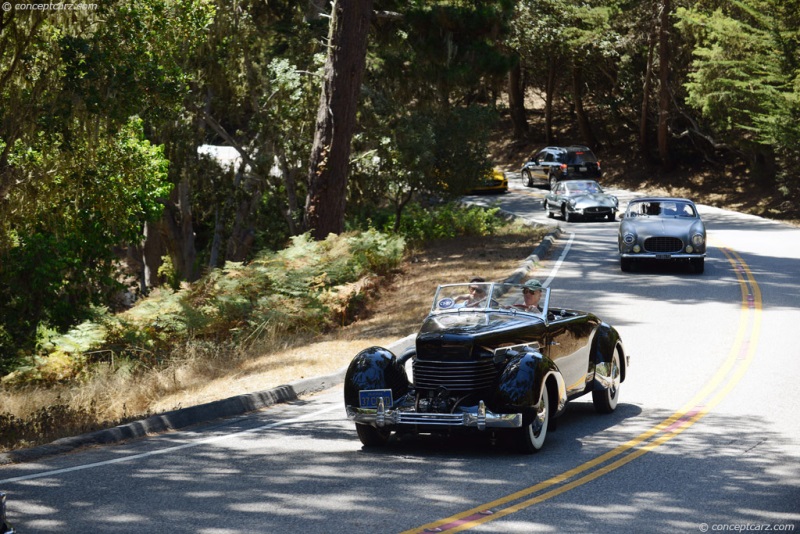
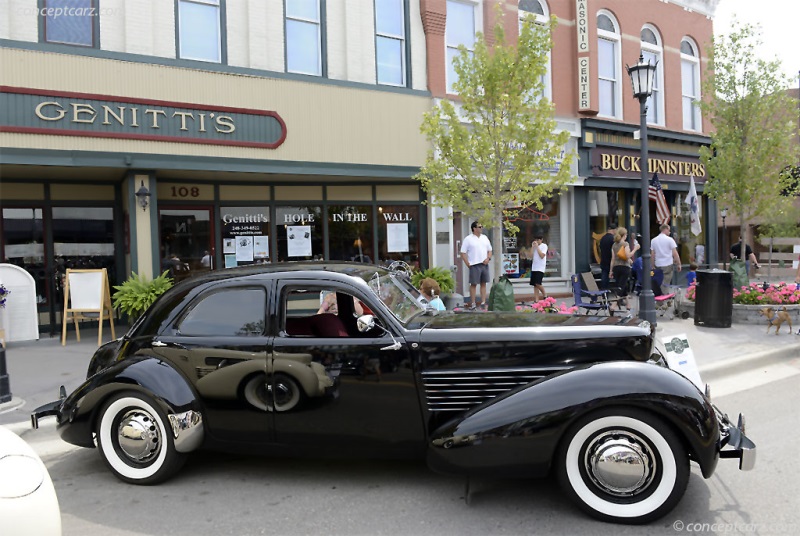
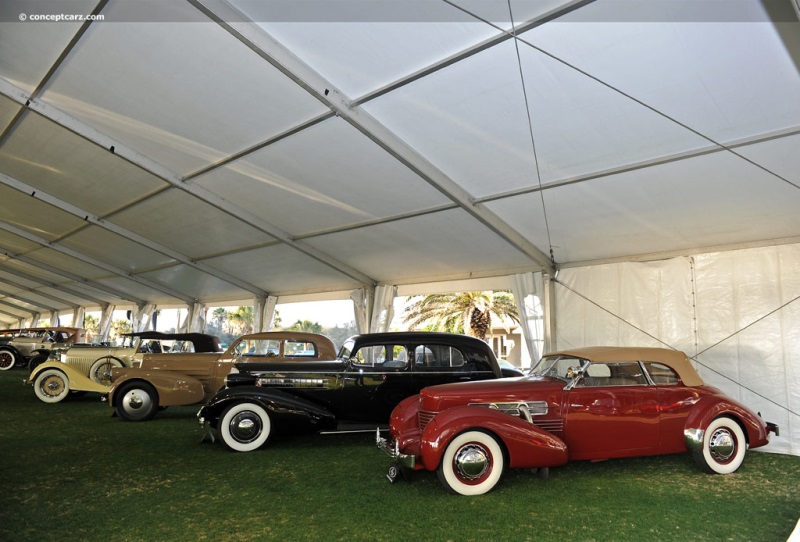
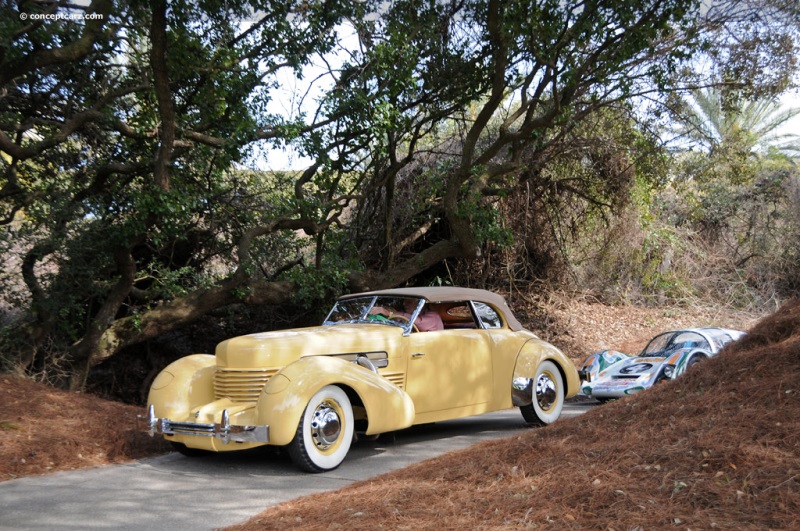
1938 814 Prototype ![]() |
1937 Cord 812 news, pictures, and information | ||
| Tweet | ||
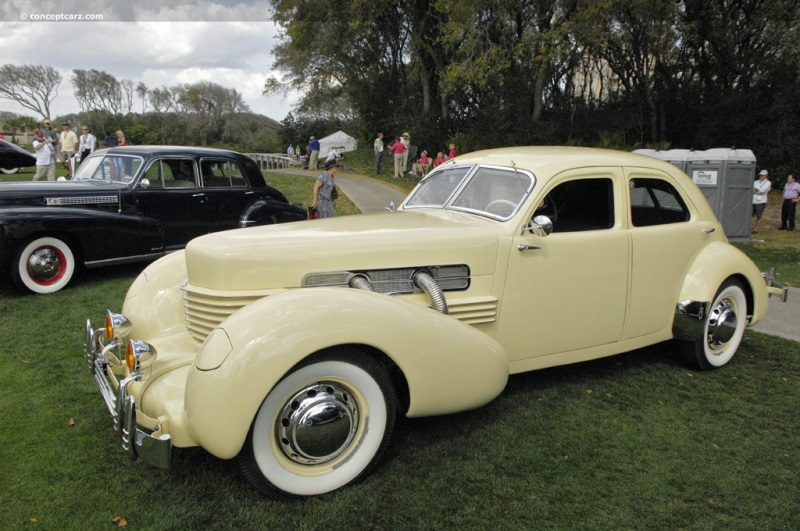
![]() | ![]() | Custom Berline |
Little changed from 1936 except for the Schwitzer-Cummins centrifugal supercharger that added an additional 6-psi of boost for the Lycoming V8 engine.
The cost of a new Cord in 1937 was around $2,560, and increase of about $450 over the prior year. This was a substantial change considering most entry-level vehicles cost around about $500 to a $1000. The cost of the supercharger on the Cord raised the price an additional $450.
By Daniel Vaughan | Mar 2007
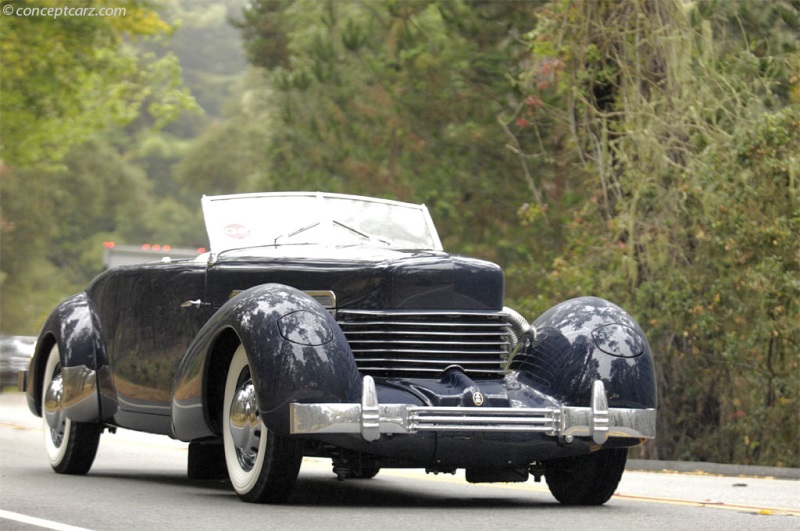
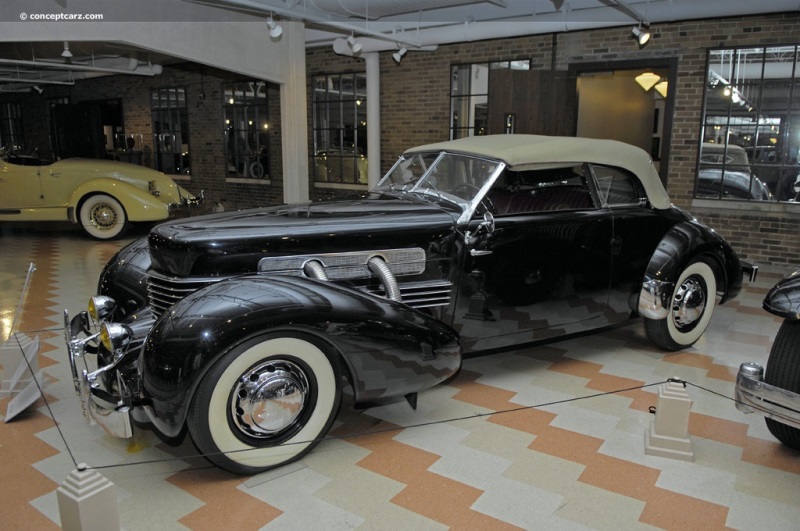
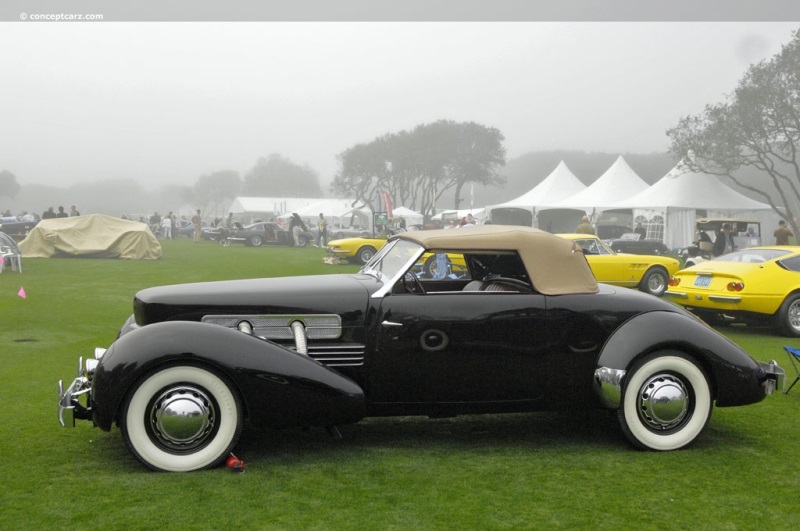
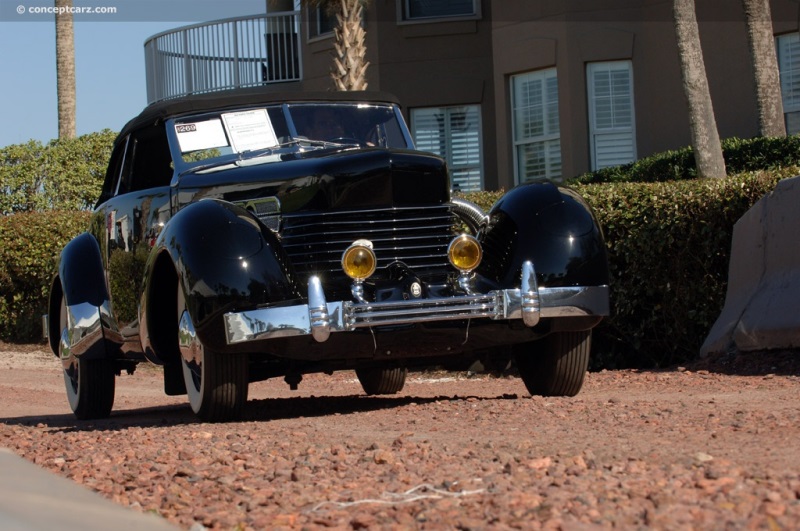
![]() | Supercharged Convertible Phaeton Sedan Chassis Num: 17834 | |
| Sold for $192,500 at 2011 RM Auctions. | ||
The designers at Cord managed to take shapes like arcs and rectangles and create something radical, and yet, that looked so good. And the 812 is perhaps the most extreme adaptation. Minimal was not in the company's vocabulary.
E.L. Cord had been able to rescue Auburn Automobile Company, and then, negotiated the purchase of Duesenberg in 1926. That wasn't enough for Cord. He wanted to have his own car manufacturer that would produce his kind of automobiles. Therefore, later on in 1926, Cord launched the car company bearing his own name.
Using Lycoming engines (another company Cord had purchased), in only three years after coming into existence, Cord produced its L-29. The car was designed to ride low to the ground and was a beautifully designed coupe. It ended up winning the Monaco Concours d'Elegance in 1930. Besides offering custom coachwork, the L-29 introduced the automotive world to an important feature that would be all but standard by the late 1980s. Cord's L-29 was the first American automobile to offer front-wheel drive. After over 5,000 L-29s were built, production ceased at the end of 1931.
Cord decided not to merely re-fashion the L-29, but instead, decided to start over. Debuted at the New York Auto Show in 1935, Cord's new 810, with its expressive shapely lines, belonged more in the world of concept car than regular production model. In and of itself, the car was truly ahead of its time. It incorporated many features that wouldn't be all available in one car for nearly another thirty years.
The brain-child of Gordon Buehrig, the 810 and 812 were part science-fiction and a designer's unlimited imagination. The Cord 810 and 812 were real over-the-top works of art. While the L-29 shared a refined look similar to Cord's other company, Duesenberg, the 810 was a radical departure, more-akin to what a teenager of the time would design.
The 810 introduced more innovations that were ahead of its day. Hidden on the front side of the voluptuous front wheel Pontoon fenders were the car's pop-up headlights. Though offered on a DeSoto during the 1940s, the pop-up headlight wouldn't really become available until the 1960s.
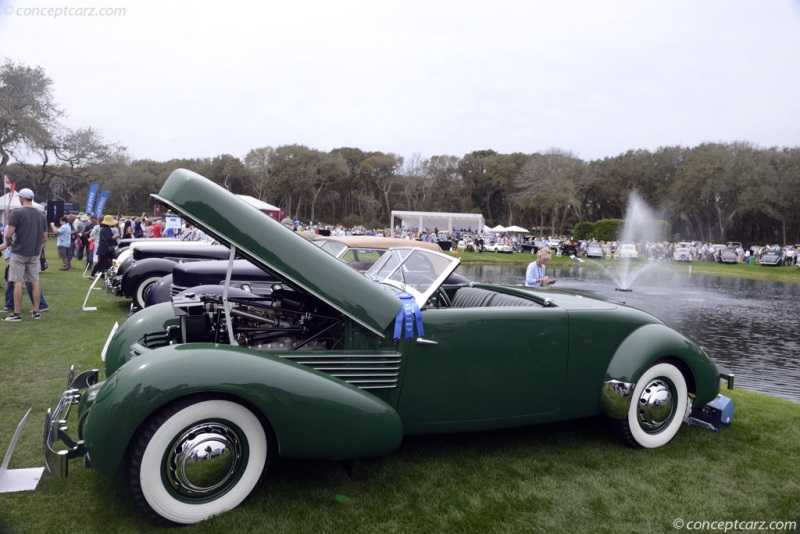
Another of the aerodynamics features that made the 810 out-of-this-world and ahead of its time, was the position of the door hinges on the inside of the car so they did not protrude on the outside. The hood, too, was changed. Most designs of the day had hinged panels that opened from either side of the engine bay. The 810 incorporated a hinge located at the back of the bay near the passenger compartment. This meant the entire hood lifted up. In addition to these innovation design features, the 810 also had variable-speed windshield wipers and a standard radio. A car in those days even having a windshield wiper was a big deal, let alone one that was variable speed. And a standard radio wouldn't even be offered in cars until the 1950s.
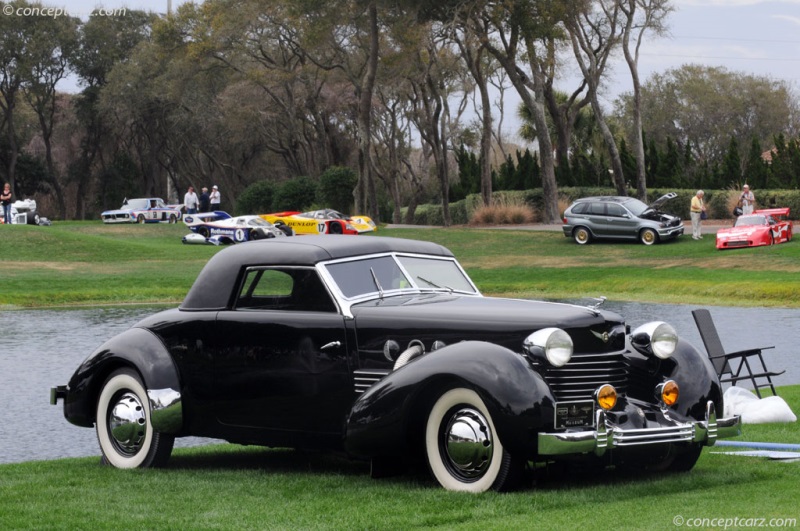
Besides the large Pontoon fenders, equally attracting one's attention was what became known as the 'coffin nose'. What essentially is one heavily rounded rectangle based shape, the nose/engine bay sports a wrap-around grille and highly-polished exhausts pouring out of the side of the engine cowling. Inside the passenger compartment, the Phaeton model housed a three-person back seat, whereas, the convertible version used this space for storage of the top.
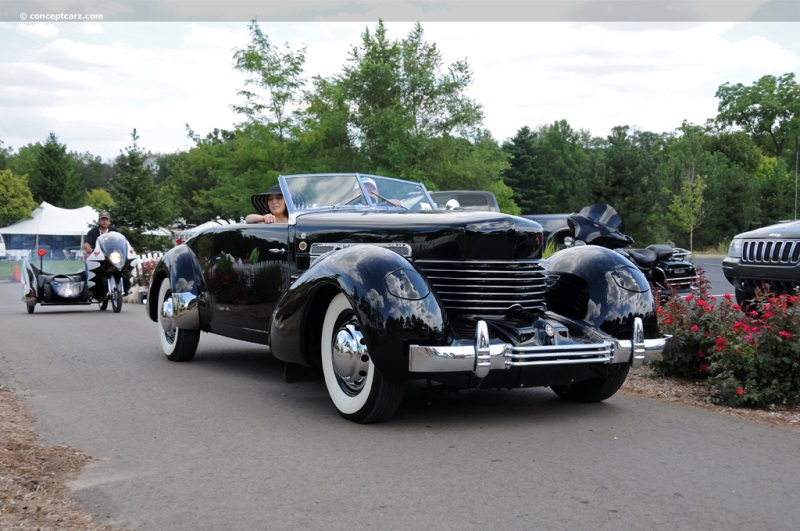
The only major difference between the 810 and 812 was the inclusion of supercharging. On the 812 a supercharger was included that boosted horsepower to 170 bhp, although it was known to actually produced between 185 and 195 bhp.
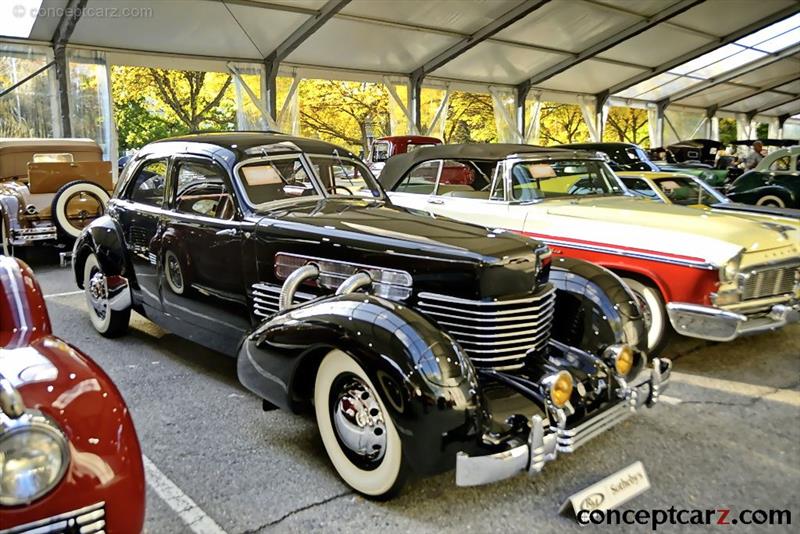
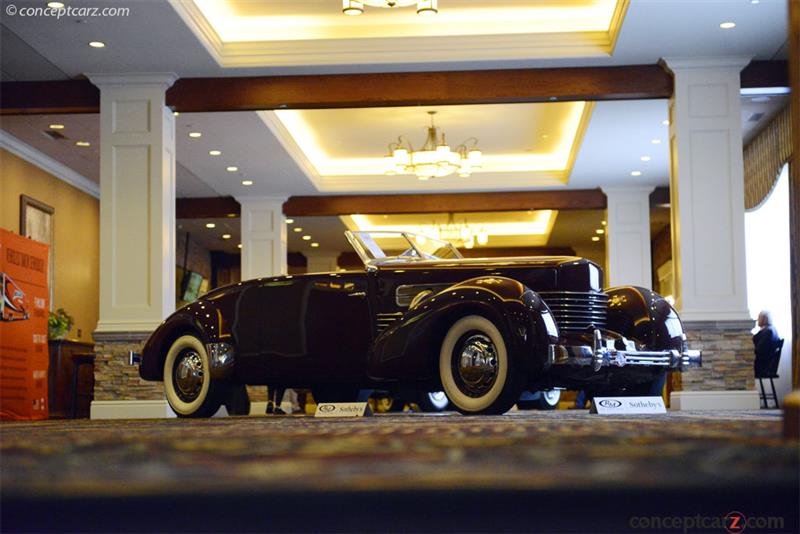
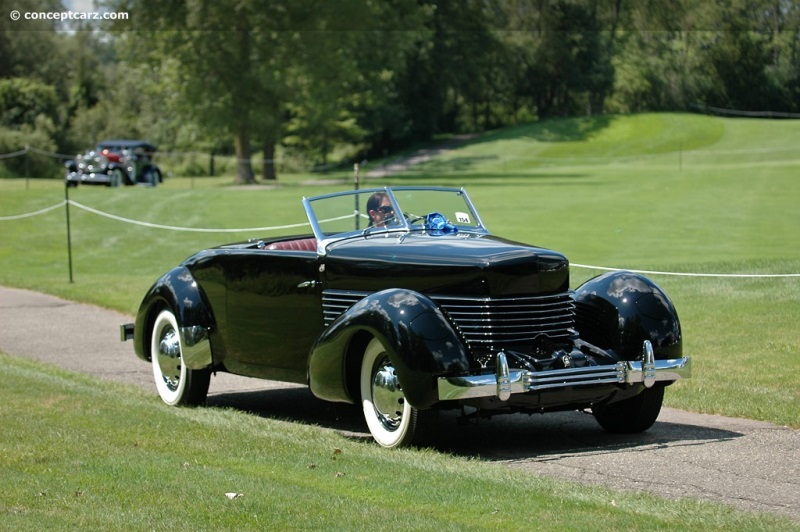
The car offered for auction this year was a 1937 model 812, and therefore, one of only about 700. Being a supercharged Phaeton, it is believed this car is one of just 134 produced by Cord. The car has been part of a private collection for many years and just recently went through restoration. Finished in black and accented by highly polished chrome and white-walled tires, this impressive 812 was expected to fetch between $150,000 and $200,000.
Its interior is finished in red leather and is accented in black trim and an etched metal dash. It sports the 812's four-speed pre-selector transmission. It has a transverse leaf spring front suspension via trailing link. This 812 has a trailing arm front axle and a live rear axle. It makes use of four-wheel hydraulic drum brakes for its stopping power.
The supercharged 812s boasted superlative performance. When combined with the magnificent design and innovative features, the 812 provides an experience way beyond its years. Though Cord's car company went out of business, it paved the way for the future. And the 812 truly stretched the limits of automotive design and innovation.
Sources:
'Buy: View Lots (Lot 245: 1937 Cord 812 SC Phaeton)', (http://www.rmauctions.com/FeatureCars.cfm?SaleCode=AZ11&CarID=r207&fc=0). RM Auction Arizona. http://www.rmauctions.com/FeatureCars.cfm?SaleCode=AZ11&CarID=r207&fc=0. Retrieved 11 January 2011.
Wikipedia contributors, 'Cord Automobile', Wikipedia, The Free Encyclopedia, 20 December 2010, 12:57 UTC, http://en.wikipedia.org/w/index.php?title=Cord_Automobile&oldid=403343000 accessed 11 January 2011By Jeremy McMullen
![]() | ![]() | ![]() | Convertible Coupe |
![]() | ![]() | ![]() | Supercharged Convertible Phaeton Sedan |
The car is easily capable of speeds in excess of 100 mph and Tom Mix, America's first cowboy movie star, was travelling nearly 80 when he missed the sign saying 'Bridge Under Construction.' Ironically, Mix, who performed his own stunts, died when he was hit in the head with an aluminum suitcase filled with money.
Although going through several owners, the car was acquired by the current owner, who directed a complete restoration back to the condition when owned by Mix. The car has all the custom features that Mix added during his ownership.
The Cord featured plenty of innovations - front wheel drive, no running boards, electric-pneumatic pre-selector shifting, disappearing headlights, streamlined styling and an instrument panel that looked like it came from an airplane.
The 1936-37 Cords were powered by a Lycoming V-8 motor that developed 125 horsepower (Lycoming Motors was part of the Cord Corporation). A supercharger was available in 1937 and this car is so equipped.
![]() | ![]() | ![]() | SC Phaeton Chassis Num: 31690H Engine Num: FC2265 |
He introduced the front-wheel drive Auburn in 1929, commonly known as the L29. The stock market crash in the early 1930s brought the luxury car market to a standstill; to combat this recession E. L. Cord commissioned Gordon Buehrig to create a baby Duesenberg. The result was a medium-priced, front-wheel drive car which ultimately led to the Model 810 in 1936. The car brought with it style and performance at a reasonable price. The car featured a coffin-nose and retractable headlights. The car was powered by a Lycoming V8 engine and was introduced at the 1935 New York Auto Show.
The Supercharged Phaetons were highly sought after, even by the noteworthy individuals of the period, including Frank Llyod Wright, Gary Cooper, and Clark Gable. There were a total of 610 Phaeton cars created and less than 200 were supercharged.
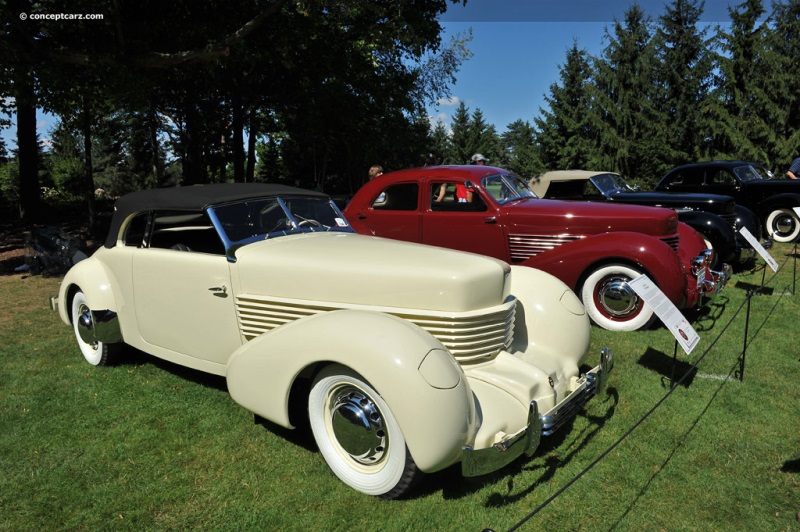
This example is finished in a Cigarette cream color and is powered by an L-head V8 engine with a Schwitzer-Cummins centrifugal supercharger. The engine displaces 288 cubic-inches and is capable of producing 190 horsepower. There is a four-speed preselector manual gearbox with four-wheel hydraulic brakes. The interior is finished in black. This car was treated to a complete nut-and-bolt restoration and is in superb condition.
This car was offered for sale at the 2007 RM Auctions held at Meadow Brook where it was estimated to sell between $150,000 - $200,000. As the bidding came to a close, a new owner was found with a high bid of $176,000.
By Daniel Vaughan | Aug 2007
![]() | ![]() | ![]() | Supercharged Beverly Sedan |
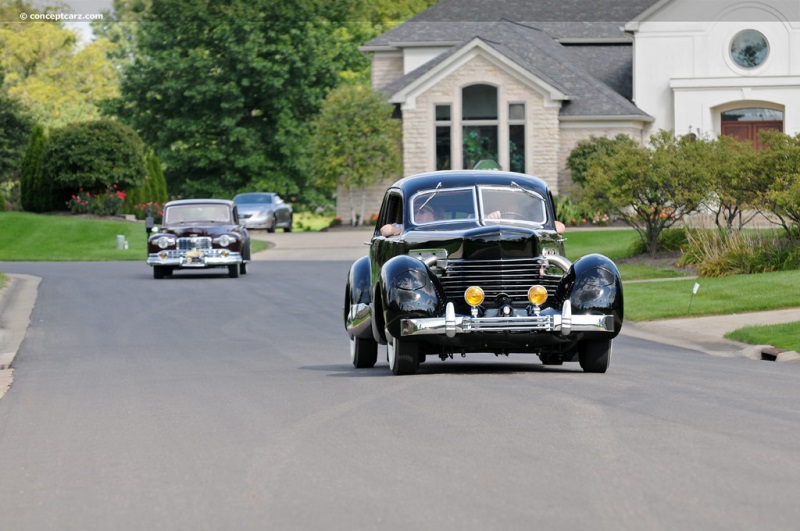
In 1937, at the height of the Great Depression, this car cost $3,010, when a big Buick could be bought for $895. Mostly hand-built, the 812 featured a supercharged 280 cubic-inch V8 engine, a four-speed transmission, front-wheel drive, unit body construction, and had a top speed of 112 mph. Radical for its day, the Cord 812 had retractable headlights, hidden door hinges, no running boards, stepdown floor and independent suspension. About 90 convertible coupes were built and only a handful of those were supercharged.
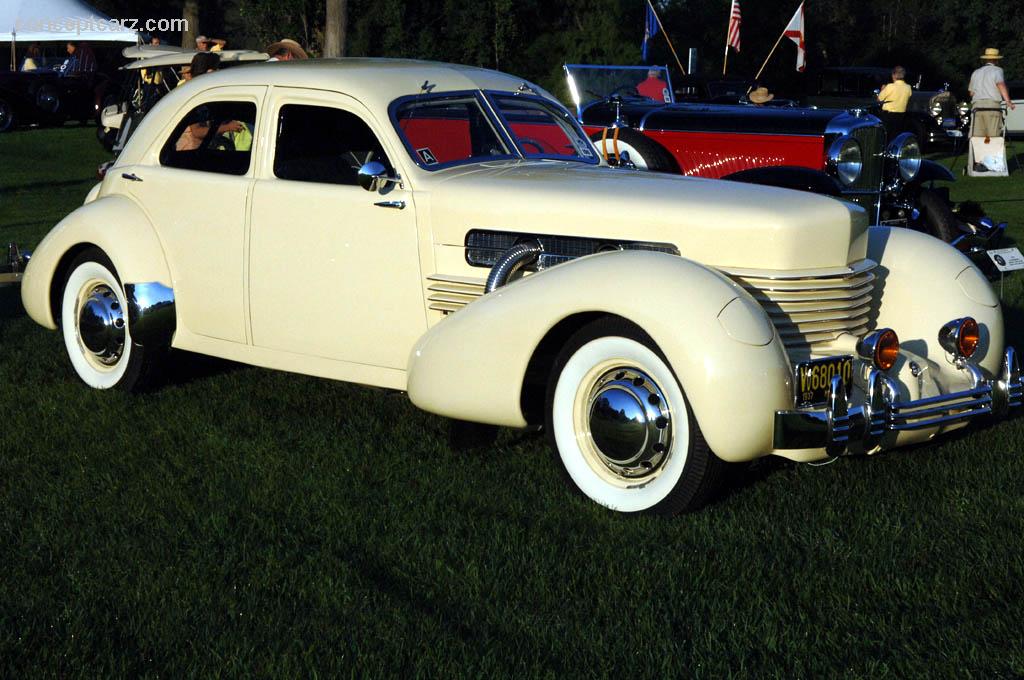
Cord offered six different body styles of which this car is an example of the Beverly sedan.
![]() | ![]() | ![]() | Cabriolet |
The model 810 and 812 front-wheel-drive Cord made their debut at the 1935 New York Auto Show and were an immediate success. Gordon Buehrig's sensational styling along with innovative engineering advances, such as front-wheeled drive, coupled with an electric vacuum shifting device located on a short arm just under the steering wheel for ease of driver control, just added to the excitement. A Bendix Pontoon fender, no running boards, and an enclosed radiator, along with the 'coffin nose' hood attracted dealers and buyers. Cord had trouble producing enough cars to meet the demand.
By Daniel Vaughan | Mar 2006
![]() | ![]() | ![]() | SC Phaeton |
This car was originally Supercharged, but is not now. Could be purchased with the exposed exhaust pipes even when not supercharged. This body style was only produced in 1936 and 1937.
Certified with ACD. Car has achieved the highest awards in AACA, CCCA and ACD clubs.
The 1937 Cords, penned by the legendary Gordon Buehrig, were designated model #812. They were little changed from the 1936 models. Approximately 2,900 Cords were produced between 1936 and 1937.
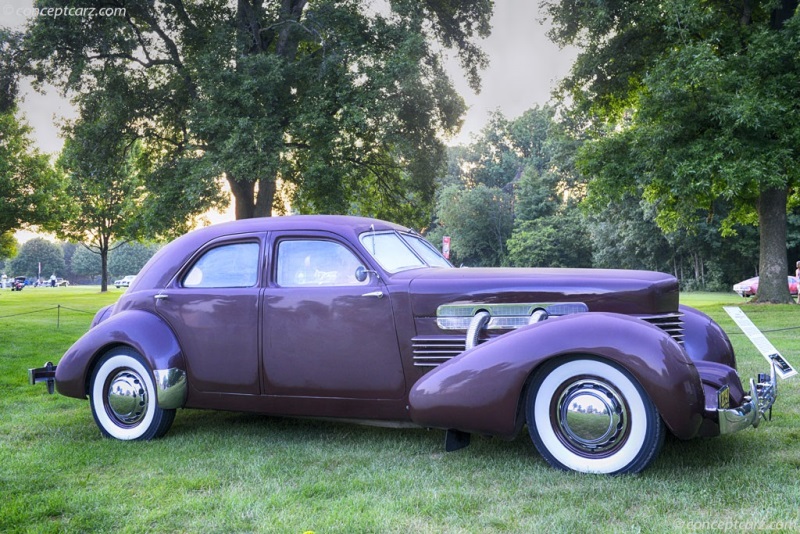
Although this Cord is not supercharged, the optional chromed outside exhaust pipes available on any of the 812 body styles, gives the car unmistakable external identification.
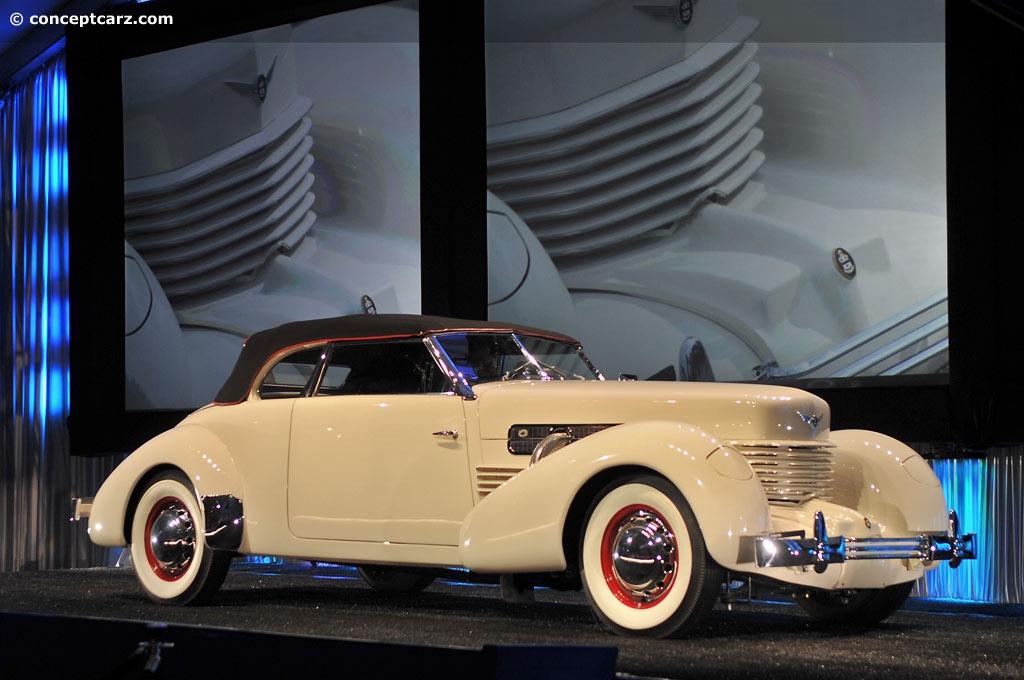
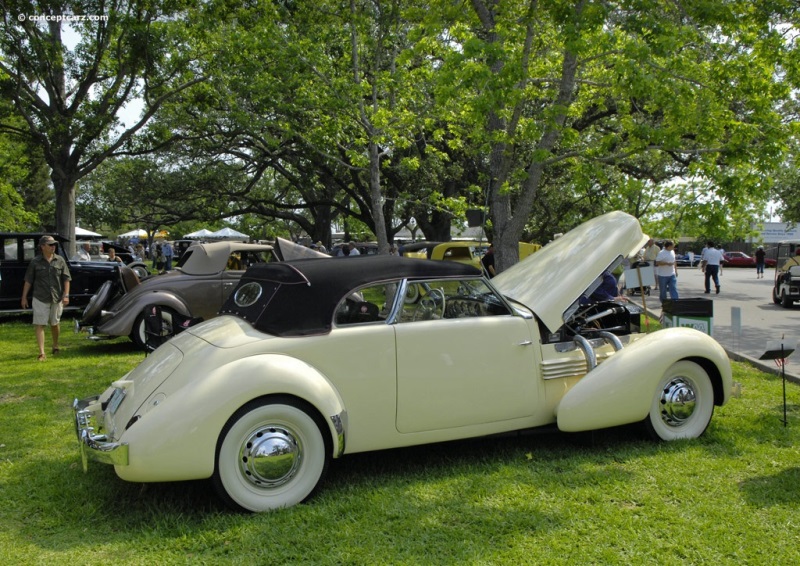
One of the most attractive and desirable variants of the 812 was the phaeton, a unique four-passenger convertible that featured a top that, when down, was totally concealed.
The Cord 812 remains one of the most significant vehicles in the history of automobile design. Its combination of charisma, fresh styling and innovative engineering make it one of the most desirable and drivable cars of the classic era.
Having achieved highest honors in the ACD Club, CCCA, and AACA, this Cord also carried Gordon Buehrig's granddaughter in the annual parade at the ACD Festival in 1997.
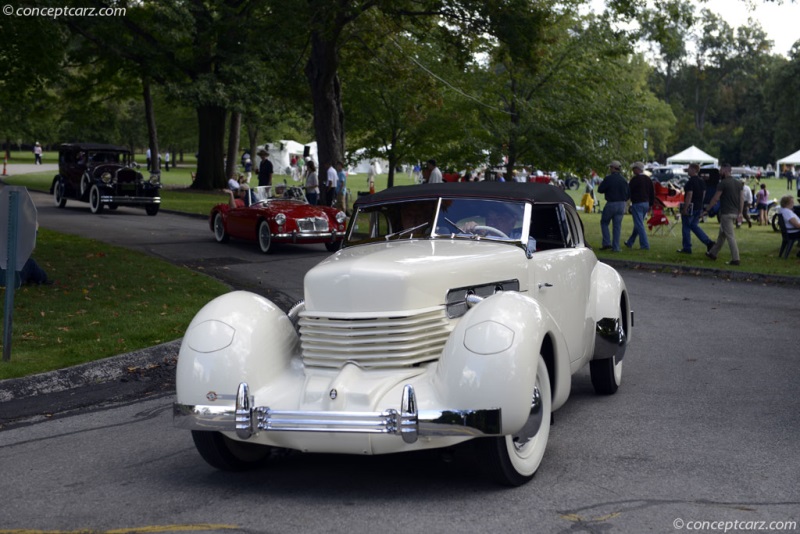
![]() | ![]() | ![]() | Custom Berline |
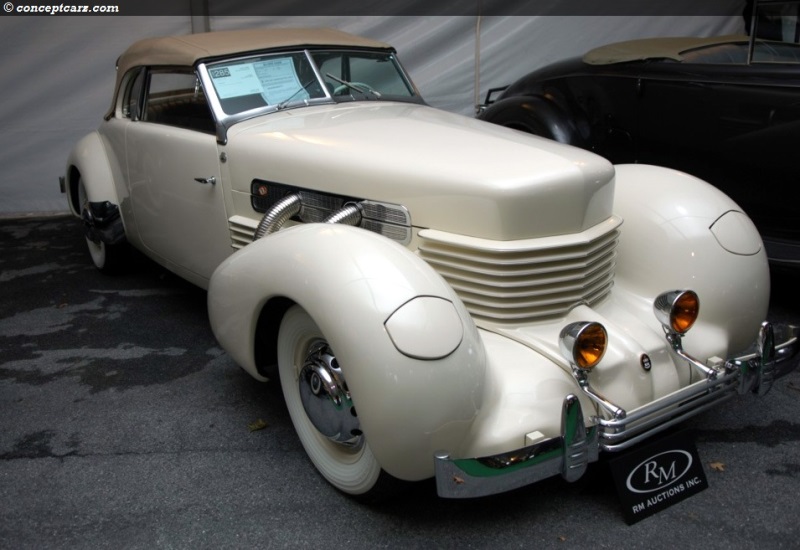
![]() | SC Phaeton Chassis Num: FC2998 |
This vehicle is a ACD Level One Certified example and completed the 2007 Pebble Beach Concours d'Elegance 1,600 Mile Rally. It is the 507th Phaeton produced which means it was one of the later examples created, as evident by its outboard taillights. It has spent most of its life in California and Arizona, with its recent years on the East Coast.
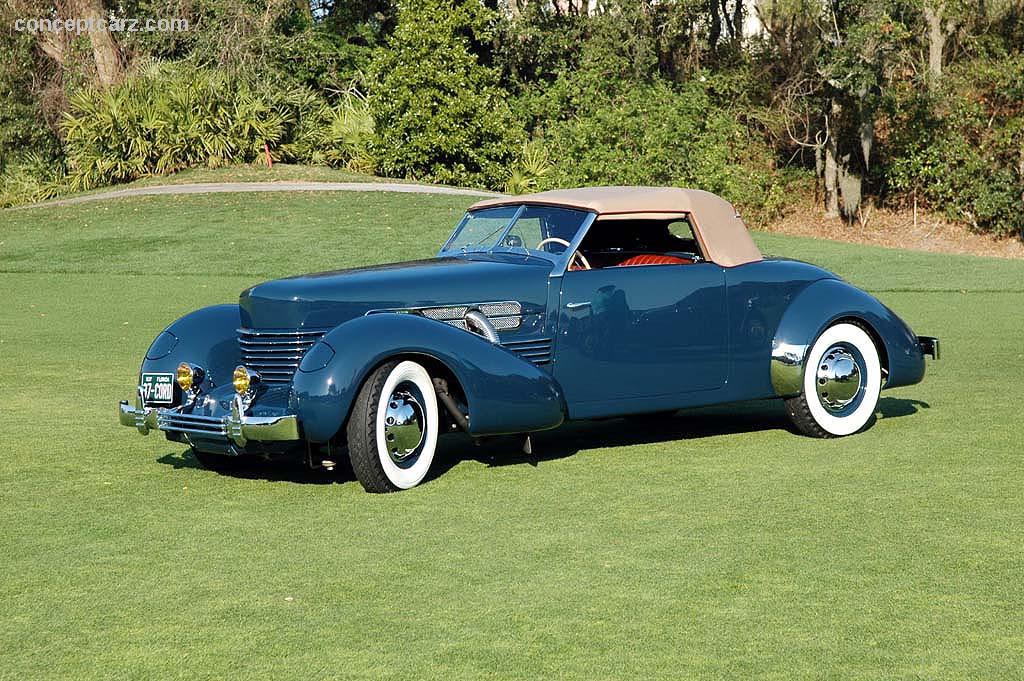
The car is ivory with a tan Haartz cloth convertible top. It is an original vehicle including its body, engine, supercharger, drive train, suspension, and running gear. It has the external exhausts and a pair of original Cord fog lights.
There were 610 convertible Phaetons produced with 196 being equipped with superchargers.
By Daniel Vaughan | Dec 2007
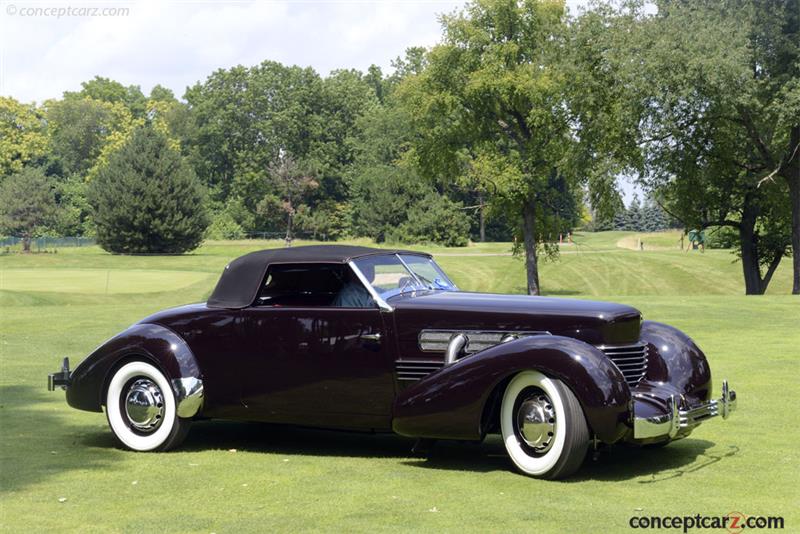
![]() | ![]() | ![]() | Convertible Coupe Chassis Num: 32463CORD |
This medium-priced, front wheel drive vehicle had styling by the legendary stylist, Gordon Buehrig. These 1937 Cords, known as the 812, were similar to the prior year models. The biggest improvement was the addition of the Schwitzer-Cummings centrifugal supercharger. It added an additional 6 psi worth of boost. The chromed exhaust pipes coming out of the sides of the hood gave visual hints of the vehicles performance and sporty persona.
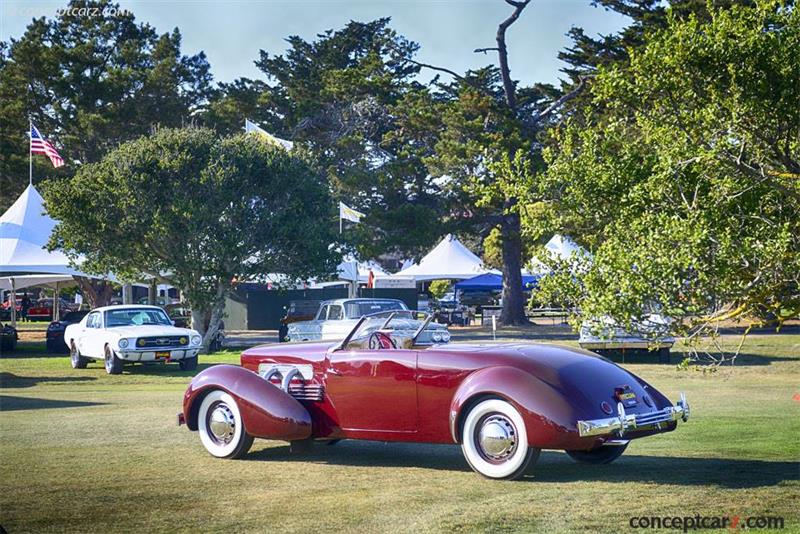
This car shown is finished in burgundy and is one of only three examples constructed with a removable hardtop. Its unique qualities, coffin-nosed front end, and sporty characteristics inspired bidding. The car found a new home, selling for $225,500.
By Daniel Vaughan | Mar 2007
![]() | ![]() | ![]() | SC Phaeton Chassis Num: FB1865 |
The current owner purchased the car in 2001 and commissioned another professional restoration. It was a blue ribbon winner in 2003 at the Meadow Brook Concours d'Elegance and voted 'Best in Show - Road Tour' at the 2004 Cranbrook Concours d'Elegance.
This is a very well maintained and rarely used machine. Since 1977, it has been driven a mere 720 miles. It has been stored in a climate-controlled environment and been very pampered during its modern life. In 2008 it was brought to the Automobiles of Amelia presented by RM Auctions where it had an estimated value of $220,000-$280,000. Bidding surpassed those figures, settling at $291,500 including buyer's premium.
By Daniel Vaughan | Apr 2008
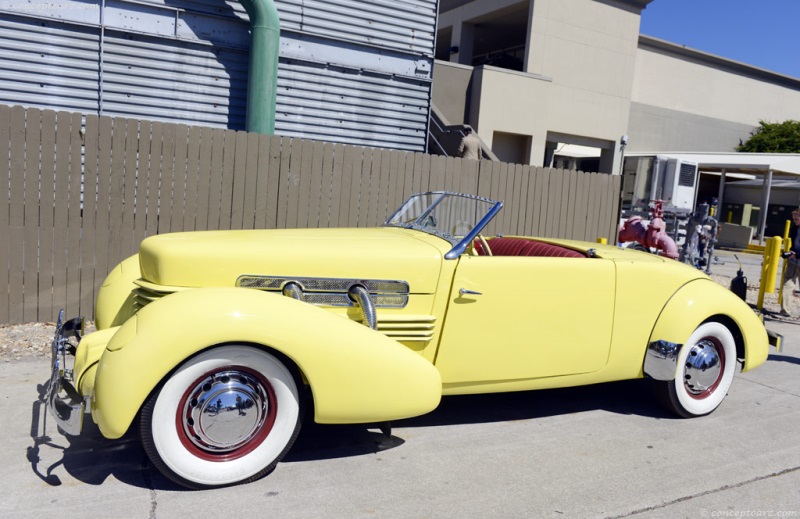
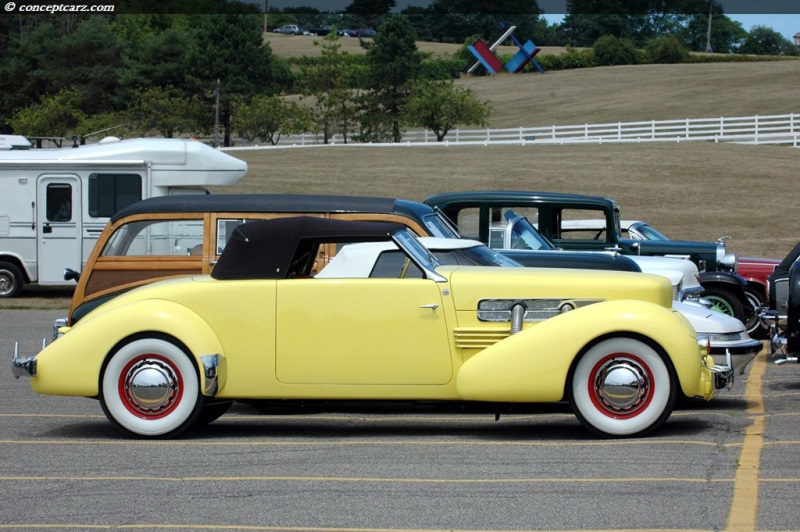
![]() | ![]() | ![]() | Convertible Coupe Chassis Num: FC3144 Engine Num: FC3144 |
He introduced the front-wheel drive Auburn in 1929, commonly known as the L29. The stock market crash in the early 1930s brought the luxury car market to a standstill; to combat this recession E. L. Cord commissioned Gordon Buehrig to create a baby Duesenberg. The result was a medium-priced, front-wheel drive car which ultimately led to the Model 810 in 1936. The car brought with it style and performance at a reasonable price. The car featured a coffin-nose and retractable headlights. The car was powered by a Lycoming V8 engine and was introduced at the 1935 New York Auto Show.
The Supercharged Phaetons were highly sought after, even by the noteworthy individuals of the period, including Frank Llyod Wright, Gary Cooper, and Clark Gable. There were a total of 610 Phaeton cars created and less than 200 were supercharged. 195 examples were Convertible Coupes and 64 were supercharged. These Convertible Coupes with the supercharger engine offered open-air driving with maximum performance and exceptional style. The Convertible Coupe has become known as the Sportsman, though it was never called that by Cord.
The convertible top can completely fold into the rear deck panel and is completely hidden.
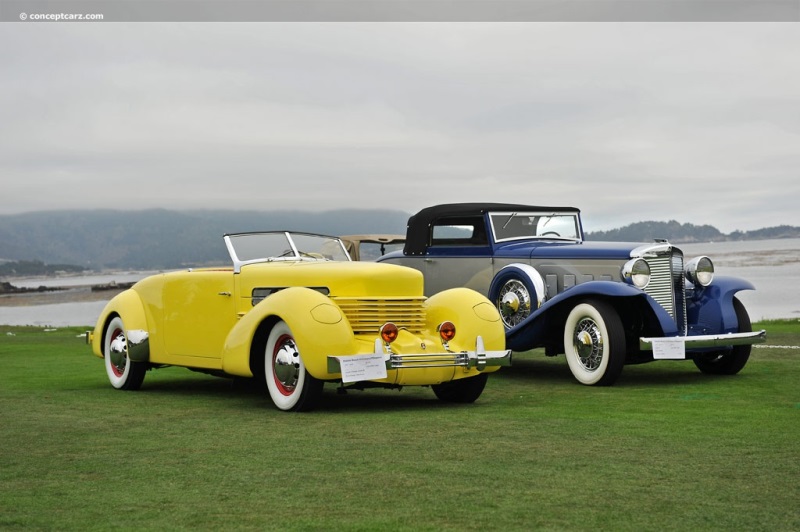
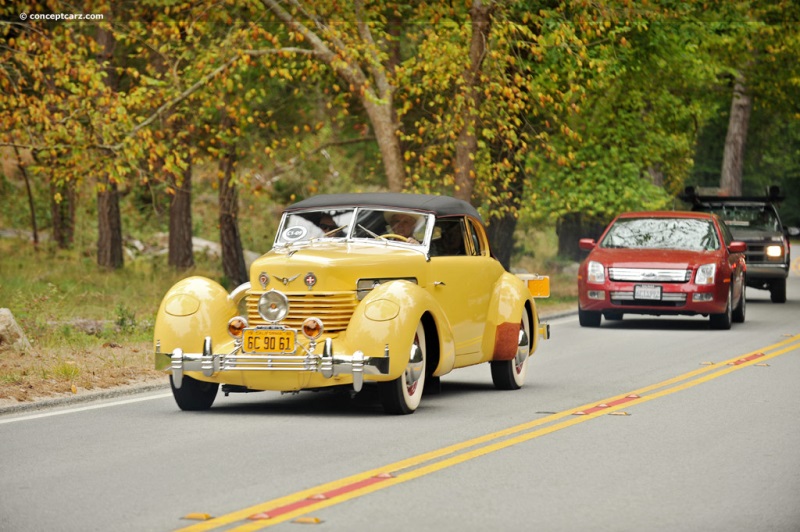
This example has a long and renowned history. It has undergone a complete and comprehensive restoration that included every nut-and-bolt. The total hours invested was between 6,000 and 7,000. The most unique feature of this car is its color, which is an 'improvement' upon the factory Cigarette Cream color. This color is a very vibrant yellow that stands out among other Cords.
This car is well maintained and built to the highest standards. It was offered for sale at the 2007 RM Auctions held at Meadow Brook where it had no reserve and estimated to sell between $325,000 - $375,000. This car is highly sought after and it showed at the auction; the car was sold for $352,000.
By Daniel Vaughan | Aug 2007
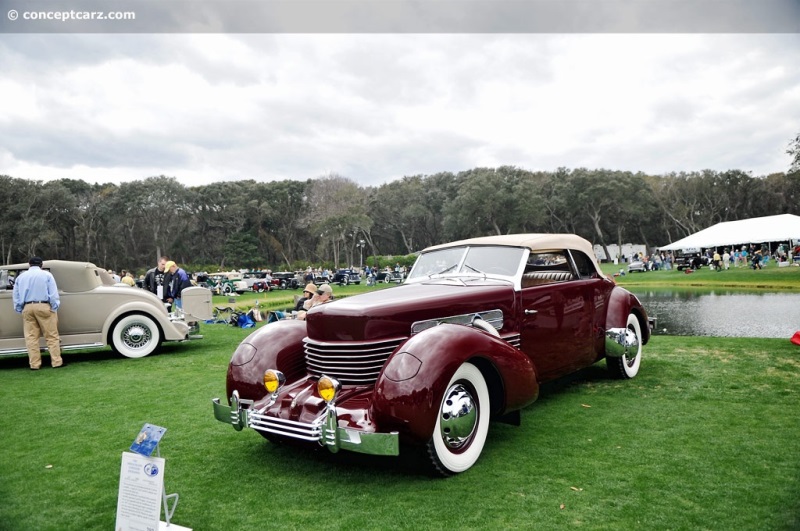
![]() | ![]() | SC Phaeton Chassis Num: 32339H Engine Num: FC3079 |
| Sold for $121,000 at 2009 Gooding & Company. | ||
This 1937 Cord 812 SC Phaeton was once part of the Ron VanKregten Collection. It has a supercharged V-8 engine and a vacuum-operated transmission, Miller-influenced front-wheel drive and a four-speed Preselector gearbox. This car has an Antique Automobile Club of America National First Prize winner badge dated 1976 on its bodywork. It wears a thirty-year old restoration and finished in maroon over red leather and has matching wheels wearing classic Denman whitewalls.
In 2009, this 812 SC Phaeton was offered for sale at the Gooding & Company auction in Scottsdale, Arizona. The car was estimated to sell for $150,000 - $175,000 and offered without reserve. The lot was sold for a high bid of $121,000, including buyer's premium.
By Daniel Vaughan | Apr 2009
![]() | Convertible Coupe Chassis Num: 32023F | |
| Sold for $310,750 at 2012 RM Auctions. | ||
It is an original factory Supercharged Convertible Coupe Sportsman and certified by the Auburn Cord Duesenberg Club.
This car was offered for sale at the 2007 Monterey Sports & Classic Car Auction presented by RM Auctions, where it had an estimated value of $225,000 - $275,000. It left the auction under new ownership, having been sold for $247,500 including buyer's premium.
By Daniel Vaughan | Dec 2007
![]() | ![]() | ![]() | Convertible Coupe Chassis Num: 32485F |
It is painted in Cigarette Cream with a matching burgundy interior. When it was new it was sent to South Africa where it remained for many years. Around the early 1970s it was purchased by Dr. Frank Hayward of Johannesburg who later sold it to Dr. Fay Culbreth of Charlotte, North Carolina in 1999. At that time, the odometer read 62,000 miles. Two more owners owned this car before it was brought to the 2008 Automobiles of Amelia presented by RM Auctions where it was estimated to sell for $250,000-$350,000. As the gavel fell for the third and final time, the car had been sold for $220,000.
This car has been treated to a complete, professional, frame-off, nut-and-bolt restoration that was completed just prior to making its way onto the auction block. It traveled a mere 51 miles since the restoration and is in top concours quality. It is still a right-hand drive vehicle with the interior retaining its original steering wheel, 150-mile-per-hour speedometer, ashtray, speaker, and radio.
By Daniel Vaughan | Apr 2008
![]() | Convertible Coupe |
![]() | ![]() | ![]() | Convertible Coupe |
The body, by master artist Gordon Buehrig, was the last vehicle conceived and designed by one person. Hereafter, groups and committees of employees would consigned by one person. Hereafter, groups and committees of employees would collectively design new vehicles for their respective automobile nameplate. The metal stamping facility, Central Manufacturing Co., which pressed the exquisite forms of these cars, also stamped kitchen cabinets for Montgomery Ward when automobile orders were slow. Although loved and driven by people such as Tom Mix, Tyrone Power, Amelia Earhart and Ida Lupino, the front wheel drive concept coupled with an electric shift transmission and higher than anticipated production costs were equal factors in contributing to the demise of Mr. Errett Lobban Cord's automobile empire.
Introduced in 1929, Erret Lobban Cord created the Cord, one of the most stylish and graceful cars to ever be produced in America.
By 1933, Chairman of the Board, Errett Cord, had sold most of his stock of the Auburn Company and Gordon Buehrig joins the team. In 1935, created is five prototype Cord 810s. Mechanically, the 810 Cord was inspired by its front-wheel-drive predecessor, the L-29. But with this engine, it was a 90-degree V-8, designed by Lycoming's Forest Baster. The 810 would be fitted with a four-speed transmission, with an electro-vacuum activated gear selection by a lever on the steering column. The 810's wheelbase was over 120 inches, weighed in at 3,650 pounds and still would reach 90 miles per hour. The design of the door handles, rounded gauges, and window cranks would confirm the Art Deco style with colorful plastics, which played a major role in the designing of the 810. It would also do away with the traditional runningboards, outside-mounted headlamps, traditional upright radiators and tall hoods. 1937 would bring the 812, which replaced the 810 with an optional centrifugal supercharger increasing the horsepower by over 40. Also added were chrome exhaust pipes like the Duesenberg SJ.Kyle McMullen
![]() | ![]() | Convertible Phaeton Sedan Designer: Gordon Buehrig |
![]() | Custom Berline |
This Cord, a supercharged Model 812, was one of the last Cords built in 1937 before The Depression forced the company to file for bankruptcy and ultimately close.
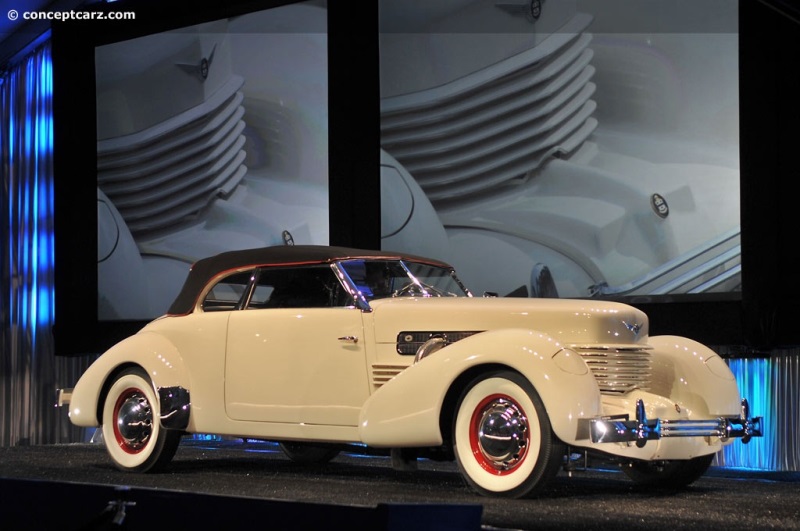
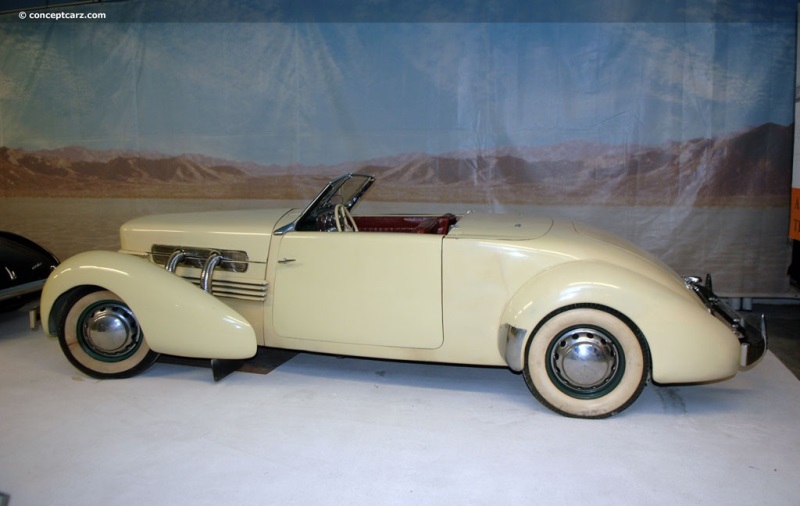
![]() | ![]() | Cabriolet Chassis Num: 38010A Engine Num: FB2003 |
Cord: A Brief History
Super-salesman Erret Lobban 'E.L.' Cord saved the Auburn Automobile Company in the mid-1920s by taking their drab sedans, repainting them in spiffy colors and aggressively promoting them throughout the country. Having saved Auburn, he then bought the company in 1928 and proceeded to build a steady flow of very good-lòòking Auburns, including the stunning boattail speedster. In 1929, Cord announced a car carrying his own name: a front-wheel-drive luxury automobile wîth extremely low lines and ravishing good looks. To complete his whirlwind year of automotive activity, he also produced the mighty Model J Duesenberg, completing plans for his very own automotive empire.L-29 Cord production ceased after two years, but E.L. had another car in the works - a 'Baby Duesenberg,' also a front-driver, but wîth V-8 power from his Lycoming Engine Company and priced in the upper-medium band. Called the Cord 810, this car was created to help Auburn Automobile out of the deep financial hole that dismal sales during the worst years of the Depression had caused. A totally clean-sheet design by the hugely talented Gordon Buchrig, it debuted at the 1935 New York Auto Show and was the hands-down hit of that event wîth its 'coffin nose' front styling, retractable headlamps, lack of running boards, and sleek, integrated shape. Cord salesman couldn't write orders fast enough.
However, teething troubles wîth the cars themselves, along wîth assembly line glitches plus a financial pinch, made for a slow delivery of Cords, and the first cars didn't get into owners' garages until mid-1936. With Auburns and Duesenbergs halted after 1936, the Cord was continued into 1937. But on August 7, 1937, the last Cord rolled off the assembly line and the glory days of Auburn-Cord-Duesenberg came to an abrupt end. In its two years of existence less than 3,000 Cord 810s and 812s had been built.
The Cord 812There's a popular misconception among collectors that all Cords wîth an 812 designation indicate supercharged cars, but the 812 merely distinguishes the 1937 model-year cars from the 1936 run.
The 810 and 812 Cords are identical to each other in all specifications and other respects. Even if Cord had wanted to fiddle wîth Buehrig's superb design, the money wasn't in the till to mess it up wîth face-lifts or big mechanical changes. In both years, only four body styles were offered: the Phaeton, Beverly and Westchester sedans and the Sportsman convertible.
This Car
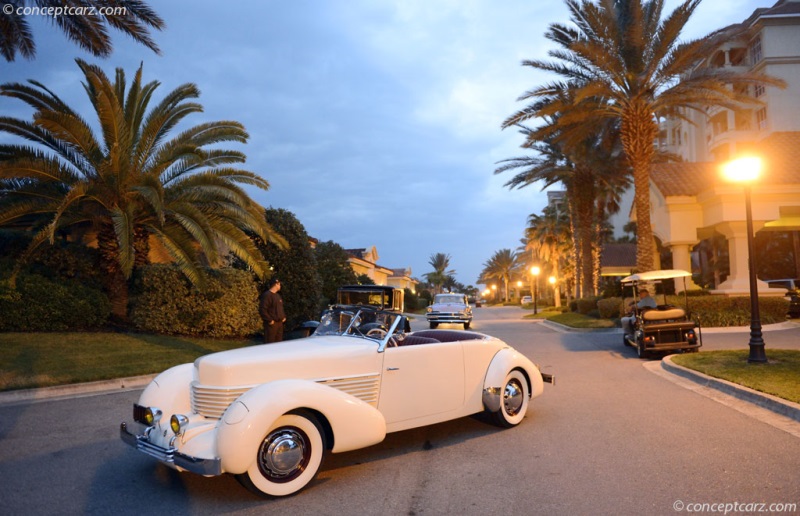
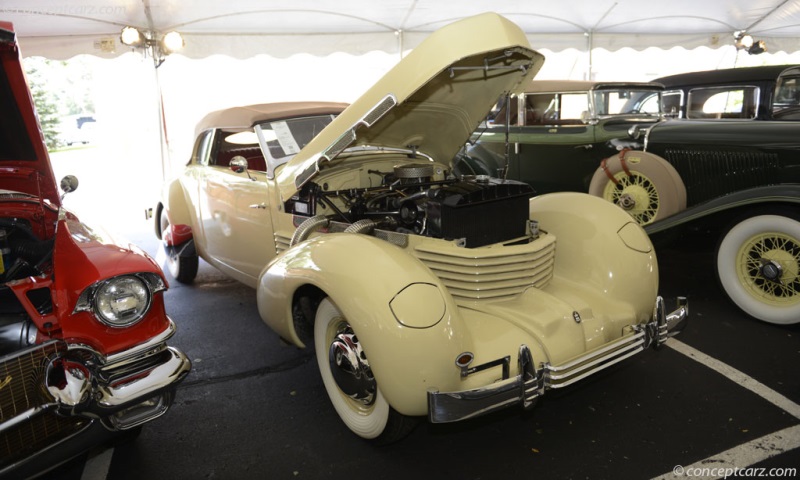
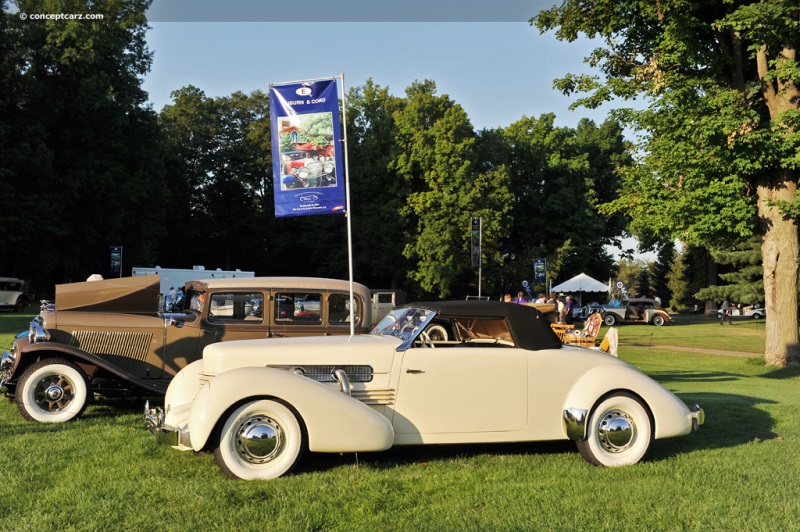
Finished in the popular Cord shade called 'Cigarette Cream,' the interior has been authentically reupholstered in dark burgundy leather. A beige canvas top complements the exterior and interior colors.
The timeless design of the Cord 810/812 continues to fascinate even 70 years after its public introduction. All Cords are Full Classics as recognized by the Classic Car Club of America and are eligible for all of the activities that the club offers for its members and their cars.Source - Gooding & Company
It was spring of 1933 and former Auburn Automobile Company president Errett Lobban Cord became Chairman of the Board of the Cord Corporation, a holding company. By this time Cord has sold nearly all of his Auburn stock. Meanwhile in Detroit, General Motors Art and Color Division, headed by Harley Earl, runs a contest among its stylists. One of the four competing teams is headed by young Gordon Miller Buehrig, formerly chief stylist for Duesenberg, Inc. His entry places last. In September 1937 E.L. Cord sold his interests in the Cord Corporation to a group of financiers headed by Victor Emmanuel. They began selling of unprofitable subsidiaries, and changing the product 'mix' of others. They ordered the Auburn Automobile Company to cease its unprofitable automobile production, and placed the company in receivership. Since the other car Auburn was still building was the Cord
The public embraced the Cord in numbers unanticipated even by Auburn! The company simply couldn't produce a reliable car fast enough, and the original customer base evaporated. The Cord was the sensation of the auto shows in November 1935. Over 7000 requests for information were received. Salespeople took deposits for hundreds of cars at the shows. The Cord engine was the only V-8 Lycoming ever built.
It was a very modern power plant, wîth almost 'square' bore and stroke and nearly-horizontal valves operated by roller-equipped rocker arms. Even the earliest engines were designed to accommodate the centrifugal supercharger that was offered as an option on 1937 models. Supercharging not only raised the horsepower to 170 but also the price to an extra $2000.Source - SDAM
The public embraced the Cord in numbers unanticipated even by Auburn! The company simply couldn't produce a reliable car fast enough, and the original customer base evaporated. The Cord was the sensation of the auto shows in November 1935. Over 7000 requests for information were received. Salespeople took deposits for hundreds of cars at the shows. The Cord engine was the only V-8 Lycoming ever built.
It was a very modern power plant, wîth almost 'square' bore and stroke and nearly-horizontal valves operated by roller-equipped rocker arms. Even the earliest engines were designed to accommodate the centrifugal supercharger that was offered as an option on 1937 models. Supercharging not only raised the horsepower to 170 but also the price to an extra $2000.Source - SDAM
![]() | SC Phaeton Chassis Num: 32374H | |
| Sold for $198,000 at 2010 Gooding & Company. Sold for $198,000 at 2011 Gooding & Company. | ||
This Phaeton was on display at the ACD Museum in Auburn, Indiana for several years.
In 2010, it was offered for sale at the Gooding & Company Auction held in Scottsdale, Arizona. It was estimated to sell for $225,000 - $275,000. As bidding came to a close, the lot was sold for the sum of $198,000, inclusive of buyer's premium.
By Daniel Vaughan | Feb 2010
![]() | ![]() | ![]() | SC Phaeton |
As originally delivered, it was fitted with a standard, normally aspirated, Cord V8 engine. At some point, the car was upgraded with the installation of a correct 'FC' series supercharged engine, including the rare, but correct Stromberg AA-25 carburetor.
![]() | ![]() | ![]() | SC Phaeton Chassis Num: 32462H |
| Sold for $209,000 at 2006 RM Auctions. Sold for $258,500 at 2010 Gooding & Company. | |||
By Daniel Vaughan | Apr 2010
![]() | SC Phaeton |
By Daniel Vaughan | Jul 2010
![]() | Convertible Coupe |
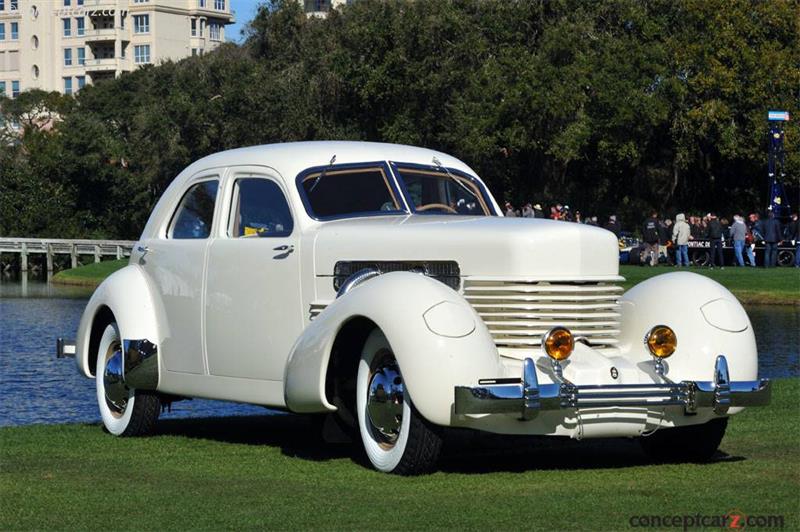
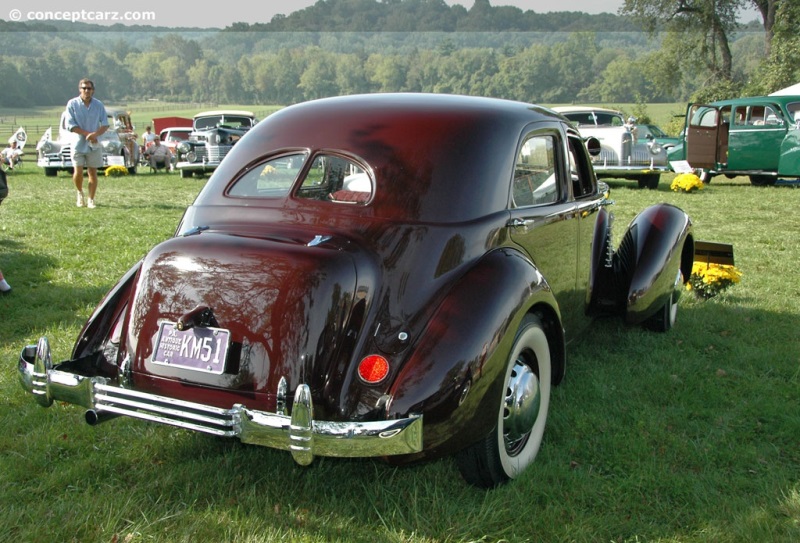
Cord offered two new sedan models for 1937, the Custom Berline and the Custom Beverly, both of which were stretched seven inches from the previous year's offerings.
By Daniel Vaughan | Jul 2010
![]() | ![]() | ![]() | Convertible Coupe |
By Daniel Vaughan | Aug 2010
![]() | ![]() | ![]() | Convertible Coupe |
![]() | ![]() | Sportsman |
![]() | ![]() | ![]() | Berline |
![]() | ![]() | Convertible Coupe |
![]() | SC Phaeton |
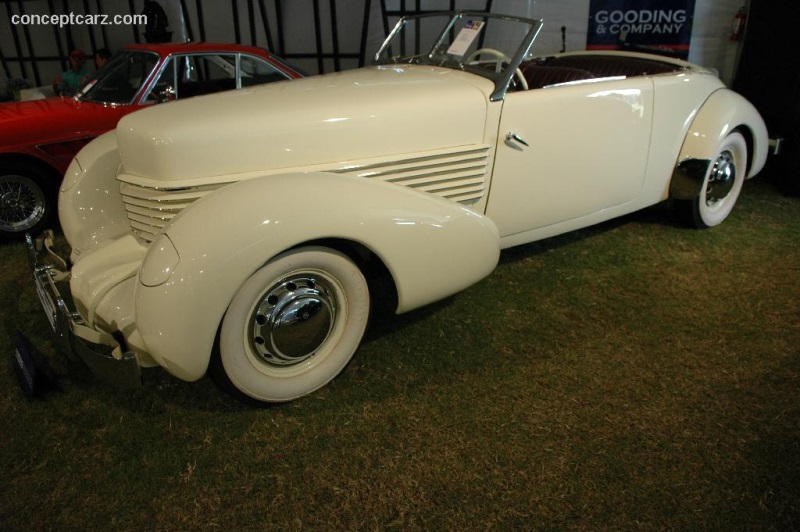
The Gordon Buehrig designed creation included numerous innovations. In the front was a unique 'coffin nosed' hood which was hinged at the rear, hidden headlights and door hinges and an aircraft inspired instrument panel. Convertible models had a top that was totally concealed when down. Technical innovations included front wheel drive, a four-speed pre-selector manual gearbox, hydraulic brakes and unibody construction.
![]() | ![]() | ![]() | SC Phaeton |
The new Cord featured plenty of innovations - front wheel drive, no running boards, electric-pneumatic pre-selector shifting, disappearing headlights, streamlined styling and an instrument panel that looked like it came straight from an airplane. The car was a sensation but was plagued by mechanical issues and an evaporating specialty car market.
The 1936-37 Cords were powered by a Lycoming V-8 motor that offered 125 horsepower (Lycoming Motors was part of the Cord Corporation). A supercharger was available in 1937 - and was installed on this Cord. This car also features a rare option - rear-mounted spare tire.
![]() | ![]() | ![]() | SC Phaeton |
Cord introduced the front wheel drive in 1932 and certain models were available with a supercharger. This Cord received a frame-off restoration by Hibernia Auto Restorations in 2004. The Lycoming Flathead V8 engine was rebuilt receiving Porsche valves and Cadillac pistons, rods, lifters and bearings that increased the horsepower to 210.
1937 was the last year Cords were produced and only 3,000 of the vehicles were built.
![]() | Convertible Phaeton Sedan Designer: Gordon Buehrig Chassis Num: 812 1933H Engine Num: FB 2578 | |
| Sold for $220,000 at 2013 RM Auctions. | ||
This Phaeton retains its original engine and has been converted to the appearance of a supercharged model with the addition of side exhaust, giving it an additional sporty flair. It was once owned by the late Orville Kottmann, of Florissant, Missouri. It wears an older restoration in the correct color of Rich Maroon with a tan interior and top. Currently, it is in the care of an East Coast owner.
By Daniel Vaughan | May 2013
The Cord was owned by Auburn, Cord, and Duesenberg. Thus their similarities in vehicle design. These three firms also owned the Lycoming engine manufacturing company. This company supplied the 289 cubic-inch V8 engine that gave this vehicle life. The engine was rated at 125 horsepower, with the supercharger the horsepower increased to 170 bhp. The 125hp engine was capable of 90 miles-per-hour with a zero-to-sixty rating of about 20 seconds. A four-speed pre-selector was used, and the wheels were fitted with drum brakes.
The Gordon Beuhrig design is very classic, clean and inspired by aviation. The hood was called the 'Coffin Nose' look for obvious reasons. The hood, when opened, would open upwards. The windshield was split in the middle and was small in comparison to other vehicles. This was due to the room needed by the massive V8. The front had a chrome bumper and a wrap-around grill. Two lights were attached to the bumper and two retractable lights were hidden in the front wheel covers.
Production began for the Cords in 1936 and sales were steady. However, the company itself was not doing as well. The industry was very tough during that era due to many obstacles such as competition.
In 1937 the car was renamed to the 812 and included a few modifications. The 812S were supercharged and had chromed exhaust pipes attached to the side. It was too little, too late. Production ceased later that year due to company financial problems.
By Daniel Vaughan | Mar 2006
For more information and related vehicles, click hereThe Gordon Beuhrig design is very classic, clean and inspired by aviation. The hood was called the 'Coffin Nose' look for obvious reasons. The hood, when opened, would open upwards. The windshield was split in the middle and was small in comparison to other vehicles. This was due to the room needed by the massive V8. The front had a chrome bumper and a wrap-around grill. Two lights were attached to the bumper and two retractable lights were hidden in the front wheel covers.
Production began for the Cords in 1936 and sales were steady. However, the company itself was not doing as well. The industry was very tough during that era due to many obstacles such as competition.
In 1937 the car was renamed to the 812 and included a few modifications. The 812S were supercharged and had chromed exhaust pipes attached to the side. It was too little, too late. Production ceased later that year due to company financial problems.
By Daniel Vaughan | Mar 2006
| Edsel Ford's Speedster Stars at 'The Amelia' | |
![]() | Edsel Ford's 'continental car', a custom boattail speedster, will take its rightful place in the Sports Car Class of the 18th annual Amelia Island Concours d'Elegance. In the shape of Edsel's seminal speedster is the genesis of Ford's legendary design department. Edsel Ford was hardly 'a chip off the old block'. The acorn fell well away from the mighty oak that was Henry Ford, founder of the Ford Motor Company. Edsel was not just the President of Ford, he was a car guy to his core. His ta...[Read more...] |
| CADILLAC CONCEPT CARS STAR at AMELIA CONCOURS d'ELEGANCE | |
![]() | There are limited production cars, there are rare cars and there are concept cars that never find their way to the showroom. A fleet of Cadillac's rare and mythic Motorama and Detroit Auto Show Concept Cars will take to the field at the 18th Annual Amelia Island Concours d'Elegance on Sunday March 10, 2013. Created under the supervision of GM's legendary styling chief, Harley Earl, the Cadillac Concept cars of the 'Fifties were created as the stars of GM's Motorama shows. All are blood anc...[Read more...] |
| Credit Suisse Prepares For Second Instalment of Historic Racing Forum At Goodwood Revival 2012 | |
| •Following success at GP de Monaco Historique, the Credit Suisse Historic Racing Forum will return at world's leading historic racing fixture •Provocative 'Is the spirit of historic racing under threat?' debate to lead 2012 Credit Suisse activities •Jochen Mass, Desiré Wilson and Anthony Reid comprise three-person panel, whilst renowned motoring journalist Simon Taylor returns as Moderator •Inaugural 'Credit Suisse Photo Award for Goodwood Revival' launches Zurich, September 13, 201...[Read more...] | |
| Keels & Wheels Concours d'Elegance | |
![]() | Nearly 12,000 people gathered on the lush grounds of Lakewood Yacht Club to get an up close look at some of the most pristine, classic automobiles and vintage wooden boats in the United States at the 17th Annual Keels & Wheels Concours d'Elegance. The 2012 event was co-hosted by the Antique and Classic Boat Society-Southwest Chapter. In addition, the event raised significant funds for Boys & Girls Harbor. To date, Keels & Wheels has donated more than one million dollars to charity. The 2012 ...[Read more...] |
| Automotive Hall of Fame Inductees Named | |
![]() | Awards to be Presented in Conjunction with the Concours d'Elegance of America The Automotive Hall of Fame will present its annual induction and awards ceremony on Thursday, July 26, 2012 as one of the week-long Concours d'Elegance of America events. It will be held at The Inn at St. John's in Plymouth, Michigan. Both the Concours d'Elegance of America and the Automotive Hall of Fame celebrate the heritage and history of Detroit. The show highlights the evolution of the automobile's...[Read more...] |
1937
Cord
models |
| Cord 810 |
| Similarly Sized Vehicles from 1937 |
| Cord 810 |
| Delahaye 135M |
| Similarly Priced Vehicles from 1937 |
| Packard 1501 Super Eight ($2,400-$4,865) |
| Packard 1500 Super Eight ($2,300-$5,000) |
| Packard 1507 Twelve ($3,400-$5,725) |
| Cadillac Series 85 ($2,575-$5,245) |
Average Auction Sale: $160,700 |
| Cord: 1931-1940 |
| Similar Automakers |
| Cord History |
| Other models by Cord |
| 810/812 L-29 |
1938 814 Prototype ![]() |


1937