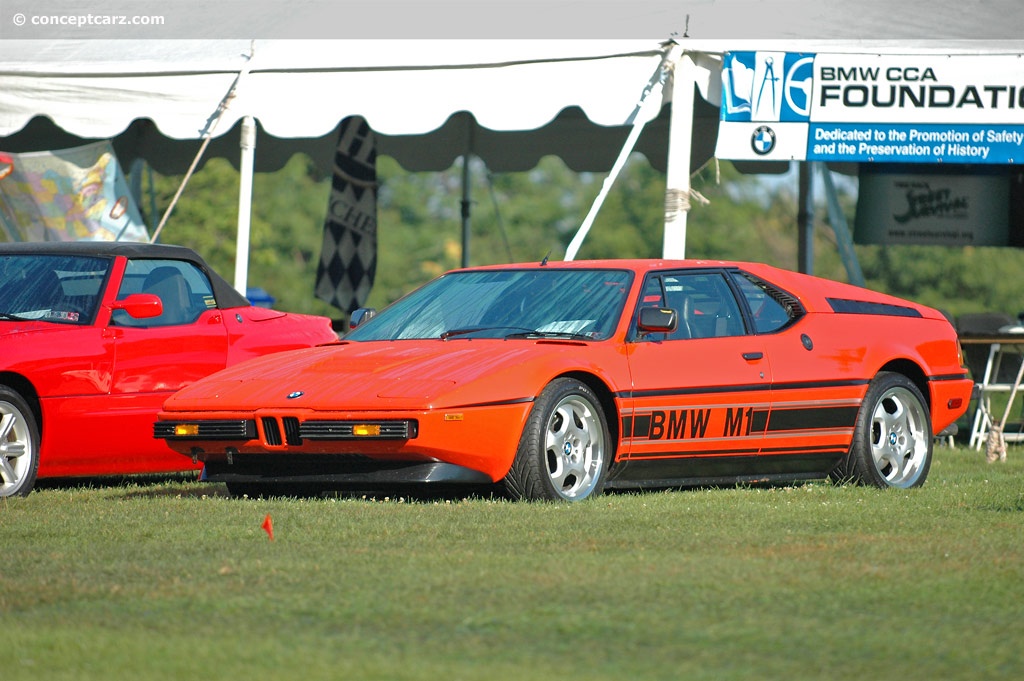
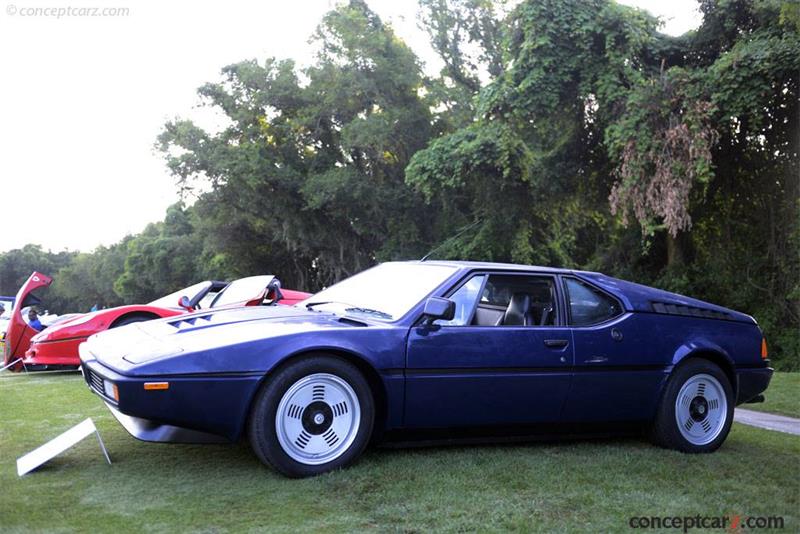
The BMW M1 was the first of the celebrated M models as well as the Bavarian company's first mid-engine supercar. BMW Motorsports boss Jochen Neerpasch was passionate about defeating Porsche, which during the 1970s had almost uniformly outpaced Munich's otherwise successful racing coupes. By the mid-1970s, an all-new Group 5 racecar was built to contest the dominant 934 and 935 models from Stuttgart. Lamborghini's Gianpaolo Dallara developed the new tubular steel spaceframe chassis, built to house a mid-mounted engine, and clothed with lightweight fiberglass coachwork penned by Italdesign's Giorgetto Giugiaro. The wholly Teutonic powerplant was from BMW Motorsports, an inline-six with four valves per cylinder actuated via dual-camshafts, and six individual throttle bodies. The M88/1 petrol engine had a 3,453 cc displacement, Kugelfischer-Bosch mechanical fuel injection, and Magneti-Marelli ignition system. It was developed by Paul Rosche who was also responsible for the S70/2 V12 and the S14 inline-4 engine. The 273 horsepower powerplant was backed by a ZF five-speed manual gearbox which sent power to the rear wheels, governed by a 40 percent limited-slip differential. The steering was by an unassisted rack-and-pinion unit, and the suspension used double wishbones with adjustable coil springs and Bilstein gas-filled dampers. The road-going versions had softer suspension bushings to improve ride quality. The ventilated steel disc brakes measured 300 mm at the front and 297 mm at the rear. At all four corners were special Campagnolo alloy wheels measuring 7x16-inches at the front and 8x16-inches at the rear wrapped with Pirelli P7 tires. 
Sports CoupeA Modenese firm by the name of Marchesi manufactured the chassis and the body and interior were built by Italdesign at their manufacturing facility in Turin. Lamborghini was initially contracted to build the car, but Giorgetto Giugiaro's Ital Design ultimately took over the project. The unfinished cars were delivered to German specialist manufacturer Baur where final assembly took place. Once complete, the cars were shipped to BMW Motorsport in Munch for a final inspection.Produced from 1978 to 1981, a total of 453 examples were built. Of those, 399 were road-going units, while 53 were built for motorsport. The BMW M1 never achieved the success envisioned by Neerpasch due only to the fact that Group 5 regulations changed making the car obsolete. Prototypes developed in 1978 were nevertheless approved for a homologated production run with sights set on Group 4 racing, and ultimately 453 cars were built in total.
Sports Coupe
Chassis #: 4301223
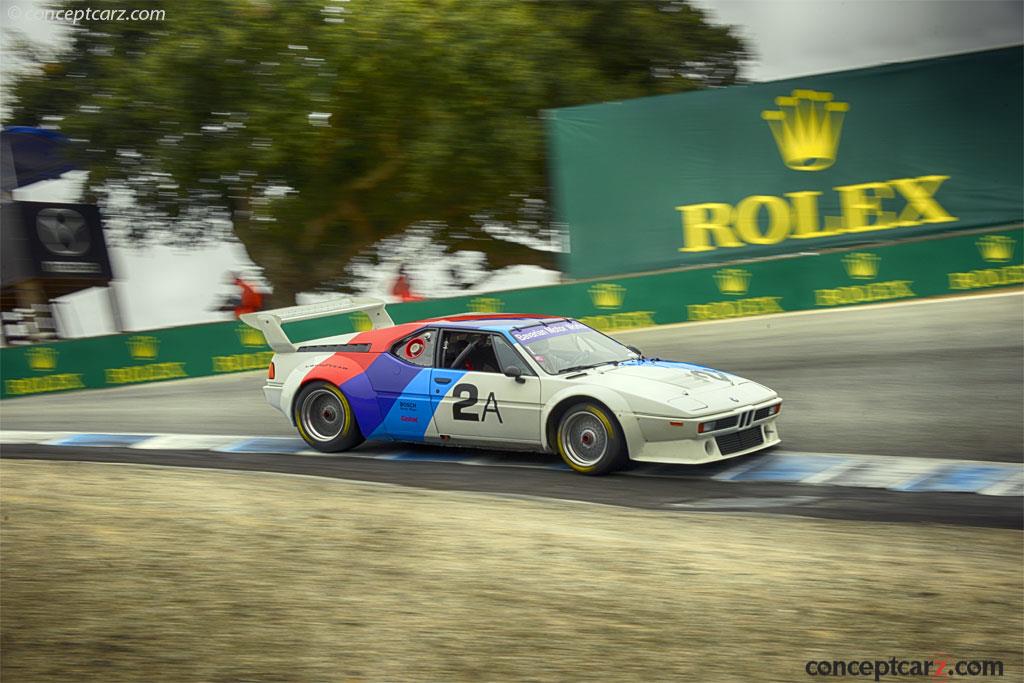
View info and historyTogether with Max Moseley, the former British racing driver and March team principal who held a position with the Formula 1 Constructor's Association, Neerpasch envisioned a single-make introductory series to European Formula 1 races in which the top five qualifying drivers would race BMW M1 competition cars against a field of top sports and touring car drivers. With BMW's approval, 25 examples were constructed for this new series, which was dubbed Procar. Modifications over the original M1 included a more developed engine with output increasing to 470 horsepower, along with coachwork modifications for aerodynamic enhancement such as larger flared wheel arches, a deeper front splitter, and a large rear wing. By the time production of the M1 ended in 1981, a total of 54 examples of the race-engineered M1 Procar had been built.Niki Lauda won the 1979 season, and Nelson Piquet the 1980 season. After requirements were met for Group 4 racing, the Procars were used by various teams in the World Championships and other national series. Additionally, the M1 raced at the 24 Hours of Le Mans from 1981 to 1986 in the Group B category. BMW France also converted an M1 Pro Car to Group B rally Specification for the 1982 and 1983 seasons. For the 1984 season, the car was entered solely by the Motul privateer racing team. The final season was its most successful, scoring an outright ERC podium at Rally d'Antibes, and victories at Rallye de La Baule and Rallye de Lorraine. In regards to financial and motorsport success, the M1 could have been considered a disaster had it not been for the Procar series. Halo cars, however, rarely achieve financial success, more often garnering publicity, technological advancements, and inspiring futuristic designs. In this light, the BMW M1 was highly successful and in many respects, the exotic BMW M1 street car was essentially a road-going Procar and Group 5 racer.
by Daniel Vaughan | Jun 2021
Sports Coupe
Sports Coupe
Chassis #: 4301223
View info and history
by Daniel Vaughan | Jun 2021
Related Reading : BMW M1 History
The M1 was a radical departure from the front-engined, rear-wheel-drive configuration of its prior vehicles. It also had to compete with the legacy of the vehicle it was replacing, the highly successful 3.0 CSL. The M1, also known as the Mid-Engined BMW M1 Project E26, was started in 1976 and completed four years later. The development of the M1 supercar was very costly its design and development....
Continue Reading >>
Continue Reading >>
Related Reading : BMW M1 History
As racing regulations evolved in the mid-seventies, BMW Motorsport saw an opportunity to beat arch-rival Porsche in a new series by designing and manufacturing a purpose-built car and offering it for sale to the public, as stipulated by the rules. The BMW M1, designed by Giugiaro and powered by a Paul Rosche designed 3.5-liter, twin-cam six-cylinder engine mounted mid-ship, debuted at the 1978 Paris....
Continue Reading >>
Continue Reading >>


1980 BMW E26 M1 Vehicle Profiles




Recent Vehicle Additions


Related Automotive News

Andy Warhol'S 1979 Bmw M1 Art Car To Be Center Piece At Saratoga Automobile Museum
BMW History and Heritage on four wheels and two on display from May – November, 2013
Woodcliff Lake, NJ – May 17, 2013… Andy Warhols 1979 BMW M1 Art Car will be the center piece of the exhibition BMW – The Ultimate Driving Machine, w...

The Celebration of 50 Years of M Continues at Monterey Car Week
First public event appearance of the 2023 M4 CSL at Legends of the Autobahn
Rolex Monterey Motorsports Reunion celebrating 100th Anniversary of 24 Hours of Le Mans with four classic BMW race cars
First-ever Corkscrew Hillclimb Shoot-Out at Weather...

BMWUSA CLASSIC TO RUN SEVEN CLASSIC RACE CARS IN CENTENARY CELEBRATION AT THE ROLEX MONTEREY MOTORSPORTS REUNION 2016
Woodcliff Lake, N.J. – August 9, 2016…BMW USA Classic will run seven historic race cars at the 2016 Rolex Monterey Motorsports Reunion on August 18-21 in Monterey, California. BMW is the featured marquee at the Rolex Reunion and the brand will...

THE McLAREN F1
FOR THE DRIVER VITALLY – AS IN ONE OF McLARENS WORLD CHAMPION RACING CARS – DRIVER AND VEHICLE BECOME ENTIRELY AS ONE
The primary design consideration for the McLaren F1 has been to make it without reserve a drivers car, an extremely high-performance...

BMW CELEBRATES ITS PAST, PRESENT AND FUTURE DURING PEBBLE BEACH CONCOURS AND ROLEX MONTEREY MOTORSPORTS REUNION WEEKEND
Never before seen concept from BMW M GmbH debuts at The Quail A Motorsports Gathering
BMW Pininfarina Gran Lusso Coupé makes North American debut at Pebble Beach Concours dElegance
New BMW 428i Coupe to be display and offered as raffle prize at...

BMW TO BE FEATURED AT SARATOGA AUTOMOTIVE MUSEUM
BMW History and Heritage on four wheels and two on display from May – November, 2013
Woodcliff Lake, NJ – March 8, 2013… BMWs rich heritage will be showcased at the Saratoga Automobile Museum in an exhibition called BMW – The Ultimat...