As the cylinder wars of the 1920s continued to escalate, Cadillac went all-in with the development of a new, 'multi-cylinder' car that was both powerful and smooth. The work was done in secrecy, and a number of prototypes were created and tested as the new engine was developed. While development continued, GM introduced the LaSalle marque, which was similar to the Cadillac but priced slightly lower and with fewer amenities.
In May of 1925, Lawrence P. 'Larry' Fisher (the third of seven brothers of the Fisher Body Company), was appointed Cadillac's general manager. While visiting the Don Lee Cadillac dealership, Mr. Fisher met Harley Earl. Impressed by his work, he tasked Mr. Earl with designing the 1927 LaSalle. The success of LaSalle convinced General Motors president Alfred P. Sloan to create the Art and Color Section of General Motors and to name Earl as its first director.
For creating the bodies of the Cadillac, Mr. Fisher and Mr. Earl toured Europe to gain inspiration from some of the finest coachbuilders of the era. The tradition of the time was to build the chassis and then have outside coachbuilding firms create the body. General Motors had acquired the coachbuilders Fleetwood Metal Body and Fisher Body to keep all the business in-house. Although the bare Cadillac chassis could be purchased by buyers, Cadillac insisted they create the coachwork.
The ending of the 1920s was dismal, with the stock market crash of October 29th of 1929. Black Tuesday, as it was called, saw investors trade roughly 16 million shared on the New York Stock Exchange in a single day. Fortunes were lost and the industrialized world spiraled downward into the Great Depression, which would last a decade. This was the deepest and longest-lasting economic downturn in the history of the Western industrialized world up to that time.
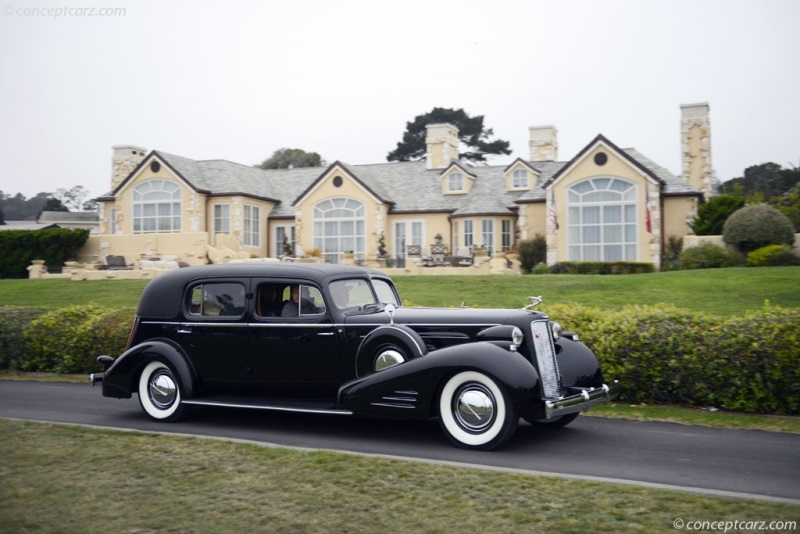
A short time later, on January 4th of 1930, Cadillac introduced its most expensive Cadillac yet, the new V-16.
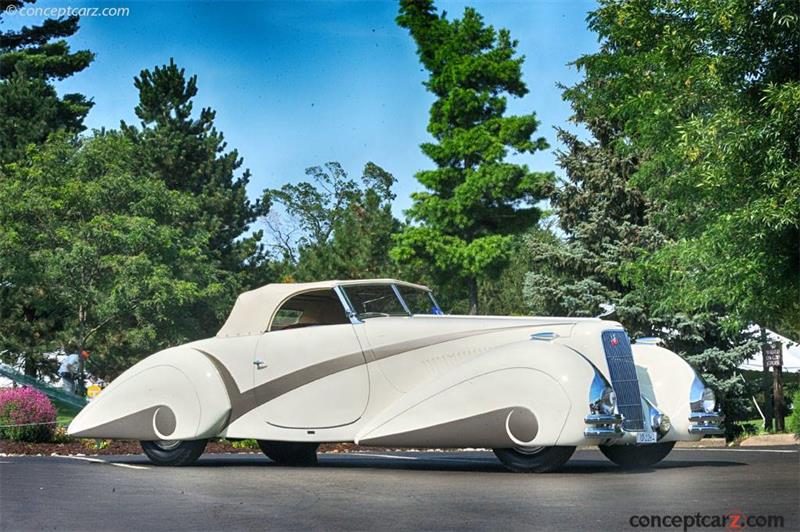
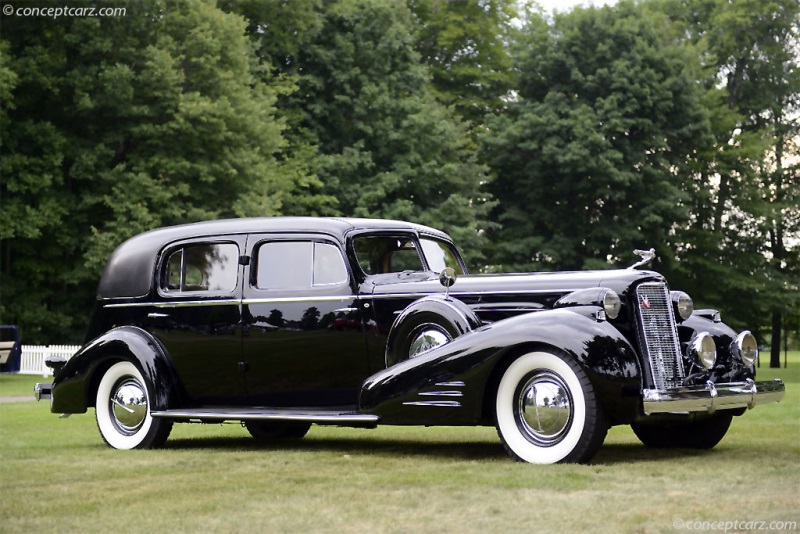
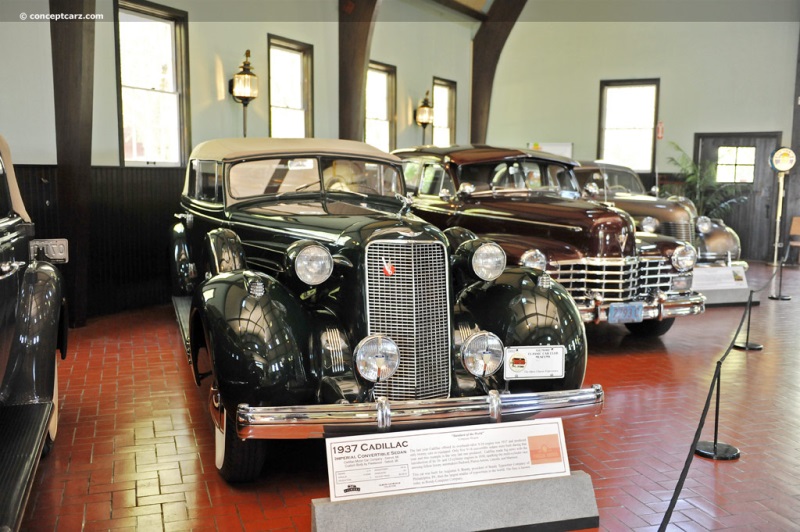
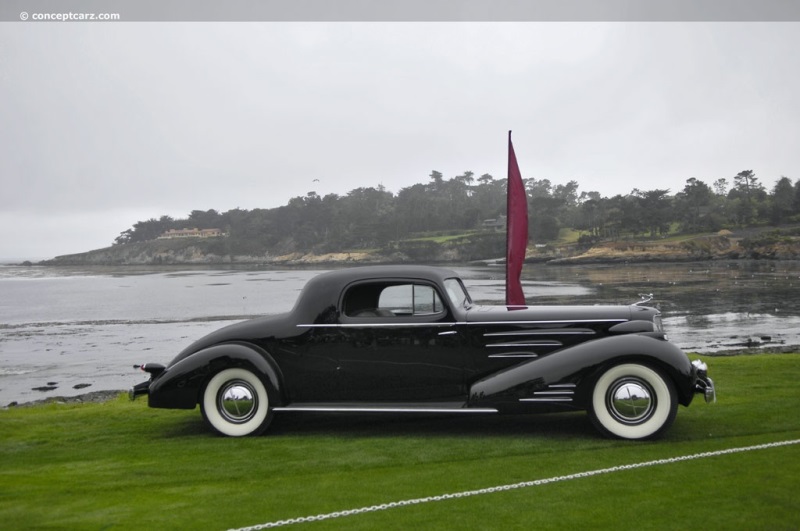
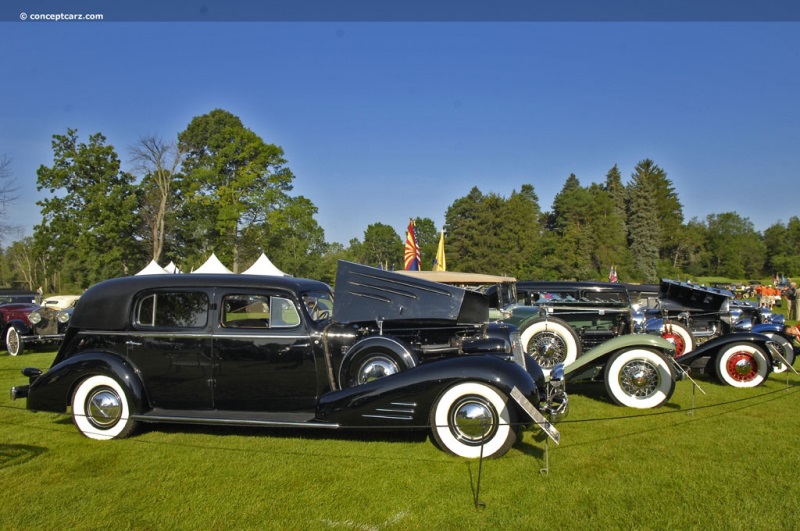
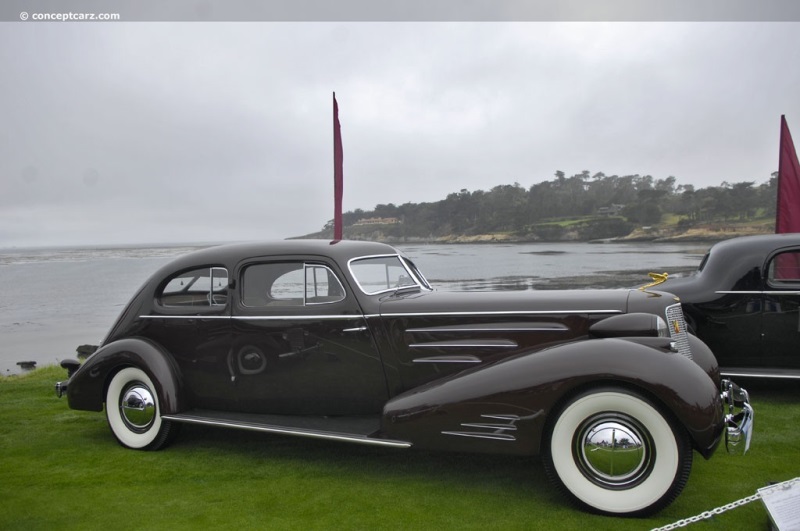
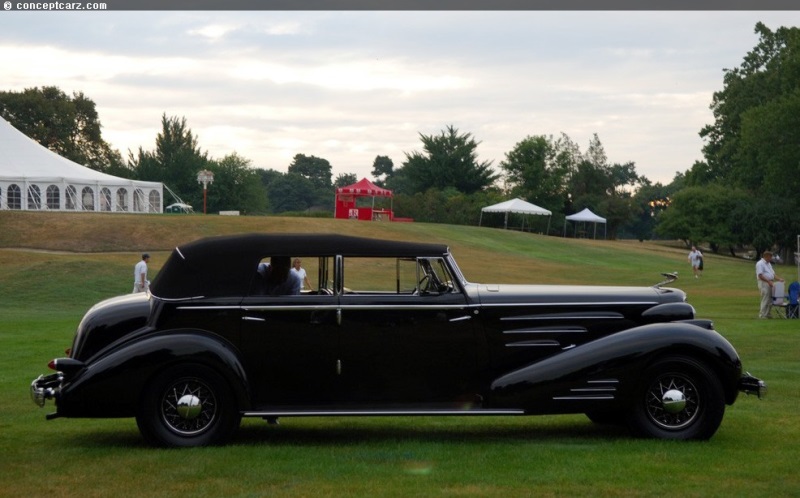
The V-16 engine had a narrow 45-degree V angle, overhead-valve arrangement, with a displacement size of 452 cubic inches. The list of body styles was vast, from both Fisher and Fleetwood - with the total list of options reaching 70 different choices. Production began slowly, with just a few cars built per day, but by April, over 1,000 examples had been built. By June, over 2,000 had been built. This euphoria was short-lived, as the Great Depression continued to eliminate potential buyers, and production dropped drastically. Among the slowest production months was August of 1931, with just seven examples built. Six examples were built in November of 1931. Just 50 examples were built both in 1935 and in 1937. 1940 was marginally better with a total of 51 examples.
Despite the Great Depression and economic hardships, Cadillac had created a styling and mechanical tour de force. It was powered by the first true 16-cylinder engine to be designed and purpose-built from scratch. Working under legendary GM Engineering chief Charles Kettering, Owen Milton Nacker led V-16 development. Work had begun in 1926 and would take several years to perfect and complete. The engine featured modern overhead-valve cylinder heads, a 45-degree cylinder bank angle, and external manifolds. The Cadillac V-16 allowed ease of access within the engine compartment for maintenance and repairs. This was the first automotive engine ever to be 'styled' with completely hidden wiring and the use of polished aluminum, porcelain, and a pair of beautiful valve covers with brushed aluminum ridges prominently featuring the Cadillac emblem.
The V-16 engine offered a (conservatively rated) 175 horsepower (the straight-8 engine in the Duesenberg Model J offered 265 horsepower), with a tremendous amount of torque - 320 foot-pounds at just 1,200 to 1,500 engine revolutions. This output was more than sufficient to carry the elegant and majestic bodies of Fisher and Fleetwood. The V-16 engine was also praised for its smoothness, thanks to evenly-spaced firing intervals and a massive but well-balanced forged crankshaft, supported by five main bearings. Its operation was very quiet, thanks to ingenious hydraulic valve-silencers. Other special V-16 innovations included a silicon-aluminum crankcase, five-point engine mounts, carefully engineered pistons and rings, plus a single distributor with two sets of breaker points, controlled by two separate ignition coils.
The fast-shrinking Depression-era market meant that just 4,378 examples of the V-16 were built through 1940, including a completely redesigned engine for the last three years – for those few who were capable of paying more than 10 times the cost of a contemporary Chevrolet or Ford.
by Daniel Vaughan | Jan 2020
In May of 1925, Lawrence P. 'Larry' Fisher (the third of seven brothers of the Fisher Body Company), was appointed Cadillac's general manager. While visiting the Don Lee Cadillac dealership, Mr. Fisher met Harley Earl. Impressed by his work, he tasked Mr. Earl with designing the 1927 LaSalle. The success of LaSalle convinced General Motors president Alfred P. Sloan to create the Art and Color Section of General Motors and to name Earl as its first director.
For creating the bodies of the Cadillac, Mr. Fisher and Mr. Earl toured Europe to gain inspiration from some of the finest coachbuilders of the era. The tradition of the time was to build the chassis and then have outside coachbuilding firms create the body. General Motors had acquired the coachbuilders Fleetwood Metal Body and Fisher Body to keep all the business in-house. Although the bare Cadillac chassis could be purchased by buyers, Cadillac insisted they create the coachwork.
The ending of the 1920s was dismal, with the stock market crash of October 29th of 1929. Black Tuesday, as it was called, saw investors trade roughly 16 million shared on the New York Stock Exchange in a single day. Fortunes were lost and the industrialized world spiraled downward into the Great Depression, which would last a decade. This was the deepest and longest-lasting economic downturn in the history of the Western industrialized world up to that time.
A short time later, on January 4th of 1930, Cadillac introduced its most expensive Cadillac yet, the new V-16.
The V-16 engine had a narrow 45-degree V angle, overhead-valve arrangement, with a displacement size of 452 cubic inches. The list of body styles was vast, from both Fisher and Fleetwood - with the total list of options reaching 70 different choices. Production began slowly, with just a few cars built per day, but by April, over 1,000 examples had been built. By June, over 2,000 had been built. This euphoria was short-lived, as the Great Depression continued to eliminate potential buyers, and production dropped drastically. Among the slowest production months was August of 1931, with just seven examples built. Six examples were built in November of 1931. Just 50 examples were built both in 1935 and in 1937. 1940 was marginally better with a total of 51 examples.
Despite the Great Depression and economic hardships, Cadillac had created a styling and mechanical tour de force. It was powered by the first true 16-cylinder engine to be designed and purpose-built from scratch. Working under legendary GM Engineering chief Charles Kettering, Owen Milton Nacker led V-16 development. Work had begun in 1926 and would take several years to perfect and complete. The engine featured modern overhead-valve cylinder heads, a 45-degree cylinder bank angle, and external manifolds. The Cadillac V-16 allowed ease of access within the engine compartment for maintenance and repairs. This was the first automotive engine ever to be 'styled' with completely hidden wiring and the use of polished aluminum, porcelain, and a pair of beautiful valve covers with brushed aluminum ridges prominently featuring the Cadillac emblem.
The V-16 engine offered a (conservatively rated) 175 horsepower (the straight-8 engine in the Duesenberg Model J offered 265 horsepower), with a tremendous amount of torque - 320 foot-pounds at just 1,200 to 1,500 engine revolutions. This output was more than sufficient to carry the elegant and majestic bodies of Fisher and Fleetwood. The V-16 engine was also praised for its smoothness, thanks to evenly-spaced firing intervals and a massive but well-balanced forged crankshaft, supported by five main bearings. Its operation was very quiet, thanks to ingenious hydraulic valve-silencers. Other special V-16 innovations included a silicon-aluminum crankcase, five-point engine mounts, carefully engineered pistons and rings, plus a single distributor with two sets of breaker points, controlled by two separate ignition coils.
The fast-shrinking Depression-era market meant that just 4,378 examples of the V-16 were built through 1940, including a completely redesigned engine for the last three years – for those few who were capable of paying more than 10 times the cost of a contemporary Chevrolet or Ford.
by Daniel Vaughan | Jan 2020
Related Reading : Cadillac Series 452/90 History
Henry Martin Leland and his son Wilfred were partly responsible for making Cadillac one of the finest of all American Automobiles. Henry was renowned for his precision engineering and for standardizing manufacturing. He helped make Cadillac into one of the finest of all American Automobiles. Later, he founded Lincoln. Even after the Lelands departed from Cadillac, the marque remained a top-of-the-line....
Continue Reading >>
Continue Reading >>
Similarly Priced Vehicles
Cadillac Monthly Sales Volume
March 2023
36,321


1937 Cadillac Series 90 V16 Vehicle Profiles



Recent Vehicle Additions


Performance and Specification Comparison
Price Comparison
$1,445 - $12,075
$1,445 - $1,885
$2,445 - $2,795
$2,575 - $5,245
Series 452/90 Specification Comparison by Year
Year
Production
Wheelbase
Engine
Prices
300
143.00 in., 149.00 in., 165.00 in.
16 cyl., 452.00 CID., 165.00hp
$4,495 - $5,945
Related Automotive News

The 42nd Annual Concours d'Elegance Of America
The 42nd annual Concours dElegance of America at the Inn at St. Johns was a celebration of art, design, and technology by showcasing a diverse array of classic, rare and magnificent automobiles. Over two hundred of the worlds most spectacular contributions...

Cadillac Elevates Presence At Pebble Beach
DETROIT – A new Cadillac design concept will debut this weekend in California as part of a new public exhibit that includes the brands newest production models and some of its most influential historic cars. The occasion is the annual Pebble...
The 42nd Annual Concours d'Elegance Of America
The 42nd annual Concours dElegance of America at the Inn at St. Johns was a celebration of art, design, and technology by showcasing a diverse array of classic, rare and magnificent automobiles. Over two hundred of the worlds most spectacular contributions...

Second Annual Greenbrier Concours
The second annual Greenbrier Concours dElegance was held at Americas Resort, The Greenbrier, which has a long connection with the automotive industry. The Friday leading up to the Sunday Concours included two driving tours - The Summit Drive and the...

The Narval Design by Figoni et Falaschi
One of their most flamboyant and artistic Figoni et Falaschi designs was the Narval or Narwhal, based upon the Delahaye 135M chassis and introduced at the 1946 Salon de Paris. It was named Narval for its prominent front treatment, like a Narwhal...

What Cars Can You Expect to See at The Elegance at Hershey?
HERSHEY, PA (May 2017) - The Elegance at Hershey is a celebration of a bygone era when the automobile stirred our imaginations and quickened our hearts. Today, people both young and old marvel at the extravagances of the automobiles of the past....

Concours d'Elegance of America : Best of Show
image0
The 38th Concours dElegance of America displayed over 300 of the worlds most spectacular contributions to automotive history. This year, the event paid tribute to many special features inclduing Ford GT-40s, Body by Dietrich, Rally Cars,...