1938 Series 50 | 1940 Series 50 ![]() |
1939 LaSalle Series 50 news, pictures, and information | ||
| Tweet | ||
The La Salle was first introduced on March 5th of 1927. It joined the ever growing General Motors line-up and positioned between Buick and Cadillac. At a target price of around $3,000 the LaSalle was envisioned to attract those who wanted more than a Buick but could not afford a Cadillac. It was built to high standards but lacked the refinement and amenities of a Cadillac. The durability, dependability, and quality helped boost sales for the LaSalle brand and General Motors.
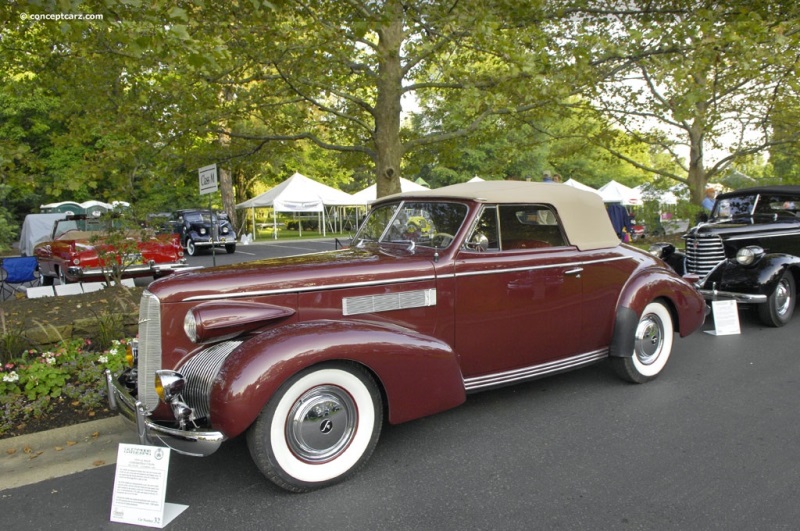
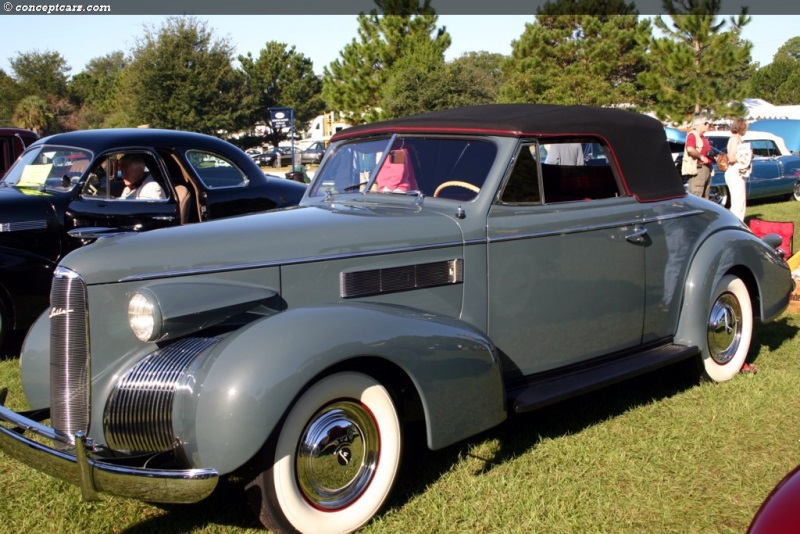
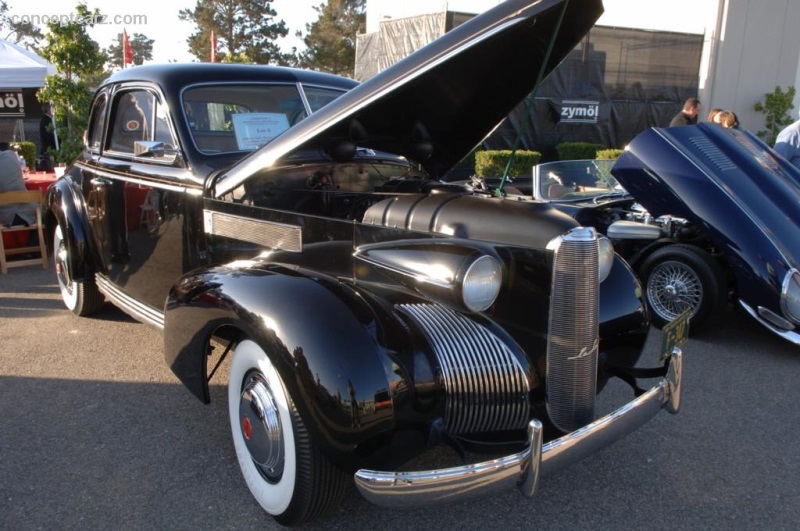
The 1939 La Salle was very modern for its time with the grille being one of its most striking features. It is both long and aerodynamic with the La Salle name proudly displayed for all to see. The headlights continue to the aerodynamic design and constructed in the form of a teardrop. Under the long and flowing hood and can be found a 322 cubic-inch eight-cylinder engine that provided adequate power for its occupants. It was taken from Cadillac which helped GM in keeping development at a minimum while satisfying all types of customer's price ranges and requests. White wall tires and chrome accents can be found throughout the vehicle.
By Daniel Vaughan | Sep 2006
The 1939 La Salle was very modern for its time with the grille being one of its most striking features. It is both long and aerodynamic with the La Salle name proudly displayed for all to see. The headlights continue to the aerodynamic design and constructed in the form of a teardrop. Under the long and flowing hood and can be found a 322 cubic-inch eight-cylinder engine that provided adequate power for its occupants. It was taken from Cadillac which helped GM in keeping development at a minimum while satisfying all types of customer's price ranges and requests. White wall tires and chrome accents can be found throughout the vehicle.
By Daniel Vaughan | Sep 2006
![]() | ![]() | ![]() | Sedan |
The 1939 model was characterized by a new tall, narrow grill plus side grills; all fine-pitch die-cast units. Note the clever jump seats in the rear of the car.
This car went through an eighteen year restoration done by Richard Parcher from Charlotte, NC. The LaSalle was purchased in 1997 by the current owner.
Engine: Ninety Degree L-Head Eight, 322 CID, generating 125 HP
Tires: 7.00 x 16; Weight 3,715 lbs; Price new: $1,475.00
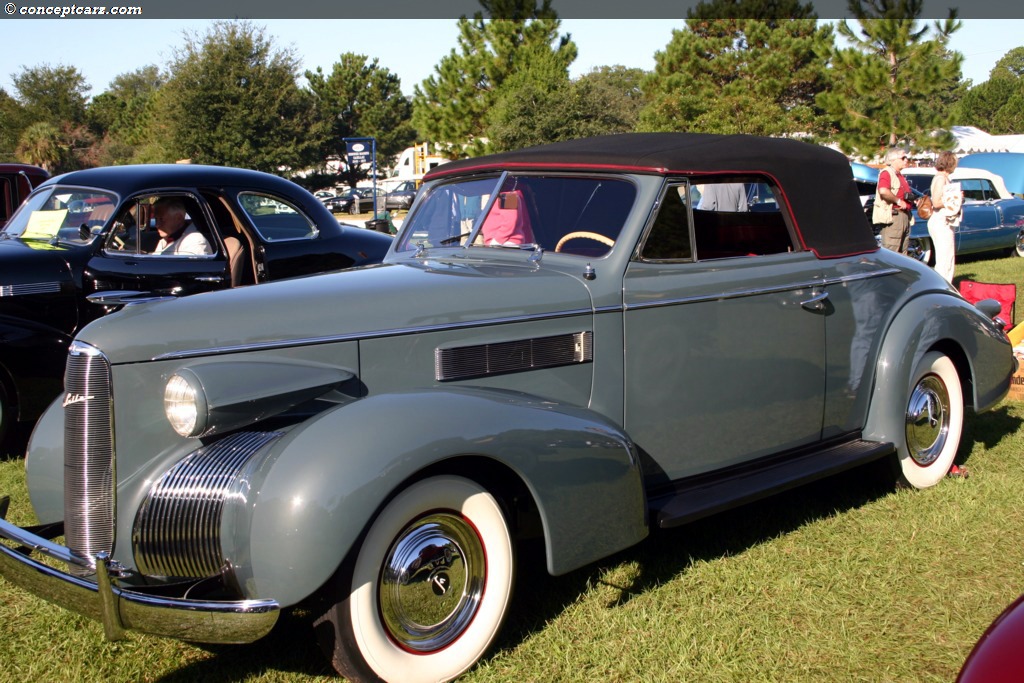
![]() | ![]() | ![]() | Convertible Coupe |
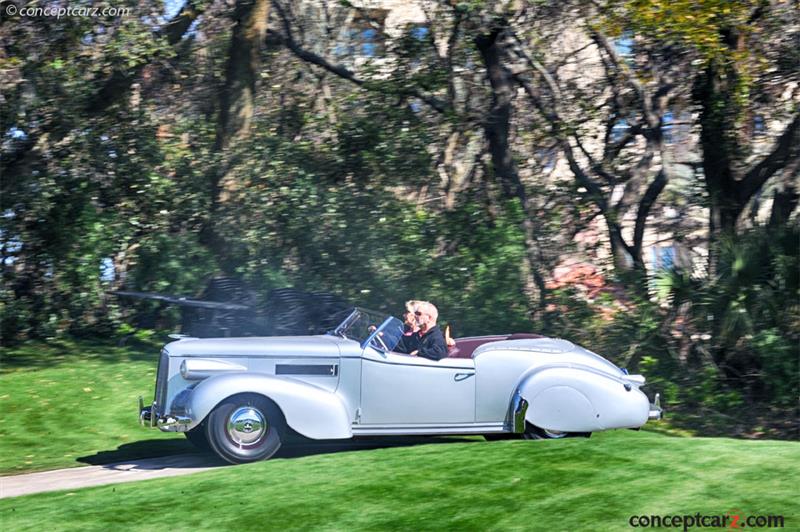
The 1939 LaSalle was characterized by a new, tall, narrow grille with side grilles, louvers at the rear of the hood side panels, headlights mounted to the radiator casing and 25 percent more glass area. It was powered by a 322 cubic-inch engine producing 125 horsepower and cost $1,475 new.
Although the LaSalle was stylish and performed well, its place in the GM marketing line-up was becoming less secure. 1940 marked the last year of LaSalle production.
During the first two decades of the 1900's, Cadillac was the leader in the U.S. luxury-car market. It wasn't until around 1925 when Packard Automobiles began replacing Cadillac as America's new favorite in the premium automobile market when Cadillac realized that they needed to step it up.
With the bottom-end Cadillac priced at $3195, many consumers were unwilling to spend such a significant amount when the top of the line Buick cost $1925. In the years following World War I, Packard's smart new group of lower-priced high-quality ‘pocket-size' vehicles were responsible for basically running away with the luxury market, and consequently, much of GM's business.
Conceived as a baby Cadillac with a bit more added style, the La Salle series was introduced on March 5, 1927. To present a youthful, dashing image completely opposite from the staid and proper Cadillac, the La Salle series was meant to be a stepping stone in a perceived gap between Cadillac and Buick in GM's lineup. Priced just above the Buick, the La Salle was designed to be a complete model line that would adequately fill out GM's product roster. The name La Salle was chosen in reference to the famed French explorer that Cadillac had been named after, as one of his compatriots.
Wanting the La Salle to be considerably more stylish than the Cadillac, President of GM Larry Fisher hired a young stylist from Cadillac's California distributor to aid in the design of the new junior series. Harley Earl was given the job as a consultant to design the first La Salle. Though assumed to be only hired for this specific task, Earl went on to become the company's director of design until he retired some 30 years later. During Earl's time at Cadillac, he influenced the entire industry in the areas of both styling and marketing strategy.
The original La Salle produced in 1927 became the first mass-production vehicle to consciously ‘styled' in the modern sense. Considered to by the most fashionable American automobiles of its day, the LaSalle was the first of the smaller and more maneuverable luxury vehicles. The LaSalle was also the pioneer in the automobile color industry. Up until this point all vehicles were produced in only black Japan enamel, the only finish available to dry quickly enough to stand up to the pace of mass production. The introduction to DuPont Chemical Company's fast-drying, polychromatic duco finishes in '24 supplied automobiles with a stunning array of colors. La Salle became one of the first cars to take advantage of this modern advancement.
The Series 350 was introduced in 1934 and was considered to be more like an Oldsmobile than a Cadillac. Borrowing an L-head straight eight from the Oldsmobile division to replace the traditional Cadillac V-8, the new series shared the same 240.3-cubic-inch (4-liter) displacement. A completely redesigned chassis was introduced with a much shorter, 119-inch wheelbase. Since the beginning of the La Salle, the double-plate type clutch was utilized until before replaced with a single-plate clutch. Hydraulic brakes were also newly adopted into the series adding yet another first to GM's repertoire.
Independent front suspension now reduced the unsprung weight problem that had been an issue since 1933. Cadillac was able to reduce the price of the LaSalle base models by $650 with these cost cutting new innovative features.
Considered to be the automotive industries fashion leader, the La Salle was equally impressive from its design side. The new design styling for the 1934 model was considered to be dramatic and eye-catching. High-set headlamps in bullet-shaped pods were placed on both sides of a tall, narrow vee'd radiator, along with curvy ‘pontoon' fenders at both the front and rear. Wheels were encased in smart chromed discs while hood vent doors gave to ‘portholes'.
The La Salle featured bumpers that emulated the shape of twin slim blades separated by two bullets, similar to the '27 Cadillacs. Trunks were absorbed into the main body on all models and spare tires moved inside the vehicles. The LaSalle Series 50 featured a four-door sedan, a new five-passenger club sedan, a two-seat coupe and a rumble-seat convertible coupe in its 1934 lineup. All models showcased Fleetwood bodywork and rear-hinged front doors. Cadillac's standard of quality and luxury were still rated as outstanding despite the money-saving measures. For the 1934 Indianapolis 500, the '34 LaSalle was chosen as a pace car for that year.
Unfortunately the following year's sales dipped far below expectations, even though they doubled the previous year's total. A total of only 7195 models were produced for the 1934 year.
Not much styling was changed for the 1935 LaSalle Series 50. Updates included two-door and four-door ‘trunkback' sedans joining the line with an industry trend. Fisher's new 'Turret-Top' construction was introduced to replace the original closed body styles. This update required steel to replace the traditional fabric inserted into the roof. Horsepower was up from 90 to 95 with a slightly higher compression ratio. Very few mechanical changes were made for the '35 model.
Due to the release of Packard's new One-Twenty, about the same size as LaSalle, though slightly lighter and 16% more powerful and costing $450 less, LaSalle sales suffered.
The following year Cadillac responded to the competition by reducing the little-changed Series 50 by $320, though even this wasn't enough to stimulate sales significantly. Packard's One-Twenty continued to thrive, and outsold the LaSalle by better than four to one for 1936.
Time to try a new approach, Cadillac next introduced a new ‘compact' Series 60 that same season.By Jessica Donaldson
With the bottom-end Cadillac priced at $3195, many consumers were unwilling to spend such a significant amount when the top of the line Buick cost $1925. In the years following World War I, Packard's smart new group of lower-priced high-quality ‘pocket-size' vehicles were responsible for basically running away with the luxury market, and consequently, much of GM's business.
Conceived as a baby Cadillac with a bit more added style, the La Salle series was introduced on March 5, 1927. To present a youthful, dashing image completely opposite from the staid and proper Cadillac, the La Salle series was meant to be a stepping stone in a perceived gap between Cadillac and Buick in GM's lineup. Priced just above the Buick, the La Salle was designed to be a complete model line that would adequately fill out GM's product roster. The name La Salle was chosen in reference to the famed French explorer that Cadillac had been named after, as one of his compatriots.
Wanting the La Salle to be considerably more stylish than the Cadillac, President of GM Larry Fisher hired a young stylist from Cadillac's California distributor to aid in the design of the new junior series. Harley Earl was given the job as a consultant to design the first La Salle. Though assumed to be only hired for this specific task, Earl went on to become the company's director of design until he retired some 30 years later. During Earl's time at Cadillac, he influenced the entire industry in the areas of both styling and marketing strategy.
The original La Salle produced in 1927 became the first mass-production vehicle to consciously ‘styled' in the modern sense. Considered to by the most fashionable American automobiles of its day, the LaSalle was the first of the smaller and more maneuverable luxury vehicles. The LaSalle was also the pioneer in the automobile color industry. Up until this point all vehicles were produced in only black Japan enamel, the only finish available to dry quickly enough to stand up to the pace of mass production. The introduction to DuPont Chemical Company's fast-drying, polychromatic duco finishes in '24 supplied automobiles with a stunning array of colors. La Salle became one of the first cars to take advantage of this modern advancement.
The Series 350 was introduced in 1934 and was considered to be more like an Oldsmobile than a Cadillac. Borrowing an L-head straight eight from the Oldsmobile division to replace the traditional Cadillac V-8, the new series shared the same 240.3-cubic-inch (4-liter) displacement. A completely redesigned chassis was introduced with a much shorter, 119-inch wheelbase. Since the beginning of the La Salle, the double-plate type clutch was utilized until before replaced with a single-plate clutch. Hydraulic brakes were also newly adopted into the series adding yet another first to GM's repertoire.
Independent front suspension now reduced the unsprung weight problem that had been an issue since 1933. Cadillac was able to reduce the price of the LaSalle base models by $650 with these cost cutting new innovative features.
Considered to be the automotive industries fashion leader, the La Salle was equally impressive from its design side. The new design styling for the 1934 model was considered to be dramatic and eye-catching. High-set headlamps in bullet-shaped pods were placed on both sides of a tall, narrow vee'd radiator, along with curvy ‘pontoon' fenders at both the front and rear. Wheels were encased in smart chromed discs while hood vent doors gave to ‘portholes'.
The La Salle featured bumpers that emulated the shape of twin slim blades separated by two bullets, similar to the '27 Cadillacs. Trunks were absorbed into the main body on all models and spare tires moved inside the vehicles. The LaSalle Series 50 featured a four-door sedan, a new five-passenger club sedan, a two-seat coupe and a rumble-seat convertible coupe in its 1934 lineup. All models showcased Fleetwood bodywork and rear-hinged front doors. Cadillac's standard of quality and luxury were still rated as outstanding despite the money-saving measures. For the 1934 Indianapolis 500, the '34 LaSalle was chosen as a pace car for that year.
Unfortunately the following year's sales dipped far below expectations, even though they doubled the previous year's total. A total of only 7195 models were produced for the 1934 year.
Not much styling was changed for the 1935 LaSalle Series 50. Updates included two-door and four-door ‘trunkback' sedans joining the line with an industry trend. Fisher's new 'Turret-Top' construction was introduced to replace the original closed body styles. This update required steel to replace the traditional fabric inserted into the roof. Horsepower was up from 90 to 95 with a slightly higher compression ratio. Very few mechanical changes were made for the '35 model.
Due to the release of Packard's new One-Twenty, about the same size as LaSalle, though slightly lighter and 16% more powerful and costing $450 less, LaSalle sales suffered.
The following year Cadillac responded to the competition by reducing the little-changed Series 50 by $320, though even this wasn't enough to stimulate sales significantly. Packard's One-Twenty continued to thrive, and outsold the LaSalle by better than four to one for 1936.
Time to try a new approach, Cadillac next introduced a new ‘compact' Series 60 that same season.By Jessica Donaldson
| The Mercedes Benz S Class: automobile comfort of the highest standard | |
![]() | • S Class: the epitome of automobile comfort • Every generation of vehicles provides ground-breaking solutions to the expectations of customers with regard to comfort The history of the Mercedes Benz S Class shows that automobile comfort is far more than just a luxurious ambiance, size and performance. In fact it is far more the intelligent support of the driver and passengers through innovative technical solutions providing answers to current questions and requirements which contribute to t...[Read more...] |
| GM Design: 85 Years of Making Art That Moves You | |
![]() | As GM Design celebrates its 85th birthday this month, the 1,900 men and women in GM's 10 global design centers are focused on the future, united in their vision to entice consumers to fall in love and see vehicles as they do: art that moves you. 'Our global team is united around its passion for designing vehicles that make an emotional connection with customers,' said Ed Welburn, GM vice president, Global Design. 'What was true 85 years ago is still true today: A designer's role is to create...[Read more...] |
| Automotive Hall of Fame Inductees Named | |
![]() | Awards to be Presented in Conjunction with the Concours d'Elegance of America The Automotive Hall of Fame will present its annual induction and awards ceremony on Thursday, July 26, 2012 as one of the week-long Concours d'Elegance of America events. It will be held at The Inn at St. John's in Plymouth, Michigan. Both the Concours d'Elegance of America and the Automotive Hall of Fame celebrate the heritage and history of Detroit. The show highlights the evolution of the automobile's...[Read more...] |
| The Champion in Touring Car Racing : The BMW M3 | |
![]() | In August 1985, a rumour surfaced in motor magazine Auto-Deutschland which emanated from a new sports car. An A Group Car from BMW that was a thoroughbred racing car according to the rules but was also to be produced in a version licensed to drive on open roads for everyday use. Speculation about this dream car that could take to normal roads and was intended for the 'Most dynamic among BMW 3 Series drivers' was right on target. But the pundits missed the mark about the motor-sport car by a mile...[Read more...] |
| Auctions America By RM's 2012 Auburn Spring Auction | |
![]() | 'Variety' is the buzzword for this year's Auctions America by RM June 1-3 Auburn Spring auction, which will offer a huge range of collector vehicles and an enormous private collection of automotive memorabilia. More than 600 American muscle cars, Classics, foreign sports cars and hot rods will cross the block at the historic Auburn Auction Park, the company's national headquarters in Auburn, Indiana. 'Last year was our first spring event at the park,' said Auctions America by RM's President ...[Read more...] |
| Similar Automakers | |
| Crosley | DeSoto |
| Edsel | Hudson |
| Imperial | Kaiser |
| Nash | Oakland |
| Tucker | Willys |
| Similarly Sized Vehicles from 1939 |
| Rolls-Royce Wraith |
| Similarly Priced Vehicles from 1939 |
| Buick 40 Special ($849-$1,406) |
| Lincoln Zephyr Series 96H ($1,325-$1,795) |
| Packard 120 ($1,100-$1,900) |
| Lincoln H-76 Zephyr ($1,700-$1,700) |
| Buick Century ($1,175-$1,713) |
| Packard 1703 Super Eight ($1,650-$2,130) |
Average Auction Sale: $28,364 |
| LaSalle: 1931-1940 |
| Similar Automakers |
| LaSalle History |
| Other models by LaSalle |
| Related Articles and Event Coverage |
| Glenmoor Gathering of Significant Automobiles |
| Hilton Head Concours d'Elegance |
| Christie's at The Monterey Jet Center |
| 2005 Meadow Brook Concours d'Elegance |
| Model 303 Model 340 Series 50 |
1938 Series 50 | 1940 Series 50 ![]() |


1938 Series 50