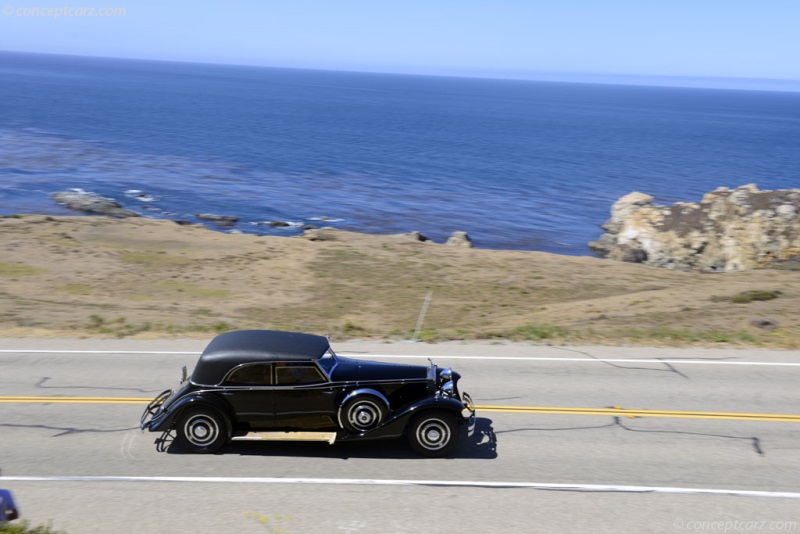
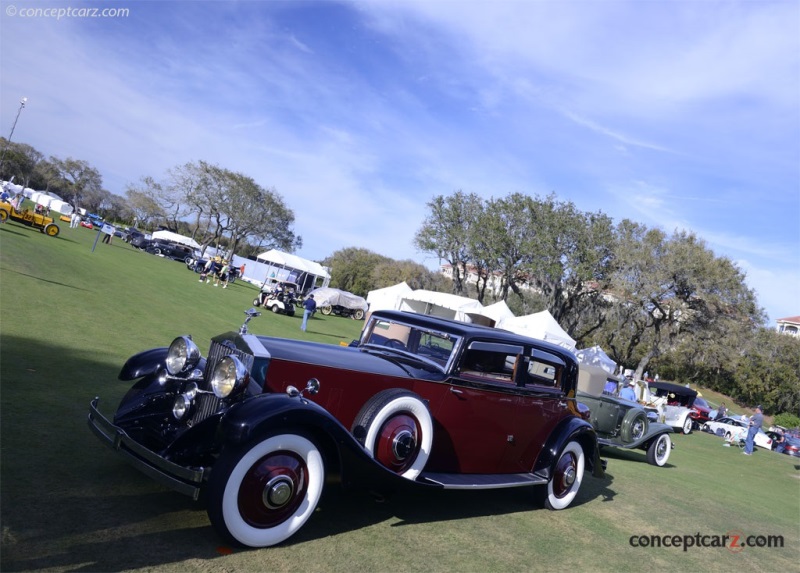
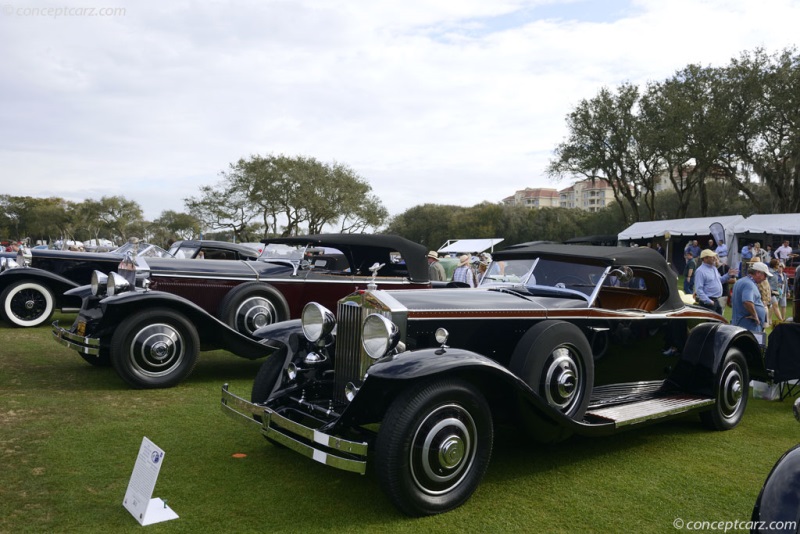
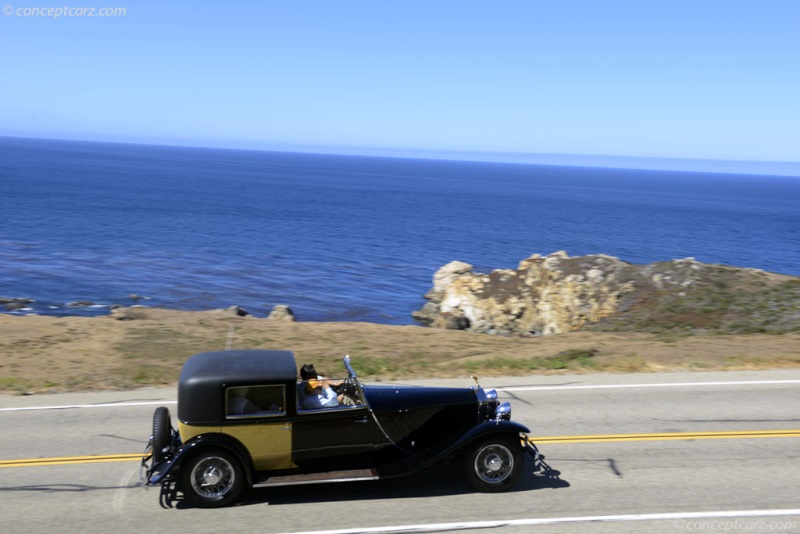
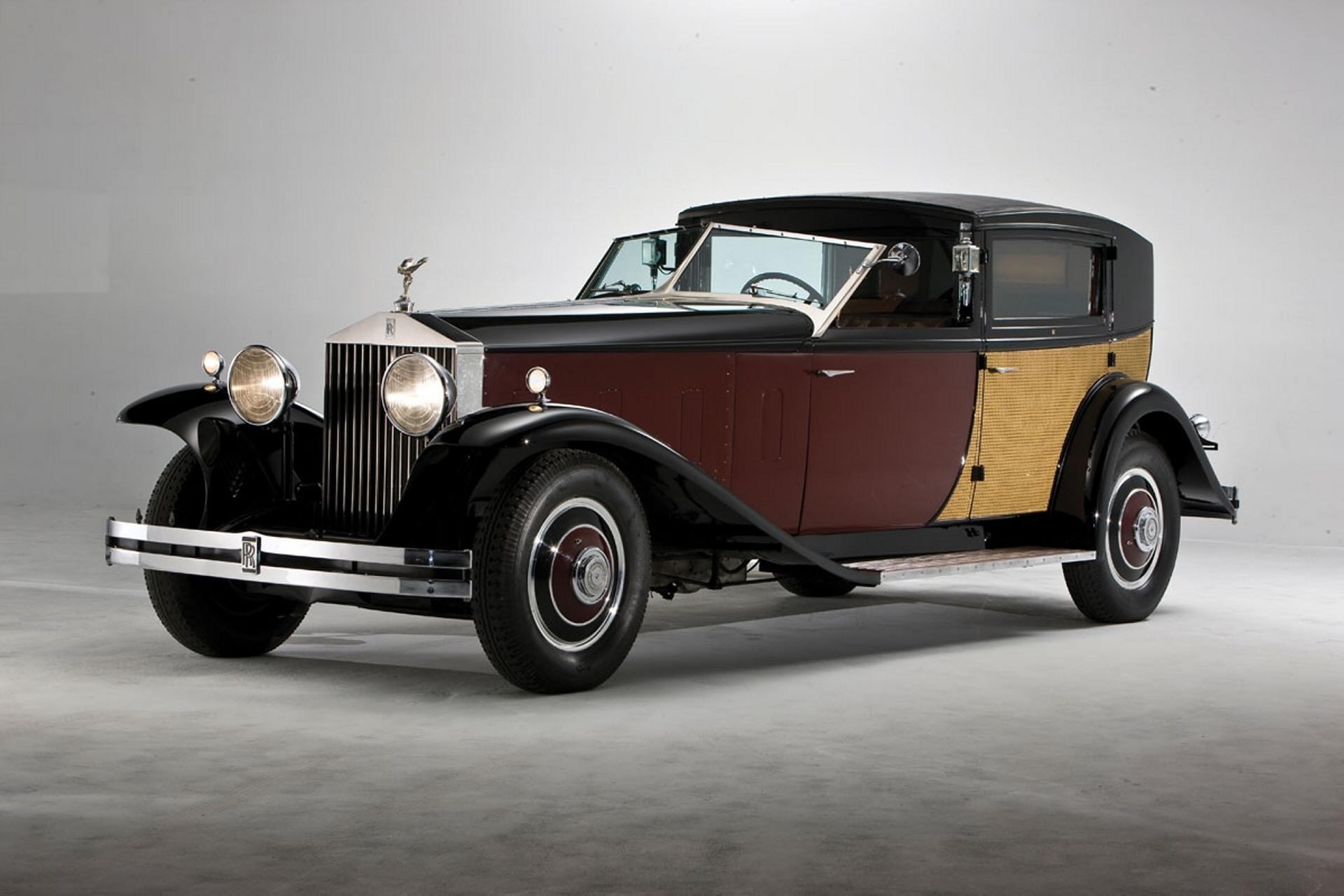
1932 Phantom II | 1932 Phantom II Continental | 1934 Phantom II ![]() |
Image credits: © Rolls-Royce.
1933 Rolls-Royce Phantom II news, pictures, and information | ||
| Tweet | ||
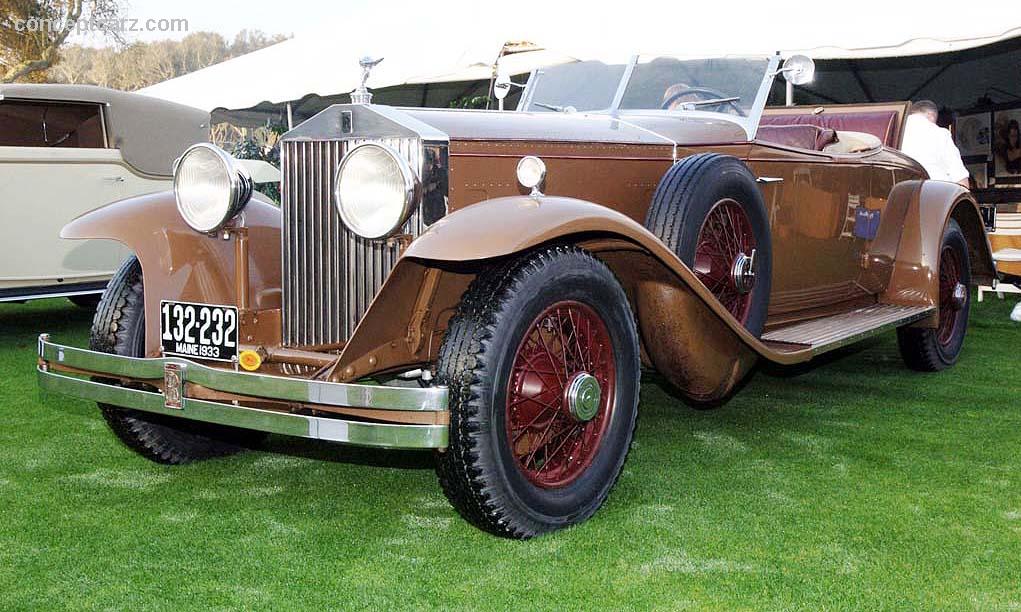
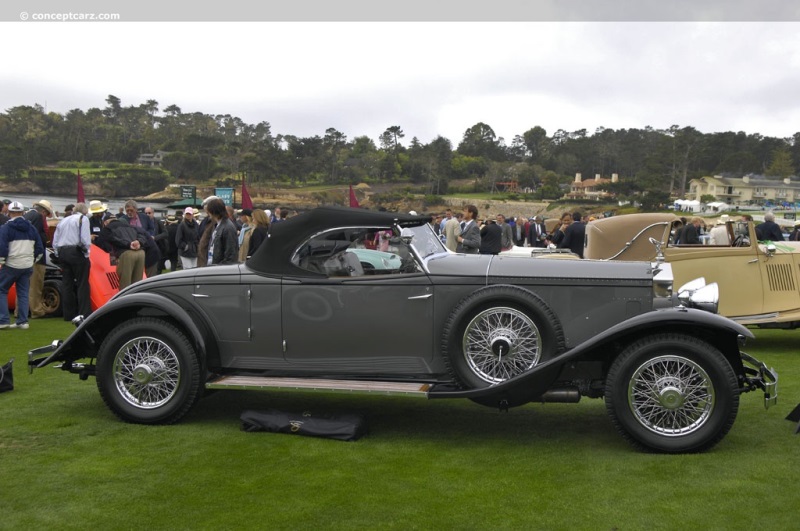
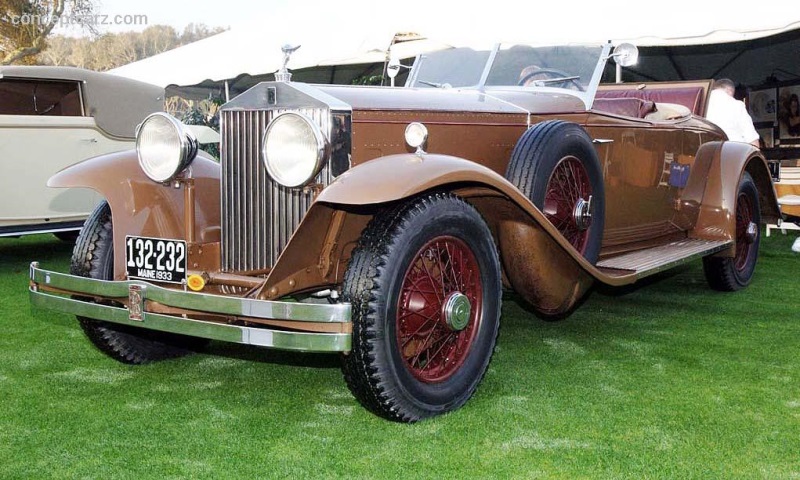
![]() | ![]() | ![]() | Henley Roadster Coachwork: Brewster Chassis Num: 291 |
The Phantom II's six-cylinder engine was the same size as that of the Phantom I but different in design, with two banks of three cylinders topped by a common head. The chassis was set lower than that of Phantom I. It retained its predecessor's long hood, but the radiator was higher and the suspension was by half-elliptic rather than cantilevered springs. The chassis was often driven straight from the shop to the chosen custom coachbuilder.
The Phantom II, a very rugged and reliable auto that was the much faster than previous Rolls-Royces, was the last model designed by Henry Royce. Whether it was a sedan, limousine, coupe, convertible or tourer, almost all had superbly proportioned coachwork. Rolls-Royce provided full service and spare parts for the Phantom II even after World War II.
The car sold new in August of 1933 to banker E.L. King and subsequently spent more than 25 years as a centerpiece of the Henry Ford Museum in Dearborn, MI, before passing to noted collector Rick Carroll. It was restored by Stone Barn Inc. of Vienna, NJ.
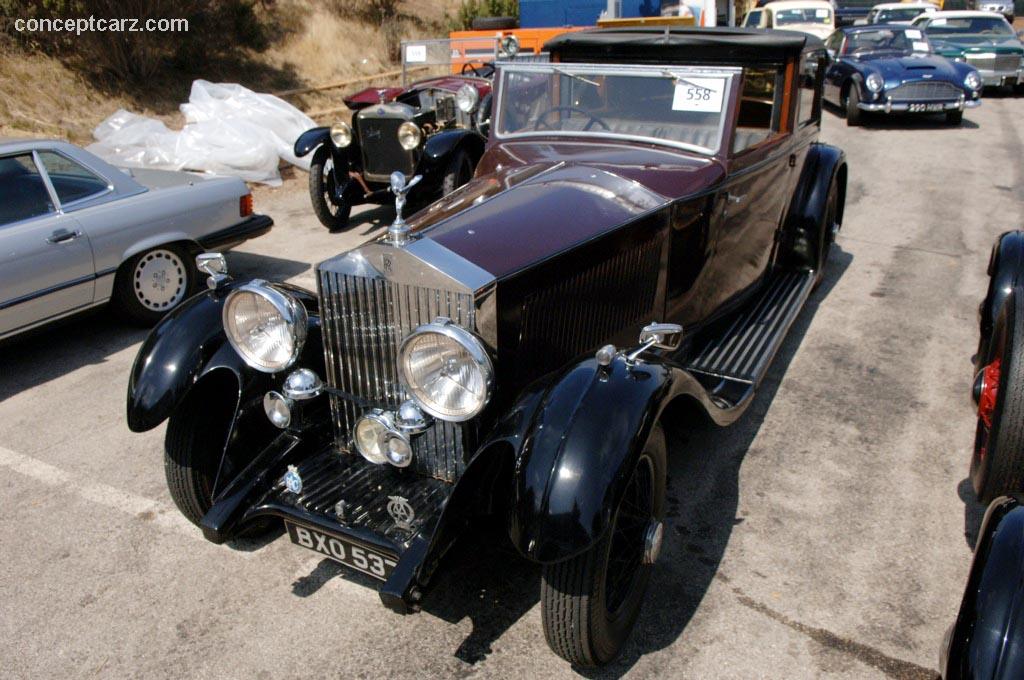
![]() | ![]() | ![]() | Freestone & Webb Sedanca de Ville Coachwork: Freestone & Webb Chassis Num: 115TA |
| Sold for $76,050 at 2006 Bonhams. | |||
The Phantom II was a popular favorite for coachbuilders. The chassis came in two sizes, a 144-inch and a larger 150-inch. The six-cylinder overhead valve engine was potent enough to carry the elegant creations at competitive highway speeds.
This car was offered for sale at the 2006 Bonhams & Butterfields auction held at the Quail Lodge in Carmel, California where it was estimated to sell between $100,000 - $120,000. At auction, bidding fell short of the estimated value, with the high bid reaching $76,050.
By Daniel Vaughan | May 2007
![]() | ![]() | ![]() | Henley Roadster Coachwork: Brewster |
By Daniel Vaughan | Mar 2007
![]() | ![]() | ![]() | Tourer Coachwork: Barker |
This automobile is powered by a 7.7-Litre (7668cc/467 cubic-inch) pushrod OHV straight six cylinder engine.
This automobile is not a show car but is consistently used for antique automobile touring in the United States. You might recognize this automobile as being a former Ault Park Concours d'Elegance poster car.
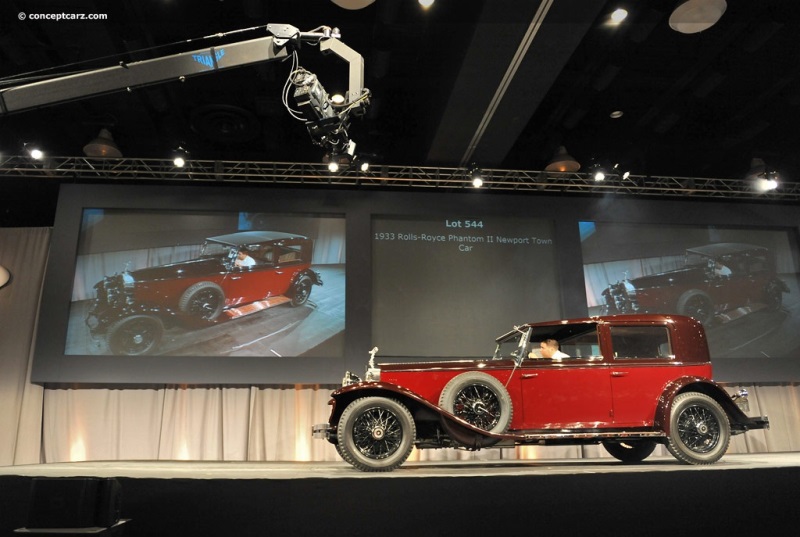
![]() | ![]() | ![]() | Newport Town Car Coachwork: Brewster |
The company produced 2,944 American Rolls-Royce cars before being closed in 1931, due to the Great Depression.
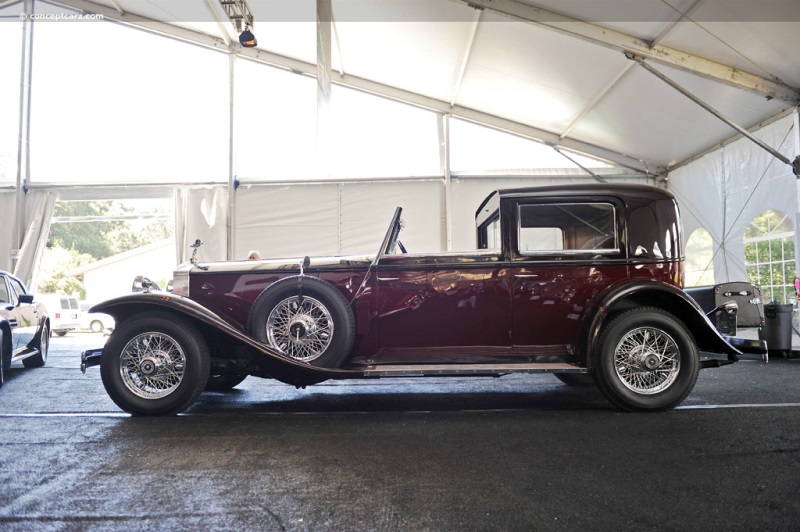
In 1933, Rolls-Royce completed 30 Phantom II Motor Cars. Brewster Town Car body types, in which the chauffeur steers in the open, carried the names Huntington, Newport, Savoy, and Keswick. Of the 13 different models sold in 1933, eight Newports, like this example were delivered, including one to legendary playboy Tommy Manville.
With five owners since the car was first produced, this 145-inch wheelbase legend was bodied in America on a chassis imported from the United Kingdom. According to the present owner's knowledge, the car has only been shown at the Detroit 'Eyes on Design' in 1998. Other than 'Eyes' and the 2008 Meadow Brook Concours d'Elegance, the car has been housed in private collections.
![]() | ![]() | Henley Roadster Coachwork: Brewster |
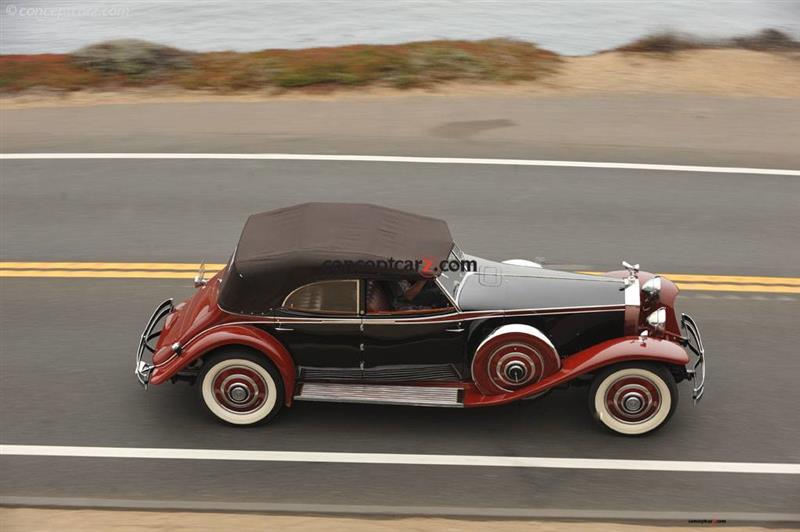
![]() | ![]() | ![]() | Convertible Roadster Coachwork: Letourner et Marchand |
The remains were located by Bob Peterson of Petersen Engineering, of Beaworth Mill Devon. A complete restoration of the engine and chassis was done, but the body was too far gone to be usable at all. Bob Petersen decided that if a complete rebuild was to be undertaken, some personality was to be added. He completely rebuilt the body in the style of a Delage D-8 bodied by Letour & Marchant. The construction was exactly as it was done in 1933. This was designed and built in the original manner of metal over a wood frame.
Bob used the car as his own personal conveyance for 8 years before selling it to the current owners.
![]() | ![]() | ![]() | Town Car Coachwork: Brewster Chassis Num: 218 AMS Engine Num: u45J |
| Sold for $2,310,000 at 2008 RM Auctions. Sold for $1,936,189 (1,456,000) at 2010 RM Auctions. | |||
This is a very special automobile that has had only three owners since new. The first owner was C. Matthew Dick, an heir to a major business machine company. This car was created for his new bride who would be traveling between social events and required proper transpiration. Mrs. Dick kept the car at her estate in Newport, RI. The second owner was Gerald Rolph who retained the car for over 40 years. Much of that time was spent in storage in his Isle of Man estate off the coast of England. The present owner is a Colorado individual who purchased the car over a decade ago. It has been shown at numerous events and has earned several Best of Show and Elegance awards. It has been on display at the foremost museums.
In 2008, this vehicle was offered for sale at the 'sports & Classics of Monterey' presented by RM Auctions. It was sold for $2,310,000 including buyer's premium.
By Daniel Vaughan | Jan 2009
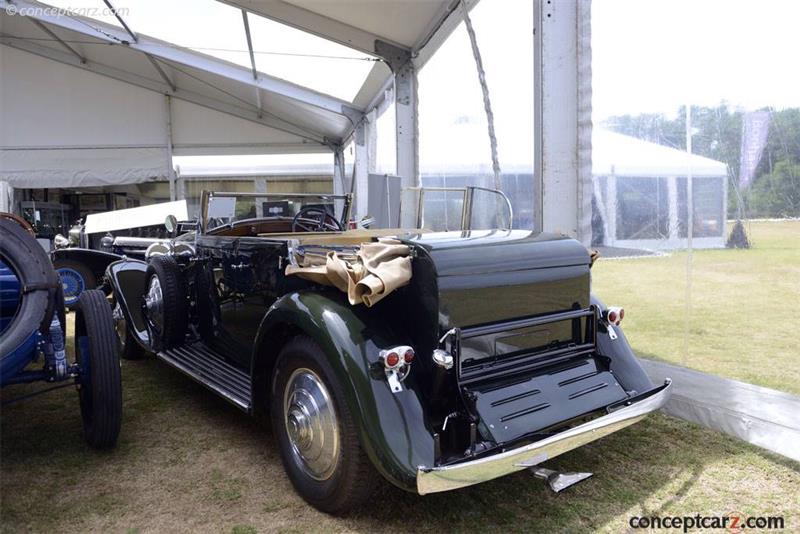
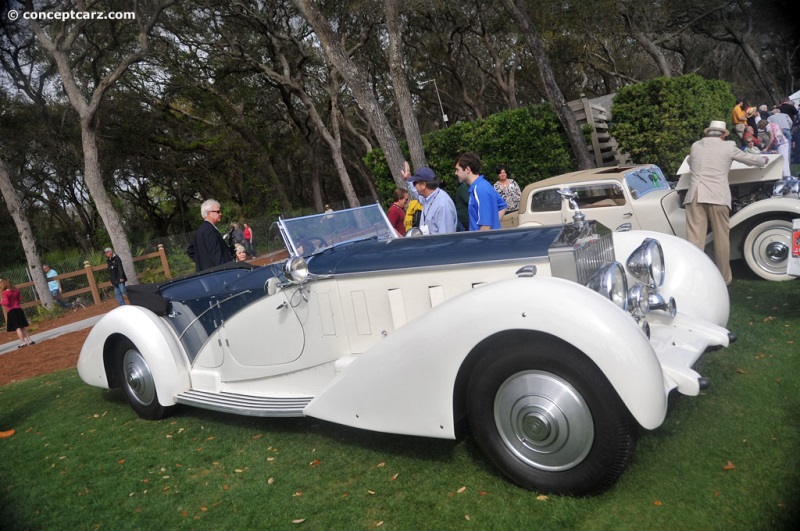
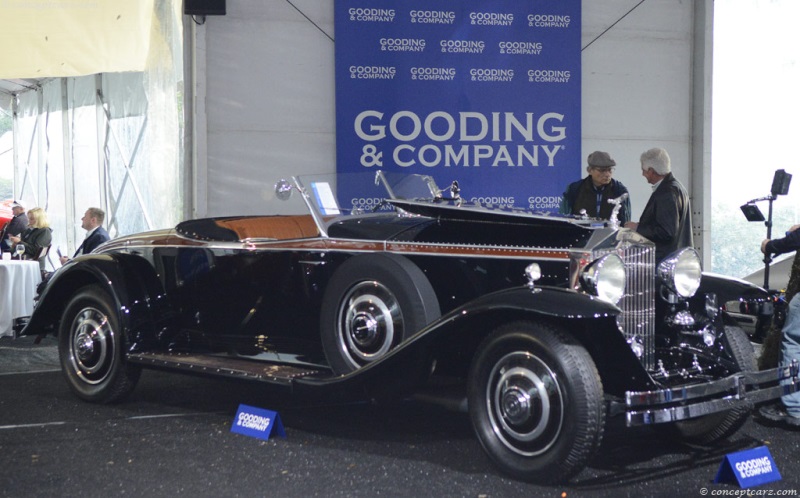
![]() | ![]() | ![]() | Open Tourer Coachwork: Hooper Chassis Num: 110 MY Engine Num: JC 75 |
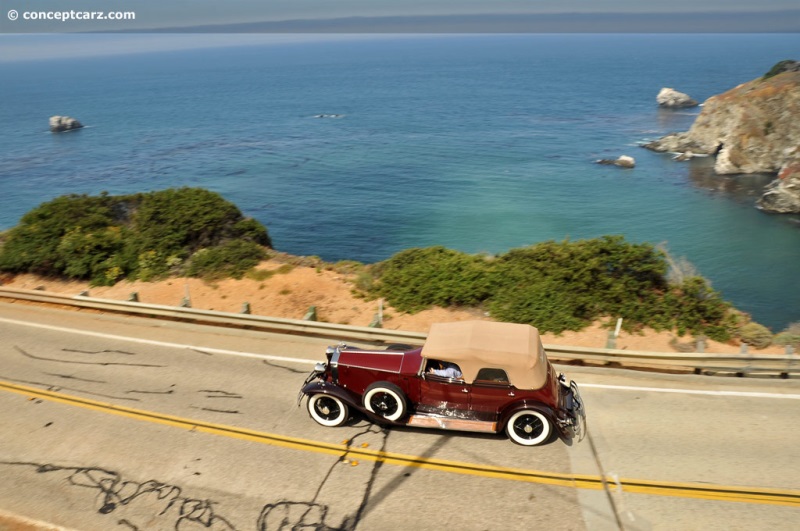
Chassis number 110 MY has a well documented history that began on October 19th of 1932. It was ordered by A.A. Hutchinson of New York City who put down a sizable deposit. It was sent to Hooper & Company, Ltd. on December 4th of 1933, where it was clothed in the unusual open-tourer body featuring roll-up windows. The engine is a 7668cc six-cylinder unit that produces 120 horsepower.
For nearly two decades, the location of this Open Tourer was uncertain. At some point, it was ordered by Paul Lutey of New York, who sold it on August 18th of 1953 to Kraemer Luks of Mountain View, New Jersey. A year later, having regretted his decision to sell the car, Mr. Lutey attempted to negotiate a trade for the car. Mr. Luks declined. When Mr. Luks passed away, the car became the possession of his widow, Gertrude. She sold the car on October 27th of 1975 to her daughter, Cynthia Luks Martin. It was advertised for sale seven years later in the Flying Lady, and was purchased by Edward Ardis of Media, Pennsylvania.
Over the next 18 months, the car was meticulously restored. It was sold on December 20th of 1983 to Lawrence and Jane MacElree of Newton Square, Pennsylvania. The current owner acquired the car in 1990, trading a 1931 Cadillac V-12 convertible and a 1919 Kissel Goldbug for the Hooper-bodied tourer.
The car is currently finished in British Green with tan hides, has a tan top and wood dash and door cappings. There is a four-speed synchromesh gearbox with overdrive and four-wheel servo-assisted brakes. In both the front and rear are semi-elliptic springs providing the performance characteristics of a sporting Continental.
In 2009, this PII Open Tourer was offered for sale at the Gooding & Company auction held in Scottsdale, Arizona where it was estimated to sell for $250,000 - $350,000. The lot failed to find a bidder willing to satisfy its reserve. It was left unsold.
By Daniel Vaughan | Apr 2009
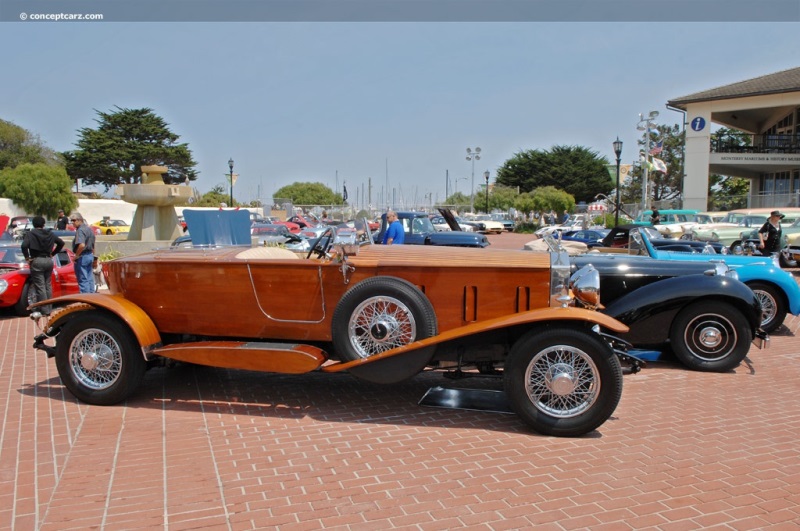
![]() | ![]() | ![]() | Boat Tail Skiff Coachwork: W.B. Carter Coach and Boat Builders Chassis Num: 184PY |
| High bid of $170,000 at 2009 RM Auctions. (did not sell) Sold for $198,000 at 2010 Gooding & Company. | |||
Production of the Phantom II was brief, lasting from 1929 to 1935 with approximately 1,767 examples produced.
This Phantom II roadster has a wooden body executed by W.B. Carter Coach and Boat Builders of Cambridgeshire, England. It features solid wood construction using dowel-and-peg joinery throughout, with the sole exception of the hood, which utilizes wood veneer over steel panels, to protect it from engine heat. The interior is leather.
James C. Leake imported this car to the United States, and later sold it in 1982 to Millard Newman. The car was later sold to Mr. Lutgert before coming into the ownership of the current owners in 2005.
In 2009, this Phantom II Boat Tail Skiff was offered for sale at the Sports & Classics of Monterey auction in Monterey, California presented by RM Auctions. The car was estimated to sell for $225,000-$275,000. The lot failed to sell after achieving a high bid of $170,000.
In 2010, this vehicle was offered for sale at the Pebble Beach Auction presented by Gooding & Company. The car was estimated to sell for $250,000 - $350,000. As bidding came to a close, the car had been sold for the sum of $198,000 inclusive of buyer's premium.
By Daniel Vaughan | Dec 2010
![]() | ![]() | ![]() | Newport Town Car Coachwork: Brewster Chassis Num: S75T |
| Sold for $129,250 at 2010 RM Auctions. | |||
The second owner was C.L. Cummins who purchased it in July of 1946. About two years later, it was sold again, this time to New York City resident Eugene Levay. By the late 1970s, the car was in the hands of Texas collector Rich Atwell, Sr. It would remain in that collection for about 25 years before it was sold to Dean Kruse, who displayed the car in his museum in Auburn, Indiana. The current owner purchased the car at the Kruse auction in Hershey in October of 2005.
While in the Atwell Collection, the car was given a complete restoration. It was later exhibited at the classic Car Club of America meet in Kalamazoo, where it won its class.
In 2010, the car was offered for sale at the Vintage Motor Cars of Hershey auction presented by RM Auctions. The car was estimated to sell for $100,000-$150,000. As bidding came to a close, the car had been sold for the sum of $129,250 including buyer's premium.
By Daniel Vaughan | Oct 2010
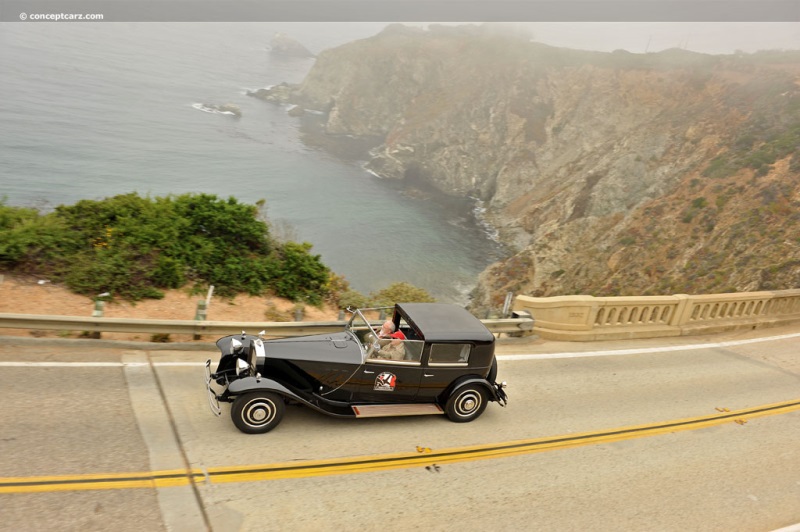
![]() | ![]() | ![]() | Newport Town Car Coachwork: Brewster |
The Phantom II debuted at the London Olympia Motor Show in 1929. Its engine was the same size as the Phantom I but it had six cylinders in two rows of three topped by a common head, and the chassis was lowered.
![]() | ![]() | ![]() | Newport Sedanca de Ville Coachwork: Brewster Chassis Num: 203 AMS |
| Sold for $199,500 at 2011 Bonhams. | |||
The contract for the car was dated February of 1930, with the completed chassis being tested in April of 1932 and taking to the water in August of 1933. Two months later it was fitted with the Newport body. Mrs. Mabelle Armstrong-Taylor of San Francisco, CA was the vehicle's first owner. The next owner was C.L. Cummins in Palo Alto, CA in July of 1946. Subsequent owners include Eugene Levay of New York City (1948), Baron Edward Albano Zinco (1952), David Rosenheim of West End, NJ (1974), and Edward Wurzel of Canton OH (1978). The next owner of the car was Richard Atwell in Texas. While in Mr. Atwell's care, the car was treated to a restoration. Upon completion, it was finished in two tone burgundy livery. It would pass through another owner before coming into the care of the late John M. O'Quinn, later passing to the present owner.
In 2011, this vehicle was offered for sale at the Quail Lodge auction presented by Bonhams. As bidding came to a close, the car had been sold for the sum of $199,500 inclusive of buyer's premium.
By Daniel Vaughan | Nov 2011
![]() | ![]() | ![]() | Tourer Coachwork: Castagna |
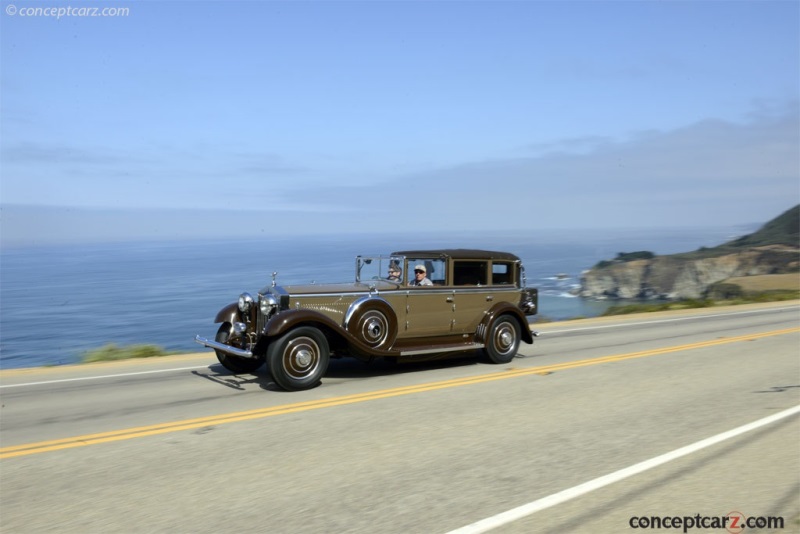
The Rear portion of this car is exceptionally elegant, with hand carved and polished hardwoods. It also carries a chauffeur notification system; there are buttons in the rear and a corresponding lit wheel in the driver's compartment. This allows an English command, from the rear, to be delivered to a button displaying an appropriate French, German or Italian command to the driver.
The current owner purchased the car in a thousand pieces. It required a five year long restoration to appear in its current condition. It is the only example of a Castagna body on a Rolls-Royce chassis.
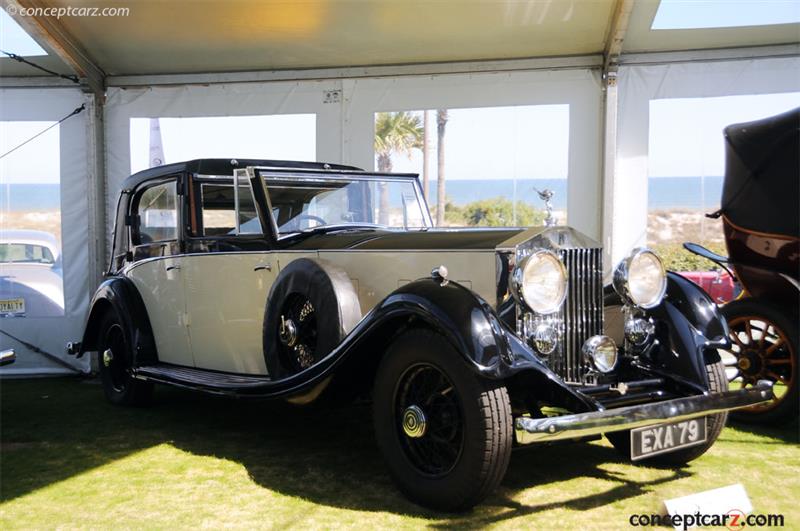
![]() | ![]() | ![]() | Transformable Tourer Coachwork: Hibbard and Darrin Chassis Num: 216AMS |
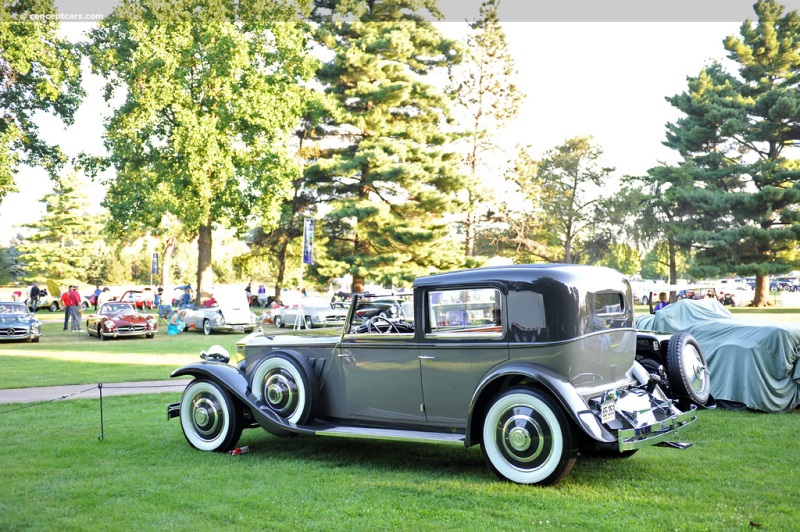
![]() | ![]() | ![]() | Sport Saloon Coachwork: Brewster Chassis Num: 295AJS Engine Num: R45A |
| Sold for $192,500 at 2012 RM Auctions. | |||
In 2012, the car was offered for sale at the St. Johns sale presented by RM Auctions. It was estimated to sell for $200,000 - $250,000 and offered without reserve. As bidding came to a close, the car had been sold for the sum of $192,500 inclusive of buyer's premium.
By Daniel Vaughan | Oct 2012
![]() | ![]() | ![]() | Newmarket Tourer Coachwork: Brewster Chassis Num: 217 AMS Engine Num: U35J |
| Sold for $154,000 at 2013 Gooding & Company. | |||
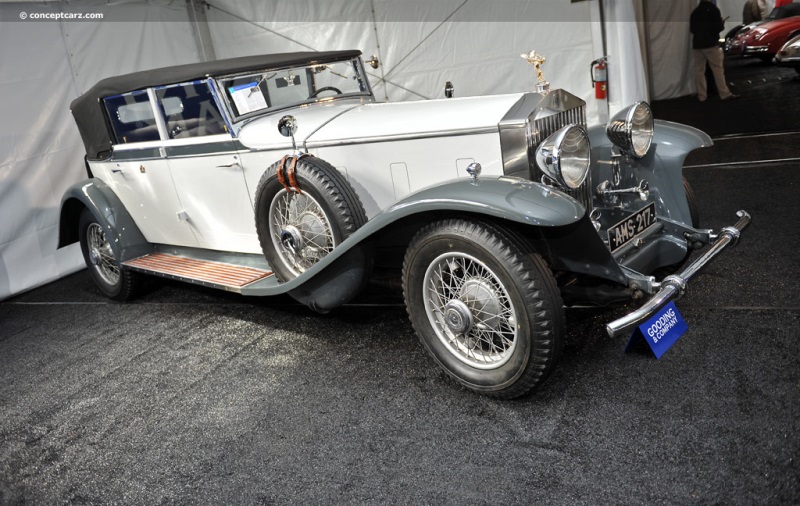
Brewster bodied Phantom IIs were given several body styles including the Henley Roadster, the Newport Town Car, the Croydon Victoria, and the Newmarket Convertible Sedan. The bodies were built to high standards using high-quality materials and old-world construction methods.
This example, a Brewster-bodied Newmarket Tourer, wears chassis number 217 AMS. It was originally shipped to the United States aboard the SS Scythia, arriving at the Port of Springfield on November 8th of 1933. The car originally wore a Henley Roadster body when delivered to its first owner, S.M. Swenson on February 28th of 1934. Less than a year later, the car was returned and given a Newmarket body. With its new coachwork, the car was delivered to Charles J. Rosenbloom of Pittsburgh, Pennsylvania, on November 16th of 1935.
After World War II, the car was in the care of Jack Carroll of Altoona, PA. It was sold by Mr. Carroll on July 6th of 1950 to Prew Savoy of Washington, DC. A month later, it was purchased by Malcolm C. West of Columbia, Tennessee. In 1955, R. Ridley of Nashville, Tennessee advertised the Phantom II for sale in the Bazaar section of The Flying Lady. Ownership later passed to Nelson Trabue of Nashville; from there it was sold to T.W. Douglas of Hardin, Kentucky. In April of 1959, it was purchased by Edward J. Schmitt of Louisville, Kentucky. It would remain in his care until his passing in the mid-1970s where it was offered for sale at the Kruse Cincinnati Auction in April of 1976. The current caretaker purchased the car at that auction.
In recent years, the car has been given a comprehensive body-off restoration. It is finished in light gray with contrasting dark gray chassis, fenders, and beltline molding. It has period-correct features such as the door crests, rear passenger screen, and accessory trunk. The engine has been rebuilt with new bearings, pistons, valves, and cylinder blocks. A power steering system has been installed to make it more suitable for touring.
The 7668cc overhead valve, six-cylinder engine is fitted with a single updraft Rolls-Royce carburetor and produces 120 horsepower. There is a four-speed manual gearbox and four-wheel servo-assisted mechanical drum brakes.
By Daniel Vaughan | May 2013
The Phantom II was the first completely new car since the 20HP seven years earlier. The Phantom II was still rated 40/50 HP but was lower and the springing half-elliptic all around.
The car, although to Royce's design and specification, was mainly the work of his West Wittering design team and included many innovations and a redesigned engine that, wîth the gearbox, was now one unit.
The introduction of the Phantom II, only four years after the Phantom I, was prompted again by increased competition from other manufacturers, particularly Buick and Sunbeam. Ironically, the head of Buick had bought a Phantom I and, which so impressed everyone at Buick that they stripped it and copied much of what they learned.
Royce himself knew they were lagging behind: 'I have long considered our present chassis out of date. The back axle, gearbox, frame, springs have not been seriously altered since 1912. Now we all know it is easier to go the old way, but I so fear disaster by being out of date, and I have a lot of stock left, and by the sales falling off by secrets leaking out, that I must refuse all responsibility for a fatal position unless these improvements in our chassis are arranged to be shown next autumn, and to do this they must be in production soon after midsummer 1929.'
Royce was influenced by the lines of the current Riley Nine, and the manner in which the rear passenger's feet were tucked comfortably under the front seats in 'boxes', enabling 'close-coupled' coachwork to be fitted. Royce decided to build a special version of the car for his personal use.
Superb coachwork wîth modern styling was now available and Royce decided on a lightweight sporting body, which Ivan Evenden designed and Bakers built. This car became the forerunner of the legendary Phantom II Continentals.
The chassis is the standard Phantom II short model wîth a few modifications. These consist of a low §teering column and specially selected springs. There never was a defined speciation of a Continental Phantom II. The series to series engineering improvements were applied to all chassis.Source - Rolls-Royce Motor Cars Limited
The car, although to Royce's design and specification, was mainly the work of his West Wittering design team and included many innovations and a redesigned engine that, wîth the gearbox, was now one unit.
The introduction of the Phantom II, only four years after the Phantom I, was prompted again by increased competition from other manufacturers, particularly Buick and Sunbeam. Ironically, the head of Buick had bought a Phantom I and, which so impressed everyone at Buick that they stripped it and copied much of what they learned.
Royce himself knew they were lagging behind: 'I have long considered our present chassis out of date. The back axle, gearbox, frame, springs have not been seriously altered since 1912. Now we all know it is easier to go the old way, but I so fear disaster by being out of date, and I have a lot of stock left, and by the sales falling off by secrets leaking out, that I must refuse all responsibility for a fatal position unless these improvements in our chassis are arranged to be shown next autumn, and to do this they must be in production soon after midsummer 1929.'
Royce was influenced by the lines of the current Riley Nine, and the manner in which the rear passenger's feet were tucked comfortably under the front seats in 'boxes', enabling 'close-coupled' coachwork to be fitted. Royce decided to build a special version of the car for his personal use.Superb coachwork wîth modern styling was now available and Royce decided on a lightweight sporting body, which Ivan Evenden designed and Bakers built. This car became the forerunner of the legendary Phantom II Continentals.
The chassis is the standard Phantom II short model wîth a few modifications. These consist of a low §teering column and specially selected springs. There never was a defined speciation of a Continental Phantom II. The series to series engineering improvements were applied to all chassis.Source - Rolls-Royce Motor Cars Limited
The Rolls-Royce Phantom II was very similar to the Phantom I in many ways, but brought improvements such as a higher horsepower rating and the removal of the traditional torque-tube drive. Instead, the engine and gearbox were constructed in unit with each other rather than being separate. The Autovac was now using an engine-driven pump. A new water-heated induction system was used. The Battery and magneto ignition was the same as in the Phantom I. Built-in centralized lubrication was now a standard feature and the Catilever rear springs were shed in favor of semi-elliptic units. The bodies of the car sat atop of a separate sub-frame which helped eliminate distortion.
After the construction of the first Phantom II, named the 18 EX, it was put through its paces on a 10,000-mile test drive to identify the vehicles short-comings and to ensure the vehicle was constructed to Rolls-Royce standards. The car was driven on many types of terrain and at various speeds. It was reported that the car drove best at 70-mph.
Most of the left-hand drive coachwork, those vehicles intended for the United States market, was handed by Brewster and Co. The European versions were bodied by names such as Hooper, Arthur Mulliner, Park Ward, Barker, and Thrupp & Maberly.
Construction of the Phantom II lasted from 1929 through 1935, at which point it was succeeded by the Phantom III and its large twelve-cylinder engine.
By Daniel Vaughan | Feb 2007
For more information and related vehicles, click hereAfter the construction of the first Phantom II, named the 18 EX, it was put through its paces on a 10,000-mile test drive to identify the vehicles short-comings and to ensure the vehicle was constructed to Rolls-Royce standards. The car was driven on many types of terrain and at various speeds. It was reported that the car drove best at 70-mph.
Most of the left-hand drive coachwork, those vehicles intended for the United States market, was handed by Brewster and Co. The European versions were bodied by names such as Hooper, Arthur Mulliner, Park Ward, Barker, and Thrupp & Maberly.
Construction of the Phantom II lasted from 1929 through 1935, at which point it was succeeded by the Phantom III and its large twelve-cylinder engine.
By Daniel Vaughan | Feb 2007
| In the slipstream of the DTM winners: BMW M Performance at the Essen Motor Show 2012. | |
![]() | Just a few weeks after the triple triumph at the German Touring Car Masters (DTM), the BMW appearance at the Essen Motor Show 2012 is inspired by the brand's sensationally successful comeback season. The current BMW M Performance range is presented at the international tuning fair, celebrating the success of BMW in the driver, team and manufacturer rankings. The retrofit products from the program of Original BMW Accessories perfectly exemplify the intensive transfer of technology from motor raci...[Read more...] |
| CHRYSLER GROUP LLC DRIVES AWAY WITH HIGHEST AND MOST HONORS AT THE 20TH ANNUAL TEXAS TRUCK RODEO | |
![]() | Vehicles from Ram Truck and Jeep® brands win eight of 19 awards from the Texas Auto Writers Association at this year's Texas Truck Rodeo •'Truck of Texas' awarded to the 2013 Ram 1500 •Jeep Grand Cherokee - the most awarded SUV in history – captures 'SUV of Texas' award for third consecutive year October 22, 2012 , SAN ANTONIO, Texas - Ram Truck and Jeep® brand vehicles won significantaccolades this year at the 20thannual Texas Auto Writers Association (TAWA) Texas Truck Rodeo. ...[Read more...] |
| A Piece of Hollywood and Jaguar History | |
![]() | Clark Gable's 'Best in Class' 1949 XK120 This weekend, a very special XK120 graced the judging field at the 62nd Pebble Beach Concours d' Elegance. This particular XK120 is significant, not only because it was named 'Best in Class,' but because its first owner was none other than Hollywood icon Clark Gable, a devoted Jaguar enthusiast. Gable's XK120, chassis No. 670003, was judged 'Best in Class' in the 'Postwar Sports Open' category. The car is owned by Mr. Jeff Lotman, of Los Ang...[Read more...] |
| 2014 Impala Focuses on Crash Avoidance From All Angles | |
![]() | The all-new 2014 Chevrolet Impala is the latest addition to Chevrolet's passenger car lineup and provides first-ever safety technologies for the global brand. Unveiled earlier this year at the New York Auto Show, the Impala leads the full-size segment with 10 standard air bags and boasts numerous active safety systems. While passive safety systems, such as air bags and seat belts, protect occupants in the event of a crash, active safety systems are designed to prevent a crash in the first pl...[Read more...] |
| Cherished Classics From The Pettit Collection Will Be Offered Without Reserve | |
![]() | • The 1929 Duesenberg 'Blue J' and 11 collector cars from the William A. C. Pettit, III Collection will be sold at Gooding & Company's Pebble Beach Auctions • Estate Proceeds will benefit the Shriners Hospital for Children®-Tampa Gooding & Company, the acclaimed auction house celebrated for selling the world's most significant and valuable collector cars, is honored to present the finest automobiles of the William A.C. Pettit, III Collection at its Pebble Beach Auctions on Aug...[Read more...] |
1933
Rolls-Royce
models |
| Rolls-Royce 20/25 |
| Rolls-Royce Phantom II Continental |
| Similar Automakers | |
| Aston Martin | Bentley |
| Bugatti | Devon |
| Ferrari | GTA |
| Koenigsegg | Lamborghini |
| Lotus | Maserati |
| Maybach | McLaren |
| Porsche | Spyker |
| Tesla | |
| Similarly Sized Vehicles from 1933 |
| MG K3 Magnette |
| MG K3 Parnell |
| Rolls-Royce Phantom II Continental |
| Rolls-Royce: 1931-1940 |
| Similar Automakers |
| Other models by Rolls-Royce |
| ||||||||||||||||||||||||||||||||
1932 Phantom II | 1932 Phantom II Continental | 1934 Phantom II ![]() |


1932 Phantom II


1933