History
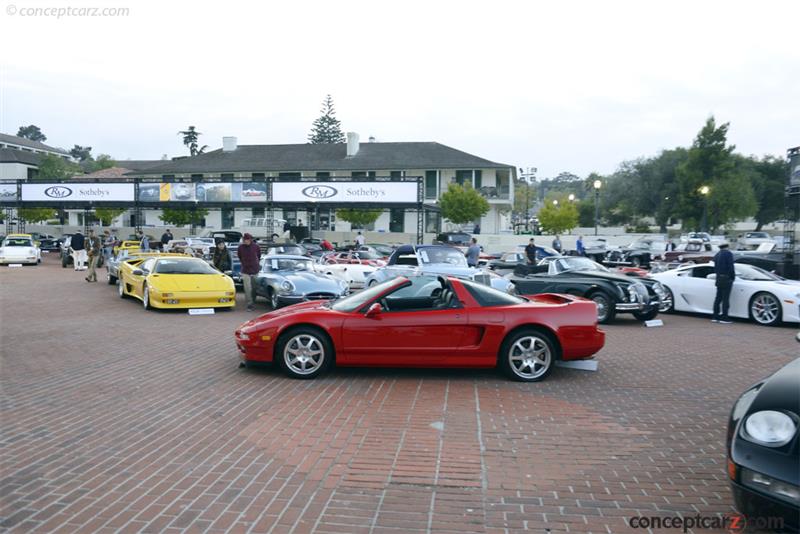
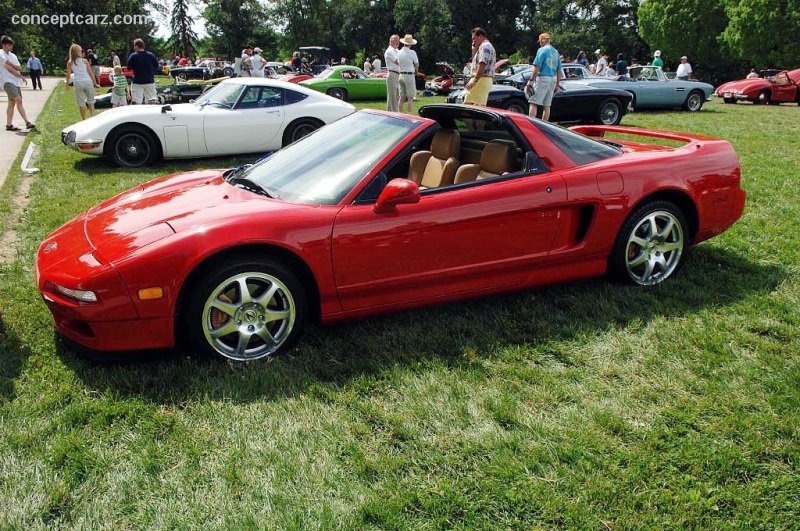
The mid-engined NSX appeared on the supercar market in 1991 and has continued in production for over ten years. Honda had been dominating Formula One racing and decided to continue that domination in the showrooms. In over a decade, the NSX has not changed much. Its styling appears to be derived for the mid-engined Lotus Esprit of the 1970's, with its flat but angular styling cues. In February of 1989, Acura introduced a new sports car at the Chicago Auto Show, the NS-X. Its introduction is significant, being the first supercar from a Japanese automobile manufacturer. The name NS-X represented 'New Sportscar eXperimental'.
The design and materials used on the NSX were revolutionary and introduced many industry 'firsts' for the production car market. It was the first production car to use titanium connecting rods, six in total. The body and chassis were comprised of aluminum, weighing just over 460 pounds, much less than steel but with equal strength. The aluminum body housed many advanced technologies such as PGM-FI, Variable Valve Timing and Lift Electronic Control (VTEC), and a direct ignition system. The 3-liter DOHC V-6 engine was mounted mid-ship and matted to a five-speed manual gearbox. With 270 horsepower and 210 foot-pounds of torque, zero-to-sixty was accomplished in under six seconds.
Production was slow, but for good reason. Each vehicle was hand-assembled by a team of technicians, with an average of about 20 examples being produced per day. During its introductory year, only 1940 examples were produced. Sales continued to be strong through the 1990's and into the next millennium. By 2004, over 8000 examples were being produced each year.
Since its inception, minor aesthetic styling changes have occurred, most notably the pop-up halogen headlights have been replaced with fixed high-intensity-discharge (HID) beams. The rear wing has been changed since its introduction and various other parts of the body have been slightly modified to improve the drag coefficient. These small changes have increased the top speed from 167 to 175 mph.
Throughout the years, various mechanical components have been updated such as the suspension and the size of the tires. The larger-diameter wheels and tires did more for its appearance than it did for performance. In 1995 a Sequential Sportshift automatic transmission, inspired by Formula One racing, was offered as optional equipment. That was the same year that the NSX-T, the NSX but with a removable roof, was introduced. Other optional equipment offered through the years was a keyless entry system and a trunk-mounted CD changer, both introduced after the 2003 model year.
1997 was the big year for the NSX and one that many enthusiasts had been waiting for since its introduction. Although the NSX's 270 horsepower engine was powerful and the excellent weight distribution of the vehicle offered superb handling, people wanted more. In 1997, Acura offered the NSX with a 3.2-liter V6 capable of producing 290 horsepower. Power was sent to the rear wheels courtesy of a six-speed manual gearbox.
Wild exterior colors having been offered such as the controversial love-or-hate Imola Orange Pearl with a yellow interior. These colors are not only making a statement, they scream it. With limited numbers of these radical colors being chosen, it may make them more valuable in the future.
In 1999 Acura offered a special edition named the Alex Zanardi Edition, honoring the driver who captured the CART racing championship twice. Only 49 examples of these hard-top special edition models were created. Minor interior and exterior styling changes distinguish it from the normal NSX models, as does the Formula Red color scheme. The big news was its loss of nearly 150 pounds and improved suspension.
Though not offered in the US, racing-inspired editions have been offered, mostly to the Japanese market. In 1992 the NSX Type R had a weight reduction of over 100 kg's and a more aggressive suspension. To reduce the weight, all non-essential luxury items were removed such as air conditioning, electric windows, and stereo. The NSX Type S and Type S Zero were both offered in 1997. These were weight-reduction models with stiffer suspensions but sporting the upgraded engine. The Type S Zero weighed less than the Type S by almost 40 kg. Both editions were sold exclusively in Japan with race track intentions. In 2002 the NSX-R was introduced. Once again, performance was increased by reducing weight and improving the suspension. Aerodynamics was improved by making subtle changes to the body and receiving a purpose-built rear spoiler. Later, an NSX-R GT version was released, with even more race-improving enhancements. These improvements allowed the vehicle to compete against much more powerful vehicles such as the Ferrari 360 Challenge Stradale.
From the beginning, the NSX has been involved in racing. In its first year on the track it captured the Manufacturer's and Driver's Championship in the International Motor Sports Association (IMSA) GTP Lights series. This accomplishment was repeated in 1992 and 1993. In 1997 an NSX captured the SCCA World Challenge Championship.
The price tag and styling are borderline 'supercar' while the horsepower is a little under-rated when compared with some of the other great supercars such as Lamborghini and Ferrari. The entire package speaks for itself, with over 10 years in production and very few changes being implemented through the years. Though it does not produce high horsepower numbers, it does have the highest per-litre output of any naturally aspirated V6 production road-going car in the world. Focusing on weight distribution, low weight, down-force, aerodynamics, suspension, and technology rather than large engines has made this vehicle a technological and stylish marvel even to this day.
By Daniel Vaughan | Mar 2006
The design and materials used on the NSX were revolutionary and introduced many industry 'firsts' for the production car market. It was the first production car to use titanium connecting rods, six in total. The body and chassis were comprised of aluminum, weighing just over 460 pounds, much less than steel but with equal strength. The aluminum body housed many advanced technologies such as PGM-FI, Variable Valve Timing and Lift Electronic Control (VTEC), and a direct ignition system. The 3-liter DOHC V-6 engine was mounted mid-ship and matted to a five-speed manual gearbox. With 270 horsepower and 210 foot-pounds of torque, zero-to-sixty was accomplished in under six seconds.
Production was slow, but for good reason. Each vehicle was hand-assembled by a team of technicians, with an average of about 20 examples being produced per day. During its introductory year, only 1940 examples were produced. Sales continued to be strong through the 1990's and into the next millennium. By 2004, over 8000 examples were being produced each year.
Since its inception, minor aesthetic styling changes have occurred, most notably the pop-up halogen headlights have been replaced with fixed high-intensity-discharge (HID) beams. The rear wing has been changed since its introduction and various other parts of the body have been slightly modified to improve the drag coefficient. These small changes have increased the top speed from 167 to 175 mph.
Throughout the years, various mechanical components have been updated such as the suspension and the size of the tires. The larger-diameter wheels and tires did more for its appearance than it did for performance. In 1995 a Sequential Sportshift automatic transmission, inspired by Formula One racing, was offered as optional equipment. That was the same year that the NSX-T, the NSX but with a removable roof, was introduced. Other optional equipment offered through the years was a keyless entry system and a trunk-mounted CD changer, both introduced after the 2003 model year.
1997 was the big year for the NSX and one that many enthusiasts had been waiting for since its introduction. Although the NSX's 270 horsepower engine was powerful and the excellent weight distribution of the vehicle offered superb handling, people wanted more. In 1997, Acura offered the NSX with a 3.2-liter V6 capable of producing 290 horsepower. Power was sent to the rear wheels courtesy of a six-speed manual gearbox.
Wild exterior colors having been offered such as the controversial love-or-hate Imola Orange Pearl with a yellow interior. These colors are not only making a statement, they scream it. With limited numbers of these radical colors being chosen, it may make them more valuable in the future.
In 1999 Acura offered a special edition named the Alex Zanardi Edition, honoring the driver who captured the CART racing championship twice. Only 49 examples of these hard-top special edition models were created. Minor interior and exterior styling changes distinguish it from the normal NSX models, as does the Formula Red color scheme. The big news was its loss of nearly 150 pounds and improved suspension.
Though not offered in the US, racing-inspired editions have been offered, mostly to the Japanese market. In 1992 the NSX Type R had a weight reduction of over 100 kg's and a more aggressive suspension. To reduce the weight, all non-essential luxury items were removed such as air conditioning, electric windows, and stereo. The NSX Type S and Type S Zero were both offered in 1997. These were weight-reduction models with stiffer suspensions but sporting the upgraded engine. The Type S Zero weighed less than the Type S by almost 40 kg. Both editions were sold exclusively in Japan with race track intentions. In 2002 the NSX-R was introduced. Once again, performance was increased by reducing weight and improving the suspension. Aerodynamics was improved by making subtle changes to the body and receiving a purpose-built rear spoiler. Later, an NSX-R GT version was released, with even more race-improving enhancements. These improvements allowed the vehicle to compete against much more powerful vehicles such as the Ferrari 360 Challenge Stradale.
From the beginning, the NSX has been involved in racing. In its first year on the track it captured the Manufacturer's and Driver's Championship in the International Motor Sports Association (IMSA) GTP Lights series. This accomplishment was repeated in 1992 and 1993. In 1997 an NSX captured the SCCA World Challenge Championship.
The price tag and styling are borderline 'supercar' while the horsepower is a little under-rated when compared with some of the other great supercars such as Lamborghini and Ferrari. The entire package speaks for itself, with over 10 years in production and very few changes being implemented through the years. Though it does not produce high horsepower numbers, it does have the highest per-litre output of any naturally aspirated V6 production road-going car in the world. Focusing on weight distribution, low weight, down-force, aerodynamics, suspension, and technology rather than large engines has made this vehicle a technological and stylish marvel even to this day.
By Daniel Vaughan | Mar 2006
Similarly Sized Vehicles
from 2000
Acura Monthly Sales Volume
March 2024
11,968
February 2024
9,769
November 2023
11,110
October 2023
11,154
September 2023
12,672
August 2023
12,159
June 2023
13,171
May 2023
13,705
April 2023
13,301
March 2023
13,569
February 2023
10,408
January 2023
9,488


2000 Acura NSX Vehicle Profiles
Recent Vehicle Additions


Performance and Specification Comparison
Price Comparison
$28,795
NSX Specification Comparison by Year
Year
Production
Wheelbase
Engine
Prices
Related Automotive News

Acura Marks 30 Years Since Debut Of Iconic NSX Supercar
Acura revisits an iconic moment in its history the unveiling of the original NS-X Concept
Csaba Csere, former Editor-in-Chief of Car and Driver, joins Acura at 2019 Chicago Auto Show to reflect on the history and heritage of NSX
Acura this week m...

Honda UK To Present Heritage Display Of Old & New NSX At Salon Privé
Monday 27th August Back in 1984, Honda developed the HP-X concept in conjunction with Pininfarina with the intention of meeting or better still, exceeding the performance of Ferraris V8 model range whilst at the same time, offering reliability...

THE McLAREN F1
FOR THE DRIVER VITALLY – AS IN ONE OF McLARENS WORLD CHAMPION RACING CARS – DRIVER AND VEHICLE BECOME ENTIRELY AS ONE
The primary design consideration for the McLaren F1 has been to make it without reserve a drivers car, an extremely high-performance...

ACURAS, PAST AND FUTURE, STAR AT 2015 ROLEX MONTEREY MOTORSPORTS REUNION
Parker Johnstone takes Spice Acura from museum to pole, podium finishes
Next-Generation Acura NSX supercar on display
Winning 2009 Acura ARX-02a LMP1 also featured
Aug 15, 2015 - MONTEREY, California -- Capping a week-long celebration of...

SENNA INSPIRED SUPERCAR JOINS SILVER JUBILEE CELEBRATIONS
Honda NSX turns 25 with massive Silverstone parade
The mid-engined two-seater that redefined the supercar
Record number of NSXs to mark quarter century
Japanese cavalcade also marks key Mazda, Nissan and Toyota milestones
Its not just the Sil...