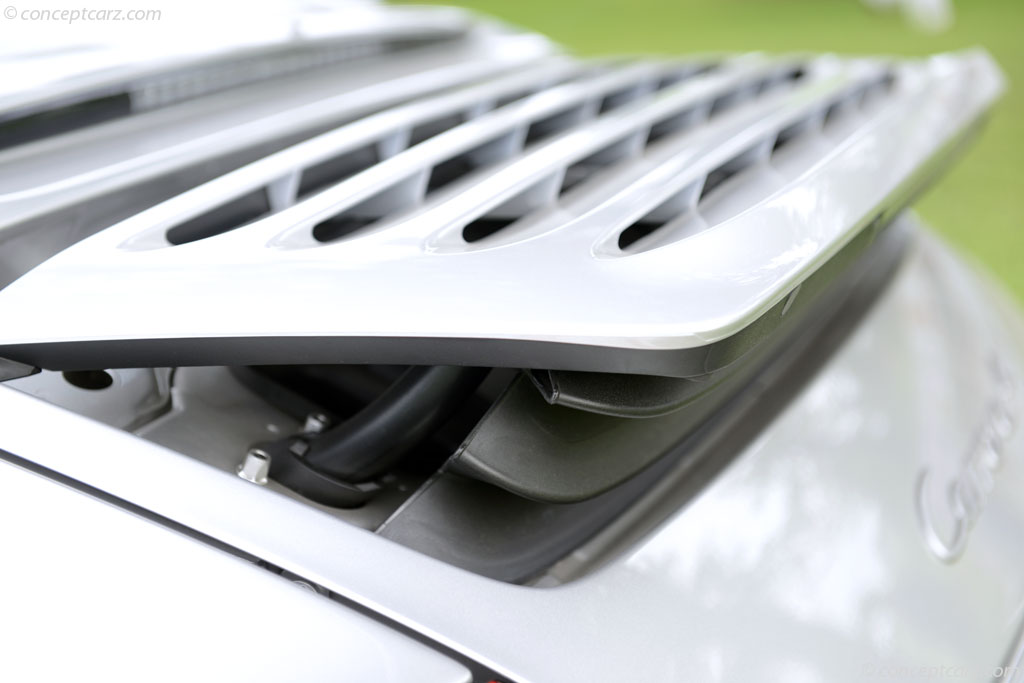
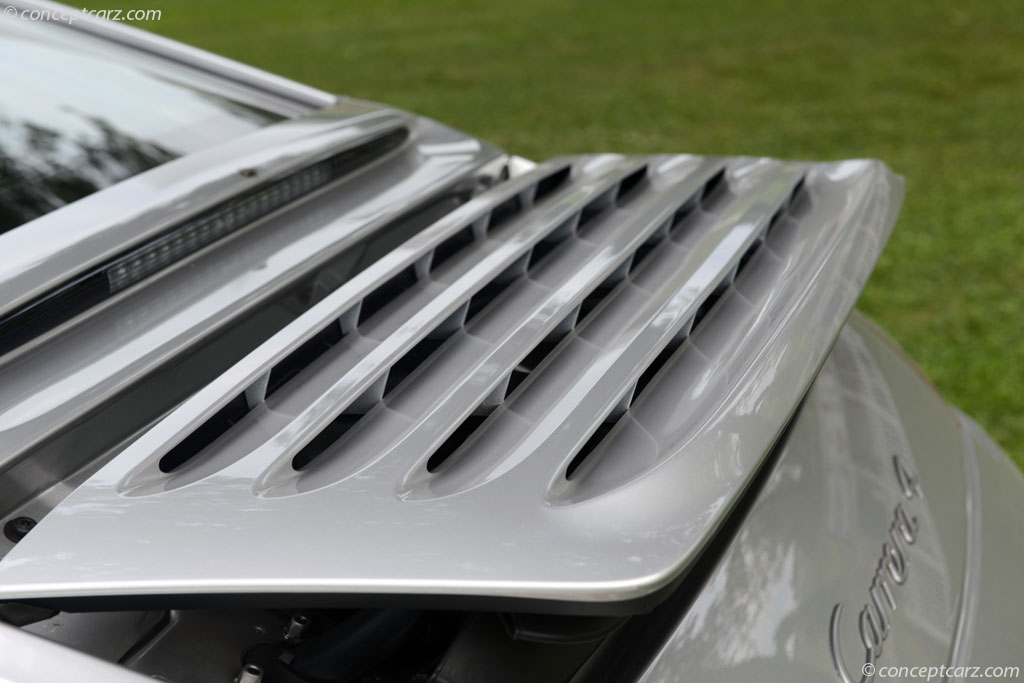
The six-cylinder ‘boxer' engine is a definitive element within the 911 concept. Flat and compact, with a low center of gravity, its rear-mounted installation has generated optimum traction throughout more than four decades of continuous evolution. In today's generation, its immediacy and sound are more inspirational than ever.
CoupeIn engineering, one rarely gets something for nothing. Every advance invariably involves an offsetting challenge. It's how these issues are addressed that ultimately defines the true talents and capabilities of the engineering team.Take an all-alloy engine for example. The advantage is obvious: it weighs less than a conventional cast iron engine thereby improving the car's relative performance and handling. However, an all-alloy engine is more susceptible to temperature changes, which can shorten component life such as the engine bearings.To address this issue, the main bearing bracket is made from aluminum alloy with special cast-in iron support elements. These iron elements hold the bearings and minimize bearing play caused by changes in engine temperature. This approach also allowed Porsche engineers to reduce the bearing clearances, which greatly reduce engine noise. A further advantage of smaller bearing clearances is a reduction in the amount of oil required. Since less oil is needed, the oil pumps can be smaller enhancing overall engine efficiency. Clearly, Porsche engineers have succeeded in developing an elegant solution that fully optimized the advantages of the all-alloy engine.
CoupeOptimal engine performance is readily available instantly thanks in large part to the new Motronic ME 7.8 engine management system. This highly precise system monitors and controls all engine related functions including valve timing, fuel injection and ignition timing. It also controls the electronic throttle, one of the key elements for Porsche Stability Management (PSM).One of the most important tasks performed by the engine management system is cylinder-specific knock control. By preventing pre-ignition at high engine speeds, this function can avert costly damage to the pistons and cylinders. Since temperatures tend to vary in different parts of the engine, each cylinder is monitored separately. If a risk is detected, the engine management system will adjust the ignition timing on the respective cylinder. Fuel is supplied to each of the six cylinders by means of sequential fuel injection. The timing and volume of each injection are controlled by the engine management system. Adjustments are based on a range of variables such as throttle position, engine speed, coolant temperature and exhaust gas composition. A hot-film air mass sensor monitors the density of the air/fuel mixture to ensure the most complete combustion, regardless of weather and altitude. This in turn delivers excellent fuel economy in an automobile capable of exhilarating levels of performance. Another important benefit of reliable combustion is the car's absolute compliance with all relevant exhaust emission standards.
CoupeThe static high-voltage ignition system uses a separate ignition coil on each individual spark plug. The role of the distributor is performed by the engine management system, which can modify the ignition timing as required. A major benefit of this arrangement is that the ignition can be integrated with all other electronically managed systems and components. If the Tiptronic S transmission's control unit, for example, requests smoother downshifts, the engine management system will modify the ignition timing accordingly.Tiptronic S
The highly advanced Tiptronic S transmission is available in all new 911 models as an option. This versatile gearbox combines fully automatic five-speed operation with the capability of manual control.In automatic mode, Tiptronic S has different gearshift patterns ranging from 'Economy' to 'Sport'. Depending on driving style and the topography of the road, Tiptronic S selects one of these five patterns and applies the optimum sequence of gearshift points. Even in automatic mode, the rapid gearshift action ensures a fast and agile response. Within a short space of time, the driver will develop a feel for the system and learn to influence the gearshifts using the throttle alone.
CoupeIn manual mode, the driver can change gear by hand using rocker controls located on the steering wheel. Simply press up to change up and down to change down. The system responds smoothly and immediately to every driver input with virtually no interruption in drive. This race-derived function is particularly useful when performing an overtaking maneuver. If there is no manual input for a period of eight seconds, the system reverts to automatic mode. The overall performance of the Tiptronic S compares favorably with that of a standard Porsche manual gearbox.In addition to the above, Tiptronic S offers a range of useful functions. When the car is started, a warm-up program increases the speed of the engine to bring the catalytic converters up to temperature. If the car is driven assertively, the system automatically selects the 'Sport' gearshift pattern without any need to use the kick-down function. In contrast with conventional automatic transmissions, Tiptronic S will not perform an up-shift before entering a corner, only to shift down on exit because the speed has dropped off. This ensures that acceleration out of corners is smooth and uninterrupted. Mid-corner gearshifts are also prevented thereby enhancing stability and safety.
CoupeUnder heavy braking, the system shifts down a gear to use the engine's own compression to help slow the car. An incline sensor improves uphill acceleration and makes better use of engine braking on descent. If traction is lost under braking in the wet, the system automatically shifts up to restore lateral grip and bring the car back into line.Performance
The new 911 Carrera engine is a six-cylinder unit displacing 3.6 liters and developing 325 hp at 6,800 rpm. Maximum torque of 273,8 pound feet is available from as low as 4,250 rpm. The engine can propel the 911 Carrera from 0 to 60 mph in 4.8 seconds.The new 911 Carrera S model is armed with a larger 3.8-liter displacement engine offering 355 horsepower at 6,600 rpm. Maximum torque is 295 pound-feet at 4,600 rpm. The impressive output is capable of propelling the Carrera S from 0-to-60 mph in 4.6 seconds and to a top track speed of 182 mph (manual transmission model).VarioCam
VarioCam Plus is a remarkably innovative system that continually adjusts the valve timing for optimum performance at all times. Key benefits include increased power and torque at all engine speeds as well as smoother running, better fuel economy and fewer exhaust emissions.
CoupeVarioCam Plus combines variable valve timing with two-stage lift on the intake side. The two-stage valve lift function is performed by electro-hydraulically operated switchable tappets. Each of these 12 tappets consists of concentric lifters, which can be locked together by means of a pin. The inner lifter is actuated by a small cam lobe, while the outer ring element is moved by a pair of larger-profile lobes. The timing of each valve is seamlessly adjusted by means of an electro-hydraulically operated rotary vane adjuster located at the head of each intake camshaft.The valve timing and valve profile are continuously changed according to conditions and engine load. For example, for cold starting and initial responsiveness, VarioCam Plus raises the amount of lift and retards the valve timing. At medium revs and minimal load, the valve lift is lowered and timing advanced to help minimize fuel consumption and emissions. While for maximum power and torque, the lift is raised and the timing advanced.All operations are controlled by a powerful ECU that manages the engine's operation and makes the appropriate adjustments. On-board diagnostics provide continuous monitoring and early fault detection for the exhaust and fuel supply systems. This results in active prevention of harmful emissions as well as consistent fuel consumption. Six Speed Manual
The new six-speed manual gearbox in all new 911 models is designed for optimum performance. Each of the six ratios has been carefully selected to take maximum advantage of the engine's extraordinary power and torque. The gearbox is driven through a dual-mass flywheel, which helps minimize noise in the drivetrain. Noise is further reduced by the cable-operated gear linkage, which insulates the lever from the engine and gearbox.
CoupeThe gear lever throw has been shortened by 15% without sacrificing smoothness or precision. This translates into faster, more positive gearshifts requiring minimal effort from the driver. Gear selection is further enhanced by the race-inspired pedal design and placement.On the 911 Carrera S, the gearbox is mated to a high-performance self-adjusting clutch. The result is a substantial reduction in the added release loads, which are normally encountered as the clutch begins to wear.Chassis
Not surprisingly, the 911 complements its powerful engine with an equally advanced and performance-oriented chassis. The car responds immediately to the driver's input with an exhilarating degree of precision and confidence-inspiring control.
CoupeThe 911 Carrera's wide, aggressive stance has been accentuated in the Carrera 4 models, with a widened rear track of .55 inch. (14 mm) on the Carrera 4 and 1.25 inch. (32 mm) on the Carrera 4S compared to their respective rear-wheel drive cousins. Higherperforming tires complement this wider wheel track to achieve a new level of all-wheel-drive performanceSport Chrono Package
More than a collection of the world's most refined race-bred technologies, the Porsche 911 is a driving experience. The new Sport Chrono Package Plus option is an all-new integrated system providing simultaneous enhancement for engine, chassis and the optional Tiptronic S transmission. The results are even greater performance and pleasure from your Porsche.Pressing the 'Sport' button on the center console is all that's required to begin exploiting the new 911's generous reserves of power and agility in a more immediate manner. In Sport mode, the engine management system's variable parameters are recalibrated to enhance engine response. A modified throttle map empowers your right foot with more progressive reaction to each tap of the accelerator. In higher gears, a rev-limiter works in tandem to offer additional protection for the engine under acceleration.
Coupe
Chassis #: WP0AB29916S745039
Serial #: 39/50
View info and history
Auction entries : 1On vehicles with Tiptronic S transmission, automatic gearshifts also become faster and more dynamic. Lift off the throttle – even at high revs – and the system immediately shifts down to apply engine braking.Unwanted upshifts in manual mode are also prevented, even as you approach the engine's rev limit. The payoff? More secure and predictable handling, particularly in the corners.While all of this is happening, PASM switches to a more rigid setup with firmer electronic damper settings for precise cornering, improved high-speed stability and tenacious road-holding traction. (Note: PASM, or Porsche Active Suspension Management, is optional on the 911 Carrera 4 and standard on the 911 Carrera 4S).
Coupe
Chassis #: WP0AB29916S745039
Serial #: 39/50
View info and history
Auction entries : 1Porsche Stability Management is also performance-optimized by raising the thresholds for triggering automatic intervention by the ABS and engine management systems, resulting in a more natural response, but less forgiving to lateral and longitudinal g-forces.A digital/analog timer mounted on the center dashboard keeps score, measuring time as deftly as the 911 concept transcends it. To help you gauge your 911's performance in a more exacting manner, a digital/analog stopwatch tracks time from hours down to hundredths of a second. Driving times can be recorded for any stretch of road, and benchmark times can be defined.Stopwatch functions are operated using a control stalk mounted to the side of the steering wheel, and data is continuously fed to an on-board computer integrated into the Porsche Communication Management (PCM) system.A second digital display located on the instrument cluster gives your eyes another option for viewing time information, while the PCM display lets you analyze detailed performance data at your leisure. The system records and displays the time and distance traveled on the current segment, number of segments completed with respective times and the fastest segment. Other useful features include a memory function controlled via the PCM system which can store a range of personal preferences.Suspension
Pitch and roll have been significantly reduced, as have road noise and vibration. Overall agility is remarkable with excellent suspension response on most driving surfaces and in most conditions.The front axle design is based around a new evolution of our proven McPherson Strut layout. The wheels are located with absolute precision by means of longitudinal and transverse links connecting to specially reinforced hub carriers. This design approach delivers excellent straight-line stability and superlative turn-in during cornering.The rear axle structure is a new and lighter development of our subframe-based multi-link LSA suspension (Lightweight, Stable, Agile). Plus, the revised kinematics at the rear of the car also provide added stability under acceleration. This race-proven approach to the rear suspension is yet another key element in the car's exceptional road and track manners.Porsche Active Suspension Management
Porsche Active Suspension Management (PASM) is an electronic control system which uses continuous damper adjustment to maintain optimum ride quality and comfort. The push-button system is standard on the 911 Carrera 4S and optional on the 911 Carrera 4.PASM has two setup modes, 'Normal' and 'Sport', with only minimal overlap between the two. While the former is a mix of performance and comfort, the 'Sport' setup mode has a much firmer range of settings for greater performance capabilities. The system responds to changing road conditions and/or driving styles by applying a variable damping force within the defined range for the selected mode ('Normal' or 'Sport'). To do that, PASM uses a series of sensors that monitor all movements of the car's body. The PASM control unit then evaluates this data and modifies the damping force on each of the wheels. The results are a reduction in pitch and roll as well as consistent road-holding on all four wheels.If 'Sport' mode is selected, the suspension is set to a harder damper rate. If the quality of the road surface drops below a certain threshold, the system immediately changes to a softer rating within the 'Sport' setup band and thus restores the car's grip and traction. When the road surface improves, PASM returns to the original, harder setting.If 'Normal' mode is selected, and the car is driven assertively, PASM automatically switches to a harder rating within the 'Normal' setup band. As the dampers become stiffer, the car becomes more stable and responds more quickly to driver inputs.In either case, the result is a car which can adapt the way it handles and rides to the driver's driving style.Source - Porsche
Coupe
Coupe
Coupe
The highly advanced Tiptronic S transmission is available in all new 911 models as an option. This versatile gearbox combines fully automatic five-speed operation with the capability of manual control.In automatic mode, Tiptronic S has different gearshift patterns ranging from 'Economy' to 'Sport'. Depending on driving style and the topography of the road, Tiptronic S selects one of these five patterns and applies the optimum sequence of gearshift points. Even in automatic mode, the rapid gearshift action ensures a fast and agile response. Within a short space of time, the driver will develop a feel for the system and learn to influence the gearshifts using the throttle alone.
Coupe
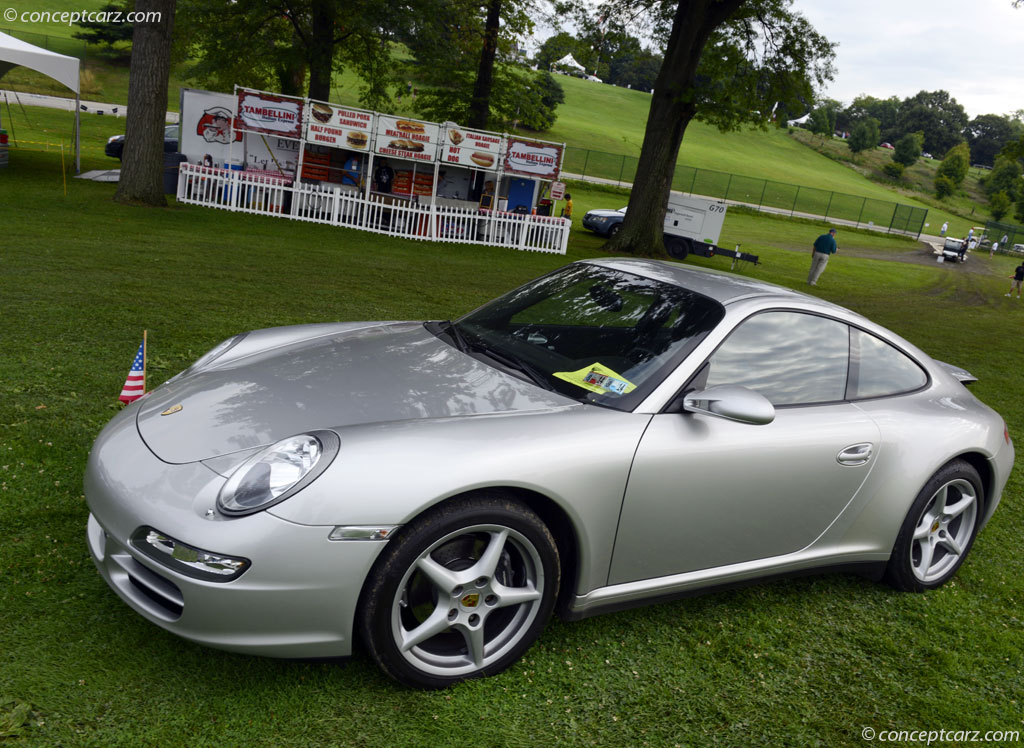
Coupe
The new 911 Carrera engine is a six-cylinder unit displacing 3.6 liters and developing 325 hp at 6,800 rpm. Maximum torque of 273,8 pound feet is available from as low as 4,250 rpm. The engine can propel the 911 Carrera from 0 to 60 mph in 4.8 seconds.The new 911 Carrera S model is armed with a larger 3.8-liter displacement engine offering 355 horsepower at 6,600 rpm. Maximum torque is 295 pound-feet at 4,600 rpm. The impressive output is capable of propelling the Carrera S from 0-to-60 mph in 4.6 seconds and to a top track speed of 182 mph (manual transmission model).VarioCam
VarioCam Plus is a remarkably innovative system that continually adjusts the valve timing for optimum performance at all times. Key benefits include increased power and torque at all engine speeds as well as smoother running, better fuel economy and fewer exhaust emissions.
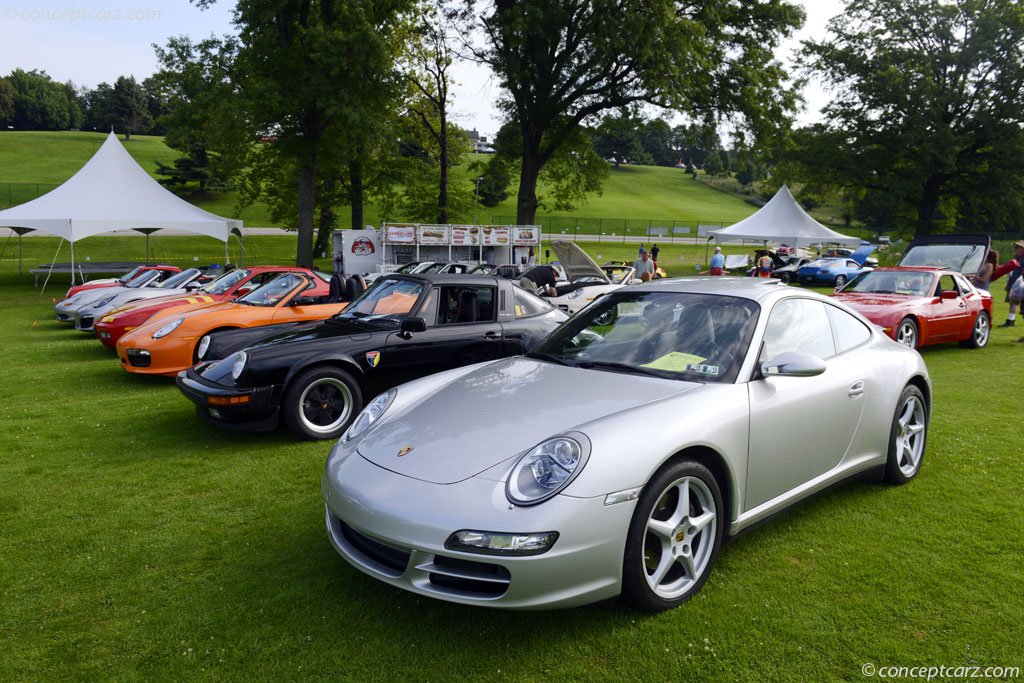
Coupe
The new six-speed manual gearbox in all new 911 models is designed for optimum performance. Each of the six ratios has been carefully selected to take maximum advantage of the engine's extraordinary power and torque. The gearbox is driven through a dual-mass flywheel, which helps minimize noise in the drivetrain. Noise is further reduced by the cable-operated gear linkage, which insulates the lever from the engine and gearbox.
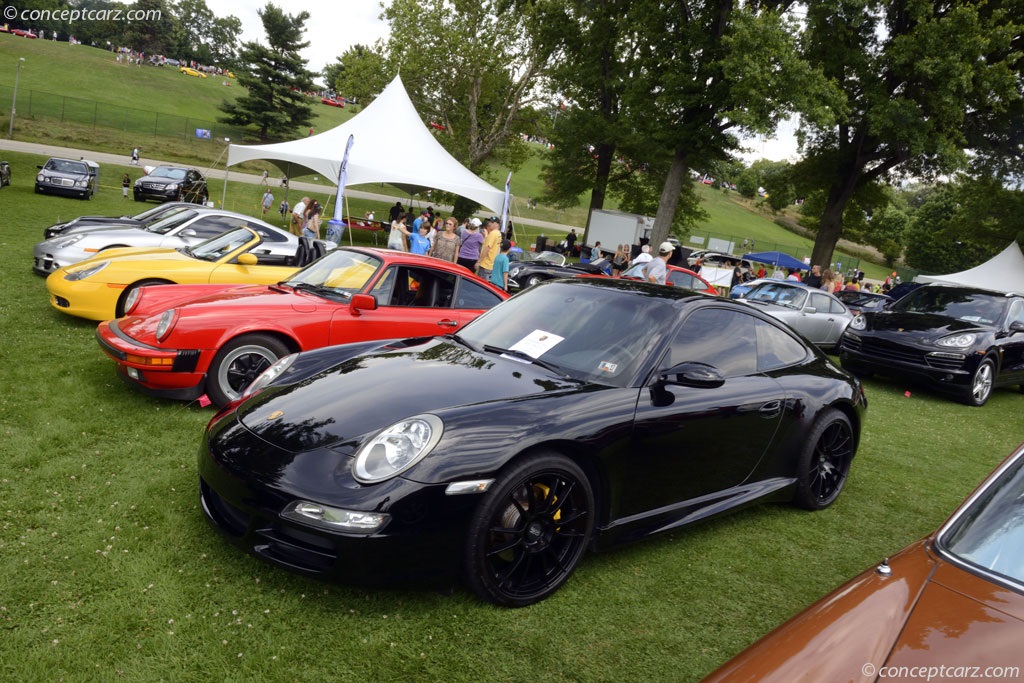
Coupe
Not surprisingly, the 911 complements its powerful engine with an equally advanced and performance-oriented chassis. The car responds immediately to the driver's input with an exhilarating degree of precision and confidence-inspiring control.
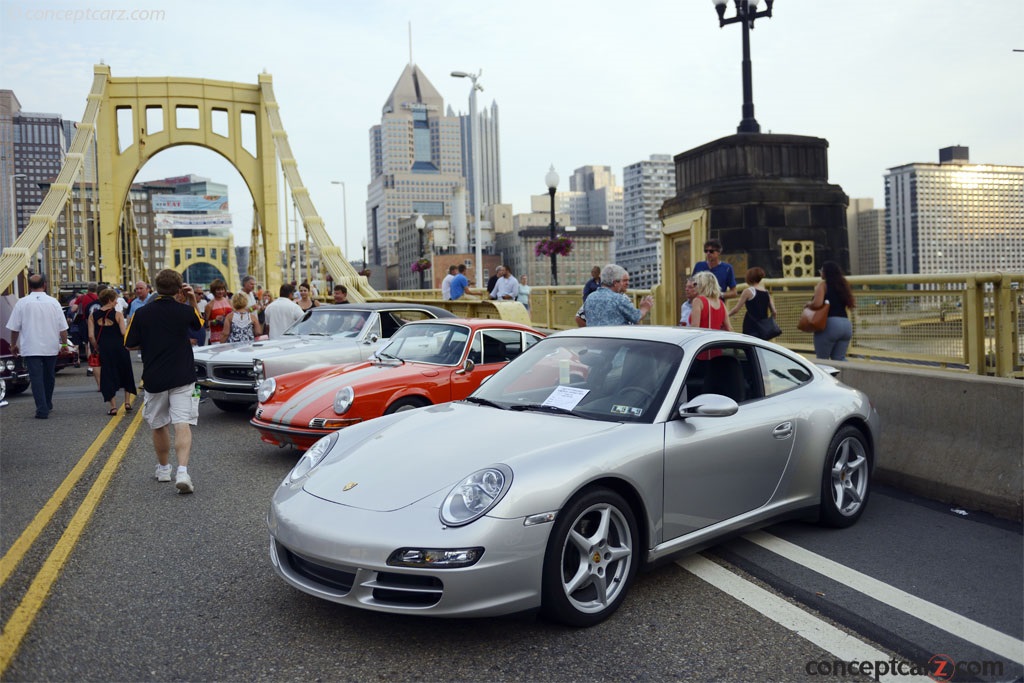
Coupe
More than a collection of the world's most refined race-bred technologies, the Porsche 911 is a driving experience. The new Sport Chrono Package Plus option is an all-new integrated system providing simultaneous enhancement for engine, chassis and the optional Tiptronic S transmission. The results are even greater performance and pleasure from your Porsche.Pressing the 'Sport' button on the center console is all that's required to begin exploiting the new 911's generous reserves of power and agility in a more immediate manner. In Sport mode, the engine management system's variable parameters are recalibrated to enhance engine response. A modified throttle map empowers your right foot with more progressive reaction to each tap of the accelerator. In higher gears, a rev-limiter works in tandem to offer additional protection for the engine under acceleration.
Coupe
Chassis #: WP0AB29916S745039
Serial #: 39/50
View info and history
Auction entries : 1
Coupe
Chassis #: WP0AB29916S745039
Serial #: 39/50
View info and history
Auction entries : 1
Pitch and roll have been significantly reduced, as have road noise and vibration. Overall agility is remarkable with excellent suspension response on most driving surfaces and in most conditions.The front axle design is based around a new evolution of our proven McPherson Strut layout. The wheels are located with absolute precision by means of longitudinal and transverse links connecting to specially reinforced hub carriers. This design approach delivers excellent straight-line stability and superlative turn-in during cornering.The rear axle structure is a new and lighter development of our subframe-based multi-link LSA suspension (Lightweight, Stable, Agile). Plus, the revised kinematics at the rear of the car also provide added stability under acceleration. This race-proven approach to the rear suspension is yet another key element in the car's exceptional road and track manners.Porsche Active Suspension Management
Porsche Active Suspension Management (PASM) is an electronic control system which uses continuous damper adjustment to maintain optimum ride quality and comfort. The push-button system is standard on the 911 Carrera 4S and optional on the 911 Carrera 4.PASM has two setup modes, 'Normal' and 'Sport', with only minimal overlap between the two. While the former is a mix of performance and comfort, the 'Sport' setup mode has a much firmer range of settings for greater performance capabilities. The system responds to changing road conditions and/or driving styles by applying a variable damping force within the defined range for the selected mode ('Normal' or 'Sport'). To do that, PASM uses a series of sensors that monitor all movements of the car's body. The PASM control unit then evaluates this data and modifies the damping force on each of the wheels. The results are a reduction in pitch and roll as well as consistent road-holding on all four wheels.If 'Sport' mode is selected, the suspension is set to a harder damper rate. If the quality of the road surface drops below a certain threshold, the system immediately changes to a softer rating within the 'Sport' setup band and thus restores the car's grip and traction. When the road surface improves, PASM returns to the original, harder setting.If 'Normal' mode is selected, and the car is driven assertively, PASM automatically switches to a harder rating within the 'Normal' setup band. As the dampers become stiffer, the car becomes more stable and responds more quickly to driver inputs.In either case, the result is a car which can adapt the way it handles and rides to the driver's driving style.Source - Porsche
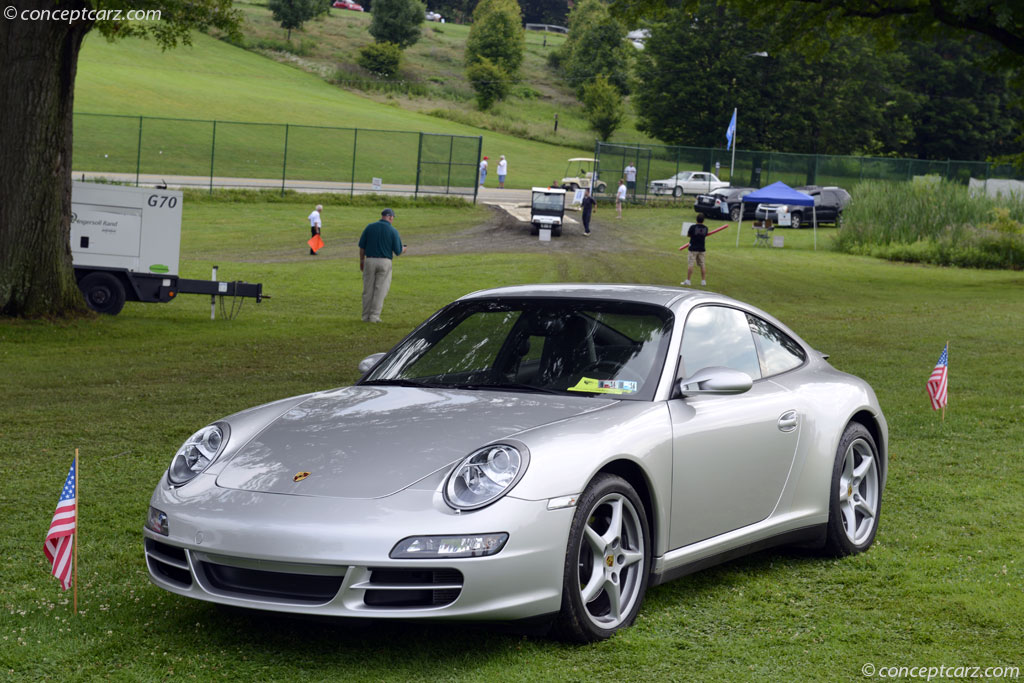
Porsche today released initial details and photography of its next generation all-wheel drive 911 model – the 2006 Porsche 911 Carrera 4. The new version offers significantly more engine, braking and handling performance than its highly respected predecessor. For the first time, the model will be available with two engine options. It also features wider bodywork, to accommodate larger rear tires, and an enhanced Porsche Stability Management system designed to provide shorter stopping distances and optimal braking.
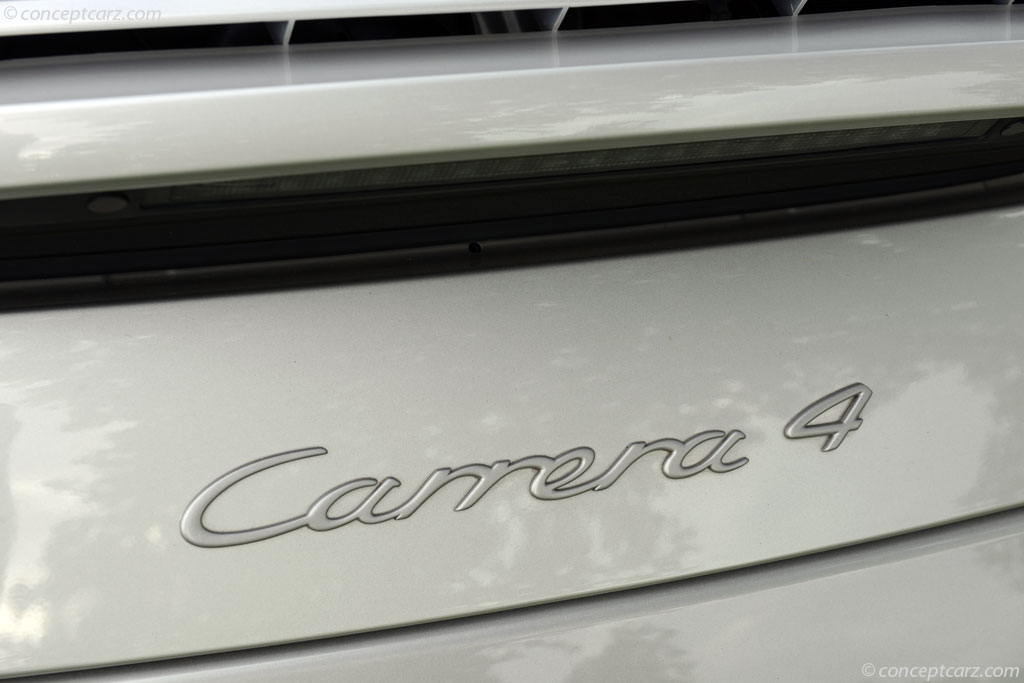
CoupeA direct descendant of the famed all-wheel drive Porsche 959, the 2006 Porsche 911 Carrera 4 Coupe is offered with two engine variations. The standard Carrera 4 is powered by the proven 3.6-liter, flat-six cylinder 325 hp (SAE) engine that propels the car from 0 to 60 mph (96 km/h) in 4.9 seconds and to a top test track speed of 174 mph (280 km/h). The Carrera 4S is equipped with a larger 3.8-liter power plant that develops 355 hp (SAE) and accelerates the car from 0 to 60 mph (96 km/h) in 4.6 seconds and to a top test track speed of 179 mph (288 km/h).The most striking exterior feature of the new Carrera 4 Coupes is their more muscular rear bodywork. To fit the Carrera 4's 295/35ZR 18 and the Carrera 4S' 305/30 ZR 19 larger and higher performing standard rear tires, the rear fenders are 1¾ inches (44 mm) wider. The Porsche Stability Management (PSM) system on the new Carrera 4S has two new functions to enhance braking. To eliminate the air gap between the pads and the disk and shorten stopping distances, the brake system is pre-filled prior to full brake application. For optimal braking, the hydraulic pump builds up extra pressure to bring all the wheels into the ABS range if the driver depresses the brake pedal quickly but not forcefully.
CoupeAs with the previous version, the Carrera 4's all-wheel drive system has a multi-disk viscous coupling that transfers between 5 and 40 percent of the driving force permanently to the front wheels. This feature provides excellent handling in curves, straight-line stability at high speeds, and improved traction on slippery roads.To further enhance handling, for the first time the Carrera 4 is available with the new Porsche Active Suspension Management (PASM) system. Standard on the Carrera 4S and an option on the Carrera 4, PASM allows the driver to select between the comfort of a Grand Touring car and the track-ready precision of a genuine high performance sports car at the touch of a button.The optional Sport Chrono Plus package is also offered as an option on both models. For sportier performance, it modifies the engine management characteristics and the control behavior of the PSM and PASM systems.
CoupeThe 2006 Porsche 911 Carrera 4 Coupe and Carrera 4S Coupe will be introduced to the United States and Canada in the fall of 2005 at a price of $77,100 US and $112,800 CDN for the Carrera 4 Coupe and $87,100 US and $127,500 CDN for the Carrera 4S Coupe.Porsche Cars North America, Inc. (PCNA), based in Atlanta, Ga., and its subsidiary, Porsche Cars Canada, Ltd., are the exclusive importers of Porsche 911, Boxster and Carrera GT sports cars and Cayenne sport utility vehicles for the United States and Canada. A wholly owned, indirect subsidiary of Dr. Ing. h.c.F. Porsche AG, PCNA employs approximately 250 people who provide Porsche vehicles, parts, service, marketing and training for its 206 U.S. and Canadian dealers. They, in turn, provide Porsche owners with best-in-class service.Source - Porsche
Coupe
Coupe
Coupe
Dr. Ing. h.c. F. Porsche AG, Stuttgart, presents a new generation of open 911 versions with all-wheel drive. The market launch of the new 911 Carrera 4 and 911 Carrera 4S Cabriolets in Europe takes place on October 22, 2005.
CoupeThe Carrera 4 Cabriolet is powered by the familiar 3.6-liter six-cylinder boxer engine, which has an output of 239 kW (325 bhp). The open all-wheel-drive sports car accelerates from 0 to 100 km/h in 5.3 seconds and reaches a top speed of 280 km/h. The 4S model is powered by the equally well-proven 3.8-liter engine, which has an output of 261 kW (355 bhp). This model sprints to 100 km/h in 4.9 seconds and has a top speed of 288 km/h. As is already the case with the coupé version of the Carrera 4, power transmission in the Cabriolets is by all-wheel drive with a Visco multi-plate clutch, which consistently brings between five and 40 percent of the driving power to the road via the front wheels. The body shell of the new open sports car models is 44 millimeters wider than on the rear-wheel-drive 911 Cabriolet, and due to its high degree of stiffness it combines the joy of open-top driving with the dynamics and driving stability of all-wheel drive. At the touch of a button, the fabric top opens and closes automatically in only 20 seconds at speeds of up to 50 km/h. At 42 kilograms, the convertible top weighs barely half as much as a comparable Vario folding roof, thus providing a lower center of gravity and a higher degree of lateral dynamics.
CoupeThe new Cabriolets' anti-roll-over system consists of super high strength steel tubes in both A-pillars, and two automatically extending bars behind the rear seats. Two head airbags complement the passive safety system. These are located in the door panel in the form of flat cushions that inflate upwards in the event of a lateral collision. This means that they provide a unique form of protection for the head, even when the top is down. Two chest airbags in the armrests and two front airbags complete the passenger protection system.To improve active safety, the standard Porsche Stability Management system (PSM) has two new functions. Pre-filling the brake mechanism ensures more spontaneous deceleration if required, and the hydraulic brake power support, which works like brake assistance, helps to build up full brake pressure in emergencies. The Porsche Ceramic Composite Brake (PCCB) is available as an option on both new versions of the Cabriolet.The chassis design corresponds to that of the conventionally powered 911 models. The standard Porsche Active Suspension Management system (PASM) in the 4S model provides a comfortably sporty basic suspension setting when set at normal, but when the sport button is pushed it triggers performance characteristics that are definitely more tightly tuned. In both positions, however, the setting is permanently geared to the appropriate driving style and the nature of the road. The active suspension system is available as an option on the Carrera 4 Cabriolet.
CoupeThe basic Euro-price is 79,900 Euros for the 911 Carrera 4 Cabriolet and 88,700 Euros for the Carrera 4S Cabriolet. In Germany, the prices of the Cabriolet models (including sales tax and national requirements) are 92,865 Euros for the Carrera 4 and 103,073 Euros for the Carrera 4S.Source - Porsche
Coupe
Coupe
Coupe
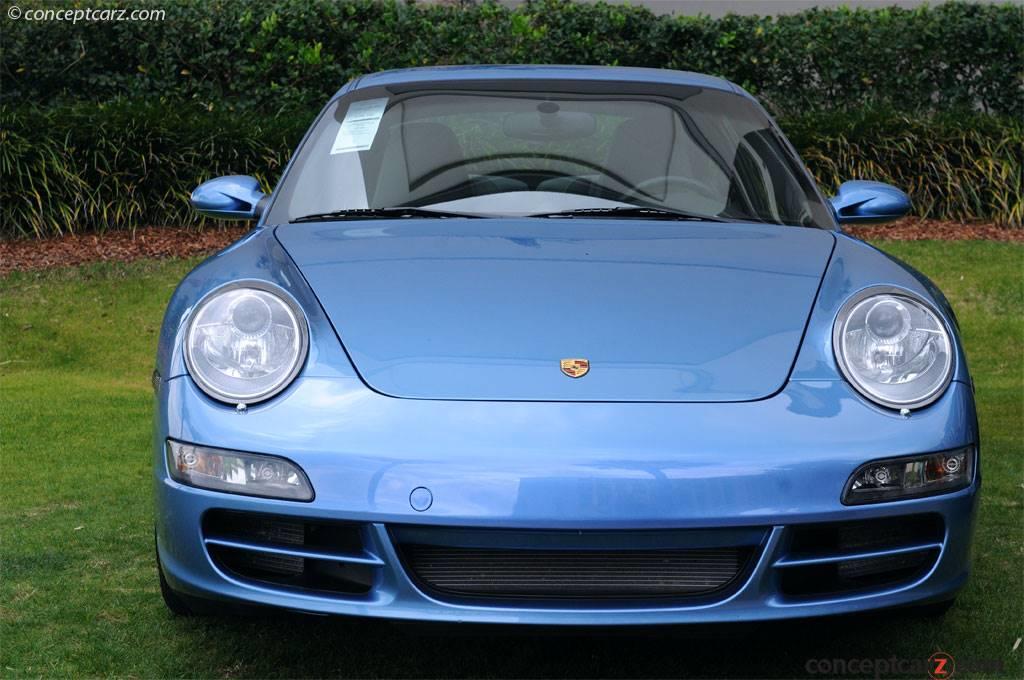
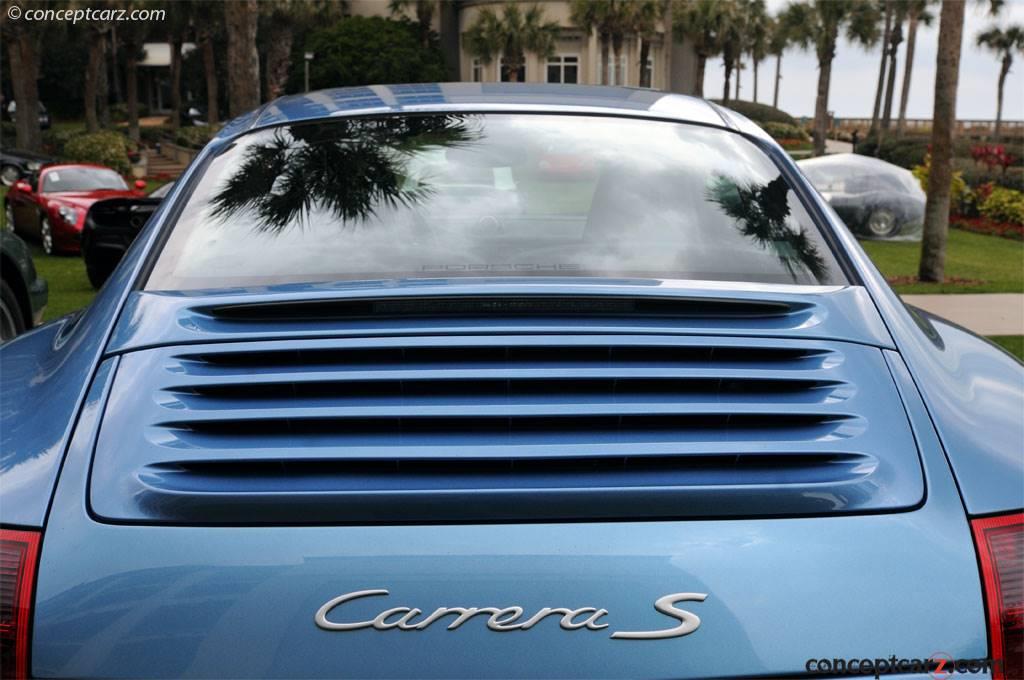
In recognition of the 50th Anniversary of the Porsche Club of America (PCA), Porsche has created an exclusive 911 Carrera® S Coupe model featuring a distinctive exterior color, unique interior styling and commemorative touches, and a more powerful and higher performing engine. Limited to an exclusive production run of just 50 cars initially made available to eligible PCA members, the 911 Club Coupe was unveiled this past weekend at PCA's 50th Annual Porsche Parade in Hershey, Pa.
CoupeThe 911 Club Coupe's most visual exterior feature is its distinguishing Azurro California color. This paint color is a modern interpretation of azure blue, a color made popular on Porsche 356 sports cars when the PCA was founded 50 years ago. The rear portion of the standard center console is also painted in Azurro California. As an option, the backs of the sport seats can be painted in this striking metallic blue color, as well.In addition to sport seats, the 911 Club Coupe's standard interior features include black instrument dials and a sport steering wheel and gear shifter. Stainless steel doorsills incorporate the 911 Club Coupe logo, and each car bears a badge on the driver's side door trim indicating its individual number in the series of 50 cars.The Club Coupe is the first in the current generation of Porsche 911 sports cars to be equipped with the X51 Powerkit. This feature increases output of the 3.8-liter, flat-six cylinder Carrera S engine from 355 to 381 horsepower and peak torque from 295 to 306 ft. lbs., making it the most powerful non-turbocharged engine yet offered in a Porsche 911 production car for North America. Distinguished by its carbon fiber air cleaner housing, the X51 Powerkit boosts performance through a series of engine enhancements including a larger throttle body, optimized intake airflow, cylinder heads and exhaust manifold modifications, changes in the control unit, and the inclusion of a sport exhaust system. The result produces a 0 to 60 mph time of a quick 4.4 seconds and a top track speed of an impressive 186 mph.
CoupeLike the Carrera S, the 911 Club Coupe is equipped with 19-inch wheels and tires, Porsche Stability Management (PSM), and Porsche Active Suspension Management (PASM) for optimal handling. The Sport Chrono Package Plus system is also standard equipment, while Porsche Ceramic Composite Brakes (PCCB) is available as an option.Manufacturers' suggested retail pricing for the 911 Club Coupe begins at $99,911 US and $145,911 CDN. It is anticipated that PCA members will purchase all 48 cars offered for sale. Due to their exclusivity, the purchasing process for these cars will be initiated through a special website (www.porsche.com/911clubcoupe) that is dedicated to the model. This website contains full terms and conditions of the sales offer. There is no charge to register for the sales offer. The offer to eligible U.S. and Canadian PCA members for the 48 Club Coupes that are available for purchase will be open until August 15, 2005. On or about this date, all of the remaining 48 Club Coupes not purchased by eligible PCA members may be made available to the general public.As part of the PCA's Golden Anniversary recognition, one of the 50 911 Club Coupes will be randomly given away to a lucky PCA member. Sweepstakes rules and eligibility are found on the same website referenced above. No purchase necessary to enter the Sweepstakes. The Sweepstakes is open to eligible U.S. and Canadian PCA members until Sept. 12, 2005.
CoupeThe Porsche Club of America is one of the largest independent, single-marque automobile clubs in the world with approximately 84,000 individual members and 139 chapters in the United States and Canada. Bill Sholar founded the club 50 years ago when he and and a small group of 11 enthusiasts held their first business meeting on Sept. 13, 1955, at Blackie's Grille in Alexandria, Va. More information about the club and its history can be found at www.pca.org.Source - Porsche
Coupe
Coupe
Coupe
Related Reading : Porsche 911 History
The legendary Porsche 911 is the longest production run sports car of all time. It was conceived as a successor for the highly successful Porsche 356 and from the start had high aspirations for success. Ferry Porsches son, Ferdinand Alexander Porsche, designed the 911. When it went into production it was labeled the 901 but Peugeot had claims to the name, so to avoid infringing on their naming scheme,....
Continue Reading >>
Continue Reading >>
Related Reading : Porsche 911 History
Who could predict that the 911 would be Porsches saving grace and surpass the 356 in sales, longevity Quickly establishing itself as an icon of 60s cool, the iconic 911 only became more popular as the years went on. The flagship of the current lineup of Porsche, the 911 (pronounced Nine Eleven) or Neunelfer is a two-door grand tourer with a very distinctive design. The 911 is one of the oldest....
Continue Reading >>
Continue Reading >>
Similar Automakers


2006 Porsche 911 Vehicle Profiles
Recent Vehicle Additions


Performance and Specification Comparison
Price Comparison
$58,900
$106,000
$122,900
Related Automotive News

All-New 2022 Toyota GR 86: Thrills Around Every Corner
Modern sports car designed by enthusiasts, for enthusiasts
Precision handling, low center of gravity and near perfect balance
2.4L flat-four boxer engine rewards drivers with peak torque at lower RPM
Functional vents and spoilers maximize aerodyn...

The 2022 Volkswagen Taos: Style, performance and value for the compact SUV space
Based on Volkswagens MQB architecture, and slotting under Tiguan, Taos melds a spacious interior with rugged looks and excellent fuel economy
Bold design establishes its connection to the growing Volkswagen SUV family
1.5-liter TSI® engine with...

2016 HYUNDAI GENESIS ADDS TO EXCEPTIONAL VALUE EQUATION WITH STANDARD PREMIUM LIGHTING APPEAL
Standard LED Daytime Running Lights and HID Headlights Elevate Premium Road Presence
Automatic Emergency Braking, Heads-up Display, Blind-Spot Detection, Cabin CO2 Sensor and Lane-Keep Assist Available as Suite of Active Safety Features
Genesis 5.0...

2014 E250 BlueTEC Sedan Gets 45 MPG EPA Highway Rating
Class-Leading Fuel Economy and Powertrain
The newest Mercedes-Benz E-Class - the 2014 E250 BlueTEC sedan - has achieved an impressive estimated EPA rating of 45 miles per gallon on the highway and 28 mpg around town. The first diesel E-Class to...
BMW ANNOUNCES PRICING FOR ALL-NEW X5 SPORTS ACTIVITY VEHICLE
Woodcliff Lake, NJ – June 24th, 2013 … It isnt often that an automobile manufacturer gets to launch an entirely new vehicle segment, but thats exactly what BMW did in 1999 when it introduced the worlds first Sports Activity Vehicle – the BMW X5. Two...