Briggs Swift Cunnigham is one of the most famous and successful sports car drivers of all time. Ironically, he did not start his racing career until his early forties although he had been active in the automotive racing scene prior. At the end of World War I, Cunningham's uncle street raced a Dodge Touring car that was powered by a Hispano-Suiza airplane engine. Briggs would accompany him on many of these races, thus fueling his interest in automotive racing.
Cunningham was a wealthy man. His father, who passed away when Briggs was only five, was the founder and president of the Citizens' National Bank and a director of the Pennsylvania Railroad. There were stipulations in the will that dictated that the fortune could not be touched until their (Briggs and his siblings) 40th birthdays.
In 1930 Briggs married Lucie Bedford, the granddaughter of a co-founder of Standard Oil. During their honeymoon in Europe, the newlyweds witnessed the Monaco Grand Prix. This race was another inspiration and a motivator for Briggs to enter the racing scene.
Cunningham had friends from his days at Yale University. They included Miles, Barron, and the Collier brothers. In 1933 the Collier brothers formed the Automobile Racing Club of America. Briggs, more of a sailor than a race car enthusiast, joined the club. He participated in some of the U.S. and European racing endeavors. This experience helped begin the dream of racing and winning the 24 Hour of Le Mans race. Briggs was a very competitive person that went beyond the race track. In 1958 he skippered the American 12-meter yacht, Columbia, and won the America's Cup.
Luigi Chinetti, an acquaintance of Cunningham and the 1949 LeMans victor, invited Cunningham to compete in the grueling 24-Hour LeMans race. Luigi promised that he could arrange for two vehicles to be entered; if Cunningham could finish, he could return again in 1951.
Cunningham immediately began his pursuit of two competitive vehicles and a knowledgeable mechanic. He was introduced to a mechanic named Bill Frick who recommended transplanting the mighty OHV V8 Cadillac engine into Ford bodies. The resulting vehicle, which Cunningham dubbed the 'Fordillacs', were both agile and powerful. When shown to racing officials, the vehicles were declined because of their deviation from LeMans regulations and because they resembled hot rods. Cunningham decided to purchase two 1950 Series 61 Coupe deVilles with manual transmissions. The rules for LeMans stated that no internal engine modifications could be performed. The chassis was to be stock but the bodies and the external parts of the engine could be modified.
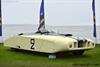
Cunningham decided to enter one of the Coupe deVilles with very minor alterations while the second vehicle would be heavily modified. Howard Weinman, an aeronautical engineer, was tasked with morphing the Cadillac. Weinman began by testing designs in wind tunnels. The resulting design was wide, had a low center of gravity, was aerodynamic, and was lightweight due to an aluminum body. The body panels could be easily removed to access the necessary mechanical components. Many people agreed that the appearance was not favorable and it received the name 'Le Manstre' by the French press.
The only suspension modification performed on each car was the addition of French springs. A thermostat was added to the drum brakes, differential housing, and transmission case so that overheating could be monitored. Two-way radios were installed in both cars. A tachometer and oil pressure gauges were added to the internal instrumentation. Unessential items, such as the rear seats, hubcaps, and fender skirts, were all removed.
Both vehicles received mild updates to their engines. The 'Le Manstre' was given five carburetors while the stock Coupe received dual 2-barrel carburetors, replacing the single 2-barrel unit. The muffler was removed and the pipes ended in front of the rear wheels. Alfin drum brakes were added to the LeManstre and both vehicles received modifications to allow better airflow of the brakes. In addition to the stock 20-gallon fuel tank, a 35-gallon tank was added. The two vehicles were painted in a dark blue and white color prior to being shipped to France.
There had been little time to perform proper testing on either vehicle prior to being shipped to France. When the vehicles arrived at LeMans they were put through intensive practice runs. Both cars proved to have their flaws such as poor night vision. When proceeding through corners at a high rate of speed, the engine received inadequate amounts of fuel. The first practice run for the LeManstre was devastating; co-driver Walters lost control and tore a hole in the nose. Repairs were able to be made before the tech inspection and the other shortcomings were addressed before race day.
Cunningham and Phil Walters were the drivers of the LeManstre, the more serious entry. The coupe was driven by Miles and Sam Collier. The traditional sprint start, where the drivers sprinted to their vehicles, revealed the doors were locked. The problem was able to be solved by reaching in through the window and unlocking the door. Still, not a good way to start a race.
On the second lap, the LeManstre lost control and ended up in a sandbank where it sat for twenty minutes before being freed. The LeManstre was now four laps behind. The Coupe had a bit of misfortune as well. Partway through the race, it had to come to a complete stop while a stray dog made its way across the track. Later on in the race, it barely made it back to the pits due to low fuel.
When the checkered flag fell, both cars were in impressive standing. The LeManstre had battled its way back from 35th place to finish in 11th. The coupe was in 10th after averaging 81.5 mph per lap. To finish the race is a major accomplishment, a testament to both driver and the car. Their accomplishment was even more significant since the Coupe had lost its first and second gear during the race.
by Daniel Vaughan | Nov 2007
Cunningham was a wealthy man. His father, who passed away when Briggs was only five, was the founder and president of the Citizens' National Bank and a director of the Pennsylvania Railroad. There were stipulations in the will that dictated that the fortune could not be touched until their (Briggs and his siblings) 40th birthdays.
In 1930 Briggs married Lucie Bedford, the granddaughter of a co-founder of Standard Oil. During their honeymoon in Europe, the newlyweds witnessed the Monaco Grand Prix. This race was another inspiration and a motivator for Briggs to enter the racing scene.
Cunningham had friends from his days at Yale University. They included Miles, Barron, and the Collier brothers. In 1933 the Collier brothers formed the Automobile Racing Club of America. Briggs, more of a sailor than a race car enthusiast, joined the club. He participated in some of the U.S. and European racing endeavors. This experience helped begin the dream of racing and winning the 24 Hour of Le Mans race. Briggs was a very competitive person that went beyond the race track. In 1958 he skippered the American 12-meter yacht, Columbia, and won the America's Cup.
Luigi Chinetti, an acquaintance of Cunningham and the 1949 LeMans victor, invited Cunningham to compete in the grueling 24-Hour LeMans race. Luigi promised that he could arrange for two vehicles to be entered; if Cunningham could finish, he could return again in 1951.
Cunningham immediately began his pursuit of two competitive vehicles and a knowledgeable mechanic. He was introduced to a mechanic named Bill Frick who recommended transplanting the mighty OHV V8 Cadillac engine into Ford bodies. The resulting vehicle, which Cunningham dubbed the 'Fordillacs', were both agile and powerful. When shown to racing officials, the vehicles were declined because of their deviation from LeMans regulations and because they resembled hot rods. Cunningham decided to purchase two 1950 Series 61 Coupe deVilles with manual transmissions. The rules for LeMans stated that no internal engine modifications could be performed. The chassis was to be stock but the bodies and the external parts of the engine could be modified.
Cunningham decided to enter one of the Coupe deVilles with very minor alterations while the second vehicle would be heavily modified. Howard Weinman, an aeronautical engineer, was tasked with morphing the Cadillac. Weinman began by testing designs in wind tunnels. The resulting design was wide, had a low center of gravity, was aerodynamic, and was lightweight due to an aluminum body. The body panels could be easily removed to access the necessary mechanical components. Many people agreed that the appearance was not favorable and it received the name 'Le Manstre' by the French press.
The only suspension modification performed on each car was the addition of French springs. A thermostat was added to the drum brakes, differential housing, and transmission case so that overheating could be monitored. Two-way radios were installed in both cars. A tachometer and oil pressure gauges were added to the internal instrumentation. Unessential items, such as the rear seats, hubcaps, and fender skirts, were all removed.
Both vehicles received mild updates to their engines. The 'Le Manstre' was given five carburetors while the stock Coupe received dual 2-barrel carburetors, replacing the single 2-barrel unit. The muffler was removed and the pipes ended in front of the rear wheels. Alfin drum brakes were added to the LeManstre and both vehicles received modifications to allow better airflow of the brakes. In addition to the stock 20-gallon fuel tank, a 35-gallon tank was added. The two vehicles were painted in a dark blue and white color prior to being shipped to France.
There had been little time to perform proper testing on either vehicle prior to being shipped to France. When the vehicles arrived at LeMans they were put through intensive practice runs. Both cars proved to have their flaws such as poor night vision. When proceeding through corners at a high rate of speed, the engine received inadequate amounts of fuel. The first practice run for the LeManstre was devastating; co-driver Walters lost control and tore a hole in the nose. Repairs were able to be made before the tech inspection and the other shortcomings were addressed before race day.
Cunningham and Phil Walters were the drivers of the LeManstre, the more serious entry. The coupe was driven by Miles and Sam Collier. The traditional sprint start, where the drivers sprinted to their vehicles, revealed the doors were locked. The problem was able to be solved by reaching in through the window and unlocking the door. Still, not a good way to start a race.
On the second lap, the LeManstre lost control and ended up in a sandbank where it sat for twenty minutes before being freed. The LeManstre was now four laps behind. The Coupe had a bit of misfortune as well. Partway through the race, it had to come to a complete stop while a stray dog made its way across the track. Later on in the race, it barely made it back to the pits due to low fuel.
When the checkered flag fell, both cars were in impressive standing. The LeManstre had battled its way back from 35th place to finish in 11th. The coupe was in 10th after averaging 81.5 mph per lap. To finish the race is a major accomplishment, a testament to both driver and the car. Their accomplishment was even more significant since the Coupe had lost its first and second gear during the race.
by Daniel Vaughan | Nov 2007
Similar Vehicles
Similarly Sized Vehicles
from 1950
Similarly Priced Vehicles
Cadillac Monthly Sales Volume
March 2023
36,321


1950 Cadillac Series 61 DeVille LeMans Vehicle Profiles

Recent Vehicle Additions


Related Automotive News

Iconic Ex-Briggs Cunningham Corvette Le Mans Headed to Amelia Island Auction
ICONIC EX-BRIGGS CUNNINGHAM 1960 CHEVROLET CORVETTE LE MANS RACE CAR LEADS A LINEUP OF BANNER SPORTS AND RACING CARS FOR THE AMELIA ISLAND AUCTION
MORE THAN 80 OUTSTANDING MOTORS CARS SET FOR THE 22 MAY AUCTION
RM Sothebys announces exci...

Competition at the Amelia Island Concours
Competition has always been a part of the Amelia Island Concours dElegance. The core group of classes includes four Race Car groups (Prewar, 1946-57, 1958-66, 1967-83). Additionally, there are four classes reserved for Sports Cars. For those seeking...

Famous & Rare Prewar MGs Star At 'The Amelia' 2018
MG will be honored at the 23rd annual Amelia Island Concours dElegance on March 11, 2018.
The sports cars from Morris Garages were founding members of postwar American sports car racing. The 23rd annual Amelia will celebrate marque-founder Cecil...

The last Ferrari 275 GTS/4 NART Spider headlines RM's star-studded Monaco sale
RM Sothebys offers the last of the line Ferrari 275 GTS4 NART Spider at its Monaco sale, 14 May, during the Grand Prix de Monaco Historique weekend
The only NART Spider sold new in Europe, and the third-to-last 275-series Ferrari built, chass...

Techno Classica 2014: more than 30 racing cars to celebrate 120 years of Mercedes-Benz motor racing history
Cars that were the heroes of magical moments put their stamp on this high-powered, most comprehensive show presentation
With more than 30 vehicles, Mercedes-Benz Classic presents motor racing history in all its unique breadth and depth
120 years o...