1953 R-Type | 1955 R-Type ![]() |
1954 Bentley R Type news, pictures, and information | ||
| Tweet | ||
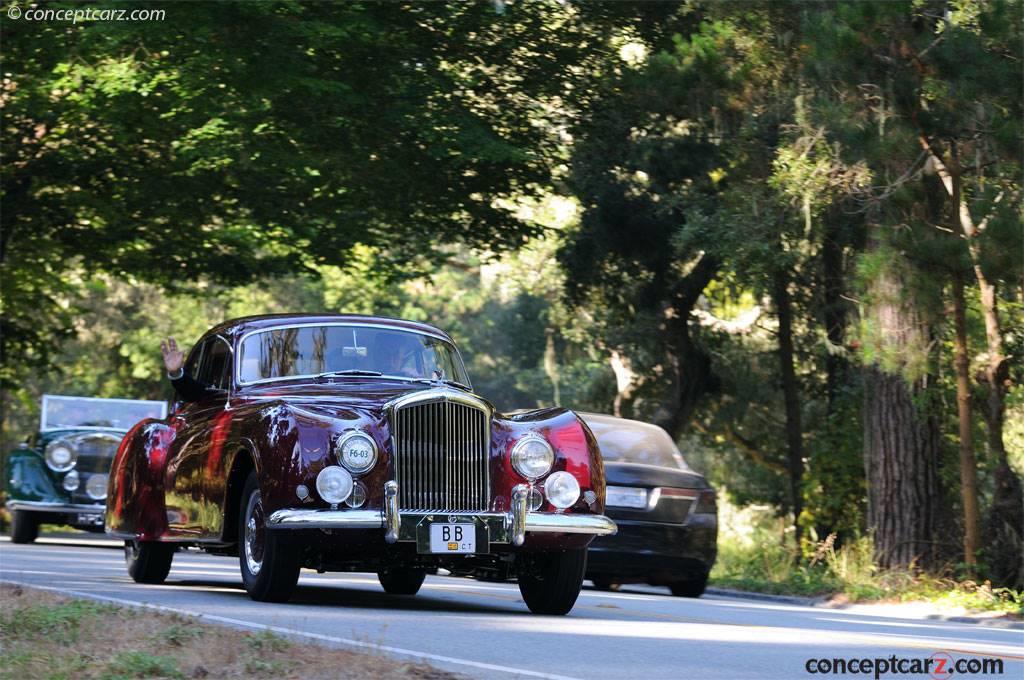
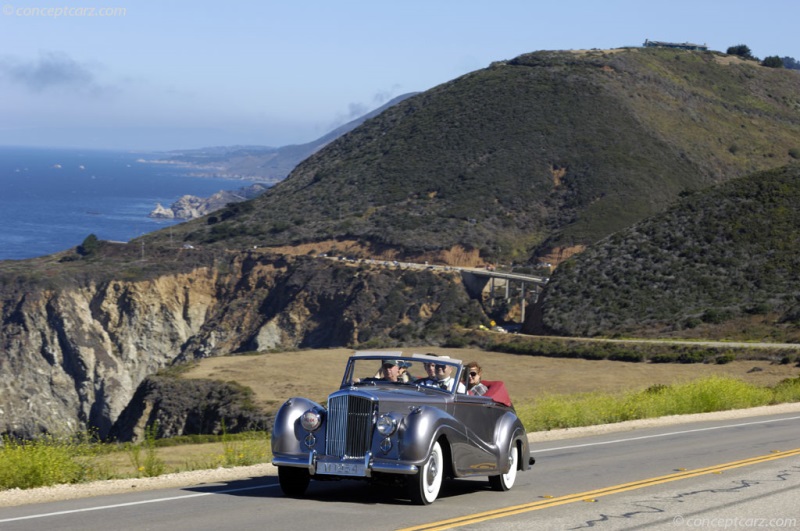
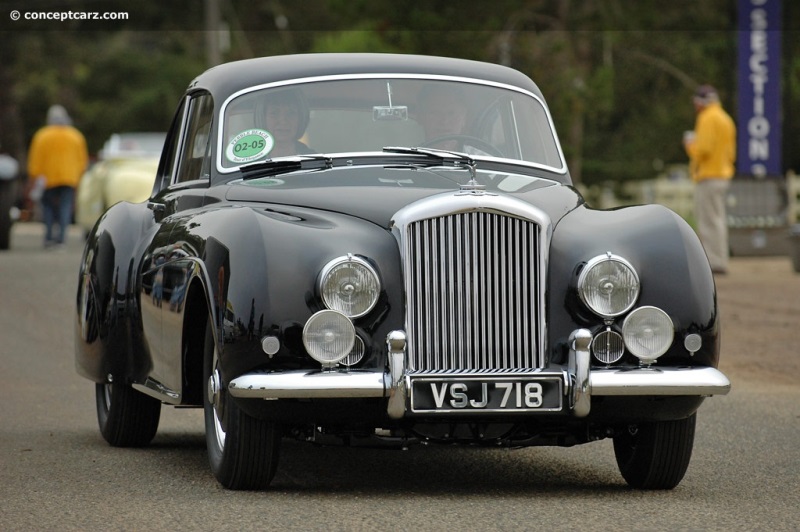
![]() | ![]() | ![]() | Fastback Coupe Coachwork: Mulliner Chassis Num: BC62LC |
| Sold for $753,500 at 2011 RM Auctions. | |||
When it would become apparent the country would not only survive, but thrive once again, a mass exodus would take place amongst the nationals. Although the war had been over for years, the population wouldn't really experience freedom until the early 1950s.
Everyone, from the common man to the wealthy man, wanted to experience life. For those that could afford it, opulence was considered life. And for those that could, nothing would provide life-giving pleasure like the Bentley Continental Fastback.
The Bentley Continental had actually come into existence before the start of World War II. These Continental, for their day were fast and comfortable. One particular Bentley, a 1938 4.25-liter Coupe would end up being able to reach more than 120 mph on the autobahns in Germany. The early Continental would eventually lead to the MK V. However, MK V production would be limited by the outbreak of World War II.
After the war, Bentley and Rolls-Royce would move operations to Crewe. Bentley would pick up manufacturing with the MK VI. In spite of the fact the war had ended, and people started to again live a life of normalcy and of greater comfort they would still need some inspiration to truly enjoy life again. Bentley would replace the MK VI with the R-Type Continental and the result would be a rebirth for Bentley. The beautifully designed H.J. Mulliner designs would motivate the wealthy to not just think practically anymore, but artistically and emotionally. And the R-Type's design was truly an evocative design; a flagship for Bentley.
All of the Continentals ever produced for Bentley would be coach-built, and therefore, very distinctive. One of those distinctive designs from Mulliner would be the Continental Fastback. The Fastback featured a steeply descending rear end completed by a boot handle and the Bentley logo.
There would be just 208 R-Type Continental cars built. Out of those, 193 would include the Mulliner Fastback Coupe design. Only 43 out of the 208 would come fitted with left-hand drive direct new from the factory. And among those 43, only nine would be fitted with automatic transmissions before leaving the factory. These nine cars would certainly be the rarest of the bunch. And one of them would be available for auction in Monterey, California.
Chassis BC62LC certainly is one of the rarest Mulliner Fastback Coupes, but it would also have a history filled with extra highlights that would cause the car even more of an interesting showpiece. This specific chassis, made available through RM Auctions, would be finished in midnight blue with maroon Connolly leather interior and would be delivered to Laurence Rockefeller in 1954. The car would be delivered to New York on board the SS Mauretania. Laurence Rockefeller was a philanthropist and a rather generous individual. The car would actually be a gift to his wife Mary Rockefeller.
Mary would own the car until 1960 when it would be sold to John Merriam, the CEO of Northern Natural Gas Company. Merriam would keep the car until 1972 when it would again be sold, with air conditioning, to Virgil Campbell. Peter Hageman would eventually purchase the car in 2001. It would eventually change hands a couple more times before it would go through come mechanical work by Mosier Restoration in Inglewood, California. The car would further go through restoration in 2007.
As presented at the time of auction, the car was expected to earn somewhere around $850,000 and $1,000,000. It would come with a 155 hp, 4.8-liter six-cylinder engine with dual SU carburetors; making it the fastest production car of its time. Even after some sixty years of age, the quality of the Bentley Continental Fastback still offers confidence of extended high-speed cruising.
One of the definitive examples that charted Bentley's course after the war, this rare Fastback Coupe also has that particular personal history that makes the car a centerpiece not just in any collection but in conversation as well.
At auction, the lot was sold for the sum of $753,500 which included buyer's premium.
Sources:
'Featured Lots: Lot No. 213: 1954 Bentley R-Type Continental Fastback by H.J. Mulliner', (http://www.rmauctions.com/featurecars.cfm?SaleCode=MO11&CarID=r198&fc=0). RM Auctions. http://www.rmauctions.com/featurecars.cfm?SaleCode=MO11&CarID=r198&fc=0. Retrieved 19 August 2011.
Wikipedia contributors, 'Bentley R Type', Wikipedia, The Free Encyclopedia, 5 July 2011, 12:15 UTC, http://en.wikipedia.org/w/index.php?title=Bentley_R_Type&oldid=437861746 accessed 19 August 2011By Jeremy McMullen
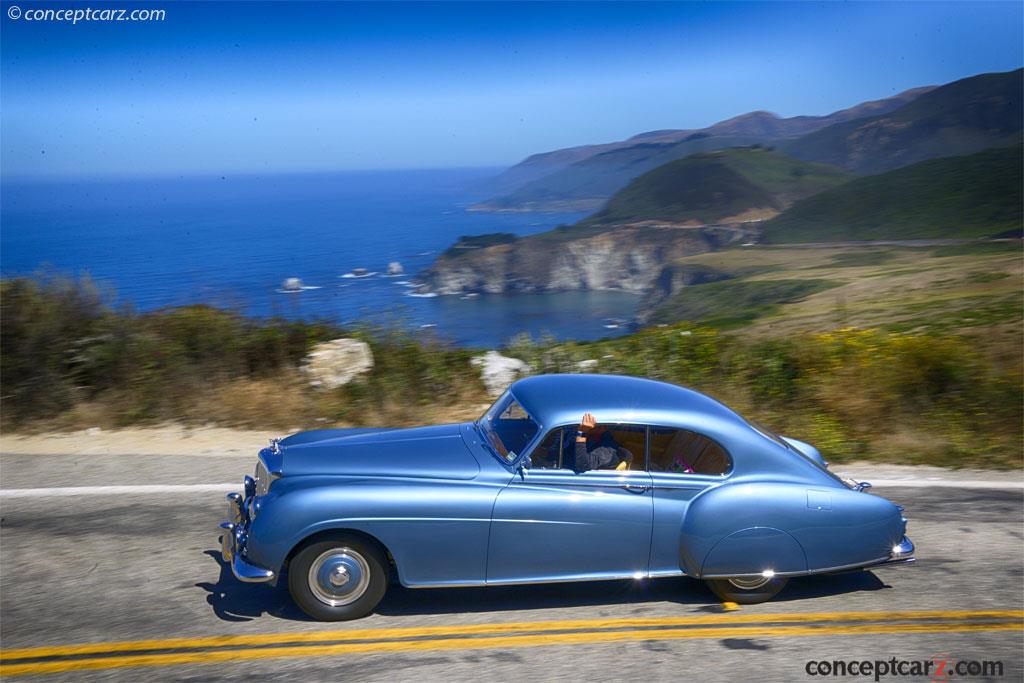
![]() | ![]() | ![]() | Fastback Coupe Coachwork: Mulliner |
The Bentley R-Type Continental, in its day, was the world's most expensive automobile. For instance, it was 35 percent more costly than a Cadillac Special Sedan. Before the outbreak of the war in 1939, Bentley thought about producing a limited-production performance model for the new high-speed roads that were being constructed in Europe. A prototype achieved a near 100 mph average speed in testing on the German Autobahn, but WWII halted production plans. Revived in 1951, Bentley Motors worked closely with coachbuilder Mulliner and developed a lightweight performance Mark VI Bentley by using aluminum panels and reducing the 4078 pound weight to 3739 on the standard sedan.
What really made the Bentley Continental so distinctive was the fastback two-door bodywork, whose excellent aerodynamics gave the car excellent high-speed performance. The pre-war prototype had raced at LeMans in 1949 and 1950 with some success.
The six-cylinder, water-cooled engine with a displacement of 5.57 liters, produced 160 horsepower, coupled to a four-speed transmission, and had a top speed of 120 mph. The pressed channel-steel chassis carried an independent front suspension with coil springs and wishbones, a rear suspension with a semi-elliptic leaf spring, and four-wheel drum brakes.
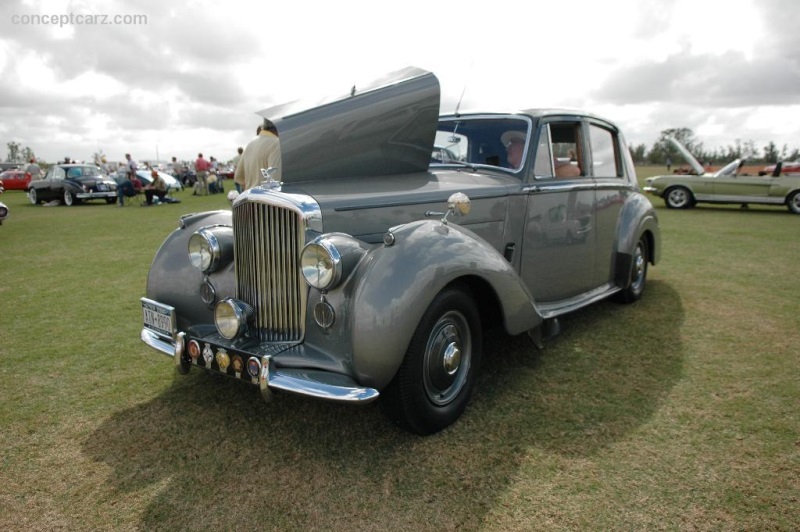
![]() | ![]() | ![]() | Saloon Coachwork: Park Ward & Co. Chassis Num: BC29D Engine Num: BED28 |
This was the 1954 London show car and is the only survivor of two alloy bodied Park Ward Coupe R-Type Continentals built out of a total of 208 chassis.
There is a complete record of the 14 owners of this vehicle. The current owner commissioned a two-year restoration by the firm of P.A. Wood and the restoration was completed by Vantage Motorworks of Miami, Florida.
All of the Park Ward vehicles were supplied with varying degrees of special accoutrements including fitted luggage to this one. The luggage and garment bags have been faithfully reproduced and nestle comfortably in the trunk along with the rare Continental Touring Spare Kit.
![]() | ![]() | ![]() | Saloon Coachwork: Mulliner Chassis Num: BC38LC |
![]() | ![]() | ![]() | Saloon |
![]() | ![]() | ![]() | Sport Saloon Coachwork: James Young |
- Possibly the ONLY one like it in the entire world.
![]() | ![]() | Coupe Coachwork: Franay Chassis Num: BC51LC Engine Num: BCC50 |
The car is the only LHD R-Type Continental Franay Fastback in existence! 1 of only 5 bodies that Franay built for the Continental R-Type chassis. Production of the Bentley R-Type started in 1952 and continued through 1955; a great departure from Bentley's traditional chauffeur-driven sedan, the Continental was designed to be driven by the owner-enthusiast. Only 208 cars were built during the three-year period and just 43 had left-hand drive. Profiles of the Continental and the Bentley Mark VI standard sedan are indistinguishable up to the rear edge of the front doors; beyond that point the 'fastback' design incorporates a rear window and a sweeping trunk lid that results in a more spacious luggage compartment. The R-Type was delivered as a rolling chassis for the creation of custom coachwork. This R-Type Continental has a 4,566 cc engine (4.5-liter), a four-speed manual transmission with floor-mounted shifter, and a rear axle geared for high-speed touring; the R-Type can maintain 120-mph for hours without breaking a sweat. Most Continentals were fastbacks built by H. J. Mulliner & Co. in London; Park Ward in London built six, Graber in Switzerland built three, Franay in Paris bodied five cars, and Pinin Farina in Italy created only one. This extremely rare and beautiful example was delivered new to Vandendreissche & Fils May 20th, 1954 in France. Former owners include: D.J. Smith, USA- January 1965 Gene Littler, USA – July 1977 Richard Gorman, USA, 1990 Bill Jacobs, Jr., Joliet, IL. USA, 1990 Blackhawk Collection, Danville, CA. USA, 1990 – current
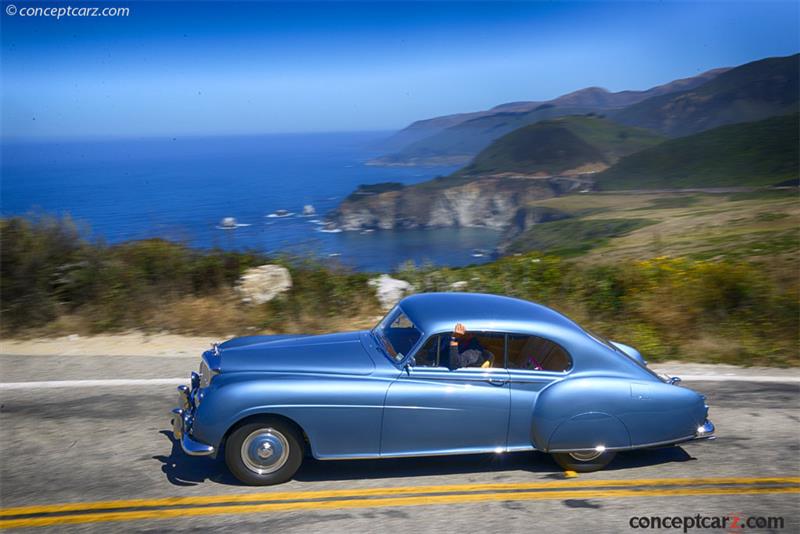
![]() | ![]() | ![]() | Fastback Coupe Coachwork: Mulliner Chassis Num: BC66LC |
| Sold for $550,000 at 2008 RM Auctions. | |||
The H.J Mulliner Sports Saloon was given an aluminum, lightweight body with a fastback deck, tapered rear fenders and a curved windscreen. The series A, B, and C cars were given an inline six-cylinder engine. The engine featured an aluminum cylinder head, six overhead intake valves, and six side exhaust valves. This 4.5-liter unit was capable of producing 158 horsepower, thanks in part to the dual SU H-6 carburetors, large bore exhaust system, and high compression.
The first 89 Continentals produced were fitted with a four-speed manual gearbox. The later series cars had an automatic based on the General Motors Hydr-Matic unit. In total, there were 166 cars with manual gearboxes and 42 with the automatic.
This 1954 Bentley R-Type Continental Fastback with coachwork by H.J. Mulliner is a left-hand drive vehicle with the highly desirable four-speed automatic.
In 2008, this vehicle was offered for sale at the 'Sports & Classics of Monterey' presented by RM Auctions. It had an estimated value of $575,000 - $765,000. The lot was sold for a high bid of $550,000, including buyer's premium.
By Daniel Vaughan | Jan 2009
In 1931 Rolls-Royce acquired Bentley. From that point, the two marques began to show similarities, such as design and mechanics. By the mid 1950's, the marques were mostly the same except for badging and engine. The R-Type's are memorable because they were still their own distinct model.
In 1952 at the Earls Court Motor Show, Bentley displayed their R-Type model. Bodywork was mostly handled by H.J. Mulliner and was available as a two-door Continental or Saloon. The Continental's featured a 4566 cc engine which was later increased to 4887 cc. The inline-six cylinder engine had dual SU carburetors, cast-iron cylinder blocks and aluminum alloy cylinder heads. A four-speed manual gearbox was standard with a 4-speed automatic being offered as optional equipment. Servo-assisted drum brakes provided the stopping power.
The predecessor the R-Type was the Mark VI which had been produced from 1946 through 1952. The customers of the Mark VI complained that there was insufficient luggage space. In 1952, this issue was addressed and the cargo space was increased. Originally, the Mark VII name was to be used but Jaguar had already secured rights to the name. They were marketed as Bentley Sports Saloons and later were given the designation R-Type. This was because the vehicle that replaced this series was the S-Type, the next in the succession.
The Continental bodies were mostly two-doors, light aluminum alloy, and aerodynamic. A few of the R-Type Continentals received coachwork courtesy of Graber or Franay. Only one Continental was bodied by the famous Pininfarina. The body designs were tested in the Rolls-Royce aircraft engine wind tunnels to determine maximum aerodynamics. The gearbox was a close-ratio unit matted to a highly tuned engine. In 1955 the production of the R-Type ceased and was replaced by the S-Series.
The R-Type Continentals were sports sedans that were excellent for touring. Their aerodynamic and stylish bodies, coupled to a potent drive-train, and luxurious interior was the complete package. In modern times, these are highly sought after.
By Daniel Vaughan | Mar 2006
In 1952 at the Earls Court Motor Show, Bentley displayed their R-Type model. Bodywork was mostly handled by H.J. Mulliner and was available as a two-door Continental or Saloon. The Continental's featured a 4566 cc engine which was later increased to 4887 cc. The inline-six cylinder engine had dual SU carburetors, cast-iron cylinder blocks and aluminum alloy cylinder heads. A four-speed manual gearbox was standard with a 4-speed automatic being offered as optional equipment. Servo-assisted drum brakes provided the stopping power.
The predecessor the R-Type was the Mark VI which had been produced from 1946 through 1952. The customers of the Mark VI complained that there was insufficient luggage space. In 1952, this issue was addressed and the cargo space was increased. Originally, the Mark VII name was to be used but Jaguar had already secured rights to the name. They were marketed as Bentley Sports Saloons and later were given the designation R-Type. This was because the vehicle that replaced this series was the S-Type, the next in the succession.
The Continental bodies were mostly two-doors, light aluminum alloy, and aerodynamic. A few of the R-Type Continentals received coachwork courtesy of Graber or Franay. Only one Continental was bodied by the famous Pininfarina. The body designs were tested in the Rolls-Royce aircraft engine wind tunnels to determine maximum aerodynamics. The gearbox was a close-ratio unit matted to a highly tuned engine. In 1955 the production of the R-Type ceased and was replaced by the S-Series.
The R-Type Continentals were sports sedans that were excellent for touring. Their aerodynamic and stylish bodies, coupled to a potent drive-train, and luxurious interior was the complete package. In modern times, these are highly sought after.
By Daniel Vaughan | Mar 2006
Following WWII, the British faced a sobering time during the early 1950s. Commodities and luxuries that were once commonplace, were still subject to rationing. Taxes continued to be piled on the British people, and frozen wages kept inflation in a constant battle.
Following a decade of prolonged asceticism, the petrol rationing was finally lifted on May 26th 1950. The British motorist was once again given the option to drive his or her car as frequently as they liked. An all-time record, as described by the AA, the traffic packed a solid ten miles out of London following the lift of the rationing.
The director of Bentley's Experimental Department, Chief Project Engineer Ivan Everden began working on a top-secret project in 1950 known as Corniche II. His goal was to create a two door, four-seater grand touring vehicle that was speed-driven, yet refined. This vehicle would eventually become the famous R-Type Continental.
One of the most beautiful vehicles in British automobile history, the Bentley Continental R is considered to be the ultimate in post-war Bentleys. In 1939, a year before the WWII, a Parisian, Andre Embiricos, was interested in a special Bentley. Built by boutique French coachbuilder Pourtout and styled by Frenchman Georges Paulin, who was responsible for designing the streamlined bodywork with the extensive wind-tunnel testing, the Bentley and Rolls Royce engineers developed the experimental 'Continental'.
A phenomenally advanced vehicle, this was a revolutionary looking 4-liter Bentley, called the ‘Embiricos Bentley'. With it's mechanical advancements, stream0lined design and lightweight coachwork, it was considered to be a true ‘super-car' forty years before the term was even coined.
It wasn't until years later in 1951, when the actual production model of the Bentley Continental began development in cooperation with Mulliner coachbuilders. Considered to be worth the wait, it was more than 20 years after Rolls-Royce took over Bentley in 1931 before a new sporty model was introduced by the new owners. The R-type Bentley Continental was produced from 1952 until 1955 with only a total of 208 units ever being produced.
Establishing the pattern for which to build upon, Ivan Rvernden would use the earlier vehicle as a model when given the go-ahead to develop the R-Type Continental. At the time, the management was divided in the opinion of whether the market was ready for such an expensive and high-powered vehicle. The debut of the R-type was made in 1952, and the world experienced Bentley amazing achievement, a luxurious vehicle that would surpass the performance of many sports cars.
The look of the R-Type Continental was one of the most striking things about it. With raised front wings that swept across the doors, before tucking into the rear of the vehicle, curved windscreen, smooth fastback, and fin-like rear wings all-together made a breathtaking car.
Designed by coachbuilder H.J. Mulliner, who used only slightly modified versions of the existing Bentley Mk VI saloon car's chassis, the result was the extremely fast, expensive, and exclusive Continental R. 193 models were bodied by HJ Mulliner. Similar to all the best 1930's Bentleys, the Continental R came with two passenger doors and a full four-seater package that was superbly detailed. The bulky, yet sleek shell of the R-type contained the combination of high horsepower and remarkable aerodynamic performance.
With a weight of only 340 kilograms, the streamlined bodywork was composed fully of aluminum alloy. The Continental R had a very impressive stopping-power and was equipped with servo-assisted drum-brakes. With a capacity of 150 bhp, the first production series of the R-type was equipped with a 4566 cc. cast-iron six-cylinder engine, while the last series had an approximate 175 bhp as the engine was bored up to 4887 cc engine.
Everything was done to lessen the weight of the four-seater luxury car. By replacing the non-standard tires and bodywork with aluminum body panels transformed it to a revolutionary light alloy frame. Also, bucket seats now replaced the bulky armchairs of before. A radio was fitted only at the customer's request, as every ounce mattered on this vehicle. Performance modifications to the R-type included a specially modified exhaust, raised compression ratio and performance to an impressing high. Able to reach a quarter of a mile in 19.5 seconds was an amazing achievement in the fifties.
With a sharp tapering tail, the Continental R still carried the prestigious Bentley radiator grille and was considered to be a vehicle for the ‘sportsman' who enjoyed driving far and fast. The vehicle had a top speed between 115 and 118 mph, and was a front engine, rear-drive with a separate chassis. The engine was low-revving, the controls and steering was heavy, and the fuel consumption was fierce. Nothing was held back on this car, the interior was filled with leather, carpet and wood, and high performance was the most important factor. Every component of the Bentley Continental R, especially the interior trim, was of the finest quality.
In 1952 the Continental R was sold for £7,608 and all of the Bentley Continental R's were built for export. The price was part of the appeal, it was considered to be quite the rage to own, the ultimate automotive status symbol. The R-type Continental was a marvelous car by any standards, and not only looked good, but was also extremely fast.
These cars have long outlived their first owners, and the majority of them are raced highly competitively today in rallies. Remaining an automotive icon half a century later, the Bentley Continental R is considered to be on of few vehicles that can by truly called a design classic.By Jessica Donaldson
For more information and related vehicles, click hereFollowing a decade of prolonged asceticism, the petrol rationing was finally lifted on May 26th 1950. The British motorist was once again given the option to drive his or her car as frequently as they liked. An all-time record, as described by the AA, the traffic packed a solid ten miles out of London following the lift of the rationing.
The director of Bentley's Experimental Department, Chief Project Engineer Ivan Everden began working on a top-secret project in 1950 known as Corniche II. His goal was to create a two door, four-seater grand touring vehicle that was speed-driven, yet refined. This vehicle would eventually become the famous R-Type Continental.
One of the most beautiful vehicles in British automobile history, the Bentley Continental R is considered to be the ultimate in post-war Bentleys. In 1939, a year before the WWII, a Parisian, Andre Embiricos, was interested in a special Bentley. Built by boutique French coachbuilder Pourtout and styled by Frenchman Georges Paulin, who was responsible for designing the streamlined bodywork with the extensive wind-tunnel testing, the Bentley and Rolls Royce engineers developed the experimental 'Continental'.
A phenomenally advanced vehicle, this was a revolutionary looking 4-liter Bentley, called the ‘Embiricos Bentley'. With it's mechanical advancements, stream0lined design and lightweight coachwork, it was considered to be a true ‘super-car' forty years before the term was even coined.
It wasn't until years later in 1951, when the actual production model of the Bentley Continental began development in cooperation with Mulliner coachbuilders. Considered to be worth the wait, it was more than 20 years after Rolls-Royce took over Bentley in 1931 before a new sporty model was introduced by the new owners. The R-type Bentley Continental was produced from 1952 until 1955 with only a total of 208 units ever being produced.
Establishing the pattern for which to build upon, Ivan Rvernden would use the earlier vehicle as a model when given the go-ahead to develop the R-Type Continental. At the time, the management was divided in the opinion of whether the market was ready for such an expensive and high-powered vehicle. The debut of the R-type was made in 1952, and the world experienced Bentley amazing achievement, a luxurious vehicle that would surpass the performance of many sports cars.
The look of the R-Type Continental was one of the most striking things about it. With raised front wings that swept across the doors, before tucking into the rear of the vehicle, curved windscreen, smooth fastback, and fin-like rear wings all-together made a breathtaking car.
Designed by coachbuilder H.J. Mulliner, who used only slightly modified versions of the existing Bentley Mk VI saloon car's chassis, the result was the extremely fast, expensive, and exclusive Continental R. 193 models were bodied by HJ Mulliner. Similar to all the best 1930's Bentleys, the Continental R came with two passenger doors and a full four-seater package that was superbly detailed. The bulky, yet sleek shell of the R-type contained the combination of high horsepower and remarkable aerodynamic performance.
With a weight of only 340 kilograms, the streamlined bodywork was composed fully of aluminum alloy. The Continental R had a very impressive stopping-power and was equipped with servo-assisted drum-brakes. With a capacity of 150 bhp, the first production series of the R-type was equipped with a 4566 cc. cast-iron six-cylinder engine, while the last series had an approximate 175 bhp as the engine was bored up to 4887 cc engine.
Everything was done to lessen the weight of the four-seater luxury car. By replacing the non-standard tires and bodywork with aluminum body panels transformed it to a revolutionary light alloy frame. Also, bucket seats now replaced the bulky armchairs of before. A radio was fitted only at the customer's request, as every ounce mattered on this vehicle. Performance modifications to the R-type included a specially modified exhaust, raised compression ratio and performance to an impressing high. Able to reach a quarter of a mile in 19.5 seconds was an amazing achievement in the fifties.
With a sharp tapering tail, the Continental R still carried the prestigious Bentley radiator grille and was considered to be a vehicle for the ‘sportsman' who enjoyed driving far and fast. The vehicle had a top speed between 115 and 118 mph, and was a front engine, rear-drive with a separate chassis. The engine was low-revving, the controls and steering was heavy, and the fuel consumption was fierce. Nothing was held back on this car, the interior was filled with leather, carpet and wood, and high performance was the most important factor. Every component of the Bentley Continental R, especially the interior trim, was of the finest quality.
In 1952 the Continental R was sold for £7,608 and all of the Bentley Continental R's were built for export. The price was part of the appeal, it was considered to be quite the rage to own, the ultimate automotive status symbol. The R-type Continental was a marvelous car by any standards, and not only looked good, but was also extremely fast.
These cars have long outlived their first owners, and the majority of them are raced highly competitively today in rallies. Remaining an automotive icon half a century later, the Bentley Continental R is considered to be on of few vehicles that can by truly called a design classic.By Jessica Donaldson
| RM Auctions' Don Davis Collection Attracts Texas-Size Bids | |
![]() | • RM Auctions posts over $21.2 million at the record-breaking sale of the distinguished Don Davis Collection, April 27 in Fort Worth, Texas • Top seller: a rare 1967 Ferrari 330 GTS sold for $1,936,000, to establish a new auction record • Five lots achieve million-dollar-plus results, with numerous auction records shattered • Toyota 2000GT enters history books with seven-figure sales price • Exceptional collection attracts bidders from 14 countries around the world FORT WORTH, Texas (A...[Read more...] |
| TOPLINE COLLECTORS PLACE SPOTLIGHT on SPEED'S BARRETT-JACKSON BROADCAST FROM SCOTTSDALE | |
![]() | • TOPLINE COLLECTORS PLACE SPOTLIGHT on SPEED'S BARRETT-JACKSON BROADCAST FROM SCOTTSDALE • 'LOST' SHELBY DUAL PROTOTYPE, HAGERTY GIVEAWAY & SALON COLLECTION HIGHLIGHT 39 HOURS OF LIVE COVERAGE The 42nd annual Barrett-Jackson Scottsdale (Ariz.) Collector Car Event, the first of four set for live coverage in 2013, kicks off the auction season in grand style as some of the world's most sought-after machines cross the block starting Tuesday, Jan. 15 at 7 p.m. ET/4 p.m. PT. SP...[Read more...] |
| Continental Tire Sports Car Festival Powered by Mazda | |
![]() | PENULTIMATE RACE OF 2012 GRAND-AM ROLEX SPORTS CAR SERIES The penultimate race of the 2012 GRAND-AM Rolex Sports Car Series will mark the finale of the professional racing season at Mazda Raceway Laguna Seca when the Continental Tire Sports Car Festival sends 10 Daytona Prototypes and 17 Grand Touring cars on a two hour and 45 minute sprint around the 11 turn, 2.23 mile track on Sunday, September 9. During qualifying, held on Saturday, Richard Westbrook (London, England) drove the #...[Read more...] |
| Famous Bentley 4¼-Litre 'Embiricos' Special Makes Star Appearance At Crewe Factory | |
![]() | One of the rarest and most valuable Bentleys in the world, the 4¼-Litre 'Embiricos' special, is making an historic appearance at the marque's home in Crewe. Fresh from taking part in the Louis Vuitton 'Serenissima Run' in Venice and featuring at the Le Mans Classic as part of the Bentley lineup, this magnificent car takes pride of place in the Lineage Showroom at the firm's Pyms Lane factory until September. Throughout the 1930s Bentley Motors, then owned by Rolls-Royce, was producing fast,...[Read more...] |
| Cherished Classics From The Pettit Collection Will Be Offered Without Reserve | |
![]() | • The 1929 Duesenberg 'Blue J' and 11 collector cars from the William A. C. Pettit, III Collection will be sold at Gooding & Company's Pebble Beach Auctions • Estate Proceeds will benefit the Shriners Hospital for Children®-Tampa Gooding & Company, the acclaimed auction house celebrated for selling the world's most significant and valuable collector cars, is honored to present the finest automobiles of the William A.C. Pettit, III Collection at its Pebble Beach Auctions on Aug...[Read more...] |
| Similar Automakers | |
| Aston Martin | Bugatti |
| Devon | Ferrari |
| GTA | Koenigsegg |
| Lamborghini | Lotus |
| Maserati | Maybach |
| McLaren | Porsche |
| Rolls-Royce | Spyker |
| Tesla | |
| Similarly Sized Vehicles from 1954 |
| BMW 502 |
| Citroen Traction Avant |
| Mercedes-Benz 300 SL |
| Oldsmobile F-88 Concept |
| Packard Panther Daytona Concept |
| Rolls-Royce Silver Dawn |
| Similarly Priced Vehicles from 1954 |
| Mercedes-Benz 300 SL ($11,005-$11,005) |
| Mercedes-Benz 300 S ($12,525-$12,555) |
Average Auction Sale: $296,643 |
| Bentley: 1951-1960 |
| Similar Automakers |
| Other models by Bentley |
| ||||||||||||||||||||||||||||||||||||||||||||
1953 R-Type | 1955 R-Type ![]() |


1953 R-Type