The Roaring Twenties was a time of technological advancement with such innovations as the telephone, aviation, radio, and the electric power transmission grid. It was a time of economic growth and prosperity and many companies, including General Motors, saw their stocks soar. In the summer of 1929, it became evident that the economy was contracting, and the stock market reacted with a series of unsettling price declines. This led to investor anxiety, coming to a head on October 24, 28, and 29 (known respectively as Black Thursday, Black Monday, and Black Tuesday).
In the midst of this economic turmoil, some of the finest, most opulent, and most luxurious automobiles were introduced. Duesenberg halted trading on the stock exchange with its announcement of the Model J, which debuted on December 1 at the New York Car Show of 1928. Cadillac stunned the automotive community with the introduction of the 16-cylinder automobile on January 4, 1930, at the New York Auto Show.
Cadillac was the first true 16-cylinder engine to be designed and purpose-built from scratch. Owen Milton Nacker, working under GM Engineering chief Charles Kettering, led the V-16 development. The clandestine project began in 1926, complete with cover stories and notations on various blueprints stating the V-16 was intended for a new GM bus or coach design. The introduction followed three years of process development by Cadillac engineers and designers. The platform was subjected to actual tests for hundreds of thousands of miles under all available road and climatic conditions.
The engine had external manifolds, modern overhead-valve cylinder heads, and a 45-degree cylinder bank angle. The engine compartment was designed for easy maintenance and repairs, and this was the first automotive engine ever to be 'styled' with completely hidden wiring and the use of polished aluminum, porcelain, and a pair of valve covers with brushed aluminum ridges prominently featuring the Cadillac emblem. It was conservatively rated at 175 horsepower and delivered incredible low-end torque, rated at 320 foot-pounds at just 1,200 to 1,500 engine revolutions. The potent engine was well-suited to carry the large and stately bodies by Fleetwood and other talented and respected coachbuilders of the era. The V-16 was incredibly smooth, thanks to evenly-spaced firing intervals and a massive but well-balanced forged crankshaft, supported by five main bearings. Hydraulic valve-silencers contributed to the whisper-quiet operation. Other innovations included a silicon-aluminum crankcase, five-point engine mounts, carefully engineered pistons, and rings, plus a single distributor with two sets of breaker points, controlled by two separate ignition coils.
With the cylinder wars in full swing, luxury marques were forced to invest dwindling resources to produce a product that could compete for the rapidly declining pool of buyers willing to part with a small fortune to purchase their product. Many automakers went out of business. Cadillac survived the early 1930s thanks to the financial resources of GM, its massive parent company. Without this support, Cadillac could never have produced such a limited-production, luxurious automobile.
Production began slowly, with a few cars being produced per day, and within a few months had ramped up to twenty-two. By April of 1930, 1,000 examples had been built, and by June, 2,000 units. The catalog list of body styles included 10 basic styles by Fleetwood, with an envelope containing approximately 30 additional designer drawings.
Around 2,500 examples were built in 1930, and by the mid-1930s, around 50 were built each year. In 1936, it was re-designated the Series 90 as Cadillac reorganized its model names. Nearly half of the fifty-two units sold that year were limousines. Hydraulic brakes were added a year later, the last year of the first generation. 1938 through 1940 Cadillac V-16 was powered by a new L-head, 431 cubic-inch engine with an in-block valve design with a wider 135-degree V-angle, twin carburetors, twin distributors, twin water pumps, twin fuel pumps, and nine main bearing crankshaft.
The V-16 continued in production through 1940 with total production reaching 4,378 units.
by Daniel Vaughan | Mar 2020
In the midst of this economic turmoil, some of the finest, most opulent, and most luxurious automobiles were introduced. Duesenberg halted trading on the stock exchange with its announcement of the Model J, which debuted on December 1 at the New York Car Show of 1928. Cadillac stunned the automotive community with the introduction of the 16-cylinder automobile on January 4, 1930, at the New York Auto Show.
Cadillac was the first true 16-cylinder engine to be designed and purpose-built from scratch. Owen Milton Nacker, working under GM Engineering chief Charles Kettering, led the V-16 development. The clandestine project began in 1926, complete with cover stories and notations on various blueprints stating the V-16 was intended for a new GM bus or coach design. The introduction followed three years of process development by Cadillac engineers and designers. The platform was subjected to actual tests for hundreds of thousands of miles under all available road and climatic conditions.
The engine had external manifolds, modern overhead-valve cylinder heads, and a 45-degree cylinder bank angle. The engine compartment was designed for easy maintenance and repairs, and this was the first automotive engine ever to be 'styled' with completely hidden wiring and the use of polished aluminum, porcelain, and a pair of valve covers with brushed aluminum ridges prominently featuring the Cadillac emblem. It was conservatively rated at 175 horsepower and delivered incredible low-end torque, rated at 320 foot-pounds at just 1,200 to 1,500 engine revolutions. The potent engine was well-suited to carry the large and stately bodies by Fleetwood and other talented and respected coachbuilders of the era. The V-16 was incredibly smooth, thanks to evenly-spaced firing intervals and a massive but well-balanced forged crankshaft, supported by five main bearings. Hydraulic valve-silencers contributed to the whisper-quiet operation. Other innovations included a silicon-aluminum crankcase, five-point engine mounts, carefully engineered pistons, and rings, plus a single distributor with two sets of breaker points, controlled by two separate ignition coils.
With the cylinder wars in full swing, luxury marques were forced to invest dwindling resources to produce a product that could compete for the rapidly declining pool of buyers willing to part with a small fortune to purchase their product. Many automakers went out of business. Cadillac survived the early 1930s thanks to the financial resources of GM, its massive parent company. Without this support, Cadillac could never have produced such a limited-production, luxurious automobile.
Production began slowly, with a few cars being produced per day, and within a few months had ramped up to twenty-two. By April of 1930, 1,000 examples had been built, and by June, 2,000 units. The catalog list of body styles included 10 basic styles by Fleetwood, with an envelope containing approximately 30 additional designer drawings.
Around 2,500 examples were built in 1930, and by the mid-1930s, around 50 were built each year. In 1936, it was re-designated the Series 90 as Cadillac reorganized its model names. Nearly half of the fifty-two units sold that year were limousines. Hydraulic brakes were added a year later, the last year of the first generation. 1938 through 1940 Cadillac V-16 was powered by a new L-head, 431 cubic-inch engine with an in-block valve design with a wider 135-degree V-angle, twin carburetors, twin distributors, twin water pumps, twin fuel pumps, and nine main bearing crankshaft.
The V-16 continued in production through 1940 with total production reaching 4,378 units.
by Daniel Vaughan | Mar 2020
Related Reading : Cadillac Series 452/90 History
Henry Martin Leland and his son Wilfred were partly responsible for making Cadillac one of the finest of all American Automobiles. Henry was renowned for his precision engineering and for standardizing manufacturing. He helped make Cadillac into one of the finest of all American Automobiles. Later, he founded Lincoln. Even after the Lelands departed from Cadillac, the marque remained a top-of-the-line....
Continue Reading >>
Continue Reading >>
Similarly Priced Vehicles
Cadillac Monthly Sales Volume
March 2023
36,321


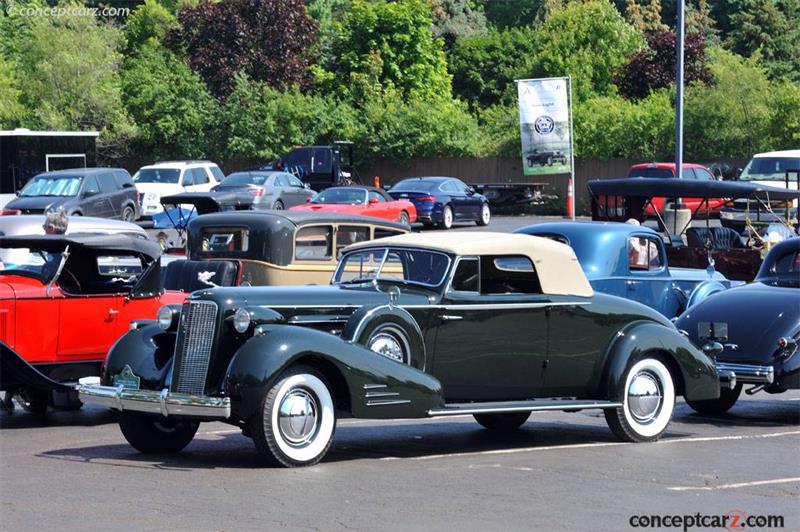
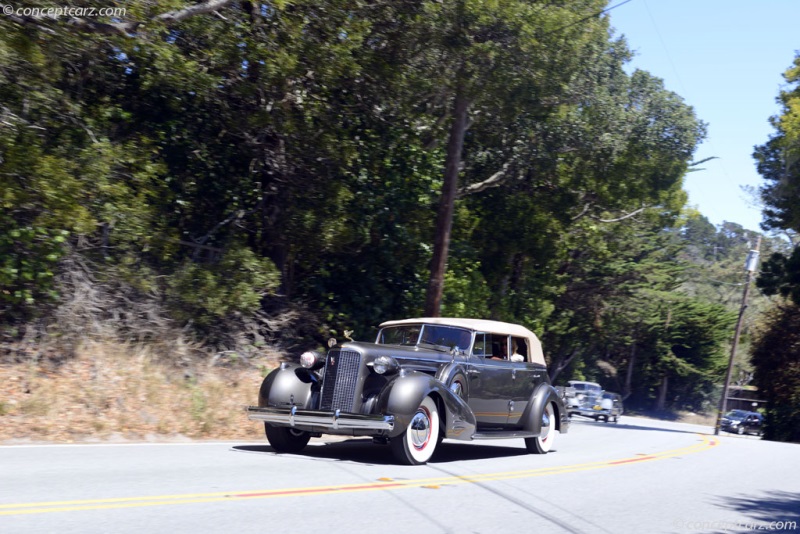
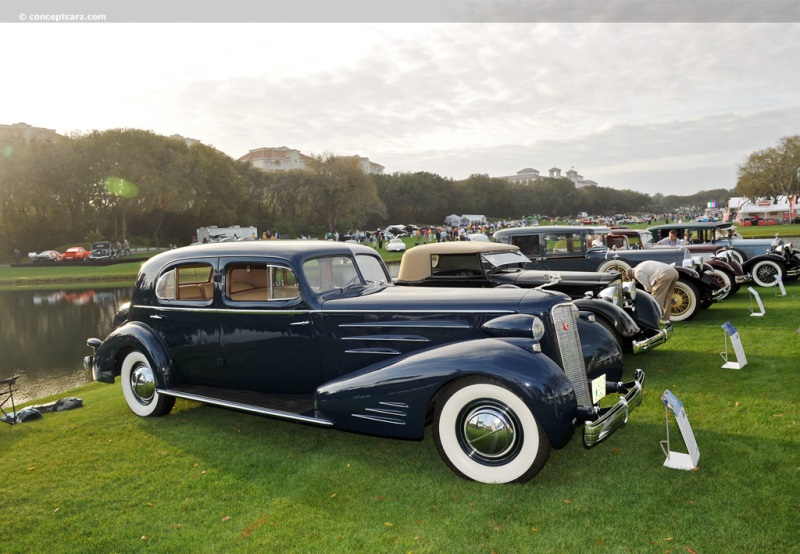
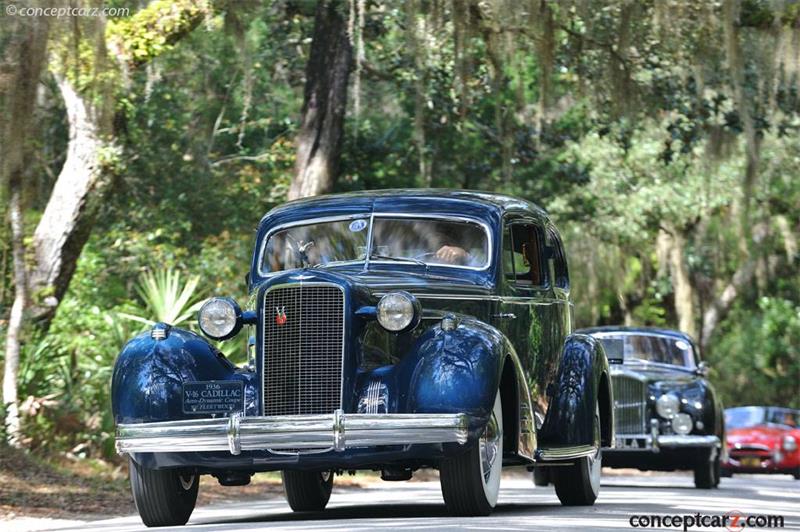
1936 Cadillac Series 90 Vehicle Profiles
Recent Vehicle Additions


Performance and Specification Comparison
Price Comparison
$1,645 - $1,725
$2,450 - $4,445
$2,695 - $5,145
$3,145 - $3,445
Series 452/90 Specification Comparison by Year
Year
Production
Wheelbase
Engine
Prices
300
143.00 in., 149.00 in., 165.00 in.
16 cyl., 452.00 CID., 165.00hp
$4,495 - $5,945
Related Automotive News

Gooding & Company Presents the Best of American Motoring, from Brass Era Legends to Postwar Sports Cars, at Its Pebble Beach Auctions
An incredible 1912 Simplex 50 HP Toy Tonneau, offered for sale from 111 years of single family ownership, will come to market for the first time, alongside motoring icons from the greatest eras of American automotive history.
The official auction...

Ford Unveils Four Special-Edition SUVs To Continue Record Sales Surge
At State Fair of Texas, Ford unveils new options for SUV drivers with four special-edition 2019 SUVs available in the United States – Expedition Stealth Edition, Expedition Texas Edition, Explorer Limited Luxury Edition AND Explorer Desert Copper Ed...

ALL-NEW GOLF ALLTRACK AND NEW BEETLE MODELS HEAD THE CHANGES
Volkswagen also simplifies model lineups to put the emphasis on value
Golf Alltrack adds all-wheel-drive ability and rugged off-road looks to the fun-to-drive and practical Golf SportWagen
Golf SportWagen receives 4Motion® all-wheel-dr...

NEW TOP-OF-THE-LINE FORD F-150 LIMITED IS MOST ADVANCED, LUXURIOUS F-150 EVER
New Ford F-150 Limited meets the growing needs of discerning truck customers interested in exclusivity, capability and craftsmanship – those looking to differentiate themselves from buyers of other high-series trucks
Innovation comes standard with...

NEW 2015 LINCOLN NAVIGATOR EQUIPPED FOR ENHANCED PERFORMANCE AND REFINEMENT
More powerful engine, redesigned exterior, updated interior and customer-focused technologies reaffirm Lincoln Navigators leadership in the full-size luxury SUV market
New 3.5-liter, twin-turbocharged EcoBoost® engine delivers more power and torqu...