1968 McLaren M6B McLeagle

1968 McLaren M6B McLeagle Navigation
History
Designed by Robin Herd and Gordon Coppuck and built by McLaren, the McLaren M7A and its B, C, and D variants are Formula One racing vehicles.
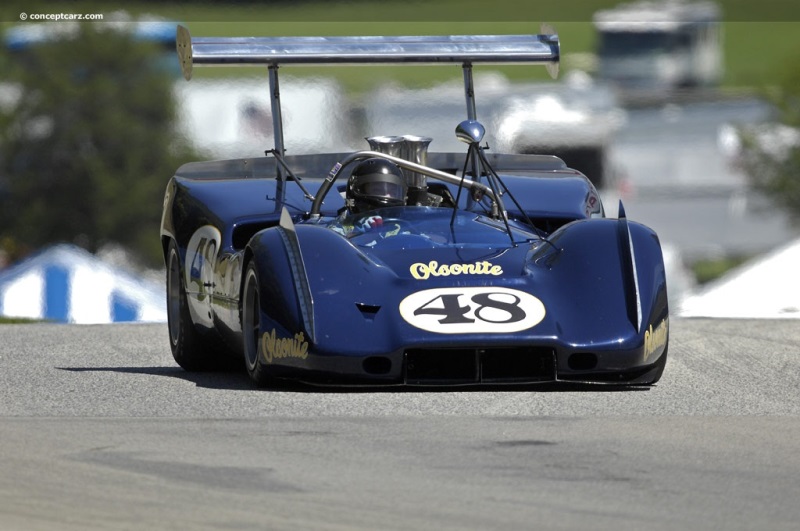
The M6B weighed in around 1,700 lbs and had in the neighborhood of 600hp. An aluminum monocoque, the M6B was quite different from modern racecars, basically as sheet aluminum origami secured with rivets. Secured with removable pins, the only 'safety cage' to mention is a not very confidence-inspiring main hoop, braced only with a stringer from the center top of the hood back to the head of the engine.
An excellent design, the M6B was the first monocoque chassis McLaren. Strong, simple and an aerodynamically efficient package, the factory attempted to sell a number of replicas to eager customers hoping to duplicate its success. This, of course, never happened as the customers were always based on last year's model while the factory team raced the latest and newest improved hardware.
Can-Am vehicles clearly occupy the ground where adrenaline and testosterone are at their maximum. At the same time, these vehicles are both absolutely terrifying yet wildly exciting.
In 1966 the basic concept of Can-Am's debut was 'professional, minimum rules, closed-wheel sports cars, who can go fastest'. A quantum leap in tire technology soon made it a contest to get the most horsepower to the ground, and horsepower quickly became the mantra of the series.
McLaren's M6B was designed to take the GM small-block V8 and mate it to a Hewland LG five-speed transaxle.
Only 28 models of the M6B were ever produced in 1968. They were sold for approximately $14,000.By Jessica Donaldson
The M6B weighed in around 1,700 lbs and had in the neighborhood of 600hp. An aluminum monocoque, the M6B was quite different from modern racecars, basically as sheet aluminum origami secured with rivets. Secured with removable pins, the only 'safety cage' to mention is a not very confidence-inspiring main hoop, braced only with a stringer from the center top of the hood back to the head of the engine.
An excellent design, the M6B was the first monocoque chassis McLaren. Strong, simple and an aerodynamically efficient package, the factory attempted to sell a number of replicas to eager customers hoping to duplicate its success. This, of course, never happened as the customers were always based on last year's model while the factory team raced the latest and newest improved hardware.
Can-Am vehicles clearly occupy the ground where adrenaline and testosterone are at their maximum. At the same time, these vehicles are both absolutely terrifying yet wildly exciting.
In 1966 the basic concept of Can-Am's debut was 'professional, minimum rules, closed-wheel sports cars, who can go fastest'. A quantum leap in tire technology soon made it a contest to get the most horsepower to the ground, and horsepower quickly became the mantra of the series.
McLaren's M6B was designed to take the GM small-block V8 and mate it to a Hewland LG five-speed transaxle.
Only 28 models of the M6B were ever produced in 1968. They were sold for approximately $14,000.By Jessica Donaldson
- 1968 McLaren M6B McLeagle Menu
- Article
- Image gallery
- Specifications
- Profiles


1968 McLaren M6B McLeagle Vehicle Profiles
Recent Vehicle Additions


Related Automotive News

The Estate Collection of Respected Privateer Racer William M. Wonder Coming to Gooding & Company's Pebble Beach Auctions
This August, the auction house will present offerings from the estate of the legendary William M. Wonder, including a 1999 Ferrari 333 SP, a 1955 Mercedes-Benz 300 SL Gullwing, and a 1990 Spice SE90P GTP.
The official auction house of the Pebble...
Sonoma Historics' Racing Seminar to discuss Can-Am and Shadow Race Cars
Sonoma Historic Motorsports Festivals Racing Seminar to discuss early Can-Am years and the radical Shadow Race Cars
SONOMA, Calif. (May 12, 2014) - For the third straight year, the Sonoma Historic Motorsports Festival (May 17-18) will...

Peter Brock and Bob Bondurant to Swap Shelby Stories at Rolex Monterey Motorsports Reunion
Two stalwart names in the colorful history of Shelby American, Peter Brock and Bob Bondurant, will share some of their stories of those early years at the Picnic with Shelby Cobra Saturday, August 18 at the Rolex Monterey Motorsports Reunion. The 30-minute...

Shelby Heritage Display Features Rarest of the Rare at Rolex Monterey Motorsports Reunion
Complementing the impressive number of authentic competition Shelby Cobras thundering around the circuit in their dedicated race group (3A) at this years Rolex Monterey Motorsports Reunion, August 17-19, will be a collection of unequalled magnitude...

4th Annual The Quail Motorcycle Gathering Information
Two of the Worlds Most Historic and Innovative Motorbikes to Be Showcased on May 5 at Quail Lodge Golf Club in Carmel, Calif.
Quail Lodge Golf Club announced today that two iconic motorcycles, Marty Dickersons Blue Bike and Dan Gurneys Alligator...


