As automobile production grew in popularity, the Studebaker company ceased building horse-drawn wagons and focused its production on trucks, buses, and passenger cars. By the 1920s, Studebaker's lineup of vehicles occupied the $1,000 to $2,500 price range, and by mid-1927, the company adopted new model names that conjured up power and excitement. The 'EU' Series of 1927 became the Dictator by 1928 and was joined by the Commander and President. The changing political climates of the late 1930s and the looming onset of World War II convinced Studebaker to change the 'Dictator' name to something else - they settled on the 'Champion' in 1938, and the name would remain part of the lineup for many decades. 
Phaeton
Chassis #: 5508161
View info and history
Auction entries : 4Political instability and fears of global war were not the only unsettling aspects of the 1930s, as the world had been thrust into a Great Depression due to the Stock Market crash of 1929, and many people would lose their employment and homes. Businesses were decimated, and most independent American automakers were forced to shutter their doors. Among them was Studebaker, whose declaration of bankruptcy allowed them to reorganize, jettison excess weight, recapitalize, and claw their way back to profitability. Designer Raymond Loewy and his team, which included a young man named Virgil Exner, were instrumental in revitalizing sales by modernizing the South Bend-based company's product with a long and distinctive hood, a swept-back grille, sharp lines, and a lower stance and silhouette. Studebaker proudly declared the new styling would 'Dictate the Standard.' The entire vehicle, including the appearance, was modernized with features that rivaled the best on the market, including a new 'Miracle Ride' system from the new 'Planar' independent front suspension introduced with the mid-year 2A series (the earlier 1A Series cars had a solid front axle). Along with coil springs and a longer wheelbase, the occupants were shielded from the imperfections of the road. For 1934, the 205.3 cubic-inch six-cylinder engine powering the Dictator had received four main bearings, a new Stromberg up-draught carburetor, and now delivered 88 horsepower, slightly more than the 85 hp produced from the previous 230 CID inline-6 of 1933. Even compared to the Ford V8, the Dictator's six-cylinder engine produced more horsepower.
Roadster
Chassis #: 5502814
View info and history
Auction entries : 2The Dictator had been an eight-cylinder model in the years leading up to 1934, but for 1934, the previous Studebaker Series 56 Six of 1933 became the Series A Dictator and wore all-new styling with streamlined bodies, a vee-type slanting radiator, single bar vee-shaped bumpers, and deeply skirted fenders. The flowing and aerodynamic stance was enhanced by the slanting hood louvers and the belt molding that traversed the body side. The interior was updated with a new instrument panel, and the front windows received integral wind wings. Styling updates continued into 1935, with a more rakish and chiseled look, highlighted by a longer and narrower grille, the front bumper lost its vee-shape and was now nearly straight with a slight bow in the center. On top of the hood was a bird-in-flight hood ornament. The 205.3 CID L-head inline-6 continued to produce 88 horsepower and was backed by a synchromesh three-speed transmission with a single dry disc clutch and floor-mounted gearshift controls. A Warner Gear automatic overdrive was optional. Studebaker's patented 'Hill Holder' system, which locked the brakes to prevent the car from rolling backward when the clutch was depressed, was standard equipment. Four-wheel 'Steeldraulic' (a vacuum hydraulic system that replaced the previous year's unreliable mechanical braking system) brakes, Autolite ignition (replacing the Delco-Remy ignition of the 1933 models), safety glass, roll-up windows, radio speaker provision in the headliner above the front windscreen, and automatic starter were part of the standard equipment list. The Dictator Regals came with either more standard equipment, including freewheeling, dual windshield wipers, dual taillamps, dual sun visors, and a robe rail.The 1935 Dictator was the most affordable model in the lineup and the only one not equipped with eight-cylinder power. Prices ranged from $695 to $895, and a plethora of open and closed-body styles were available. The coupe was priced at $695, the two-door St. Regis Sedan at $715, the roadster and five-passenger coupe at $745, the Custom St. Regis Sedan at $740, the sedan with seating for six at $745, the Custom Sedan at $770, and the Land Cruiser Sedan at $880. The Regal added approximately $35 to the base price. The Studebaker catalog listed its roadster as a 'roadster,' but with its roll-up windows, it was more like a true convertible.
Roadster
Chassis #: 5502814
View info and history
Auction entries : 2Production of the Series 1A Dictator began in December 1934 and continued through September 1935, with 11,742 units constructed. The Seris 2A Dictator was built from November 1934 through September 1935, with 23,550 examples constructed. The styling, features, and price tag of the 1935 Studebaker Dictator resonated positively with buyers, provided the company with the bulk of its sales, and helped the South Bend company to place ninth in the industry standings.
by Daniel Vaughan | Apr 2021
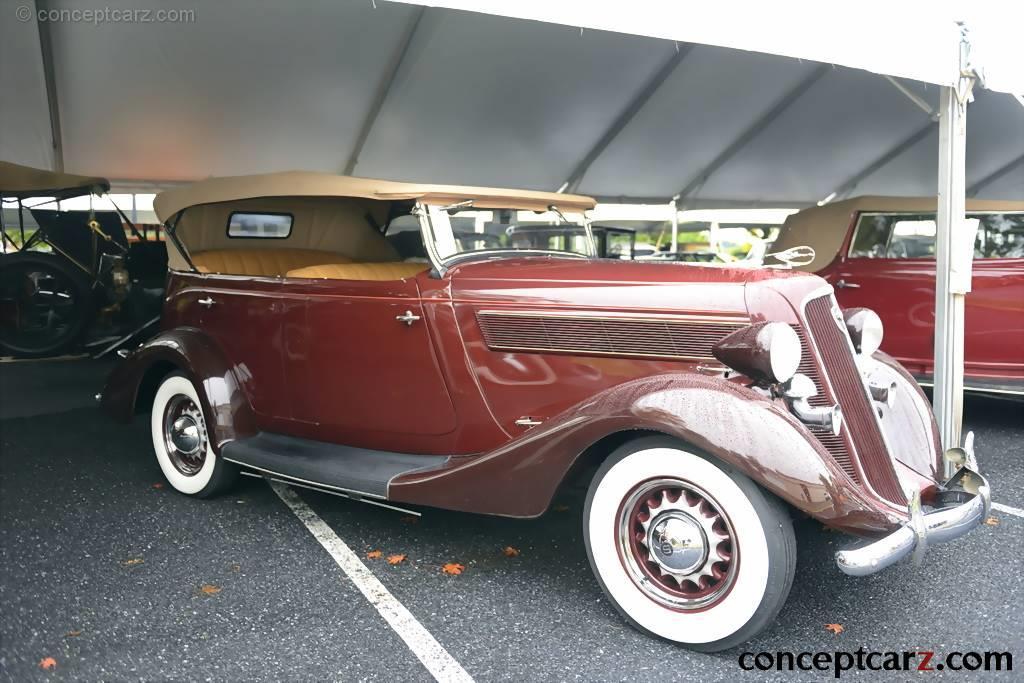
Phaeton
Chassis #: 5508161
View info and history
Auction entries : 4
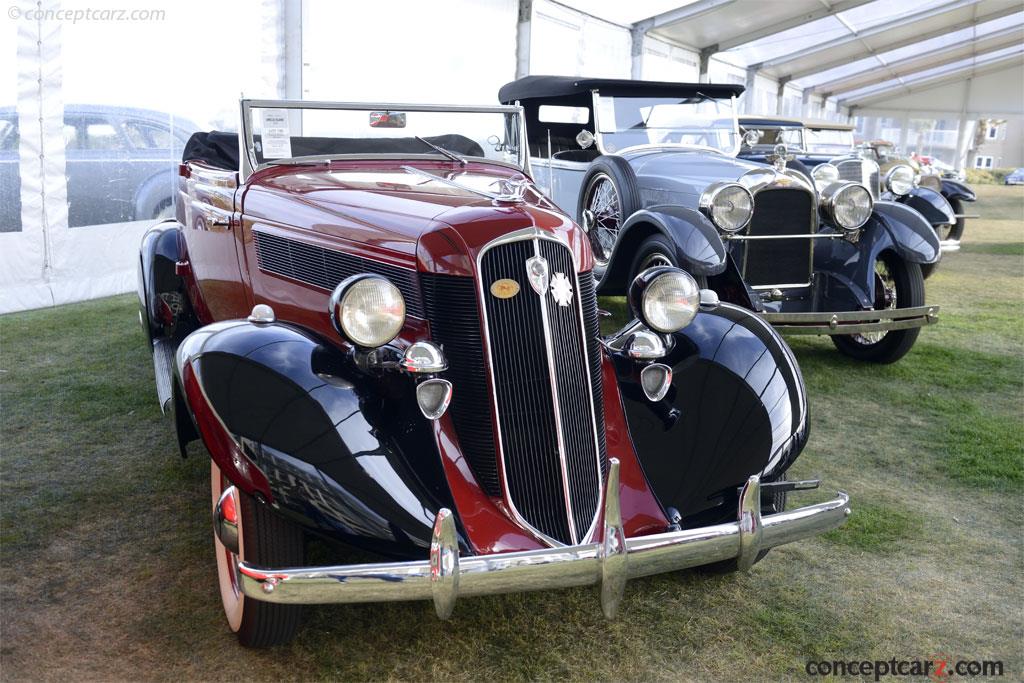
Roadster
Chassis #: 5502814
View info and history
Auction entries : 2
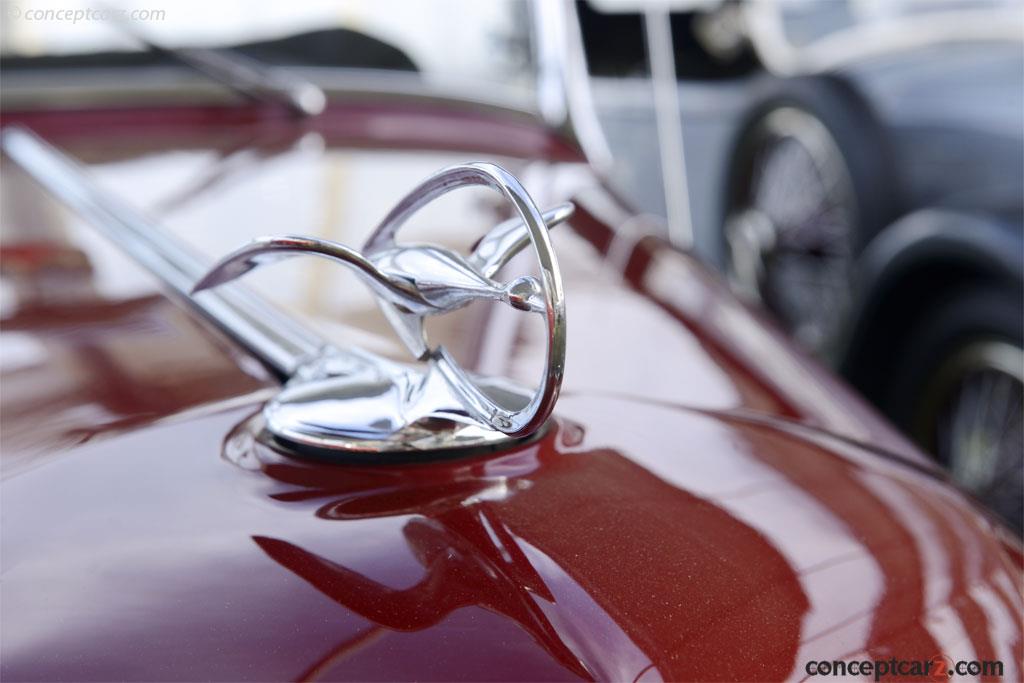
Roadster
Chassis #: 5502814
View info and history
Auction entries : 2
by Daniel Vaughan | Apr 2021
Related Reading : Studebaker Dictator History
The Studebaker Dictator was produced from 1927 through 1937, with 1928 being the first full year of the Dictator production. The Dictator was designed as a replacement for the Standard Six. This new model amplified the reputation of the Studebaker Company by breaking 28 distance and time records during the end of the 1920s. The name Dictator was used because Standard boasted that it dictated....
Continue Reading >>
Continue Reading >>
Similarly Priced Vehicles


1935 Studebaker Dictator Vehicle Profiles

Recent Vehicle Additions


Performance and Specification Comparison
Price Comparison
$925 - $1,130
$1,200 - $1,529
Dictator Specification Comparison by Year
Year
Production
Wheelbase
Engine
Prices
Related Automotive News

Italian thoroughbreds to feature prominently at Bonhams Quail Lodge auction
Numerous iconic and desirable models from Ferrari, Lancia, Lamborghini and more contribute to growing anticipation for this approaching sale
San Francisco – Bonhams is delighted to announce its impressive assembly of Italian sports cars...

Next Generation European Compact Car From Nissan To Be Manufactured By Renault In Europe
Nissan Motor Co., Ltd. today announced that the replacement for the current Nissan Micra compact car will be manufactured at a Renault plant in Europe. Due to start production in 2016, the vehicle will be exported across Europes left-hand drive markets....

Coys True Greats London Sale
Coys round off their 2012 auction calendar with their world-famous True Greats sale of important collectors cars, classic film posters and the Keeler Collection of rare models.
With some 400 lots coming under the auctioneers hammer on 4th December,...

A Piece of Hollywood and Jaguar History
Clark Gables Best in Class 1949 XK120
This weekend, a very special XK120 graced the judging field at the 62nd Pebble Beach Concours d Elegance. This particular XK120 is significant, not only because it was named Best in Class, but because...

Cherished Classics From The Pettit Collection Will Be Offered Without Reserve
The 1929 Duesenberg Blue J and 11 collector cars from the William A. C. Pettit, III Collection will be sold at Gooding %26 Companys Pebble Beach Auctions
Estate Proceeds will benefit the Shriners Hospital for Children®-Tampa
Gooding %26...