The Pierce-Arrow was a leading luxury nameplate in the early American automobile industry. George Pierce started the manufacturing of household items such as iceboxes, bathtubs, birdcages, and later bicycles. He later experimented with automobile production using popular power sources such as steam. A Scottish engineer named David Fergusson was brought in to help with the developmental aspects of engine design and production. The first successful Pierce automobile, a Motorette, was in 1901 and featured a single-cylinder DeDion engine producing nearly 3 horsepower. By 1903 the Pierce automobiles were powered by their own engines that they had designed and manufactured.
Roadster
View info and historyBy the early 1910s, Pierce was using exotic metals such as aluminum that not only were light-weight but were also very rigid. Pierce-Arrows were also known for their 'frog eye' appearance, named after their use of headlight integration into the fenders.The company endured World War I and by the 1920s, the competition had become pretty fierce. Not only were many marques furthering their development of new technology, but they continued to produce stylish and modern designs. Pierce-Arrow was a strong believer in their six-cylinder engine while other manufacturers were using more powerful and tunable eight-cylinder engines. The Pierce-Arrow design did not change drastically during the 1920s, another potential reason for their ultimate demise. The onset of the Great Depression and problems with management prompted a merger with Studebaker. A short time later the Pierce-Arrows were equipped with eight-cylinder engines which helped stimulate sales. By the early 1930s, a 12-cylinder could be found in the Pierce-Arrows. Their engines were strong and powerful, capturing over 13-speed records at the Bonneville Salt Flats.
Roadster
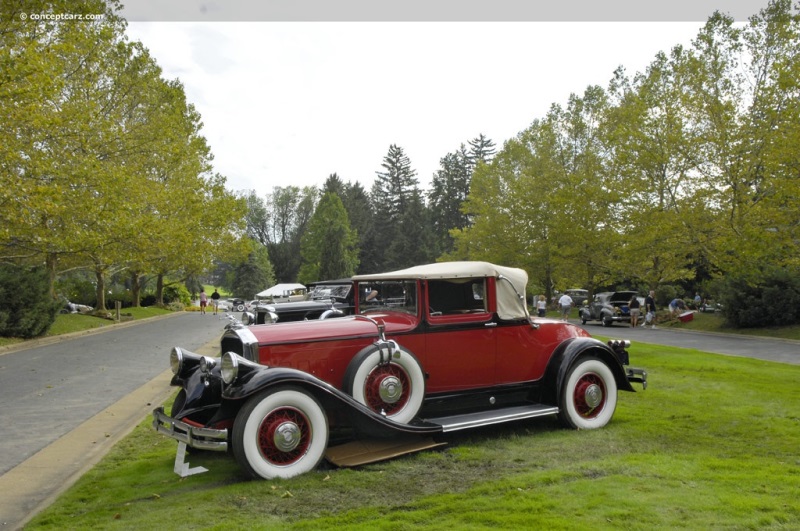
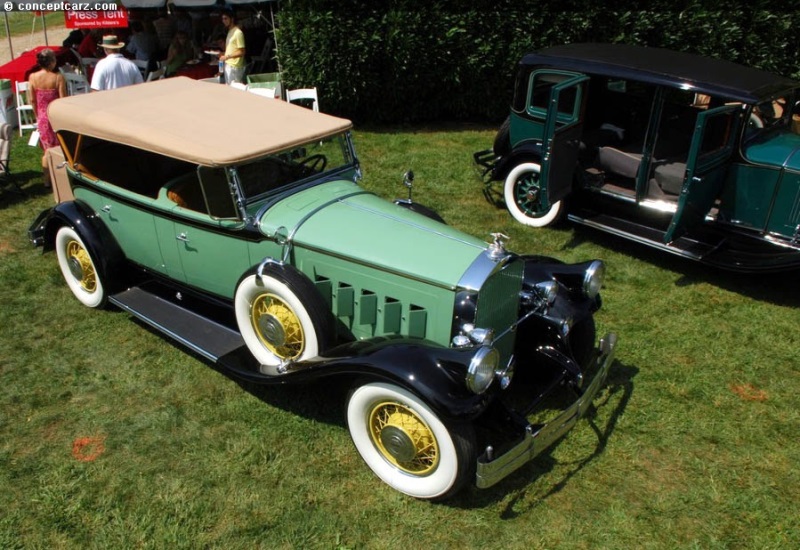
View info and historyIn 1933, Pierce-Arrow and Studebaker were both feeling the effects of the Depression. Studebaker was forced to sell Pierce-Arrow. The company was again rescued; this time by a group of Buffalo-based investors. With this new life provided to Pierce-Arrow, they were able to produce an improved model line up for 1935 and again in 1937.The Packard Company was managing to stay afloat by creating a lower-cost line that appealed to a broader market segment and had increased revenue and sales. Pierce-Arrow attempted to mimic their achievement by introducing the low-priced One-Twenty model. The move may have worked if it had been done earlier, and Pierce-Arrow was forced to cease production in 1938. On Friday, May 13th the company was sold at auction.This 1930 Pierce-Arrow Model B Roadster carried a $2975 factory price tag. It was equipped with an eight-cylinder 366 cubic-inch engine capable of producing a respectable 125 horsepower. The front headlights are integrated into the front fenders and a covered, side-mounted spare wheel can be found located in front of the driver's side door.
by Daniel Vaughan | Nov 2008

Roadster
View info and history

Roadster
View info and history
by Daniel Vaughan | Nov 2008
Similar Automakers
Similarly Priced Vehicles


1930 Pierce-Arrow Model B Vehicle Profiles




Recent Vehicle Additions


Performance and Specification Comparison
Price Comparison
$2,700 - $2,900
$4,000 - $6,300
Related Automotive News

Gooding & Company Presents the Best of American Motoring, from Brass Era Legends to Postwar Sports Cars, at Its Pebble Beach Auctions
An incredible 1912 Simplex 50 HP Toy Tonneau, offered for sale from 111 years of single family ownership, will come to market for the first time, alongside motoring icons from the greatest eras of American automotive history.
The official auction...

Past Best of Show Winners at The Pebble Beach Concours d'Elegance
overview1
The 70th anniversary of the Pebble Beach Concours dElegance was celebrated with a spectacular display of previous Best of Show winners. Thirty-seven examples graced the showfield and many were still with the same owners who raised the trophy...

Gooding & Company Looks Toward Pebble Beach with Stunning Selection of Historic Prewar Classics
Highlights include a top-of-the-line 1930 Duesenberg Model J Disappearing-Top Convertible Coupe, a Grand Prix-winning 1929 Bugatti Type 35B, a well-documented 1914 Stutz 4E Bearcat, and an opulent 1910 Rolls-Royce 4050 HP Silver Ghost Pullman Limousine.
As...
HILTON HEAD ISLAND MOTORING FESTIVAL & CONCOURS D'ELEGANCE PRESENTS 2015 PINNACLE AND HONORED COLLECTORS
Fred Guyton collection to feature 2014 Pebble Beach Concours Best in Class winner
William Tom Gerrard recognized for Post-War collection and key Concours contributions
HILTON HEAD ISLAND, S.C. – Each year, the Hilton Head Isla...

POTEET, CIZEK EARN TOP AWARDS AT GOODGUYS 16TH PPG NATIONALS
Columbus, OH – Tennessees George Poteet and Nebraskas Ron Cizek collected the top two awards at the Goodguys 16th PPG Nationals in Columbus, Ohio last weekend. Under brilliant sunshine and in front of record crowds, Poteets vintage NASCAR-inspired...