1959 Tipo 61 Birdcage | 1961 Tipo 61 ![]() |
Image credits: © Maserati.
1960 Maserati Tipo 61 Birdcage news, pictures, and information | ||
| Tweet | ||
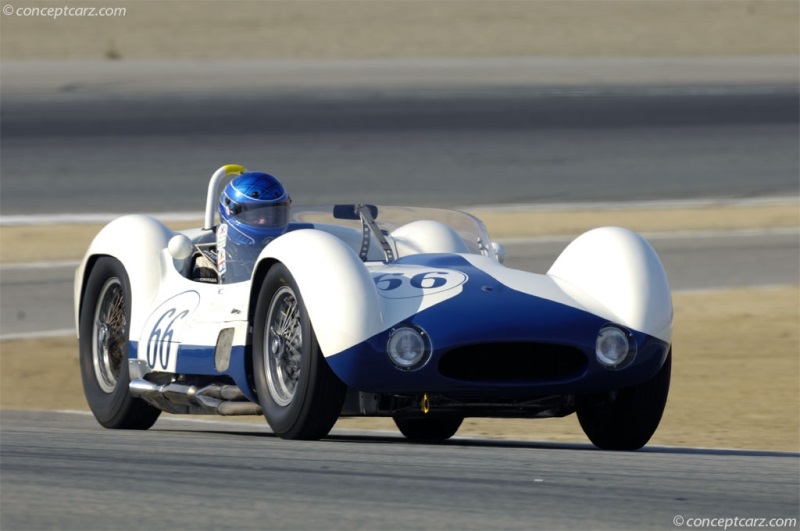
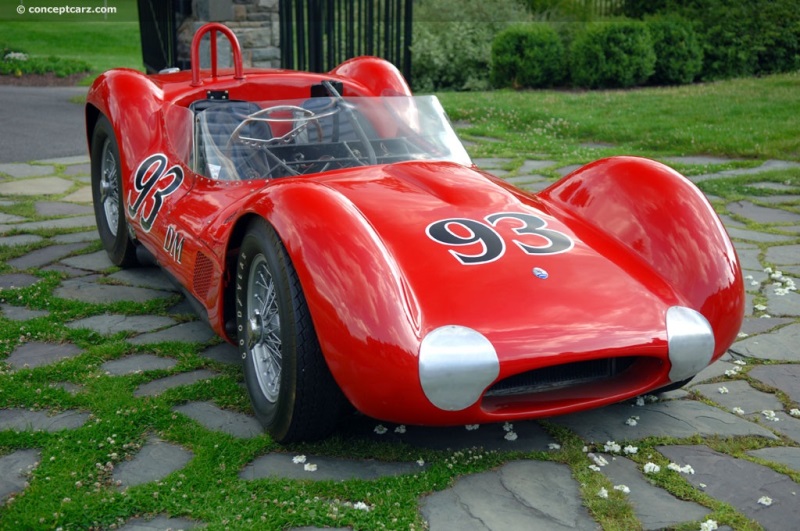
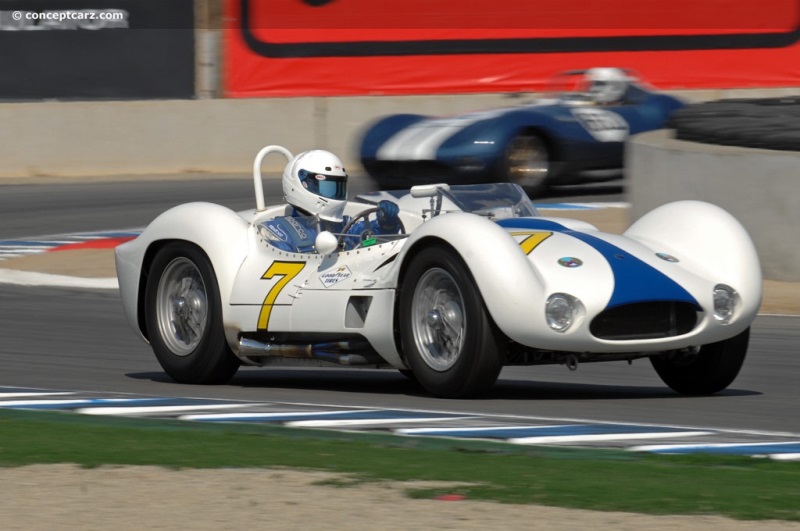
The Maserati Tipo 60/61 Birdcage is arguably one of the greatest cars of all time.
The first Tipo 60's were built for the 1960 World Sports Car Championship. Stirling Moss drove the car to victory in its first race. Although it won its first race, it was unable to capture the season championship.
A larger engine, a 2.9-liter four cylinder that produced 50 extra horsepower, was supplied to later cars which were labeled Tipo 61's. Even with great drivers such as Jim Hall, Briggs Cunningham, Carroll Shelby, Roger Penske, and Dan Gurney, and Masten Gregory the vehicle was unable to produce the big wins.
The first Tipo 60's were built for the 1960 World Sports Car Championship. Stirling Moss drove the car to victory in its first race. Although it won its first race, it was unable to capture the season championship.
A larger engine, a 2.9-liter four cylinder that produced 50 extra horsepower, was supplied to later cars which were labeled Tipo 61's. Even with great drivers such as Jim Hall, Briggs Cunningham, Carroll Shelby, Roger Penske, and Dan Gurney, and Masten Gregory the vehicle was unable to produce the big wins.
![]() | ![]() | ![]() | Roadster Chassis Num: 2469 Engine Num: 2469 |
It was rebuilt by Chuck Sargent after an incident at Continental Divide in 1961.
During the 1962 season, it won Stockton and Dunkirk and came in second at Cumberland.
It was sold to Dick Blair in 1962 who continued its racing pedigree until 1963. It was then totally reconditioned with its last major race believed to be at Mansfield in July of 1963.
In 1968 it was sent to the Indianapolis Motor Speedway's Hall of Fame Museum. In 1997 it was reconditioned by Bill Spoerle's restoration shop at the Speedway in preparation for its return to Laguna Seca for Carroll Shelby salute at the 1997 Monterey Historics.
By Daniel Vaughan | Jul 2008
![]() | ![]() | ![]() | Roadster Chassis Num: 2458 |
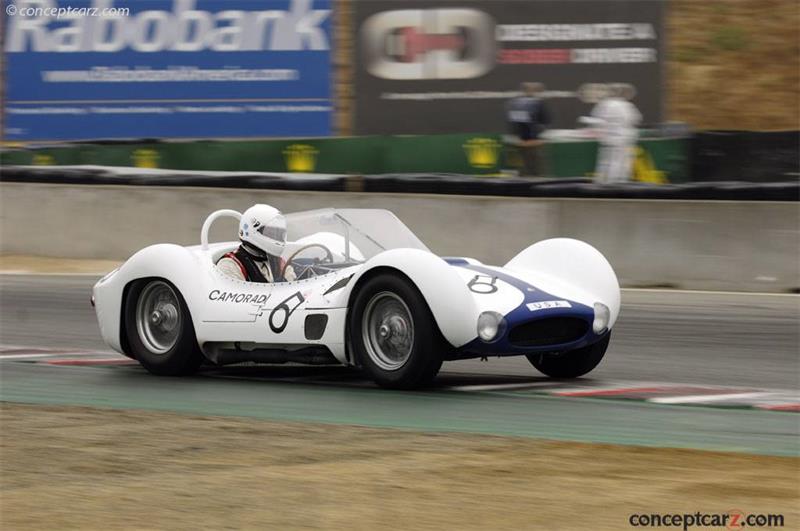
This example was entered in the 1960 Cuban Grand Prix for Stirling Moss by Camoradi USA (CAsner MOtor RAcing DIvision) owner, the colorful racing driver and personality, 'Lucky' Casner. The victory was the only professional victory under the Castro regime. Moss teamed in the Tipo 61 with Dan Gurney to win the 1000 KM of Nurburgring in Germany.
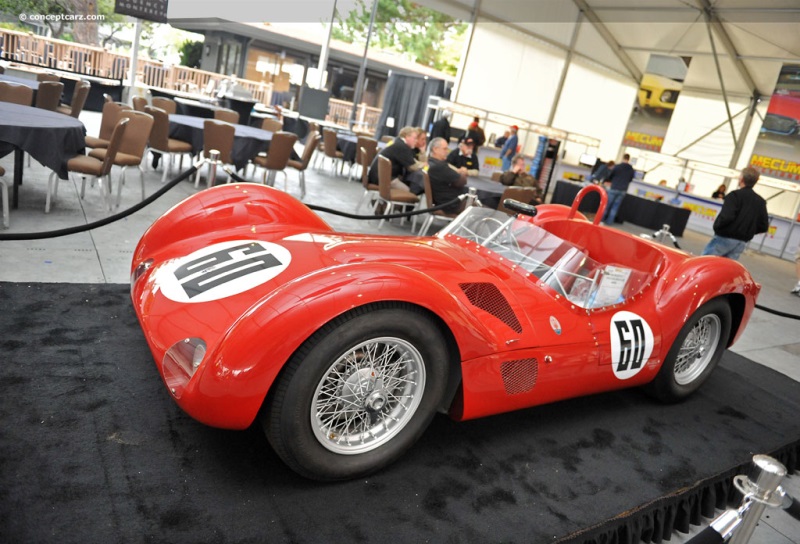
![]() | Roadster Chassis Num: 2459 | |
| High bid of $1,850,000 at 2011 Mecum. (did not sell) | ||
By Daniel Vaughan | Oct 2011
The Maserati Tipo 61 was produced from 1959 through 1960. During its production lifespan, only 16 examples were created. The design had been conceived by Giulio Alfieri, Maserati's chief design engineer at the time with the purpose of competing in SCCA competition.
The name 'Birdcage' was given to the Tipo 61 because of their tubular chassis. It featured a spaceframe chassis comprised of around 200 small aluminum tubes welded together. This gave the vehicle rigidity and strength while minimizing weight. The front suspension was wishbones while the rear was a DeDion axle.
Both the Tipo 60 and Tipo 61 were powered by a four cylinder engine, mounted in the front at a 45-degree angle and powering the rear wheels. The Tipo 60 was powered by a two-liter four-cylinder engine. The Tipo 61 used a 250 S, 2.9-liter four cylinder engine. The 250 horsepower Tipo 61 with two Weber 45 DCO3 carburetors was suitable for SCCA competition and with its low weight, was highly competitive. Disc brakes were used on all four corners of the car. A five-speed manual gearbox and rack-and-pinion steering were standard and were partly responsible for the vehicles reputation for being easy to drive.
In 1960 Gus Audrey captured the class championship in SCCA racing. Roge Penske did the same in 1961. In 1960 Stirling Moss and Dan Gurney entered a Tipo 61 Birdcage into the highly competitive Nurburgring 1000 km race. Against other famous and competitive nameplates such as Ferrari, Porsches, and Aston Martins the Birdcage emerged victorious.
A beautiful automobile that was fast, agile, competitive and legendary.
By Daniel Vaughan | Jun 2006
The name 'Birdcage' was given to the Tipo 61 because of their tubular chassis. It featured a spaceframe chassis comprised of around 200 small aluminum tubes welded together. This gave the vehicle rigidity and strength while minimizing weight. The front suspension was wishbones while the rear was a DeDion axle.
Both the Tipo 60 and Tipo 61 were powered by a four cylinder engine, mounted in the front at a 45-degree angle and powering the rear wheels. The Tipo 60 was powered by a two-liter four-cylinder engine. The Tipo 61 used a 250 S, 2.9-liter four cylinder engine. The 250 horsepower Tipo 61 with two Weber 45 DCO3 carburetors was suitable for SCCA competition and with its low weight, was highly competitive. Disc brakes were used on all four corners of the car. A five-speed manual gearbox and rack-and-pinion steering were standard and were partly responsible for the vehicles reputation for being easy to drive.
In 1960 Gus Audrey captured the class championship in SCCA racing. Roge Penske did the same in 1961. In 1960 Stirling Moss and Dan Gurney entered a Tipo 61 Birdcage into the highly competitive Nurburgring 1000 km race. Against other famous and competitive nameplates such as Ferrari, Porsches, and Aston Martins the Birdcage emerged victorious.
A beautiful automobile that was fast, agile, competitive and legendary.
By Daniel Vaughan | Jun 2006
The Maserati Tipo 61 was produced from 1959 through 1960. During its production lifespan, only 16 examples were created. The design had been conceived by Giulio Alfieri, Maserati's chief design engineer at the time with the purpose of competing in SCCA competition.
The name 'Birdcage' was given to the Tipo 61 because of their tubular chassis. It featured a spaceframe chassis comprised of around 200 small aluminum tubes welded together. This gave the vehicle rigidity and strength while minimizing weight. The front suspension was wishbones while the rear was a DeDion axle.
Both the Tipo 60 and Tipo 61 were powered by a four cylinder engine, mounted in the front at a 45-degree angle and powering the rear wheels. The Tipo 60 was powered by a two-liter four-cylinder engine. The Tipo 61 used a 250 S, 2.9-liter four cylinder engine. The 250 horsepower Tipo 61 with two Weber 45 DCO3 carburetors was suitable for SCCA competition and with its low weight, was highly competitive. Disc brakes were used on all four corners of the car. A five-speed manual gearbox and rack-and-pinion steering were standard and were partly responsible for the vehicles reputation for being easy to drive.
In 1960 Gus Audrey captured the class championship in SCCA racing. Roge Penske did the same in 1961. In 1960 Stirling Moss and Dan Gurney entered a Tipo 61 Birdcage into the highly competitive Nurburgring 1000 km race. Against other famous and competitive nameplates such as Ferrari, Porsches, and Aston Martins the Birdcage emerged victorious.
Tipo 63
The Maserati Tipo was given the nickname 'Birdcage' because of its triangulated, tubular chassis construction that resembled a birdcage which could be seen through the vehicle's large front windscreen. The Tipo 60 and 61 cars featured a front-engined design. The first rear-engine design, the Tipo 63, was actually powered by a 2890.3 cc Tipo 61 four-cylinder engine inclined at a 58-degree angle. Introduced near the close of 1961 the Maserati Tipo 61 had been designed by Giulio Alfieri to accommodate a 3-liter V8 engine. Many components were borrowed from the prior birdcage models such as the five-speed transaxle and front suspension. In the rear, however, was an independent suspension with coil springs.
Alfieri modified the suspension and the four-cylinder engine was replaced with a 2989 12-cylidner engine from the 250F T2. The engine was so large that it intruded into the cockpit. The Tipo 63 Birdcage's were constructed for Cunningham, Serenissima, and Camoradi teams and driven by famous drivers such as Bruce McLaren, Walt Hansgen, Stirling Moss, Masten Gregory, and others. On the track the vehicles were met with disappointing results. They are best remembered for its fourth place finish at the grueling 24 Hours of Le Mans endurance race driven by team Cunningham.
Many of the disappointing finishes were caused by mechanical issues such as a carburetor problem that cause Dick Thompson and Bill Kimberley to finish 9th at the Road America 500 in 1961. Scarfiotti and Vaccarella failed to finish at Nurburgring due to bad weather - water had entered the carburettors. A Tipo 61 finished the race in first place. In 1961 four Tipo 63 models were entered into the Le Mans race were three failed to finish. The fourth had been crashed during during practice by Walt Hansgen after the suspension collapsed. It was rebuilt for the Le Mans race where it was driven by Pabst and Thompson and achieved a fourth-place finish.
In total only seven Tipo 63's, two Tipo 64's, and one Tipo 65 were constructed between late 1960 and early 1965.
The Tipo 64 was introduced in 1962, also a rear-engine design. The frame was comprised of very small tubes also of a birdcage structure. The rear suspension was changed in favor of a de Dion suspension. Journalists dubbed the car a Supercage.
There were two Tipo 63's given the number 63.002, both were constructed for Briggs Cunningham, one was a SWB the other a LWB. This may have been done to avoid import duties imposed by the United States. All of the Maserati Tipo 63 models are accounted for and exist today.
The Tipo 63 has been featured in a film and even made an appearance in Elvis Presley's Viva Las Vegas. The Maserati Tipo 63 was a very quick car able to achieve speeds of 180 mph but it suffered from handling issues. Another issue was the lack of serious development work mainly because of financial constraints meaning the Tipo 63 never achieved its true potential.
Tipo 64
Constructed from two type 63's which had been returned to the factory in 1961 in preparation for the 1962 season. The Type 64 involved total revision of the frame in search of better weight distribution and weight reduction. The engine moved forward, which shifted the cockpit further forward, front suspension was improved and a totally new rear end designed which incorporated the use of a De Dion axle - abandoning the independent suspension of the Type 63. Also changed was the positioning of the rear exhausts which were now very low megaphone type, as opposed to the higher placed exhaust on the Type 63.
There were only ever two Maserati Tipo 64's constructed and both were built from Type 63's which had been returned to the factory in 1961 for the 1962 season. To reduce weight and even out distribution even further the frame was revised and the engine was moved forward. These caused the cockpit to move forward as well. The suspension of the Tipo 63 was abandoned in favor of a De Dion axle setup.
Journalists dubbed the car a Supercage. There were two Tipo 63's given the number 63.002, both were constructed for Briggs Cunningham, one was a SWB the other a LWB. This may have been done to avoid import duties imposed by the United States. All of the Maserati Tipo 63 models are accounted for and exist today. The Tipo 63 has been featured in a film and even made an appearance in Elvis Presley's Viva Las Vegas. The Maserati Tipo 63 was a very quick car able to achieve speeds of 180 mph but it suffered from handling issues. Another issue was the lack of serious development work mainly because of financial constraints meaning the Tipo 63 never achieved its true potential.
Tipo 65
The Maserati Tipo 65 was powered by a 5-liter V8 engine that produced around 430 horsepower and rested in a 'Supercage' frame. It was completed in time for LeMans and arrived at the track just five days prior to the race. The testing session was valuable to the team, as it provided information about the cars abilities and potential weaknesses.
The car qualified in 21st position and was piloted by F1 drvier Jo Siffert. Within a short amount of time, the car had been brought into eighth place. Sadly, it was not to last, as the car spun and punctured the radiator. The car limped back to the pits but its time on the track was over. Due to regulations, cars were allowed to refill fluids only after 25 laps were completed. As a result, the team was forced to withdraw from the race.
After the race, the car was repaired but it would not return to the track. It was later sold to a Swiss collector who made a few modifications, most noticeably to the front. It was then sold to Jo Siffert. Siffert died during a tragic accident during the early 1970s and the car was sold to an individual from England. While in his care it was actively campaigned in historic competition. It then purchased by Peter Kaus and became part of the Rosso Bianco Museum. In the mid-2000s it was sold at auction.
By Daniel Vaughan | Jul 2008
For more information and related vehicles, click hereThe name 'Birdcage' was given to the Tipo 61 because of their tubular chassis. It featured a spaceframe chassis comprised of around 200 small aluminum tubes welded together. This gave the vehicle rigidity and strength while minimizing weight. The front suspension was wishbones while the rear was a DeDion axle.
Both the Tipo 60 and Tipo 61 were powered by a four cylinder engine, mounted in the front at a 45-degree angle and powering the rear wheels. The Tipo 60 was powered by a two-liter four-cylinder engine. The Tipo 61 used a 250 S, 2.9-liter four cylinder engine. The 250 horsepower Tipo 61 with two Weber 45 DCO3 carburetors was suitable for SCCA competition and with its low weight, was highly competitive. Disc brakes were used on all four corners of the car. A five-speed manual gearbox and rack-and-pinion steering were standard and were partly responsible for the vehicles reputation for being easy to drive.
In 1960 Gus Audrey captured the class championship in SCCA racing. Roge Penske did the same in 1961. In 1960 Stirling Moss and Dan Gurney entered a Tipo 61 Birdcage into the highly competitive Nurburgring 1000 km race. Against other famous and competitive nameplates such as Ferrari, Porsches, and Aston Martins the Birdcage emerged victorious.
Tipo 63
The Maserati Tipo was given the nickname 'Birdcage' because of its triangulated, tubular chassis construction that resembled a birdcage which could be seen through the vehicle's large front windscreen. The Tipo 60 and 61 cars featured a front-engined design. The first rear-engine design, the Tipo 63, was actually powered by a 2890.3 cc Tipo 61 four-cylinder engine inclined at a 58-degree angle. Introduced near the close of 1961 the Maserati Tipo 61 had been designed by Giulio Alfieri to accommodate a 3-liter V8 engine. Many components were borrowed from the prior birdcage models such as the five-speed transaxle and front suspension. In the rear, however, was an independent suspension with coil springs.
Alfieri modified the suspension and the four-cylinder engine was replaced with a 2989 12-cylidner engine from the 250F T2. The engine was so large that it intruded into the cockpit. The Tipo 63 Birdcage's were constructed for Cunningham, Serenissima, and Camoradi teams and driven by famous drivers such as Bruce McLaren, Walt Hansgen, Stirling Moss, Masten Gregory, and others. On the track the vehicles were met with disappointing results. They are best remembered for its fourth place finish at the grueling 24 Hours of Le Mans endurance race driven by team Cunningham.
Many of the disappointing finishes were caused by mechanical issues such as a carburetor problem that cause Dick Thompson and Bill Kimberley to finish 9th at the Road America 500 in 1961. Scarfiotti and Vaccarella failed to finish at Nurburgring due to bad weather - water had entered the carburettors. A Tipo 61 finished the race in first place. In 1961 four Tipo 63 models were entered into the Le Mans race were three failed to finish. The fourth had been crashed during during practice by Walt Hansgen after the suspension collapsed. It was rebuilt for the Le Mans race where it was driven by Pabst and Thompson and achieved a fourth-place finish.
In total only seven Tipo 63's, two Tipo 64's, and one Tipo 65 were constructed between late 1960 and early 1965.
The Tipo 64 was introduced in 1962, also a rear-engine design. The frame was comprised of very small tubes also of a birdcage structure. The rear suspension was changed in favor of a de Dion suspension. Journalists dubbed the car a Supercage.
There were two Tipo 63's given the number 63.002, both were constructed for Briggs Cunningham, one was a SWB the other a LWB. This may have been done to avoid import duties imposed by the United States. All of the Maserati Tipo 63 models are accounted for and exist today.
The Tipo 63 has been featured in a film and even made an appearance in Elvis Presley's Viva Las Vegas. The Maserati Tipo 63 was a very quick car able to achieve speeds of 180 mph but it suffered from handling issues. Another issue was the lack of serious development work mainly because of financial constraints meaning the Tipo 63 never achieved its true potential.
Tipo 64
Constructed from two type 63's which had been returned to the factory in 1961 in preparation for the 1962 season. The Type 64 involved total revision of the frame in search of better weight distribution and weight reduction. The engine moved forward, which shifted the cockpit further forward, front suspension was improved and a totally new rear end designed which incorporated the use of a De Dion axle - abandoning the independent suspension of the Type 63. Also changed was the positioning of the rear exhausts which were now very low megaphone type, as opposed to the higher placed exhaust on the Type 63.
There were only ever two Maserati Tipo 64's constructed and both were built from Type 63's which had been returned to the factory in 1961 for the 1962 season. To reduce weight and even out distribution even further the frame was revised and the engine was moved forward. These caused the cockpit to move forward as well. The suspension of the Tipo 63 was abandoned in favor of a De Dion axle setup.
Journalists dubbed the car a Supercage. There were two Tipo 63's given the number 63.002, both were constructed for Briggs Cunningham, one was a SWB the other a LWB. This may have been done to avoid import duties imposed by the United States. All of the Maserati Tipo 63 models are accounted for and exist today. The Tipo 63 has been featured in a film and even made an appearance in Elvis Presley's Viva Las Vegas. The Maserati Tipo 63 was a very quick car able to achieve speeds of 180 mph but it suffered from handling issues. Another issue was the lack of serious development work mainly because of financial constraints meaning the Tipo 63 never achieved its true potential.
Tipo 65
The Maserati Tipo 65 was powered by a 5-liter V8 engine that produced around 430 horsepower and rested in a 'Supercage' frame. It was completed in time for LeMans and arrived at the track just five days prior to the race. The testing session was valuable to the team, as it provided information about the cars abilities and potential weaknesses.
The car qualified in 21st position and was piloted by F1 drvier Jo Siffert. Within a short amount of time, the car had been brought into eighth place. Sadly, it was not to last, as the car spun and punctured the radiator. The car limped back to the pits but its time on the track was over. Due to regulations, cars were allowed to refill fluids only after 25 laps were completed. As a result, the team was forced to withdraw from the race.
After the race, the car was repaired but it would not return to the track. It was later sold to a Swiss collector who made a few modifications, most noticeably to the front. It was then sold to Jo Siffert. Siffert died during a tragic accident during the early 1970s and the car was sold to an individual from England. While in his care it was actively campaigned in historic competition. It then purchased by Peter Kaus and became part of the Rosso Bianco Museum. In the mid-2000s it was sold at auction.
By Daniel Vaughan | Jul 2008
| BMW of North America Adds Support to RRDC Evening with Brian Redman | |
![]() | HILLIARD, Ohio (April 16, 2013) - BMW of North America, LLC, will support the RRDC Evening with Brian Redman presented by Firestone at the Road Racing Drivers Club's fifth annual West Coast banquet on April 18, held prior to the Toyota Grand Prix of Long Beach (Calif.). Redman raced for BMW in 1975 and '76, winning the 12 Hours of Sebring in 1975 (with co-drivers Hans Stuck, Sam Posey and Allan Moffat), the first year of BMW's official foray into American sports-car racing. He also won...[Read more...] |
| Firestone Returns As Presenting Sponsor of RRDC Evening With Brian Redman in Long Beach | |
![]() | The Firestone brand will return as presenting sponsor of the Road Racing Drivers Club's fifth annual West Coast banquet honoring auto racing's most influential leaders. This year, on Thursday, April 18, prior to the running of the Toyota Grand Prix of Long Beach, the 'RRDC Evening with Brian Redman presented by Firestone' will highlight the career of one of the sport's most popular, talented and successful race-car drivers. This is the Firestone brand's fourth straight year as a supporter of the...[Read more...] |
| 1967 Can-Am Road America: The Beginning of the 'Bruce and Denny Show' | |
![]() | While Formula One will be forever considered the pinnacle of motorsport, from a period between 1966 and 1986 there existed a series that would likely be the closest to 'anything goes' as any motor racing series could truly get. Based upon the FIA Group 7 cars but allowed to showcase unlimited engine sizes and unfettered aerodynamics, the Can-Am cars would have to be considered the pinnacle of motorsport technology and power of their era. And for more than a couple of years there would be one tea...[Read more...] |
| 1959 24 Hours of Le Mans: Confirmation of a Great | |
![]() | When it came to success in motor racing, Salvadori was blessed behind the wheel of a sports car. Throughout the 1950s, there really weren't too many drivers more successful. However, at Le Mans, Salvadori's would be left fighting for a race finish just about as badly as he had been throughout the majority of his Formula One career. But in 1958, things would turn around in the Formula One World Championship. Could the same thing happen for Salvadori at Le Mans a year later? Just 24 hours awaited ...[Read more...] |
| 1957 Italian Grand Prix: A True Nobleman Stands Amongst Two of F1's Most Noble | |
![]() | The sea of spectators overwhelming the circuit would be a truly awe-inspiring sight to behold. The vast majority of this horde was there to celebrate the car adorned in red finishing in the top three. The car's driver, a true royal, would stand amongst the crowd as if standing amongst adoring and loving subjects. For the first time in his career, Wolfgang von Trips would be able to count himself amongst the elite of Formula One. Wolfgang von Trips had been born into a noble German family in ...[Read more...] |
1960
Maserati
models |
| Maserati 3500GT Touring |
| Maserati 3500GT Vignale |
| Maserati Tipo 60 Birdcage |
| Similar Automakers | |
| Aston Martin | Bentley |
| Bugatti | Devon |
| Ferrari | GTA |
| Koenigsegg | Lamborghini |
| Lotus | Maybach |
| McLaren | Porsche |
| Rolls-Royce | Spyker |
| Tesla | |
| Similarly Sized Vehicles from 1960 |
| AC Ace |
| BMW 700 |
| Elva Courier MK II |
| Elva MKV |
| Lotus Elite |
| Maserati Tipo 60 Birdcage |
| Nash Metropolitan |
| Renault R4 |
| Maserati: 1950-1960 |
| Similar Automakers |
| Maserati History |
| Other models by Maserati |
| Manufacturer Website |
| |||||||||||||||||||||||||||||||||||||||||
| 150S 200 Si 228 250 250F | 300S 3500 GT 430 450 4CL | 5000 GT 6CM 8CM 8CTF A6 | Bi-Turbo Birdcage Bora Coupe Coupe / Spyder | Ghibli GranCabrio GranTurismo Indy Khamsin | MC12 Merak Mexico Mistral Quattroporte | Sebring |
1959 Tipo 61 Birdcage | 1961 Tipo 61 ![]() |


1959 Tipo 61 Birdcage


1960