History
The first vehicles to bear the Alvis name, founded by Thomas George John and G. P. de Freville, appeared in 1920. Production of the Alvis vehicles would last for 47 years ending in 1967. The vehicles quickly built a reputation for performance and for their durability, and quality craftsmanship. The company, during its lifespan, would also be involved in the production of aero-engines and military vehicles.
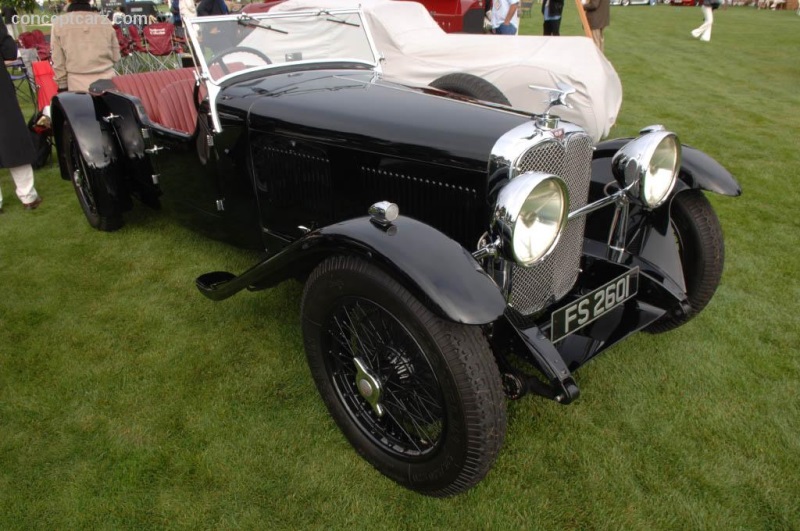
The Speed 20 was introduced in 1932 and were available in various configuration. Production would continue until 1936. The 4 door touring version was the standard configuration with Cross & Ellis handling these coachwork orders. The 4 door saloon was courtesy of Charlesworth. The two-door tourer, two-door sports saloon, and drophead coupe versions were created by Vanden Plas.
When introduced the engine offered was a six-cylinder unit with pushrod overhead valves, three SU carburetors, and about 86 horsepower. Their engines were referred to as 'Silver Eagles'. The suspension was comprised of semi-elliptical springs in the front and rear. 14-inch drum brakes provided the stopping power. Specifications varied and were continually improved. In 1933 the Crested Eagle was introduced which used an independent suspension with a transverse leaf spring and wishbone setup.
In 1933 Alvis introduced to the world a gearbox with synchromesh on all forward gears. This advancement made the vehicles much easier to drive and offered considerably better performance.
In 1936 production of the Speed 20 ceased with around 750 examples being produced.
By Daniel Vaughan | Oct 2006
The Speed 20 was introduced in 1932 and were available in various configuration. Production would continue until 1936. The 4 door touring version was the standard configuration with Cross & Ellis handling these coachwork orders. The 4 door saloon was courtesy of Charlesworth. The two-door tourer, two-door sports saloon, and drophead coupe versions were created by Vanden Plas.
When introduced the engine offered was a six-cylinder unit with pushrod overhead valves, three SU carburetors, and about 86 horsepower. Their engines were referred to as 'Silver Eagles'. The suspension was comprised of semi-elliptical springs in the front and rear. 14-inch drum brakes provided the stopping power. Specifications varied and were continually improved. In 1933 the Crested Eagle was introduced which used an independent suspension with a transverse leaf spring and wishbone setup.
In 1933 Alvis introduced to the world a gearbox with synchromesh on all forward gears. This advancement made the vehicles much easier to drive and offered considerably better performance.
In 1936 production of the Speed 20 ceased with around 750 examples being produced.
By Daniel Vaughan | Oct 2006


1932 Alvis Speed 20 Vehicle Profiles
Recent Vehicle Additions


Performance and Specification Comparison
Speed 20 Specification Comparison by Year
Year
Production
Wheelbase
Engine
Prices
6 cyl., 153.23 CID., 87.00hp