1927 Bugatti Type 35B

1927 Bugatti Type 35B Navigation
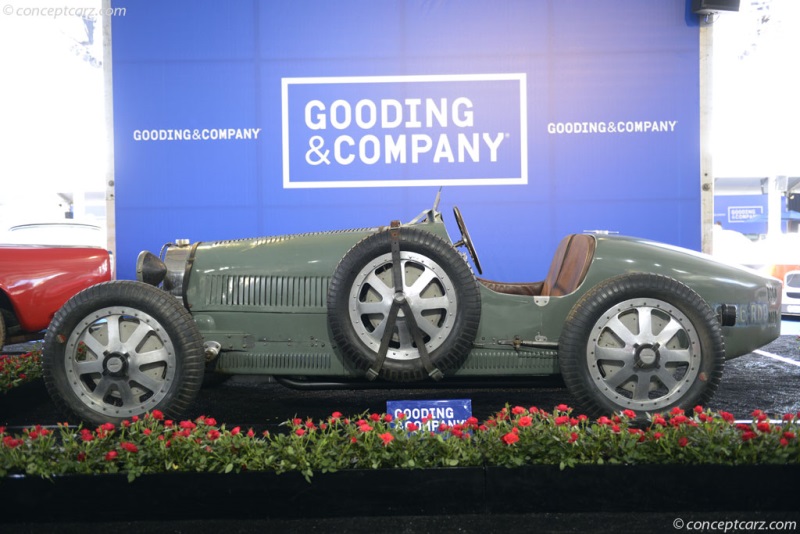
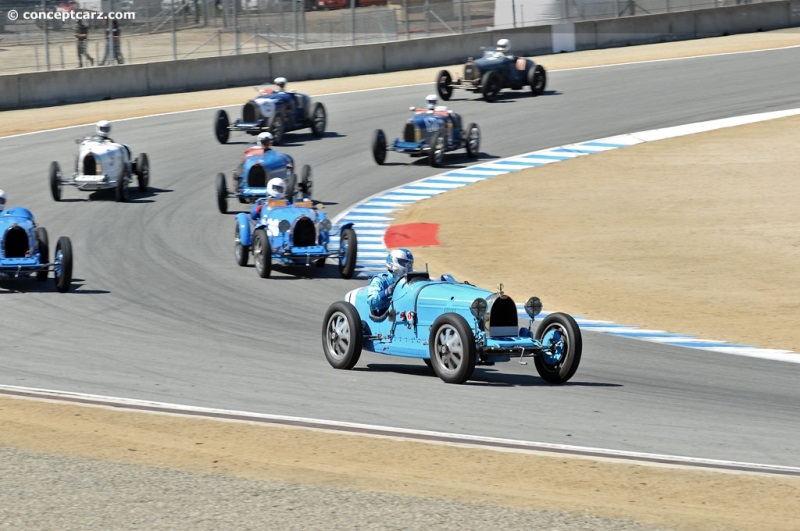
The Bugatti Type 35 holds the distinction of being an accomplished and effective Grand Prix car, and one of the most beautiful and enduring designs of all time. Produced from 1924 to 1930, the Type 35 would win over 1,000 races during its career. It won the Grand Prix World Championship in 1926, the Targa Florio for five consecutive years, and the Monaco Grand Prix three times. By the end of 1926, the Type 35 had already set 47 individual speed records. Popular with amateur and professional racing men and women, the list of drivers who piloted the Type 35 includes Varzi, Divo, Costantini, Benoist, Chiron, Nuvolari, Dreyfus, and Williams.Ettore Bugatti introduced the Type 35 in August 1924 at the French Grand Prix, held in Lyon. Five factory team cars were entered, but tire troubles throughout the race resulted in the team achieving no better than 7th place at the finish. Clearly not a harbinger of things to come, the Type 35 in its various forms would go on to become arguably the most successful racing car of all time. The most potent and refined version was the Type 35B with its 2.3-liter supercharged engine. Approximately 534 examples of the Type 35 were built in various configurations (including the Type 35, Type 35A, Type 35B, Type 35C, Type 35T, Type 37, Type 37A, and Type 39). The most abundant was the Type 37 of which 223 examples were built. The Type 37 had the same chassis and bodywork as the Type 35, but rode on wire wheels and was powered by a 1.5-liter straight-4 engine. An additional 67 examples were supercharged version of the Type 37, known as the Type 37A.The Bugatti Type 35 was replaced in 1931 by the Miller-inspired twin-cam Type 51.Mechanical Specification
Endowed with state-of-the-art engineering, the Type 35 rested on a 94.5-inch wheelbase and was 144.9 inches in length. Behind the horseshoe-shaped radiator was an evolution of the three-valve 1,991cc (121.5 cubic-inch) overhead cam straight-eight engine that had initially powered the Type 29 of 1921. Like several preceding Bugatti models, the bore measured 2.36 inches and the stroke of 3.46 inches. The normally aspirated two-liter engine produced an impressive 90 horsepower, and its sophisticated roller-bearing system allowed the engine to rev to 6,000 RPM. The engine blocks were delicately hand-scraped to ensure that the surfaces were flat enough that gaskets were not required for sealing. Many of the exposed surfaces of the engine compartment were given engine-turned finishes, and safety wires threaded through almost every fastener in intricately laced patterns.The front axle was hollow to reduce unsprung weight, and springs passed through the axle rather than the traditional U-bolt assembly. The wheels were alloy and the brakes were an effective cable-operated mechanical drum system. The bodies were formed from aluminum with styling that was both elegant and purposeful. Features included a tapered tail, scraped or polished metal finishes, and seating for two.The Bugatti Type 35
Boattail Racer
Chassis #: 4884
View info and historyType 35 Variants
- Type 35
- Type 35B
- Type 35C
- Type 35TProduction
The total production of the naturally aspirated, 2-liter Bugatti Type 35 was 96 units. An additional 139 examples of the Type 35A, 13 of the Type 35T, 45 of the Type 35C, and 37 of the Type 35B were produced. The Type 35A was introduced in May 1925 and was intended for road-going purposes. Nicknamed by the public as the 'Tecla', the Type 35A was devoid of some of the mechanical sophistication of its racing-bred sibling. It used plain bearings on the crankshaft, coil ignition similar to that of the Type 30, and smaller valves. A visual feature of the Type 35A that distinguished it from other Type 35s was its wire-spoked wheels.
Boattail Racer
Chassis #: 4884
View info and historyBoth the Type 35T and Type 35C were introduced in 1926. The latter had a two-liter engine with a Roots supercharger and a single Zenith carburetor, bringing output to nearly 128 horsepower. Its inaugural outing was at the Milan Grand Prix (1926) where it placed first and second. The Type 35T was built specifically for the Targa Florio (1926) race and was powered by a 138 cubic-inch (2,262cc) engine which had a 3.9-inch stroke. Grand Prix competition limited engine displacement to 2.0 liters, making the Type 2.3-liter Type 35T ineligible. The Type 35B was the most powerful version of the Type 35 and was known by the factory as the 'Type 35TC' - for Targa Compressor. It was powered by the 2.3-liter engine sourced from the Type 35T with the addition of a supercharger that helped boost output to 138 hp. It produced more horsepower and torque than the Type 35C, but had a lower rev limit and higher fuel consumption, eventually prompting the factory to return to Type 35C production. Type 35CBugatti Type 37
The Type 37 used the chassis and bodywork of the Type 35, but with a smaller 1.5-liter, SOHC three-vale straight-4 engine that offered 60 horsepower. This powerplant was also used in the Type 40. Aimed at privateer drivers, the Type 37 rode on wire wheels and could be purchased with a supercharger (Type 37A) that brought output to around 90 horsepower. With the additional power, the Type 37A also received larger shrouded brake drums. Bugatti Type 39
The Bugatti Type 39 was essentially a Type 35C but with a smaller 1.5-liter (1,493cc / 91 cubic-inch) engine. The stroke was reduced from 88mm to 66mm due to the shorter-stroked crankshaft, and it received a mix of regular and ball bearings. Ten examples were produced including supercharged examples which were known as the Type 39A. One example was given a 1.1-liter engine.
by Daniel Vaughan | Aug 2024
Endowed with state-of-the-art engineering, the Type 35 rested on a 94.5-inch wheelbase and was 144.9 inches in length. Behind the horseshoe-shaped radiator was an evolution of the three-valve 1,991cc (121.5 cubic-inch) overhead cam straight-eight engine that had initially powered the Type 29 of 1921. Like several preceding Bugatti models, the bore measured 2.36 inches and the stroke of 3.46 inches. The normally aspirated two-liter engine produced an impressive 90 horsepower, and its sophisticated roller-bearing system allowed the engine to rev to 6,000 RPM. The engine blocks were delicately hand-scraped to ensure that the surfaces were flat enough that gaskets were not required for sealing. Many of the exposed surfaces of the engine compartment were given engine-turned finishes, and safety wires threaded through almost every fastener in intricately laced patterns.The front axle was hollow to reduce unsprung weight, and springs passed through the axle rather than the traditional U-bolt assembly. The wheels were alloy and the brakes were an effective cable-operated mechanical drum system. The bodies were formed from aluminum with styling that was both elegant and purposeful. Features included a tapered tail, scraped or polished metal finishes, and seating for two.The Bugatti Type 35

Boattail Racer
Chassis #: 4884
View info and history
- Type 35
- Type 35B
- Type 35C
- Type 35TProduction
The total production of the naturally aspirated, 2-liter Bugatti Type 35 was 96 units. An additional 139 examples of the Type 35A, 13 of the Type 35T, 45 of the Type 35C, and 37 of the Type 35B were produced. The Type 35A was introduced in May 1925 and was intended for road-going purposes. Nicknamed by the public as the 'Tecla', the Type 35A was devoid of some of the mechanical sophistication of its racing-bred sibling. It used plain bearings on the crankshaft, coil ignition similar to that of the Type 30, and smaller valves. A visual feature of the Type 35A that distinguished it from other Type 35s was its wire-spoked wheels.

Boattail Racer
Chassis #: 4884
View info and history
The Type 37 used the chassis and bodywork of the Type 35, but with a smaller 1.5-liter, SOHC three-vale straight-4 engine that offered 60 horsepower. This powerplant was also used in the Type 40. Aimed at privateer drivers, the Type 37 rode on wire wheels and could be purchased with a supercharger (Type 37A) that brought output to around 90 horsepower. With the additional power, the Type 37A also received larger shrouded brake drums. Bugatti Type 39
The Bugatti Type 39 was essentially a Type 35C but with a smaller 1.5-liter (1,493cc / 91 cubic-inch) engine. The stroke was reduced from 88mm to 66mm due to the shorter-stroked crankshaft, and it received a mix of regular and ball bearings. Ten examples were produced including supercharged examples which were known as the Type 39A. One example was given a 1.1-liter engine.
by Daniel Vaughan | Aug 2024
Related Reading : Bugatti Type 35 History
The Bugatti Type 35 is regarded by many as one of the most beautiful pre-war racers from the legendary Bugatti Company. Its beauty is matched by its accomplishments, is one of the most successful pre-war racer winning over 1000 races and capturing the 1926 Grand Prix World Championship with 351 races. During that two-year period, it also claimed 47 records. From 1925 through 1929, the Bugatti Type....
Continue Reading >>
Continue Reading >>
THE LEGENDARY BUGATTI TYPE 35 – THE WORLD'S MOST SUCCESSFUL RACING CAR
Light, strong, fast and elegant. The Bugatti Type 35 is one of the most successful racing cars of all time. And deservedly so the French manufacturers open-top sports car secured over 2,000 victories between 1924 and 1930. Today, the Type 35 is a legend in international motor sport. And a whole lot more besides. The Bugatti Type 35 is one of the icons of Bugattis rich history and tradition.....
Continue Reading >>
Continue Reading >>
- 1927 Bugatti Type 35B Menu
- Article
- Image gallery
- Valuation
- Specifications
- Profiles
Bugatti
Similar Automakers
Similarly Sized Vehicles
from 1927


1927 Bugatti Type 35B Vehicle Profiles
Recent Vehicle Additions


Performance and Specification Comparison
Type 35B Specification Comparison by Year
Year
Production
Wheelbase
Engine
Prices
Related Automotive News

Bugatti's greatest racer celebrates centenary at Salon Privé Concours
Bugatti Type 35 turns 100 in style at the UKs most lavish Concours
Highly original Type 35 B with continuous history represents models nadir
Part of exclusive Bugatti class including competition and touring models
Former Pebble Beach Show-winn...

Bugatti Heritage – A year of records
Classic Bugatti cars achieved record results at auctions in 2020.
image00
Historic Bugatti cars continue to rise in value. Five automotive masterpieces from Molsheim were the five most valuable vehicles sold at auction internationally in 2020....

Gooding & Company Proudly Presents 'Passion of a Lifetime' – A Masterpiece Collection of Sixteen Substantial Automobiles for Sale on 1 April 2020
Santa Monica, Calif. (22 January 2020) – Gooding %26 Company, the internationally recognized auction house, is honored to reveal the automobiles comprising the companys first-ever London sale, Passion of a Lifetime, at Somerset House in central...

Bugatti'S Dominance In 1928
90 years since the racing season packed with victories for the Type 35
From the very first day of the car manufacturer from Molsheim, the Bugatti myth was created mainly by motorsports. In this respect, 1928 was a special year for Bugatti. The...

Goodwood Festival of Speed 2013: auction of Mercedes-Benz W 196 R one of highlights at world's 'largest motorised garden party'
Mercedes-Benz Classic presents great moments in motor-racing history at Goodwood
Motorsport festival celebrating its 20th anniversary
Auction of only privately owned post-war Silver Arrow by Bonhams sure to cause a stir
Stuttgart – This...