The Audi Tradition programme of events for 2006 is clearly influenced by the Silver Arrows of Auto Union. The historical department of AUDI AG will be celebrating its Silver Arrow treasures at events at home and abroad. The Auto Union racing cars of the thirties will be turning out on several occasions, recalling the European Championship win in 1936 with Bernd Rosemeyer at the wheel, comparable with today's Formula 1 World Championship. A particular highlight in this respect will be the completion of the last Auto Union Type D.
Chassis #: 019
View info and historyThis most elegant of all the Auto Union Silver Arrows is to celebrate its world premiere in England, at the Goodwood Festival of Speed from 7 to 9 July 2006. A genuine work of art is being created: Audi Tradition is having the twin-supercharged Auto Union Type D projectile from 1939 rebuilt by restoration specialists Crosthwaite & Gardiner (England), and running it for the first time in the home country of motor sport. H.P. Müller won the French Grand Prix in 1939 in this legendary 12-cylinder car, and Tazio Nuvolari won the last Grand Prix before the war, in Belgrade. Goodwood will also reverberate to the sound of a second 12-cylinder car, the original Auto Union Type D from 1938, and of the 16-cylinder Auto Union Type C. The Audi 200 quattro will be competing in the TransAm series held at Goodwood: it was with this racing car that Audi achieved a unique string of victories in the hard-fought TransAm Championship in the USA in 1988.The 16-cylinder Auto Union Type C will be exhibited at the Techno Classica veteran car exhibition in Essen at the start of April, and at Heidelberg Historic in Sinsheim and Neckarsulm in mid-June. On the first weekend in July, the Type C will be completing a few laps at the traditional 'Corso' at the Silvretta Classic in Vandans (Austria), in honour of 95-year-old Paul Pietsch, the only surviving Auto Union Silver Arrow driver. At the same time, the original Auto Union Type D will be putting in an appearance at the Auto Union Veterans Club (AUVC) meet in Brussels. This Type D will drive in Germany at the racetrack for the first time at the start of this year's DTM season at the Hockenheimring on 9 April.Source - Audi
Chassis #: 019
View info and history
Perhaps the most expensive car ever to be sold in the history of the prestigious auction house Christie's is due to go under the hammer on 17 February at the international vintage car fair Rétromobile in Paris: one of two remaining original Type D racing cars from Auto Union dating from 1939. Christie's has estimated the value of the car at 8.8 to 12 million euros. That would be a new record in the British auction house's long history. Worldwide interest in the vehicle is huge. For that reason, Christie's is holding a press conference in collaboration with Audi of America and Audi Tradition in New York on 25 January (10.30 am). Audi France will be exhibiting an original Auto Union Type D from Audi Tradition to mark the auction in Paris (12 February, 11.30 am).
Chassis #: 019
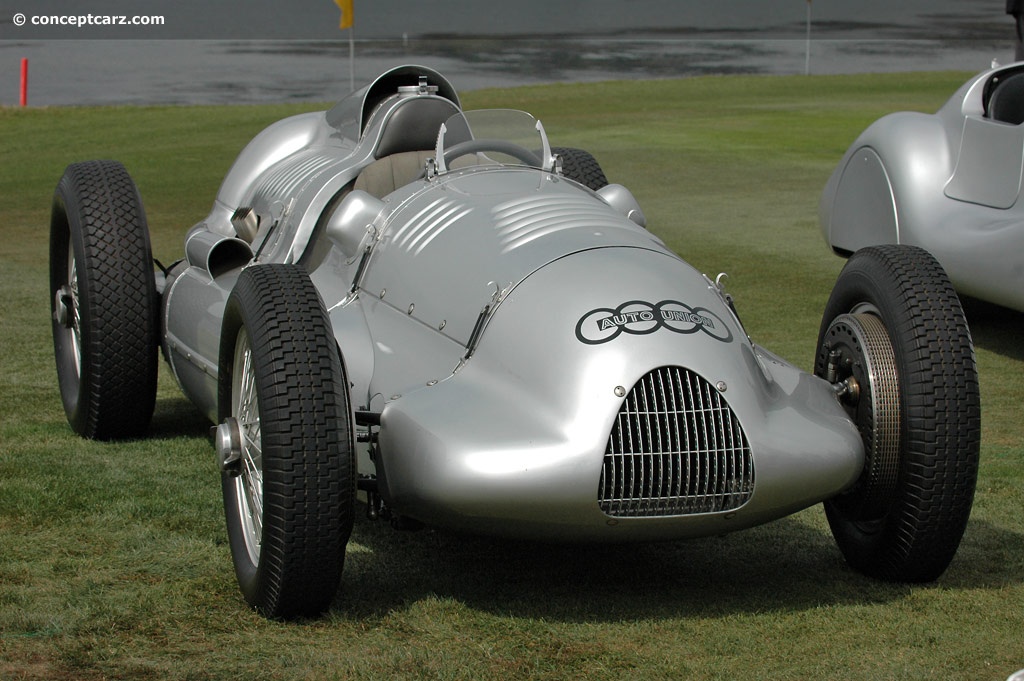
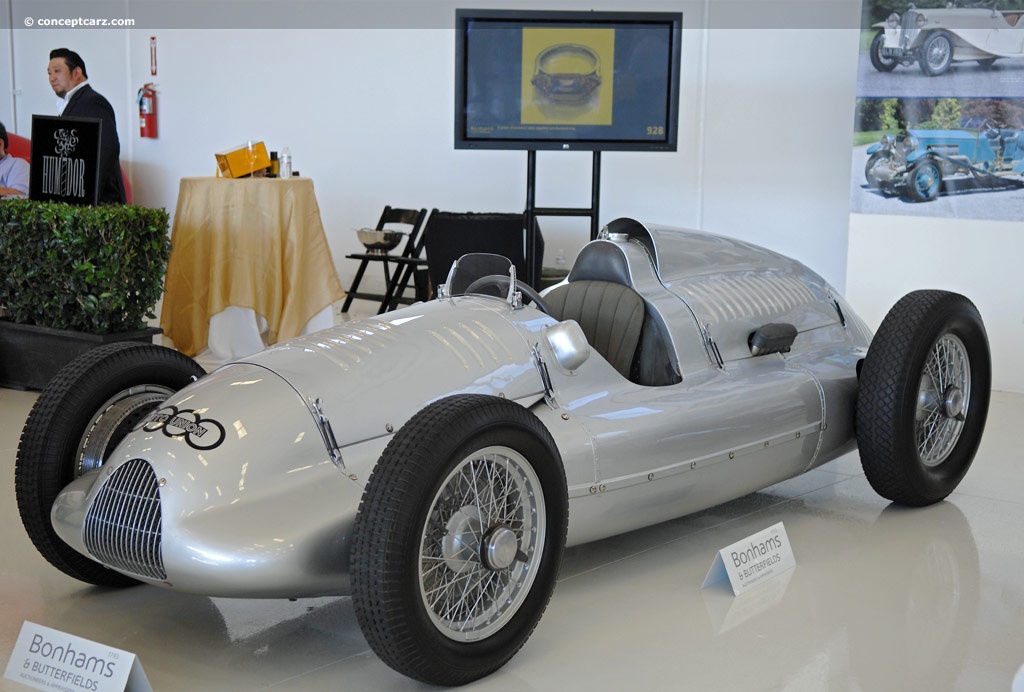
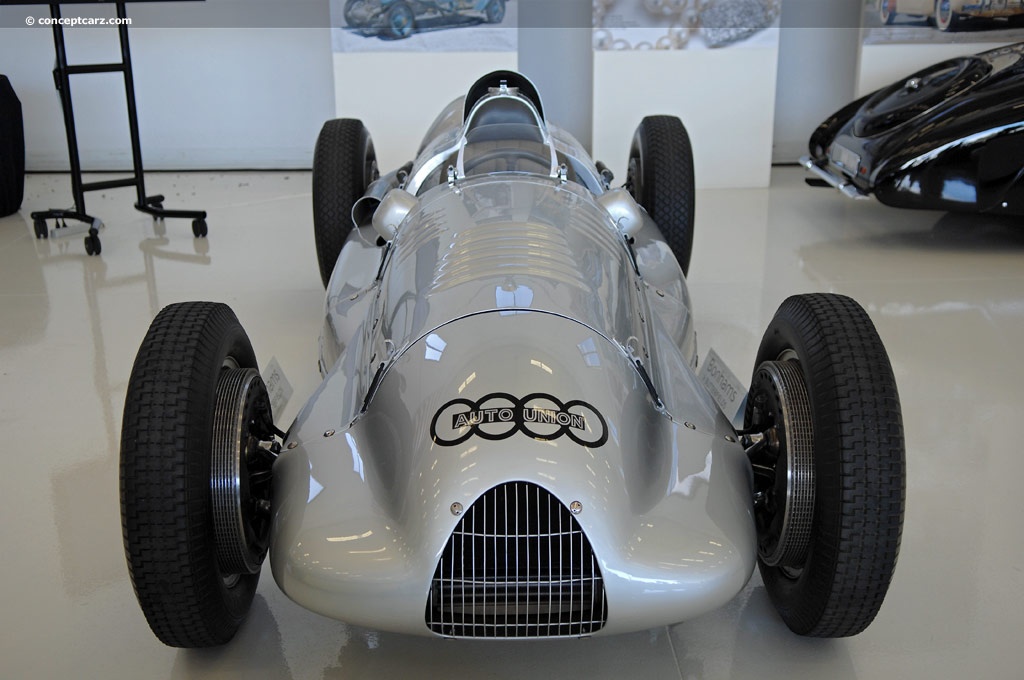
View info and historyAuto Union is one of the brands that later jointly became AUDI AG. Audi Tradition keeps alive the memory of the legendary Auto Union Grand Prix racing cars. While the vehicle on auction will be on display in the Audi Forum New York (250 Park Avenue and 47th) on 25 January, the so-called sister car – the Auto Union Type D racing car from 1938 – will be making an appearance on 12 February in Paris (Bauer Saint Honoré, 48 Place du Marché Saint Honoré). Both of these Grand Prix cars made the journey from the former Soviet Union, having been transported there from Zwickau in eastern Germany after World War II by the Soviet occupation forces.In the 1980s the American Paul Karassik eventually brought them to the West having searched for over ten years and eventually finding the cars stripped down into individual parts in the former USSR. He then had them reassembled by specialists in Britain with technical support from AUDI AG. Subsequently AUDI AG acquired the 1938 car from Paul Karassik. The 1939 D Type passed into private ownership.The Auto Union engineers, headed by Robert Eberan-Eberhorst, developed the 12-cylinder Type D racing car for the 1938 racing season, in which new international Grand Prix regulations were introduced, limiting engine capacity to three liters. The fundamental technical design of the car – mid-mounted engine, torsion bar suspension, supercharged engine – essentially followed the model of its Type C predecessor, developed by Ferdinand Porsche for Auto Union with a 16-cylinder V-engine. In 1938 Auto Union won the Italian and British Grand Prix with the Type D racing car.
Chassis #: 019
View info and historyThe car was modified in 1939 with the addition of a twin compressor, which increased its engine power output from 420 to 460 bhp. Its top speed was 330 km/h and it was driven to victory at the Grand Prix in France and Yugoslavia. The top drivers of the Auto Union Type D racing car were Tazio Nuvolari, H.P. Müller, Hans Stuck, Rudolf Hasse and Georg Meier.Audi Tradition today once again owns four Auto Union Silver Arrows – the original Type D and Type C/D hill-climbing car and replicas of the original Type C Grand Prix car and the Type C Avus Streamline racing car. A further replica is still to be produced this year – a Auto Union Type D racing car of the 1939 generation with twin compressor.Experts from Audi Tradition will be on hand at the press conferences in New York and Paris and at the auction on 17 February at 6.30 pm on the Christie's stand at the Rétromobile in Paris (Hall 7), where they will be available to answer specialist questions.
Chassis #: 019
View info and historyThe four rings of the Audi badge symbolize the brands Audi, DKW, Horch and Wanderer, which were later combined under the umbrella of Auto Union. Auto Union and NSU, which merged in 1969, made many significant contributions towards the development of the car. AUDI AG was formed from Audi NSU Auto Union AG in 1985. Together with the two traditional companies Auto Union GmbH and NSU GmbH, Audi Tradition nurtures and presents the deep and diverse history of Audi. The Audi museum mobile at the Audi Forum Ingolstadt is open from 9 a.m. to 6 p.mSource - Audi
Chassis #: 019
View info and history
Chassis #: 019
View info and history
Chassis #: 019
View info and history


1938 Auto-Union Type D Vehicle Profiles

Chassis #: 019
Recent Vehicle Additions


Related Automotive News

Mercedes-Benz Classic At Solitude Revival 2017 In Stuttgart: At The Centre Of The Brand's Racing History
At the fifth Solitude Revival, Mercedes-Benz Classic will bring the great age of motorsport back to life on the legendary Stuttgart circuit with famous racing vehicles and drivers. Among the vehicles on show are the Mercedes-Benz Model S from 1927 and...

Discover vintage vehicles from Audi Tradition on the road
More than 20 events in the 2017 vintage car season
Walter Röhrl in the Sport quattro S1 Pikes Peak at the Festival of Speed
Auto Union Type C in action at the Großglockner rally and at Castle Dyck
Audi Tradition starts 2017 wit...

AUDI PRESENTS NINE UK PUBLIC DEBUTS AT GOODWOOD FESTIVAL OF SPEED
Some of the finest examples of Vorsprung durch Technik from the past and present converge on the UKs largest motoring garden party
540PS R8 Spyder tops the power charts while the all-new Q2, the most compact Audi SUV to date, joins the Q7 e-tron p...

120 years of motor sport at Mercedes-Benz take centre stage at the Goodwood Festival of Speed 2014
Addicted to Winning at this years Goodwood Festival of Speed, Mercedes-Benz looks back on some fascinating racing victories of the last 120 years
The unique motor sport heritage of the Mercedes-Benz brand is being celebrated with an exclusive i...

Home again: the last Auto Union Type D twin-supercharger Silver Arrow returns to Audi
Audi Tradition buys back the second Karassik restoration car
Auto Union Type D built in 1939, then lost in the USSR for many years
Thomas Frank, Head of Audi Tradition One of the most emotional moments in our heritage work for AUD...