The Ferrari story began in 1929 when Enzo Ferrari founded Scuderia Ferrari - 'Ferrari Stable' - to build race cars. After World War II, he began building road cars but only as a means to fund his beloved racing.
Coupe by Pininfarina
Chassis #: 1521GT
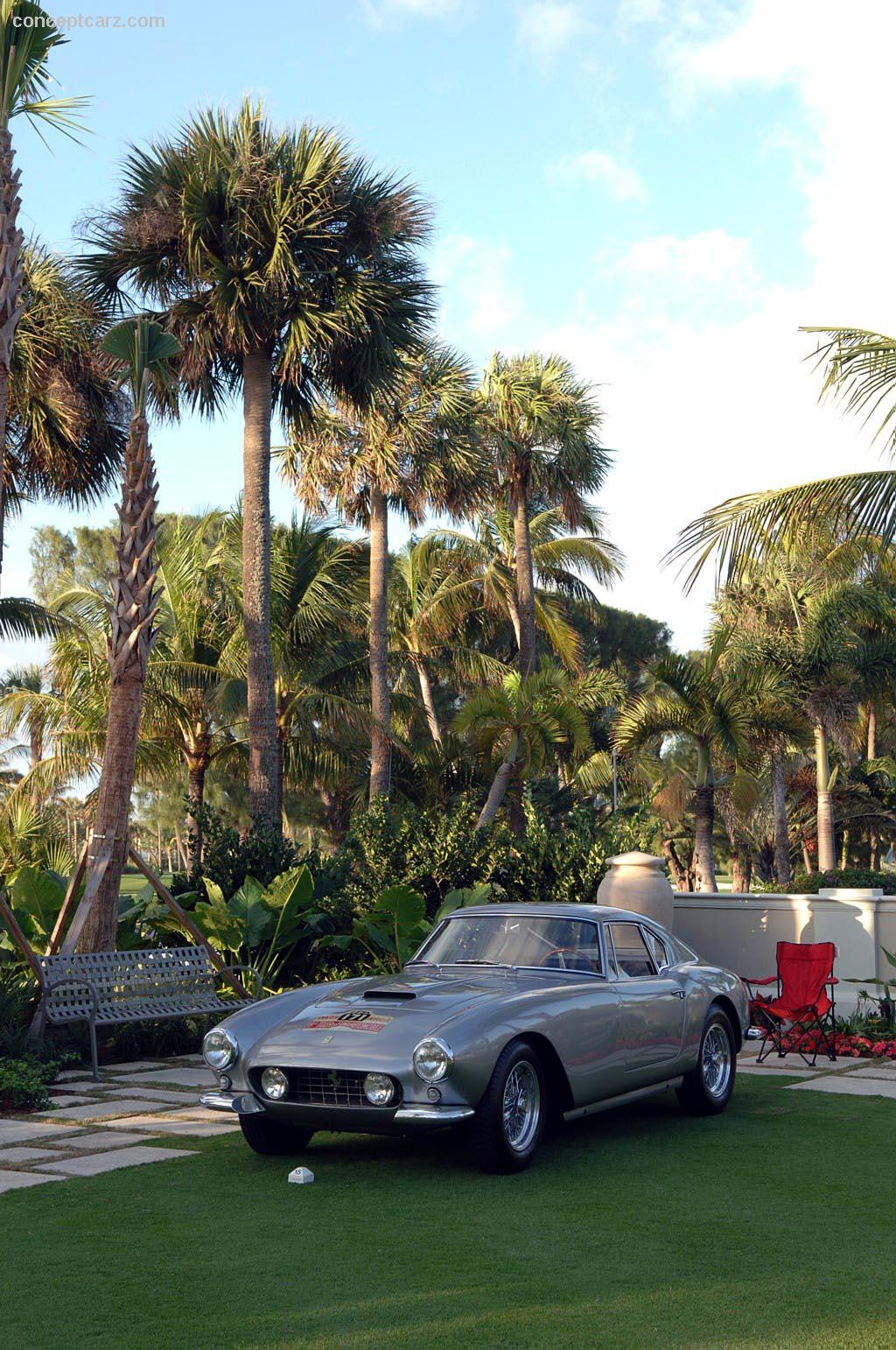
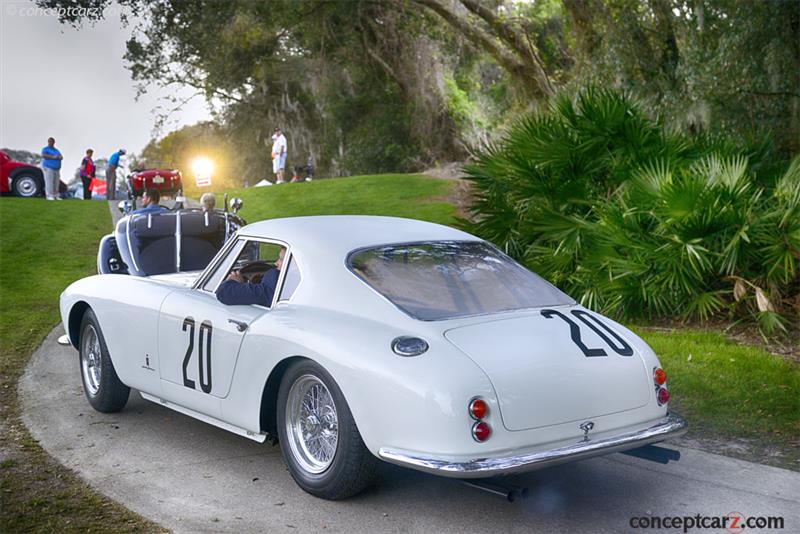
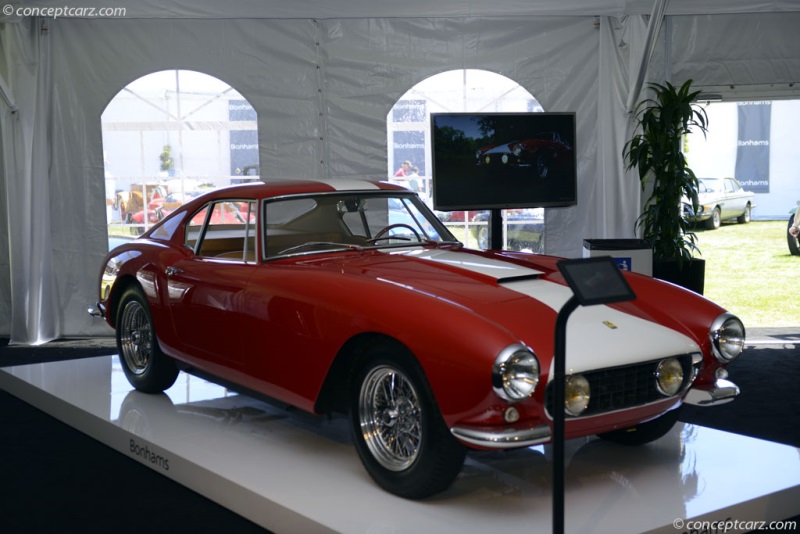
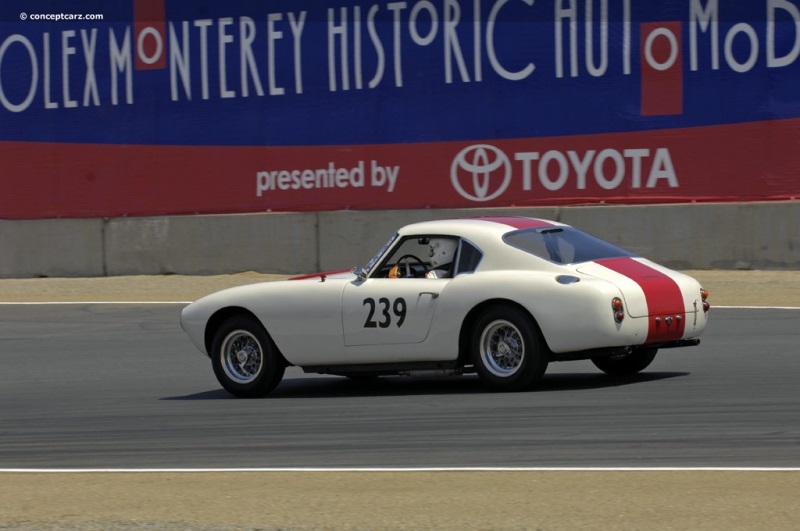
View info and historyThe Ferrari 250 was built from 1953 to 1964 powered by a lightweight 2.9L V12 in either a long (102.4 inch) or short (94.5 inches) wheelbases. In 1959, seven 250 GT Berlinetta 'Interim' LWB coupes were built during the transition from the 250 GT Tour de France Berlinetta to the 250 GT SWB Berlinetta. These seven featured the new Pinin Farina bodywork from the upcoming SWB (short wheelbase) Berlinettas on the long-wheelbase chassis. All were built to competition specs and included a highly tuned engine and drive train. The bodies were all aluminum with an additional rear quarter window.Ferrari's earliest racing campaigns employed the famed 'short-block' V-12 engine designed by Gioacchino Colombo, powering the 125S and 166MM racecars, and the concurrent road car line followed similar design principles. Growing displacement sizes led to the 212 and 225 Inter and Export models, which were sold as road-going vehicles but several were used for competition.During the early 1950s, as Scuderia Ferrari's sports car competition program developed, the company went down a different path using engines based on Aurelio Lampredi's 'long-block' V12 design. This became the mainstay of Maranello's sports car racing efforts including the 340 Mexico, 375 MM, and 375 Plus, which accounted for the majority of Ferrari's sports car racing victories between 1953 and 1956.
Coupe by Pininfarina
Chassis #: 1521GT
View info and historyThe larger Lampredi engine was overwhelmingly successful in competition, but Maranello continued to experiment with various chassis designs and motor specifications, including the Colombo-designed unit. For the 1952 Mille Miglia, a 2,953 cubic-centimeter version of the short-block engine was installed into a 2,400 mm chassis and clothed with Vignale coachwork similar to a design used on the 212 Export. Called the 250 S, chassis number 0156 ET was entered for Luigi Villoresi, but at the last minute, a substitution was made and Giovanni Bracco was given driving duties, and ultimately placed first overall. Renamed the 250 MM, the same car (0156 ET) raced at Le Mans and was driven by Bracco again at the Carrera Panamericana, but a transmission failure during the final leg of the rally prevented what may have been another Bracco victory. This led to the 250-specification engine being produced for a short run of 2500 MM customer racing cars and although they used Lampredi-style heads, they were the first competition use of Colombo's design with a 2,953cc displacement. The FIA introduced displacement limitations for sports cars following the tragic disaster at the 1955 24 Hours of LeMans, opening an opportunity for Ferrari to introduce a new competition 250 GT model in early 1956 with Scaglietti coachwork based on an earlier Pinin Farina show car design. Wearing coachwork described as 'Berlinetta', this new model was marketed as a dual-use competition variant of the 250 GT road cars.
Coupe by Pininfarina
Chassis #: 1521GT
View info and historyThe first example built, chassis number 0503 GT, placed 4th overall and 1st-in-class at the Giro di Sicilia in April 1956 with Olivier Gendebien and his cousin Jacques Washer driving. This accomplishment was repeated at the Mille Miglia the following month, with a 5th overall finish and 1st-in-class victory. At the Tour de France Auto in September of 1956, Marquis Alfonse de Portago drove chassis no. 0557 GT to a convincing victory, firmly establishing the car's reputation. Over the next two years, the Berlinetta earned numerous victories at various European circuits, including at the Tour de France in 1957 and 1958, earning it the nickname the 'Tour de France,' or 'TdF.' The 250 GT Tour de France was in production for three years and numerous mechanical and bodywork changes were made during that time, with perhaps the most visual change being in the rear quarter panels (or sail panels) with various numbers of louvers as the model evolved through three batches. The fourth and final variation, often referred to as the 'interim' Berlinetta, was built during the spring of 1959 and began with chassis number 1377 GT.
Coupe by Pininfarina
Chassis #: 1521GT
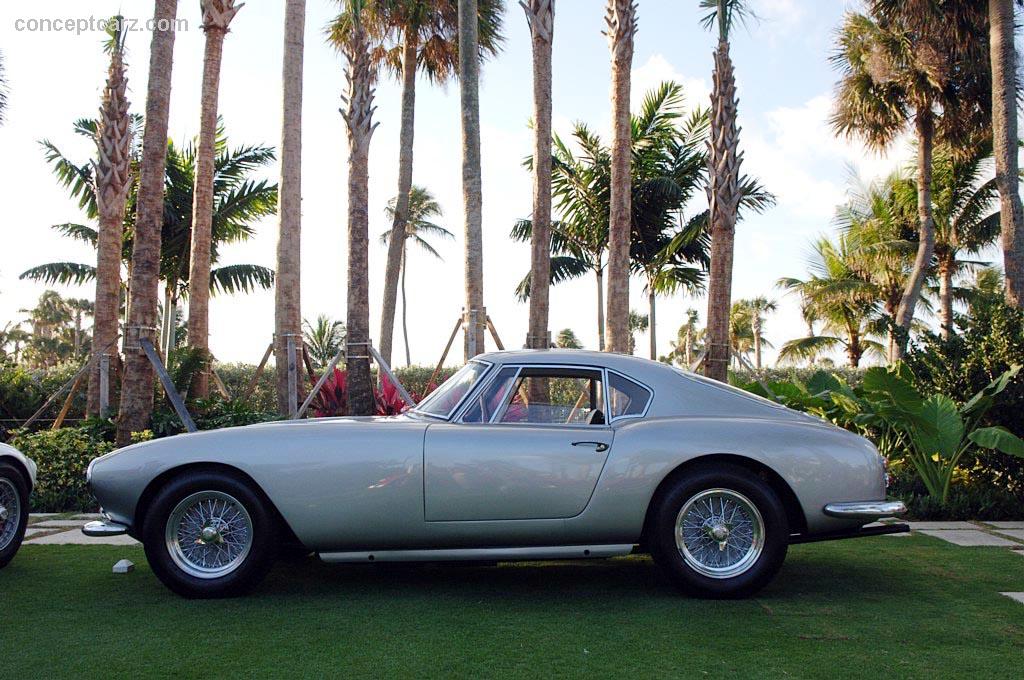
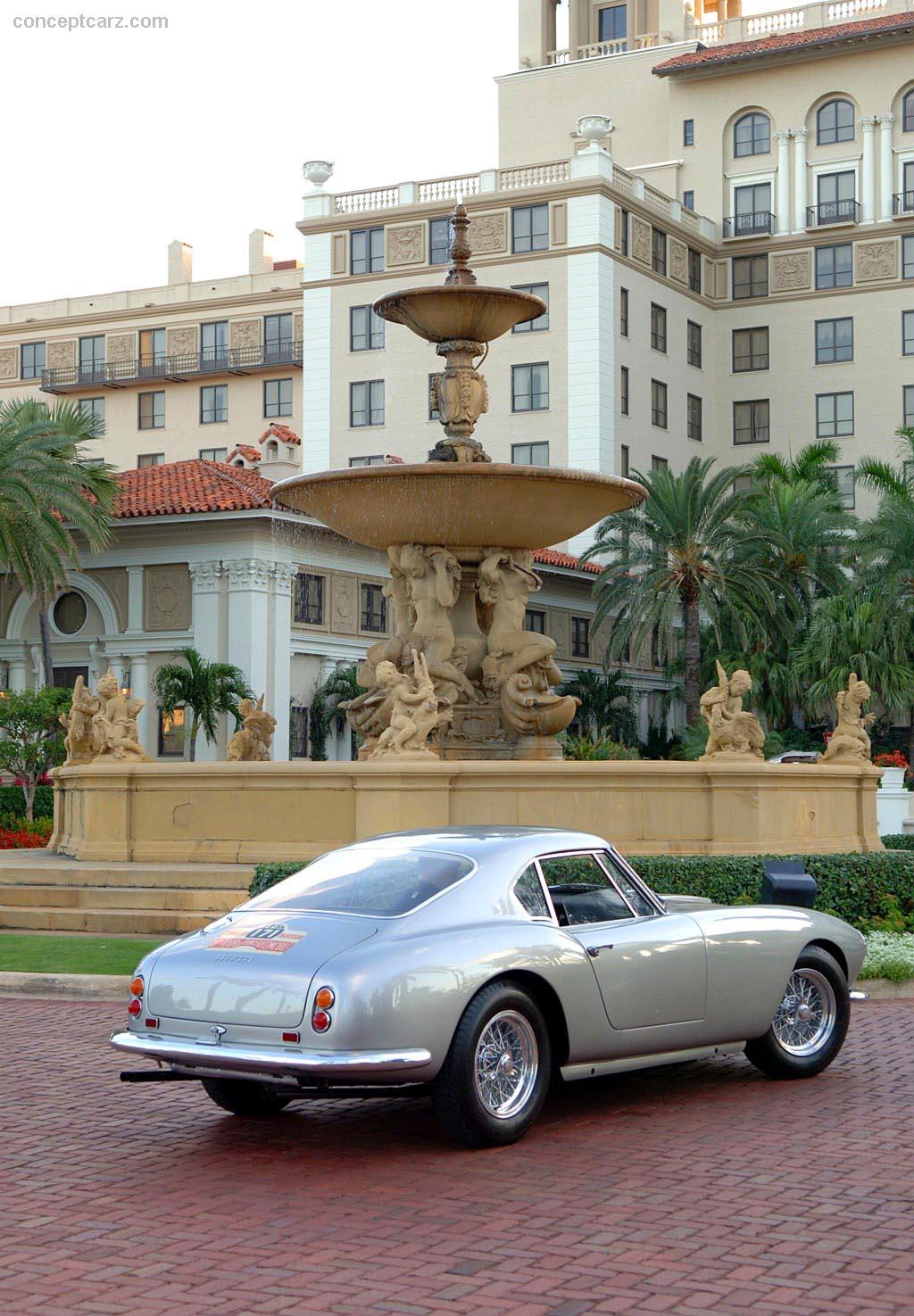
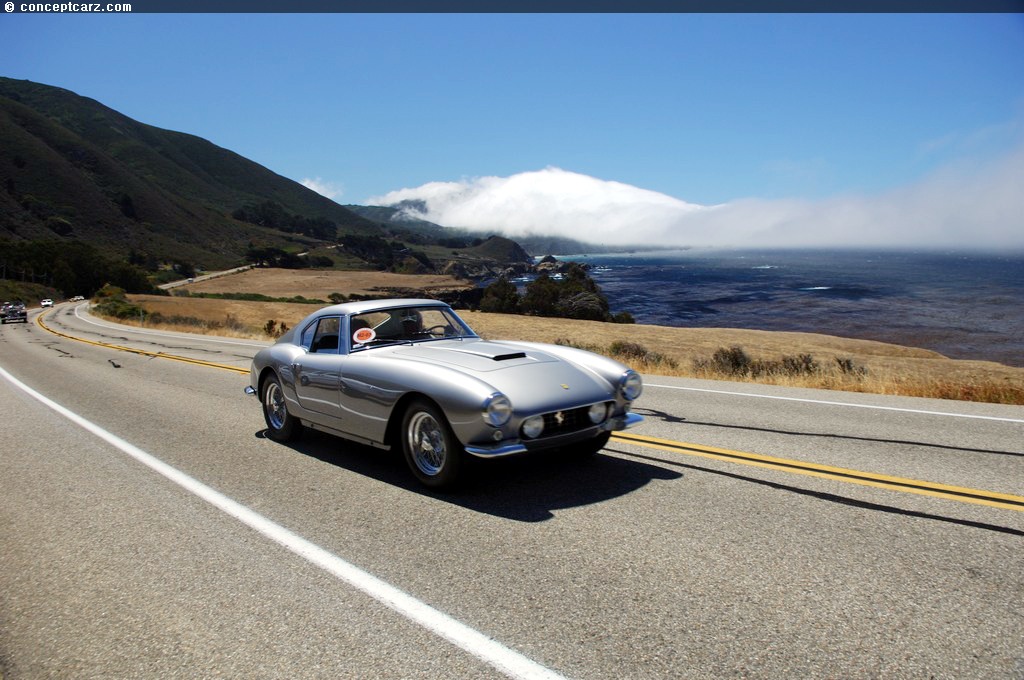
View info and historyThe 'interim' cars rested on a 2,600mm wheelbase and clothed with new Scaglietti coachwork designed by Pinin Farina. Design cues included an under-sloping front grille, shorter overhangs, and more rounded front fenders and fastback rear end. The bodylines of the Interim foreshadowed what was to come with the SWB Berlinetta.Scaglietti built the 250 GT 'Interim' Berlinetta with lightweight all-alloy coachwork, and the 2,953cc single overhead camshaft V-12 engine used three Weber 40 DCL/6 carburetors and delivered 260 horsepower at 7,000 RPM. The engine benefitted from recent advancements including those introduced on the Testa Rossa with the outside spark-plus design with individual, non-siamesed porting. The new Tipo 128 F architecture provided greater performance, better reliability, and easier maintainability, even during extended competition use. The engines were backed by a four-speed manual gearbox, the front suspension was independent and the rear used a live axle setup, and stopping power was provided by four-wheel disc brakes. Only seven examples of the long-wheelbase 250 GT Interim Berlinetta were built between April and September of 1959, incorporating design elements of both the outgoing Tour de France and the soon-to-appear 250 GT SWB. The seven examples built have serial numbers 1377GT, 1461GT, 1465GT, 1509GT, 1519GT, 1521GT, and 1523GT. Among their accolades, chassis number 1461 GT placed fourth overall and 1377 GT placed 6th overall (and 4th-in-class) at the 1959 Le Mans 24 Hour race. An 'Interim' Berlinetta continued Ferrari's dominance at the Tour de France with another outright victory in 1959.
Coupe by Pininfarina
Chassis #: 1521GT
View info and historyAt the Paris Motor Show in October of 1959, Ferrari introduced the SWB Berlinetta, resting on a new 2,400mm wheelbase platform and clothed with a design similar to the long-wheelbase Interim.
by Daniel Vaughan | Mar 2019

Coupe by Pininfarina
Chassis #: 1521GT
View info and history
Coupe by Pininfarina
Chassis #: 1521GT
View info and history
Coupe by Pininfarina
Chassis #: 1521GT
View info and history
Coupe by Pininfarina
Chassis #: 1521GT
View info and history
Coupe by Pininfarina
Chassis #: 1521GT
View info and history
by Daniel Vaughan | Mar 2019
Related Reading : Ferrari 250 GT History
Production of the 250 Series began in 1954 and continued on through the early part of the 1960s. There were numerous variations of the 250 and would ultimately become Ferraris most successful line of vehicles to date. The 250 is also recognized as the first Ferrari to ever receive disc brakes. This did not take place until the end of the 1950s. Also, the 250 was the first four-seater. Ferraris....
Continue Reading >>
Continue Reading >>
Similar Automakers


1959 Ferrari 250 GT Interim Vehicle Profiles

Recent Vehicle Additions


Related Automotive News

Pebble Beach Auctions Online Catalogue Now Live; Historic, Unrestored 1962 Ferrari 250 GT SWB Berlinetta Unveiled as Headlining Car
Gooding %26 Company launches its entire online catalogue for the Pebble Beach Auctions, announces a remarkably original 1962 Ferrari 250 GT SWB Berlinetta along major Italian star cars.
Gooding %26 Company, the official auction house of the Pebble...

1962 Ferrari 250 GT SWB California Spider to Lead Gooding & Company's Amelia Island Auctions Alongside Stable of the Finest Ferraris
The star car of the auctions will be a one-off 1962 Ferrari 250 GT SWB California Spider, joined by a 250 GT Tour de France Berlinetta, a 250 MM Vignale Spider, and other examples of Maranellos finest models.
Leading international auction...

'Ferrari Forever' opens at the Enzo Ferrari Museum in Modena
FERRARI FOREVER OPENS AT THE ENZO FERRARI MUSEUM IN MODENA.
AN EXHIBITION DEDICATED TO THE WORLD OF CLASSICHE, CELEBRATING 75 YEARS OF THE MARANELLO-BASED COMPANY.
On 12 March 1947, Enzo Ferrari started up the Ferrari 125 S, the first car...

Ferrari: Under The Skin
15 November 2017 - 15 April 2018
Major exhibition announced by the Design Museum in London to mark the 70th anniversary of Ferrari
£140M worth of Ferraris featured in exhibition displaying cars driven by racing drivers Peter Collins and Stir...

REVERED FERRARI 250 LM LEADS SUPERLATIVE ROSTER OF ITALIAN SPORTS CARS AT RM'S FLAGSHIP MONTEREY SALE
· RM Auctions announces a legendary 1964 Ferrari 250 LM by Scaglietti as the latest multi-million-dollar highlight for its flagship Monterey sale, August 15–16 in California
· 250 LM leads a superb roster of no less than 26 Ferraris at...