The All American Racers (AAR) team was founded in 1964 by Dan Gurney and Carroll Shelby, and was based in Santa Ana, California. Despite the name, the team would benefit from many foreign influences, especially its Formula One program that was based in the United Kingdom and powered by British-sourced Weslake engines. Thus, the F1 program was run under the guise Anglo-American Racers. The team's 1965 entry at Le Mans was a Goodyear-backed Lotus 38 and the following year, the team employed the services of designer Len Terry to help develop their own car. In keeping with the 'All American' theme, Gurney called his car the 'Eagle' after the national bird of the United States.
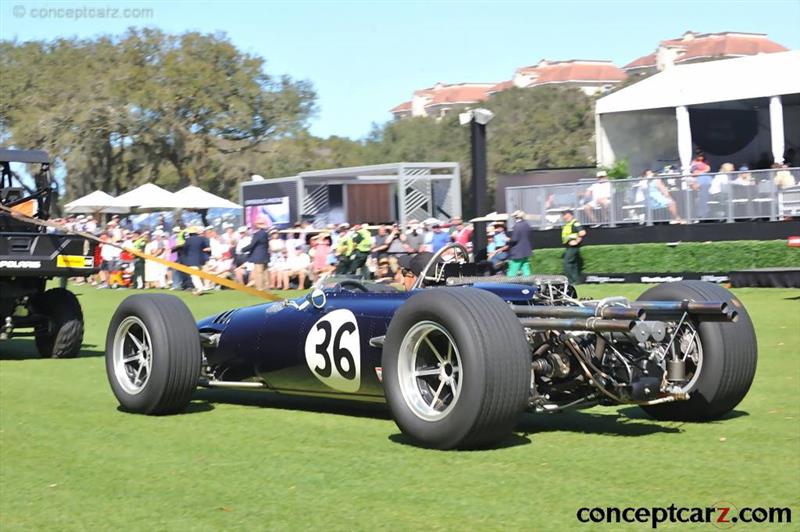
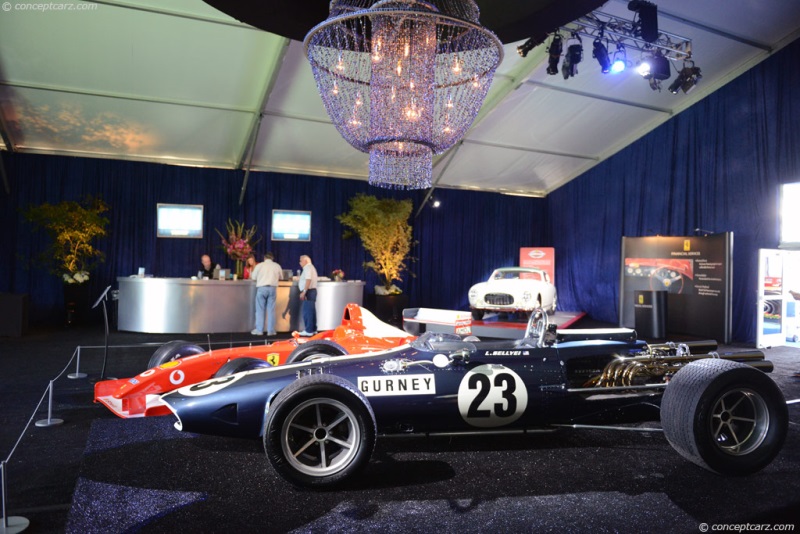
The new Eagle F1 car, known as the Mark 1 while the similarly-styled Indy car was known as the Mark 2, followed in the mold of its predecessor, the Lotus 38 which had won at Indianapolis in 1965. Recent Formula 1 rule changes increased displacement to three liters for 1966, allowing both the Indy and Grand Prix Eagles to have a similar design. Both had a fully enclosed monocoque construction formed from aluminum. The suspension at the front and rear were independent with coil springs and telescopic dampers all round, and wishbones at the front and radius rods at the rear. Girling hydraulic disc brakes provided the stopping power. At the front was the iconic beak-shaped nose, reinforcing the 'Eagle' name and adding uniqueness to the Formula 1 lineup.
Since it was closely related to the Lotus 38, the Mark I, later dubbed the T1G, was ready well ahead of the planned twelve-cylinder engine in development at Weslake. While development continued, the Mark I was fitted to a tried-and-true Coventry Climax four-cylinder engine that was nearly 2.8 liters in size. The first Eagle to employ the Aubrey Woods-developed Gurney-Weslake V-12 was chassis number AAR-102, the second chassis built by AAR. Its engine was a 60-degree V12 with a 2,997cc displacement, dual overhead camshafts, four valves per cylinder, Lucas Mechanical Fuel Injection, and initially developed approximately 360 horsepower, later increased to 390 horsepower at 10,500 RPM. It was paired with a five-speed Hewland DG300 MK II manual gearbox.
The Eagle Mark 1 with four-cylinder power was underpowered compared to the competition, but it was reliable, durable, nimble, and in the capable care of Dan Gurney, scored a fifth-place finish at the French Grand Prix (its second race appearance). Later in the year, Gurney placed another fifth place overall in Mexico. The four-cylinder Eagles driven by Phil Hill and Bob Bondurant were not as successful.
With the twelve-cylinder engine installed, the Eagle was one of the most powerful and heavier cars on the grid. The inaugural outing for the V-12-powered Eagle was in the Italian Grand Prix at Monza, the seventh round of the World Championship. At the helm was Gurney, but due to a fuel feed problem during practice was forced to start the race at the back of the grid. During the race, Gurney completed seven laps before he was forced to retire due to high oil temperatures. The second outing was at the U.S. Grand Prix at Watkins Glen in October, where AAR-102 was once again sidelined with low oil pressure plus a cracked fuel cell. The car had been running as high as 8th before oil leaked onto the clutch.
The final race of the 1966 season was at the Grand Prix of Mexico. Driving duties of AAR-102 were assigned to Bob Bondurant while Gurney piloted the Coventry Climax-powered AAR-101. AAR-102 once again was unable to finish the race but Gurney placed 5th.
On the off-season, the team worked to resolve the V12 engine's shortcomings that had plagued the new car. The first race on the 1967 schedule was at the Brands Hatch International Race of Champions on March 12th, a non-championship race. With the Eagle-Weslake MK1 in fine running condition, Gurney was able to capture pole position, a full second quicker than anyone else. During the first practice session, AAR-102 had lowered the existing lap record by three seconds. When Gurney set the fastest time during Friday's practice session, he was rewarded with 100 bottles of champagne.
The Brands Hatch International Race of Champions consisted of two 10-lap heads and the 40-lap main event. Gurney drove AAR-102 to 1st place during heat 1, with Richie Ginther placing third in AAR-103. Ginther initially led heat 2 but was later passed by Gurney. They would finish in 1st and 2nd place, with Gurney ahead of Ginther. During the main event, Gurney took an early lead and captured his third victory in AAR-102, despite suffering from low oil pressure and a smoking engine.
After Brands Hatch came the Monaco Grand Prix, the second round of the 1967 World Championship. Gremlins once again plagued the team and Gurney was unable to finish the race with AAR-103 due to fuel pump issues. Richie Ginther was unable to qualify with AAR-102.
June of 1967 was a very memorable time for Gurney as he became the second driver in history to win a Grand Prix in a car of his own design, winning at the Belgian Grand Prix at Spa with AAR-104. Gurney also won the 24 Hours of Le Mans with Ford's MK IV GT40.
AAR-104 was known as the 'Ti-Mag' car as it was built from titanium and magnesium. During its 13-race career, it crossed the finish line on only two occasions, including its victory at Spa and a ninth at the 1968 German Grand Prix.
Bruce McLaren joined AAR for three races at the end of the 1967 season. McLaren and AAR-102 retired early at the French Grand Prix due to mechanical issues and were in 7th place when a connecting rod broke at the British Grand Prix at Silverstone, forcing another early retirement. At the German Grand Prix at Nürburgring, AAR-102 was in 5th place when it went airborne, bottomed out, and broke the oil-scavenge pipe.
After the 1967 season, Gurney decided to focus his attention on building Indy cars for the USAC event. Dan went on to see his Eagles dominate Indy in the 1970s.
by Daniel Vaughan | Aug 2022
The new Eagle F1 car, known as the Mark 1 while the similarly-styled Indy car was known as the Mark 2, followed in the mold of its predecessor, the Lotus 38 which had won at Indianapolis in 1965. Recent Formula 1 rule changes increased displacement to three liters for 1966, allowing both the Indy and Grand Prix Eagles to have a similar design. Both had a fully enclosed monocoque construction formed from aluminum. The suspension at the front and rear were independent with coil springs and telescopic dampers all round, and wishbones at the front and radius rods at the rear. Girling hydraulic disc brakes provided the stopping power. At the front was the iconic beak-shaped nose, reinforcing the 'Eagle' name and adding uniqueness to the Formula 1 lineup.
Since it was closely related to the Lotus 38, the Mark I, later dubbed the T1G, was ready well ahead of the planned twelve-cylinder engine in development at Weslake. While development continued, the Mark I was fitted to a tried-and-true Coventry Climax four-cylinder engine that was nearly 2.8 liters in size. The first Eagle to employ the Aubrey Woods-developed Gurney-Weslake V-12 was chassis number AAR-102, the second chassis built by AAR. Its engine was a 60-degree V12 with a 2,997cc displacement, dual overhead camshafts, four valves per cylinder, Lucas Mechanical Fuel Injection, and initially developed approximately 360 horsepower, later increased to 390 horsepower at 10,500 RPM. It was paired with a five-speed Hewland DG300 MK II manual gearbox.
The Eagle Mark 1 with four-cylinder power was underpowered compared to the competition, but it was reliable, durable, nimble, and in the capable care of Dan Gurney, scored a fifth-place finish at the French Grand Prix (its second race appearance). Later in the year, Gurney placed another fifth place overall in Mexico. The four-cylinder Eagles driven by Phil Hill and Bob Bondurant were not as successful.
With the twelve-cylinder engine installed, the Eagle was one of the most powerful and heavier cars on the grid. The inaugural outing for the V-12-powered Eagle was in the Italian Grand Prix at Monza, the seventh round of the World Championship. At the helm was Gurney, but due to a fuel feed problem during practice was forced to start the race at the back of the grid. During the race, Gurney completed seven laps before he was forced to retire due to high oil temperatures. The second outing was at the U.S. Grand Prix at Watkins Glen in October, where AAR-102 was once again sidelined with low oil pressure plus a cracked fuel cell. The car had been running as high as 8th before oil leaked onto the clutch.
The final race of the 1966 season was at the Grand Prix of Mexico. Driving duties of AAR-102 were assigned to Bob Bondurant while Gurney piloted the Coventry Climax-powered AAR-101. AAR-102 once again was unable to finish the race but Gurney placed 5th.
On the off-season, the team worked to resolve the V12 engine's shortcomings that had plagued the new car. The first race on the 1967 schedule was at the Brands Hatch International Race of Champions on March 12th, a non-championship race. With the Eagle-Weslake MK1 in fine running condition, Gurney was able to capture pole position, a full second quicker than anyone else. During the first practice session, AAR-102 had lowered the existing lap record by three seconds. When Gurney set the fastest time during Friday's practice session, he was rewarded with 100 bottles of champagne.
The Brands Hatch International Race of Champions consisted of two 10-lap heads and the 40-lap main event. Gurney drove AAR-102 to 1st place during heat 1, with Richie Ginther placing third in AAR-103. Ginther initially led heat 2 but was later passed by Gurney. They would finish in 1st and 2nd place, with Gurney ahead of Ginther. During the main event, Gurney took an early lead and captured his third victory in AAR-102, despite suffering from low oil pressure and a smoking engine.
After Brands Hatch came the Monaco Grand Prix, the second round of the 1967 World Championship. Gremlins once again plagued the team and Gurney was unable to finish the race with AAR-103 due to fuel pump issues. Richie Ginther was unable to qualify with AAR-102.
June of 1967 was a very memorable time for Gurney as he became the second driver in history to win a Grand Prix in a car of his own design, winning at the Belgian Grand Prix at Spa with AAR-104. Gurney also won the 24 Hours of Le Mans with Ford's MK IV GT40.
AAR-104 was known as the 'Ti-Mag' car as it was built from titanium and magnesium. During its 13-race career, it crossed the finish line on only two occasions, including its victory at Spa and a ninth at the 1968 German Grand Prix.
Bruce McLaren joined AAR for three races at the end of the 1967 season. McLaren and AAR-102 retired early at the French Grand Prix due to mechanical issues and were in 7th place when a connecting rod broke at the British Grand Prix at Silverstone, forcing another early retirement. At the German Grand Prix at Nürburgring, AAR-102 was in 5th place when it went airborne, bottomed out, and broke the oil-scavenge pipe.
After the 1967 season, Gurney decided to focus his attention on building Indy cars for the USAC event. Dan went on to see his Eagles dominate Indy in the 1970s.
by Daniel Vaughan | Aug 2022
Related Reading : AAR Eagle T1 G History
Daniel Sexton Gurney was born on April 13th of 1931 in Port Jefferson, New York. During his teenage years, he moved to California. He holds the title as being the only US-born driver to win a Formula Grand Prix, other than the Indianapolis 500, in a car he constructed. His name is legendary in the racing scene, competing in Indy Car, NASCAR, Can-Am and the Trans-Am Series. Another highlight of his....
Continue Reading >>
Continue Reading >>
Similar Automakers
Related Drivers
 Robert Bondurant Paul Richard 'Richie' Ginther Daniel Sexton Gurney Philip Toll Hill, Jr
 Bruce Leslie McLaren
 Victor 'Al' Pease
 Ludovico Scarfiotti
Related Teams
Anglo American Racers  Castrol Oils Ltd


1966 AAR Eagle MK1 Vehicle Profiles

Recent Vehicle Additions


Related Automotive News

The First-Ever AAR Gurney Eagle, Accompanied by Roster of American Automotive All-Stars, Announced for Gooding & Company's Amelia Island Auctions
The auction house is offering the very first AAR Gurney Eagle Mk 1 at its upcoming Amelia Island Auctions, as well as a 1931 Duesenberg Model J Convertible Sedan, a 1935 Auburn 851 SC Boattail Speedster, and other select American icons.
Gooding...
R.H.H. Parnell: 1959 Formula One Season
In 1951, Reg Parnell pulled off a huge upset surviving an absolute deluge of rain that flooded the Silverstone circuit during the BRDC International Trophy race. Parnell would manage to keep his Ferrari 375 under control long enough to be declared the...

High Efficiency Motors: 1958 Formula One Season
C.T. Tommy Atkins would start out his career as a motorcycle racer riding Douglas motorcycles in the early 1930s. By the time the mid-to-late 50s rolled around, Atkins had moved on from racing, but not very far. Perhaps feeling a need to support up-and-coming...
RRDC VOTES IN 37 NEW MEMBERS FOR 2013
HILLIARD, Ohio (Nov. 7, 2013) - Thirty-seven race-car drivers and motorsports professionals have been voted into the Road Racing Drivers Club in 2013. The group includes 13 Regular Members from the open-wheel and sports-car racing ranks, 20 Associate...

1965 Mexico Grand Prix: Ginther Finally Gets It!
Richie Ginther had come so close so many times in the past but had always been outshone by someone else for victory. Now with the new Honda Team, it seemed anybody other than Ginther would win. But all of that would change on the 24th of October, 1965.
Ginthers...

1962 Monaco Grand Prix: McLaren Carries the Cooper Flag back to the Top
By the beginning of the 1962 Formula One season Jack Brabham had left Cooper to form his own racing team. It seemed the glories days of the double World Championship were well and truly behind them. However, left in Brabhams stead would be a man very...


