Racing has always been a way for marque's to showcase their talents and their products to a wide audience. It was often said that to win on Sunday meant strong sales on Monday. Aston Martin's early history was filled with racing in many different series, gaining success on an international level. By the early 1960s, they had withdrawn their efforts after winning a World Sportscar Championship and a Victory at the 24 Hours of LeMans in 1959. After the companies racing efforts ceased, they relied on their winning season, and proven heritage to help stimulate sales. Their return to racing would take many years, though they were always very close to the scene. During the mid-1960s, they supplied Lola with V8 engines for their T70 Coupes. The engines were unreliable and Lola quickly switched to Chevrolet power. 
Coupe
Chassis #: AMR1/04
View info and history
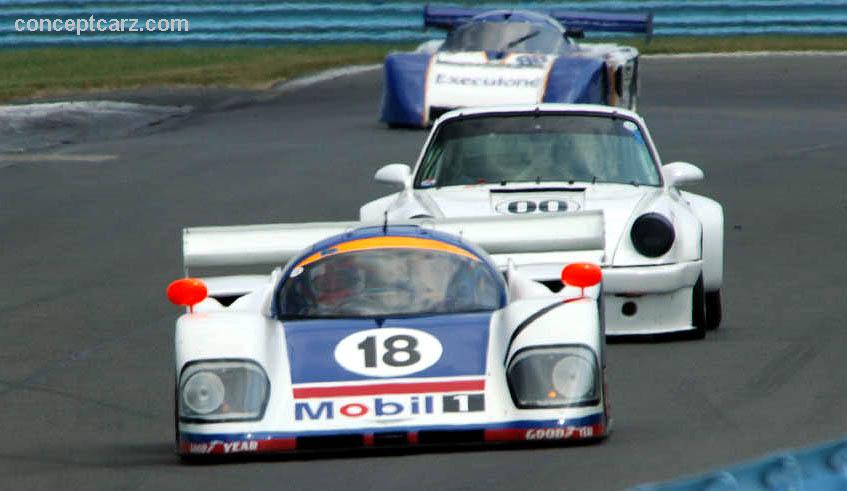
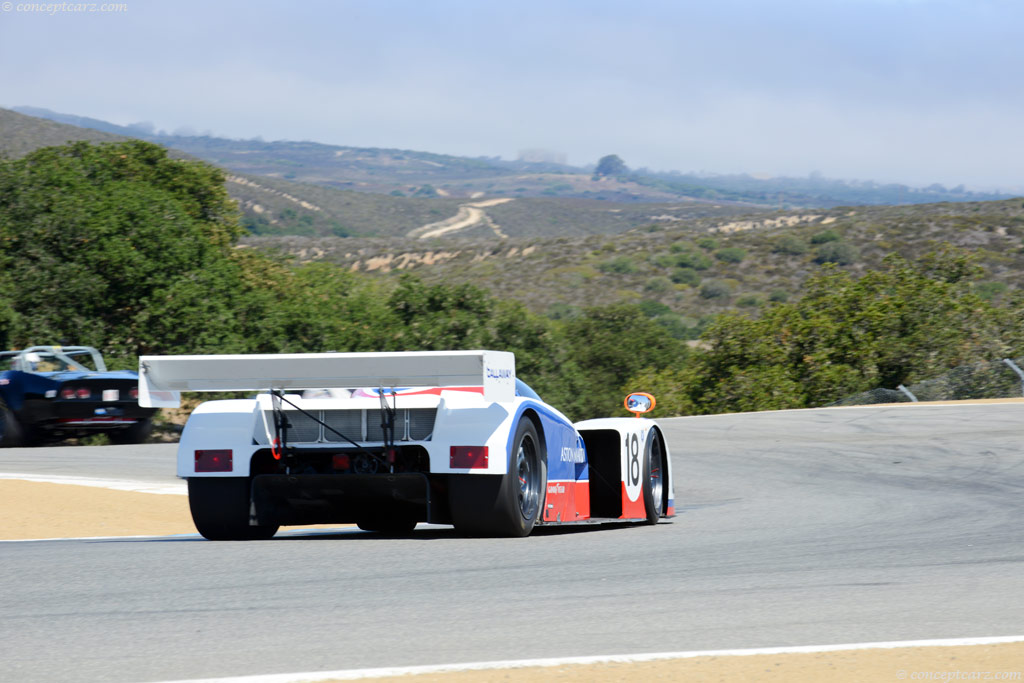
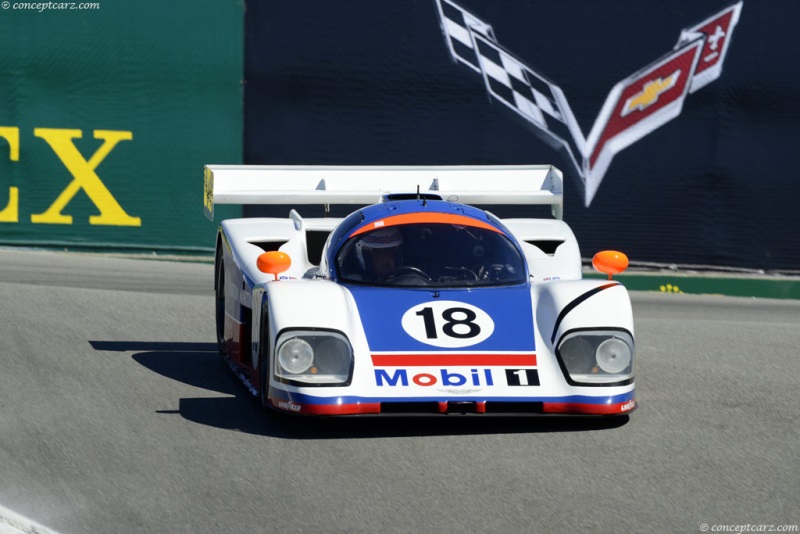
Auction entries : 2From 1977 through 1979, Robin Hamilton raced Aston Martins at LeMans. The cars were heavily modified production cars that were met with little success at the grueling endurance race. Undeterred, Hamilton continued to find an Aston Martin combination worth of its heritage. With financial backing from Pace Petroleum, he was able to successfully marry a Lola chassis and an Aston Martin V8 engine prepared by Tickford. The combination had proven to be a disaster a few years prior; this time Hamilton was determined to make it work. Instead of using the name 'Aston Martin' to adorn the vehicle, it was dubbed the Nimrod. The Nimrod was ready by late 1981 and made its racing debut the following season. It would continue in competition for four years, often being met with mild success. The vehicle Achilles heals was the Tickford prepared engine, which suffered from reliability issues. In 1983, a second Nimrod team was formed; it was founded by Pink Floyd manager Steve O'Rourke. In 1984, a third team was added, the Cheetah. All of the teams were plagued by the same problem - the engine. They continued racing with the chassis and engine combination until the close of the 1985 season.Mid-way through the 1986 season, Aston Martin returned to their roots by creating a new racer for Group C competition. The V8 engine had proven unreliable and unworthy on two separate occasions, but Aston Martin felt the 'third time's the charm.' Reeves Callaway and his Connecticut based business was tasked with preparing the newly developed quad-cam engine. Ecurie Ecosse was tasked with the development of the new car. The chief designer was Max Boxstrom of Brabham fame. The chassis was monocoque constructed from composite materials. The tub was formed from carbon fiber and the body shell from kevlar. The final exotic material used was honeycomb for the floors. The suspension was comprised of double wishbones. Mounted mid-ship was the 5.3-liter Callaway prepared engine. A larger six-liter engine followed a short time later. The 5.3-liter unit created around 570 horsepower while the 6.0-liter version produced nearly 700 bhp. Sitting on top of the five-speed gearbox was the radiator. On top of that was the rear wing. The car was in ready in 1988, but many had wondered if the project would have continued. Ford had acquired a controlling 75% portion of Aston Martin Lagonda's stock in September of 1987, and this expensive project was a promising potential to cross the chopping block. To everyone's surprise, the project continued. In October of 1988, the AMR1 was completed and proudly wore the white, red, and blue livery of its Mobil 1 and Goodyear sponsorship. The car was tested during the close of the 1988 season, and prepared for 1989. Thirty years prior, Aston Martin had ended its racing career on a high note. Its return to the sport had many with high expectations, though an understanding that much had changed since that era.
Coupe
Chassis #: AMR1/04
View info and history
Auction entries : 2During one of the cars early outings, it was damaged in a crash. This caused the team to miss the first race of the season. By the second race, a second car had been prepared and was able to manage a dismal 17th place finish. At the 24 Hours of LeMans, chassis number 02 and 03 were entered with chassis number 02 earning an 11th place finish. The car was piloted by Roe, Los and Redman.A fourth car was created and utilized the experience and testing from the prior cars. An additional 60 kg was shed, making the car a bit more competitive. It was entered in the Brands Hatch Race where it was driven by Leslie and Redman to an impressive fourth place finish.
Coupe
Chassis #: AMR1/04
View info and history
Auction entries : 2The final car created, chassis number AMR1/05, was ready just in time for the final race of the season, at Mexico. It featured an improved, more powerful engine, yet it was able to do no better than eighth place. Ford re-focused their endurance racing program efforts with Jaguar, meaning the AMR program was brought to an end at the close of the 1989 season. By 1991, changes to regulations meant the engines became obsolete.
by Daniel Vaughan | Jul 2007
Coupe
Chassis #: AMR1/04
View info and history
Auction entries : 2

Coupe
Chassis #: AMR1/04
View info and history
Auction entries : 2
Coupe
Chassis #: AMR1/04
View info and history
Auction entries : 2
by Daniel Vaughan | Jul 2007


1989 Aston Martin AMR1 Vehicle Profiles
Recent Vehicle Additions


Related Automotive News

ASTON MARTIN GROUP C RACECAR FOR AUCTION AT RACE RETRO
A 1989 Aston Martin AMR1 Group C racecar will headline Silverstone Auctions competition car sale at Race Retro 2017.
AMR105 has secured a number of race wins and podium places with legendary race drivers behind the wheel.
The car will be offered...

ENEOS Oil returns to 100th Pikes Peak race with Tesla Model 3
Evasive Motorsports Tesla will again be driven by Dai Yoshihara.
ENEOS and Dai Yoshihara extend six-year partnership
The 100th running of the 2022 Pikes Peak International Hill Climb on June 26 will mark the fourth year ENEOS has supported the...

Competition at the Amelia Island Concours
Competition has always been a part of the Amelia Island Concours dElegance. The core group of classes includes four Race Car groups (Prewar, 1946-57, 1958-66, 1967-83). Additionally, there are four classes reserved for Sports Cars. For those seeking...

120 years of motor sport at Mercedes-Benz take centre stage at the Goodwood Festival of Speed 2014
Addicted to Winning at this years Goodwood Festival of Speed, Mercedes-Benz looks back on some fascinating racing victories of the last 120 years
The unique motor sport heritage of the Mercedes-Benz brand is being celebrated with an exclusive i...

Techno Classica 2014: more than 30 racing cars to celebrate 120 years of Mercedes-Benz motor racing history
Cars that were the heroes of magical moments put their stamp on this high-powered, most comprehensive show presentation
With more than 30 vehicles, Mercedes-Benz Classic presents motor racing history in all its unique breadth and depth
120 years o...

1991 24 Hours of Le Mans: Facing the Giants
It had been more than thirty years but the Silver Arrows would compete, and win, the 24 Hours of Le Mans. Jaguar would also earn its first victory in more than thirty years when it took the overall honors in 1988. And then there was Porsche, the most...