History
During the 1950s, Giotto Bizzarrini worked as chief engineer at Ferrari on such projects as the Ferrari 250 GTO. In 1961, he left Ferrari, and by 1963, he had formed his own company, Bizzarrini. In the mid-1950s, Bizzarrini wanted to include a mid-engined racing car to his lineup to help achieve the success that his GT racers were unable to provide. The GT cars had been able to secure class wins, but Bizzarrini wanted an overall victory.
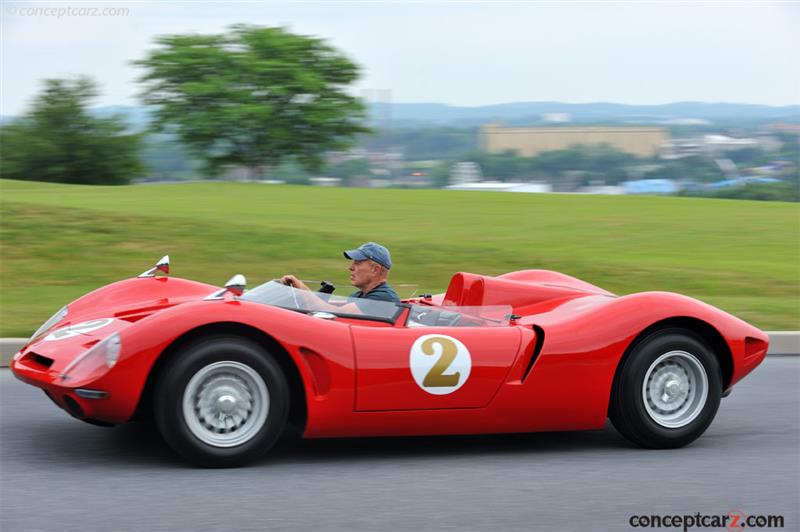
Design, development, and testing began in mid-1965 and it took six months for the first chassis to be constructed. The chassis was a traditional tubular construction with triangle-shaped tubes. Disc brakes were placed in the front and rear. The suspension was comprised of double wishbones and the engine was a Chevrolet V8 engine mounted at a 90-degree angle. It had a 5.3-liter displacement size and could produce around 365 horsepower. A five-speed ZF manual gearbox was matted to the engine and drove the rear wheels. The body was lightweight, but strong, comprised of aluminum and fiberglass.
The name of the vehicle, P538, was derived from the Chevrolet Corvette engine '5.3-liter V8'.
The first customer requested that a four-liter V12 engine that Bizzarrini had designed while at Lamborghini, be mounted in the car, rather than the V8. The engine was capable of producing 430 horsepower with the help of six twin-choke Weber carburetors. It was estimated that the car had a top speed of around 170 mph. The lightweight fiberglass body weighed only 40 kg and with the entire package weighed just 700kg.
The prototype car was brought to a track and Edgar Berney was given the opportunity to put it through its paces on an official test run. During the test session, the car was flipped and had extensive damage. The car was stripped of all useable materials and applied to a second chassis. During this time, a third car was constructed which was to be used as a Works car.
Upon completion of the second car, it was sent to its owner in the United States. The car was powered by the Lamborghini V12 engine. The owner used in SCCA competition and reported to be very fast with exceptional handling. It was later banned from SCCA local competition.
Once the second car had been completed, Bizzarrini turned their attention to the third car which was to compete in the 1966 LeMans 24 Hours. The car, with V8 power, was ready by the time of the race, but there had not been any time to do proper testing. It took only seven laps for the team to find a problem with the car and it returned to the pits. There had been a vibration in the wheel. The vehicle was hoisted up on jacks and in the process, ruptured a water hose within one of the triangular tubes and sidelined the car from the race.
The car was brought back to LeMans a year later, though it was not allowed to race, for reasons unknown. The prototype racer was now obsolete.
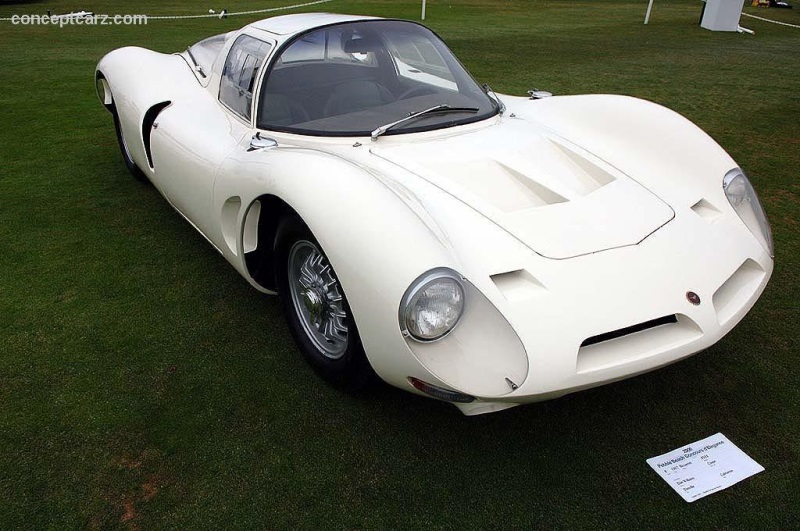
The roadster body was later removed and replaced with a coupe configuration. This had been done in an effort to sell the vehicle as a racer. Bizzarrini felt the coupe configuration would allow it to qualify for more competition than the prior body. The Duke of Aosta was interested in purchasing the car, but it did not fit. Not wanting to turn away a customer, Bizzarrini created a fourth car with a unique coupe body. The car was called the 'Duca d'Aosta' Coupe. The Duke kept the car for only a short time before selling it to a collector in 1972. The collector kept it in his care for nearly 30 years. It was sold at auction in Geneva in 1999. In recent years, it was shown at the 2006 Pebble Beach Concours d'Elegance. It was shown at the Blackhawk Exhibition at Pebble Beach in 2005.
The LeMans car's history continued. The newly created ItalDesign Company, formed by Giorgietto Giugiaro, was interested in creating a show car based on the chassis of the P538. The coupe body of the LeMans car was removed and sent to ItalDesign to finish. It took a short forty days for ItalDesign to create the new vehicle, the Manta, which was shown at the 1969 Turin Auto Show. It was renumbered as 6901. It is powered by an eight-cylinder engine.
By Daniel Vaughan | Apr 2007
Design, development, and testing began in mid-1965 and it took six months for the first chassis to be constructed. The chassis was a traditional tubular construction with triangle-shaped tubes. Disc brakes were placed in the front and rear. The suspension was comprised of double wishbones and the engine was a Chevrolet V8 engine mounted at a 90-degree angle. It had a 5.3-liter displacement size and could produce around 365 horsepower. A five-speed ZF manual gearbox was matted to the engine and drove the rear wheels. The body was lightweight, but strong, comprised of aluminum and fiberglass.
The name of the vehicle, P538, was derived from the Chevrolet Corvette engine '5.3-liter V8'.
The first customer requested that a four-liter V12 engine that Bizzarrini had designed while at Lamborghini, be mounted in the car, rather than the V8. The engine was capable of producing 430 horsepower with the help of six twin-choke Weber carburetors. It was estimated that the car had a top speed of around 170 mph. The lightweight fiberglass body weighed only 40 kg and with the entire package weighed just 700kg.
The prototype car was brought to a track and Edgar Berney was given the opportunity to put it through its paces on an official test run. During the test session, the car was flipped and had extensive damage. The car was stripped of all useable materials and applied to a second chassis. During this time, a third car was constructed which was to be used as a Works car.
Upon completion of the second car, it was sent to its owner in the United States. The car was powered by the Lamborghini V12 engine. The owner used in SCCA competition and reported to be very fast with exceptional handling. It was later banned from SCCA local competition.
Once the second car had been completed, Bizzarrini turned their attention to the third car which was to compete in the 1966 LeMans 24 Hours. The car, with V8 power, was ready by the time of the race, but there had not been any time to do proper testing. It took only seven laps for the team to find a problem with the car and it returned to the pits. There had been a vibration in the wheel. The vehicle was hoisted up on jacks and in the process, ruptured a water hose within one of the triangular tubes and sidelined the car from the race.
The car was brought back to LeMans a year later, though it was not allowed to race, for reasons unknown. The prototype racer was now obsolete.
The roadster body was later removed and replaced with a coupe configuration. This had been done in an effort to sell the vehicle as a racer. Bizzarrini felt the coupe configuration would allow it to qualify for more competition than the prior body. The Duke of Aosta was interested in purchasing the car, but it did not fit. Not wanting to turn away a customer, Bizzarrini created a fourth car with a unique coupe body. The car was called the 'Duca d'Aosta' Coupe. The Duke kept the car for only a short time before selling it to a collector in 1972. The collector kept it in his care for nearly 30 years. It was sold at auction in Geneva in 1999. In recent years, it was shown at the 2006 Pebble Beach Concours d'Elegance. It was shown at the Blackhawk Exhibition at Pebble Beach in 2005.
The LeMans car's history continued. The newly created ItalDesign Company, formed by Giorgietto Giugiaro, was interested in creating a show car based on the chassis of the P538. The coupe body of the LeMans car was removed and sent to ItalDesign to finish. It took a short forty days for ItalDesign to create the new vehicle, the Manta, which was shown at the 1969 Turin Auto Show. It was renumbered as 6901. It is powered by an eight-cylinder engine.
By Daniel Vaughan | Apr 2007
Similar Vehicles


1967 Bizzarrini P538 Vehicle Profiles
Recent Vehicle Additions


Performance and Specification Comparison
P538 Specification Comparison by Year
Year
Production
Wheelbase
Engine
Prices
Related Automotive News

One of the Three Final Cars Built by Famed Italian Engineer Giotto Bizzarrini To Be Offered at Russo and Steele's Highly Anticipated Monterey Auction
Monterey, California – As the engineer responsible for the design and development of some of the most successful and innovative racing and GT cars ever conceived, Giotto Bizzarrini remains one of the most revered names in motorsport history. Hailing...

Lamborghini 350 GT returns to Geneva 60 years after its debut
Automobili Lamborghini celebrates its first production model by taking it back to the city where it was unveiled in 1964 by Ferruccio Lamborghini
In March 1964, Automobili Lamborghini was still in its infancy. Established just a few months previously,...

Miura: the world's first production car equipped with a transverse central - rear mounted V12 engine
The story of a legendary engine in the year of the V12, ahead of the hybrid model launch in 2023
In 1966, the Lamborghini V12 engine firmly established itself as an all-time legend when it was mounted transversally in a rear-mid position on...

The legacy of the Lamborghini Countach in a video series. From the idea car, the LP 500 of 1971, to five generations spanning seventeen years
In its celebration of the 50th anniversary of the Countach, Automobili Lamborghini is launching a series of four videos on its social media channels. Every Monday they will recount the legacy of an automotive icon in an unprecedented manner, by involving...

The Best Of Lamborghini At London Concours 2020
The London Concours has announced its Great Marques Lamborghini display, celebrating the very best from SantAgata
Line-up includes icons early pioneers like the 400GT and iconic Miura, through to the Diablo SV, Murcielago and Aventador SVJ
Les...

John Barnard's Finest: Some of the Greatest of Barnard's Design
The latter-part of Barnards Formula One career would be filled with disappointments and disputes. However, there was no disputing the genius of the man from London. In fact, a couple of innovations that are mainstays in Formula One design were first...