1931 Bugatti Type 41
1931 Bugatti Type 41 Navigation
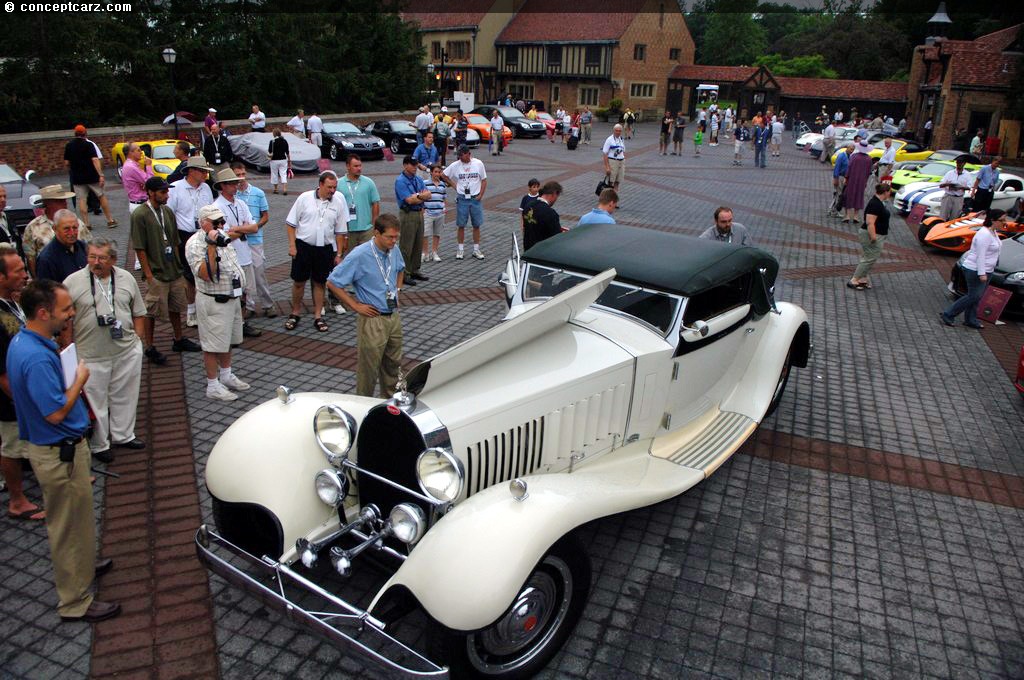
In the 1920s, Bugatti created the most luxurious car in the world
Cabriolet
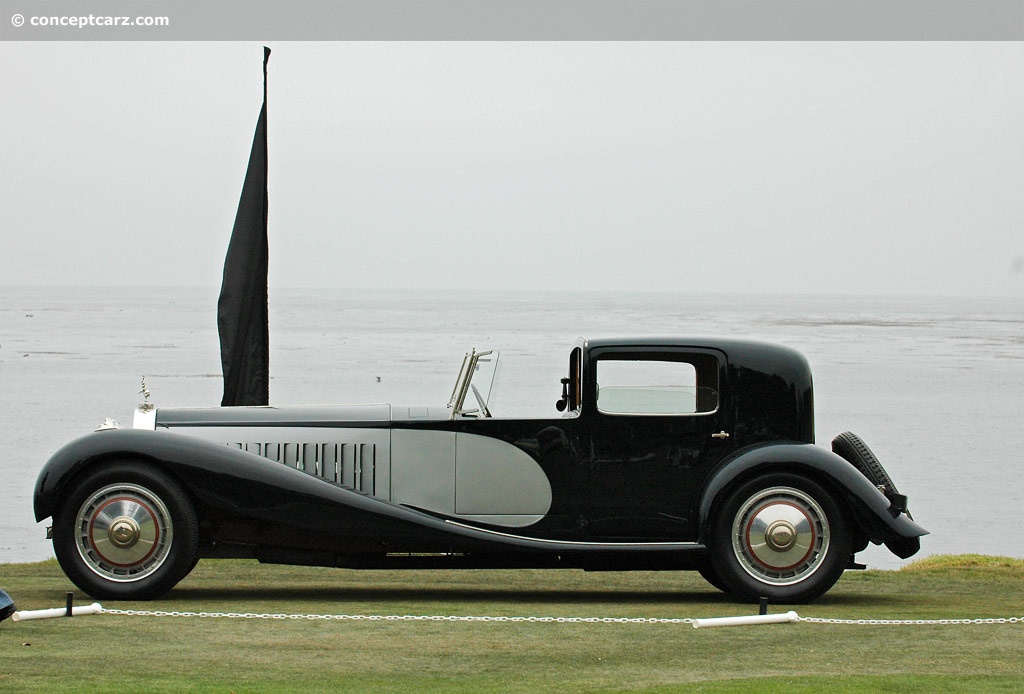
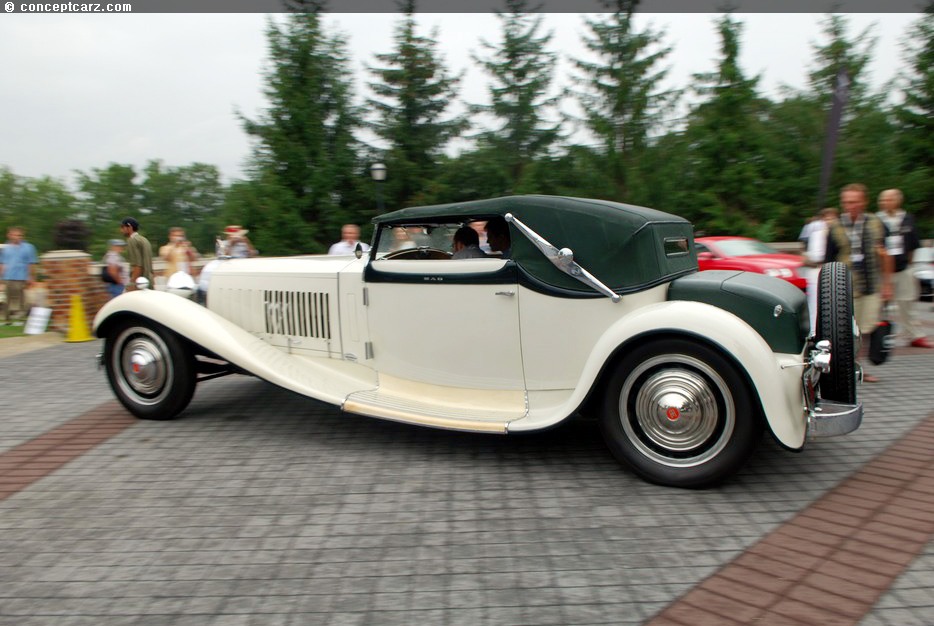
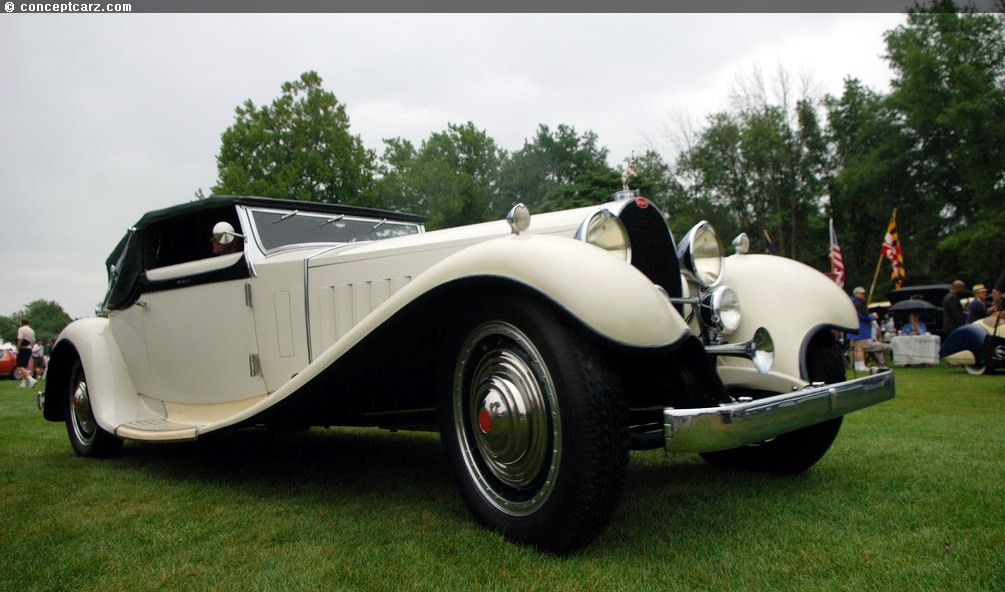
View info and historyMolsheim With the Type 41 Royale, in 1926, Bugatti presented the strongest, largest and most luxurious automobile in the world, characterized by unimaginable power and opulent equipment. For Ettore Bugatti, the Royale was the culmination of his creation. A vehicle that knew no competitors in terms of performance, quality, and image. A vehicle for emperors, kings, and queens. Simply put, 'Royale' - the royal.With a wheelbase of 4.3 meters and a length of over six meters, the Royale was the largest, most powerful and most magnificent car ever built in Molsheim. With a price of at least 100,000 Reichsmarks, it was around three times as expensive as similar limousines from other manufacturers and exceeded the price of other Bugatti vehicles about 10 times. Selected customers received the chassis with the drive and grille. As was customary at the time, independent and famous body construction companies such as Kellern & Cie, Weymann, Binder, Bugatti, Weinberger and Park Ward took care of the setup. Company founder Ettore Bugatti invested a lot of time and money into the development and went all in.Aircraft Engine as a Blueprint for the Royale Drive
Cabriolet
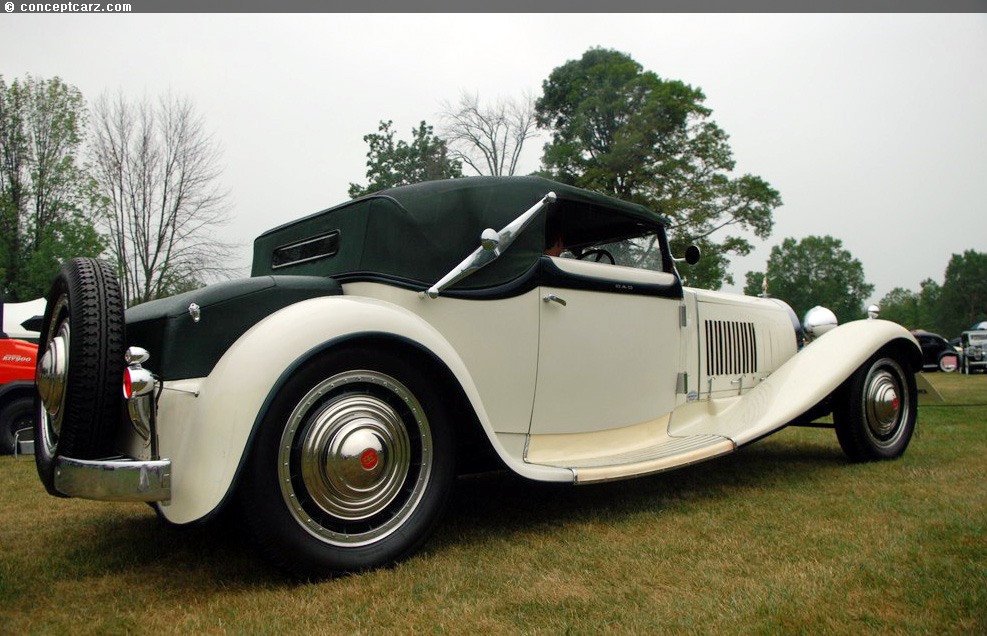
View info and historyEverything about the vehicle was unique: an aircraft engine that company founder Ettore Bugatti designed in 1927 on behalf of the French government served as blueprint for the drive - at that time with a displacement of 14.7 litres and 300 hp. Under the long hood, a 12.8 litre inline eight-cylinder worked in the production vehicles, also with about 300 hp. It managed to accelerate the vehicle, which could weigh up to 3.5 tons (depending on the body), to around 200 km/h. The engine remained discreetly in the background: the maximum output was only 1800 revolutions. A dry sump lubrication system pumped 23 litres of oil to the required points, 43 litres of coolant oil kept the temperature in balance. A vertical shaft connected the crankshaft and camshaft together, the long crankshaft sat on nine plain bearings. The extraordinary drive needed space; to open the bonnet, two fitters were needed to unlock and fold up the extra-long bonnet.A multi-plate dry clutch that was shifted via a three-speed gearbox transmitted the power to the rear wheels. Bugatti doubled the quarter elliptical suspension on the axles in order to achieve more comfort. Solid alloy wheels with slots ensured that the large brake drums did not overheat. The 200 litre tank ensured enough range.The first prototype was built in 1926, but it was based on a longer wheelbase and a larger engine with a displacement of 14.7 litres. It wasn't until 1932 that Bugatti sold the first Royale to the Parisian industrialist Armand Esders. An extremely elegant roadster body by Jean Bugatti sheathed the eight-cylinder above the drive. Since Armand Esders only wanted to drive his vehicle during the day, the Roadster did not have headlights – giving it a more elegant look. Three other vehicles with different bodies went into customer hands. Overall, a Cabriolet, a Pullman limousine, a travel limousine with a folding top and a two-door limousine were built in the few years to come. In the Coupé Napoleon, the passenger communicated with the driver via an electrical intercom.
Cabriolet
View info and historyThe Royale is the only Bugatti vehicle to have a hood ornament. It features a dancing elephant, designed by Ettore's deceased brother Rembrandt Bugatti, a well-known artist and sculptor.Despite its extraordinary features, the Royale did not go on to be an economic success. The global economic crisis and its aftermath made prospective buyers hold back. Up until 1933, six models of the super-car were built, only four of them were sold. Ettore Bugatti would be chauffeured with a Royale – or drove it himself. His wife also preferred a Royale as a means of transport. All vehicles still exist today, including two in the Cité de l'Automobile, Schlumpf Collection, in Mulhouse, France, and one at the Bugatti Headquarters in Molsheim. Each one of the six Royale vehicles can be considered as one of the most exclusive and expensive vehicles in the world. If one of them were ever auctioned, it could be the most expensive car in the world.Other Royale Engines for Express Trains
Cabriolet
View info and historyAlthough Bugatti didn't manage to sell many Royales, its construction was still a success. Bugatti modified the eight-cylinder engines that had already been produced, to use them for a new project - as units of motor coaches for express trains for the French railways. In just nine months, Bugatti developed an express train based on the huge engines.From 1935 to 1958 these engines were used in the new four-axle rail multiple unit that Bugatti developed for the ETAT state railway, known today as SNCF. Depending on the version, an SNCF XB 1000 required two to four of these huge motors with an output of 200 hp each. During the first test runs, a train reached 172 km/h - making it the first modern high-speed train. The SNCF ordered a total of 79 of these rail vehicles with the Royale engines, conducting extreme power without vibrations.Source - Bugatti
Cabriolet
View info and history
Cabriolet
View info and history
Cabriolet
View info and history
Cabriolet
View info and history
- 1931 Bugatti Type 41 Menu
- Article
- Image gallery
- Valuation
- Specifications


1931 Bugatti Type 41 Vehicle Profiles


Recent Vehicle Additions


Performance and Specification Comparison
Royale Specification Comparison by Year
Year
Production
Wheelbase
Engine
Prices
Related Automotive News

Bugatti Legends Type 41 LA Royale – A Royal Vehicle
In the 1920s, Bugatti created the most luxurious car in the world
Molsheim, 09 04 2020 With the Type 41 Royale, in 1926, Bugatti presented the strongest, largest and most luxurious automobile in the world, characterized by unimaginable...

Bugatti's greatest racer celebrates centenary at Salon Privé Concours
Bugatti Type 35 turns 100 in style at the UKs most lavish Concours
Highly original Type 35 B with continuous history represents models nadir
Part of exclusive Bugatti class including competition and touring models
Former Pebble Beach Show-winn...

A motorsport pioneer celebrates a special anniversary: 100 years of the trailblazing Bugatti Type 32 'Tank'
Bugatti is known across the world for visionary engineering and ingenious designs, and today the brand celebrates the official centenary of the racing debut of one of its most innovative cars the Type 32 Tank. This streamlined racing car was to lay...

Black and yellow: a timeless combination
Although Bugattis motorsport heritage is most associated with French Racing Blue, many of its most elegant cars were finished in the favorite color combination of its founder Ettore Bugatti black and yellow.
For true connoisseurs of the Bugatti...
Bugatti Legends Type 41 LA Royale – A Royal Vehicle
In the 1920s, Bugatti created the most luxurious car in the world
Molsheim, 09 04 2020 With the Type 41 Royale, in 1926, Bugatti presented the strongest, largest and most luxurious automobile in the world, characterized by unimaginable...

PEBBLE BEACH 2015: BUGATTI PRESENTS SUCCESSFUL SUPER SPORTS CARS FROM THE COMPANY'S HISTORY
The most successful racing car ever built, the Type 35, and the fastest production car in the world, the Veyron 16.4 Super Sport, are two of the record holders featured in the Bugatti line-up
Other highlights include a Type 57SC Roadster and Type 5...