1961 Cooper T-56 FJ
1961 Cooper T-56 FJ Navigation
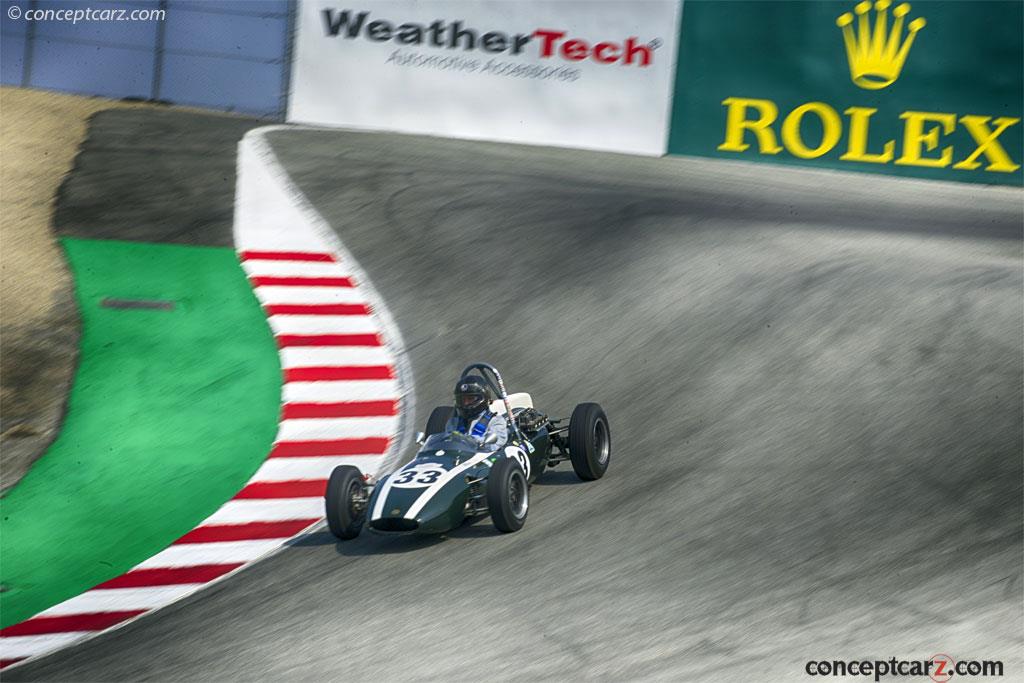
John Cooper and his father, Charles, founded the Cooper Car Company in December 1947 in Surbiton, Surrey, England. From humble beginnings (in a small garage), the Cooper Company would achieve enviable success in motorsports, with their single-seaters competing in Formula One and the Indianapolis 500, and their Mini Cooper excelled in rally racing. 
Monoposto
Chassis #: FJ-17-61
View info and historyJohn Cooper and his friend Eric Brandon initially built and drove single-seaters equipped with 500cc JAP motorcycles in Formula Three competition. These Cooper-built F3 cars provided the likes of Graham Hill and Stirling Moss an opportunity to demonstrate their talents and the performance capabilities of the machines. Other racing greats took notice and were soon behind the wheel of the Cooper-Bristol front-engine Formula 2, further strengthening Cooper's position in the emerging post-war motorsport community. Jack Brabham piloted a privately entered Cooper Formula 2 to a 6th-place finish at the 1957 Monaco Grand Prix. The car's rear-engine configuration marked a significant transformation in the realm of motorsport, sending ripples that would influence nearly all forms of automobile racing. The momentum continued into 1958, with Moss winning the Argentine Grand Prix and Trintignant at Monaco. Jack Brabham became the Formula One World Champion in 1960 in a rear-engine Cooper.The Cooper Mk2 Formula Junior T56 was often fitted with BMC engines and occasionally with a Ford unit. It had an 89-inch wheelbase, four-wheel hydraulic drum brakes, an independent suspension by wishbones and coil springs at the front, and transverse leaf springs and wishbones at the rear.
Monoposto
Chassis #: 61-1 FJRThe first series of Cooper Formula Junior racing cars was the T52, built for the 1960 racing season. The chassis was formed by four longitudinal tubes with hoops at the cowl and behind the driver, and the BMC powerplants were paired with Citroen gearboxes. The Cooper T56 made its racing debut in 1960 and was officially built for the 1961 season. It was followed in 1962 by the Cooper T59, which was five inches narrower than its predecessor, an inch lower, and featured a semi-reclining seat position for the driver. Formula Junior
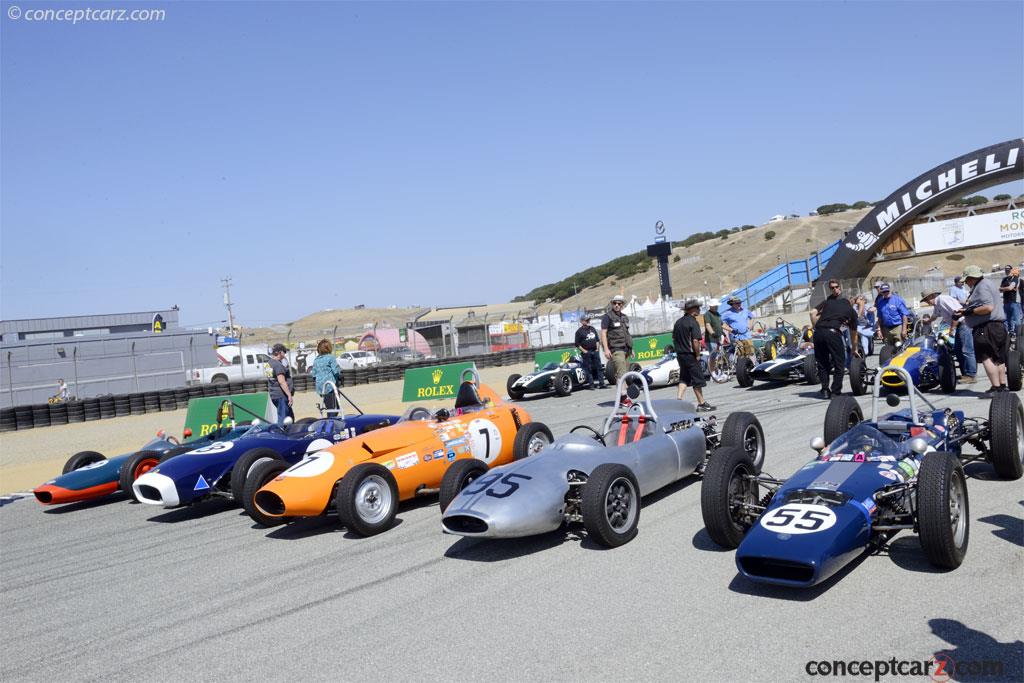
Formula Junior competition commenced in late-1958 and was intended as a low-cost, entry-level series with cars built to pre-defined specifications. Italian marques dominated the first year of the formula, but were quickly surpassed by British constructors. By the close of 1960, over 100 constructors were building Formula Junior race cars, and this figure ballooned to nearly 500 by the end of 1963. Mid-engine Formula Juniors built by British-based constructors, including Cooper and Brabham, were the most successful.
by Daniel Vaughan | Feb 2025

Monoposto
Chassis #: FJ-17-61
View info and history
Monoposto
Chassis #: 61-1 FJR
Formula Junior competition commenced in late-1958 and was intended as a low-cost, entry-level series with cars built to pre-defined specifications. Italian marques dominated the first year of the formula, but were quickly surpassed by British constructors. By the close of 1960, over 100 constructors were building Formula Junior race cars, and this figure ballooned to nearly 500 by the end of 1963. Mid-engine Formula Juniors built by British-based constructors, including Cooper and Brabham, were the most successful.
by Daniel Vaughan | Feb 2025
Related Reading : Cooper T-56 History
The Cooper T56 began its racing career in 1960 where it competed in the Formula Junior class. Along with the T-56 factory contracted cars, a number of kits were sold. In 1962 the T-56 was replaced by the T-59, the third edition of the Formula Junior cars produced by the Cooper Car Company.....
Continue Reading >>
Continue Reading >>
- 1961 Cooper T-56 FJ Menu
- Article
- Image gallery
- Valuation
- Specifications
- Profiles


1961 Cooper T-56 FJ Vehicle Profiles


Recent Vehicle Additions


Related Automotive News

Historic Lotus 19 Raced By Moss, Hill, Ireland And Clark Comes To The Open Market For The First Time In 57 Years
1960 Lotus 19 Monte Carlo, Chassis 953
Raced by some of the greatest British racing drivers
Jim Clark won in this car at Oulton Park in 1964
Signed by Sir Stirling Moss and the last car driven by him as a professional race driver
First raced in 1...
American Honda Supports RRDC Evening with George Follmer in Long Beach
HILLIARD, Ohio (March 29, 2016) - American Honda Motor Co., Inc., will support the RRDC Evening with George Follmer presented by Firestone by hosting the cocktail reception on April 14 for the seventh consecutive year at the Road Racing Drivers...
George Follmer to be honored by RRDC in Long Beach
HILLIARD, Ohio (March 2, 2016) - George Follmer, the only driver to have won both the Trans-Am and Can-Am championships in one year (1972), will be honored by the Road Racing Drivers Club at the RRDC Evening with George Follmer presented by Firestone...
RRDC VOTES IN 37 NEW MEMBERS FOR 2013
HILLIARD, Ohio (Nov. 7, 2013) - Thirty-seven race-car drivers and motorsports professionals have been voted into the Road Racing Drivers Club in 2013. The group includes 13 Regular Members from the open-wheel and sports-car racing ranks, 20 Associate...

EXCEPTIONAL ROSTER OF PORSCHE RACE CARS JOIN THE STARTING GRID FOR RM'S EAGERLY AWAITED MONTEREY SALE
RM Auctions, the worlds largest collector car auction house for investment-quality automobiles, has announced more star consignments for its highly anticipated Monterey sale, August 17–18, in California, this time a remarkable group of Porsches. Comprising...