Concept Cars Home
 

1949 Kurtis Kraft Sport news, pictures, and information

Roadster
Chassis Num: 12
 
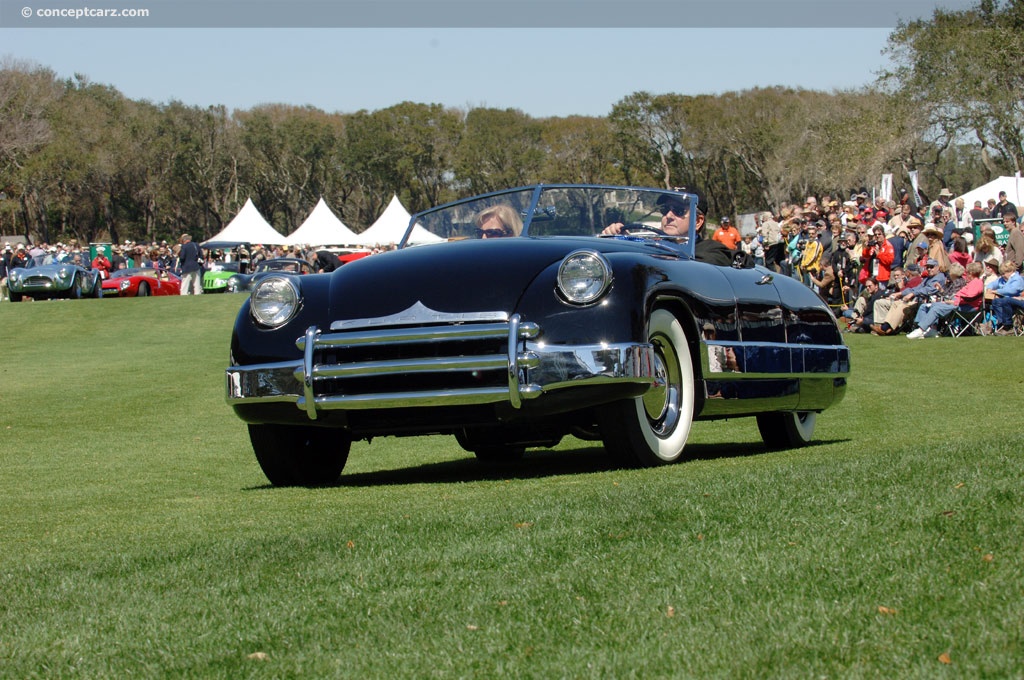
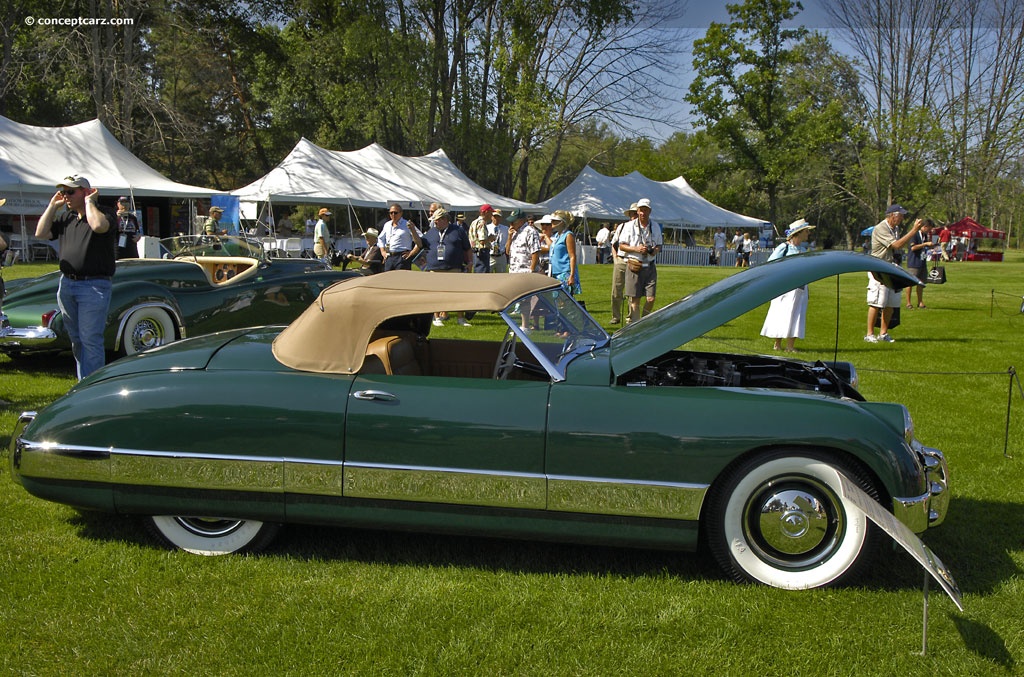
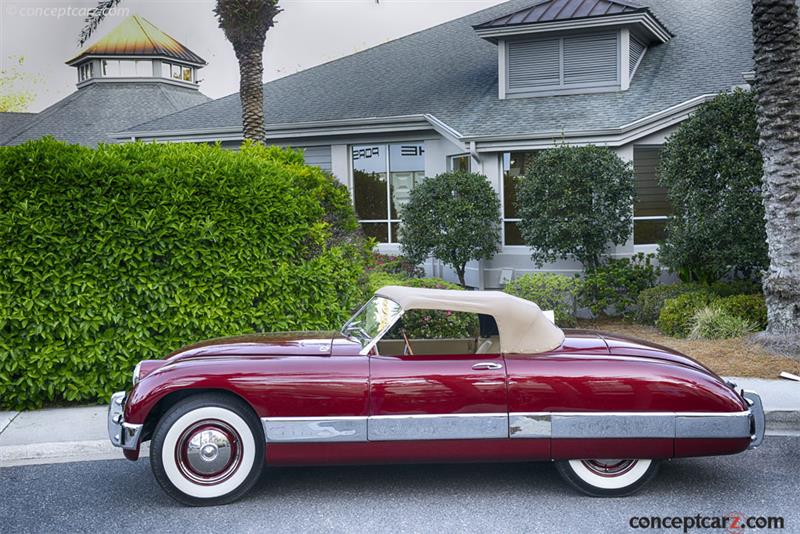
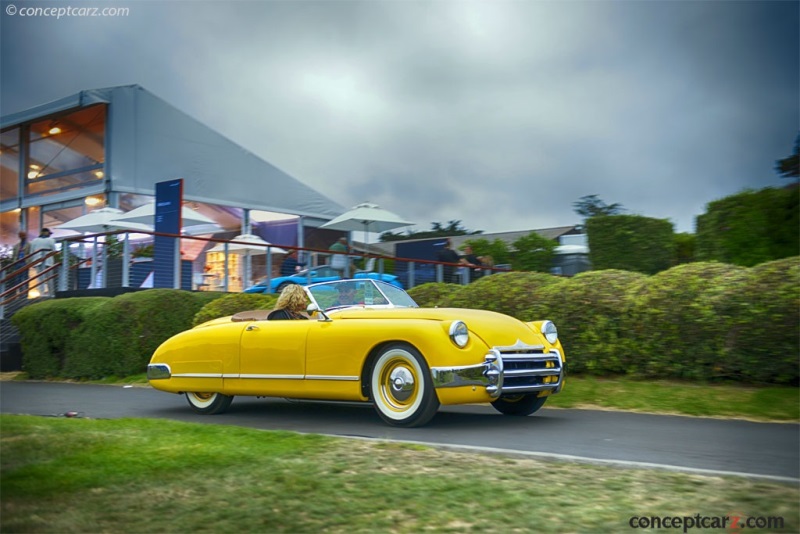
This Kurtis Kraft Sport is serial number 12 of 17 built. The car was constructed in the same Los Angeles Kurtis shop where the Indianapolis-winning race cars were built. Many articles were written and many photographs were taken of the Kurtis Sports. The car is powered by a 1949 Ford flathead V8, the most popular engine for the car. The transmission, rear end and suspension are all 1949 Ford. The body - one of the first unitized types - is all aluminum with steel doors. At the 1949 Bonneville trials, Wally Parks drove a Kurtis Sport to an average speed of 142.515 mph. Frank Kurtis wanted everyone to know that his car was faster than a Jaguar XK120. In 1950, the tooling for the car was sold to Earl 'Madman' Muntz, who added 13 inches to the wheelbase to allow for a rear seat. Kurtis found the car too labor-intensive to build - even at a price tag of $5,500.
Earl 'Mad Man' Muntz was a used-car salesman in Illinois. In the early 1940s he began transporting cars from the mid-west to Southern California where he would sell the cars and make a profit. After World War II he joined forces with Henry Kaiser and became a Kaiser-Frazer dealer. It is believed that in 1947 he sold 22,000 Kaisesr-Frazers. His talents also included the sale of radios, televisions, and other electronic equipment.

Frank Kurtis is remembered for his racers that he constructed for midget and Indy car competition. He even produced a very successful line of road racers. In 1949, the Kurtis Sports Car was introduced and available as a completed unit or as a kit car. Around twenty examples were constructed when Kurtis introduced the legendary 500S.

In 1950, Muntz purchased Frank Kurtis' designs for Indy-car building and all of the tooling for the production of a two-seater sports car. The result was the Muntz Road Jet. There were many challenges involved, such as increasing the chassis by twelve inches to accommodate rear seating. The price of the vehicle was also a challenge; Muntz brought the price of the vehicle to a more reasonable price by foregoing the use of aluminum for steel. By doing this, the weight of the vehicle increased. Some of the vehicles were fitted with fiberglass fenders in an effort to reduce overall weight. Power was provided by a Cadillac V8 initially and later replaced by a flathead Lincoln V8. At this time, Muntz was able to secure Hydramatic transmissions from Ford.

There were 30 Muntz Road Jet vehicles constructed. Production began in 1950 transpiring in Glendale, California. Later, production was moved to Evanston, Illinois midway through 1951. At this point, the Cadillac engine and the aluminum body were no longer used and the Lincoln powerplant and steel bodies were used in their place. The wheelbase increased by an additional three inches.

Muntz automobiles were not overly flamboyant but they did come equipped with many standard options including a wire recorder in the radio and a cooled liquor cabinet in the compartments under the backseat armrest. All of the cars came equipped with seat belts which were attached to the seat frames instead of the floor.

Due to the costs of production and the expensive machinery used to construct these vehicles, it is estimated that Muntz lost an average of $1000 on each of the vehicles produced. This did not slow production at first, but when Muntz's other business ventures began to follow suite, Production was halted.

Ford and Chevrolet began work in the early 1950s on a two-seat sports car. When Muntz learned of this, he decided to create a suitable competitor for this upcoming sports car. The examples were constructed in time for the 1953 Indianapolis Sports Car Show and dubbed the Muntz Roadster. Also on the show floor were the Corvette which received all of the media attention. The Muntz Roadster was left with little fan-fare.

There were a total of four Muntz Roadster constructs. The vehicle shown is the second of the four constructed and is powered by an OHV Lincoln engine. The fenders are constructed of lightweight fiberglass.

This vehicle made an appearance at the inaugural Palm Beach International Concours d'Elegance where it was awarded Best in Class.

By Daniel Vaughan | Mar 2008
Roadster
 
Frank Kurtis built the majority of the Indy race cars in the 1940's through the 1960's. He wanted to incorporate that racing technology in a sports car, and he designed and built that sports car in 1949.

Kurtis's sports car was originally intended to have a Studebaker powertrain but when a V-8 did not materialize he switched to Ford.

Kurtis built 16 production sports cars, plus 2 prototypes. Cash flow prevented him from continuing and he sold the molds to Earl 'Madman' Muntz. Kurtis then built the first Muntz Jets. The Muntz, which shared many of the same body parts, included fenders and had 13 inches added to the wheelbase to allow for a rear seat.

This example is powered by a 1949 Ford Flathead V8, the most popular engine for the car. The body, one of the first unitized types, is all aluminum with steel doors.

Kurtis later sold this car to an amateur racer. After he destrooy the engine, the car traded hands several times. Finally, using Wally Parks and Arlen Kurtis (Frank's son) as consultants, it was restored to its original condition by H. DeWayne Ashmead.

This was the first production Kurtis Sports Car. It set a land speed record on the Bonneville Salt Flats in 1949 (142.42 MPH). The driver was Wally Parks, the first editor of Hot Rod Magazine and foudner of NHRA. Vic Elderbrock built the 239 cubic-inch Ford flathead engine. The Ford transmission consisted of three forward gears with overdrive. The differential was sourced from Studebaker as was the suspension. It was later raced in New York and Florida. Since being rescued as a 'parts car' it has undergone a complete restoration under the supervision of the original driver.
Roadster
 
Built by Frank Kurtis, this Ford-powered sports car set a land speed record of 142.515 mph on the Bonneville Salt Flats in 1949. The driver was Wally Parks, the first editor of Hot Rod Magazine and foudner of NHRA. Vic Elderbrock built the 239 cubic-inch Ford flathead engine. The Ford transmission consisted of three forward gears with overdrive. The differential was sourced from Studebaker as was the suspension.

Kurtis later sold this car to an amateur racer. After he destrooy the engine, the car traded hands several times. Finally, usiing Wally Parks and Arlen Kurtis (Frank's son) as consultants, it was restored to its original condition by H. DeWayne Ashmead.

This car is the first of the 16 production Kurtis Sports Cars built by Frank Kurtis. The rights to the car were then sold to Earl 'Madman' Muntz who used the design as his basis for the Muntz Jet.
Roadster
 
This car was the high school graduation gift to Frank Kurtis' son, Arlen, in October of 1950. He was starting his senior year and Frank gave this car as an early graduation. The car was in the form of leftover Kurtis pieces after selling the design to Earl 'Madman' Muntz. The Muntz Jets were 13 inches longer, making them a four-seater.

The car was then built by Arlen with the help of Ward Miller, Harry Pilford, Tom Barnes and Dick Troutman, employees of Kurtis Kraft. The dashboard was designed to accept the 1949 Ford instruments but Arlen machined it to accept Stewart Warner gauges. The front fenders are aluminum; the rear fenders, hood and trunk lid are fiberglass. The car was finished in June of 1951. Arlen sold the car when entering the Navy in 1952.

The car re-appeared a couple of times over the years, but it was not until 1990 when Carol, Arlen's wife, and Arlen's sister, bought the car back as a surprise Christmas gift.

The car has now been restored by Arlen, the current owner - 60 years later.
RICHARD PETTY DEDICATES MUSCLE CARS FOREVER STAMPS
Raw power gets a stamp of its own today as seven-time NASCAR National Champion Richard Petty helps dedicate the America on the Move: Muscle Cars Forever stamps. Petty, his son Kyle and Postmaster General Patrick Donahoe will dedicate the limited-edition stamps at the Daytona International Speedway where 'The King' won a record seven Daytona 500 Championships. Typically equipped with big, powerful engines, these high-performance vehicles began roaring across America in the 1960s. The limite...[Read more...]
Unique Mystery Mustang Headlines Amelia's Unique WWTT* Class
'The Amelia's' *WHAT WERE THEY THINKING? Class is much more than a place for what some might label weird, odd or strange. The class, with a philosophy unique to 'The Amelia', is a place for significant and interesting cars that fit no class, category or commercial orthodoxy. Nearly half a century later, we still don't know what Ford was planning when they commissioned the creation of Bill and Chris Snyder's 1964 ½ 'shorty' Mustang. We do know that they created one man's dream car. We just...[Read more...]
Corvette Shines in the Big Apple
All-new Corvette Stingray comes to New York City 60 years to the day after Motorama debut 2013-01-16 Sixty years ago tomorrow, spectators lined New York City's posh Park Avenue, waiting to get a glimpse of the ground-breaking Chevrolet Corvette on display at the General Motors' Motorama show. On Thursday, the Corvette will be back in The Big Apple, marking the historic milestone with the all-new 2014 Chevrolet Corvette Stingray. The all-new Corvette Stingray debuted earlier...[Read more...]
Carroll Shelby, Ford Family for More Than Half a Century
Carroll Shelby was a member of the Ford family for the better part of 60 years, producing stunning performance vehicles from concepts to production models. He once said his energy and passion for performance products were always strongest when he was working with Ford. Shelby most recently collaborated with the company on the 2013 Ford Shelby GT500 Mustang, the most powerful production V8 in the world. Working with SVT engineers at Sebring and the Arizona Proving Grounds, at times he drov...[Read more...]
September 15 d'Plaisir Road Rallye will precede
The September 15 road rally that precedes the Palos Verdes Concours d'Elegance the following day has been named the d'Plaisir Road Rallye in honor of the 2012 Concours' theme 'French Curves.' It begins with lunch at the Rolling Hills Country Club in Rolling Hills, traverses the stunning views and winding roads of the Peninsula and ends at the Palos Verdes Golf Club in Palos Verdes Estates with a helicopter golf ball drop and a reception honoring Concours Grand Marshals Peter and Merle Mullin...[Read more...]
4000
500M
Kraft 500S
Kraft Midget

© 1998-2012. All rights reserved. The material may not be published, broadcast, rewritten, or redistributed.