The Rolls-Royce 25/30 was produced between 1936 and 1938 and served as a replacement to the successful 20/25 released in 1929. The inspiration and impetus for the 25/30 was the need and desire for increased power to carry the large (heavy), elegant, and custom coachwork. The 3,669cc inline-6 cylinder engine was bored out to 4,257cc, while the stroke remained the same. It used a 6:1 compression ratio, the magneto ignition was dropped (a standby coil was provided), and a single proprietary Stromberg downdraught carburetor replaced the Rolls-Royce unit. The engine was built in unit with the four-speed gearbox and synchromesh was installed on third and top gears. Stopping power was provided by four-wheel drums with a mechanical servo under license of Hispano-Suiza. 
Fixed Head Coupe by James Young
Chassis #: GMX 54
View info and history
Auction entries : 1The riveted chassis had a 132-inch wheelbase was suspended by a rigid axle with half-elliptic springs and hydraulic dampers. At the front was a Rolls-Royce radiator with a triangular top and thermostatically controlled vertical louvers. Coachwork was left to independent coachbuilders including Park Ward, Hooper, Thrupp & Maberly, Arthur Mulliner, and H.J. Mulliner & Co.After 1,201 examples had been produced, Rolls-Royce replaced the 25/30 with the Wraith which entered production in 1938 and continued into a year later with 491 units built. The Wraith was larger than its predecessor and rested on a 136-inch wheelbase with a length of 203 inches and powered by the same 4,257cc straight-6 engine found in the 25/30, but with a cross-flow cylinder head. Synchromesh was on the second, third, and fourth gear and retained the right-hand change. Production was disrupted due to World War II and when peacetime resumed, the company's first post-war model was the Silver Wraith, produced from 1946 to 1958.
by Daniel Vaughan | Dec 2021
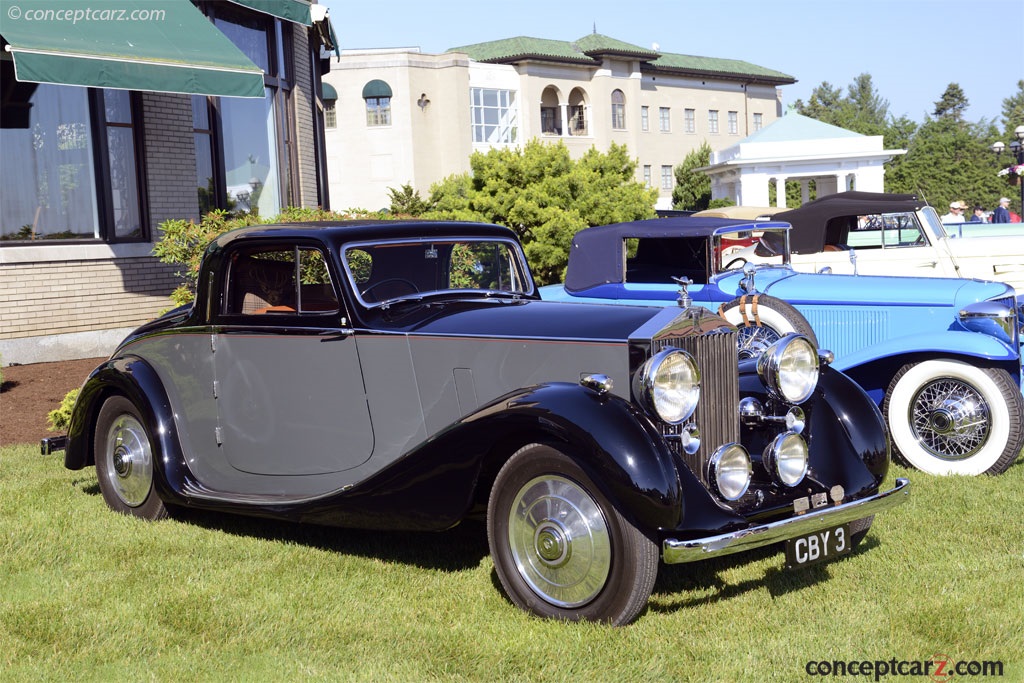
Fixed Head Coupe by James Young
Chassis #: GMX 54
View info and history
Auction entries : 1
by Daniel Vaughan | Dec 2021
Related Reading : Rolls-Royce 25/30HP History
The 2530 was an improvement on the 2025 and ultimately marked the final development of the Twenty. The engine was enlarged to 4,257 cc and although similar in looks to its predecessor it was highly regarded, (a 2530 can be distinguished from a late 2025 by its three-spoke steering wheel). 1,201 2530s were sold in just two years of production. Some significant changes had been made for the....
Continue Reading >>
Continue Reading >>


1936 Rolls-Royce 25/30 Vehicle Profiles



Recent Vehicle Additions


Performance and Specification Comparison
25/30HP Specification Comparison by Year
Year
Production
Wheelbase
Engine
Prices
Related Automotive News

Prestigious European Classics, Including Exceptional 1933 Bugatti Type 55 Roadster, Added to Gooding & Company's Pebble Beach Auctions
A selection of highly desirable concours-quality offerings from Europes finest automakers, including Bugatti, Bentley, Alfa Romeo, and Peugeot, to cross the auction block at Pebble Beach next month.
Internationally acclaimed auction house Gooding...

Rolls-Royce Black Badge: Born from heritage
Rolls-Royce reflects on commissions from highly prominent clients
Three rebellious motor cars spanning four decades of marques 117-year history
Disruptive clients have embraced Rolls-Royces near-limitless Bespoke possibilities
Finished entirel...

From pioneers to performance greats: Salon Privé unveils stellar entry for Concours d'Elégance
More than 100 years of motoring history on show at Blenheim Palace
Awards will be decided by ICJAG panel of world-leading experts and chief automotive designers
Coachbuilt beauties entered, along with competition legends on two wheels and four
Cl...

Salon Privé Concours d'Elégance By Chubb Insurance Prize Winners Announced
1948 Talbot-Lago T26 GS Fastback Coupé by Figoni takes top honours as Best of Show at the 2019 Salon Privé Concours dElégance by Chubb Insurance
Original 1930 Gurney Nutting-bodied Bentley 4.5 Litre receives Peoples Choice Award
Outstanding Salo...

2019 Pebble Beach Concours d'Elegance Best of Show Winner
1931 Bentley 8 Litre Named Best of Show at the 69th Pebble Beach Concours dElegance
PEBBLE BEACH, Calif. (August 18, 2019) — Every August, the history of the automobile rolls onto the competition field of the Pebble Beach Concours dElegance...