Enzo Ferrari managed to upset at least two influential people during the 1960s, including Henry Ford who responded by waging an all-out war on the racetrack resulting in outright victories. The other individual was an Italian Industrialist named Ferruccio Lamborghini. He had made a fortune with his Lamborghini Trattori tractor business during the post-World War II economic boom which allowed him to buy the best-of-the-best. In 1958, he purchased a Ferrari 250 GT two-seater coupe with a design by Pininfarina. This was followed by several other Ferrari's over the years, including a Scaglietti-designed 250 GT SWB Berlinetta and a 250 GT 2+2 four-seater. After several trips to Ferrari's service center to have repairs completed, he voiced his dissatisfaction about the cars to Enzo Ferrari. Enzo responded by saying Lamborghini should build tractors and leave the sports car building to Ferrari. Ferruccio disagreed and created Automobili Lamborghini in 1963. 
Coupe by Zagato
Chassis #: 0310
View info and historyFerruccio was an accomplished businessman and knew that if he was to create a better product than Ferrari, he would have to have the industry's best and most accomplished designers and engineers. Among the list was Giotto Bizzarrini who - turns out - had a lot in common with Ferruccio. He had been employed by Ferrari but was part of the 'Great Walkout' in 1961. He then worked with ATS, and then in 1962 started his own company, Società Autostar, whose name was changed to Bizzarrini in 1964. For Lamborghini, he designed a 3.5-liter V12 engine with twin overhead camshafts, and with the help of six twin-choke Weber carburetors, it produced 350 horsepower. Part of Ferruccio's dissatisfaction with the Ferrari vehicles was that they felt like they were initially racing cars turned into road-going cars. He felt that they were noisy, the interior was quickly made, and they lacked the quality of a refined grand tourer automobile. Having similar feelings about the potent engine created by Bizzarrini, he requested that the engine be detuned. In the end, it offered 280 horsepower with a 320 bhp version available as optional equipment.The exterior design was tasked to Franco Scaglione. Sargiotto Bodyworks turned the drawings into metal and later Carrozzeria Touring was tasked with refining the design further. The square steel tube chassis was the work of Neri & Bonacini under the direction of chief engineer Giampaolo Dallara.
Coupe by Zagato
Chassis #: 0310
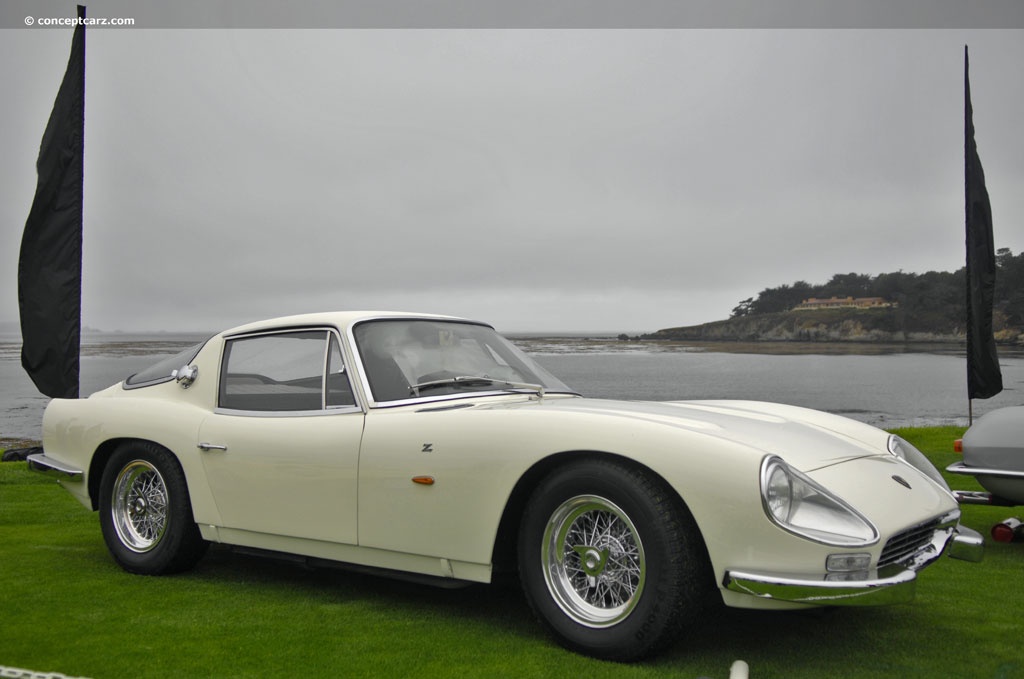
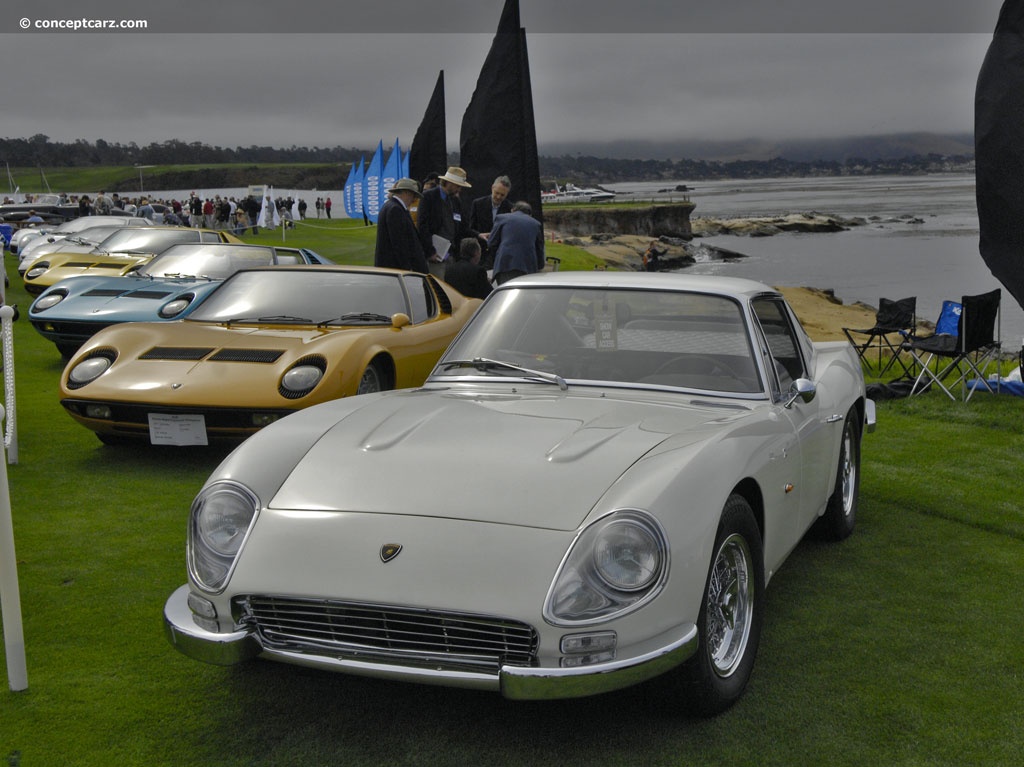
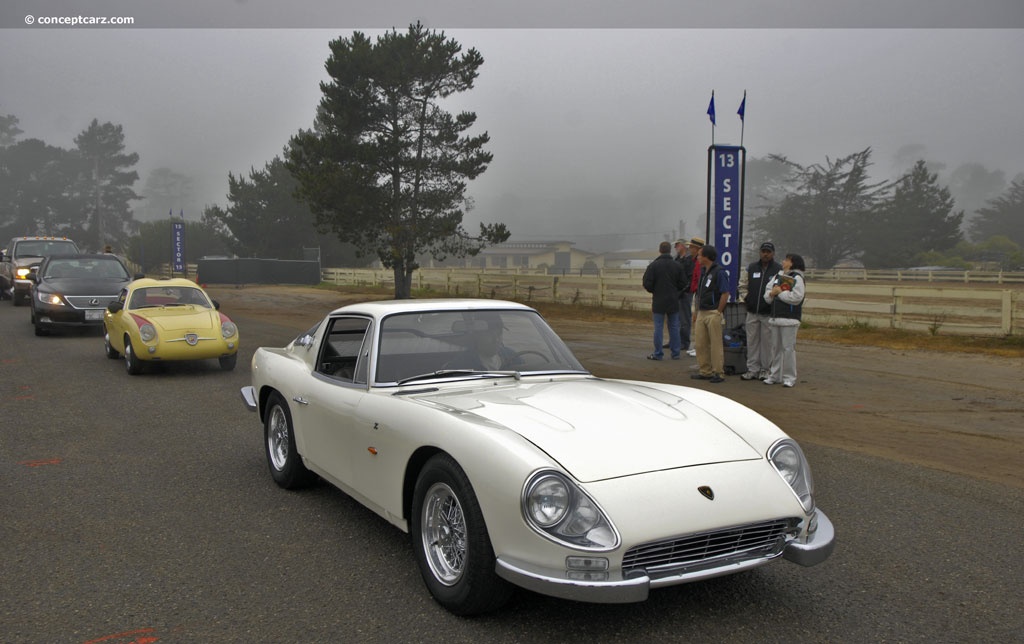
View info and historyAt the 1963 Turin Motorshow, the Lamborghini 350 GTV made its debut, sans engine. After further development, testing, and tuning, the Lamborghini 350 GT was ready for production and in the spring of 1964 was shown at the Geneva Auto Salon. Production would continue until 1966 with 120 examples ultimately built. During this time, at least one - possibly two examples were given Zagato coachwork and rested on a shortened chassis. The design was by Ercole Spada of Zagato and it made its debut at the 1965 London Motorshow as the Lamborghini 3500 GTZ. The Zagato-bodied car was created as an alternative to the Touring body. Also in 1965, Lamborghini introduced a mid-engine 4-liter V12 car with coachwork by Bertone. It was called the Miura and it was revolutionary - arguably the creation of the supercar class. Although the Lamborghini 3500 GTZ was attractive and elegant, Ferruccio feared that the struggling Zagato Company would be unable to stay afloat. Instead, Lamborghini installed the 4.0-liter V12 into the front-engined 350 GT and called it the 400 GT or 400 GT Interim. Twenty-three examples were built with three given aluminum coachwork. Further revisions and modifications resulted in the second 400 GT, commonly known as the 400 GT 2+2.
Coupe by Zagato
Chassis #: 0310
View info and historyOf the potentially two examples that were created, only one is currently known.
by Daniel Vaughan | Sep 2019
Coupe by Zagato
Chassis #: 0310
View info and history
Coupe by Zagato
Chassis #: 0310
View info and history
Coupe by Zagato
Chassis #: 0310
View info and history
by Daniel Vaughan | Sep 2019
Related Reading : Lamborghini 350/400 History
Ferruccio Lamborghini had built a significant amount of wealth as a tractor builder. When he bought a Ferrari he expected a vehicle with superior performance and few problems. What he got was a car that did have superior performance but was plagued with mechanical difficulties. Upon returning the vehicle to the Ferrari shop and complaining about the lack of build quality, Enzo Ferrari replied You....
Continue Reading >>
Continue Reading >>


1965 Lamborghini 3500GTZ Vehicle Profiles
Recent Vehicle Additions


Related Automotive News

Lamborghini 350 GT returns to Geneva 60 years after its debut
Automobili Lamborghini celebrates its first production model by taking it back to the city where it was unveiled in 1964 by Ferruccio Lamborghini
In March 1964, Automobili Lamborghini was still in its infancy. Established just a few months previously,...

Where it all started: Enzo's first production model heads up incomparable set of Maranello greats as Salon Privé celebrates Ferrari's 75th anniversary
Salon Privé Concours dElégance presented by Aviva assembles rare and hallowed Ferrari models, the like of which has never been seen before at a UK Concours
Notables include 1947 125 S (first production Ferrari ever built, on loan from factory),...

Concours of Elegance 2021: The rarest cars in the world
The Concours of Elegance has revealed the full list of vehicles that make up its Main Concours display of the rarest cars in the world
From trailblazing pre-war Grand Prix cars to the very Rolls-Royce that gave birth to the best car in the world...

Ferraris In Full Force: Unique 599 GTZ Nibbio Spyder And F12Tdf '120Th Anniversary' Lead Clutch Of Additional Ferraris Headed To Rm Sotheby's Paris Sale
RM Sothebys reveals unique Ferrari F12tdf 120th Anniversary for upcoming Paris auction on 13 February widely known as a former press vehicle in the UK and Europe, uniquely carrying an Enzo Ferrari 120th anniversary plaque and driven by Sebastia...

The Best Of Lamborghini At London Concours 2020
The London Concours has announced its Great Marques Lamborghini display, celebrating the very best from SantAgata
Line-up includes icons early pioneers like the 400GT and iconic Miura, through to the Diablo SV, Murcielago and Aventador SVJ
Les...