1957 Ace Bristol | 1957 Ace Aceca | 1959 Ace Bristol ![]() | 1959 Aceca ![]() |
1958 AC Aceca news, pictures, and information | ||
| Tweet | ||
![]() | ![]() | ![]() | Fastback Coupe Chassis Num: AEX672 |
| Sold for $99,000 at 2012 RM Auctions. | |||
The British AC Cars Company was founded in 1904 as Autocarriers, Ltd. Their Aceca closed coupe model was produced from 1954 until 1963. Originally, they were fitted with an AC engine but the similar Bristol-engined Aceca-Brisol was also available alongside the original from 156 to 1963 when production of the AC engine ceased.
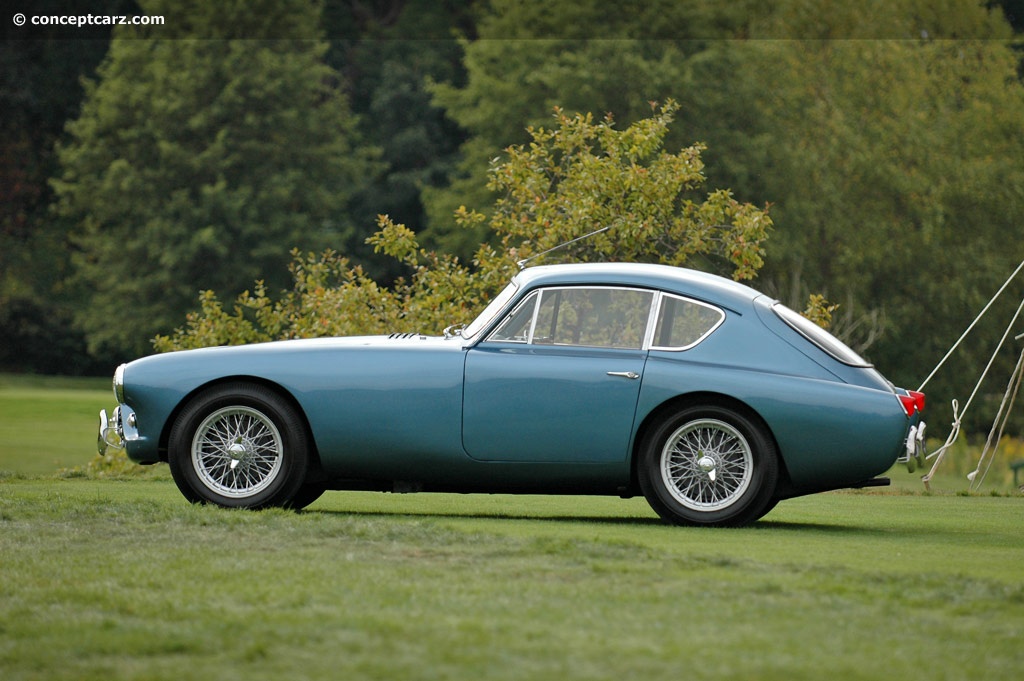
The Aceca was based on the open two-seat AC Ace. They were a hand-built GT car in the typical British tradition, with ash wood and steel tubing used in its construction. A notable feature was the hatchback at the rear, making the Aceca only the second car, after the 1954 Aston Martin DB2/4, to incorporate this element. Only 151 Acecas, 169 Aceca-Bristols and 8 Ford-engined models were built when production halted in 1963. The Aceca engine was an overhead camshaft straight-6 displacing 1991cc, and produced 90 horsepower.
The front-end styling of the Ace and Aceca reportedly traces back to a design done by Pinin Farina for AC in the late 1940s. The car has exceptionally light weight owing to a tubular frame, aluminum engine block and aluminum body panels. Large 16-inch spoked road wheels and almost perfect fore/aft weight distribution allowed exceptional handling on loose dirt tracks. It also features front-wheel disc brakes (added in 1957), transverse 'de Dion' leaf rear suspension, articulated rear half-axles, worm-gear steering, an optional overdrive, curved windshield and leather covered bucket seats. The suspension is independent at the front and rear using transverse leaf springs.
![]() | ![]() | ![]() | Fastback Coupe Chassis Num: AE650 Engine Num: CL2350WT |
Along with the Aston Martin DB2/4, the Aceca was one of the first hatchback designs.
During the car's production lifespan, very few alterations were made to the Aceca apart from a change of engines. In total, there were just 151 examples produced with the AC six.
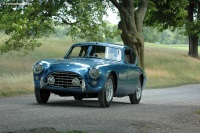
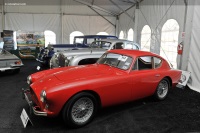
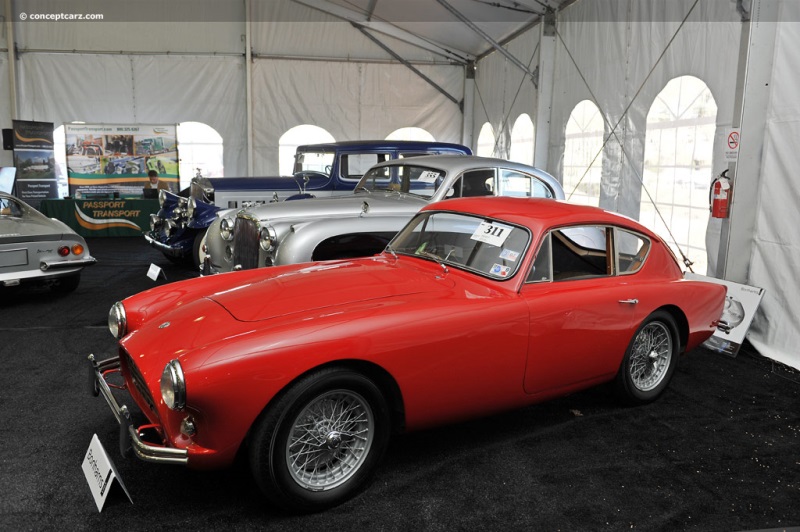
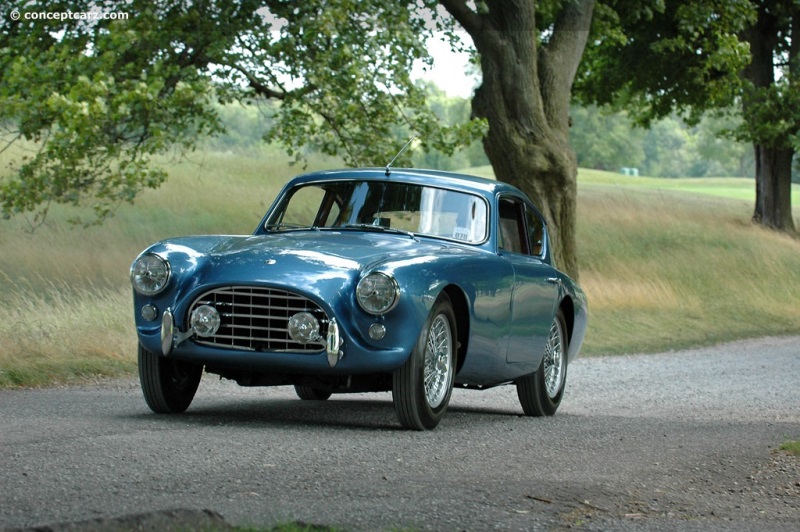
This example is an original right-hand drive car that left the Thames Ditton factory on April 23rd of 1958 in Bright Blue with beige upholstery. It was originally registered as '10FPG' in the UK.
The car was set to auction in 1986 and subsequently advertised by classic car dealer Nigel Dawes later that year. The Aceca then made its way across the Atlantic and underwent a comprehensive rebuild in recent years for the Texas-based owner. The car is currently finished in red with tan upholstery with blue piping and matching blue carpets.
In 2013, the car was offered for sale at the Bonhams Auction in Scottsdale, Arizona. It was estimated to sell for $85,000 - $100,000. Bidding failed to satisfy the vehicle's reserve and it would leave the auction unsold.
By Daniel Vaughan | Feb 2013
The Ace was debuted in 1953 at the London Motor Show and was produced beginning in 1954 and continuing through 1963. The vehicle consisted of light-weight tubular chassis with steel boxes in the front and rear which supported a transverse leaf and lower wishbone independent suspension system. The chassis was designed by John Tojeiro. Power was initially provided by a Welleter-designed engine and was mounted in the front of the vehicle but placed back far enough to take advantage of balance. The body and design of the vehicle was inspired by the 2-seater Ferrari 166MM Barchetta (little boat) made by Touring of Milan.
During the first year of production, there were fewer than 60 examples produced. These were all Aces - convertibles. The Aceca, a hard top variant was debuted in 1954.
Due to the vehicles light weight, optimal weight distribution, responsive engine and handling, and stylish appearance, it attracted much attention.
In 1956 the Bristol-engine version was introduced, replacing the Welleter-designed motor. The Bristol 1971 cc, six cylinder engine was capable of producing 125 horsepower at 5750 rpm and propelling the light-weight car to a top speed of around 180 kph. Production of the Bristol engines ceased around the end of the 1950's and AC began using a British Ford Zephyr engine. It was a heavier engine and produced less power. There were only 47 of these 2.6 liter examples produced from 1961 through 1963.
The vehicles came equipped with front disc brakes, Girling hydraulic shock absorbers, rack-and-pinion steering, and a four-speed manual transmission.
In total, there were around 735 Aces and 326 Acecas produced. The AC Ace was the basis for one of the best known sports car of all time, the Shelby Cobra.
By Daniel Vaughan | Aug 2009
During the first year of production, there were fewer than 60 examples produced. These were all Aces - convertibles. The Aceca, a hard top variant was debuted in 1954.
Due to the vehicles light weight, optimal weight distribution, responsive engine and handling, and stylish appearance, it attracted much attention.
In 1956 the Bristol-engine version was introduced, replacing the Welleter-designed motor. The Bristol 1971 cc, six cylinder engine was capable of producing 125 horsepower at 5750 rpm and propelling the light-weight car to a top speed of around 180 kph. Production of the Bristol engines ceased around the end of the 1950's and AC began using a British Ford Zephyr engine. It was a heavier engine and produced less power. There were only 47 of these 2.6 liter examples produced from 1961 through 1963.
The vehicles came equipped with front disc brakes, Girling hydraulic shock absorbers, rack-and-pinion steering, and a four-speed manual transmission.
In total, there were around 735 Aces and 326 Acecas produced. The AC Ace was the basis for one of the best known sports car of all time, the Shelby Cobra.
By Daniel Vaughan | Aug 2009
The oldest British car manufacturer, AC has continuously produced vehicles since 1901 and the marque carries enormous prestige. The AC Aceca, a closed coupe, was unveiled in 1954 in London and only 328 prototypes were ever produced.
Production of the Aceca Coupe commenced in 1955 and Le Mans 1957 was a lucrative one for AC, with an AC Bristol finishing tenth overall. 1958 was an even better year as a special bodied AC Bristol that finished eighth and a standard car ninth. Produced from 1954 until 1963, the similar Bristol-engined Aceca-Bristol was also eventually available in the 1956 model year. Both of these models were hand-bult GT vehicles in the British tradition, both featured ash wood joining steel tubing into their construction. Following the 1953 Aston Martin DB2/4, the Aceca was only the second vehicle to incorporate the hatchback at the rear.
The differences between the Aceca and the Aceca-Briston lay in the engines. Though both were straight-6es, but the Aceca shared its 90 hp 2.0 L engine with the lighter AC Ace, and the Aceca-Bristol utilized a 125 hp 'D-Type' 2.0 L unit sourced from Bristol Cars. One was also able to purchase the Aceca-Bristol with a milder 'B-Type' Bristol engine of 105 hp. The Aceca was priced at $5,400 in the U.S. but the Bristol specification added another $1000 to the pricetag. A total of 151 Acecas were produced, while 169 Aceca-Bristols were built. Unfortunately production was halted quite unexpectedly in 1963.
Certain design specifics in the Aceca were taken from the exquisite design work by Pina Farina for the AC Company in the 1940s, these included in the front-end styling. The grille was simple, but the curves were perfectly executed along the hood and around the headlights. The Aceca had a superbly low weight due to the tubular frame, and aluminum body panels and the aluminum engine block. Other weight saving features were in the 16' spoked wheel and nearly perfect weight distribution in the fore/aft which also contributed to the exception handling on loose, dirt tracks. The Aceca exhibited its distinctive engineering with the front-wheel disc brakes, articulated rear half-axles, transverse 'de Dion' leaf rear suspension, worm-gear steering, curved windshield, electronic overdrive in 2nd, 3rd and 4th gear The bucket seats were also very well-designed and encased in leather in true 1950's vintage auto style.
Also very innovative for the time, the AC engine was considered to be ‘an engineering marvel', patterned after the powerful Bristol aircraft engine. The engine was a inline 6, aluminum block, overhead cam, double chain drive that was fueled by 3 inline SU downdraft carburetors, that each fed two cylinders. 6 straight-out header pipes were directly opposite and these allowed the combustion gases to enter the cylinder, do one rotation during combustion and exit oppositely, straight-out, without any resistance.
Enthusiasts consider the Aceca to be a great car to drive, though it rides a bit hard, due to the stiff suspension. Cornering and steering was done quite proficiently, but some complained that it tended to oversteer, but it was still ‘solid and predictable' handling. Consumers also complained about the inadequate rear mirrors, a heating system not properly suited to colder climates and inadequate soundproofing above 75 mph.By Jessica Donaldson
For more information and related vehicles, click hereProduction of the Aceca Coupe commenced in 1955 and Le Mans 1957 was a lucrative one for AC, with an AC Bristol finishing tenth overall. 1958 was an even better year as a special bodied AC Bristol that finished eighth and a standard car ninth. Produced from 1954 until 1963, the similar Bristol-engined Aceca-Bristol was also eventually available in the 1956 model year. Both of these models were hand-bult GT vehicles in the British tradition, both featured ash wood joining steel tubing into their construction. Following the 1953 Aston Martin DB2/4, the Aceca was only the second vehicle to incorporate the hatchback at the rear.
The differences between the Aceca and the Aceca-Briston lay in the engines. Though both were straight-6es, but the Aceca shared its 90 hp 2.0 L engine with the lighter AC Ace, and the Aceca-Bristol utilized a 125 hp 'D-Type' 2.0 L unit sourced from Bristol Cars. One was also able to purchase the Aceca-Bristol with a milder 'B-Type' Bristol engine of 105 hp. The Aceca was priced at $5,400 in the U.S. but the Bristol specification added another $1000 to the pricetag. A total of 151 Acecas were produced, while 169 Aceca-Bristols were built. Unfortunately production was halted quite unexpectedly in 1963.
Certain design specifics in the Aceca were taken from the exquisite design work by Pina Farina for the AC Company in the 1940s, these included in the front-end styling. The grille was simple, but the curves were perfectly executed along the hood and around the headlights. The Aceca had a superbly low weight due to the tubular frame, and aluminum body panels and the aluminum engine block. Other weight saving features were in the 16' spoked wheel and nearly perfect weight distribution in the fore/aft which also contributed to the exception handling on loose, dirt tracks. The Aceca exhibited its distinctive engineering with the front-wheel disc brakes, articulated rear half-axles, transverse 'de Dion' leaf rear suspension, worm-gear steering, curved windshield, electronic overdrive in 2nd, 3rd and 4th gear The bucket seats were also very well-designed and encased in leather in true 1950's vintage auto style.
Also very innovative for the time, the AC engine was considered to be ‘an engineering marvel', patterned after the powerful Bristol aircraft engine. The engine was a inline 6, aluminum block, overhead cam, double chain drive that was fueled by 3 inline SU downdraft carburetors, that each fed two cylinders. 6 straight-out header pipes were directly opposite and these allowed the combustion gases to enter the cylinder, do one rotation during combustion and exit oppositely, straight-out, without any resistance.
Enthusiasts consider the Aceca to be a great car to drive, though it rides a bit hard, due to the stiff suspension. Cornering and steering was done quite proficiently, but some complained that it tended to oversteer, but it was still ‘solid and predictable' handling. Consumers also complained about the inadequate rear mirrors, a heating system not properly suited to colder climates and inadequate soundproofing above 75 mph.By Jessica Donaldson
| SUBARU PUMA RALLYCROSS TEAM READY TO LAUNCH AT X GAMES BARCELONA | |
![]() | • Bucky Lasek, Dave Mirra and Sverre Isachsen return to pilot their 2013 Subaru PUMA WRX STI's • Round 2 of Global RallyCross will air LIVE on ESPN at 10 a.m. ET, Sunday, May 19th Cherry Hill, N.J., - The Subaru PUMA RallyCross Team will kick off its 2013 season with a three-car effort this Sunday at X Games Barcelona. Returning to race the trio of 600 hp Subaru PUMA WRX STI RallyCross cars, will be three-time European RallyCross Champ Sverre Isachsen, BMX icon and seasoned RallyCros...[Read more...] |
| BMW HONORS BOSCH | |
| 'BMW Supplier Innovation Award' for outstanding partnership - Special prize in the innovation partnership category - BMW honors several innovation milestones - Bosch continues to drive progress in automotive technology The BMW Group has awarded Bosch its 'BMW Supplier Innovation Award'. The German carmaker presents the prize to suppliers who have distinguished themselves with outstanding innovation and performance. 'We are very proud of this award,' says Peter Tyroller,...[Read more...] | |
| BUICK TURNS 110: 11 HIGHLIGHTS OF 11 DECADES | |
![]() | Buick vehicles today are built in state-of-the-art facilities around the world. The Enclave luxury crossover's Lansing Delta Township plant was the industry's first LEED Gold-certified manufacturing facility. The brand has evolved in many ways since 1903, when the first Buick was hand-built in a small barn behind David Dunbar Buick's Detroit home. Here are 11 top highlights from Buick's first 11 decades: • Through the end of 2012, Buick has sold more than 43 million vehicles. That's the equiv...[Read more...] |
| POW! BAM! ZOOM! The Original 1966 TV Batmobile To Cross Auction Block At Barrett-Jackson Scottsdale | |
![]() | Holy Grail of TV Star Cars to be Sold for First Time January 19, 2013 Barrett-Jackson, the World's Greatest Collector Car Auctions™, announced today that it will offer one of the most recognized and popular pieces of entertainment history worldwide, at its 42nd annual Scottsdale www.barrett-jackson.com/scottsdale/ auction in January – the only 1955 Lincoln Futura concept car which was heavily modified by legendary customizer George Barris to become the original 1966 Batmobile in the l...[Read more...] |
| Pair Of 1960s Automotive Icons Take Center Stage At RM Arizona | |
| • RM Auctions secures a highly desirable 1960 Ferrari 250 GT SWB Berlinetta 'Competizione' and an ultra-rare 1965 Ford GT40 for its January 18 sale in Phoenix, Arizona • Latest multi-million-dollar entries join a stellar list of more than 80 blue-chip collector cars, including a rare 1930 Duesenberg Model J Derham Tourster, offered for the first time in 45 years • Frequently updated list of entries available online at rmauctions.com BLENHEIM, Ontario (November 29, 2012) – RM A...[Read more...] | |
1958
AC
models |
| AC Ace Bristol |
| AC Aceca Bristol |
| Similarly Priced Vehicles from 1958 |
| Porsche 356A ($3,200-$5,900) |
Average Auction Sale: $99,000 |
| AC: 1951-1960 |
| Similar Automakers |
| AC History |
| Other models by AC |
| 16 Series 427 / 428 Ace Greyhound |
1957 Ace Bristol | 1957 Ace Aceca | 1959 Ace Bristol ![]() | 1959 Aceca ![]() |


1957 Ace Bristol


1958