History
In May of 1930, engineer Arnoth Soth began work on a V8 under the direction of Laurence Sheldrick. With a displacement of 299 cubic inches, the 60-degree V8 had a square design. Henry Ford's directives however gave the engineers additional problems, as he wanted this engine built without an oil pump. The flywheel instead would throw oil into on a tank in valve chambers where it would then run down to the bearings. The engine quickly burned out on the dynamometer.
Both the Ford Model 18 and the Ford Model B were seen as Dearborn's response to the Depression. Following a 19-year production run of the Model T, the vehicle upon which Ford's empire was founded which had had a production run of over 15 million units, it was time to focus elsewhere. In 1932, the Model B was introduced as a new Ford vehicle, which was quite simply an updated version of the Model A, and was eventually replaced by the '35 Model 48. As Ford was unveiling the Model B, they were also producing a very similar vehicle with Ford's new Flathead V8 engine, and it was marketed as the Model 18, though it was more commonly called the Ford V-8 today. It was basically indistinguishable from the Model B, and up until this time, Ford had always produced just one basic vehicle at a time. The design behind the Ford Model 18, beginning with the V8 engine, involved the planning and input of many people.
The two versions of the 1932 Ford, the V8 flathead and a four-cylinder came in a variety of body styles, the 2 door cabriolet, the 2 door roadster, 4 door phaeton, two and four-door sedans, four-door 'Woodie' station wagon, two-door Convertible Sedan, two-door Victoria, Panel and Sedan Deliveries, 5-window coupe, and the 3-window Deluxe Coupe. The less popular model was the four-cylinder model, a refined version of the four-cylinder Model A. The Model 18 was broken down as the deuce, the '1' standing for 'first' and the '8' for the V-8. The nomenclature Deuce coupe was a slang term that was used to refer to the 1932 Ford coupe, which was derived from the year of the manufacture.
Billed as a five-passenger coupe, the 1932 Ford Model 18 Victoria could as easily be dubbed a close-coupled two-door sedan. The U.S. only received 8,586 units of the 1932 Ford Victoria's. In secret, Henry Ford organized his engineers Ray Laird and Carl Shultz to begin working on his own ideas in Thomas Edison's old Fort Myers lab. This laboratory had been moved from Florida to Henry's newly established Greenfield Village lab in Dearborn, Michigan.
Next, Henry Ford asked Ed Huff, head of the electrical laboratory, to develop the ignition system. Huff didn't think that the ignition system could be done the way Ford envisioned, and told Ford this. Henry Ford wasn't happy with this response and instead when to Emil Zoerlein to develop the ignition system, and to keep his work on the down-low. The design that he came up with was very similar to those found today, mounted on the front of the engine and driven directly from the camshaft.
Since business at the Ford industry was going quite well in 1930, Laird and Shultz saw little reasoning behind turning Ford's ideas into reality. After all, Ford was selling nearly double Chevy's total, more than one million vehicles. In November of 1930, Shultz and Laird finally reached success, when two different 90-degree V8 designs were completed. One of the designs had the same square dimensions as the doomed 299-inch Soth engine, while the other engine had a bore of 3.375 inches and a stroke of 3.25 inches, which gave a displacement of 232.5 cubic inches.
Herman Reinhold aided in secretly casting blocks at the Rouge and by February of 1931, the first engine was up and running. Four engines that were dubbed Model 24 were installed in updated Model A models by June. Thinking that this wasn't the time to follow through with this experiment, Ford decided that the Depression was looming and that business was bad, so he instead decided to release an improved Model A. Work on that model began in the late summer of 1931.
By 1931, the new engines were being tested, and the Ford Rouge plant was humming with busy activity. The new inline-four had to prove a significant improvement over the Model A engine. A variety of modifications were made to increase to power output of the basic 200.5-cubic-inch block. Exploited, but with careful balancing, a high-lift cam, new larger mains, new rods with larger bearings and new crank were added.
In November, the engine was put into production, and engineers truly believed that they had the perfect four. The original successful V8 engine in a low-priced vehicle, the 1932 Model 18 was the signature achievement for Ford. The Roadster was priced at $460, the coupe at $490, and the convertible sedan for $650. The total production for the Roadster peaked at 12,597 and 124,101 for the two-door sedan. Today, the roadster and the coupe body styles are utilized more often in making the models into street-rods. Much like all 1932 Ford Victoria Model 18 V8's, this vehicle ran on a 106.5-inch wheelbase, and from a distance, the 1932 model didn't look much different from the Model A. When one looks closer though you could see that this was an all-new model from radiator cap to taillight. According to Edsel, this was by far 'the best-looking Ford yet'.
The Ford Model 18 phaeton V8 featured a sidemount spare, a leather interior and a luggage rack. Inside, the instruments included an 80-mph speedometer that was placed in a very handsome, engine-turned oval housing that was trimmed with a stainless bead strip and placed in a mahogany color panel. This was a design them that was borrowed from the Lincoln. The standard top-hinged windshield opened on a pair of adjustable arms, and the sun visor was arranged to swing out of the way. Available options were fine wool, mohair and leather upholstery. The bodies were available in a variety of colors with contrasting reveals and pinstriping and in Ford tradition, fenders on all models were dipped in black enamel.
The first Ford to feature a grille that hid the radiator, the 1932 Ford Model 18 coupe was quite revolutionary.
The Roadster is most likely the most popular model, though only 15,115 were constructed worldwide, and 9,268 of them came with the V8. The Roadster had a much more 'jaunty' look, in comparison to the cabriolet, which was a true convertible. For 1933 the power from the V8 was increased to 75 hp with a revised ignition system. The four-cylinder engine remained unchanged, and total sales for the model year were up to 311,113. Only 568 units of the adorable V8 roadster version of the 1932 Ford Model 18 station wagon were sold, while the DeLuxe Ford coupe attracted 21,175 buyers.
The Ford Model 18 and the Ford Model B weren't able to drag the country out of the depression. If customers couldn't find work to earn the money to pay for them, Henry Ford could hardly expect his cars for the masses to be purchased. Sales were low until June 1932 because of the slow production start-up, but they reached 55,000 units. It wasn't until July that Ford realized he just couldn't keep up with the demand. Sales fell, production was halved, and wages were cut.
From July until September of 1932, production stayed close to 20,000 units a month, but it eventually tapered off along with sales. In October sales peaked, but one month later, layoffs were rampant, and more than three-quarters of a million Michigan workers were unemployed. Four of Ford's 33 United States plants had been closed down, and another by January. A little over 300,000 cars were produced for North America for 1932, much lower than Ford's predicted million and a half.By Jessica Donaldson
Both the Ford Model 18 and the Ford Model B were seen as Dearborn's response to the Depression. Following a 19-year production run of the Model T, the vehicle upon which Ford's empire was founded which had had a production run of over 15 million units, it was time to focus elsewhere. In 1932, the Model B was introduced as a new Ford vehicle, which was quite simply an updated version of the Model A, and was eventually replaced by the '35 Model 48. As Ford was unveiling the Model B, they were also producing a very similar vehicle with Ford's new Flathead V8 engine, and it was marketed as the Model 18, though it was more commonly called the Ford V-8 today. It was basically indistinguishable from the Model B, and up until this time, Ford had always produced just one basic vehicle at a time. The design behind the Ford Model 18, beginning with the V8 engine, involved the planning and input of many people.
The two versions of the 1932 Ford, the V8 flathead and a four-cylinder came in a variety of body styles, the 2 door cabriolet, the 2 door roadster, 4 door phaeton, two and four-door sedans, four-door 'Woodie' station wagon, two-door Convertible Sedan, two-door Victoria, Panel and Sedan Deliveries, 5-window coupe, and the 3-window Deluxe Coupe. The less popular model was the four-cylinder model, a refined version of the four-cylinder Model A. The Model 18 was broken down as the deuce, the '1' standing for 'first' and the '8' for the V-8. The nomenclature Deuce coupe was a slang term that was used to refer to the 1932 Ford coupe, which was derived from the year of the manufacture.
Billed as a five-passenger coupe, the 1932 Ford Model 18 Victoria could as easily be dubbed a close-coupled two-door sedan. The U.S. only received 8,586 units of the 1932 Ford Victoria's. In secret, Henry Ford organized his engineers Ray Laird and Carl Shultz to begin working on his own ideas in Thomas Edison's old Fort Myers lab. This laboratory had been moved from Florida to Henry's newly established Greenfield Village lab in Dearborn, Michigan.
Next, Henry Ford asked Ed Huff, head of the electrical laboratory, to develop the ignition system. Huff didn't think that the ignition system could be done the way Ford envisioned, and told Ford this. Henry Ford wasn't happy with this response and instead when to Emil Zoerlein to develop the ignition system, and to keep his work on the down-low. The design that he came up with was very similar to those found today, mounted on the front of the engine and driven directly from the camshaft.
Since business at the Ford industry was going quite well in 1930, Laird and Shultz saw little reasoning behind turning Ford's ideas into reality. After all, Ford was selling nearly double Chevy's total, more than one million vehicles. In November of 1930, Shultz and Laird finally reached success, when two different 90-degree V8 designs were completed. One of the designs had the same square dimensions as the doomed 299-inch Soth engine, while the other engine had a bore of 3.375 inches and a stroke of 3.25 inches, which gave a displacement of 232.5 cubic inches.
Herman Reinhold aided in secretly casting blocks at the Rouge and by February of 1931, the first engine was up and running. Four engines that were dubbed Model 24 were installed in updated Model A models by June. Thinking that this wasn't the time to follow through with this experiment, Ford decided that the Depression was looming and that business was bad, so he instead decided to release an improved Model A. Work on that model began in the late summer of 1931.
By 1931, the new engines were being tested, and the Ford Rouge plant was humming with busy activity. The new inline-four had to prove a significant improvement over the Model A engine. A variety of modifications were made to increase to power output of the basic 200.5-cubic-inch block. Exploited, but with careful balancing, a high-lift cam, new larger mains, new rods with larger bearings and new crank were added.
In November, the engine was put into production, and engineers truly believed that they had the perfect four. The original successful V8 engine in a low-priced vehicle, the 1932 Model 18 was the signature achievement for Ford. The Roadster was priced at $460, the coupe at $490, and the convertible sedan for $650. The total production for the Roadster peaked at 12,597 and 124,101 for the two-door sedan. Today, the roadster and the coupe body styles are utilized more often in making the models into street-rods. Much like all 1932 Ford Victoria Model 18 V8's, this vehicle ran on a 106.5-inch wheelbase, and from a distance, the 1932 model didn't look much different from the Model A. When one looks closer though you could see that this was an all-new model from radiator cap to taillight. According to Edsel, this was by far 'the best-looking Ford yet'.
The Ford Model 18 phaeton V8 featured a sidemount spare, a leather interior and a luggage rack. Inside, the instruments included an 80-mph speedometer that was placed in a very handsome, engine-turned oval housing that was trimmed with a stainless bead strip and placed in a mahogany color panel. This was a design them that was borrowed from the Lincoln. The standard top-hinged windshield opened on a pair of adjustable arms, and the sun visor was arranged to swing out of the way. Available options were fine wool, mohair and leather upholstery. The bodies were available in a variety of colors with contrasting reveals and pinstriping and in Ford tradition, fenders on all models were dipped in black enamel.
The first Ford to feature a grille that hid the radiator, the 1932 Ford Model 18 coupe was quite revolutionary.
The Roadster is most likely the most popular model, though only 15,115 were constructed worldwide, and 9,268 of them came with the V8. The Roadster had a much more 'jaunty' look, in comparison to the cabriolet, which was a true convertible. For 1933 the power from the V8 was increased to 75 hp with a revised ignition system. The four-cylinder engine remained unchanged, and total sales for the model year were up to 311,113. Only 568 units of the adorable V8 roadster version of the 1932 Ford Model 18 station wagon were sold, while the DeLuxe Ford coupe attracted 21,175 buyers.
The Ford Model 18 and the Ford Model B weren't able to drag the country out of the depression. If customers couldn't find work to earn the money to pay for them, Henry Ford could hardly expect his cars for the masses to be purchased. Sales were low until June 1932 because of the slow production start-up, but they reached 55,000 units. It wasn't until July that Ford realized he just couldn't keep up with the demand. Sales fell, production was halved, and wages were cut.
From July until September of 1932, production stayed close to 20,000 units a month, but it eventually tapered off along with sales. In October sales peaked, but one month later, layoffs were rampant, and more than three-quarters of a million Michigan workers were unemployed. Four of Ford's 33 United States plants had been closed down, and another by January. A little over 300,000 cars were produced for North America for 1932, much lower than Ford's predicted million and a half.By Jessica Donaldson
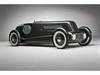


1932 Ford Special Speedster Vehicle Profiles

Recent Vehicle Additions


Performance and Specification Comparison
Model 18 Specification Comparison by Year
Year
Production
Wheelbase
Engine
Prices
106.00 in.
8 cyl., 239.00 CID., 100.00hp
Related Automotive News

Broad Arrow Fires on All Cylinders at The Amelia with Total Sales Exceeding $63M with a 92% Sell-Through Rate
Broad Arrow Auctions sale at The Amelia meaningfully exceeded expectations this past weekend, with total sales surpassing %2463M and a sell-through rate of 92. Now in its second year as the official auction house at The Amelia, Broad Arrow executed a...

80Th Anniversary Lincoln Continental Arrives In Style With Iconic Center-Opening Doors
Introduction of Lincoln Continental 80th Anniversary Coach Door Edition pays homage to the iconic style of the 1960s
This limited-edition Continental offers nod to heritage while providing refinements for todays discerning luxury client, such as a...

ART DECO AVIONS-VOISIN C14 LUMINEUSE LEADS EARLY ENTRIES FOR RM SOTHEBY'S 2016 AMELIA ISLAND SALE
RM Sothebys to continue strong track record in Amelia Island, Florida, March 12, 2016
Early sale highlights led by stunning 1927 Avions-Voisin C14 Lumineuse once owned by Gabriel Voisin
Single-day auction to feature 100 blue-chip automobiles...

Edsel Ford's Speedster Stars at 'The Amelia'
Edsel Fords continental car, a custom boattail speedster, will take its rightful place in the Sports Car Class of the 18th annual Amelia Island Concours dElegance. In the shape of Edsels seminal speedster is the genesis of Fords legendary design...

Lincoln at Los Angeles Auto Show Press Days: Celebration of Its Past and Future As Brand Rolls Out Its Reinvention
The brand pays tribute to its heritage today, displaying seven of the most influential Lincoln designs
Thursday sees a display full of the all-new MKZ premium midsize sedan and MKZ Hybrid, the future of Lincoln, on the Lincoln stand
Lincoln launches...