Enzo Ferrari reluctantly embraced the need for an exclusive line of road-going cars to finance the company's growing competition efforts. Street cars were part of Maranello's roster, but they were built in very minuscule numbers, usually to special customer order, with no attempt made at standardization. This changed in 1954 when the Pinin Farina-designed 250 Europa was introduced at Paris. This was Ferrari's first true production model and would form the foundation for all future Ferrari 250 models. These included the second series 250 GT Europa, again designed by Pinin Farina, but since they were in the process of building a new, much larger production facility, they did not yet have the space to build the larger quantities of cars that Ferrari was requesting. Accordingly, the design they created was handed over to Carrozzeria Boano, headed by one of Pinin Farina's designers, Mario Felice Boano (formerly of Ghia). When Boano was later recruited by Fiat, construction was handed to his son-in-law, Ezio Ellena. 
Coupe by Boano
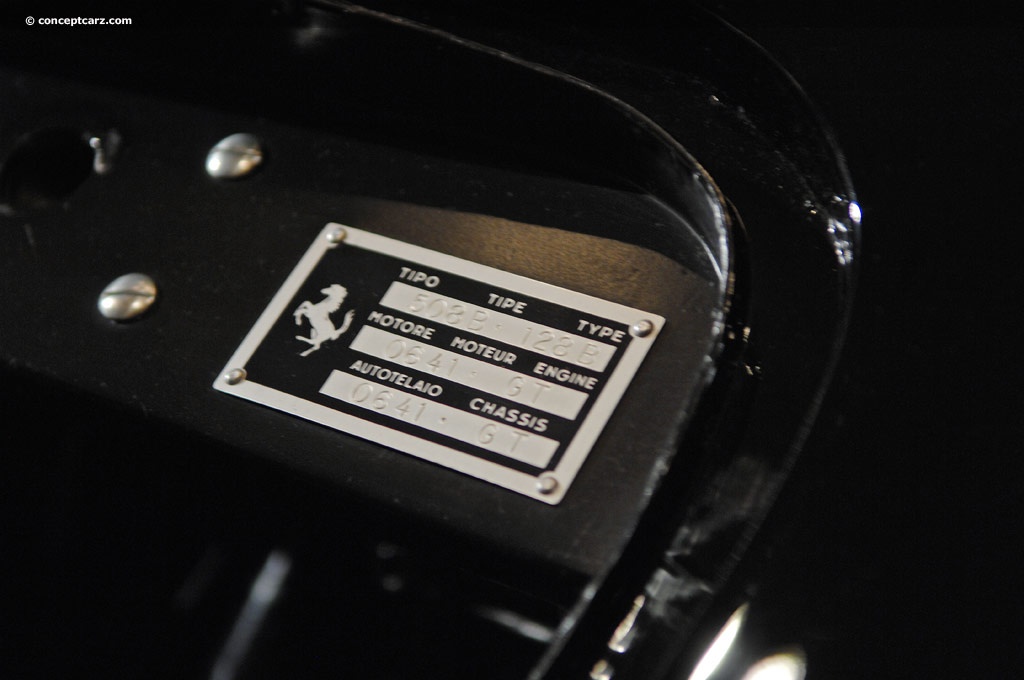
Chassis #: 0641 GT
View info and history
Auction entries : 2Carrozzeria Boano
Felice Boano had worked in the coachbuilding business during the pre-war era, including employment at Stabilimenti Farina in Turin before joining Pinin Farina in 1930. In 1944, Boano and Giorgio Alberti acquired Carrozzeria Ghia in Torino after Giacinto Ghia passed away. Designs that followed often featured a low-roofline, a styling feature that would become a hallmark of Boano's design. The coachwork they created was applied to the Lancia Aurelia and Alfa Romeo 2500 CC of 1950, the Karmann Ghia of 1953, and the Chrysler K200, among others. In 1954, Felice Mario Boano and his son Gian Paolo, along with partner Luciano Pollo, formed Carrozzeria Boano at Via Collegno in Grugliasco. The business was in operation for three years, closing after Boano accepted a job with Fiat in their styling department. His son, Gian Paolo, succeeded him in 1959, as leader of the Centro Stile, Fiat's styling department. Mario retired from Fiat in 1966 and Giano Paolo remained with Fiat until 1988. Ferrari 250 GT Boano
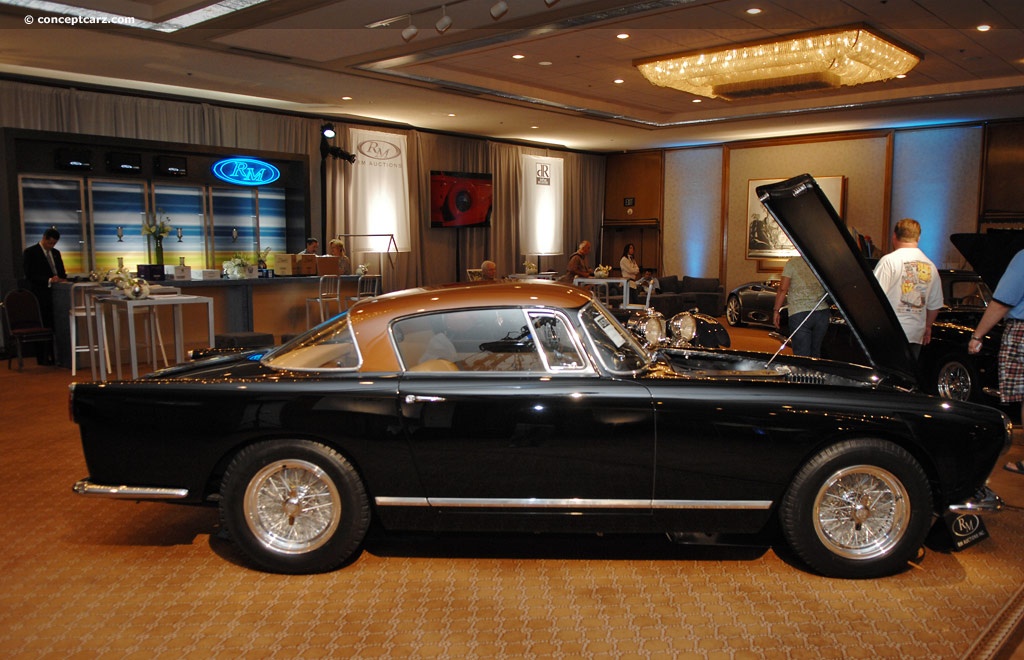
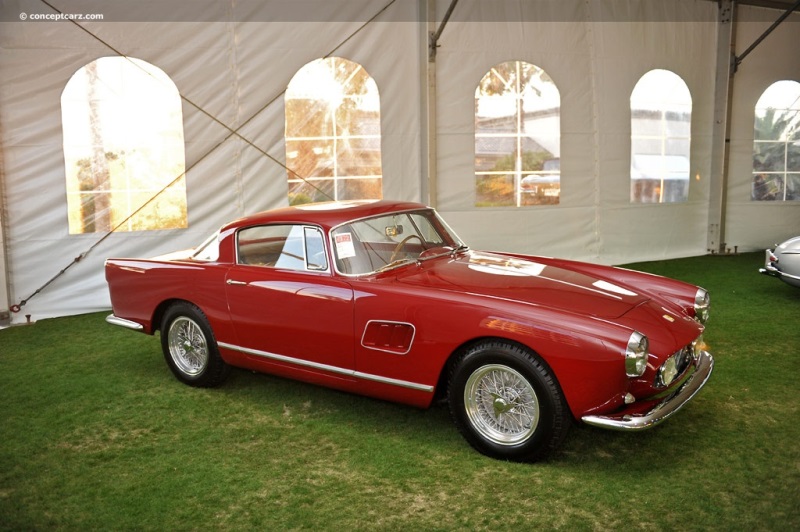
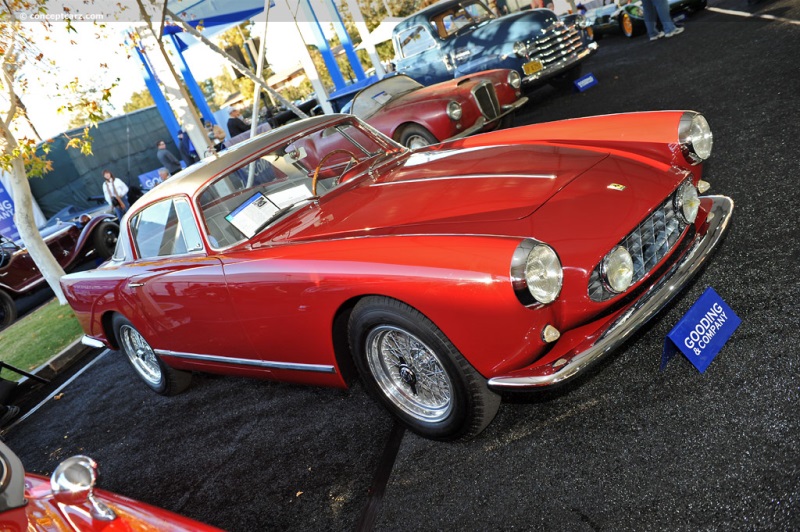
The 250 GT Low-Roof Berlinetta was introduced in 1955 at the Geneva Motor Show and served as a replacement for the Europa GT. The new 250 Gran Turismo benefitted from the latest chassis developments and modern Pinin Farina styling, executed by Carrozzeria Mario Boano. They were sophisticated, refined, sporting machines that helped Ferrari gain greater recognition in important markets and appeal to a wider audience. The quiet, yet athletic lines hinted at the vehicle's dynamic capabilities, motivated by the wet-sump Colombo-designed V12 engine with a 2,953cc displacement, single overhead camshafts, three Weber 36DCZ3 carburetors, and developing approximately 260 horsepower. It used an oval steel tube ladder-type chassis with an independent front suspension with A-arms and coil springs, while the rear received a solid axle with trailing arms and leaf springs. It had a 102-inch wheelbase, the same as the preceding 205 Europa GT, but less than the 110.2-inch wheelbase of the 250 Europa and Ferrari 375 America. The original 250 Europa had a 2,963cc Lampredi V12 engine with 197 horsepower while the 250 Europa GT that followed received the Colombo V12 with 217 hp - the first road-going Ferrari to employ this engine. The Pinin Farina styling was an evolution of the Speciale Coupé (chassis number 0407GT) but with a completely redesigned rear end. In the front was a smaller, elliptical grille with fog lamps, while the rear incorporated square and protruding tail fins at both corners. This design shared several qualities with the 410 Superamerica, also created by Pinin Farina in the same year. The first prototype 250 GT Coupe rested beside a 410 Superamerica in March of 1956 at the Geneva Motor Show, both wearing very similar styling. Also present was a Boano-bodied Speciale Cabriolet. After Pinin Farina bodied nine prototypes, Boano officially took over the production. Distinguishable features of the Boano-bodied cars include the low roofline and a single straight line traversing the length of the car, without any kick-ups behind the doors.
Coupe by Boano
Chassis #: 0641 GT
View info and history
Auction entries : 2The Carrozzeria Boano-built 250 GTs were distinguished by the 'Low Roof' and had an overall height of 53 inches. 250 GTs built by Ellena had a 'High Roof' and an overall height of 54 inches. Boano built approximately 74 examples (between 60 and 88 cars over a two-year production run) of the 250 GT while Ellena constructed another 50 examples. All but one were coupes - the single convertible (chassis number 0461 GT) was acquired by Bob Lee off the stand at the 1956 New York Auto Show. 14 examples were given lightweight alloy bodywork and are 'Competizione' models. While Pinin Farina-built cars receipt script or emblems, the Boano and Ellena-built cars did not have any identifying nameplates, because they acted as subcontractors.
by Daniel Vaughan | Nov 2021
Coupe by Boano
Chassis #: 0641 GT
View info and history
Auction entries : 2
Felice Boano had worked in the coachbuilding business during the pre-war era, including employment at Stabilimenti Farina in Turin before joining Pinin Farina in 1930. In 1944, Boano and Giorgio Alberti acquired Carrozzeria Ghia in Torino after Giacinto Ghia passed away. Designs that followed often featured a low-roofline, a styling feature that would become a hallmark of Boano's design. The coachwork they created was applied to the Lancia Aurelia and Alfa Romeo 2500 CC of 1950, the Karmann Ghia of 1953, and the Chrysler K200, among others. In 1954, Felice Mario Boano and his son Gian Paolo, along with partner Luciano Pollo, formed Carrozzeria Boano at Via Collegno in Grugliasco. The business was in operation for three years, closing after Boano accepted a job with Fiat in their styling department. His son, Gian Paolo, succeeded him in 1959, as leader of the Centro Stile, Fiat's styling department. Mario retired from Fiat in 1966 and Giano Paolo remained with Fiat until 1988. Ferrari 250 GT Boano
The 250 GT Low-Roof Berlinetta was introduced in 1955 at the Geneva Motor Show and served as a replacement for the Europa GT. The new 250 Gran Turismo benefitted from the latest chassis developments and modern Pinin Farina styling, executed by Carrozzeria Mario Boano. They were sophisticated, refined, sporting machines that helped Ferrari gain greater recognition in important markets and appeal to a wider audience. The quiet, yet athletic lines hinted at the vehicle's dynamic capabilities, motivated by the wet-sump Colombo-designed V12 engine with a 2,953cc displacement, single overhead camshafts, three Weber 36DCZ3 carburetors, and developing approximately 260 horsepower. It used an oval steel tube ladder-type chassis with an independent front suspension with A-arms and coil springs, while the rear received a solid axle with trailing arms and leaf springs. It had a 102-inch wheelbase, the same as the preceding 205 Europa GT, but less than the 110.2-inch wheelbase of the 250 Europa and Ferrari 375 America. The original 250 Europa had a 2,963cc Lampredi V12 engine with 197 horsepower while the 250 Europa GT that followed received the Colombo V12 with 217 hp - the first road-going Ferrari to employ this engine. The Pinin Farina styling was an evolution of the Speciale Coupé (chassis number 0407GT) but with a completely redesigned rear end. In the front was a smaller, elliptical grille with fog lamps, while the rear incorporated square and protruding tail fins at both corners. This design shared several qualities with the 410 Superamerica, also created by Pinin Farina in the same year. The first prototype 250 GT Coupe rested beside a 410 Superamerica in March of 1956 at the Geneva Motor Show, both wearing very similar styling. Also present was a Boano-bodied Speciale Cabriolet. After Pinin Farina bodied nine prototypes, Boano officially took over the production. Distinguishable features of the Boano-bodied cars include the low roofline and a single straight line traversing the length of the car, without any kick-ups behind the doors.
Coupe by Boano
Chassis #: 0641 GT
View info and history
Auction entries : 2
by Daniel Vaughan | Nov 2021
Related Reading : Ferrari 250 GT Boano History
The Boano and Ellena coupes of the late 1950s are considered the first series-built Grand Touring cars produced by Ferrari. These 250GT-based cars were designed by Pinin Farina and made their debut at the March 1956 Geneva Auto Show. The first 250GT completed was chassis number 0429GT. Pinin Farin did not have the capacity for series production at the time, and after just eight units were produced....
Continue Reading >>
Continue Reading >>
Related Reading : Ferrari 250 GT History
Production of the 250 Series began in 1954 and continued on through the early part of the 1960s. There were numerous variations of the 250 and would ultimately become Ferraris most successful line of vehicles to date. The 250 is also recognized as the first Ferrari to ever receive disc brakes. This did not take place until the end of the 1950s. Also, the 250 was the first four-seater. Ferraris....
Continue Reading >>
Continue Reading >>
Similar Automakers


1957 Ferrari 250 GT Boano Vehicle Profiles


Recent Vehicle Additions


Performance and Specification Comparison
250 GT Boano Specification Comparison by Year
Year
Production
Wheelbase
Engine
Prices
Related Automotive News

2019 Pebble Beach Concours d'Elegance Best of Show Winner
1931 Bentley 8 Litre Named Best of Show at the 69th Pebble Beach Concours dElegance
PEBBLE BEACH, Calif. (August 18, 2019) — Every August, the history of the automobile rolls onto the competition field of the Pebble Beach Concours dElegance...

1929 Mercedes-Benz S Barker Tourer Named Best Of Show At The 67Th Pebble Beach Concours d'Elegance
PEBBLE BEACH, Calif. (August 20, 2017) — Just a week ago, Bruce R. McCaws 1929 Mercedes-Benz S Barker Tourer emerged from the restoration shop of Steve Babinsky in Lebanon, New Jersey. Today, having crossed the country, the boattailed beauty captured...

Lancia Named 2016 Best of Show
PEBBLE BEACH, Calif. (August 21, 2016) — The 2016 Pebble Beach Concours dElegance concluded with first-time entrant Richard Mattei lifting the top prize high overhead soon after his 1936 Lancia Astura Pinin Farina Cabriolet was named Best of...

2015 Pebble Beach Concours d'Elegance Best of Show
PEBBLE BEACH, Calif. (August 17, 2015) -- An Italian Isotta Fraschini Tipo 8A Cabriolet that once turned heads and garnered top prizes in the classic era glided to victory at the 65th Pebble Beach Concours dElegance on Sunday.
The competition...

63rd Pebble Beach Concours d'Elegance Names 1934 Packard 'Best of Show'
The competition showcased 248 cars, including 48 from abroad
PEBBLE BEACH, Calif. (August 18, 2013) -- A 1934 Packard 1108 Twelve Dietrich Convertible Victoria owned by Joseph and Margie Cassini III of West Orange, New Jersey, was named Best...