1983 Ford Probe IV Concept

1983 Ford Probe IV Concept Navigation
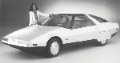
In June of 2002, this Ford Probe IV Concept was offered for sale at Christies Auction. It was estimated to sell for $15,000 - $25,000 but as the gavel fell for the third and final time, those estimates were put to shame as the high bid had reached $48,175 including buyer's premium. The lot was sold. This car is built on a working chassis though the engine is no longer functional. It has an adjustable ride-height system that is air-energized and is believed to be in workable condition. The windows are made of glass and the body is fiberglass. All four of the doors work and the interior has seating for four. This Prove IV Concept is showing signs of its age, as the paint is scratched and chipped. There is a crack on the left front fender and the interior is worn. Still, it is a remarkable engineering highlight that has a drag coefficient of 0.152, the same as the F-16 fighter.
By Daniel Vaughan | Dec 2008
By Daniel Vaughan | Dec 2008
Probe IV was in fact the third example of the Probe series. Probe II never appeared and Probe III was a concept created for Ford Europe which saw some of its features incorporated in the Merkur XR4Ti.
Probe IV advanced the state of aerodynamic art at Ford to a new level, going to great lengths to make its surfaces as smooth as possible and present the minimum frontal area. A low ride height minimized undercar airflow and the Probe IV went to the extent of creating a speed sensitive ride height and attitude system. Probe IV could assume a pronounced nose-down attitude at speed. In fact, the back of Probe IV could rise six inches while at the same time the nose dropped four inches at high speed, improving its stability and air penetration. The front air dam was also electrically controlled, compensating for attitude changes and driver controllable to compensate for rough surfaces.
Headlights were under plastic covers. Side windows were flush in their frames with small power operated panels at the bottom for ventilation and paying tolls. The radiator and air conditioning compressor were located at the rear in order to eliminate a high drag radiator opening in the front (or nose). A full belly pan smoothed the limited undercar airflow that the air dam and attitude control let through and the tires were specially-developed for Probe IV, skinny P155/75R-16 LDC Goodyear tires that even had a low drag tread pattern. Even the identification and emblems were flush with the Probe IV surface. The only interruption to exterior air flow were the outside mirrors, which were in faired-in and sharply swept back enclosures.
Mechanical innovations were required to meet Probe IV requirements including a highly sophisticated short MacPherson strut front suspension. Its front engine, rear drive chassis was powered by a 1.6 liter 4-cylinder turbocharged engine which was canted 70 degrees to the side to lower the hood.

One of Probe IV's most distinctive features are its fully-skirted wheels and tires which utilize membranes between the outer covers and the body. The membranes flex when the front wheels are turned and allow Probe IV to be driven normally, but drastically reduce wheel well turbulence and resulting aero drag.
The occupants of Probe IV sit in specially designed grey velour 'sling' style seats designed to provide lumbar and thigh support in a semi-reclining position which saves 1½ inches in roof height. Instruments are placed directly in front of the driver with other controls in elaborate black panels with white legends on each side of the wheel. The top of the single-spoke steering wheel is transparent. The transmission shifter and additional controls are placed on the center console.
Probe IV achieved a drag coefficient of 0.152, the same as the F-16 fighter, an extraordinary accomplishment particularly in view of its comfortable internal accommodations for four.Source - Christies
Probe IV advanced the state of aerodynamic art at Ford to a new level, going to great lengths to make its surfaces as smooth as possible and present the minimum frontal area. A low ride height minimized undercar airflow and the Probe IV went to the extent of creating a speed sensitive ride height and attitude system. Probe IV could assume a pronounced nose-down attitude at speed. In fact, the back of Probe IV could rise six inches while at the same time the nose dropped four inches at high speed, improving its stability and air penetration. The front air dam was also electrically controlled, compensating for attitude changes and driver controllable to compensate for rough surfaces.
Headlights were under plastic covers. Side windows were flush in their frames with small power operated panels at the bottom for ventilation and paying tolls. The radiator and air conditioning compressor were located at the rear in order to eliminate a high drag radiator opening in the front (or nose). A full belly pan smoothed the limited undercar airflow that the air dam and attitude control let through and the tires were specially-developed for Probe IV, skinny P155/75R-16 LDC Goodyear tires that even had a low drag tread pattern. Even the identification and emblems were flush with the Probe IV surface. The only interruption to exterior air flow were the outside mirrors, which were in faired-in and sharply swept back enclosures.
Mechanical innovations were required to meet Probe IV requirements including a highly sophisticated short MacPherson strut front suspension. Its front engine, rear drive chassis was powered by a 1.6 liter 4-cylinder turbocharged engine which was canted 70 degrees to the side to lower the hood.

One of Probe IV's most distinctive features are its fully-skirted wheels and tires which utilize membranes between the outer covers and the body. The membranes flex when the front wheels are turned and allow Probe IV to be driven normally, but drastically reduce wheel well turbulence and resulting aero drag.
The occupants of Probe IV sit in specially designed grey velour 'sling' style seats designed to provide lumbar and thigh support in a semi-reclining position which saves 1½ inches in roof height. Instruments are placed directly in front of the driver with other controls in elaborate black panels with white legends on each side of the wheel. The top of the single-spoke steering wheel is transparent. The transmission shifter and additional controls are placed on the center console.
Probe IV achieved a drag coefficient of 0.152, the same as the F-16 fighter, an extraordinary accomplishment particularly in view of its comfortable internal accommodations for four.Source - Christies
Related Reading : Ford Probe History
Unveiled in 1989, the Ford Probe was a coupe introduced by Ford to replace the Ford EXP as Fords sport compact vehicle. Completely based on the Mazda G-platform, the Probe used unique sheet-metal and featured an exciting interior. Sold worldwide as a sporty coupe, the Probe was created to fill the market niche that had earlier been filled by the Capri in Europe. The Probe was also considered as a....
Continue Reading >>
Continue Reading >>
- 1983 Ford Probe IV Concept Menu
- Article
- Image gallery
- Specifications
Recent Vehicle Additions


Related Automotive News

VOLKSWAGEN'S NEW TURBO ENGINES AND 2015 GOLF ON DISPLAY AT THE SEMA SHOW
Tuned Jetta sedans featuring new EA888 turbocharged TSI® engines on display in Las Vegas First North American tuned seventh-generation Golf debuts before market launch in 2014
Las Vegas, NV - With U.S. sales having more than doubled...
VOLKSWAGEN OF AMERICA REPORTS AUGUST 2013 SALES
- Best-ever August and year-to-date results for Passat and TDI® Clean Diesels
Best August and year-to-date for Passat with 10,194 and 76,364 units, respectively
Jetta Sedan delivered 13,508 units for the month
Tiguan delivered 2,948 units, marking...

Golf R Celebrates Its World Premiere At The Frankfurt Auto Show
Wolfsburg, 2 September 2013 –The most powerful Golf in the range excites with 296 horsepower and a 0 to 62 mph sprint time of just 4.9 seconds. The vehicles distinctive styling also highlights its sporty character.
The new Golf R was developed...
MODEL YEAR 2014: MORE EFFICENT, DOWNSIZED ENGINES AND AN EXTENDED R-LINE RANGE HEAD THE CHANGES
New 1.8-liter turbocharged and direct-injection TSI® engine to feature in Jetta, Beetle, and Passat, replacing the 2.5-liter five cylinder. R-Line® range expands to five models.
Jetta SE and SEL models are fitted with new 170-horsepower 1.8-liter...
VOLKSWAGEN BEETLE TURBO AND JETTA GLI RECEIVE POWER BOOST
- New EA888 Gen 3 engine, produced in Silao, Mexico, makes its U.S. debut
- Engine offers 10 hp increase over previous Gen 2 powerplant
- Beetle models have a manufacturer estimated fuel economy improvement of up to eight percent on the combined cycle
-...