Concept Cars Home
Image Left 1957 DB 2/4 MKIII1959 DB2/4 Image Right
 

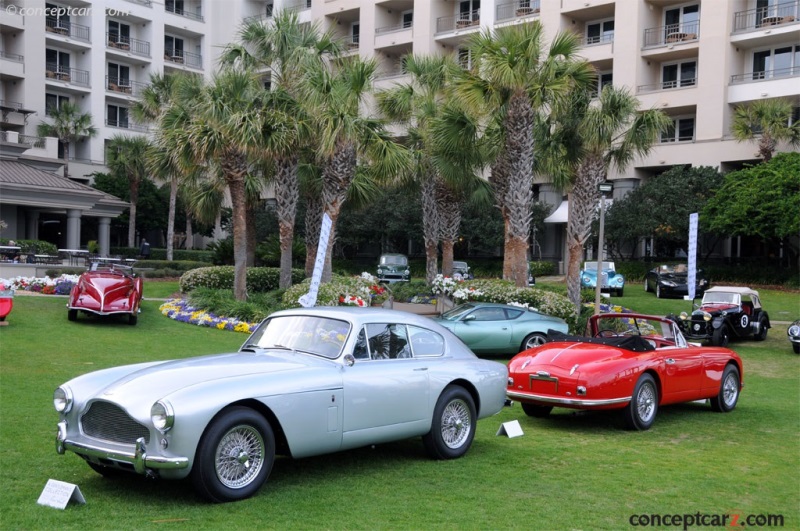
1958 Aston Martin DB2/4 MK III news, pictures, and information

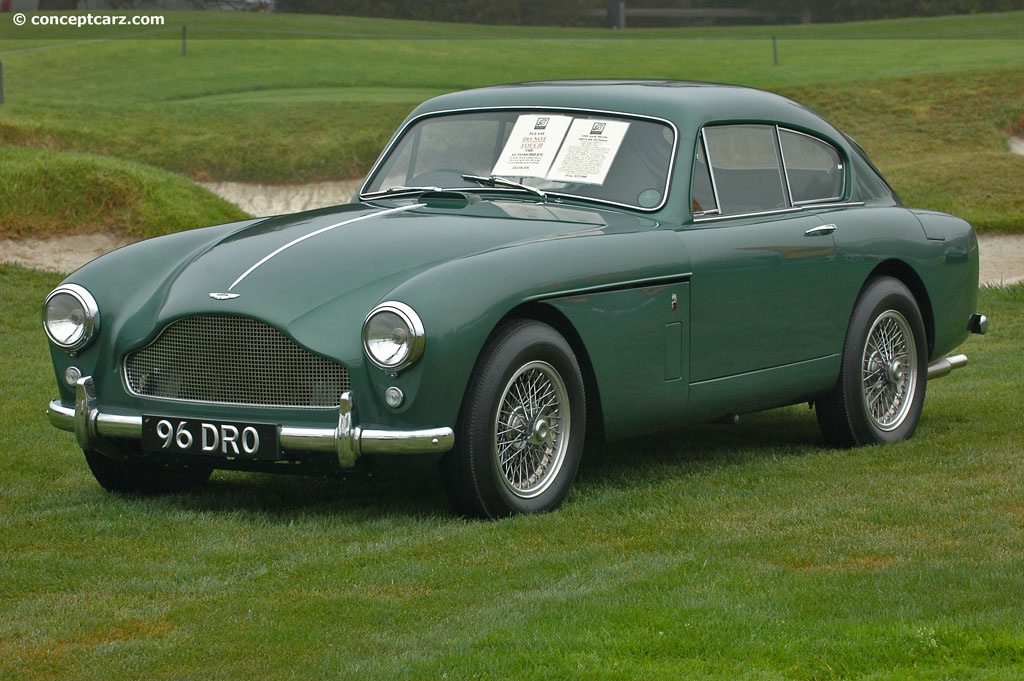
Fastback Coupe
Chassis Num: AM 300 3 1622
Engine Num: DBA 1234
 
High bid of $210,000 at 2012 RM Auctions. (did not sell)
Industrialist David Brown purchased Aston Martin in 1947 and provided much needed capitalization; Brown also bought the Lagonda marque and Lagonda's recently developed double overhead cam (dohc) 2580 cc six-cylinder engine. The resulting Aston Martin Lagonda Ltd. became a subsidiary of David Brown & Sons, a company that manufactured farm tractors. Brown's initials continued for decades as the Aston Martin ‘DB' series. As many car manufacturers did following the war, Aston Martin got very involved with motor racing and the marque's reputation for speed, style and dependability was established; in 1950 DB2 coupes finished 5th and 6th in the Le Mans 24-hour endurance race, and a succession of competition-built Aston Martin DB models including the DBR (R = Racing) models with top race finishes followed. The DB Mark III was introduced early in 1957 as the successor to the DB2-4 and continued through 1959 as the Mark IIIB. Tickford built bodies for the DB 2/4 Mark 2 and Mark 3 after David Brown bought the company in 1954; subsequently, AML moved to the Tickford Works, Newport Pagnell during the late 1950s.
Fastback Coupe
Chassis Num: AM300/3/1386
Engine Num: 1029
 
High bid of $197,500 at 2011 RM Auctions. (did not sell)
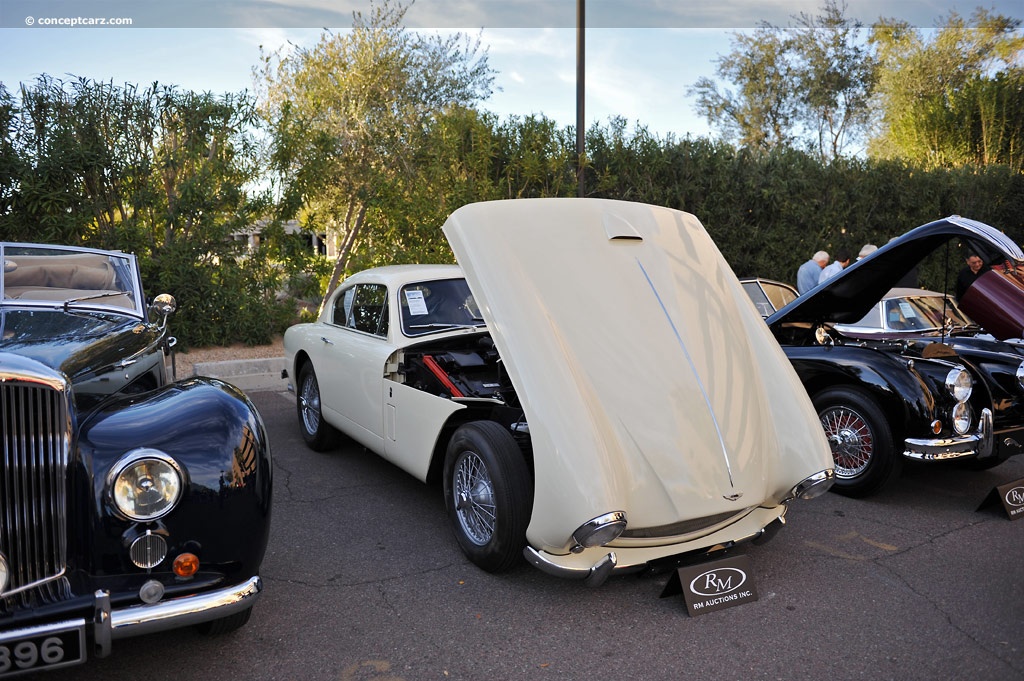
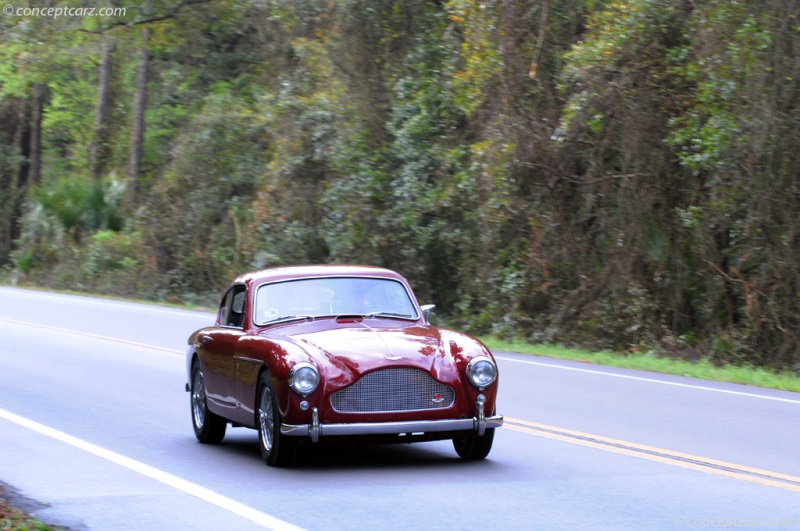
Some things are just too good to part with, or, touch for that matter. Some things, despite the incredible urge to take and touch and feel, are just better appreciated by what the eyes take in. The beautiful lines of the 1958 Aston Martin DB MK IIIA Coupe cause the eyes to stir the imagination all by themselves. Touch is not necessary.

Aston Martin's DB series is an icon in the automotive industry. David Brown acquired the company in the late 1940s and contracted Frank Freely to design a new model road car. In 1950, Aston Martin debuted its DB2. Throughout the 1950s, the DB2 went through various refinements. Each one seemed to create its own identity among enthusiasts. In 1953, the original DB2 became the DB2/4, which was a four-place saloon. Some of its noted variants were the Drophead Coupe and the Fixed Head Notchback. In 1954, the engine and car performance was the next area to be refined. A new 3.0 liter engine MK II variant, which produced 140 horsepower, was unveiled in 1955. The MK II continued in production until 1957 until it was replaced by the MK III. The DB MK III's engine was now capable of producing 178 bhp with optional dual exhaust outlets. Other refinements on the MK III included the reshaping of the grill on the nose. Its redesigned shape took after the DB3S sports car racing variant. Inside the car's interior, noted changes included the instrument cluster being placed directly in front of the driver. A technical change which took place in 1957 was that the 2/4 indication was dropped in favor of merely DB MK III.

The example up for auction at the 2011 RM Auction in Arizona has been considered a benchmark vehicle. Kevin Kay has been quoted as saying, this car is 'the template with which any DB2-series Aston should be compared for an authentic restoration.' The DB2 had been barely driven ever since it was first purchased in 1958. Like little shots of adrenaline, the car's one and only previous owner had only put 44,000 miles on the car.

The car includes a 162 bhp, 2,922 cc DBA in-line six-cylinder engine. It has dual overhead camshafts and dual SU carburetors. It touts a fully-synchronized four-speed manual gearbox, independent front suspension with coil springs, trailing arms, anti-roll bar, trailing link, coil springs and Armstrong lever dampers. The rear axle is a live Salisbury connected by trailing links and a transverse Panhard rod. The brakes for this car, though front-wheel Girling disc brakes were optional, are hydraulic drum brakes.

There are numerous amounts of original aspects to the car. This example was offered for sale in Southern California and sports a left-hand driving position. In addition to the left-hand drive that is somewhat unique, this car goes even further. The car still sports the original California 'black plate' issued with the sale of the car. The black plate itself is desirable to many collectors. The car has only had one previous owner since 1958 and was just sold in 2009!

The car's owners, when they purchased it after the death of its original owner, expected to have to restore the car to a certain degree. However, upon inspection, they found the car to be in rather good condition. It was tested and considered to track and drive still with a tight feel, as only a new car would. The chassis has retained much of its original ivory white finish. The seats have been re-covered as the original Connolly black-trimmed hides have been altered. Because of the fact the car is so historic its owners decided not to put the car through any restoration.

Since acquisition, the car has been entered into one classic rally to confirm that it runs as it should be expected. So much of the car is authentic. The car even comes complete with a copy of its original factory build sheet. The car has so many original, complete and irreplaceable aspects to it that it is truly belonging in a special class.

Source:
'Buy: Feature Lots (Lot 142: 1958 Aston Martin DB MK IIIA Coupe)', (http://www.rmauctions.com/FeatureCars.cfm?SaleCode=AZ11&CarID=r339). RM Auctions Arizona. http://www.rmauctions.com/FeatureCars.cfm?SaleCode=AZ11&CarID=r339. Retrieved 3 January 2011.

By Jeremy McMullen
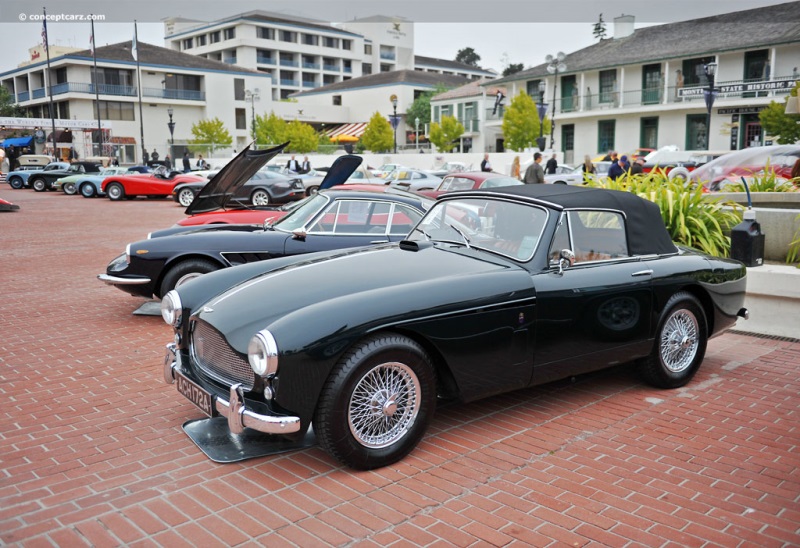
Drophead Coupe
Chassis Num: AM/300/3/1700
 
Sold for $247,500 at 2011 RM Auctions.
Aston Martin had derived its name from Lionel Martin and from Aston Hill near Aston Clinton in Buckinghamshire. Aston Martin would be founded in 1913 with the help of Robert Bamford and would begin life selling Singer automobiles on Callow Street in London. Martin was quite involved in racing, especially hill climbs, and would decide that he could make his own cars and sell them. The first would be produced in 1915.

Unfortunately, World War I would halt production as Martin had joined the Admiralty and Robert Bamford went into the Royal Army Service Corps. Everything of Aston Martin would be sold to Sopwith Aviation Company.

After the war, Aston Martin would again be re-birthed and would begin actually producing cars. However, financial trouble always seemed to plague the small company and its very existence was threatened many times. Then, once again, another World War would halt production of automobiles. However, at least this time Aston Martin would continue to exist, but now making aircraft components.

When Aston Martin emerged from war yet again, it would do so with a new owner. David Brown Limited would buy both Aston Martin and Lagonda. And under Sir David Brown, Aston Martin's 'post-war savior', Aston Martin would ascend to a whole different level of auto-making and reputation.

The ascendancy would begin with the DB2. A huge step over its predecessor, the dual overhead cam straight-six would be derived from a Lagonda engine and would make the small coupe quite a performer. In fact, the DB2 would become quite successful in motor races and would actually pave the way for the company future success and direction.

While the DB2 would right the ship and get it back on course, its next edition would be considered by some to be the wind that carried the company along. The next edition was, very simply, the DB Mark III, but it would end up being anything but simple.

The Mark III would be the ultimate refinement of the DB2 is just about every way. The bodywork would be redesigned, including the now very familiar grille. The redesigned grille, headlights and hood would take the design from a more classic golden age look into the realm of modern sports car almost overnight. The DB3 would have a new instrument panel and would even make Girling disc brakes available.

Almost everything about the new design would be appealing to the public. It had the look and it had the performance. Road & Track would praise the new design calling it, 'A car for connoisseurs'. This model variant would end up propelling Aston Martin into the future. And it would be this model variant, according to the novels, that would be associated with James Bond.

In total, 551 model DB Mark IIIs would be made. However, out of those 551 models there were a couple of variants that represented the cream of the litter. The rarest and most desirable of the DB3s would be its two coupe variants. One of those variants was the Drophead Coupe. The second was the Fixed Head Coupe. Only about five Fixed Head Coupes would ever be made. Only 84 Drophead Coupes would go on to be made.

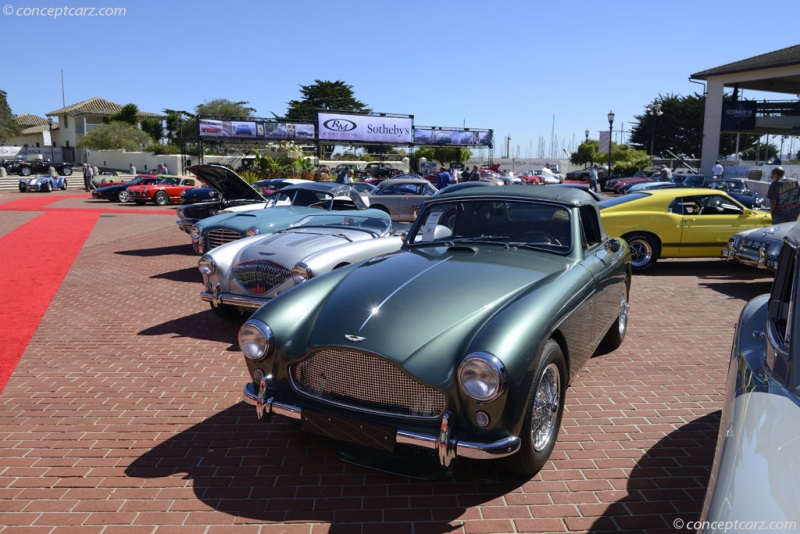
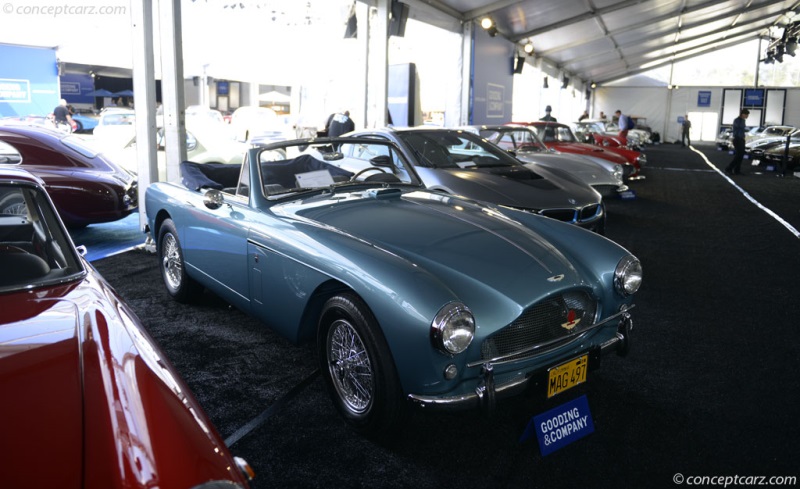
At the RM Auctions in Monterey, California one of those 84 Drophead Coupes would be up for sale. The 1958 Aston Martin DB Mark III Drophead Coupe, chassis number AM/300/1700, represents one of the ultimate refinements of the DB2. This DB3 marks the first actual post-war Aston Martin and is amongst the rarest of the fleet.

Complete with its Feltham, hand-built quality, AM/300/1700 would be delivered with its right-hand drive and Deep Carriage Green finish to Mr. Alfred W. McAlphine in September of 1958. The car would consist of such non-standard equipment as a Laycock overdrive and a twin exhaust system. The car would also come with a 178 bhp, 2.9-liter inline six-cylinder engine with dual SU carburetors. The front wheels would feature hydraulic disc brakes and 'Alfin' drums on the rear. Such a car would be capable of going zero to 60 mph in 9.3 seconds and could touch 120 mph.

Over the years the car would have a few owners. Most currently the property of Bernie Madoff, the car would be driven but the number of miles would be minimal. This would be validated by an inspection in 2008 that found only around 30,500 miles on the car.

Showing some signs of wear, the chassis still sports its Deep Carriage Green finish and period-style wire-spoke wheels and Michelin 'Sport Pilote' X tires. The interior had been re-trimmed with tan leather upholstery, and, had its convertible top replaced with a newer black model.

In spite of its wear, AM/300/1700 is still one of just 84 Drophead Coupe DB3s ever to be produced. It is rare and it is certainly a part of Aston Martin's rise to elite status. In many ways, Aston Martin owes its existence to the DB Mark III, like this one.

AM/300/1700 was expected to earn between $200,000 and $250,000 at auction.

Sources:
'Featured Lots: Lot No. 130: 1958 Aston Martin DB Mark III Drophead Coupe', (http://www.rmauctions.com/featurecars.cfm?SaleCode=MO11&CarID=r182&fc=0). RM Auctions. http://www.rmauctions.com/featurecars.cfm?SaleCode=MO11&CarID=r182&fc=0. Retrieved 18 August 2011.

Wikipedia contributors, 'Aston Martin', Wikipedia, The Free Encyclopedia, 15 August 2011, 12:58 UTC, http://en.wikipedia.org/w/index.php?title=Aston_Martin&oldid=444967566 accessed 18 August 2011

Wikipedia contributors, 'Aston Martin DB Mark III', Wikipedia, The Free Encyclopedia, 4 June 2011, 16:22 UTC, http://en.wikipedia.org/w/index.php?title=Aston_Martin_DB_Mark_III&oldid=432537515 accessed 18 August 2011

Wikipedia contributors, 'Aston Martin DB2', Wikipedia, The Free Encyclopedia, 17 June 2011, 15:19 UTC, http://en.wikipedia.org/w/index.php?title=Aston_Martin_DB2&oldid=434776149 accessed 18 August 2011

By Jeremy McMullen
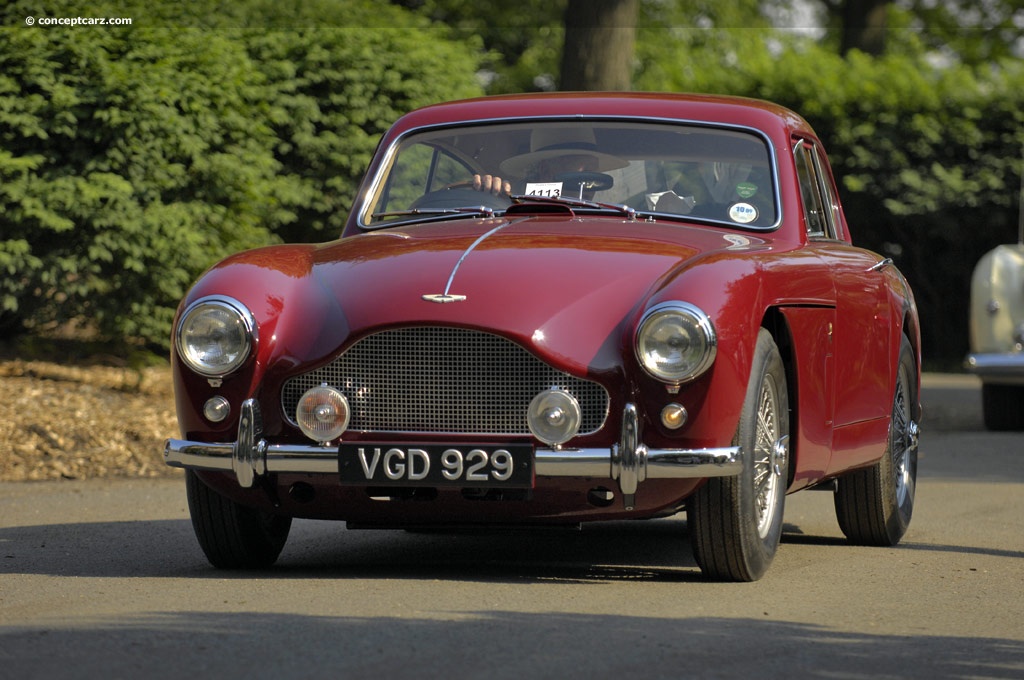
Fastback Coupe
 
The DB Mark III was introduced in 1957. It featured several refinements over its predecessor, including a reshaped front grille and optional dual exhaust outlets. The instrument cluster was relocated-directly in front of the driver.

The 2922cc DBA inline six-cylinder developed 162 horsepower (178 horsepower with the optional dual exhaust outlets). The motor features dual overhead camshafts as well as dual SU carburetors.

The engine is mated to a four-speed manual gearbox. The chassis features independent front suspension with coil springs, trailing arms, anti-roll bar, trailing link and Armstrong lever dampers.

This Aston Martin was purchased new by Eugene M. Smith, who designed the 1949 Ford coupe. His friend, Robert Gucci, supplied the leather for the car. The car was acquired by the current family in 1962 and driven daily until 1976.
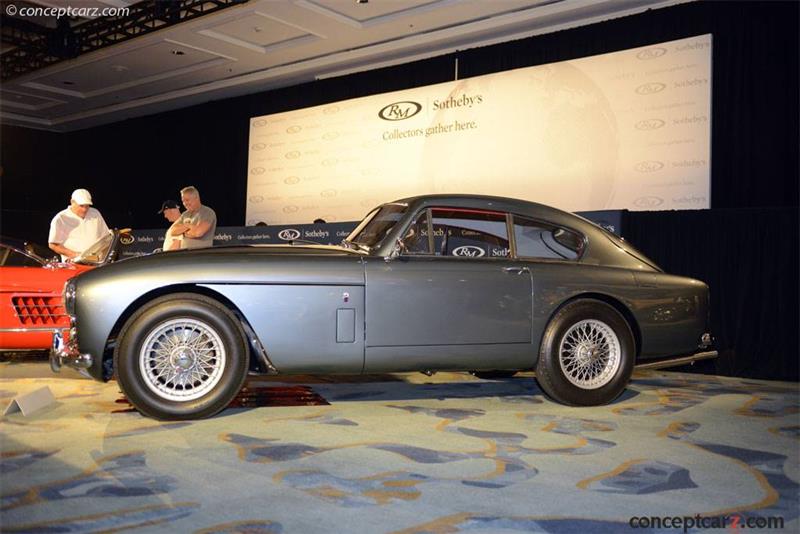
Fastback Coupe
Coachwork: Tickford
Chassis Num: AM 300/3/1333
Engine Num: DBA/959
 
Sold for $129,250 at 2012 Gooding & Company.
Sold for $209,000 at 2012 Gooding & Company.
Aston Martin built 551 examples of the DB Mark III during its three-year run, lasting from 1957 through 1959. These were hand-built vehicles and approximately 310 were exported to the United States.

Aston Martin chose the Geneva Auto Show in 1957 to introduce their DB Mark III model. They served as a model update of the successful DB 2/4 and were the final model based on the Claude Hill-designed chassis of 1948. In mid-1959, the Aston Martin product line was completely reconceived with the introduction of the DB4.

This DB Mark III was ordered through Peter Satori exotics dealership in Pasadena, California and delivered on January 17th of 1958. It was originally finished in black with red interior and its first owner was a resident of Beverly Hills. It was later sold to Mr. G. Bartell in Manhattan Beach before entering the care of Gene Young of Costa Mesa, California. The car would remain with Mr. Young for over three decades. When it was finally sold from the Young estate, it had been parked for many years and, though thoughtfully stored, was in need of significant mechanical attention. It was given a new set of five correct Dayton wire wheels with new Avon Turbospeed tires. The clutch master and slave cylinders have been refurbished and the cooling system has received similar attention.

Power is from a 6-cylinder, 2922cc dual overhead cam engine fitted with Twin SU carburetors and offering 162 horsepower. There is a four-speed manual gearbox and four-wheel hydraulic drum brakes.

In 2012, the car was offered for sale at the Gooding & Company auction held in Scottsdale, Arizona. It was estimated to sell for $150,000 - $220,000. As bidding came to a close, the car had been sold for the sum of $129,250 inclusive of buyer's premium.

By Daniel Vaughan | Jan 2012
The DB name came from the name David Brown (later Sir David Brown), an individual who had purchased the Aston Martin Company.
The DB series was built from 1950 through 1953 with only 411 examples being produced. Power was supplied by a W.O. Bentely designed Lagonda six-cylinder engine that was capable of producing 116 bhp and could propel the car to a top speed of 117 mph. The zero-to-sixty time was around 11.2 seconds. The Vantage series received 125 bhp.

The two-seater DB2's were available in two body styles, the coupe and drophead.

In 1953, the DB2/4 MK1 became available. This series featured a four seater, 2+2, saloon or drop head body style. The design went through minor changes with the most notable changes appearing in the front of the vehicle. The early versions of the vehicle featured a hatchback rear window.

The DB2/4 MK1's were originally powered by a 2.6 liter Vantage engine but was later replaced with a 3-liter, 140 bhp engine that was not only more powerful, it was heavier.

The MK1 series ended in 1955 with 565 examples being produced, 73 being dropheads.

The DB2/4 MK2 series began in 1995 and would continue until 1957. During this time frame, 199 examples were produced. There were two body styles available; a coupe and a convertible. Both had 2 doors and 4 seats. A hardtop style saloon was also available although less than 35 were produced.

Most MK2's were mechanically similar to the MK1's, however, later version received engine modifications that included larger valves and different cam shafts. The horsepower output was increased to 165.

In 1957, Aston Martin introduced the final derivation of the DB2 series, the DB MK III. It would continue production until 1959 and amass a production total of 551 units. It was offered in Saloon or Convertible body styles and consisted of 4 seats. The base engine produced 162 horsepower, propelling the vehicle to a top speed of 120 mph.

By Daniel Vaughan | Mar 2006
The first Aston Martin was built in 1913 by London Singer dealers Robert Bamford and Lionel Martin. It was comprised of a Coventry Simplex engine and an Isotta Fraschini chassis. They were later joined by Count Louis Zborowski, who provided finical backing and was an avid racer. Under the patronage of Augustus Bertelli, the legacy of Aston Martin continued to grow in motorsports throughout the years. Motorsports was expensive, and by 1925 the company had entered into receivership, a trend common to the company throughout its lifetime.

In 1926 the Aston Martin Motors Ltd. was incorporated with A.C. (Bert) Bertelli as one of the new directors. With the help of Bertelli, the company weathered the run years and the various financial backers. To many, Bertelli is the father of Aston Martin and some of the greatest pre-War era cars were created under his guidance. Their Ulster and 1.5-liter cars enjoyed much success including at the 24 Hours of LeMans.

A.C. Bertelli left Aston Martin in 1937, soon after the arrival of the new 2-liter car. This car was a shift in the way the company did business, as it was less sporty and marketed more towards civilized driving. In 1939 the company introduced a prototype designed by Claude Hill dubbed the Atom. It was comprised of a steel spaceframe chassis and given a four door sedan body. When gearbox manufacturer David Brown was given the opportunity to drive the Atom in 1947, he decided to buy the company.

The Atom was a slightly odd looking vehicle but possessed many modern features which would become the starting-point for many new models in the years to come. Aston Martins push-rod engines, however, were deemed inadequate by Mr. Brown. Rather than creating a new engine design he simply purchased Lagonda and the rights to produce the W.O. Bentley designed twin-cam six-cylinder engine. This engine would become the basis for Aston Martin engines in the years to come, and would give the company many podium finishes.

While negotiations were still in process with Lagonda, a small number of two-liter Aston Martins were created based on the Atom design. At the time, they were called 2-Liter Sports; in modern times they are commonly referred to as the DB1.

A six-cylinder Aston Martin racer made its racing debut at the first 24 Hours of LeMans in the post-War era. The production version was show in April of 1950 at the New York Auto Show. It was called the DB2 and powered by a 2.6-liter Lagonda six clothed in a two-door coupe body designed by Frank Freely. The design was well received by the public and it appeared as though financial stability would soon become part of the company's lineage. The small factory struggled to keep pace with the demand for the new coupe as more interest was created by the Works DB2s as they scored several important victories including first and second in class at LeMans in 1950.

The first fifty cars created had large grilles which were later removed. In 1951, the Vantage model was introduced which was an upgraded version of the DB2. The DB3 became the company's racing entrant while the DB2 was their road going model.

The two-seater DB2's first major update came in 1953 when it was given two rear seats and a name change to DB2/4. This, as was the DB2, was available in either fixed or drop head configuration. Several chassis were delivered to custom coachbuilders to be fitted with unique creations orchestrated by customers desires and demands. Among them were the 'Wacky' Arnolt commissioned Bertone Spiders which were very attractive and equally as popular.

Though meant for the road, the DB2/4 models were used by privateers in many various sporting events with much success. This inspired the Works to prepare three examples for the Rallye Monte Carlo in 1955. Their efforts were rewarded with a first in class and a Team Prize.

Another major revision occurred in 1956 with the introduction of the DB2/4 MKII featuring a three-liter version of the six-cylinder engine producing 140 horsepower. An even more powerful version was available, featuring a high-lift camshaft, larger valves, and 165 horsepower. Coachbuilders were still given the opportunity to create their versions of the car. The most memorable was a Touring created Spyder shown at the 1956 Earls Court show in London. Three additional orders were placed but never materialized. Nevertheless, this would be the start of a relationship between the British based Aston Martin Company and the Touring Coachbuilding firm, resulting in spectacular creations throughout the years.

The fourth and final update to the DB2/4 was the MKIII, also known as the DB MK III, introduced in 1957. The basic design of the prior DB cars was retained, as it had proven to be very popular and versatile. The most noticeable change was to the front which received a revised frontal region. The big changes occurred elsewhere, with the vehicles mechanical components, including the standard 162 horsepower engine and front disc brakes. Both of these changes greatly improved the vehicles performance and handling capabilities.

In 1958 the DB2 Series was replaced by the DB4 which were powered by a 3.7-liter version of the six-cylinder engine.

By Daniel Vaughan | Oct 2007
Magnificent Series of Coachbuilt Classics To Grace RM's Amelia Island Concours D'Elegance Sale
• RM Auctions returns as the official auction house of the Amelia Island Concours d'Elegance, March 9, 2013 • Single-day sale features breathtaking roster of more than 80 investment-quality collector cars • Notable highlights include an outstanding series of coachbuilt classics headlined by a multi-million-dollar 1935 Duesenberg Model SJ Walker-LaGrande Convertible Coupe and a trio of Cords from the personal collection of Jim Fasnacht • Frequently updated list of entries available online at r...[Read more...]
Breaking news from Coys
1966 AC Shelby Cobra - Now selling at No Reserve! Coys are pleased to announce that a 1966 AC Shelby Cobra will now be selling at No Reserve later today at the Autosport International show at the NEC in Birmingham. Featured on the front cover of Classic & Sportscar magazine in September 2012, this Cobra is beautifully presented in Rangoon Red paintwork with black leather upholstery and hood and tan tonneau and sidescreens, and the car still displays a delightful patina. The 427ci b...[Read more...]
Barrett-Jackson Flavors Its January Scottsdale Auction With NASCAR Treats
• RACING HERITAGE, HIGH PERFORMANCE ARE RECIPES FOR CAR-COLLECTING FEAST
• SPEED™ SET FOR 39 HOURS of LIVE COVERAGE STARTING JAN. 15
The great Henry Ford once said, 'Auto racing began five minutes after the second car was built.' And for more than 60 years, there are few entities that better represent auto racing in America than NASCAR. From the hallowed grounds of Daytona International Speedway, to Sonoma, California's intricate and picturesque road course, the sp...[Read more...]
Allard Automobiles Featured at 2012 Glenmoor Gathering
Allard automobiles will be one of the featured marques at the 2012 Glenmoor Gathering. More than 20 Allard automobiles are expected to be on display during the Glenmoor Gathering weekend. Allards featured lightweight bodies built in England but were usually fitted with big American engines, resulting in a terrific power to weight ratio. Shown above at last year's Glenmoor Gathering is an award-winning 1950 Allard J2 roadster owned by David K. Hans of Barrington, Illinois, that was displayed in...[Read more...]
Legendary Tucker Automobiles on Display at 2012 Glenmoor Gathering
Several 1948 Tucker Automobiles will be part of the show field at the 2012 Glenmoor Gathering, including an unrestored Tucker from the Gilmore Car Museum Collection (above). A total of 51 cars were built before production stopped and most of them survive today. The distinctive car-the brainchild of Preston Tucker-was designed by Alex Tremulis. In all, more than 200 vintage and classic American and European automobiles and motorcycles will be on the show field. The motorcycle class will f...[Read more...]

Arrow Right 1958 Aston Martin models
Aston Martin DB4
Aston Martin DB4 GT

Similar Automakers
BentleyBugatti
DevonFerrari
GTAKoenigsegg
LamborghiniLotus
MaseratiMaybach
McLarenPorsche
Rolls-RoyceSpyker
Tesla
Similarly Sized Vehicles from 1958
Alfa Romeo 2000
Aston Martin DB4 GT
Beutler 356B
BMW 507
Jaguar Tojeiro D-Type
Jaguar XK150
Lancia Aurelia
Maserati 3500 GT
Porsche 356A
Volkswagen Karmann-Ghia

Similarly Priced Vehicles from 1958
Aston Martin DB4 ($7,475-$7,475)
Mercedes-Benz 220S ($4,300-$7,630)
Cadillac Series 62 ($4,780-$7,500)

Average Auction Sale: $167,990

 
Aston Martin: 1951-1960
Similar Automakers
Other models by Aston Martin

Related Articles and Event Coverage
Gooding and Company - Pebble Beach Auction
Gooding and Company - The Scottsdale Auction
RM-Automobiles of Arizona
Glenmoor Gathering of Significant Automobiles
RM Auctions at Monterey
Automobiles of Arizona by RM Auctions
Greenwich Concours d'Elegance : European Car Display
The Blackhawk Collection at Pebble Beach
Pebble Beach Concours d'Elegance
2006 Blackhawk Collection


15/98
2 litre C-Type
2-Liter Type A Speed Model
Aston V8
Cygnet
DB2
DB3
DB4
DB5
DB6
DB7
DB9
DBR1
DBR9
DBS
Lagonda
Le Mans
Mk II
One-77
T-Type
Ulster
V12 Vantage Roadster
V12 Zagato
V8 Vantage
Vanquish
Virage

Image Left 1957 DB 2/4 MKIII1959 DB2/4 Image Right
© 1998-2012. All rights reserved. The material may not be published, broadcast, rewritten, or redistributed.