Concept Cars Home
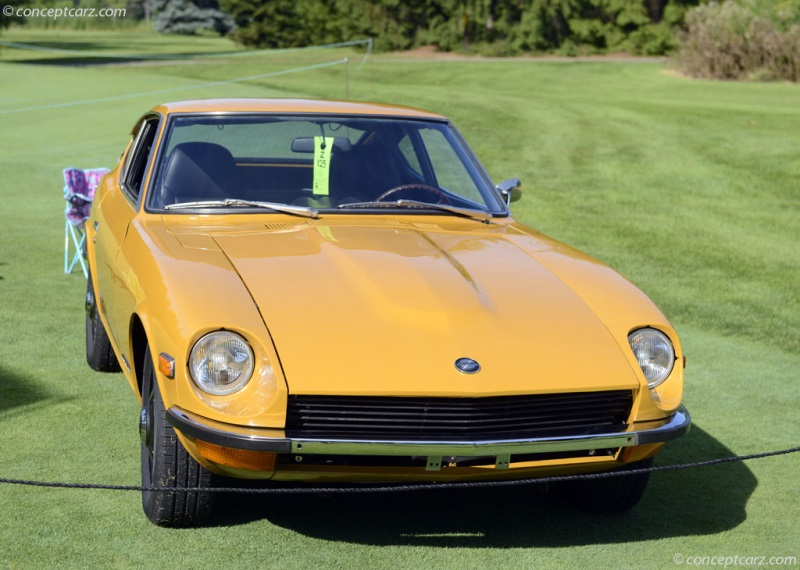
Image Left 1969 240Z-G1971 240Z Image Right
 

Image credits: © Datsun.

1970 Datsun 240Z news, pictures, and information

Coupe
Chassis Num: HLS30-05835
 
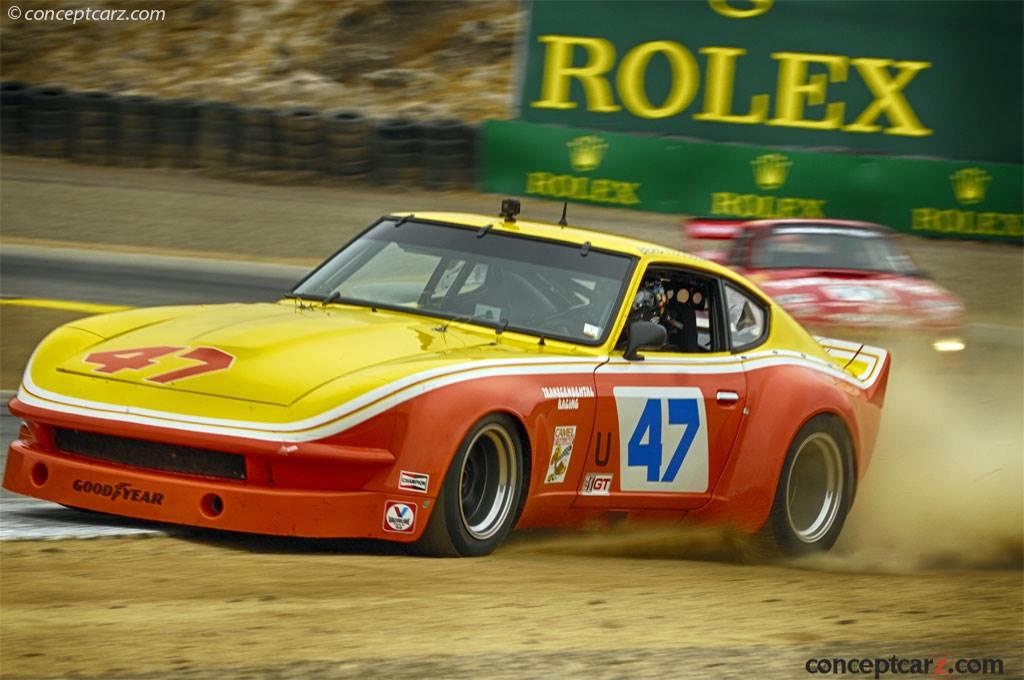
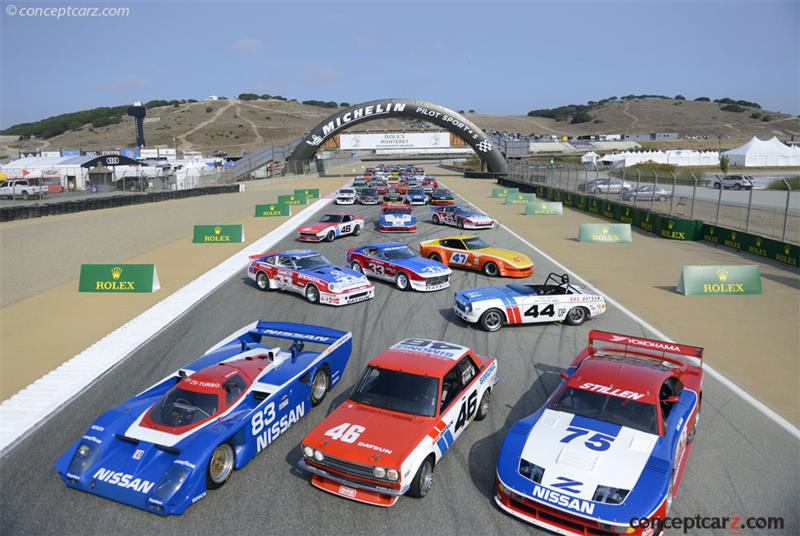
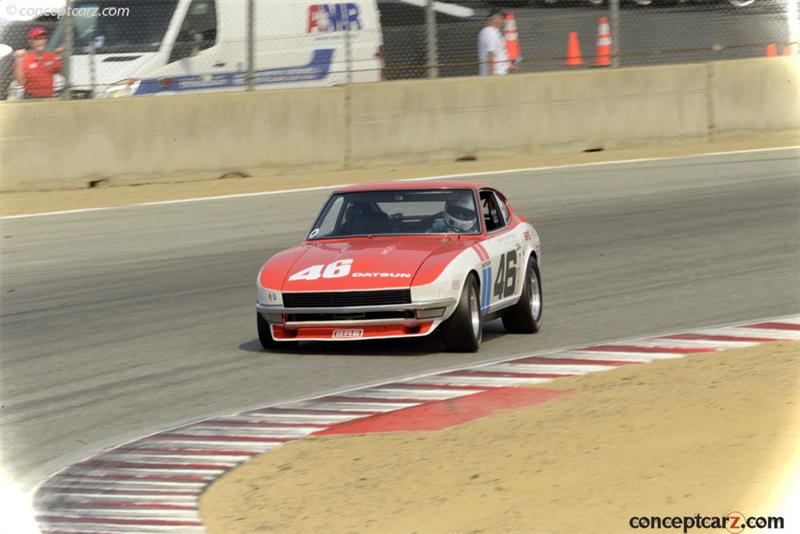
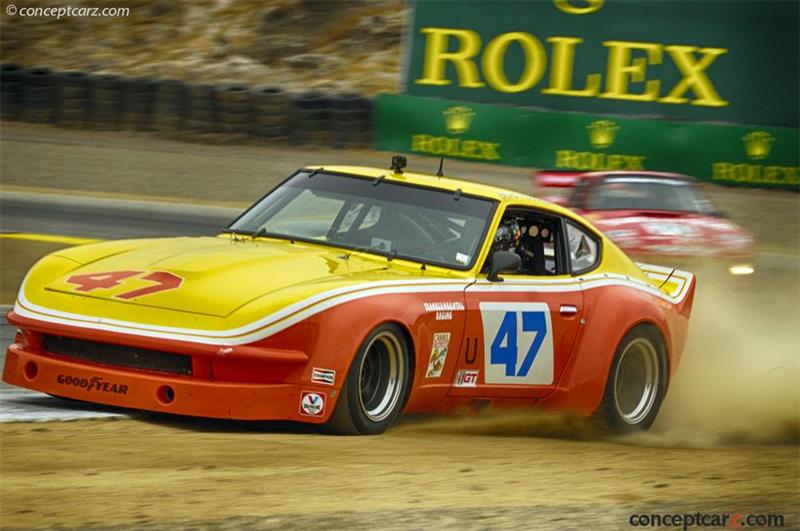
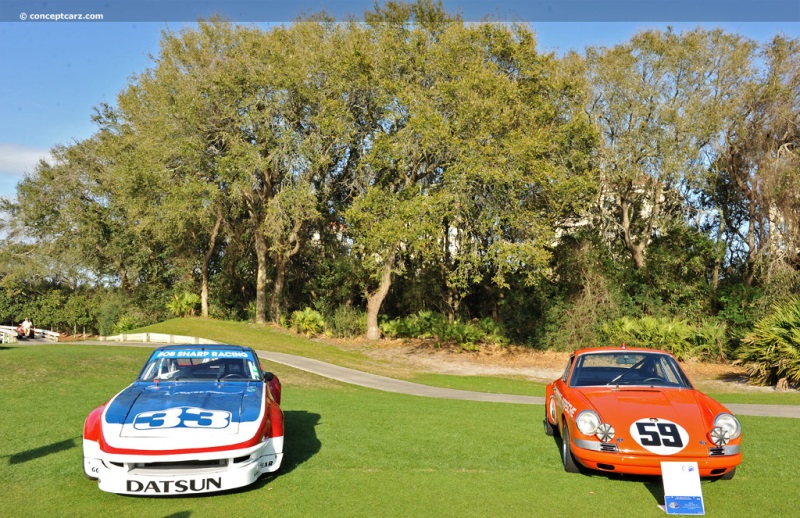
This Datsun 'Z' started its racing career in the stable of Bob Sharp Racing competing as a Datsun 240Z in the C Production championship in this chassis and the IMSA GTU title in another chassis. In April 1976, the first IMSA GTU Z car was destroyed in a high speed crash at Road Atlanta. This 1975 C Production championship car was hastily converted to IMSA trim in time for the next two rounds in California. After another incident at Lime Rock, Bob Sharp turned the driving over to Elliot Forbes-Robinson for the remainder of the season. For the 1977-78 season Sam Posy was hired to race in IMSA for Bob Sharp Racing. Sam set lap records at many venues including Lime Rock, Mid America, Pocono, Sears Point, Daytona, Mid Ohio, Road Atlanta and Talladega. The battles for the GTU wins between Walt Mass and Sam Posey became known as the 'Walt and Sam' show. Mechanical failures denied Sam the GTU titles both years by a narrow margin. Posey later raced this chassis HLS30-05835 for National Treaty Services in IMSA for the 1979-80 season along with Fred Stiff. Other drivers of note include Paul Newman.
The 240Z was not a new idea. Sturdy engineering, excellent performance, low price, attractive styling, and average interior had been achieved by many manufacturers prior to the Z-car. The reason the 240Z car was so great was because it capitalized on all these criteria and perfected the concept of a low-cost, reliable, sports car. Mr. Yutaka Katayama is considered the 'Father of the Z Car' and is responsible for the design and creation of this legendary vehicle. As recognition of his contributions to the automotive world, in 1998 he was inducted into the Automobile Hall of Fame.

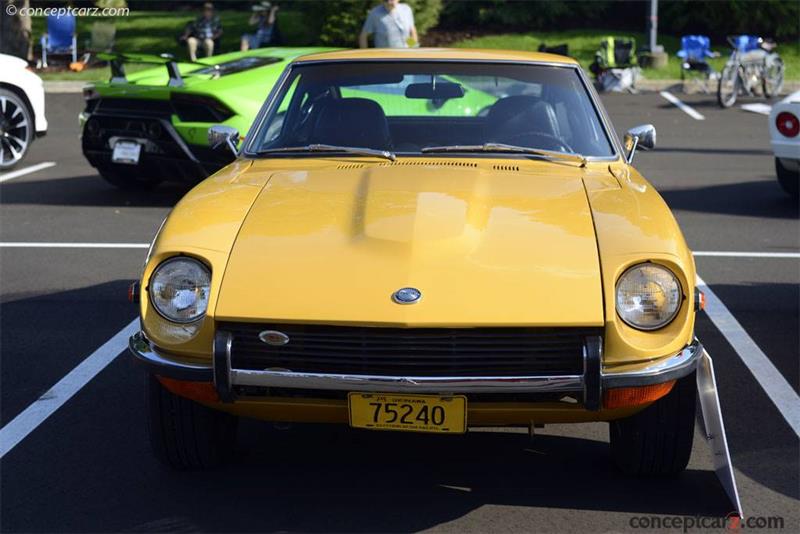
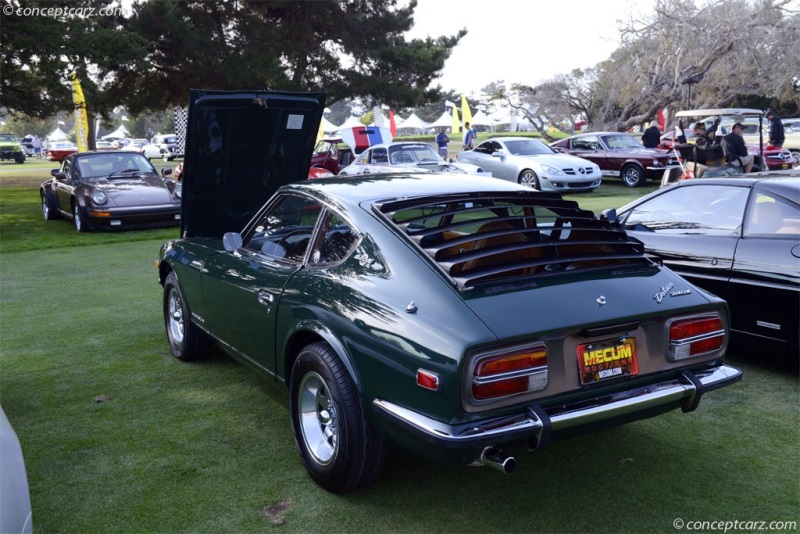
The Datsun 240Z was introduced in 1969 as a 1970 model. The engine was a derivation of the Datsun 1600. The Datsun 1600 engine was a copy of the 1960's six-cylinder Mercedes-Benz 220 engine, but with two less cylinders. By adding two extra cylinders in the 240Z the cylinder count was back to six. With 151 horsepower and 146 pound-feet of torque the vehicle could propel from zero-to-sixty in eight seconds. The independent suspension and the rack-and-pinion steering added to its quick response, performance, and handling. The front disc brakes brought the car to a stop from high speeds in just seconds. With a price tag of just over $3,500, it cost much less than anything else on the market. Due to demand, a year later Kelly Blue Book rated the value of a used 240Z at $4,000.

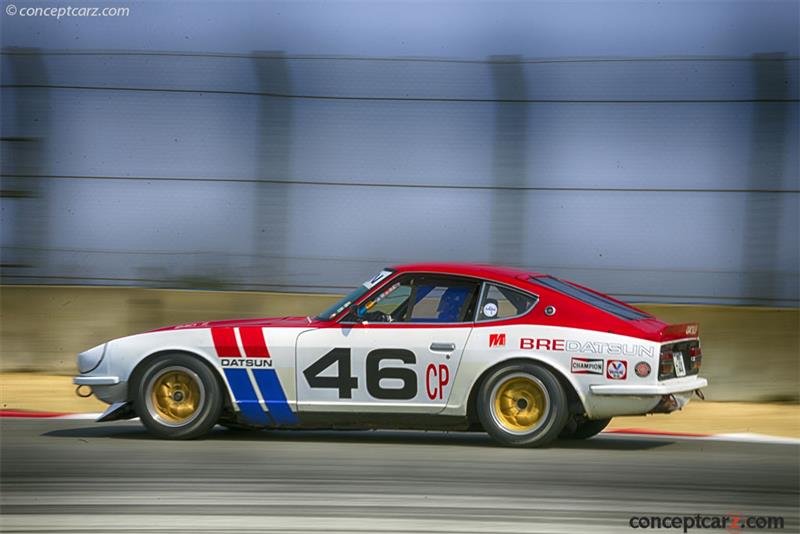
The 240Z dominated the SCCA (Sports Car Club of America) C-class production category for 10 years ranging from 1970 through 1979. In 1970 and 1971 John Morton, driving for Brock Racing Enterprises, was the first to claim victory in SCCA C-Class production racing using a 240Z. Bob Sharp claimed his first win in that category in 1972 and again in 1973 and 1975. Walt Maas continued the streak in 1974. The Z-car competed in the IMSA (International Motor Sports Association) where it captured many victories, including the IMSA GTU title. In 1982, Devendorf and his Electromotive racing team win Datsun's first ever IMSA GTO championship.

In 1985, Paul Newman set 10 track records in a 280ZX Turbo.

In 1994, a race-modified Z car won the 24 Hors of Daytona and the 12 Hours at Sebring. It also captured the GTS Class at the 24 Hours of LeMans, making it the only car ever to accomplish such a record within the same year.

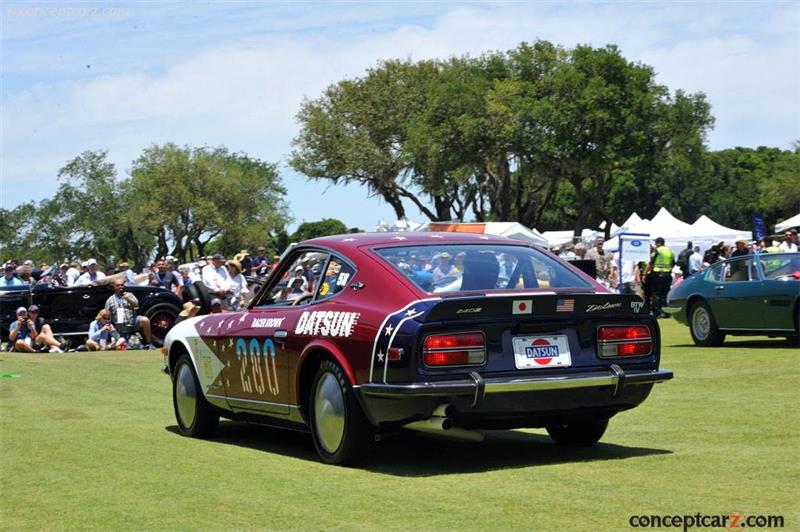
In 1974, the engine displacement was increased to 2.6 liters and the vehicle was dubbed the 260Z. This brought an end to the 240Z series which had sold 116,712 examples during its life-span. The United States emissions regulations were increasing every year. Thus, the 260Z had less horsepower than its predecessor and was rated at 139.

The 260Z was available in 2+2 configuration. With the fold-down rear seats, the 260Z offered a higher level of practicality over the 240Z. During its first and only model year, 63,963 examples were produced giving it the all-time Z-car sales record to date.

In 1975 the displacement was increased to 2.8 liters and the vehicle dubbed the 280Z. A Bosch L-Jetronic fuel injection system was included which helped bring increase the horsepower to 149.

In 1977, the horsepower rating was 170. A five-speed overdrive transmission was now offered, giving the vehicle better performance and fuel economy. The sales of the Z car once again hit a record high, with 67,331 units sold.

In 1979, the second generation of the Z-car was introduced as the 280ZX. It was more refined and luxurious than the previous Z's. The formula was correct and it was named Motor Trends 'Import Car of the Year'. A new all-time sales record was achieved with 86,007 units being sold.

In 1980, over 500,000 cumulative American Z-cars had been sold. It had reached the half-million sales mark faster than any other sport car. A new T-bar roof option was now being offered.

To add to the appeal and performance of the 280ZX, a turbocharged engine became available in 1981. Sales continued to remain strong through 1983.

In 1984 the third generation of the Z-car was introduced and was dubbed the 300ZX. It featured distinct styling and a new 3.0 liter V6 engine. The normal-aspirated engine produced 160 horsepower, while the turbocharged version offers 200 horsepower.

In 1989, the American automotive economy was continuing to evolve. Minivan's and sport utility vehicles were gaining in popularity. In response, Nissan introduced the fourth-generation Z-car in 1990. The new 300ZX featured improvements both mechanically and aesthetically. Under the hood sat an all-new DOHC 3.0-liter engine with a horsepower rating of 222. A twin-turbocharged version of the engine was available and brought the total horsepower output to 300. The body of the vehicle had been improved giving it a more aggressive stance.

Motor Trend awarded the Z00ZXTT 'Import Car of the Year' and 'One of the Top Ten Performance Cars'. Automobile Magazine honored the car with 'Design of the Year' and was added to its 'All Stars' list. Not to be outdone, Road & Track named the car 'One of the Ten Best Cars in the World'. Car and driver named it 'One of the Ten Best Cars'.

During the 1990 model year the one-million sales mark was achieved making it the all-time best selling sports car. The car continued to receive great reviews and awards by Magazines and publications. The year 1995 marked the 25th Anniversary of the Z-car. To commemorate this occasion, a limited edition was produced with the help of Steve Millen Sport Cars.

In 1996, the production of the Z-car ceased in North America. Decreasing Sales figures, and increased smog regulations and production costs were to blame. The price of the twin-turbo 300ZX was priced at $45,000, a cost that was to expensive for most consumers. Production of the Z-car continued in Japan until 1999, although it had undergone a major redesign in 1998.

In August of 2002, Nissan introduced the 350Z. This six-gear, two-seater was the fifth generation of the Z-car. Offered in five trim packages that included Base, Enthusiast, Performance, Touring, and Track Editions, the vehicle was an instant success. Base price was around $26,000 with the fully-loaded Track option costing over $34,000. Aesthetic and performance upgrades were available through Nismo, Nissan's motorsport and performance division.

In 2004, a roadster option was offered. The roadster was available in two trim packages which included the Enthusiast and Touring editions.

A special 35th Anniversary model was released in 2005 featuring twice the output of the original 1969 model.

Sales figures, race results, and satisfied customers have proven this to be one of the best sports vehicles ever produced.

By Daniel Vaughan | Jan 2007
For more information and related vehicles, click here

BMW of North America Adds Support to RRDC Evening with Brian Redman
HILLIARD, Ohio (April 16, 2013) - BMW of North America, LLC, will support the RRDC Evening with Brian Redman presented by Firestone at the Road Racing Drivers Club's fifth annual West Coast banquet on April 18, held prior to the Toyota Grand Prix of Long Beach (Calif.). Redman raced for BMW in 1975 and '76, winning the 12 Hours of Sebring in 1975 (with co-drivers Hans Stuck, Sam Posey and Allan Moffat), the first year of BMW's official foray into American sports-car racing. He also won...[Read more...]
BMW TO BE FEATURED AT SARATOGA AUTOMOTIVE MUSEUM
• BMW History and Heritage on four wheels and two on display from May – November, 2013
Woodcliff Lake, NJ – March 8, 2013… BMW's rich heritage will be showcased at the Saratoga Automobile Museum in an exhibition called 'BMW – The Ultimate Driving Machine.' The exhibition, which will feature a retrospective of BMW cars and motorcycles, will run from May 6 – November 3, 2013. The array of BMW automobiles will include road cars and race cars, both from the modern era, as well as p...[Read more...]
YOKOHAMA TIRE CORPORATION GEARS UP FOR THE 2013 MOTORSPORTS SEASON
Plans include a new team in the ALMS GT Class and continued efforts in the GTC and GT3 Challenge series, off-road racing and drifting FULLERTON, CA (March 7, 2013) – From desert racing to drifting, Porsche 911 GT3 to Ferrari 458, Yokohama Tire Corporation (YTC) is busy tuning up for the 2013 racing season. 'This will be an exciting year,' said Andrew Briggs, YTC director of product planning and motorsports. 'We have a new ALMS partner, a historic teaming in off-road and a strong, over...[Read more...]
THE VIPER GTS-R IS BACK IN 2012
•Two identical SRT Viper GTS-R race cars will compete in this weekend's American Le Mans Series event at the 2.54-mile Road Atlanta circuit. •The driver lineup for Petit Le Mans: Tommy Kendall and Marc Goossens will be joined by Jonathan Bomarito in the No. 93 Pennzoil Ultra Viper GTS-R. Dominik Farnbacher and Kuno Wittmer will share driving duties with Ryan Hunter-Reay in the No. 91 Hewlett Packard Viper GTS-R. •This is the first on-track, factory-based participation for the SRT Viper GTS-R...[Read more...]
BMW North America Chairman to Drive One of Three BMW-Owned Cars in Rolex Monterey Motorsports Reunion
It's not every day that the chairman of an automobile company swaps his suit and tie for a Nomex driving suit and straps himself into a race car, but that's Ludwig Willisch's style. As head of BMW North America, Willisch will pilot a 1975 BMW 3.0 CSL at the Rolex Monterey Motorsports Reunion August 17-19 at Mazda Raceway Laguna Seca. The BMW 3.0 CSL that Willisch will be driving is one of only five team cars campaigned by BMW North America in 1975 and 1976, winning IMSA races at Sebring, Maz...[Read more...]

Arrow Right 1970 Datsun models
Datsun 1200
Datsun 2000
Datsun 510

Similarly Sized Vehicles from 1970
Alfa Romeo Giulia Super
Datsun 510
Ferrari Dino 246 GT
Fiat 124
Lancia Fulvia
Lotus Elan
Lotus Europa
Porsche 911 ST
Porsche 911E
Porsche 911S

Similarly Priced Vehicles from 1970
Plymouth GTX ($3,530-$3,530)
Dodge Challenger ($2,720-$4,055)
Chevrolet Caprice Series ($3,470-$3,865)

Average Auction Sale: $12,697

 
Datsun: 1960-1970
Similar Automakers
Datsun History
Other models by Datsun

Related Articles and Event Coverage
Rolex Monterey Motorsports Reunion
Amelia Island Concours d'Elegance
Watkins Glen Vintage Grand Prix
2011 Rolex Monterey Motorsports Reunion
Kohler International Challenge
Mid-Ohio Car Show
Legends of Motorsports at Watkins Glen International
Mid-Ohio Vintage Grand Prix
Watkins Glen HSR
Monterey Historic Automobile Races at Laguna Seca
Zippo U.S. Vintage Grand Prix at Watkins Glen
2005 BeaveRun Fall Festival


1200
1500 SPL310
1600 SP311/SPL311
2000 SR311/SRL311
510
Maxima
Z-Car

Image Left 1969 240Z-G1971 240Z Image Right
© 1998-2012. All rights reserved. The material may not be published, broadcast, rewritten, or redistributed.