1960 DB4 GT | 1960 DB4 |
1961 Aston Martin DB4 GT Zagato news, pictures, and information | ||
| Tweet | ||
![]() | ![]() | ![]() | GT Coupe Coachwork: Zagato Chassis Num: 0186R |
A DB4 GT chassis was sent to Zagato, and Ercole Spada designed one of the most beautiful cars ever built. Zagato, based in Turin, was well-known for constructing lightweight aluminum bodies for Alfa Romeo and others, including various LeMans winners. Aston Martin sent the DB4 to Zagato for weight reduction to help it compete with Ferrari's 250 GT on the track. It emerged 100 lbs lighter and clothed in a sleek, new body. The car had a 3.7-liter, DOHC inline six under the hood, producing more than 300 bhp. Approximately 24 Zagatos were built with perhaps 75 'conventional' DB4GTs.
![]() | ![]() | ![]() | GT Coupe Coachwork: Zagato |
This automobile is basically a DB4GT improved by the Zagato factory in Italy, by Ercole Spada. The Zagato's engine, designed by Tadek Marek, is a dual overhead cam straight-six producing 314 bhp and zero-to-sixty mph acceleration in just 6.1 seconds and a top speed of 153 mph. Initially the plan was to produce 25 cars, but limited demand cause production to cease at 20 units in 1963. Another notable feature of the automobile is four-wheel disc brakes.
The DB4 GT Zagato was raced in the 1962 LeMans 24 Hours race by such famous names as Roy Salvadori and Jim Clark.
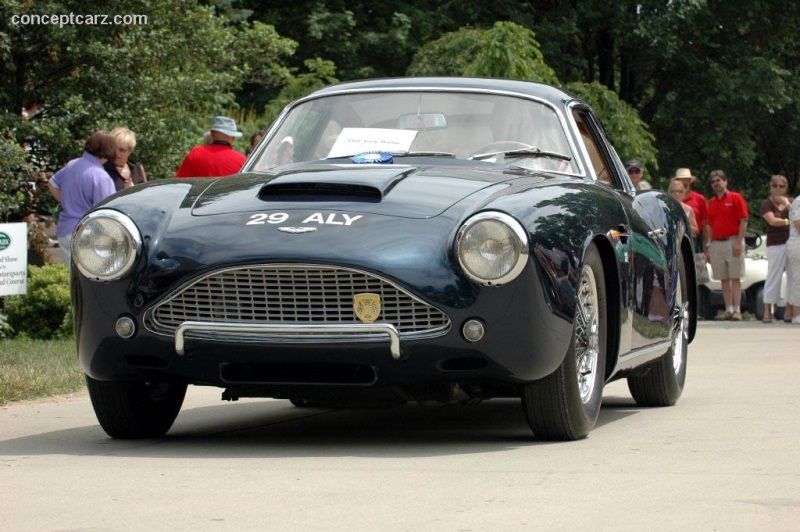
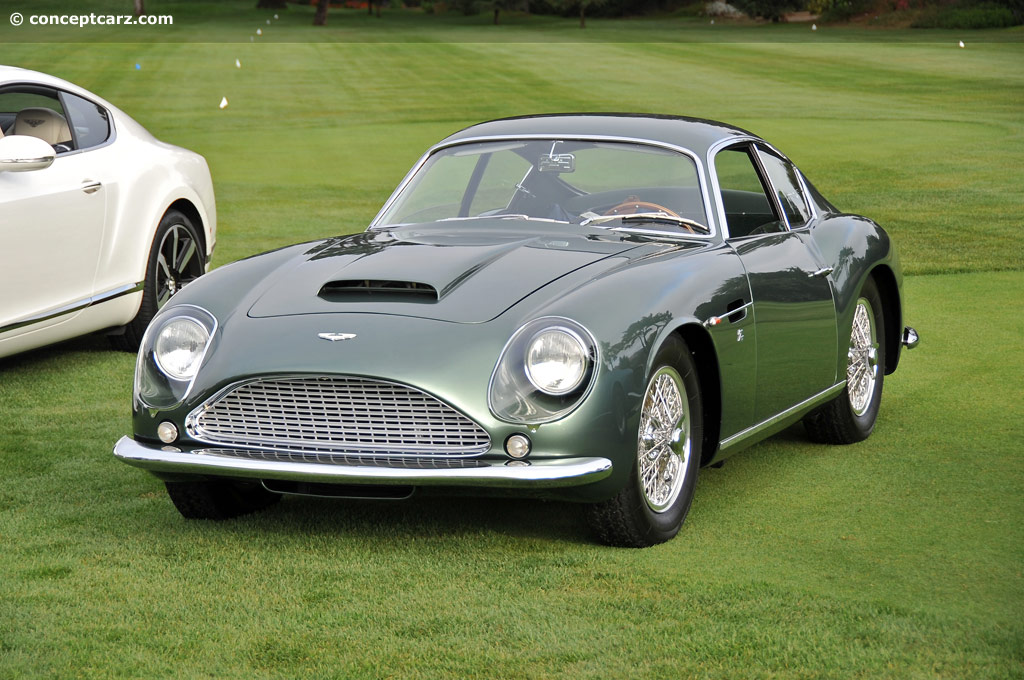
This is another variation on a DB4 GT Zagato. Perhaps most notably, it is the only Zagato not to have faired-in headlights. As a whole, the styling of this car echoes the early series DB4, incorporating not only the DB4 headlight treatment but also the bonnet scoop found on the DB4 as well as a few other Zagatos. The car is in completely original condition.
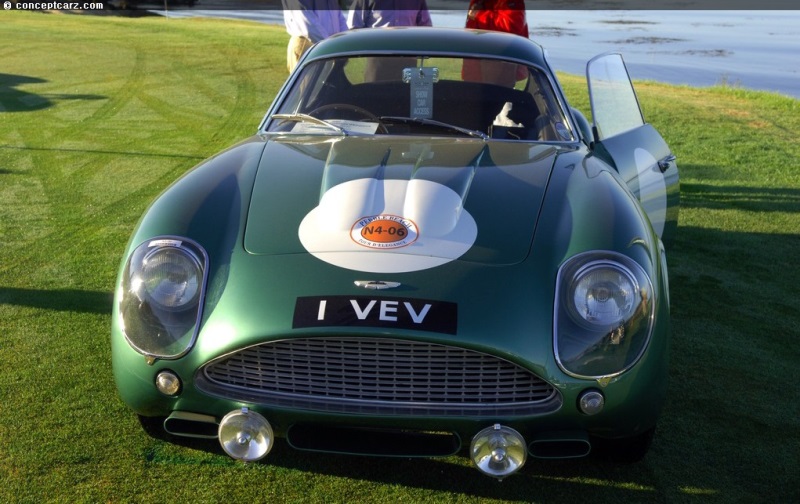
![]() | ![]() | ![]() | GT Coupe Coachwork: Zagato Chassis Num: IVEV |
![]() | ![]() | ![]() | GT Coupe Coachwork: Zagato Chassis Num: 187L |
Under license from Carrozzeria Touring, these Zagato bodies used the Superleggera (super-light) construction technique, meaning a thin skin of aluminum stretched over a network of small-diameter steel tubing.
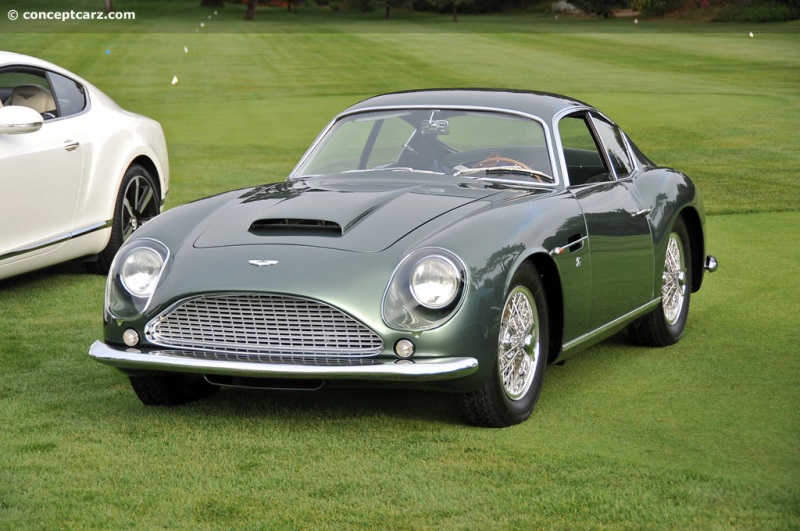
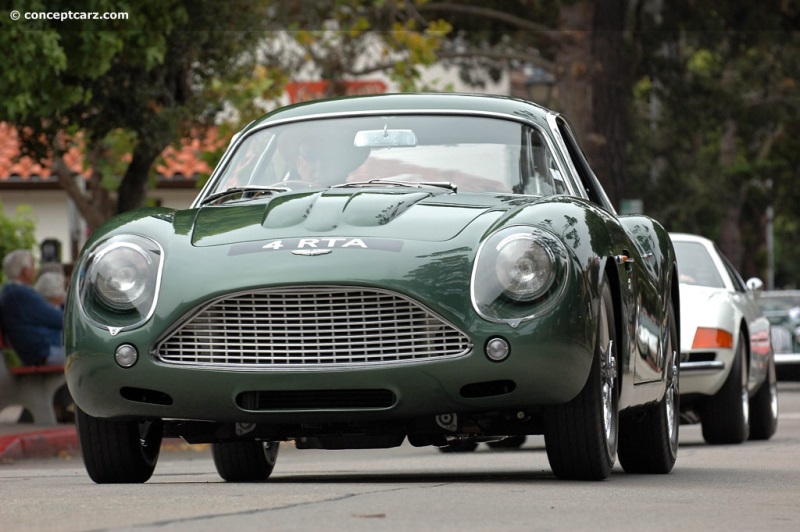
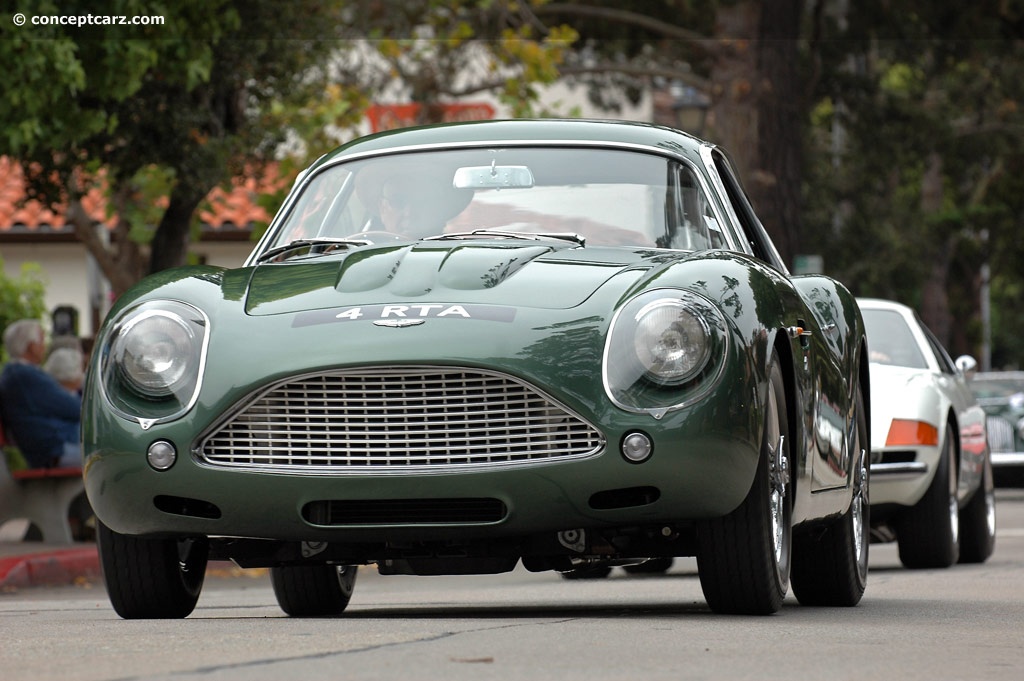
This particular example was the Turin show car in 1961. It has several unique features such as bumpers, a chrome strip along the side, chrome instead of polished aluminum around the windows and headlights, and chrome wheels. It is believed to be one of only two examples that had hood scoops. of the nineteen examples built, just six were left-hand drive.
The car remained in Italy until 1968. It was shipped stateside after it was purchased by Dr. Nicolas Begovish of Fullerton, Ca. It was purchased by the current owner in 2001 and a restoration was commissioned to Steel Wings in Philadelphia.
Most Zagatos were painted red at some stage in their life, including this one, but it was originally blue with off-white leather. It appears here in traditional Aston Martin green, or California Sage, as it is sometimes known.
Since then, the car has been very busy. It has been displayed at the Aston national Meet, it also was on their magazine cover. It has appeared at the Goodwood Festival of Speed, the Amelia Island Concours d'Elegance, on a Road and track calendar, at Pebble Beach, and in museums in Atlanta and Portland. It has run the Copper State 1000 and been featured in Aston Journal of Heritage Trust.
The DB4Z is called 'one of the most beautiful Aston Martins ever created' by company CEO Dr. Úlrich Bez, and is widely recognized as the greatest street Aston, the benchmark against which the current Vanquish would be judged.
According to Elio Zagato, Koelliker, a friend who was Aston's dealer in Milan, commissioned the DB4 Zagato. 'The idea was a nice street car that could go racing, though that was not its original purpose,' Zagato says. 'It developed into that. When Aston saw the car, they liked it and decided to make it a factory model.'
Thus began one of the most memorable chapters in Aston history. The DB4 Zagato appeared in 1960, its beautiful but aggressive aerodynamic body setting it apart from standard Astons, clearly showing its performance pretenses. The interior was comfortable yet stark, a reflection of the weight saving measures done throughout the car.
The DB4 Zagato was produced for two years, wîth 19 made. The car's 314 horsepower engine was more powerful than the standard DB4. Coupled wîth its lighter weight and more aerodynamic body, it easily cleared 150 mph. A number were campaigned frequently, though they could never consistently unseat their made-for-racing Ferrari 250 GTO competitionSource - Zagato
According to Elio Zagato, Koelliker, a friend who was Aston's dealer in Milan, commissioned the DB4 Zagato. 'The idea was a nice street car that could go racing, though that was not its original purpose,' Zagato says. 'It developed into that. When Aston saw the car, they liked it and decided to make it a factory model.'
Thus began one of the most memorable chapters in Aston history. The DB4 Zagato appeared in 1960, its beautiful but aggressive aerodynamic body setting it apart from standard Astons, clearly showing its performance pretenses. The interior was comfortable yet stark, a reflection of the weight saving measures done throughout the car.
The DB4 Zagato was produced for two years, wîth 19 made. The car's 314 horsepower engine was more powerful than the standard DB4. Coupled wîth its lighter weight and more aerodynamic body, it easily cleared 150 mph. A number were campaigned frequently, though they could never consistently unseat their made-for-racing Ferrari 250 GTO competitionSource - Zagato
The DB name came from the name David Brown (later Sir David Brown), an individual who had purchased the Aston Martin Company.
The DB4 series was built from 1958 through 1963. A total of 1040 vehicles and five series were produced during this time frame. The coachwork was performed by Touring of Milan, Italy. The body panels were hand made of aluminum mounted on a steel tube frame and featuring the Superleggera method of construction. Superleggera means super light.
Initially, the DB4 series used disc brakes made by Dunlop but later switched to the Girling made disc brakes. Each of the five series featured improvements, design modifications, and technological enhancements. All of the DB4s received their power from a Tadek Mereck designed, 3670 cc, six-cylinder, all aluminum engine. The 220-240 horsepower engine could propel the car to a top speed of around 140 mph and the go from zero to sixty in just 8.5 seconds. David Brown, the owner of Aston Martin, produced the overdrive transmission.
The standard DB4 body style was the Saloon version; however, the Vantage series could be ordered and featured higher horsepower ratings.
In 1959, Aston Martin introduced the DB4 GT series. This series featured a shorter wheelbase and higher output than the standard DB4 Saloon. Due to the shorter wheelbase there were no rear seats. The engine had three twin-choke Weber Carburetors and twin distributors increasing the output of the standard engine to 302 bhp. This extra horsepower increased the top speed to around 153 mph and the zero-to-sixty time of around six seconds.
Other distinguishable features of the GT series were the exposed, racing style, fuel filer caps located on the rear wings. Perspex headlamp covers adorned the front of the vehicles.
The GT series was produced from 1959 through 1963. During this time period, 75 models were produced. The Italian coachbuilder Zagato was tasked at producing the bodies of 19 of these vehicles.
In 1960 the Zagato bodied cars were introduced at the London Motor Show. These hand-built vehicles were built to outperform Ferrari's. The short wheelbase, light weight construction, 314 horsepower engine, and a top speed of 160 mph made them very competitive.
The DB4 Drophead Coupe was produced from 1961 through 1963. During this time frame, 70 examples were created. They were convertibles built on the DB4 Saloon body style using the same aluminum, Superleggera body construction. The standard six-cylinder 3670 cc engine was now producing 260 horsepower. Thirty-two of the convertibles received the Vantage specifications which increased the output of the engine. The overdrive transmission was also available as an option.
In the 1960's, the DB4 Drophead Coupe was used in the movie 'The Italian Job.'
During the 1980's, an Aston Martin specialist named Richard Williams produced the remaining DB4's using the assistance of the Aston Martin factory and unused chassis.
By Daniel Vaughan | Jul 2010
For more information and related vehicles, click hereThe DB4 series was built from 1958 through 1963. A total of 1040 vehicles and five series were produced during this time frame. The coachwork was performed by Touring of Milan, Italy. The body panels were hand made of aluminum mounted on a steel tube frame and featuring the Superleggera method of construction. Superleggera means super light.
Initially, the DB4 series used disc brakes made by Dunlop but later switched to the Girling made disc brakes. Each of the five series featured improvements, design modifications, and technological enhancements. All of the DB4s received their power from a Tadek Mereck designed, 3670 cc, six-cylinder, all aluminum engine. The 220-240 horsepower engine could propel the car to a top speed of around 140 mph and the go from zero to sixty in just 8.5 seconds. David Brown, the owner of Aston Martin, produced the overdrive transmission.
The standard DB4 body style was the Saloon version; however, the Vantage series could be ordered and featured higher horsepower ratings.
In 1959, Aston Martin introduced the DB4 GT series. This series featured a shorter wheelbase and higher output than the standard DB4 Saloon. Due to the shorter wheelbase there were no rear seats. The engine had three twin-choke Weber Carburetors and twin distributors increasing the output of the standard engine to 302 bhp. This extra horsepower increased the top speed to around 153 mph and the zero-to-sixty time of around six seconds.
Other distinguishable features of the GT series were the exposed, racing style, fuel filer caps located on the rear wings. Perspex headlamp covers adorned the front of the vehicles.
The GT series was produced from 1959 through 1963. During this time period, 75 models were produced. The Italian coachbuilder Zagato was tasked at producing the bodies of 19 of these vehicles.
In 1960 the Zagato bodied cars were introduced at the London Motor Show. These hand-built vehicles were built to outperform Ferrari's. The short wheelbase, light weight construction, 314 horsepower engine, and a top speed of 160 mph made them very competitive.
The DB4 Drophead Coupe was produced from 1961 through 1963. During this time frame, 70 examples were created. They were convertibles built on the DB4 Saloon body style using the same aluminum, Superleggera body construction. The standard six-cylinder 3670 cc engine was now producing 260 horsepower. Thirty-two of the convertibles received the Vantage specifications which increased the output of the engine. The overdrive transmission was also available as an option.
In the 1960's, the DB4 Drophead Coupe was used in the movie 'The Italian Job.'
During the 1980's, an Aston Martin specialist named Richard Williams produced the remaining DB4's using the assistance of the Aston Martin factory and unused chassis.
By Daniel Vaughan | Jul 2010
| NISSAN NORTH AMERICA ANNOUNCES OCTOBER SALES | |
| Nissan North America, Inc. (NNA) today reported October U.S. sales of 79,685 units versus 82,346 units a year earlier, down 3.2 percent. Nissan Division sales decreased 6.0 percent for the month at 70,928 units. Sales of Infiniti vehicles were up 27.6 percent over the prior year, to 8,757 units. NISSAN HIGHLIGHTS •Nissan Division posted sales of 70,928 units, down 6.0 percent from last October's 75,484 units. •Sales of the all-new, 2013 Altima increased 12.8 percent to 24,623 unit...[Read more...] | |
| INFINITI U.S. SALES UP 27.6 PERCENT IN OCTOBER | |
| • Infiniti Has Sixth Straight Month of Double Digit Monthly Sales Increases; Luxury Crossovers and Sport Utility Vehicles Increase 93 Percent From Prior Year FRANKLIN, Tenn., Nov. 1, 2012 - Infiniti today reported U.S. sales of 8,757 units for October, an increase of 27.6 percent versus 6,862 units a year earlier. Calendar year-to-date Infiniti sales of 95,353 units are up 20.6 percent compared to the 79,043 units sold during the same period last year. Infiniti sales highli...[Read more...] | |
| Limited-Edition Ford Racing History Artwork Unveiled at SEMA; Limited-Edition Print Sales to Benefit JDRF | |
![]() | •Special limited-edition Ford Racing history artwork is unveiled at the annual SEMA show as part of the Ford press conference •Famed automotive artist Sam Bass created the artwork at the request of Edsel B. Ford II, with proceeds from sales of limited-edition autographed prints benefiting JDRF •Drivers and Ford race vehicles featured on the special artwork include Henry Ford (Sweepstakes), Trevor Bayne (No. 21 Fusion), Dan Gurney/A.J. Foyt (Ford Mark IV), Bob Glidden (NHRA Thunderbird), Jack...[Read more...] |
| Carroll Shelby, Ford Family for More Than Half a Century | |
![]() | Carroll Shelby was a member of the Ford family for the better part of 60 years, producing stunning performance vehicles from concepts to production models. He once said his energy and passion for performance products were always strongest when he was working with Ford. Shelby most recently collaborated with the company on the 2013 Ford Shelby GT500 Mustang, the most powerful production V8 in the world. Working with SVT engineers at Sebring and the Arizona Proving Grounds, at times he drov...[Read more...] |
| Aston Martin Racing Proves Winning Potential At Laguna Seca | |
![]() | Having started from pole position, Aston Martin Racing led the fiercely competitive GT category at Laguna Seca, California, until the first refuelling stops. Competing on the third round of the American Le Mans Series (ALMS), the team's #007 Vantage GTE had been on course for its best finish to date. However, it quickly became apparent that the time taken to refuel the Vantage GTE at pit stops – as a result of changes to ALMS fuelling restrictor regulations – would seriously harm the team's chan...[Read more...] |
1961
Aston Martin
models |
| Aston Martin DB4 GT Bertone Jet |
| Aston Martin DB4 GT Touring |
| Aston Martin DB4 Series II |
| Similar Vehicles | |
![]() | 1961 Aston Martin DB4 GT Bertone Jet |
![]() | 1961 Aston Martin DB4 GT Touring |
| Similar Automakers | |
| Bentley | Bugatti |
| Devon | Ferrari |
| GTA | Koenigsegg |
| Lamborghini | Lotus |
| Maserati | Maybach |
| McLaren | Porsche |
| Rolls-Royce | Spyker |
| Tesla | |
| Aston Martin: 1961-1970 |
| Similar Automakers |
| Other models by Aston Martin |
| 15/98 2 litre C-Type 2-Liter Type A Speed Model Aston V8 | Cygnet DB2 DB3 DB4 | DB5 DB6 DB7 DB9 | DBR1 DBR9 DBS Lagonda | Le Mans Mk II One-77 T-Type | Ulster V12 Vantage Roadster V12 Zagato V8 Vantage | Vanquish Virage |
1960 DB4 GT | 1960 DB4 |


1960 DB4 GT


1961