Ferrari was defeated by Henry Ford II in international GT-class racing with the Ford-powered Shelby Daytona Coupes capturing the World Manufacturer's Championship for 1965. The Ford GT40s swept the top three places at Le Mans in 1966 along with numerous other accolades in the years that followed. However, Ford did not have a street-legal, mid-engine supercar to sell to an eager public; a problem that was later resolved with the introduction of the Pantera.
CoupeAlejandro de Tomaso was the son of an Argentinian government official. His passions and interests were more focused on motor racing than managing the fortune the family had accumulated, so he fled to Italy during the overthrow of the Péron government in 1955. During his racing career, he raced OSCA cars for the Maserati brothers, then formed his own company, DeTomaso Automobili SpA, in 1959. He built six Formula One cars in 1961, two with OSCA engines. His first road-going car was a mid-engine Ghia-bodied two-seater with Ford Cortina power, called the Vallelunga Coupe. Approximately fifty examples were built, along with a single spyder version, but its pressed-steel chassis proved problematic. Alejandro married an American named Isabelle Haskell, heiress to an electrical components company in New Jersey. With plenty of financial resources, de Tomaso acquired Ghia. In 1969, he further developed the Vallelunga into the Mangusta (mongoose - an animal that can kill cobras, a nod to Mr. Carroll Shelby). It was essentially a racer for the street based on the Ford 70P racing car. The Mangusta had a Ford 302 cubic-inch V8 engine, ZF 5-speed transaxle, backbone chassis, Girling disc brakes, and a limited-slip differential. The mid-engine coupe wore a design by Giorgetto Giugiaro, then working at Ghia. The design was one that had been created for Renzo Rivolta's Iso marque but had been previously rejected. Between 1967 and 1970, approximately 300 examples were built with many being imported to the United States by Kjell Qvale of San Francisco. During this time, de Tomaso had built a relationship with the Ford Motor Company, which proved instrumental in the next automotive venture, the Pantera. (Panther) For the Pantera, de Tomaso gave it a unitized body, and the larger 351 CID V8 developing 330 horsepower and giving it a 160 mph top speed.
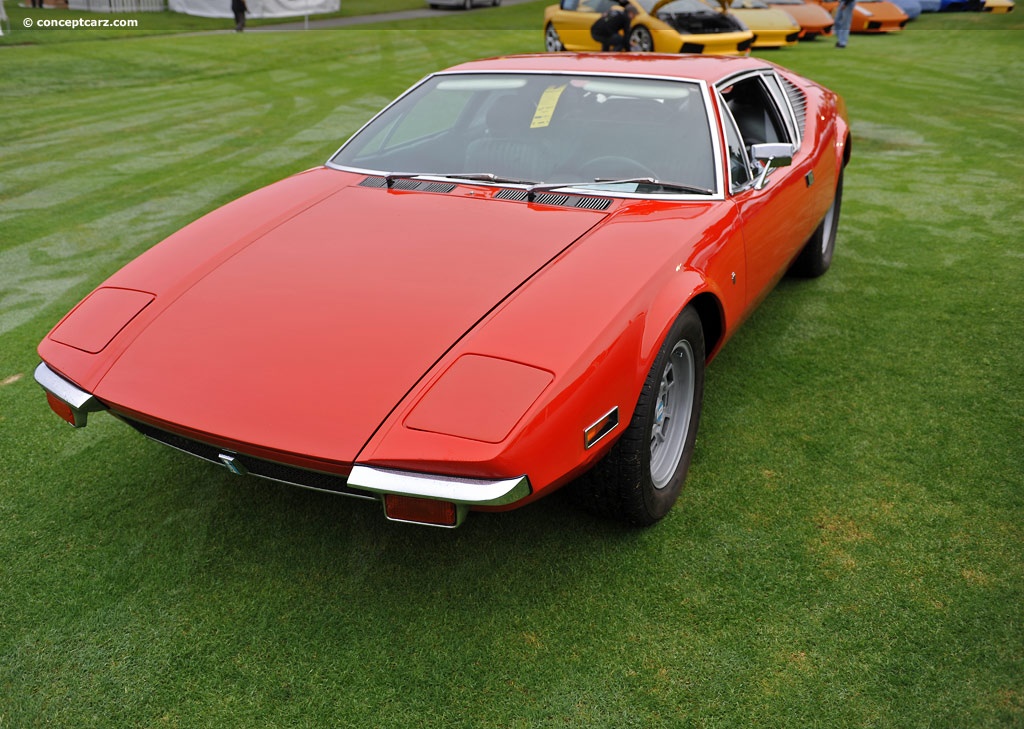
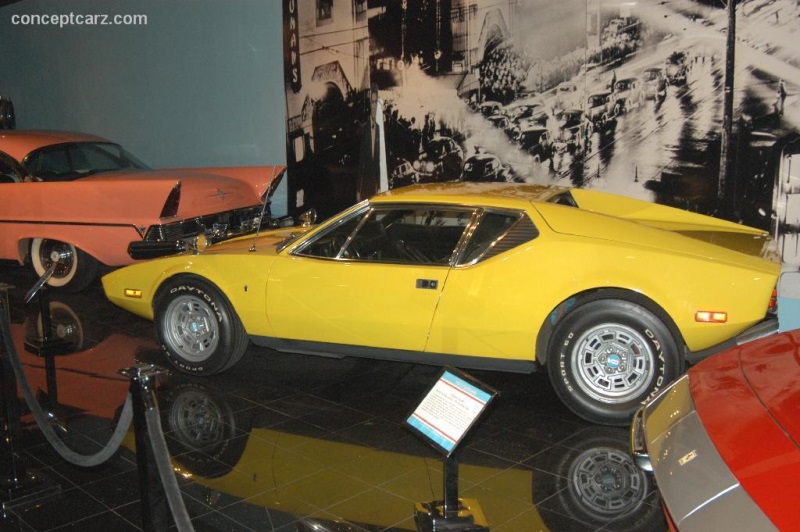
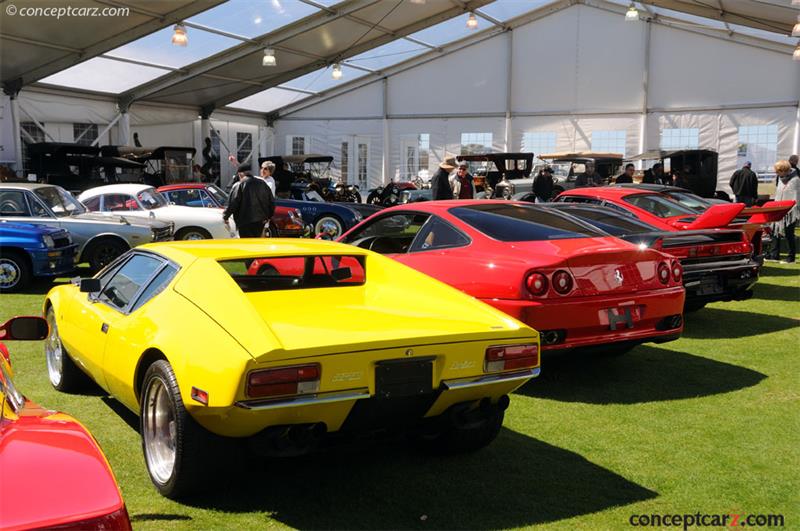
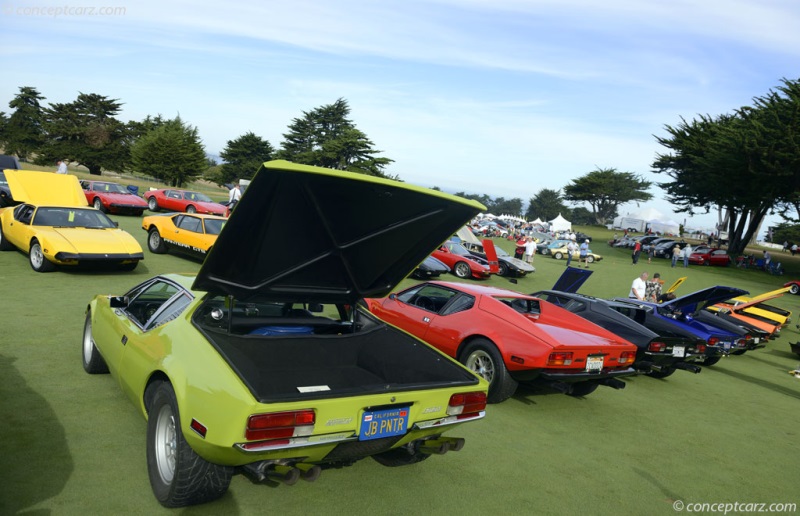
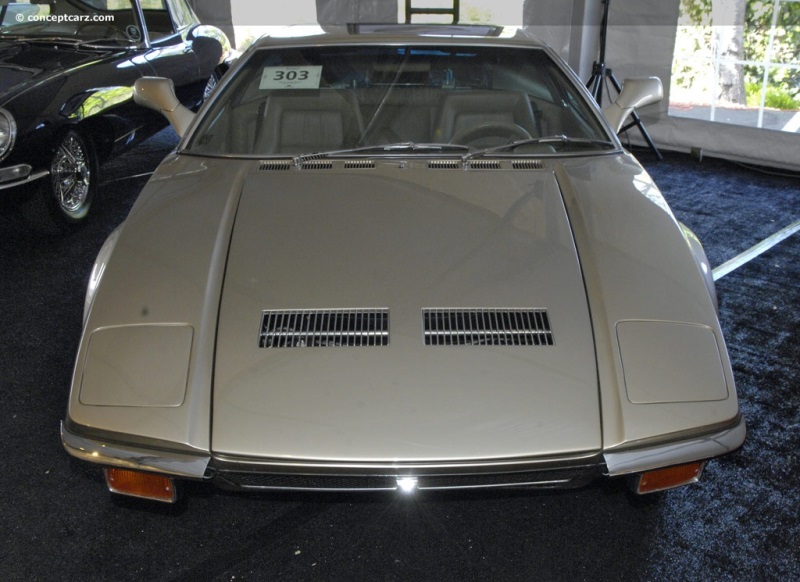
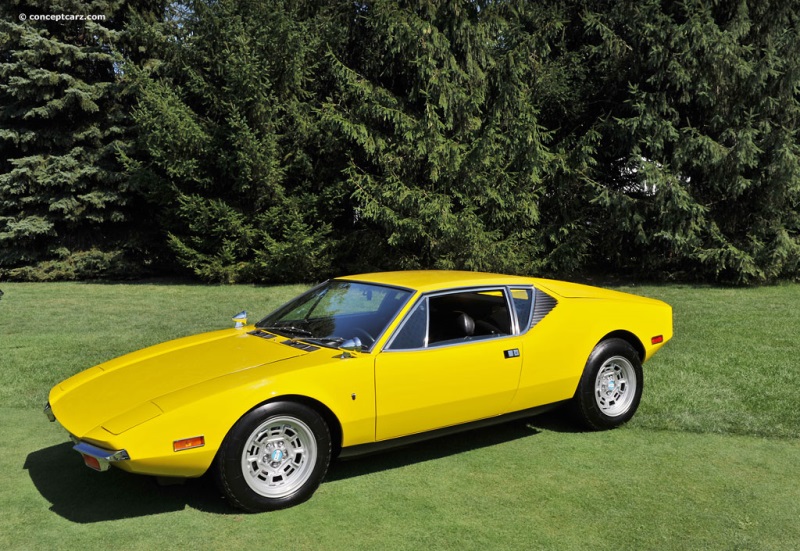
CoupeThe Pantera was penned by Tom Tjaarda, son of Lincoln-Zephyr designer John Tjaarda, then working at Ghia. Vignale performed the construction, also a de Tomaso company. It had a low, wedge-shaped design with a pointed nose and disappearing headlamps. Luggage space was available in both the front and rear. The resulting De Tomaso Pantera was constructed in Italy and sold largely through Lincoln-Mercury dealers in the United States with a full factory warranty. It combined American-style comforts - including air conditioning and power windows, a 351 Cleveland V8 engine, and European performance features as rack-and-pinion steering, power-assisted four-wheel disc brakes, and a ZF transaxle. DeTomaso introduced the Pantera in a public debut in Modena during March 1970 and was presented to the American public at the 1970 New York Motor Show just a few weeks later.
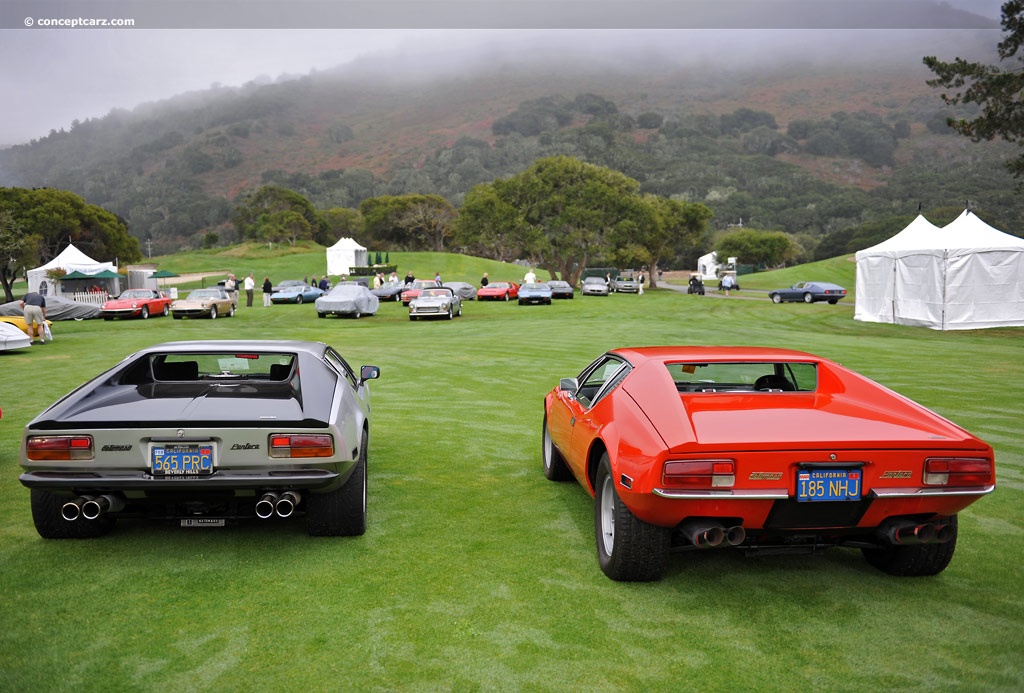
CoupeThe first of several upgrades occurred in 1972 with the introduction of the 'L' model, which had 'impact resistant' bumpers and improved cooling and air conditioning systems. The GTS model of 1974 was distinguished by flared wheel arches, which in European trim came with a 350 horsepower engine, larger wheels and tires, and other performance upgrades. Around the same time, the GT/4 was introduced, a development of the Group 4 competition cars of 1972 and 1973. In 1980, the Pantera received its first major revision to its body style, with the introduction of the GT5 which, with its deep front air dam and delta-wing rear spoiler, was among the earliest examples to utilize these aerodynamic devices in a passenger car design. Introduced in 1985, the GTS5 had revised bodywork and significant upgrades to its interior. Bertone's Marcello Gandini, the stylist of Lamborghini's Miura and Countach, completely redesigned the Pantera in 1990.In 1973, due to emissions regulations, the Pantera's power decreased. New bumpers required for U.S. DOT certification added nine inches and 50 pounds to the car. In 1974, U.S. imports were halted, but cars were available at retail well into 1975 as production continued in Italy. The Pantera later used engines from Australia, and it was briefly re-introduced to the United States in 1981, through an independent importer. In 1973, Ford acquired Ghia from de Tomaso and two years later de Tomaso took over Maserati. Maserati was sold to Fiat in 1993, the year Alejandro de Tomaso suffered a stroke and retired from the business. He lived another decade, passing away in 2003.
CoupeProduction of the Pantera, the world's longest-running supercar, came to an end in 1993.
by Daniel Vaughan | Apr 2020

Coupe

Coupe
Coupe
Coupe
by Daniel Vaughan | Apr 2020
Related Reading : DeTomaso Pantera History
The Pantera was the result of an Argentinian racing driver (Alejandro De Tomaso), Italian engineering, and American muscle. The styling was handled by Tom Tjarda while Giampaolo Dallara was responsible for the structural design. Looking at the vehicle, it greatly resembles that of the Lamborghini offspring. The reasoning for this resemblance could be attributed to Giampaolo Dallara who was also aided....
Continue Reading >>
Continue Reading >>
Related Reading : DeTomaso Pantera History
The Pantera is DeTomasos most significant production car to date and lived an overall production life of nearly 25 years. It is the model which most people identify with DeTomaso and completed the companys transition to a volume producer of high performance GTs. In describing the Panteras career, especially from a U.S. perspective, it is easiest to view it in three separate stages the Ford importation....
Continue Reading >>
Continue Reading >>
Similar Vehicles



1971 DeTomaso Pantera Vehicle Profiles

Recent Vehicle Additions


Performance and Specification Comparison
Price Comparison
Pantera Specification Comparison by Year
Year
Production
Wheelbase
Engine
Prices
Related Automotive News

Phenomenal Ferraris and Italian Thoroughbreds Offered at Gooding & Company's Pebble Beach Auctions
The auction house announced a stable of Italian star cars, including a 1950 Ferrari 166 MM Berlinetta Le Mans, a 1961 Ferrari 400 Superamerica Series I Coupe Aerodinamico, and a 1954 Ferrari 500 Mondial Series I Spider.
A stunning group of star...

Lamborghini Celebrates The 50Th Anniversary Of The Jarama GT
This year marks the 50th Anniversary of the Lamborghini Jarama GT, presented for the first time at the Geneva Motor Show in March 1970.
The Jarama, whose name derives from an area north of Madrid famous for breeding fighting bulls, was the latest evolution...

Mazda At 100 | 60 Years Of Coupes
Mazdas first car the R360 was a stylish micro coupe launched in 1960 for Japans Kei car segment.
Launched in 1967, the Mazda Cosmo was a ground-breaking performance coupe for Mazda.
Today the style of concepts like the Vision Coupe and RX Visio...

Lamborghini Miura Celebrated In A Dedicated Class At The 59Th Pebble Beach Concours d'Elegance
SantAgata Bolognese, 12 August 2019 – The Pebble Beach Concours dElegance, established in 1950, is the one of the most renowned classic car shows in the world, and every year the selection of cars for display is very severe, because only the...

THE McLAREN F1
FOR THE DRIVER VITALLY – AS IN ONE OF McLARENS WORLD CHAMPION RACING CARS – DRIVER AND VEHICLE BECOME ENTIRELY AS ONE
The primary design consideration for the McLaren F1 has been to make it without reserve a drivers car, an extremely high-performance...