Ford began the development of a rear-wheel drive, a turbocharged version of their MK III Escort (the Escort RS 1700T) for the new Group B rally racing series. As is often the case, development problems arose which ultimately forced Ford to abandon the project. Instead of simply writing off the costs of the failed 1700T, Ford executives made the decision to go in a different direction, and build an all-new, purpose-built rally car. This new vehicle would go head-to-head with the Lancia Delta S4 and the Audi Quattro S1 - meaning the new car would require four-wheel drive. 
Evolution Coupe
Chassis #: SFACXXBJ2CGL00087
View info and history
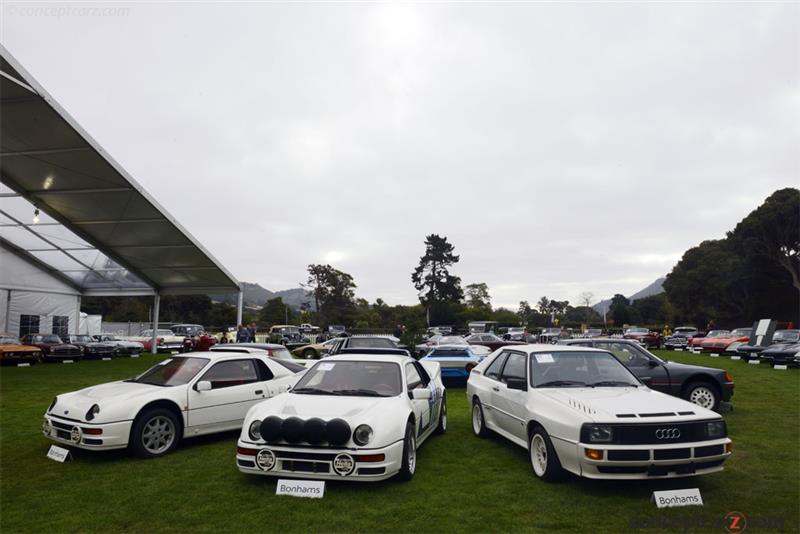
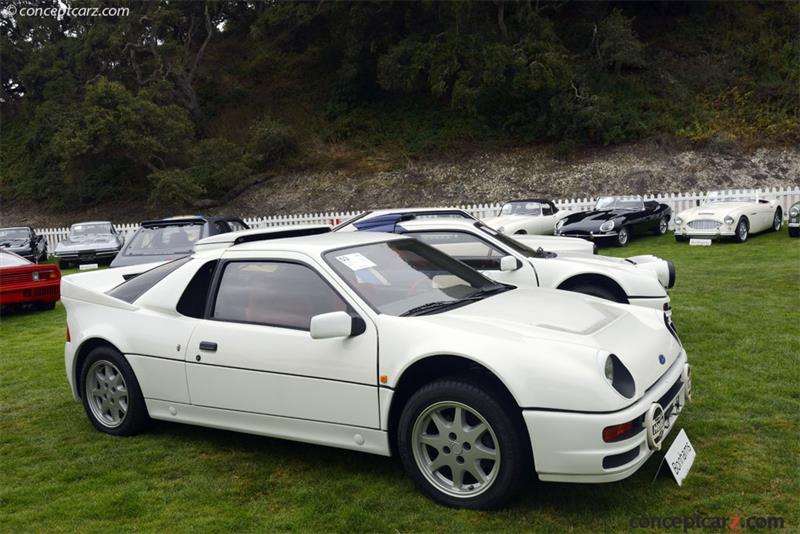
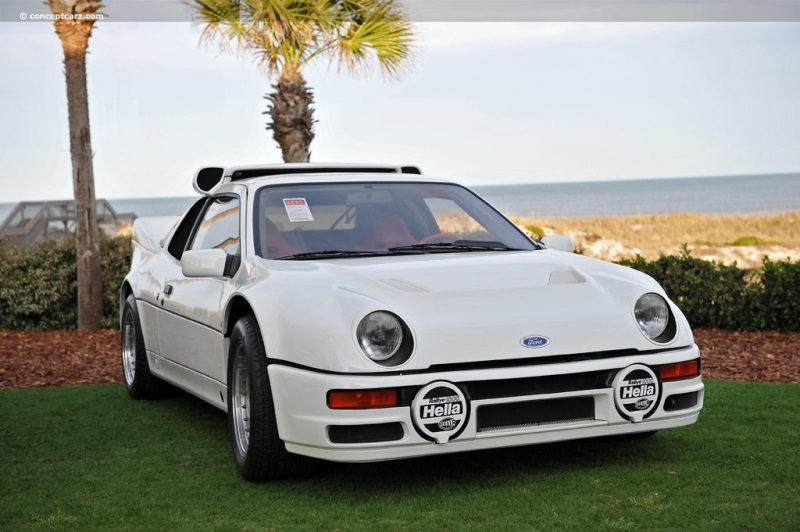
Auction entries : 1The RS200 was given a composite/fiberglass body styled by Flippo Saprino at the Ghia Design Studio. Formula One designer Tony Southgate designed the chassis along with help from former F1 engineer John Wheeler. Mounting the 1.8-liter Cosworth 'BDT' engine in the middle, and placing the transmission in the front, gave the RS200 excellent balance, even better than its competition.Complying with FIA homologation rules, Ford planned to build a minimum of 200 examples. 24 of those were given serious upgrades and dubbed 'Evolution' models. The RS200 Evolution received an uprated suspension, brakes, and a larger 2.1-liter version of the Cosworth powerplant. At full boost, the RS200 has nearly 600 horsepower and can race from zero-to-sixty in just over 3 seconds.
by Daniel Vaughan | Oct 2017

Evolution Coupe
Chassis #: SFACXXBJ2CGL00087
View info and history
Auction entries : 1
by Daniel Vaughan | Oct 2017
Related Reading : Ford RS200 History
The Ford RS200 was designed to comply with FIA homologation regulations and based on Fords Group B Rally car. Homologation rules stated that 200 examples of road-going versions must be created in order to compete in rally racing. The vehicle was so perfect that it held the Guinness Book of Records for being the worlds fastest accelerating car. The vehicle was created by Ford of Britain. It was....
Continue Reading >>
Continue Reading >>
Similarly Sized Vehicles
from 1986


1986 Ford RS200 Vehicle Profiles


Recent Vehicle Additions


Performance and Specification Comparison
Price Comparison
$7,190 - $15,275
$11,020 - $14,145
RS200 Specification Comparison by Year
Year
Production
Wheelbase
Engine
Prices
Related Automotive News

Andy Warhol's exclusive 'Cars' series now open at the Petersen Automotive Museum
The Pop art icons unique Cars series of automotive art and the exceptionally rare Mercedes-Benz vehicles that were its subjects appear in public in the US for the first time in over three decades
Appearing for the first time in North America...

Andy Warhol's 'Cars' series to go on display for the first time in North America in over 30 years at the Petersen Automotive Museum
The Pop art icons unique Cars series of automotive art and the exceptionally rare Mercedes-Benz vehicles that were its subjects appear in public in the US for the first time in over three decades
Appearing for the first time in North America...
Works Rally Legends Rev Up
A formidable collection of 6 of the most recognizable race and rally cars ever to skid sideways across gravel will be offered at Bonhams Grand Palais sale on 8 February.
Leading the pack is a 100 original, genuine works example of one of the most successful...

RENAULT SHOWS THREE FRESH DEBUTS AND THE BREADTH AND SUCCESS OF ITS MOTORSPORT HISTORY AT THE GOODWOOD FESTIVAL OF SPEED
From the worlds first Grand Prix winner to Land Speed Record Breakers and 21st Century World Championship–Winning Formula 1 Cars
Global debut for the exciting new Twingo GT
UK debut for the Renault Sport Clio R.S.16 concept
UK debut for the Renau...

ALL-NEW FORD FOCUS RS MAKES GLOBAL AUTO SHOW DEBUT; PIONEERS INNOVATIVE AWD AND PERFORMANCE TECHNOLOGIES
Fords all-new Focus RS makes global show debut in Geneva introduces advanced performance technologies to deliver the ultimate fun-to-drive experience
Third-generation Focus RS pioneers innovative Ford Performance All-Wheel-Drive with Dynamic Torq...