|
|
|
|
|
|
|
|
|
|
|
|
|
|
|
|
|
|
|
|
|
|
|
|
|
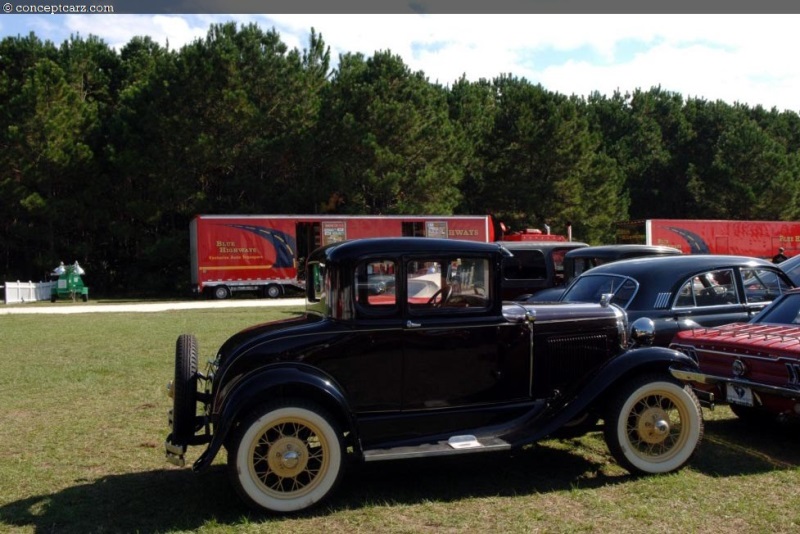
1931 Ford Model A news, pictures, and information
In January of 1896, Henry visited a friend named Brady King and noticed two copies of the American Machinist on Brady's desk. The magazines contained a two-part article on how to build a simple gasoline engine from odds and ends. Henry became determined to build one. Late on Christmas Eve in 1895, Henry brought home a small engine that he'd built and with Clara's help, Henry successfully started and ran his first combustion engine. With this initial success, he decided to form a team of mechanics to help him build a real motorcar. Working in an old shed behind Henry's home on Bagely Avenue, they took a length of scrap pipe from an old steam engine, cut the pipe into two eleven inch lengths, and bored the pieces to 2.565 inches to create the cylinders. Fuel was fed to the engine simply by placing the fuel tank directly above the engine to let gravity do the work. Power was transferred to the wheels by a ten-foot length of chain. The car weighed no more than 500 pounds and was able to travel at 20 mph -
Though born in adversity, the Model A was the 'New Car' that took Ford from the ranks of the simple utilitarian Model T to the zenith of an automobile with serviceable good looks. The elder Henry Ford had been reluctant to bid farewell to the venerable 'T', but once he reached accord with son Edsel (who fought to build a new car), Henry plunged headlong into the Model A project. He designed the new chassis and engine himself, while Edsel oversaw the styling. The Model A's styling was sophisticated and derived mainly from Lincoln, which was overseen by Edsel.
The Ford factory was idle for 6 months pending a change-over to the Model A. The Model A was a 4 cylinder, 3-speed machine with features that Henry had never envisioned in 1908 when he introduced the Model T. The new engine displaced over 200 cubic inches and reached 40 horsepower, making it nearly twice as powerful as the T. Four wheel mechanical brakes replaced two, and shock absorbers replaced leaf springs. The new car had over 6800 parts, far more than the Model T, which had fewer than 5000. Despite the great depression, and the business losses stemming from the down time at the factory, 4.5 million Model A's were sold between 1927-1931, with Ford outselling Chevrolet two-to-one in the peak year 1930.
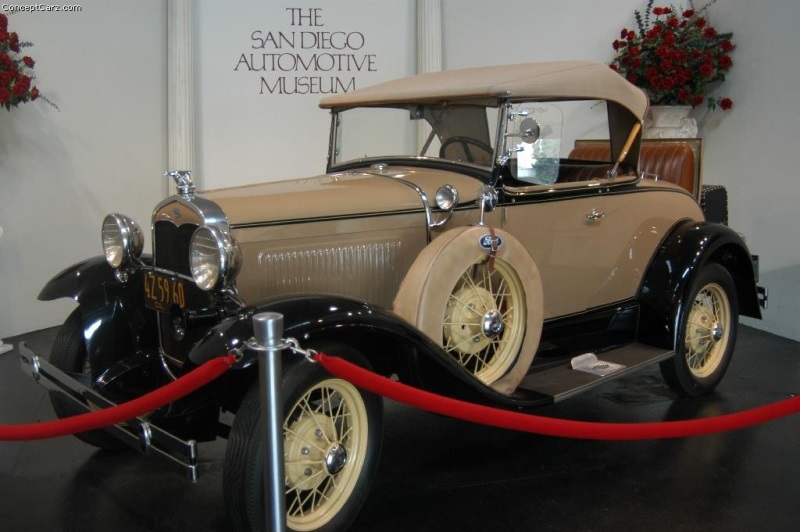
Collection of Dwight SanfordSource - SDAM
![]() | ![]() | View more photos |
Collection of the Los Angeles County Natural History Museum.Source - Petersen Museum
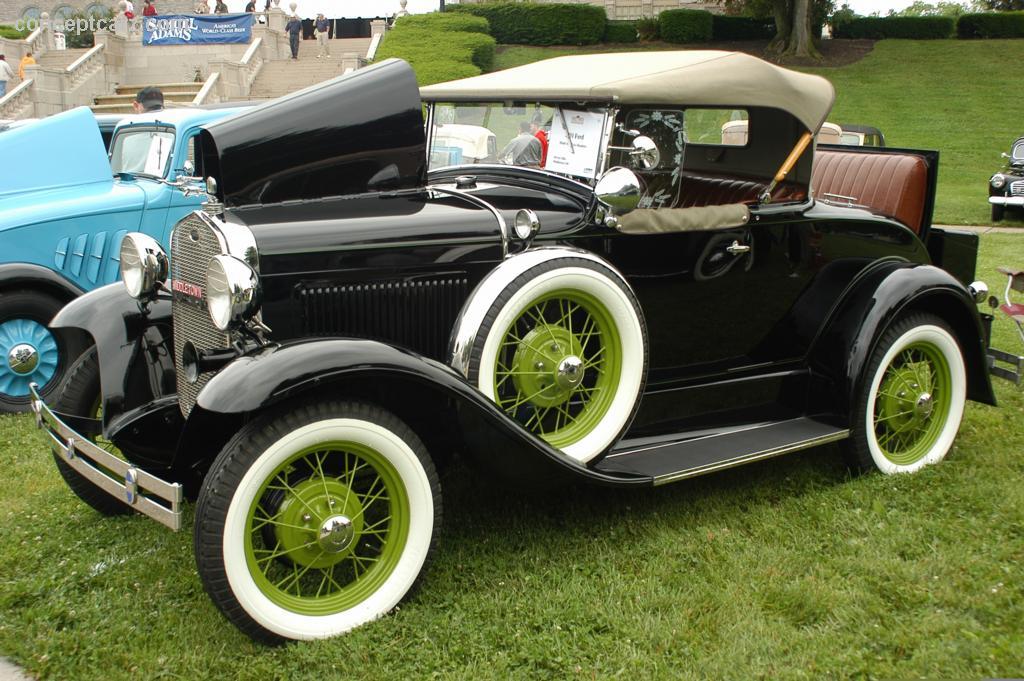
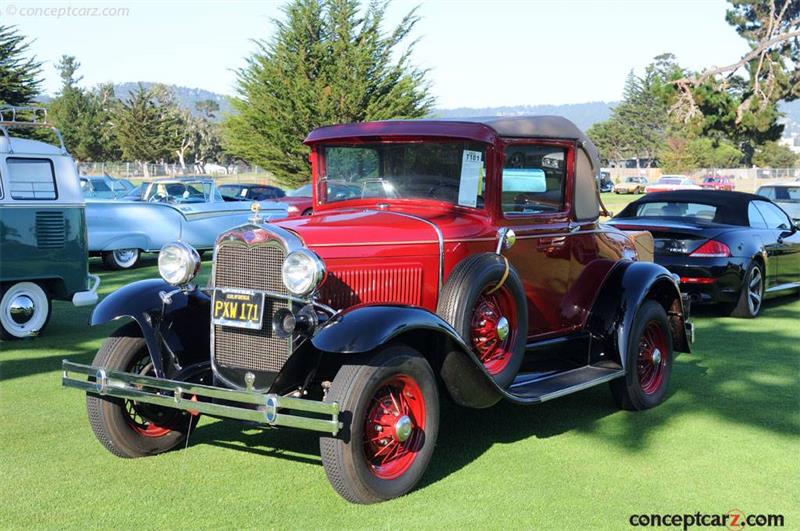
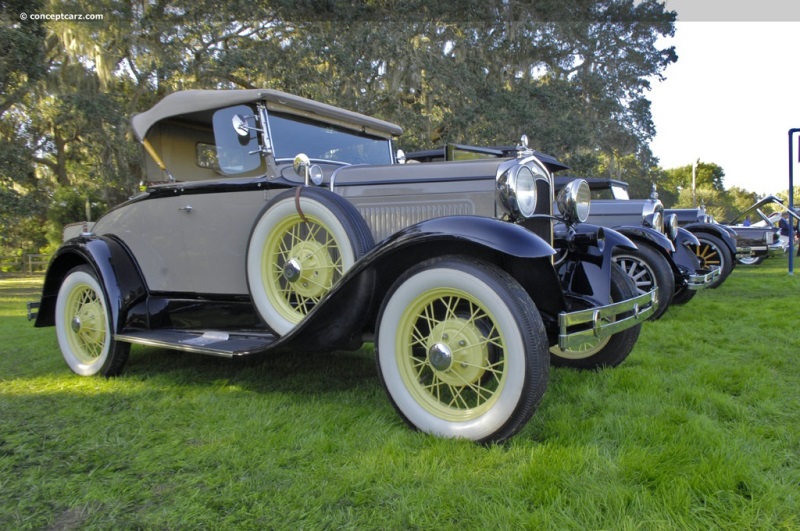
The Ford Model A was a very popular automobile and succeeded the Model T in 1928. During the period of 1928 through 1931 there were approximately five million Model A's (all body styles) manufactured. The 1931 Model A Roadster was priced at $475.00 and weighed 2230 pounds - that's 22 cents a pound. There were 456,000 Roadsters produced by Ford during this four year period.
This Brewster Green Roadster with its Apple Green wheels and pinstripe was the original 1931 color and is currently in the identical configuration as manufactured by Henry Ford - no modifications. This car was on display for seven years in a restaurant called 'Roadsters' near Fredericksburg, Virginia. Prior to that time this Roadster won Senior National First Prize, Antique Automobile Club of America (AACA).
![]() | ![]() | View more photos Roadster Chassis Num: RF8413 |
At the conclusion of the Worldwide Group Auction, this vehicle was left unsold.
![]() | ![]() | View more photos Highboy Rumble Seat |
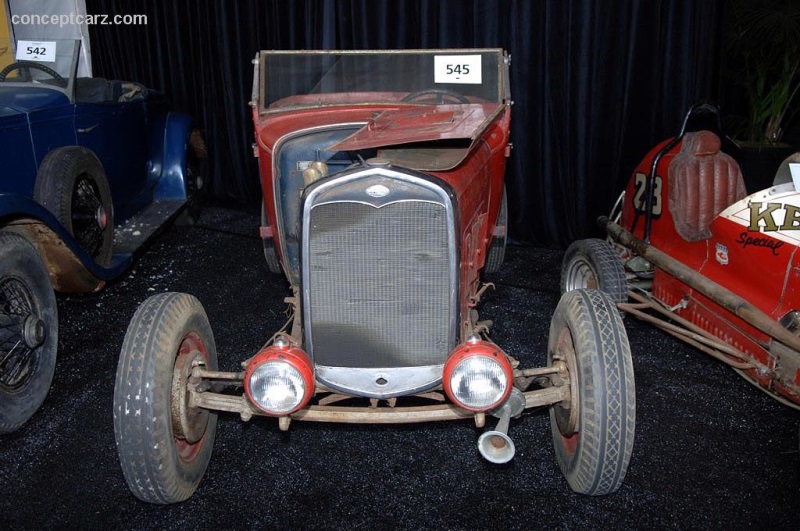
This car was equipped with a lightened flywheel, aluminum pistons, and better ignition. Top speed was estimated to be 110 mph.
This car was offered for sale at the 2006 Bonhams & Butterfields auction held at the Quail Lodge in Carmel, California where it was estimated to sell between $40,000 - $60,000. Though it is in pretty poor condition, the body-style is highly desirable. The upgrades alone are worth the selling price. The buyer of this vehicle got a bargain, when it was sold for $30,000 at auction, falling short of the estimated value.
![]() | ![]() | Convertible Sedan |
Except for the bumpers, most of the bright work was not chrome, but rather, highly polished 'stainless' steel, which was durable and never rusted.
In the 1930s, whitewall tires were available as an after market accessory, however, as per Henry Ford's directive, all Model A's, even the sport models, rolled off the assembly line with blackwall tires.
The sportlights (spotlights), which are rarely seen on both sides, are an original accessory, as are the 'Fulton Upstart' starting level, and the oil pressure gauge.
Notice that the Model A has no dashboard as other cars have. What appears to be the dashboard is actually the gas tank, which allows for a simple 'gravity flow' fuel system to the carburetor. The four-cylinder flat head (actually 'L' head) engine delivers about 40-hrosepower, and provides for a comfortable cruising speed of 30-50 MPH.
![]() | Deluxe Roadster Chassis Num: CAS9340 |
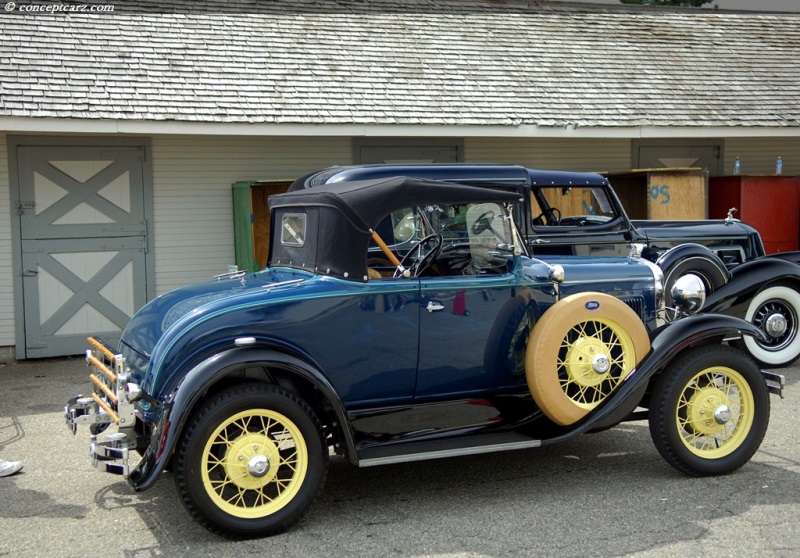
This car was in the possession of its previous owner for 52 years. It has an older restoration that is still in good condition. It includes many desirable features such as the rumble seat, twin side mounts with canvas cover, luggage rack, two rear taillights, horn and chrome on the bumpers and radiator. The car is finished in correct Washington Blue with black fenders, yellow wheels and matching pin-striping. The interior and rumble seat are finished in a tobacco color and the canvas top is black.
Ford was able to weather The Great Depression by continuing to offer a product that was attainable by many. The Deluxe models had a price tag under $500 and included many popular accessories and amenities.
The Model A had been introduced in 1927 and was a worthy successor of the highly popular Model T Tin Lizzie. The Model A was a more refined car than its Model T sibling, with better reliability, greater performance, refined operation, and a variety of bodies that were versatile in any weather condition.
At auction this car was sold for $44,000.
![]() | ![]() | View more photos A400 Chassis Num: 1750 |
Only the Deluxe version was produced in 1931. The deluxe version included leather trim and walnut interior wood graining.
This unit is #1750 of 5085. It is an AACA Junior, Senior and Grand National Winner.
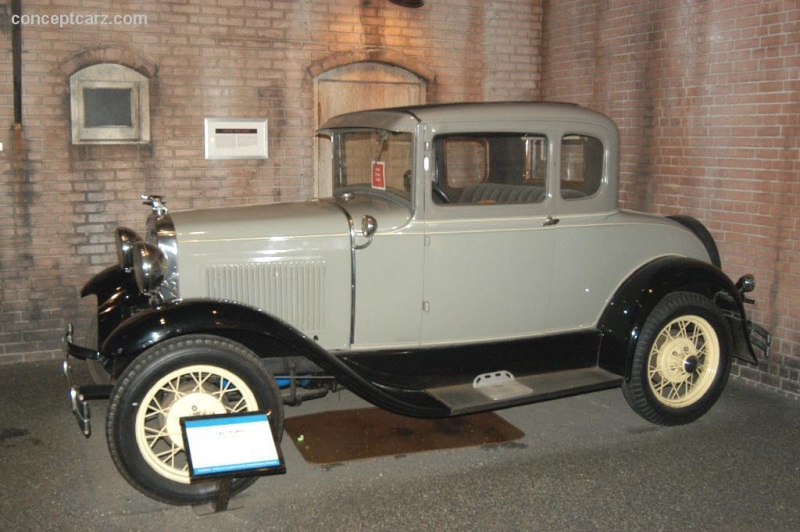
![]() | ![]() | View more photos Deluxe Coupe |
The Model A was the replacement for the popular Model T. Prices ranged from $385 for a roadster to $570 for the top-of-the-line Fordor. The 201 cubic-inch L-head engine was capable of providing around 20 to 30 mpg.
These cars were very versatile and fit with nearly any configuration request. They came in a variety of body styles including the Fordor in either two or three windows, Victoria, Station Wagon, Truck, Town Car, Convertible Cabriolet, Phaeton, Business Coupe, Sport Coupe, Roadster Coupe, Tudor, and Coupe to name a few.
Production of the Model A would last until August 31, 1931 with 4,320,446 examples produced. It was replaced by the Model B.
On auction day, this was one of the last vehicles to cross the auction block. It was able to secure a new owner, one willing to pay slightly less than the estimated value, at $15,950 including buyers premium.
![]() | ![]() | View more photos Special Delivery Style 255-A Chassis Num: A4682692 |
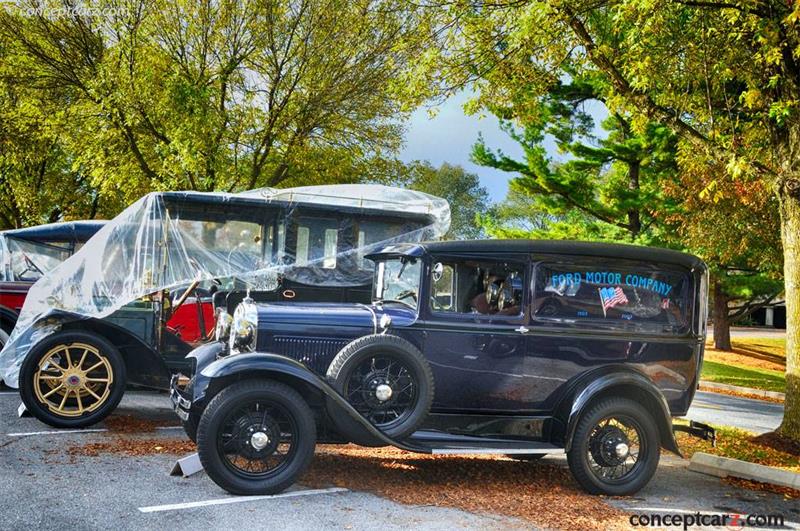
The light commercial vehicles in the Model A lineup were available right from the beginning on the Model A. This included the 76-A and 82-A Roadster and Closed-Cab Pickups, respectively. After a short while, they were joined by Panel Delivery trucks, both standard and Deluxe, styles 79-A and 130-A. In 1930 the 295-A Town Car Delivery truck and 255-A Special Delivery were added to the list.
The 255-A Special Delivery was based on the 150-B Station Wagon. The 255-A had two-doors and solid side rear panels. This particular example is painted in Manila Tan and complemented with a wood body. The car is mostly solid though there are a few blemishes such as at the right cargo door which now wears a brace near the latch. The fenders are solid but a bit ruff. The interior is nice and appears to have weathered time in nice fashion. The steering wheel has no visible cracks. The horn is a modern replica and the front bumper is missing. The engine needs mechanical attention before proper use, but is operable. The odometer displays 41,995 miles since new, and it was last inspected in Pennsylvania in 1955.
This rare example of the Model A was offered for sale at the Vintage Motor Cars sale at Hershey, PA presented by RM Auctions. It was estimated to sell for $15,000 - $20,000 and offered without reserve. Bidding surpassed the estimates with the final bid settling at $66,000 including buyer's premium.
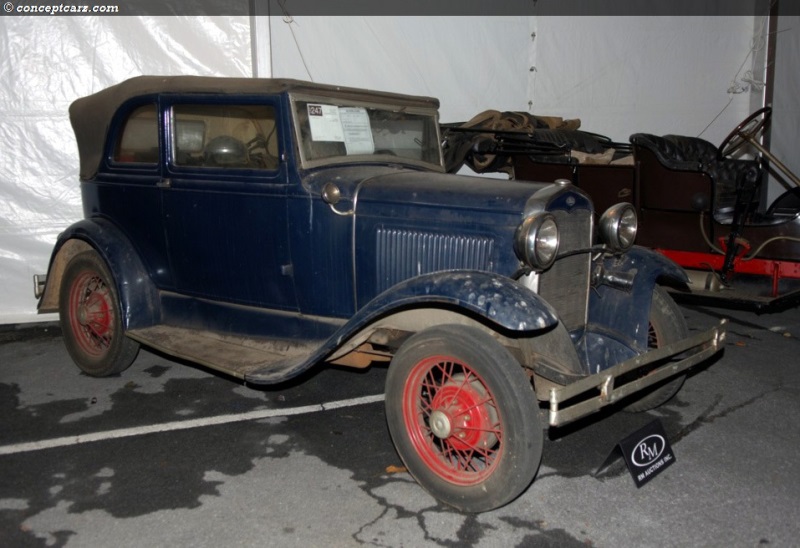
![]() | ![]() | A400 Chassis Num: A1250825 |
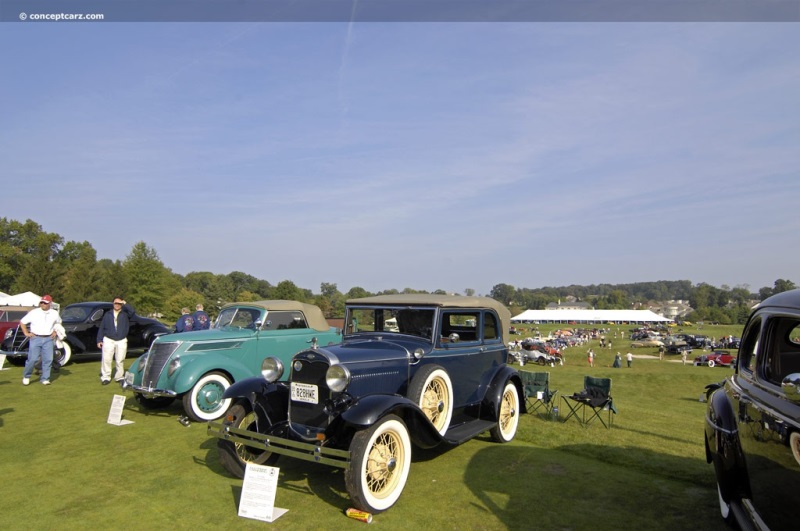
The convertible sedan was cataloged as body style 400-A, thus the A400 nickname, and was first introduced in 1931. Just under 5,000 examples were created before production of the Model A ceased in March of 1932. The body style would continue for one more year into 1932, available as a four-cylinder Model B or V8 Model 18.
![]() | ![]() | Deluxe Roadster |
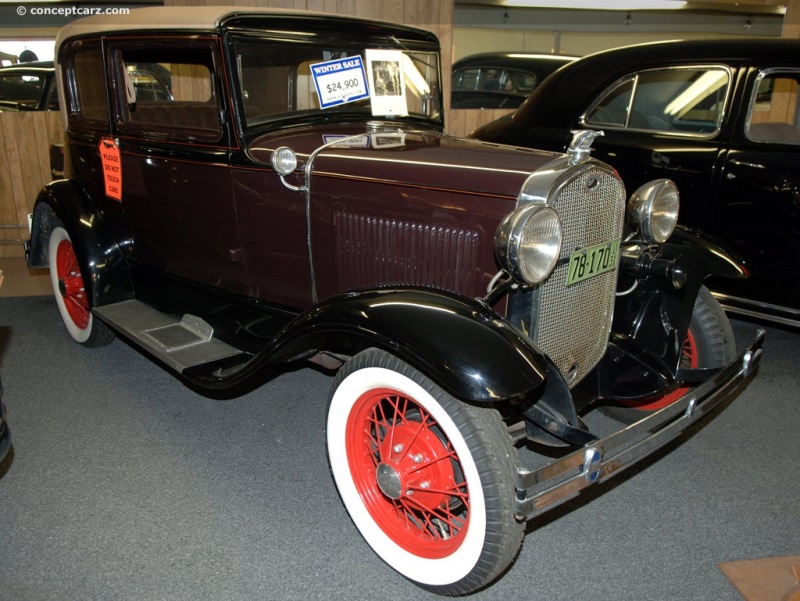
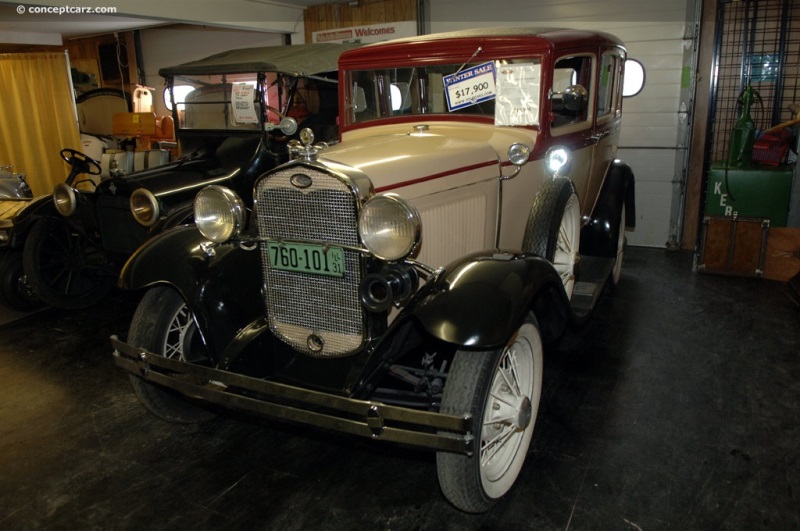
![]() | ![]() | Standard Fordor Sedan |
![]() | Victoria Coupe |
![]() | ![]() | View more photos Deluxe Phaeton |
Edsel Ford designed and led the Model A project. Prices ranged from $385 for a roadster to $570 for the top-of-the-line Fourdoor. The engine was an L-head, 4-cylinder 40 horsepower with a displacement of 201 cubic-inches. Typical fuel consumption was 20 plus mpg.
This particular car is a 180A Sport Phaeton with a body built by Briggs Manufacturing for Ford. The original price of this car was $760 with options that included front and rear bumpers ($15 option), trunk rack ($10), side mount spare tires ($40), Quail radiator caps ($3) a second tail lamp ($4), and tire rear view mirrors ($9). Ford produced 2229 Sport Phaetons in 1931. An estimated 233 exist today.
![]() | Roadster |
![]() | ![]() | View more photos Open Cab Roadster Pickup Chassis Num: A1012576 |
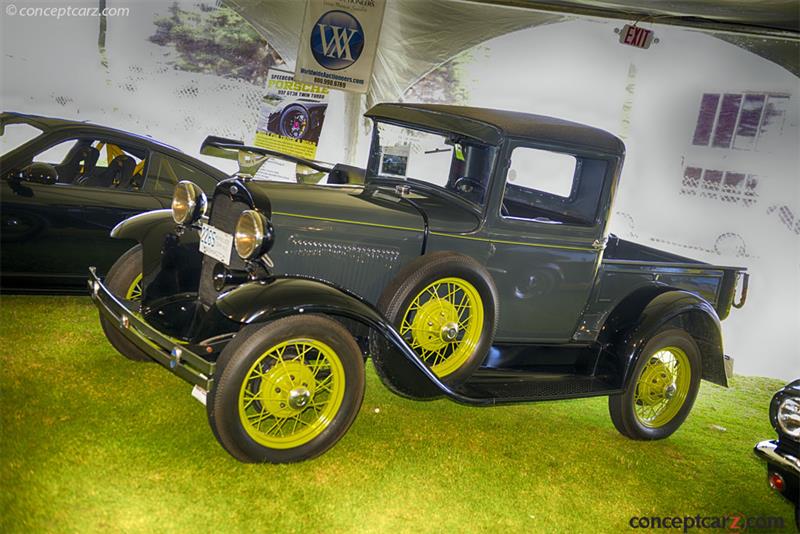
Ford introduced their new truck line in the mid-1930s. It had roadster type doors, wider fenders, and a one-piece flat folding windshield. The headlight pods and radiator shell were black and the interior wood floors were painted body color. The spare tire was positioned on the front fender well and the running boards had an embossed non-skid surface.
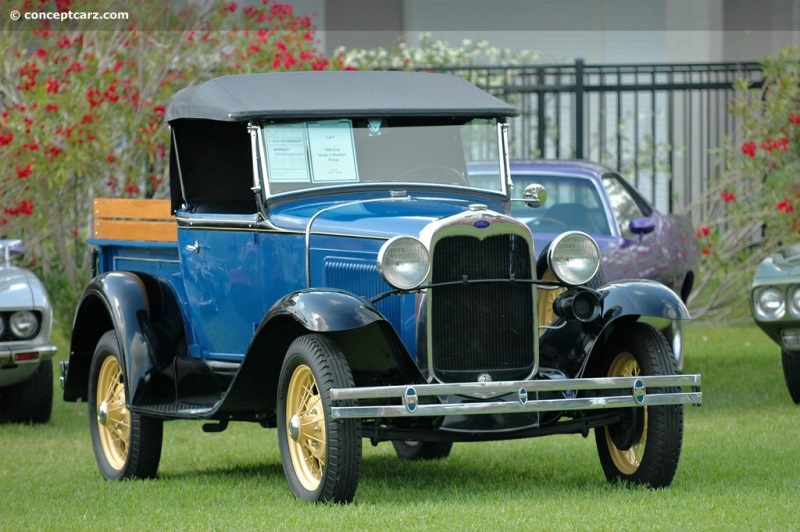
This particular Model A Roadster Pickup has been given a high quality restoration. There are five new period-style tires, fresh top, driver's side external rear view mirror, and tailgate chain protectors. It is one of only 2,637 open cab roadster pickups produced in 1931. It is painted in Hessian Blue and powered by a 200.5 cubic-inch L-Head four-cylinder engine rated at 40 horsepower. There is a three-speed manual transmission and four-wheel mechanical brakes.
In 2009, this Model A Roadster Pickup was offered for sale at the Houston Classic Auction in Seabrook, Texas presented by Worldwide Auctioneers. The lot was estimated to sell for $25,000 - $35,000. As bidding came to a close, the lot had been sold for the sum of $21,000, plus buyer's premium.
![]() | ![]() | View more photos A400 |
![]() | Convertible Sedan |
Styling was revised for the final year of Model A production, including a new radiator shell with a relief design. The chassis and drive train remained the same - powered by Ford's four cylinder motor that developed 40 horsepower.
This car was the recipient of a complete, body-off restoration in 2007. That year it received the Award of Excellence at the Model A Restorers Club (MARC) national meet.
The name Model A was first used by Ford in 1903 and also known as the Fordmobile. This was the first vehicle produced by the Ford Motor Company and its first owner was Dr. Ernst Pfenning of Chicago, Illinois who purchased the Model A on July 23, 1903. Production of the first generation Model A lasted from 1903 through 1905 with 1750 examples being produced.
Automobile production was new and experiments with design, techniques, and technology were still being experimented with. Many early producers of the automobile had been in either the coachbuilding business or the bicycle business. Upon the invention of the automobile, they switched to the production of horseless carriages.
Henry Ford had $28,000 in investment capital to begin his new business. Upon completion of his first motorcar, he had spent all but $223.65. The Model A's were available as either a two-seater runabout or a four-seater tonneau. A flat-2 engine was horizontally-mounted midship and capable of producing 8 horsepower. A three-speed planetary transmission was matted to the engine. Dimensions and weight varied but the advertised top speed of the vehicle was about 45 miles per hour. The base price was $750 and was available with options such as a rear seat for $100. A rubber roof would set the buyer back an additional $30 while the leather roof was $50.
The Model A was replaced by a sequence of 'letter cars' until Ford produced the perfect combination of accordability and reliability with the Model T. It was mass produced and by 1914 the adaptation of the assembly line streamlined the process even further. By the 1920s, Ford had mobilized the United States with their customers wanting more and willing to pay more for it. Chevrolet's were becoming popular because they were similar to the Ford but offered a few extra amenities at a slightly higher but still reasonable price. Near the close of the 1920's and after sales began to slip, Ford realized that a replacement was needed.
So as production came to a close for the Model T, Henry Ford halted all production for six months to retool the equipment and prepare for the production of the Model A. The second generation of the Ford Model A began on October 20th, 1927. Sale of the Model A began on December 2nd, 1927 and was offered in four colors. The Model had been available in the United States only in black because it dried the fastest.
The public eagerly awaited the sale of the Model T's replacement and were not disappointed. It was a stylish and elegant vehicle, which had been designed by Henry Ford's son, Edsel. In comparison to its predecessor, it was more sophisticated and complex.
The cost of the second generation Model A, produced 24 years after the original Model A was sold for $365 less, with price ranging from $385 through $570. The car was powered by an L-head 4-cylinder engine with just over 200 cubic-inches in displacement. A three-speed sliding gear transmission with 1 reverse speed was used. Top speed was achieved a little over sixty-miles per hour with the average fuel mileage being rather exceptional at over 40 MPG.
Just like the Model T, the Model A was available in multiple configurations such as the top of the line Fordor in either 2 or 3 window, Victoria, Station Wagon, Truck, Town Car, Convertible Cabriolet, Phaeton, Business Coupe, Sport Coupe, Roadster Coupe, and Coupe to name a few.
During the production lifespan of the Model A, lasting until August 31, 1931, Ford produced 4,320,446 Model A's. It was replaced by the Model B.
For more information and related vehicles, click here© 1998-2010. All rights reserved. The material may not be published, broadcast, rewritten, or redistributed.
Automobile production was new and experiments with design, techniques, and technology were still being experimented with. Many early producers of the automobile had been in either the coachbuilding business or the bicycle business. Upon the invention of the automobile, they switched to the production of horseless carriages.
Henry Ford had $28,000 in investment capital to begin his new business. Upon completion of his first motorcar, he had spent all but $223.65. The Model A's were available as either a two-seater runabout or a four-seater tonneau. A flat-2 engine was horizontally-mounted midship and capable of producing 8 horsepower. A three-speed planetary transmission was matted to the engine. Dimensions and weight varied but the advertised top speed of the vehicle was about 45 miles per hour. The base price was $750 and was available with options such as a rear seat for $100. A rubber roof would set the buyer back an additional $30 while the leather roof was $50.
The Model A was replaced by a sequence of 'letter cars' until Ford produced the perfect combination of accordability and reliability with the Model T. It was mass produced and by 1914 the adaptation of the assembly line streamlined the process even further. By the 1920s, Ford had mobilized the United States with their customers wanting more and willing to pay more for it. Chevrolet's were becoming popular because they were similar to the Ford but offered a few extra amenities at a slightly higher but still reasonable price. Near the close of the 1920's and after sales began to slip, Ford realized that a replacement was needed.
So as production came to a close for the Model T, Henry Ford halted all production for six months to retool the equipment and prepare for the production of the Model A. The second generation of the Ford Model A began on October 20th, 1927. Sale of the Model A began on December 2nd, 1927 and was offered in four colors. The Model had been available in the United States only in black because it dried the fastest.
The public eagerly awaited the sale of the Model T's replacement and were not disappointed. It was a stylish and elegant vehicle, which had been designed by Henry Ford's son, Edsel. In comparison to its predecessor, it was more sophisticated and complex.
The cost of the second generation Model A, produced 24 years after the original Model A was sold for $365 less, with price ranging from $385 through $570. The car was powered by an L-head 4-cylinder engine with just over 200 cubic-inches in displacement. A three-speed sliding gear transmission with 1 reverse speed was used. Top speed was achieved a little over sixty-miles per hour with the average fuel mileage being rather exceptional at over 40 MPG.
Just like the Model T, the Model A was available in multiple configurations such as the top of the line Fordor in either 2 or 3 window, Victoria, Station Wagon, Truck, Town Car, Convertible Cabriolet, Phaeton, Business Coupe, Sport Coupe, Roadster Coupe, and Coupe to name a few.
During the production lifespan of the Model A, lasting until August 31, 1931, Ford produced 4,320,446 Model A's. It was replaced by the Model B.
| Vehicle Spotlight |
![]() | ![]() | ![]() | ![]() | ![]() | ![]() |
![]() | ![]() | ![]() | ![]() | ![]() | ![]() |
![]() | ![]() | ![]() | ![]() | ![]() | ![]() |
![]() | ![]() | ![]() |
| 1931 Ford models |
| Ford Gemsa Sprint Car |
| Ford: 1931-1940 |
| Similar Automakers |
| Ford History |
| Manufacturer Website |
| Other models by Ford |
![]() |