The supercharged road-going Mercedes of the 1930s are wonderful testaments to the unprecedented fertility in motor car mechanical and styling advancement. The 500 K's immediate forerunner, the 380, was introduced in 1933 at the Berlin Auto Show. It was powered by a 3.8-liter supercharged straight-eight and positioned at the head of Mercedes-Benz's model range alongside the aging SS. Building upon and refining the mechanical prowess of the earlier S series, Mercedes-Benz's forced induction technology enabled the driver to engage the supercharger for short bursts of enhanced acceleration. 
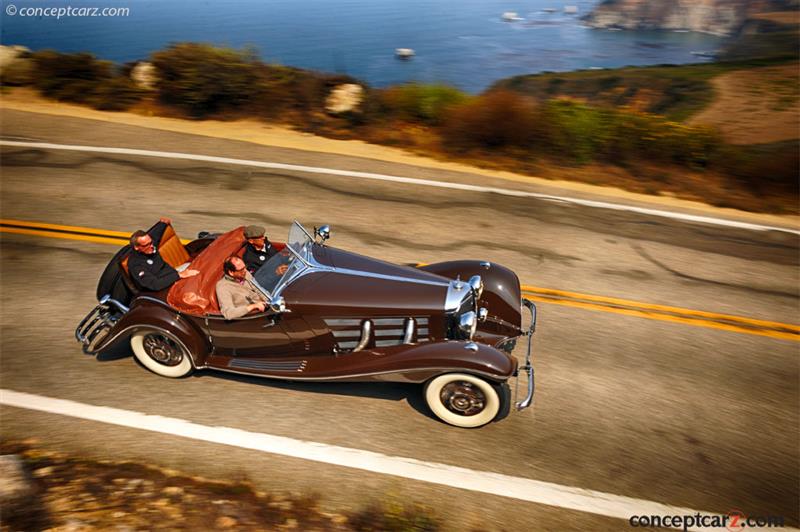
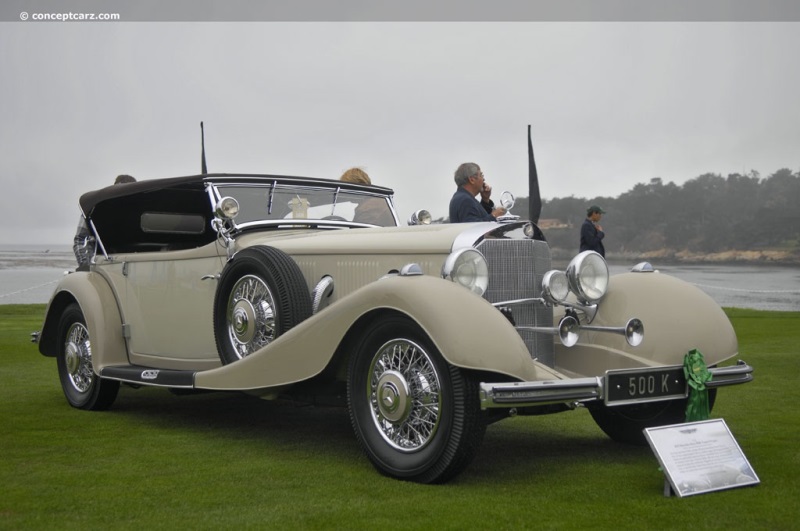
Roadster by Windovers
Chassis #: 123699
Engine #: 123699
View info and history
Auction entries : 1The 380 continued the design lineage of the S series with the large V-shaped radiator, positioned far back on the chassis, and prominent Bosch headlights. Using the very best of modern automotive technology of the era, the 380 was equipped with all-round independent suspension and four-wheel hydraulic brakes. The result was class-leading handling, ride, and braking, complemented by the effortless power of the blown straight-eight engine.Unlike previous cars which had been designed and built to be chauffeur-driven, the 380 was designed as owner/driver transportation, reflecting the evolving social and economic changes of the 1930s. Although a Paragon of technological advances, the 380 was deemed insufficiently powerful to reach the desired performance levels when carrying large and stately, fully-enclosed limousine coachwork. The solution was its successor, the 500 K, and the succeeding 540 K. The Mercedes-Benz 500 K was introduced at the Berlin Auto Show, a mere 13 months after the 380's arrival. Power was sourced from a 5,018cc overhead-valve straight-eight engine fitted with the company's Roots-type supercharger system that became fully engaged with pressing the accelerator pedal to the end of its travel. The system engaged the compressor and at the same instant closed off the alternative atmospheric intake to the carburetor.
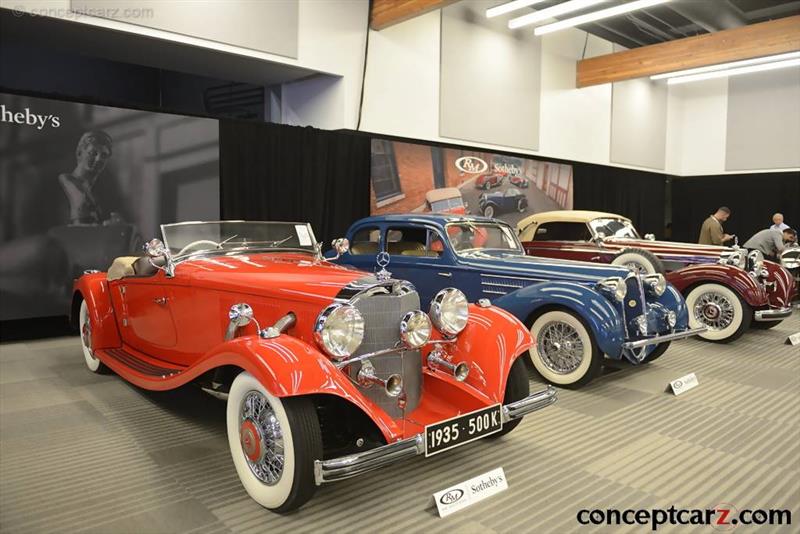
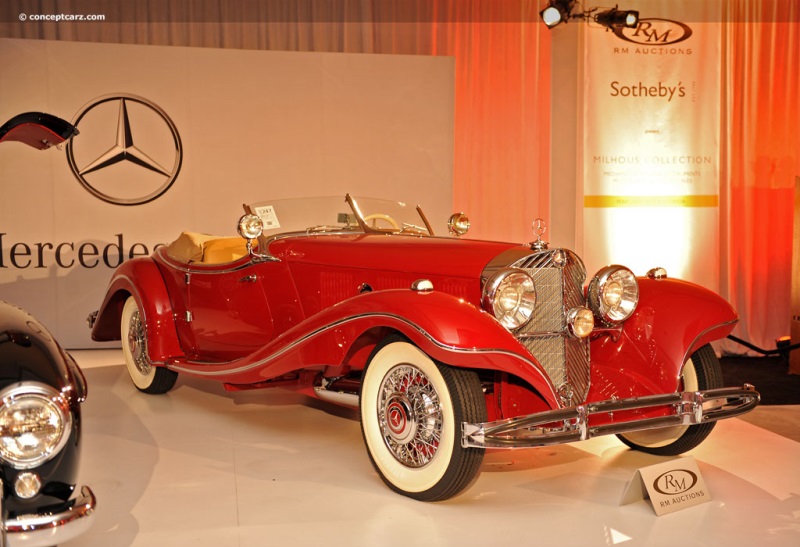
Special Roadster
Engine #: 123686
View info and history
Auction entries : 1The Mercedes 380 remained in production through the end of 1934, after which the 500 K remained unchallenged as the top-of-the-line model. The Mercedes 500 K used a steel box-section chassis and a similar all-independent suspension setup as its predecessor. The front used double wishbones and coil springs while the rear was comprised of a swing axle, twin coil springs, and hydraulic level-type shock absorbers for damping. Examples built later in the production lifecycle received horizontal camber compensating springs that further refined wheel control. The rear swing-axle independent setup was created by Hans Nibel, whose career at Mercedes-Benz began during the early years of the 20th Century, succeeding Marius Barbarou as chief engineer in 1904. He designed and raced the mighty Benz cars of the period, culminating in the 200hp 'Blitzen' Benz. Following the merger in 1926 between Daimler-Motoren-Gesellschaft and Benz & Cie., Nibel replaced Ferdinand Porsche and would ultimately build some of the most sophisticated chassis of their day, used for both the road and track, including the first of the legendary 'Silver Arrow' racers. The stopping power of the 500 K was handled by servo-assisted hydraulic drum brakes, and the engine was backed by either a four or five-speed gearbox. Standard equipment included electric windscreen wipers, centralized lubrication, safety glass, two spare wheels, a 12-volt electrical system, and central fog light.
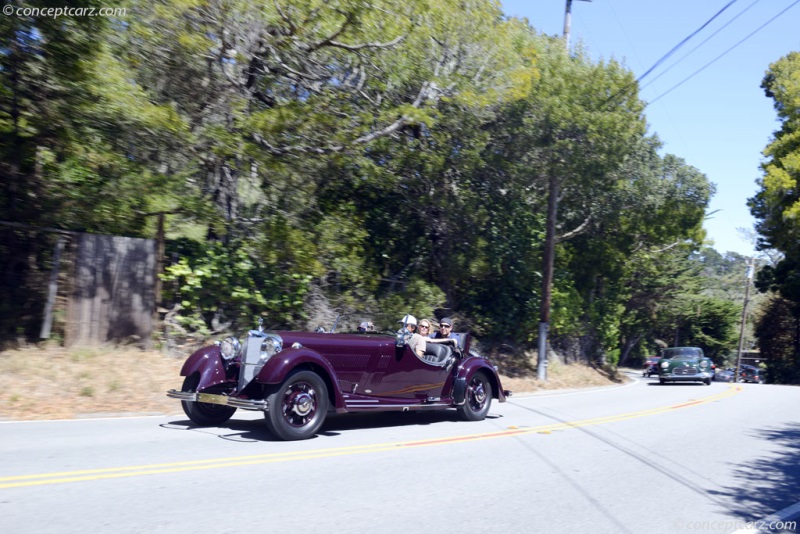
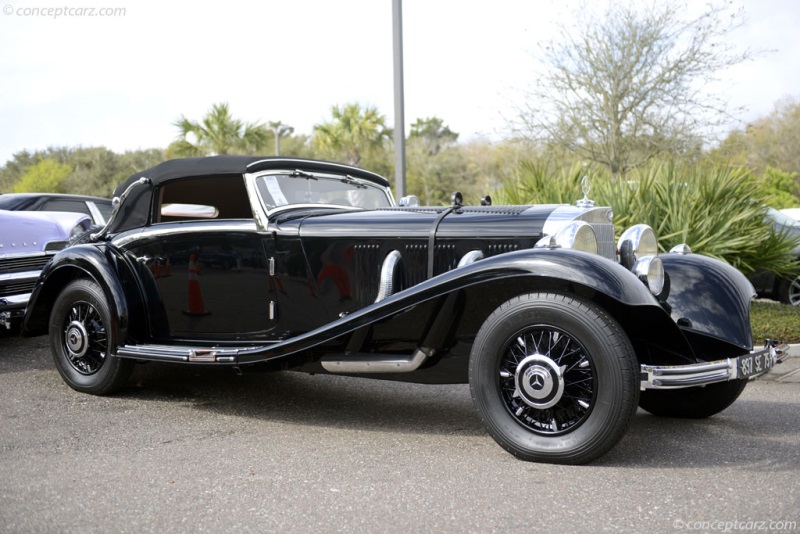
Cabriolet A
Chassis #: 105384
Engine #: 105384
View info and history
Auction entries : 1The five-liter eight-cylinder pushrod engine developed 100 horsepower in the un-supercharged guise or 160 bhp at 3,400 RPM with the compressor engaged via its multi-plate clutch. With the potent powerplant, the 500K was one of the few genuine 100 mph road cars available in the 1930s, with a top speed approaching 177 km/h (110 mph). Unlike most automakers of the era, Mercedes-Benz offered a wide variety of body styles that were built in their Sindelfingen factory. Several factory body styles were offered on the three different sized wheelbase platforms, including several open and closed variants. A total of 354 (as few as 342) examples were built including 29 'Spezial Roadsters' designed by stylist Hermann Ahrens. The two-seater Spezial Roadster was distinguished by its V-shaped split front window. 105 examples of the 500 K were built in 1934, 190 in 1935, and 59 in 1936.The two longer 'B' and 'C' four-seat cabriolet coachwork was built atop the 129.5-inch (3290 mm) platform, and later used on touring and sedan bodies. The shorter 'A' platform had a wheelbase size of 117.3-inches (2980 mm) and used for two-seater coachwork, including the Special Roadster.
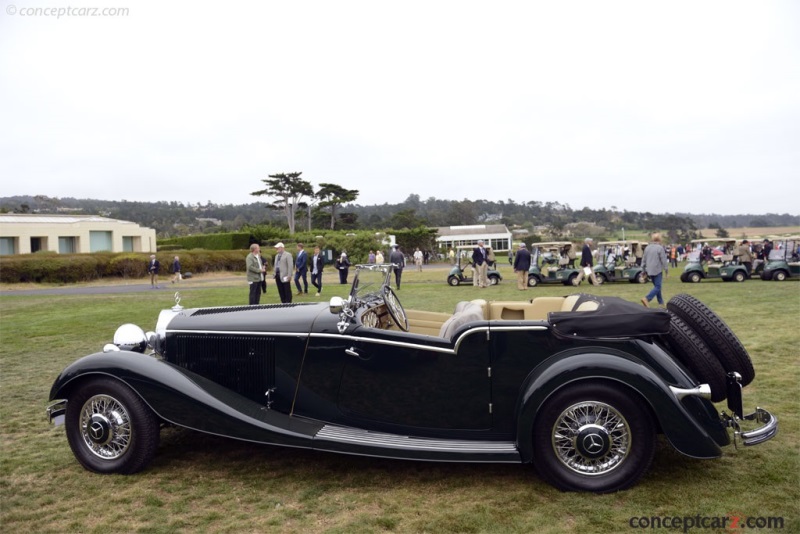
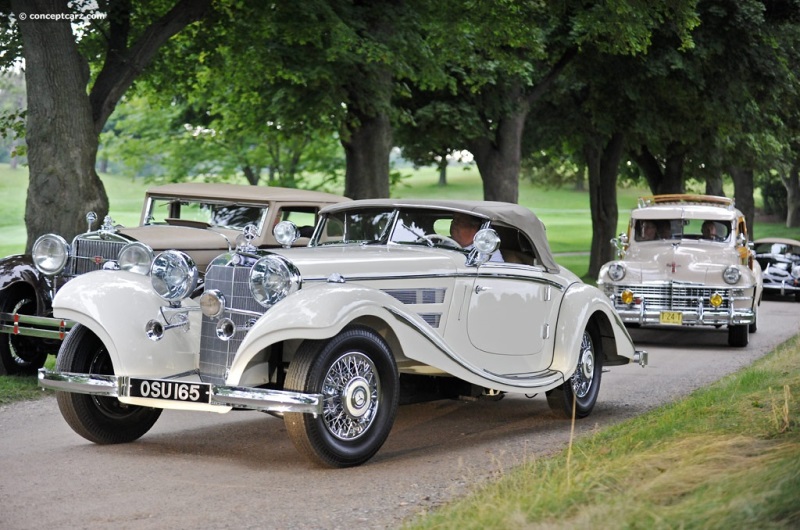
Touren Wagon
View info and historyThe 540 K that followed continued the pedigree of its predecessors, with production remaining exclusive with just 319 examples built. The 500K and 540K were arguably the most noteworthy production models offered by the Stuttgart firm during the 1930s, and the last supercharged production Mercedes until relatively recent times. Designed for the network of high-speed Autobahns that was spreading across Germany in the 1930s, the Mercedes-Benz 500K was the pinnacle of automotive engienering excellence.
by Daniel Vaughan | Jun 2021
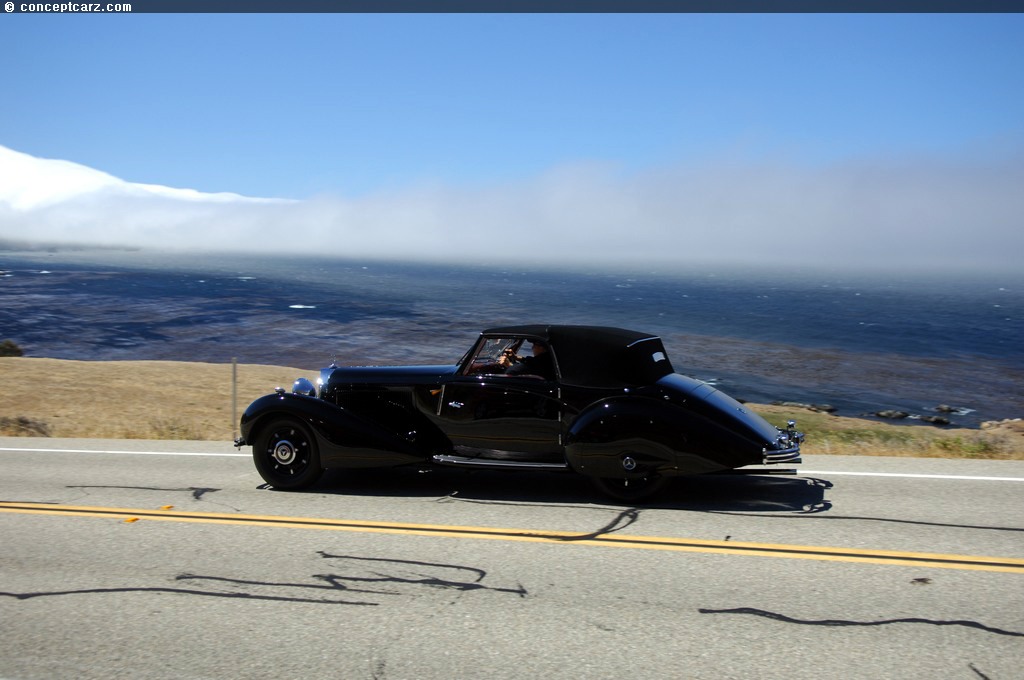
Roadster by Windovers
Chassis #: 123699
Engine #: 123699
View info and history
Auction entries : 1
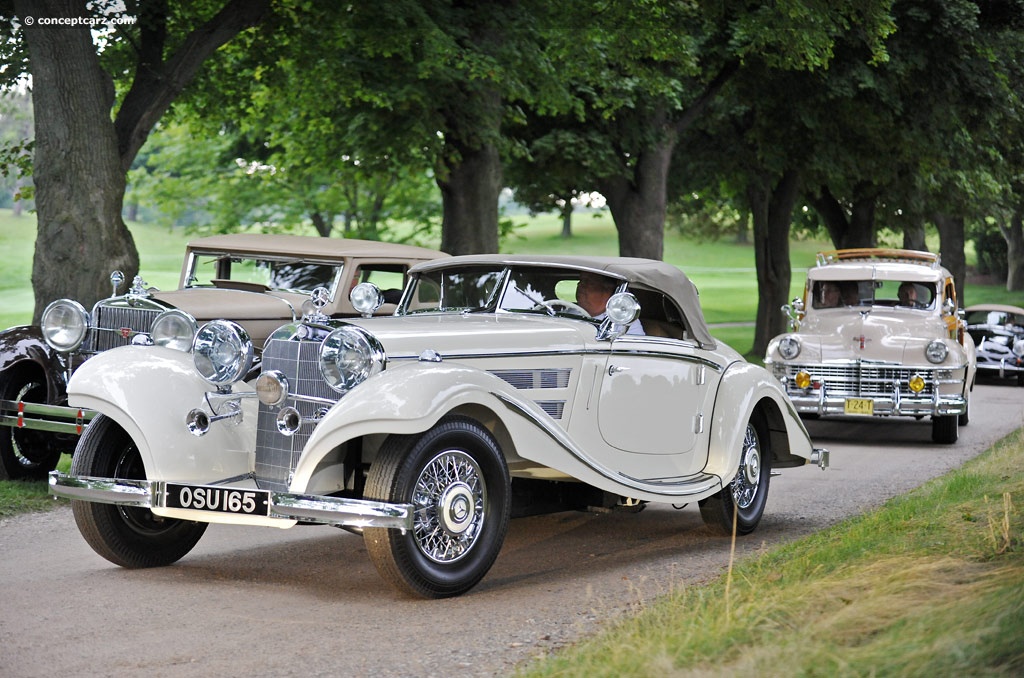
Special Roadster
Engine #: 123686
View info and history
Auction entries : 1
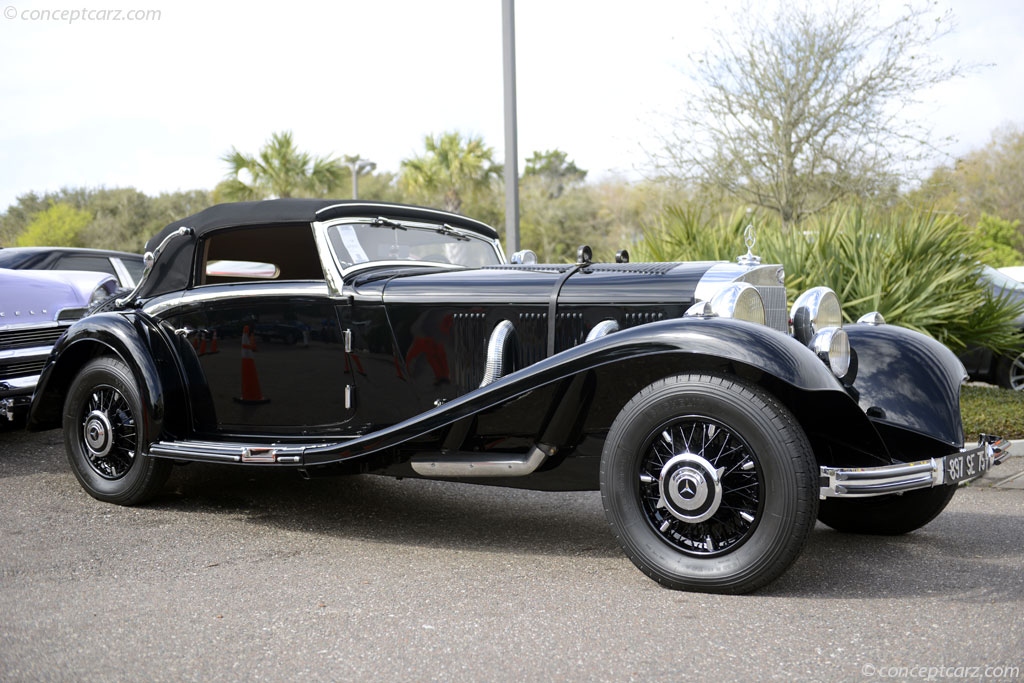
Cabriolet A
Chassis #: 105384
Engine #: 105384
View info and history
Auction entries : 1
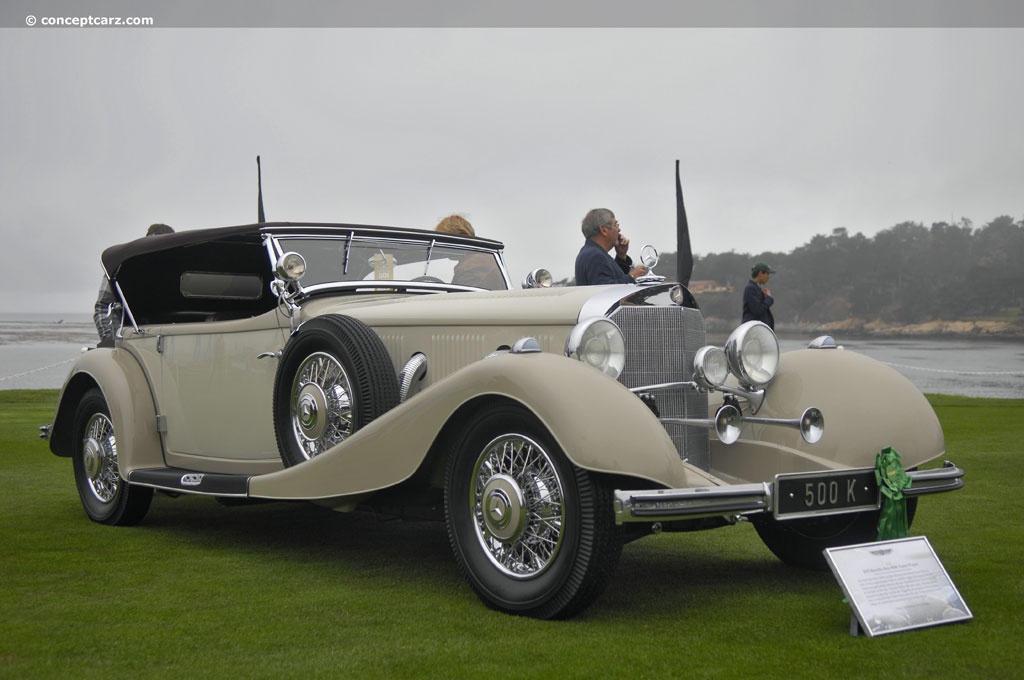
Touren Wagon
View info and history
by Daniel Vaughan | Jun 2021
Similarly Sized Vehicles
from 1935


1935 Mercedes-Benz 500K Vehicle Profiles





Recent Vehicle Additions


Performance and Specification Comparison
500 Specification Comparison by Year
Year
Production
Wheelbase
Engine
Prices
Related Automotive News

The Amelia 2019 Celebrates Mercedes-Benz 500K - 540K
Jacksonville, FL - A special class of Mercedes-Benz 500K - 540K will take center stage at the 24th annual Amelia Island Concours dElegance on March 10, 2019.
The 500K and 540K descend from the mighty Mercedes-Benz SSK, winner of the brutal...

Inaugural Concours d'Elegance of Texas deemed a massive success
Houston, Texas. May 15, 2012. Last weekend, the award winning La Torretta Lake Resort %26 Spa in Montgomery played host to the biggest and most prestigious classic car weekend in Texas, welcoming thousands of visitors through its gates for the inaugural...

Coys Legende et Passion Auction
The catalogue for Coys international auction, Legende et Passion, held in Monaco on Saturday 12th May 2012, is now available online to Club members at www.coys.co.uk.
This is a very significant European headline auction, held against the backdrop...

The Škoda Karoq: New Compact SUV With Lots Of Space And State-Of-The-Art Technology
Design modern dynamic SUV design language
Powertrains four new engines, powerful and efficient TSI and TDI
Chassis state-of-the-art technology, up to five driving modes and special Off-Road mode
Driver assistance systems extended range for in...

HONDA CIVIC TYPE R MAKES NORTH AMERICAN DEBUT AT THE 2016 SEMA SHOW
Oct 28, 2016 - TORRANCE, Calif.
Civic Type R headlines Civicpalooza display featuring more than nine tuned, accessorized and custom-built Civic Sedans, Coupes and Hatchbacks
10th Generation Civic Racing vehicles include 2016...

BONHAMS RETURNS TO STUTTGART WITH A MIGHTY MILLION EURO MERCEDES-BENZ
Bonhams return to Stuttgart for the annual single-marque Mercedes-Benz sale will be led by the magnificent 1928 Mercedes-Benz Model K 6,240cc Supercharged Torpedo Transformable. With its superb Saoutchik transformable coachwork, it is estimated at €800,000-1,200,000.
Wi...

15 Exciting Collector Automobiles to Watch During This January's Scottsdale, Arizona Car Week Auctions
Scottsdale, Arizona (January 13th, 2016) – Astute Collectors of the worlds most sought after and most valuable automobiles know that Scottsdale, Arizona in January is where the market values for collector cars are established each year. As such, they...

2015 RANGE ROVER SPORT SVR
The 2015 Range Rover Sport SVR will be the first Land Rover vehicle to wear the new high-performance SVR badge
The Range Rover Sport SVR is the most dynamically focused Land Rover vehicle ever produced
To see the official 2015 Range Rover Sport SV...