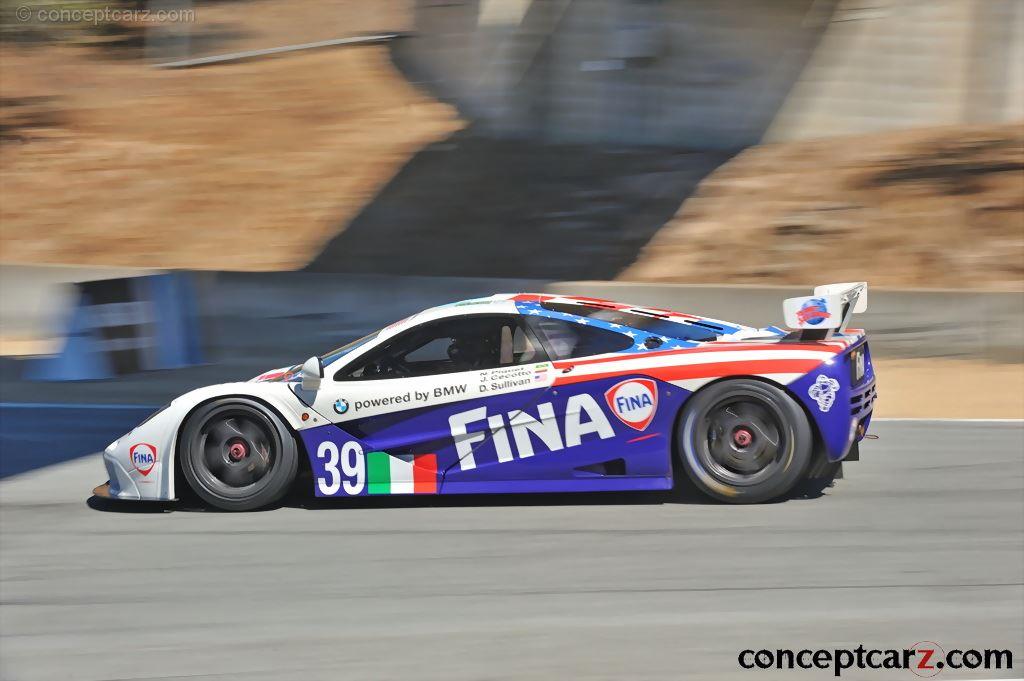
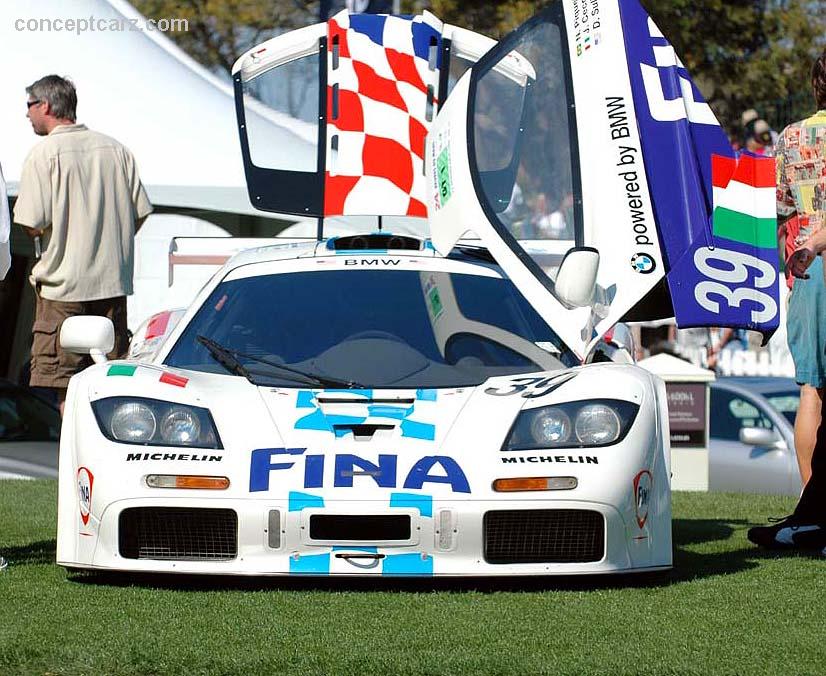
In 1995, seven McLaren F1 GTRs were entered into the grueling and prestigious LeMans 24 Hours race. When the checkered flag fell, the GTR had captured an astonishing 1st, 3rd, 4th, 5th, and 13th overall and 1st, 2nd, 3rd, and 4th in the GT class. McLaren became the first manufacturer to score four of the top five places with a vehicle debut. The winning GTR had never been raced prior to the race and has not been raced since.
Coupe
Chassis #: 17 R
View info and historyThe F1 GTR cars were built by McLaren cars LTD which is a subsidiary of the McLaren Formula One Team. At the time of its development, it was the most expensive, most powerful, and fastest production car in the world. This unique vehicle had a modified BMW 6.1 liter 12-cylinder engine placed in the rear to capitalize on weight distribution. With nearly 630 horsepower, the F1 GTR could race from zero-to-sixty mph in just over three seconds and had a reported top speed of over 230 mph. It holds the record for the highest top speed of 240.1 mph.There were three seats, with the driver sitting in the middle. The purpose was to once again capitalize on weight distribution and provide the driver with optimal viewing capabilities of the road. The drawback was that it was difficult to enter and exit this vehicle. The driver had to negotiate their body into this very low vehicle and then climb over a passenger seat. To be in command of these highly capable machines is well worth the obstacle course. During the production lifespan, lasting from 1991 to 1998, only 100 cars were created, making this a very exclusive automobile. The McLaren F1 production began in 1991 and resulted in a total of 64 examples being created. There were five LM cars created to celebrate the historical achievements accomplished at LeMans, one for each of the F1 GTRs that finished the LeMans race. The F1 LM was very similar to the LeMans cars, but they were modified to achieve street-legal status. The engine was tuned slightly to produce an astonishing 680 horsepower. There were three GT models created. The GT cars were built to capitalize on down-force, much like the LeMans cars had done. The bodywork was extended and a redesign of the rear deck helped achieve this low drag goal.
Coupe
Chassis #: 17 R
View info and historyFrom 1995 through 1998, twenty-eight examples of the GTR were created. The F1 GTRs varied slightly from year to year. Some were designed to race in 4 hour races while others were built for 24-hour endurance races. Specifications often varied based on the race and on the buyer.In 1996, the BPR GT Series created regulations that limited the maximum engine output to no more than 600 horsepower and must have a minimum weight of 1000kg. McLaren responded by shedding around 100KG and achieving the minimum weight requirements. The engine was detuned to produce 600 horsepower. Aerodynamics and down-force were improved by the adaptation of a larger rear wing. At the 1996 LeMans, the F1 GTR finished in fourth place overall.The changes continued in 1997 when stricter regulations were placed on the FIA GT Series and the LeMans 24 Hour race. Weight reduction, aerodynamic changes, engine improvements, and a new sequential transmission were a few of the necessary modifications to the vehicle. When all was said-and-done, the vehicle weighed in at just over 910 kg.
by Daniel Vaughan | Jan 2006
Coupe
Chassis #: 17 R
View info and history
Coupe
Chassis #: 17 R
View info and history
by Daniel Vaughan | Jan 2006
GT Vehicles
Similar Automakers


1996 McLaren F1 GTR Vehicle Profiles

Recent Vehicle Additions


Related Automotive News

FAMOUS FIVE McLAREN F1 GTR FINISHERS TO BE REUNITED AT LE MANS TWO DECADES AFTER DOMINANT RESULT
The five McLaren F1 GTRs that finished the 1995 24 Hours of Le Mans to complete a parade lap 20 years after famous victory
Ultimate celebration of the GTR legacy as the McLaren P1™ GTR makes global dynamic debut
Follow the celebrations and join th...

The Celebration of 50 Years of M Continues at Monterey Car Week
First public event appearance of the 2023 M4 CSL at Legends of the Autobahn
Rolex Monterey Motorsports Reunion celebrating 100th Anniversary of 24 Hours of Le Mans with four classic BMW race cars
First-ever Corkscrew Hillclimb Shoot-Out at Weather...

Awakening The Beast: Pagani Zonda Aether Joins RM Sotheby's Abu Dhabi Auction
NOVEMBER SALE AT FORMULA 1 ETIHAD AIRWAYS ABU DHABI GRAND PRIX 2019 IS FIRST OF ITS KIND IN THE MIDDLE EAST
ZONDA ON VIEW AT SOTHEBYS LONDON FROM 15 AUGUST
RM Sothebys announces one-off 2017 Pagani Zonda Aether roadster as feature lot fo...

BMWUSA CLASSIC TO RUN SEVEN CLASSIC RACE CARS IN CENTENARY CELEBRATION AT THE ROLEX MONTEREY MOTORSPORTS REUNION 2016
Woodcliff Lake, N.J. – August 9, 2016…BMW USA Classic will run seven historic race cars at the 2016 Rolex Monterey Motorsports Reunion on August 18-21 in Monterey, California. BMW is the featured marquee at the Rolex Reunion and the brand will...

1989 Indianapolis 500: Sideways to Victory
The tension in the final moments would be so great it would take everything within Shelley Unser to keep from breaking into a shaking fit. Two laps from the end of the race, traffic would dramatically slow Al Unser Jr.s pace allowing Emerson Fittipaldi...

VOLKSWAGEN MOTORSPORT TO CELEBRATE 50th ANNIVERSARY OF FORMULA VEE AT ROLEX 24 AT DAYTONA
Former stars of Formula Vee and Formula Super Vee will take to the track in historic cars, 50 years after the first official FV race
Herndon, VA - Formula Vee will celebrate a big birthday at the Rolex 24 at Daytona this coming weekend (24...