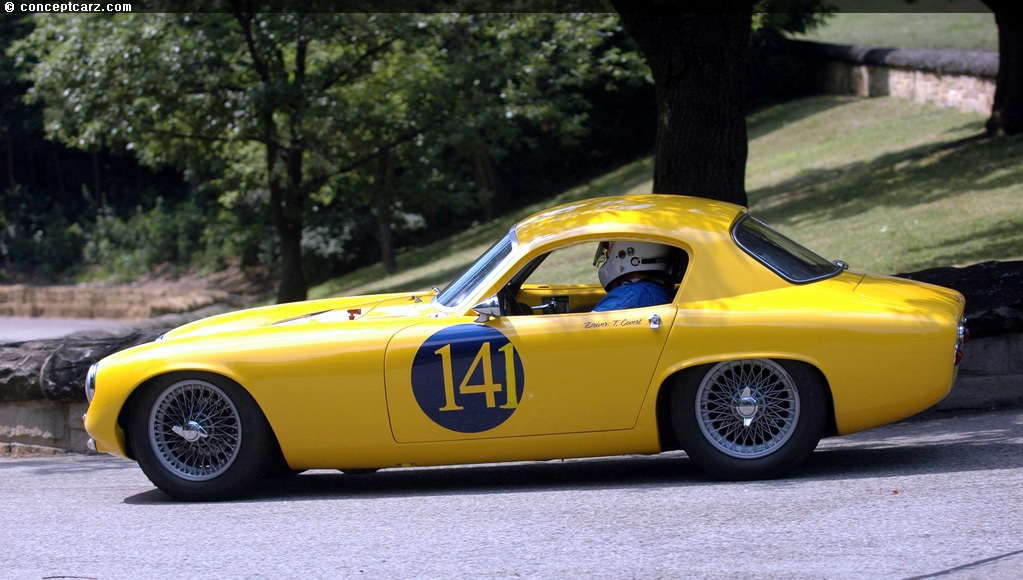
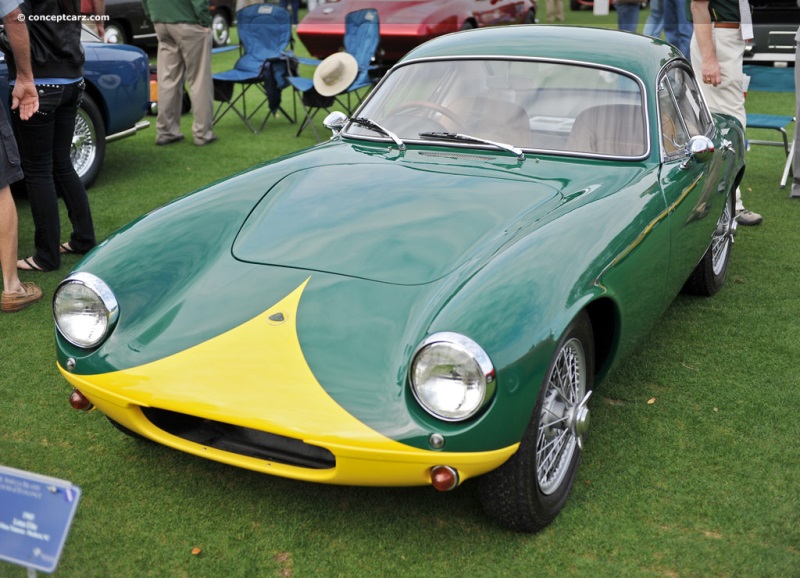
Colin Chapman built lightweight racing cars with aerodynamic designs and small displacement engines. This marriage of efficiency and mechanical sophistication often resulted in performance that exceeded much more powerful machines. His company fostered an enviable reputation reinforced by numerous victories and podium victories, yet Chapman worried its longevity required a firm commercial foundation. Thus birthed the road-going Type 14 Elite Grand Touring Coupe, introduced in 1956 as the far-sighted forerunner of a new age of composite-construction, monocoque-chassised performance cars. Similar to his competition cars, Chapman endowed the Elite with lightweight construction, attractive bodywork, and a potent Coventry Climax FWE all-aluminum inline four-cylinder engine. 
CoupeConstruction
The Lotus Elite received fiberglass monocoque construction with the stressed-skin Glass reinforced plastic unibody acting as a load-bearing structure for the car. The front suspension and engine were supported by a subframe that was bonded into the front of the monocoque, along with a squared-section windscreen hood with mounting points for the door hinges. It provided roll-over support and protection, along with a jacking point for lifting the car. The first two hundred and fifty examples were constructed by Maximar Mouldings at Pulborough, Sussex, but due to numerous problems, the manufacture was entrusted to Bristol Aeroplane Company. With modifications to the design and construction, the resultant body was stiffer, lighter and provided more protection in the event of a crash. Mechanical Specification
The Lotus Elite had a wheelbase size of 88.3 inches, an overall length of 148 inches, stood 46.5 inches tall, and was 59.3 inches wide. The suspension was independent all round with transverse wishbones at the front, and Chapman struts at the rear. The suspension attachment points often pulled out of the fiberglass structure, and was one of the shortcomings of using fiberglass-reinfected plastic without a full understanding of its engineering qualities.
CoupeStopping power was via Girling disc brakes, often devoid of servo assistance, positioned inboard at the rear and measuring 9.5 inches in diameter. The tires were Pirelli Cinturato 155HR15. Engine and Transmission
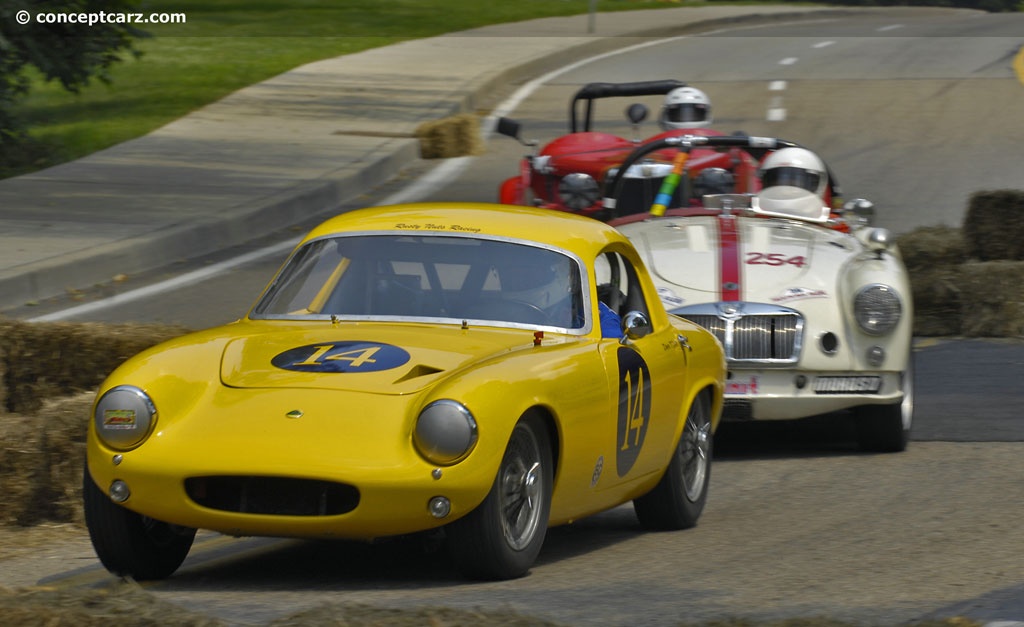
All production Elites (except one that received a newly developed Lotus-Ford Twin Cam engine) were equipped with a Coventry Climax FWE all-aluminum inline four-cylinder engine. It displaced 1.2 liters (1,216cc) and offered approximately 75 horsepower. The transmission was a four-speed manual unit.In 1960, the SE version was introduced and came with twin SU carburetors and a fabricated exhaust manifold, boosting engine output to 85 hp. Additional upgrades included a ZF gearbox, Lucas PL700 headlamps, and a silver-colored roof.
CoupeThe Super 95 version received a higher compression ratio and a stronger camshaft with five bearings. A few Super 100 and Super 105 versions had Weber carburetors and were intended for motorsport competition. Body Design
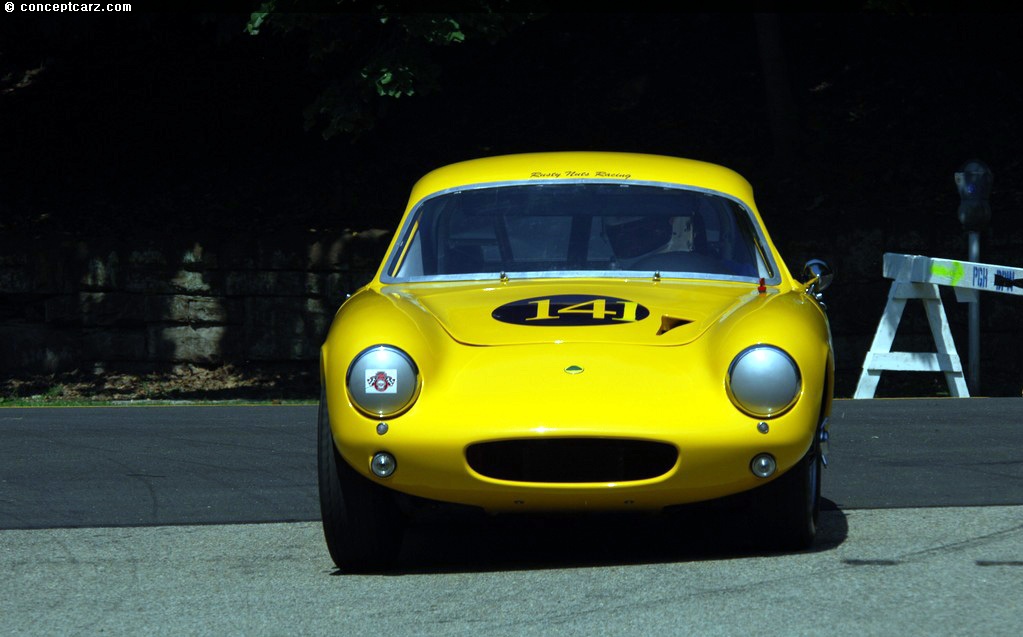
Without the aid of computers or wind tunnel testing, designers were able to pen a body with a low drag coefficient of Cd=0.29. Peter Kirwan-Taylor created the original Elite drawings, with Frank Costin contributing to the final design. Frank was the brother Mike (a co-founder of Cosworth) and Chief Aerodynamic Engineer for the de Havilland Aircraft Company.Production
The Lotus Elite was produced from 1957 to 1963, with 1,030 examples built (as many as 1,047). Performance
The Lotus Elite was capable of racing from zero to sixty mph in 11.4 seconds and had a top speed of nearly 112 mph.
by Daniel Vaughan | Jun 2023
Coupe
The Lotus Elite received fiberglass monocoque construction with the stressed-skin Glass reinforced plastic unibody acting as a load-bearing structure for the car. The front suspension and engine were supported by a subframe that was bonded into the front of the monocoque, along with a squared-section windscreen hood with mounting points for the door hinges. It provided roll-over support and protection, along with a jacking point for lifting the car. The first two hundred and fifty examples were constructed by Maximar Mouldings at Pulborough, Sussex, but due to numerous problems, the manufacture was entrusted to Bristol Aeroplane Company. With modifications to the design and construction, the resultant body was stiffer, lighter and provided more protection in the event of a crash. Mechanical Specification
The Lotus Elite had a wheelbase size of 88.3 inches, an overall length of 148 inches, stood 46.5 inches tall, and was 59.3 inches wide. The suspension was independent all round with transverse wishbones at the front, and Chapman struts at the rear. The suspension attachment points often pulled out of the fiberglass structure, and was one of the shortcomings of using fiberglass-reinfected plastic without a full understanding of its engineering qualities.
Coupe
All production Elites (except one that received a newly developed Lotus-Ford Twin Cam engine) were equipped with a Coventry Climax FWE all-aluminum inline four-cylinder engine. It displaced 1.2 liters (1,216cc) and offered approximately 75 horsepower. The transmission was a four-speed manual unit.In 1960, the SE version was introduced and came with twin SU carburetors and a fabricated exhaust manifold, boosting engine output to 85 hp. Additional upgrades included a ZF gearbox, Lucas PL700 headlamps, and a silver-colored roof.
Coupe
Without the aid of computers or wind tunnel testing, designers were able to pen a body with a low drag coefficient of Cd=0.29. Peter Kirwan-Taylor created the original Elite drawings, with Frank Costin contributing to the final design. Frank was the brother Mike (a co-founder of Cosworth) and Chief Aerodynamic Engineer for the de Havilland Aircraft Company.Production
The Lotus Elite was produced from 1957 to 1963, with 1,030 examples built (as many as 1,047). Performance
The Lotus Elite was capable of racing from zero to sixty mph in 11.4 seconds and had a top speed of nearly 112 mph.
by Daniel Vaughan | Jun 2023
Related Reading : Lotus Elite Type 14 Coupé History
Founded by Anthony Colin Bruce Chapman, whose ACBC initials appear in the famous green and yellow emblem of his company, Lotus was still a fresh car manufacturer in 1957. For a while prior to that year, Lotus offered the Seven, a seminal sports car with sparse construction and an undiluted personality. The Seven was revered for its lightness and simplicity, and it was a very capable car offering as....
Continue Reading >>
Continue Reading >>
Related Reading : Lotus Elite Type 14 Coupé History
The Lotus Elite was produced from 1958 through 1963. The Elite was Colin Chapmans first real production, road-worthy, closed automobile. The road-going vehicles provided the funds to finance the racing program. Constructed of glassfibre monocoque comprised of eight box sections, the vehicle was both light and strong. Under the hood was an aluminum four-cylinder 1216 cc OHC engine courtesy of Coventry....
Continue Reading >>
Continue Reading >>
Similar Automakers


1960 Lotus Elite Vehicle Profiles


Recent Vehicle Additions


Performance and Specification Comparison
Price Comparison
Elite Type 14 Coupé Specification Comparison by Year
Year
Production
Wheelbase
Engine
Prices
Related Automotive News

Toyota Marks 50-Millionth Corolla Sold
From A Humble Start, the Corolla Grew to Become the Worlds Best-Selling Model, and Toyota Celebrates This Milestone Cars Place in Automotive History and Customers Lives
PLANO, Texas (August 26, 2021) – This past July, Toyota sold the 50-millionth...

1958 Lotus Elite Earls Court Motor Show Car To Star At Silverstone Auctions Sale
Used as the launch car for the 1958 Earls Court Motor Show
Bought new by jazz legend Chris Barber
Restored by Ant Anstead for a Channel 4 special, For The Love Of Cars
Extensively raced in top-level International Sports Car racing from 1958 to 1...

The Ultimate Beach Cruiser: The 1974 Volkswagen Acapulco Thing
The Volkswagen Type 181 – commonly referred to as The Thing – has always been a fun summer classic for drivers who enjoy a cool and wildly original type of ride. The removable doors, retractable soft top and folding windshield provided a driving experience...

CHANNEL 4'S FOR THE LOVE OF CARS RESTORED, FIRST PRODUCTION, EARLS COURT SHOW CAR LOTUS ELITE FOR AUCTION
The 1958 Lotus Elite Series I, one of the most famous Elites in the world, will be auctioned by Silverstone Auctions at the Classic Motor Show Sale on 12th November.
Bought new by close friend of Colin Chapman, the Jazz Legend Chris Barber.
Exten...

GENERAL MOTORS GALORE AT MECUM KISSIMMEE 2016
69 Trans Am Convertibles, 69 ZL1s and Featured Corvettes at Auction, Jan. 15-24
Walworth, Wis. – Jan. 12, 2016 – As the worlds largest collector-car auction featuring 3,000 vehicles, Mecum Kissimmee is unequaled in its variety of mak...