1963 TR4 ![]() |
1962 Triumph TR4 news, pictures, and information | ||
| Tweet | ||
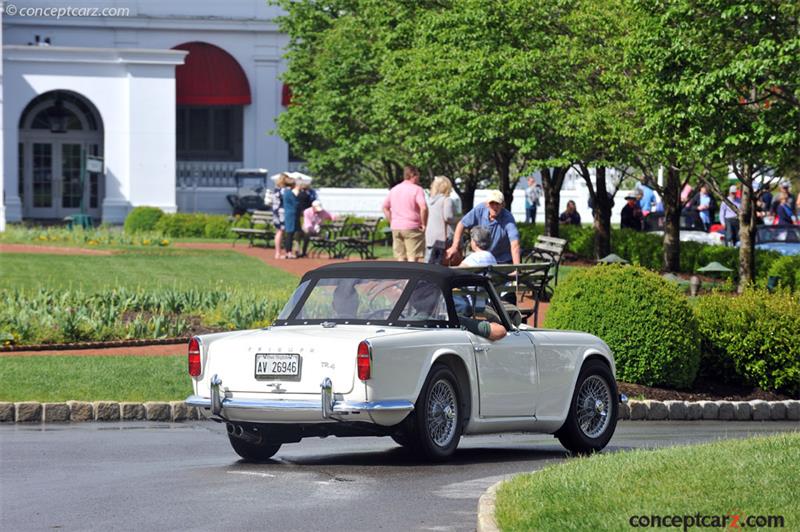
The Giovanni Michelotti designed Triumph TR4 proceeded the TR2 and TR3. It was the last of the four cylinder TRs until the TR7 was introduced in 1975. The chassis and running gear from the TR3 was used to help reduce cost.
During 1961, the TR4 was released. It was more comfortable, practical, and had more room than the previous TR's. Rack-and-pinion steering and servo brakes became available and an optional 2138 cc engine was also offered.
The 1965 TR4A version received a new chassis featuring independent suspension which improved handling. This was the first major update since the 1961 TR4 release.
In 1967 a six-cylinder engine with fuel-injection became available. The US was able to get the six-cylinder but unable to get a fuel-injection version.
During 1961, the TR4 was released. It was more comfortable, practical, and had more room than the previous TR's. Rack-and-pinion steering and servo brakes became available and an optional 2138 cc engine was also offered.
The 1965 TR4A version received a new chassis featuring independent suspension which improved handling. This was the first major update since the 1961 TR4 release.
In 1967 a six-cylinder engine with fuel-injection became available. The US was able to get the six-cylinder but unable to get a fuel-injection version.
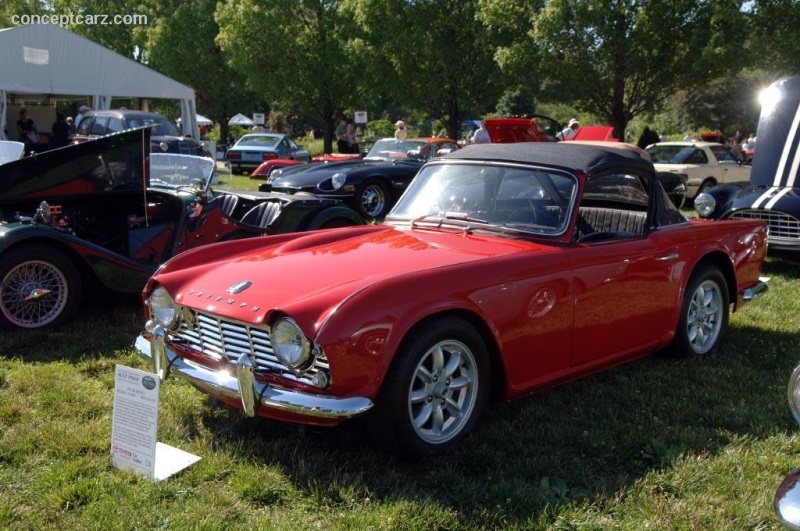
![]() | Roadster |
The engine used was a larger 2138cc Standard engine with 86mm pistons in 'wet liners.' The horsepower rating is 105bhp with 128 foot-pounds of torque. Road and Track magazine reported in 1962 that the TR4 would go from zero-to-sixty mph in 10.1 seconds with a standing quarter mile time of 17.5 seconds at 77.2mph.
![]() | ![]() | ![]() | Hardtop Coupe |
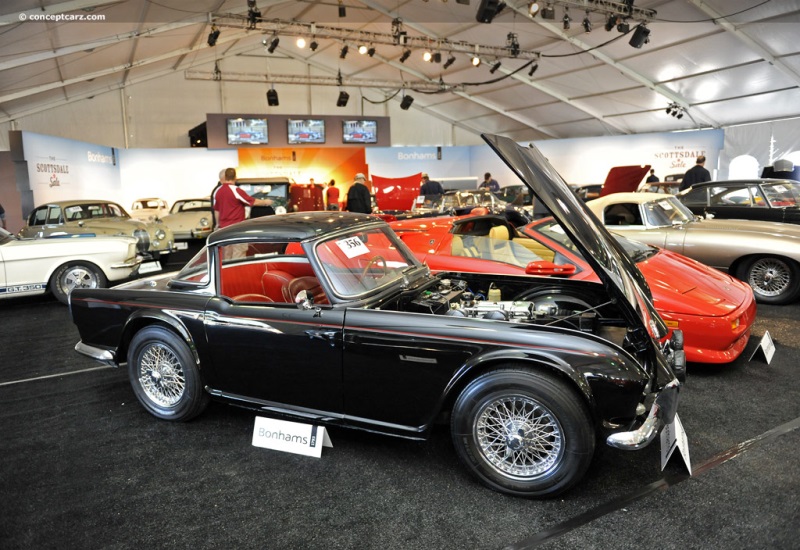
![]() | ![]() | ![]() | Hardtop Coupe Chassis Num: CT10529L Engine Num: TCF1378E |
| Sold for $44,000 at 2011 RM Auctions. Sold for $59,800 at 2013 Bonhams. | |||
This particular example was completed on June 14th of 1962 and originally painted black with red leather trim. Delivered to the Standard Triumph Motor Company of Boston, Massachusetts, this early TR4 was one of the first 500 built and underwent an exhaustive multi-year restoration by Precision Autocraft of Massachusetts in the mid-1990s. The seats were upholstered in leather, trimmed in the original color. It was also given a period Nardi wood-rim steering wheel.
In 2013, the car was offered for sale at the Bonhams Auction in Scottsdale Arizona. It was offered without reserve and sold for the sum of $59,800 including buyer's premium.
By Daniel Vaughan | Feb 2013
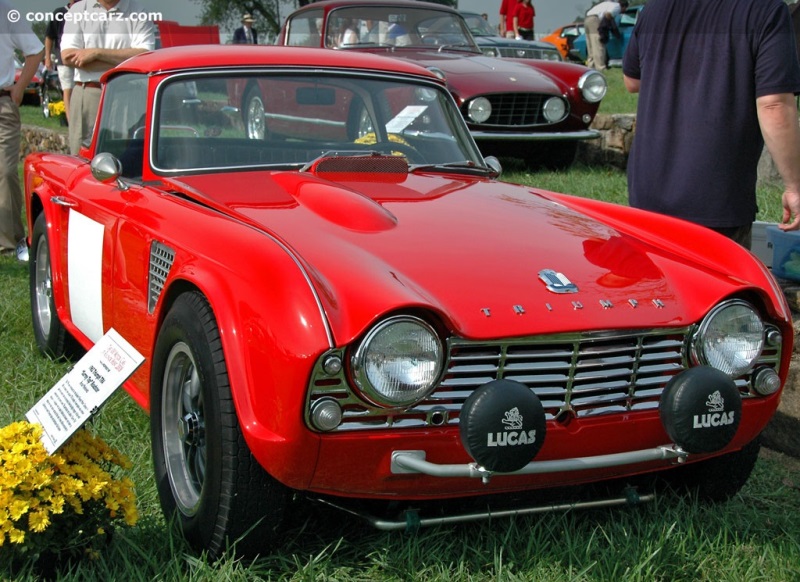
The Triumph TR4 was introduced in 1961. The body had been given a modern and updated appearance by Michelotti but its drive-train and chassis were based on its TR predecessors. Production lasted until 1965 when it was replaced by the TR4A.
Prior to its release and while under development, the car was referred to by its codename, 'Zest'. The TR Series was a popular sports car but it did have its drawbacks and inconveniences. The introduction of the TR4 eliminated a few of the inconveniences by offering roll-up windows in place of the noisy and impractical side-curtains. A redesigned angular rear allowed for a trunk. The trunk and roll-up windows meant that items could be stored safely in the car. The prior plastic side curtains were easily torn and property was often stolen. The soft top could still be compromised but with the addition of the optional removable hard top, the TR4 became very versatile. The hard top had a fixed glass rear window and an integral roll-bar. The first five hundred produced had an aluminum center panel while the rest had a steel center unit.
The TR4 improved performance for the little sports car. The track was enlarged and the steering now used a rack-and-pinion unit. The transmission was now fully synchronized on all gears and the engine was enlarged slightly. An optional Laycock de Normanville electrically operated overdrive could be selected for second, third, and fourth gear.
The wheels original used were 15x4.5 inch disks. One of the more typical tires was the 165x15 bias ply. 48 lace wire wheels could be ordered and were often painted the same color as the car. Other popular options were to have them painted silver, matte, or polished chrome.
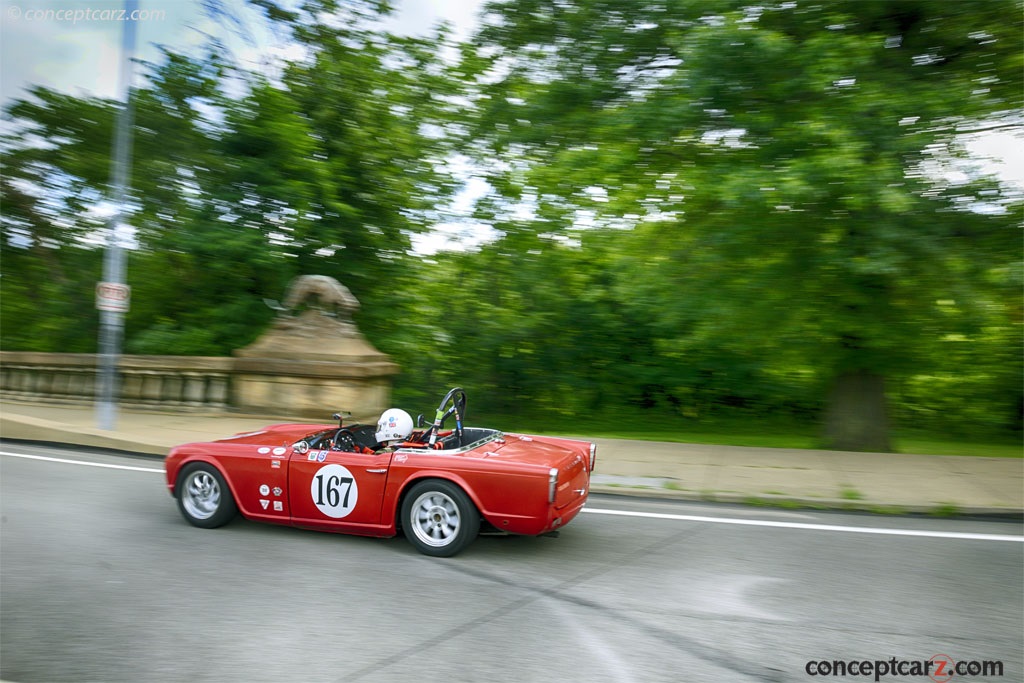
The TR4 was successful both in sales and in sporting events. They could often be seen competing in SCCA, hill-climb, and rally events where they provided plenty of podium finishes for their owners. The wet-sleeve engine was very convenient. The cylinder liners and pistons were easily changed allowing the vehicle to compete under different capacity rules. Some TR4 racers were given a supercharger which raised the 105 bhp SAE output to over 200.
In 1965 the TR4 was given an independent rear suspension, slightly modified frame, and various styling changes. In response to these changes the TR4 was dubbed the TR4A. Production of the TR4A continued until 1968 when it was replaced by the six-cylinder TR250.
The new suspension was an effort by the company to enhance the comfort of the vehicle and address customer complaints. Though the main difference between the TR4 and TR4A was the independent suspension, only about 75 percent of the TR4A models actually had this new suspension. These vehicles can be identified by the 'IRS' badge on the rear of the vehicle. The estimated 25% that did not receive the 'IRS' equipment had the solid rear axle configuration. The reasons for keeping with the solid rear axle was to provide a production racer for those who favored performance over comfort. The solid rear axle was easier to prepare for racing than was the 'IRS' setup. However, the independent rear suspension did not mean that the TR4A was not a competitive racer. The setup proved its potential at the Sebring 12 Hour race in 1966 when three TR4A models with 'IRS' finished in the top three spots.
The TR4 and TR4A were proven vehicles, with an attractive sticker price, sporty intentions, favorable appearance, and many conveniences of the day.
By Daniel Vaughan | Sep 2006
Prior to its release and while under development, the car was referred to by its codename, 'Zest'. The TR Series was a popular sports car but it did have its drawbacks and inconveniences. The introduction of the TR4 eliminated a few of the inconveniences by offering roll-up windows in place of the noisy and impractical side-curtains. A redesigned angular rear allowed for a trunk. The trunk and roll-up windows meant that items could be stored safely in the car. The prior plastic side curtains were easily torn and property was often stolen. The soft top could still be compromised but with the addition of the optional removable hard top, the TR4 became very versatile. The hard top had a fixed glass rear window and an integral roll-bar. The first five hundred produced had an aluminum center panel while the rest had a steel center unit.
The TR4 improved performance for the little sports car. The track was enlarged and the steering now used a rack-and-pinion unit. The transmission was now fully synchronized on all gears and the engine was enlarged slightly. An optional Laycock de Normanville electrically operated overdrive could be selected for second, third, and fourth gear.
The wheels original used were 15x4.5 inch disks. One of the more typical tires was the 165x15 bias ply. 48 lace wire wheels could be ordered and were often painted the same color as the car. Other popular options were to have them painted silver, matte, or polished chrome.
The TR4 was successful both in sales and in sporting events. They could often be seen competing in SCCA, hill-climb, and rally events where they provided plenty of podium finishes for their owners. The wet-sleeve engine was very convenient. The cylinder liners and pistons were easily changed allowing the vehicle to compete under different capacity rules. Some TR4 racers were given a supercharger which raised the 105 bhp SAE output to over 200.
In 1965 the TR4 was given an independent rear suspension, slightly modified frame, and various styling changes. In response to these changes the TR4 was dubbed the TR4A. Production of the TR4A continued until 1968 when it was replaced by the six-cylinder TR250.
The new suspension was an effort by the company to enhance the comfort of the vehicle and address customer complaints. Though the main difference between the TR4 and TR4A was the independent suspension, only about 75 percent of the TR4A models actually had this new suspension. These vehicles can be identified by the 'IRS' badge on the rear of the vehicle. The estimated 25% that did not receive the 'IRS' equipment had the solid rear axle configuration. The reasons for keeping with the solid rear axle was to provide a production racer for those who favored performance over comfort. The solid rear axle was easier to prepare for racing than was the 'IRS' setup. However, the independent rear suspension did not mean that the TR4A was not a competitive racer. The setup proved its potential at the Sebring 12 Hour race in 1966 when three TR4A models with 'IRS' finished in the top three spots.
The TR4 and TR4A were proven vehicles, with an attractive sticker price, sporty intentions, favorable appearance, and many conveniences of the day.
By Daniel Vaughan | Sep 2006
1962
Triumph
models |
| Triumph Spitfire MKI |
| Triumph TR3B |
| Similar Automakers | |
| Allard | Austin-Healey |
| Bristol | MG |
| Morgan | |
| Similarly Sized Vehicles from 1962 |
| BMW 700 |
| Citroen 2CV |
| Fiat 1200 |
| Lancia Appia Series III |
| Lotus Elite |
| MG MGA 1600 |
| Sunbeam Alpine |
| Sunbeam Harrington Le Mans |
| Triumph Spitfire MKI |
| Triumph: 1961-1970 |
| Similar Automakers |
| Other models by Triumph |
| 2000 | Dolomite | Gloria Southern Cross | GT6 | Herald | Spitfire | Stag | TR |
1963 TR4 ![]() |


1962