History
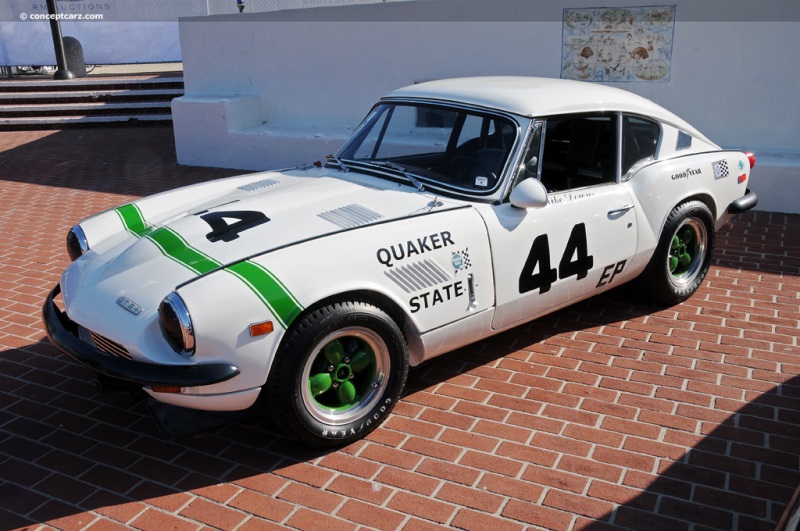
The Triumph GT6 was produced from 1966 through 1973. The GT6 followed on the heels of the Spitfire sports car. The body was a fastback with a rear-opening hatch. The vehicle came from the company as a two-seater, but if requested, additional seating could be placed into the rear, with space accommodating a small child. Under the long hood was a straight six-cylinder that produced just under 100 horsepower. A four-speed manual was standard; overdrive was offered as optional equipment. The top speed was around 106 mph, with zero-to-sixty taking about 11.7 seconds. The fuel economy was respectable. The vehicle's largest downfall was its poor handling in corners. Drivers reported the car had a tendency to break away, much like other models in the Triumph line-up. The extra weight of the vehicle made the Triumph GT6 even worse, and magazines and the press criticized the car rather heavily.
The interior was rather elegant, with a wood dash and complete instrumentation. Heaters and carpets were a luxury at the time, and Triumph offered them as standard equipment.
In 1968 Triumph introduced the GT6 MK2, also known as the GT6+. The spring suspension was replaced with a swing-axle unit with rotoflex couplings resulting in a revised reputation for Triumph. Triumph had finally found a reasonable solution to their Achilles' heel.
As government regulations and safety concerns continued to mount, Triumph conformed to these requirements by raising the bumper. The front end required a little modification due to the bumper changes. Side vents were added to the front wings and rear pillars.
Triumph modified the engine with a new cylinder head, manifolds, and camshafts which boosted horsepower to 104. The top speed was now about 117 mph, with zero-to-sixty taking about 10 seconds. This was faster than its competitor, the MGB GT, which had a 105 mph top speed and 13-second zero-to-sixty mph run. On the interior, a two-speed heater fan was now standard. The dash also received modifications.
The Triumph GT6 MK3 was the final upgrade for the GT6 series; it was introduced in 1970 and lasted until 1973. Triumph revised the body, which brought it inline with the design of the Spitfire. Just before the vehicle was discontinued, the suspension was again revised this time with a swing-spring setup. 1973 brought about other changes, such as cloth seats replacing the previous vinyl. Servo brakes were also added.
The Triumph GT6 was a great sports car, but it never achieved the sales success the company had hoped. The handling was a problem during its early life, but these were quickly rectified. Some have speculated that a convertible option would have helped boost sales.
By Daniel Vaughan | Sep 2006
The interior was rather elegant, with a wood dash and complete instrumentation. Heaters and carpets were a luxury at the time, and Triumph offered them as standard equipment.
In 1968 Triumph introduced the GT6 MK2, also known as the GT6+. The spring suspension was replaced with a swing-axle unit with rotoflex couplings resulting in a revised reputation for Triumph. Triumph had finally found a reasonable solution to their Achilles' heel.
As government regulations and safety concerns continued to mount, Triumph conformed to these requirements by raising the bumper. The front end required a little modification due to the bumper changes. Side vents were added to the front wings and rear pillars.
Triumph modified the engine with a new cylinder head, manifolds, and camshafts which boosted horsepower to 104. The top speed was now about 117 mph, with zero-to-sixty taking about 10 seconds. This was faster than its competitor, the MGB GT, which had a 105 mph top speed and 13-second zero-to-sixty mph run. On the interior, a two-speed heater fan was now standard. The dash also received modifications.
The Triumph GT6 MK3 was the final upgrade for the GT6 series; it was introduced in 1970 and lasted until 1973. Triumph revised the body, which brought it inline with the design of the Spitfire. Just before the vehicle was discontinued, the suspension was again revised this time with a swing-spring setup. 1973 brought about other changes, such as cloth seats replacing the previous vinyl. Servo brakes were also added.
The Triumph GT6 was a great sports car, but it never achieved the sales success the company had hoped. The handling was a problem during its early life, but these were quickly rectified. Some have speculated that a convertible option would have helped boost sales.
By Daniel Vaughan | Sep 2006
Similar Automakers
Similarly Sized Vehicles
from 1969
Similarly Priced Vehicles
AMC Rambler Hurst S/C ($2,995-$2,995)
Chevrolet Chevelle ($2,485-$3,270)
Oldsmobile Cutlass ($2,685-$3,155)
BMW 2002 ($2,980-$2,980)
Plymouth Satellite ($2,636-$3,349)
Plymouth Barracuda ($2,675-$3,085)
Mercury Cougar ($3,000-$3,575)
Plymouth Fury ($2,700-$3,715)
Chevrolet Impala ($2,910-$3,465)
Mercury Montego ($2,540-$2,980)
Average Auction Sale: $37,821
Chevrolet Chevelle ($2,485-$3,270)
Oldsmobile Cutlass ($2,685-$3,155)
BMW 2002 ($2,980-$2,980)
Plymouth Satellite ($2,636-$3,349)
Plymouth Barracuda ($2,675-$3,085)
Mercury Cougar ($3,000-$3,575)
Plymouth Fury ($2,700-$3,715)
Chevrolet Impala ($2,910-$3,465)
Mercury Montego ($2,540-$2,980)
Average Auction Sale: $37,821


1969 Triumph GT6 Vehicle Profiles

Recent Vehicle Additions


Performance and Specification Comparison
Price Comparison
$3,300
GT6 MKII Specification Comparison by Year
Year
Production
Wheelbase
Engine
Prices
Related Automotive News

Porsche Honors Hurley Haywood On 70Th Birthday
Endurance racing legend born May 4, 1948
Atlanta, Georgia. Porsche congratulates one of its most decorated ambassadors, Hurley Haywood, on a shared anniversary The five-time Rolex 24 Hours of Daytona winner turns 70 today, just a month before...

Amelia Island Concours d'Elegance Celebrates The Immortal Jaguar XKE At 60
Sixty years ago a legend was born in secrecy. The first Jaguar XKE prototype, a roadster, was assigned an official chassis number 850001.
On March 11, 2018 the 23rd annual Amelia Island Concours dElegance will celebrate and honor the British...

BILL WARNER IS RRDC'S 2014 BOB AKIN AWARD WINNER
DAYTONA BEACH, Fla. (Jan. 22, 2015) - Bill Warner, best known as the force behind the hugely successful Amelia Island Concours dElegance since 1996, received the 2014 Bob Akin Award from the Road Racing Drivers Club at a dinner prior to the running...
RRDC VOTES IN 37 NEW MEMBERS FOR 2013
HILLIARD, Ohio (Nov. 7, 2013) - Thirty-seven race-car drivers and motorsports professionals have been voted into the Road Racing Drivers Club in 2013. The group includes 13 Regular Members from the open-wheel and sports-car racing ranks, 20 Associate...

Sonoma Historic Motorsports Festival Celebrates Corvette'S 60 Years At Sonoma Raceway
Fast cars, fine food and wine highlight May 18-19 weekend
Paul Reinhart is honored guest, popular racing seminar scheduled for second year
SONOMA, Calif. (April 27, 2013) - The Sonoma Historic Motorsports Festival returns to Sono...