History
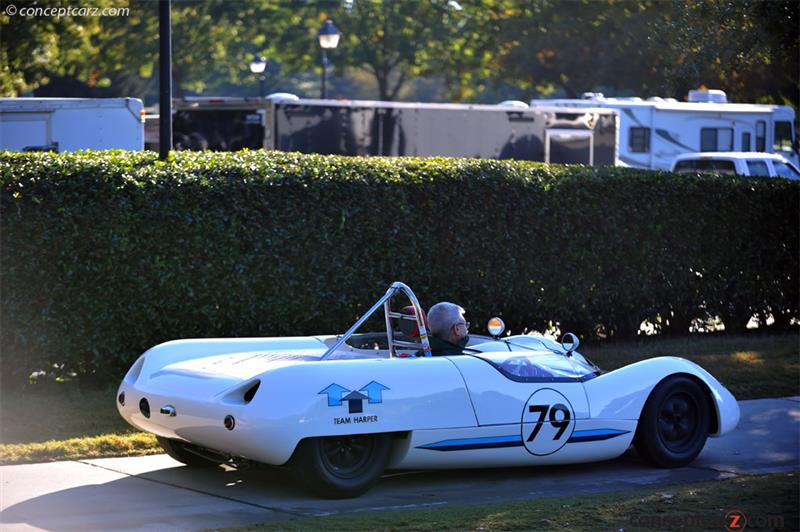
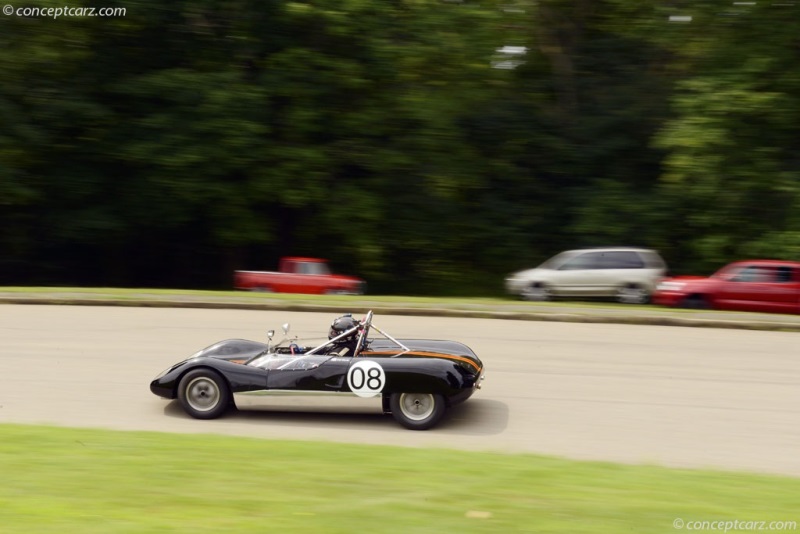
In 1962 Lotus introduced their next iteration of the compact, rear-engined sports cars, the Type 23. It was a derivative of the Lotus 19 which had been produced from 1960 through 1961, as well as the Lotus 20, 21, and 22 cars. The Type 23 made its inaugural racing debut at the Nordschleife in May of 1962. The Lotus was fitted with a 100 horsepower engine, but it was enough to propel the car to the front of the pack, ahead of the Porsches, Ferraris, and Aston Martins. At the wheel was the very capable Jim Clark who had brought the car to the front after the first lap, in the wet. Some of the other cars have as much as four times the horsepower. Sadly, on lap 12 Clark was forced to retire when a damaged exhaust manifold leaked exhaust fumes.
The Type 23 raced extensively in national and international races winning many class victories and oftentimes beating the large-engined competition. It quickly became a popular favorite with many racers and one of Lotus's best-selling race cars of all time.
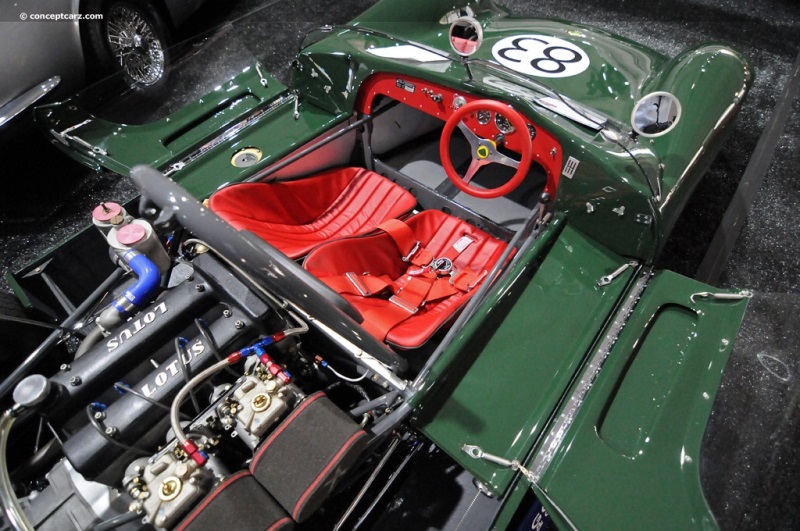
During its production lifespan Louts offered the lightweight car with a variety of options that included the Coventry Climax 750 cc four-cylinder engine and even a 12-cylinder Rotorvic motor for competition at LeMans. In standard form, the Type 23 came equipped with an 1100 cc engine. A popular option was to upgrade to the Type 23B specification which included the 1600cc Lotus/Ford twin-cam engine. The Lotus 23B was given stronger chassis tubes and fitted with a more potent Ford-based 1.5 and 1.6-liter Lotus Twincam engine.
In 1962 a Type 23B driven by Jim Clark easily proved its potential by leading the Ferrari and Jaguar cars at Nurburgring 1000KM before mechanical difficulty led to a crash. The cars dominated many of the races they entered; even in modern times they still provide podium time for their drivers in vintage and historic racing events.
The Type 23 was constructed of fiberglass and outfitted with a Hewland MK gearbox. The suspension was comprised of double wishbones and dual trailing arms. The steering was rack-and-pinion.
By Daniel Vaughan | Feb 2008
The Type 23 raced extensively in national and international races winning many class victories and oftentimes beating the large-engined competition. It quickly became a popular favorite with many racers and one of Lotus's best-selling race cars of all time.
During its production lifespan Louts offered the lightweight car with a variety of options that included the Coventry Climax 750 cc four-cylinder engine and even a 12-cylinder Rotorvic motor for competition at LeMans. In standard form, the Type 23 came equipped with an 1100 cc engine. A popular option was to upgrade to the Type 23B specification which included the 1600cc Lotus/Ford twin-cam engine. The Lotus 23B was given stronger chassis tubes and fitted with a more potent Ford-based 1.5 and 1.6-liter Lotus Twincam engine.
In 1962 a Type 23B driven by Jim Clark easily proved its potential by leading the Ferrari and Jaguar cars at Nurburgring 1000KM before mechanical difficulty led to a crash. The cars dominated many of the races they entered; even in modern times they still provide podium time for their drivers in vintage and historic racing events.
The Type 23 was constructed of fiberglass and outfitted with a Hewland MK gearbox. The suspension was comprised of double wishbones and dual trailing arms. The steering was rack-and-pinion.
By Daniel Vaughan | Feb 2008


1962 Lotus 23B Vehicle Profiles

Recent Vehicle Additions


Related Automotive News

Historic Lotus 19 Raced By Moss, Hill, Ireland And Clark Comes To The Open Market For The First Time In 57 Years
1960 Lotus 19 Monte Carlo, Chassis 953
Raced by some of the greatest British racing drivers
Jim Clark won in this car at Oulton Park in 1964
Signed by Sir Stirling Moss and the last car driven by him as a professional race driver
First raced in 1...

1969 24 Hours of Le Mans: A Traditional Statement Provides a Memorable Race
What if a statement ended up costing one of the biggest victories of ones career Would it be worth it Jacky Ickx would come close to finding out as he approached the checkered flag on the afternoon of the 15th of June in 1969.
Ford had determined...
RRDC VOTES IN 37 NEW MEMBERS FOR 2013
HILLIARD, Ohio (Nov. 7, 2013) - Thirty-seven race-car drivers and motorsports professionals have been voted into the Road Racing Drivers Club in 2013. The group includes 13 Regular Members from the open-wheel and sports-car racing ranks, 20 Associate...

1964 Nurburgring 1000 Kilometers: Survive for One Last Victory
During the late 1950s, Richie Ginther would begin a relationship with John von Neumann and this partnership would result in one of the most dominant periods of American sportscar racing in which Ginther and Porsche would be virtually unbeatable. Nearly...

ALL-AMERICAN CAR TO BE CONSERVED BY ALL-AMERICAN RACERS
One of the race cars American racing legend Dan Gurney is most closely associated with is the Ford Mark IV that he and A.J. Foyt took to a historic victory at the 1967 24 Hours of Le Mans.
Gurney will get a chance to become even more familiar with the...