1966 Porsche 906
1966 Porsche 906 Navigation
History
The Porsche 904, also known as the Porsche Carrera GTS, was designed by Ferdinand 'Butsi' Porsche and introduced in 1963. GT Homologation rules stated that at least 100 examples needed to be produced in a twelve month time period. Porsche knew that selling 100 race cars would be difficult so they built the 904 as a street legal race car. Three prototypes were built and tested vigorously near the close of 1963. Modifications and enhancements were applied and the 908 was officially displayed to the public in November of 1963. In less than a month after its debut, almost all 90 examples were spoken for and by April of 1964, the 100 units had been constructed.
The flat-four cylinder engine was placed in the middle of the car and powered the rear transaxle. A 5-speed manual gearbox was matted to the 356 Carrera 2 derived engine and modified to produce 180 horsepower. The potent engine and low weight of the vehicle, 1430 pounds, the vehicle was able to achieve a top speed of 160 miles-per-hour. A flat-six engine, in development at the time and being built for the 901/911 model, was intended to be used but was not ready in time. Some 904's did receive a six and eight cylinder engine throughout its 2 year production life span, these vehicles were referred to as 904/6 and 904/8. Not enough of these larger engine versions were built to be homologated so they raced in the prototype class.
In 1964, 100 examples were produced which satisfied homologation requirements. There was such a demand for the 904 that an additional 20 examples were produced in 1965.
The body production was handled by Heinkel, an airplane manufacturer who was able to produce two per day. To increase the rigidity of the chassis, the frame was bonded to the body. The weight of the steel frame chassis was the 904's Achilles heel though its powerful engines and excellent handling characteristics helped disguise this problem. By 1965 Ferrari's V6 Dino racers began exploiting these weaknesses and almost instantaneously rendered the Porsche 904 obsolete.
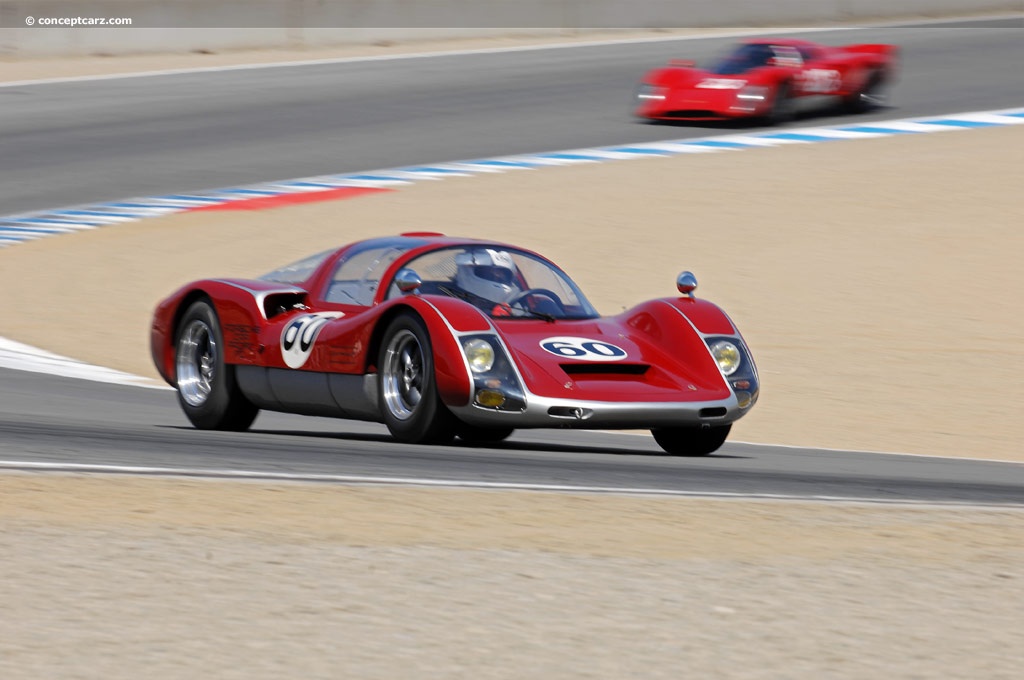
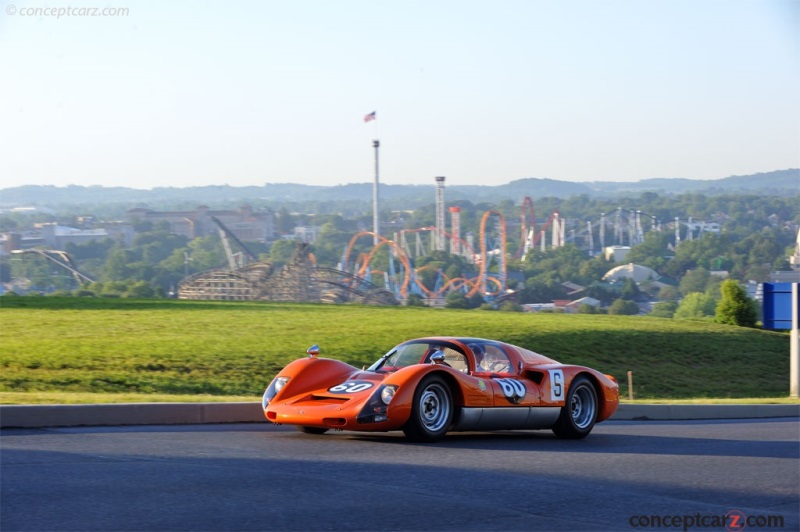
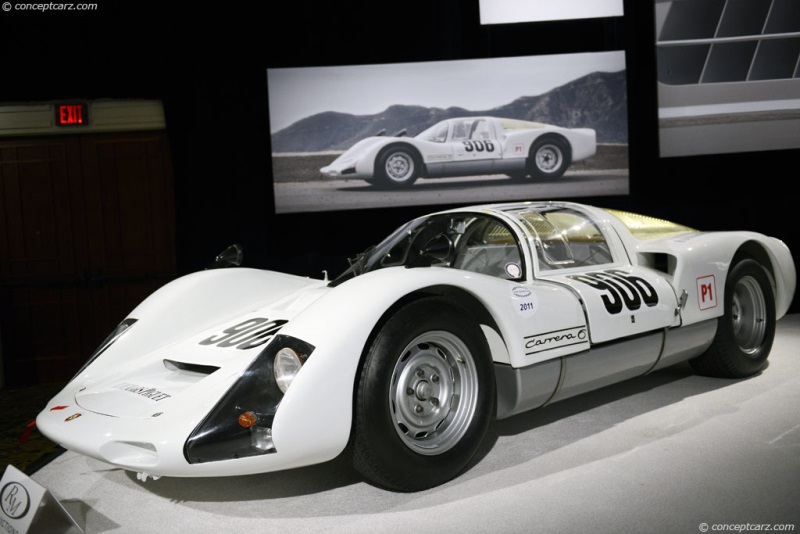
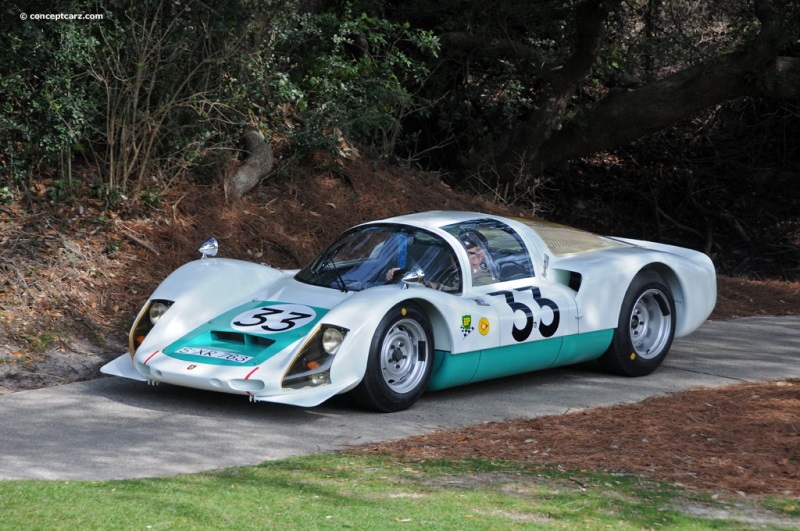
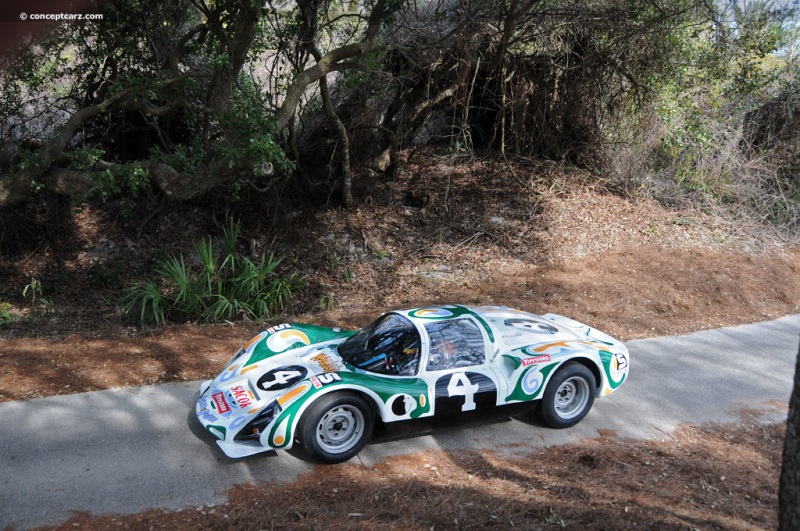
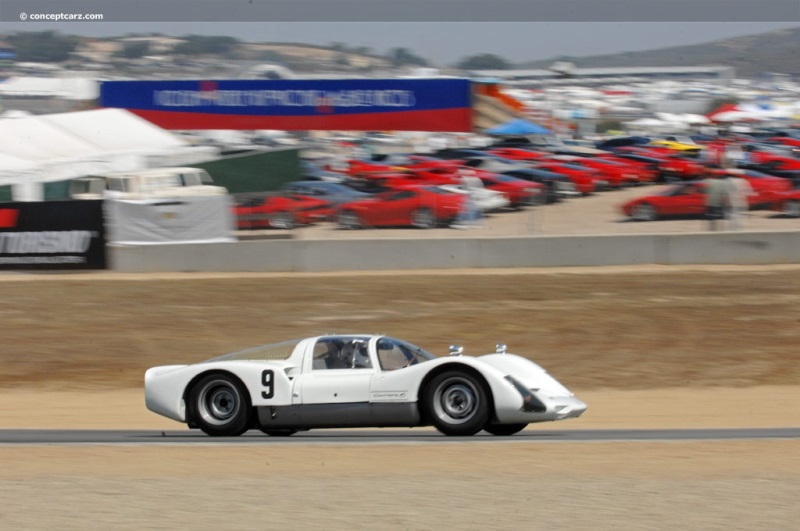
The Porsche 906 was produced in 1966 with a total of 65 examples being produced with 9 being prototypes outfitted with fuel-injection engines. It was designed under Ferdinand Piech's direction that began almost immediately when the introduction of the Ferrari Dino racers had virtually made the Porsche cars obsolete. The first item to go was the ladder frame in favor of a lighter spaceframe construction. Porsche intended to outfit the car with 13 inch wheels but unfortunately did not have direct access to these parts. The wheels would not only have to be small, but lightweight and rigid. They found what they were looking for at Lotus who used a similar design for their Formula 1 race cars. Porsche acquired the wheels and Lotus gladly unloaded their spare parts. A flat-eight Grand Prix engine was fitted, although a lightweight 6-cylinder engine would become the option of choice for many of the races. The 8-cylinder engine was mostly reserved for hillclimbing events especially when competing against the Ferrari Dinos. A spider body was fitted, and its inaugural appearance was at the Swiss Ollon-Villars hillclimb where it was met with disappointing results that were clearly to-do with poor testing and rushed development. The Ferrari's easily dominated the event and sent Porsche and their ''Ollon Villars Spyder' back to the drawing-board.
The 'Ollon Villars Spyder' had shown some potential but it was clear that more was needed. The FIA Group 4 GT homologation requirements had been dropped from 100 to 50 examples needing to be produced before eligible to race. It was decided to shift their attention from the development of a larger engine to focusing on a new spaceframe chassis. Though the homologation requirements had been reduced, it was still a difficult task to build 50 complex spaceframe chassis in a short period of time. Porsche found a solution by outsourcing the construction to Karosseriewerk Weinsberg while they focused on perfecting the chassis by attempting to reduce its weight and increase its rigidity. Once accomplished, they saved time by reusing many of the mechanical components from the 904, such as the front and rear suspension.
The chassis construction was progressing nicely but there was still the issue of the engine. The 904/6 proved to posses the most potential so work began immediately on reducing its weight, and increasing its durability and output. This was a difficult task since the engine already used many lightweight materials such as aluminum. The solution was to remove the aluminum and replace them with magnesium. An item that was made of steel was substituted with titanium. The horsepower was increased to around 210 which was very impressive and at almost twice the output of the similar 911 road car engine.
Porsche now had a lightweight and durable engine and chassis. Now they needed a suitable body. For this they turned to fiberglass construction and wind-tunnel testing. The resulting design was much wider than its predecessor which allowed it to sit lower to the ground. Much care and attention went into creating the fiberglass body. In the end, the overall weight of the car was just 580 kg, more than 250 pounds lighter than the 904/6.
The name '906' and 'Carrera 6' were slowly adopted by the company after they began stamping '906' onto the chassis to distinguish them from the prior 904/6 versions. The name fit rather well, keeping with Porsche's naming scheme with the '6' representing the number of cylinders.
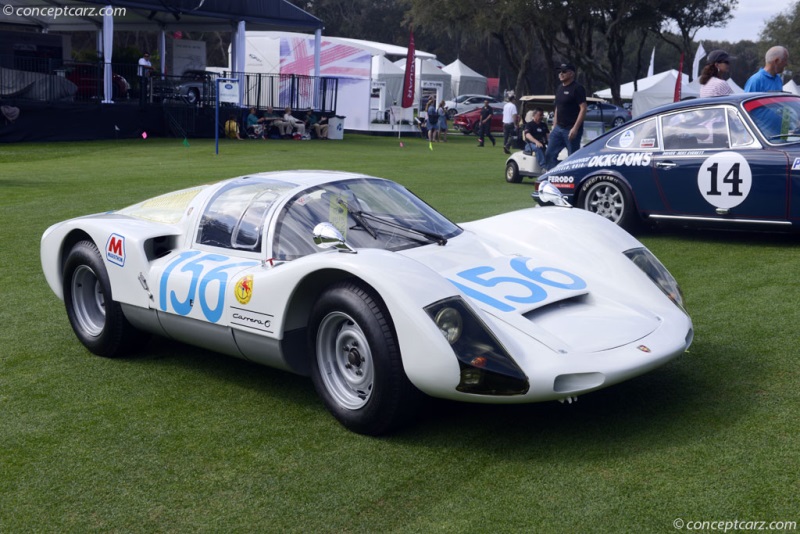
The Porsche 906 Carrera 6 made its official debut on January of 1966 at the Daytona 24 Hours race. It was painted in navy blue colors and pared up on the grid against cars that were much larger in size and powered by greater engines. When the checkered flag fell, the Porsche 906 was sixth overall and fist in its class. After proving its capabilities at Daytona, the remaining 50 examples had been ordered by privateers. Not all fifty had been built which meant that the Porsche 906 was not qualified for Group 4 GT racing. As a result it raced in the prototype class until the requirement was satisfied. The Ferrari prototypes were fast but they had weaknesses that the Porsche 906's capitalized upon. Ferrari had built only a few prototype racers while Porsche had a wider selection. The Porsche 906's were slightly more evolved and as a result were more durable.
By the close of April all 50 examples had been constructed and Porsche was finally cleared for Group 4 GT competition. At Targa Florio, only a week after satisfying homologation requirements, the Porsche 906 won an overall victory. This was the beginning of a highly successful season, which Porsche left in the capable hands of privateers. This left Porsche free to work on improving the car.
The trend in the automotive community was shifting from carburetors to fuel injection. Not to be left behind, Porsche began experimenting which often produced less-than desirable results. After much tuning and development, a suitable system had been found. The Bosch injection system proved to be the most reliable and produced the best results. Though the performance did not increase, it did provide superior throttle response over the Weber carburetors, and it was easier to tune.
To compliment the new engine, a new body was created which reduced drag levels. Porsche dubbed the resulting car, with its new engine and body work, the 906E, with the 'E' representing 'Einspritzung, or injection. Once again, Porsche found their car being raced int he prototype class. Its inaugural race was at the 24 Hours of Le Mans where the car proved to be very capable. A group of 906E's finished 4th, 5th, and 6th behind a very strong group of Ford GT40's. Though the Porsche 906's did not finish first they were able to defeat the V-12 Ferrari Ps for the first time.
Four chassis were created and outfitted with eight-cylinder races to make them more capable at various tracks, such as Nurburgring. These vehicles are unofficially known as 906/8. Though they did not attain the success Porsche had hoped for, they did continue the evolutionary development process and laid the ground work for Porsche's next iteration of their race car program. By 1970, a Porsche 917K would emerge victorious at the 24 hours of Le Mans.
The Porsche 906 Carrera 6 had combined a multi-tubular space-frame chassis to a lightweight and aerodynamic body. A durable, lightweight, and potent engine had powered the car to many victories during the 1966 season. It had proven to be faster than most other cars on the track, easily beating the more powerful Ferraris.
By Daniel Vaughan | Apr 2006
The flat-four cylinder engine was placed in the middle of the car and powered the rear transaxle. A 5-speed manual gearbox was matted to the 356 Carrera 2 derived engine and modified to produce 180 horsepower. The potent engine and low weight of the vehicle, 1430 pounds, the vehicle was able to achieve a top speed of 160 miles-per-hour. A flat-six engine, in development at the time and being built for the 901/911 model, was intended to be used but was not ready in time. Some 904's did receive a six and eight cylinder engine throughout its 2 year production life span, these vehicles were referred to as 904/6 and 904/8. Not enough of these larger engine versions were built to be homologated so they raced in the prototype class.
In 1964, 100 examples were produced which satisfied homologation requirements. There was such a demand for the 904 that an additional 20 examples were produced in 1965.
The body production was handled by Heinkel, an airplane manufacturer who was able to produce two per day. To increase the rigidity of the chassis, the frame was bonded to the body. The weight of the steel frame chassis was the 904's Achilles heel though its powerful engines and excellent handling characteristics helped disguise this problem. By 1965 Ferrari's V6 Dino racers began exploiting these weaknesses and almost instantaneously rendered the Porsche 904 obsolete.
The Porsche 906 was produced in 1966 with a total of 65 examples being produced with 9 being prototypes outfitted with fuel-injection engines. It was designed under Ferdinand Piech's direction that began almost immediately when the introduction of the Ferrari Dino racers had virtually made the Porsche cars obsolete. The first item to go was the ladder frame in favor of a lighter spaceframe construction. Porsche intended to outfit the car with 13 inch wheels but unfortunately did not have direct access to these parts. The wheels would not only have to be small, but lightweight and rigid. They found what they were looking for at Lotus who used a similar design for their Formula 1 race cars. Porsche acquired the wheels and Lotus gladly unloaded their spare parts. A flat-eight Grand Prix engine was fitted, although a lightweight 6-cylinder engine would become the option of choice for many of the races. The 8-cylinder engine was mostly reserved for hillclimbing events especially when competing against the Ferrari Dinos. A spider body was fitted, and its inaugural appearance was at the Swiss Ollon-Villars hillclimb where it was met with disappointing results that were clearly to-do with poor testing and rushed development. The Ferrari's easily dominated the event and sent Porsche and their ''Ollon Villars Spyder' back to the drawing-board.
The 'Ollon Villars Spyder' had shown some potential but it was clear that more was needed. The FIA Group 4 GT homologation requirements had been dropped from 100 to 50 examples needing to be produced before eligible to race. It was decided to shift their attention from the development of a larger engine to focusing on a new spaceframe chassis. Though the homologation requirements had been reduced, it was still a difficult task to build 50 complex spaceframe chassis in a short period of time. Porsche found a solution by outsourcing the construction to Karosseriewerk Weinsberg while they focused on perfecting the chassis by attempting to reduce its weight and increase its rigidity. Once accomplished, they saved time by reusing many of the mechanical components from the 904, such as the front and rear suspension.
The chassis construction was progressing nicely but there was still the issue of the engine. The 904/6 proved to posses the most potential so work began immediately on reducing its weight, and increasing its durability and output. This was a difficult task since the engine already used many lightweight materials such as aluminum. The solution was to remove the aluminum and replace them with magnesium. An item that was made of steel was substituted with titanium. The horsepower was increased to around 210 which was very impressive and at almost twice the output of the similar 911 road car engine.
Porsche now had a lightweight and durable engine and chassis. Now they needed a suitable body. For this they turned to fiberglass construction and wind-tunnel testing. The resulting design was much wider than its predecessor which allowed it to sit lower to the ground. Much care and attention went into creating the fiberglass body. In the end, the overall weight of the car was just 580 kg, more than 250 pounds lighter than the 904/6.
The name '906' and 'Carrera 6' were slowly adopted by the company after they began stamping '906' onto the chassis to distinguish them from the prior 904/6 versions. The name fit rather well, keeping with Porsche's naming scheme with the '6' representing the number of cylinders.
The Porsche 906 Carrera 6 made its official debut on January of 1966 at the Daytona 24 Hours race. It was painted in navy blue colors and pared up on the grid against cars that were much larger in size and powered by greater engines. When the checkered flag fell, the Porsche 906 was sixth overall and fist in its class. After proving its capabilities at Daytona, the remaining 50 examples had been ordered by privateers. Not all fifty had been built which meant that the Porsche 906 was not qualified for Group 4 GT racing. As a result it raced in the prototype class until the requirement was satisfied. The Ferrari prototypes were fast but they had weaknesses that the Porsche 906's capitalized upon. Ferrari had built only a few prototype racers while Porsche had a wider selection. The Porsche 906's were slightly more evolved and as a result were more durable.
By the close of April all 50 examples had been constructed and Porsche was finally cleared for Group 4 GT competition. At Targa Florio, only a week after satisfying homologation requirements, the Porsche 906 won an overall victory. This was the beginning of a highly successful season, which Porsche left in the capable hands of privateers. This left Porsche free to work on improving the car.
The trend in the automotive community was shifting from carburetors to fuel injection. Not to be left behind, Porsche began experimenting which often produced less-than desirable results. After much tuning and development, a suitable system had been found. The Bosch injection system proved to be the most reliable and produced the best results. Though the performance did not increase, it did provide superior throttle response over the Weber carburetors, and it was easier to tune.
To compliment the new engine, a new body was created which reduced drag levels. Porsche dubbed the resulting car, with its new engine and body work, the 906E, with the 'E' representing 'Einspritzung, or injection. Once again, Porsche found their car being raced int he prototype class. Its inaugural race was at the 24 Hours of Le Mans where the car proved to be very capable. A group of 906E's finished 4th, 5th, and 6th behind a very strong group of Ford GT40's. Though the Porsche 906's did not finish first they were able to defeat the V-12 Ferrari Ps for the first time.
Four chassis were created and outfitted with eight-cylinder races to make them more capable at various tracks, such as Nurburgring. These vehicles are unofficially known as 906/8. Though they did not attain the success Porsche had hoped for, they did continue the evolutionary development process and laid the ground work for Porsche's next iteration of their race car program. By 1970, a Porsche 917K would emerge victorious at the 24 hours of Le Mans.
The Porsche 906 Carrera 6 had combined a multi-tubular space-frame chassis to a lightweight and aerodynamic body. A durable, lightweight, and potent engine had powered the car to many victories during the 1966 season. It had proven to be faster than most other cars on the track, easily beating the more powerful Ferraris.
By Daniel Vaughan | Apr 2006
- 1966 Porsche 906 Menu
- Article
- Image gallery
- Valuation
- Specifications
- Profiles
Porsche
Similar Automakers
Similarly Sized Vehicles
from 1966


1966 Porsche 906 Vehicle Profiles

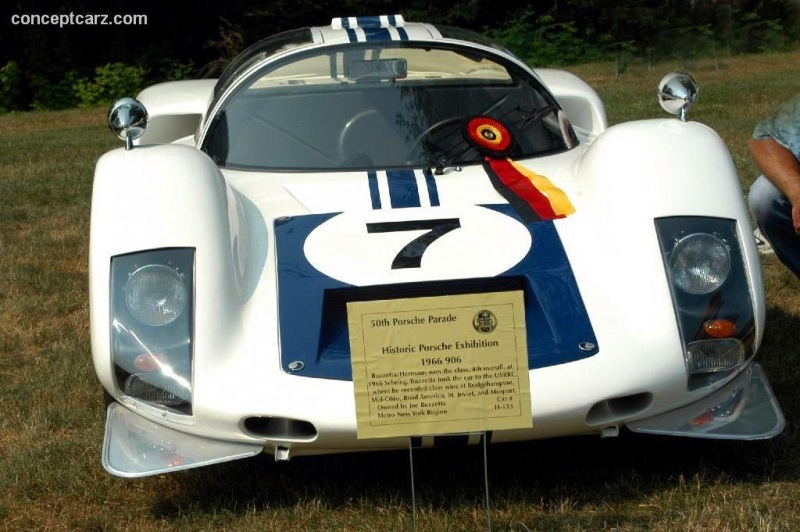
Chassis #: H-133

Recent Vehicle Additions


Related Automotive News

Inaugural Concours d'Elegance of Texas deemed a massive success
Houston, Texas. May 15, 2012. Last weekend, the award winning La Torretta Lake Resort %26 Spa in Montgomery played host to the biggest and most prestigious classic car weekend in Texas, welcoming thousands of visitors through its gates for the inaugural...

'The World's Fastest Cars' Join Gooding Christie's Amelia Island Auctions, Led by Time-Capsule RUF CTR Yellowbird, Pair of Manual AMG Hammers, Porsche 959, RUF CTR2, and Italian Supercars
The finest RUF CTR Yellowbird extant is announced for Gooding Christies Amelia Island sale, alongside two bespoke, manual-gearbox equipped AMG Hammers, a RUF CTR2 in Adriatic Blue, and ex-Brunei Royal Family Porsche 959.
Gooding Christies...

The Elegance at Hershey
Modeled after the finest concours in Europe and America, The Elegance is a genteel garden party featuring the worlds finest collector cars, arrayed around the classically manicured gardens of The Hotel Hershey. Approximately 75 carefully curated...
All-Star Cast of Cars, Drivers at Porsche Rennsport Reunion V
The Porsche highlights for a weekend full of highlights
Atlanta, Georgia. For the Porsche Rennsport Reunion V taking place at Mazda Raceway Laguna Seca this weekend, both the men and the machines they drove are expected to outdraw one...
RRDC VOTES IN 37 NEW MEMBERS FOR 2013
HILLIARD, Ohio (Nov. 7, 2013) - Thirty-seven race-car drivers and motorsports professionals have been voted into the Road Racing Drivers Club in 2013. The group includes 13 Regular Members from the open-wheel and sports-car racing ranks, 20 Associate...

1964 Nurburgring 1000 Kilometers: Survive for One Last Victory
During the late 1950s, Richie Ginther would begin a relationship with John von Neumann and this partnership would result in one of the most dominant periods of American sportscar racing in which Ginther and Porsche would be virtually unbeatable. Nearly...