|
|
|
|
|
|
|
|
|
|
|
|
|
|
|
|
|
|
|
|
|
|
|
|
|
1965 Shelby Cobra 427 news, pictures, and information
![]() | Roadster |
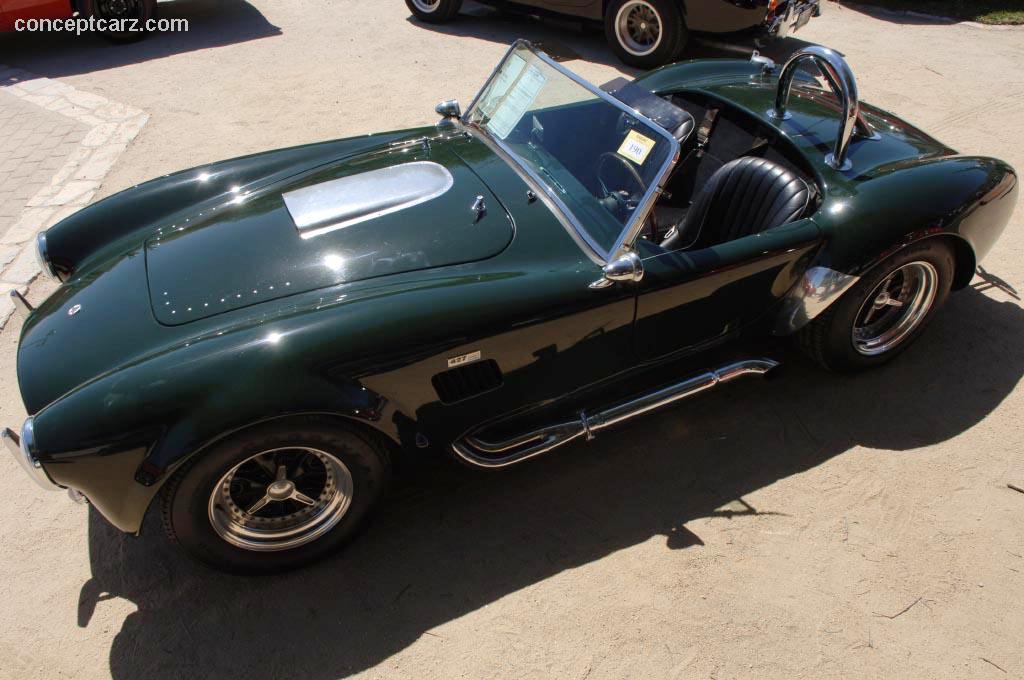
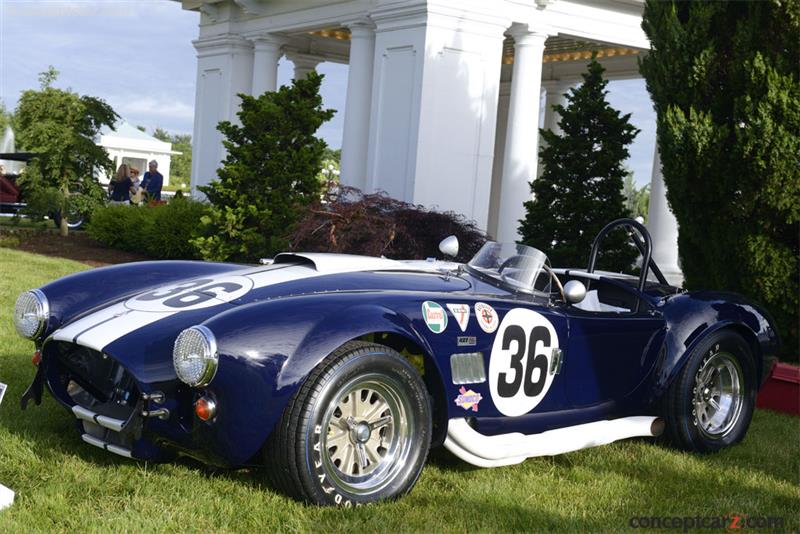
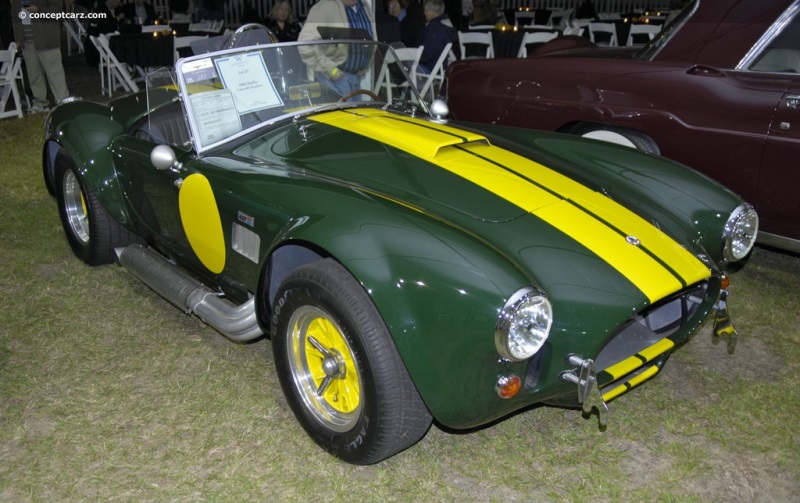
This car was restored by the owner, who completed everything (except the paint) working weekends for five years. The car was assembled to duplicate the original racing appearance. The car has been to Willow Springs and the California Speedway for club events. The car has also received awards at the JBA show, the Saleen show, National City car show, and others.
Collection of Howard GireSource - SDAM
![]() | ![]() | S/C Replica Chassis Num: CSX 3198R |
It was offered for sale at the 2006 RM Auction in Monterey, Ca where it was estimated to sell between $50,000-$60,000. This is a far cry from what an original would sell for and provides enthusiasts the opportunity for owning a vehicle that is very close to the original. It was offered without reserve and bidding only reached $41,250. The lot was sold with the new owner getting a bargain.
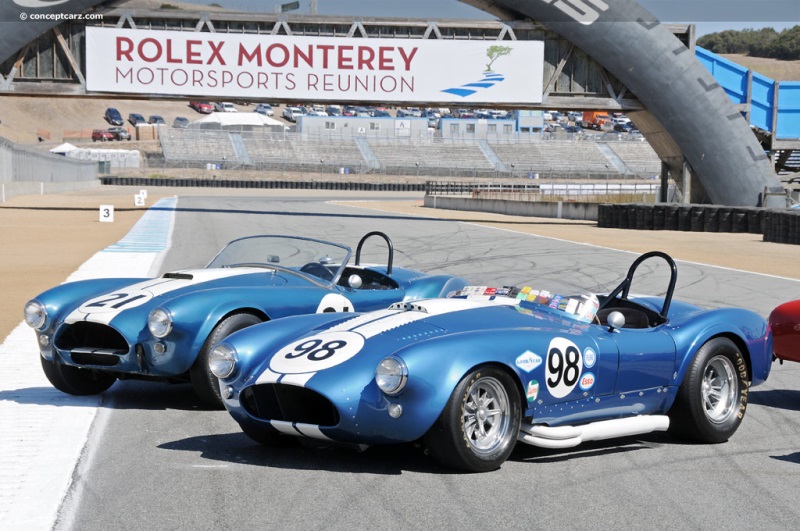
![]() | ![]() | View more photos Roadster Chassis Num: CSX3176 |
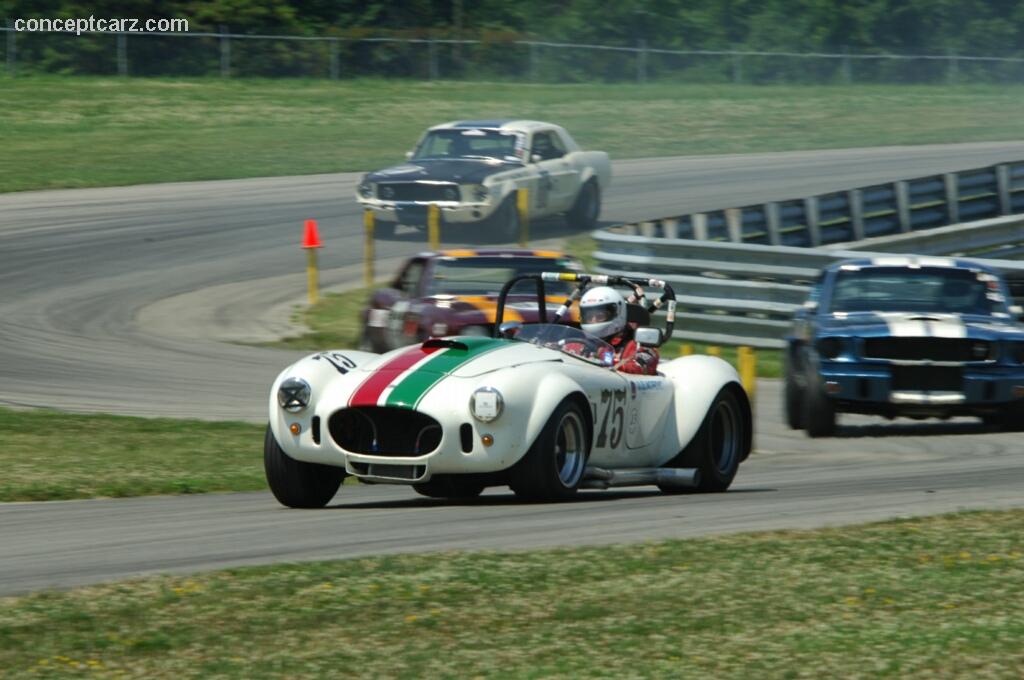
The car was then sold again in 1979 to Morgan Warner and purchased by Robert Andersson in 1980. The car was exported to Sweden and raced until 1985, with total placings as follow: 2nd overall in 1982 and 1983; first in 1985.
Then in 1985 the car was brought back to the USA and placed in storage until 1998 when it began to participate in historic racing. Today's owner is still Robert Andersson.
![]() | View more photos Roadster Chassis Num: CSX4005LA |
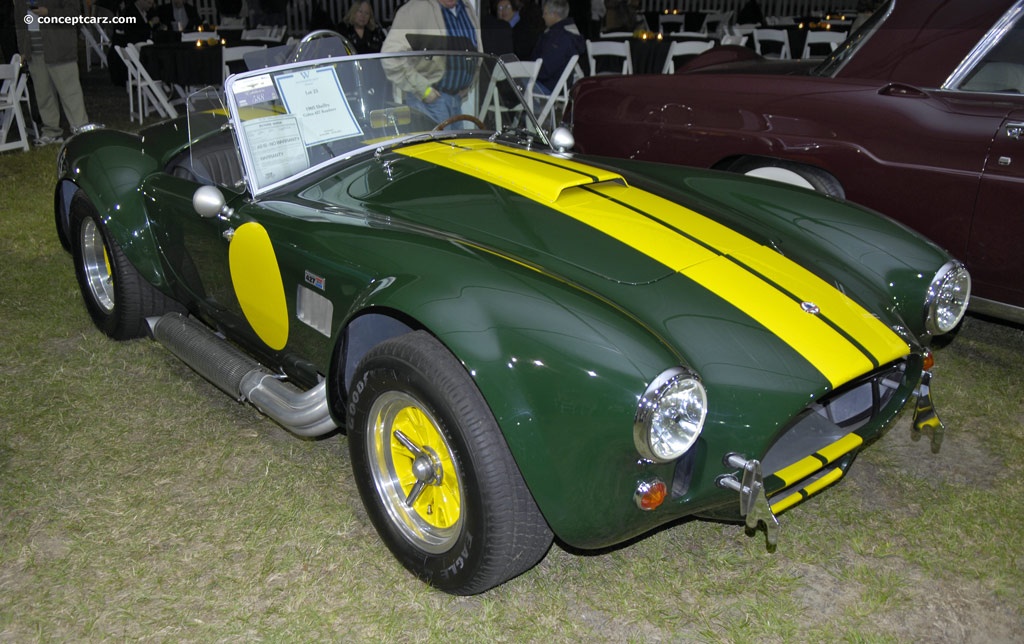
In 2008, this Shelby Cobra 427 was offered for sale at the Hilton Head Sports & Classic Car Auction presented by Worldwide Auctioneers. It had an estimated value of $165,000 - $195,000. As the gavel fell for the third and final time, bidding had failed to satisfy the reserve and the lot was left unsold.
![]() | ![]() | View more photos Roadster |
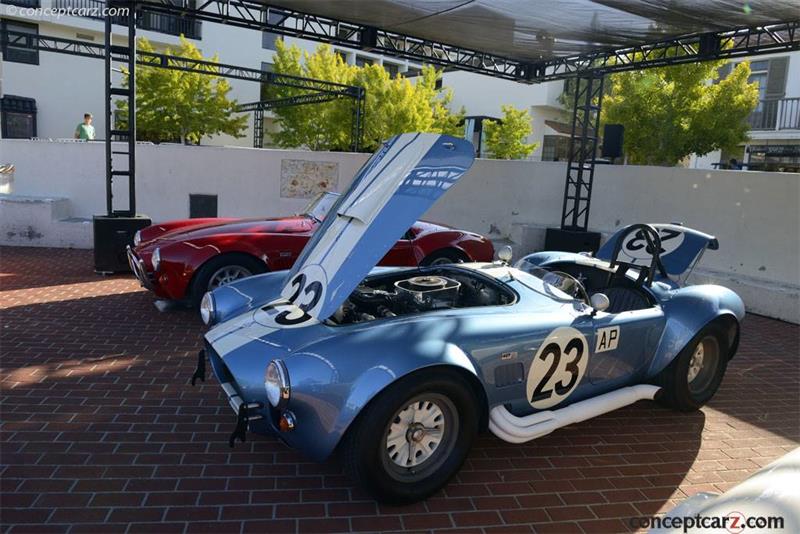
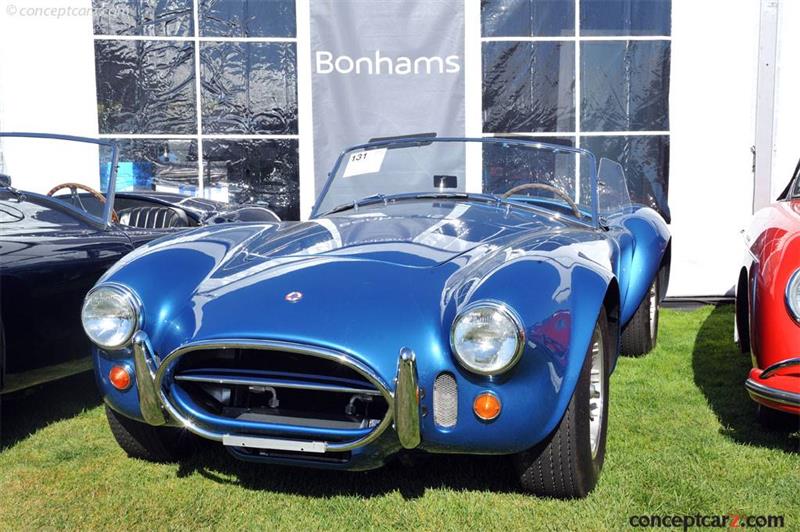
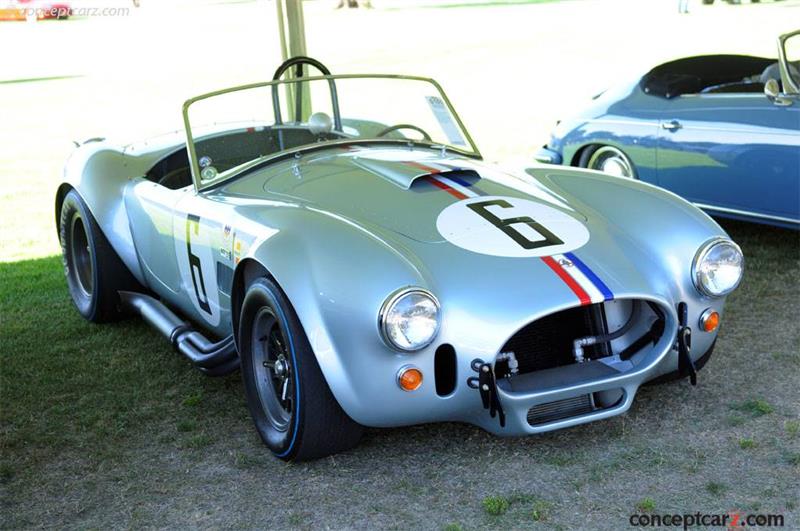
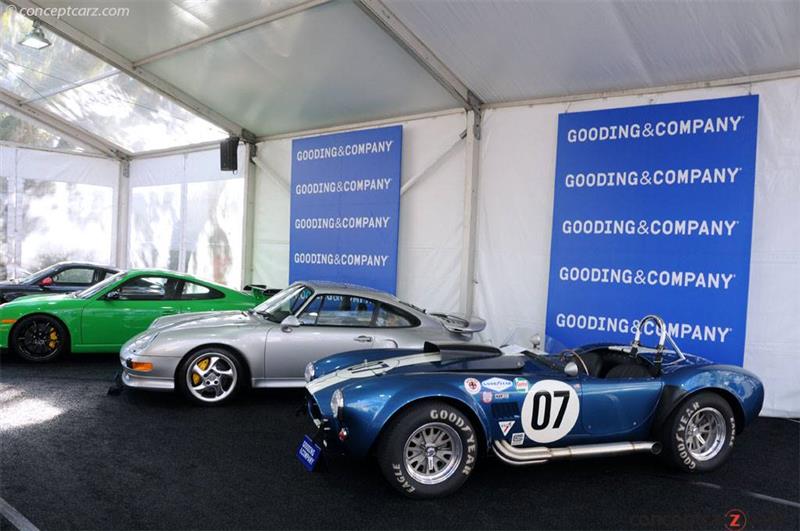
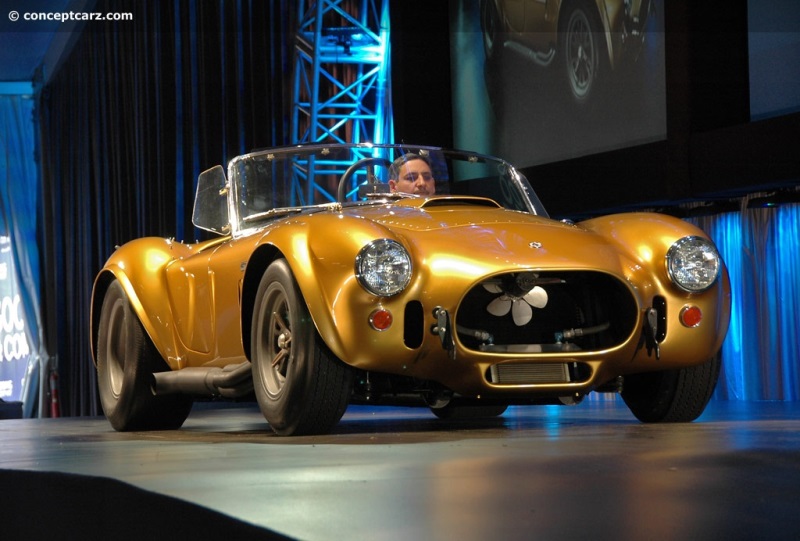
By 1962, Shelby Cobras were entering the racing industry and a year later were beating the already-established Corvette Stingrays. By 1964, Shelby Cobras were finishing higher than Ferrari GTOs. In late-1964, a prototype Cobra powered by Ford's 427 cubic-inch, 500 horsepower, V-8 engine was built, debuting in January 1965 at Riverside international Raceway.
The 1965 Shelby Cobra 427 featured a new tubular coil spring chassis engineered by Ford designer Klaus Arning, but was still based on the Ace chassis. The body was modernized with flared arches-allowing for a wider track and larger tires-and a straight-bar grille replaced the honeycomb style.
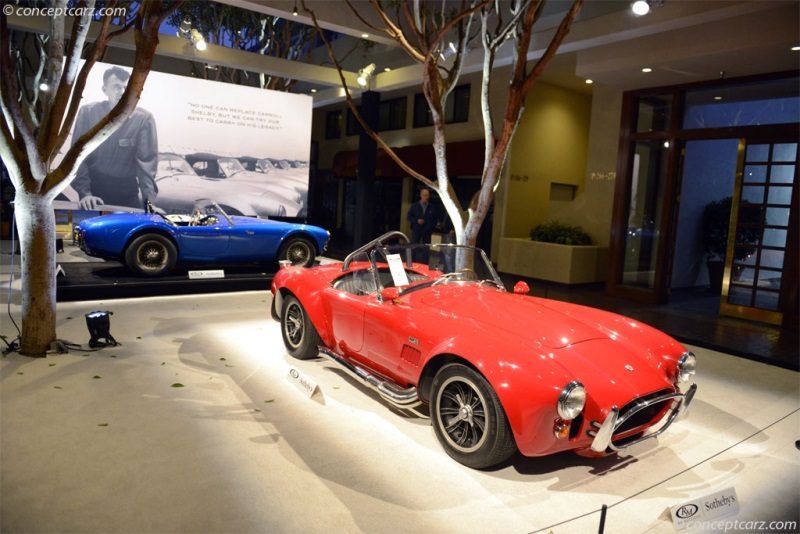
![]() | ![]() | View more photos Roadster Chassis Num: CSX 3006 |
In many respects, the father of the 427 Cobra was racing driver Ken Miles, who had driven many 'specials' – one off cars, usually with a big engine. Miles thought the idea of a racing special with an even bigger engine might work with the Cobra. If there was any doubt about the need, it was eliminated when the Shelby team went to Nassau for Speed Week in 1963 where they were confronted with Chevrolet's new Corvette Grand Sports, which were more than nine seconds a lap faster than the Cobras!
Although Shelby had been promised a new aluminium block version of Ford's 390 engine, internal resistance developed from the NASCAR faction inside Ford, and Shelby was forced to make do with the cast iron 427. Although reliable at 500 horsepower, the engine was so much heavier that a complete redesign of the chassis was required to ensure that the car would handle properly. The result was a new chassis, five inches wider, with coil springs all around. With the help of Ford's engineering department, the necessary work was done, and the 427 Cobra was born.
As with all his cars, Shelby intended to see that they were winners on the track. In order to qualify as a production car under FIA rules for the GT class, manufacturers were required to produce a minimum of 100 examples. With Shelby's strong relationship with privateer racers, he was confident he could sell that many, and as a result, a competition spec version of the new 427 was developed.
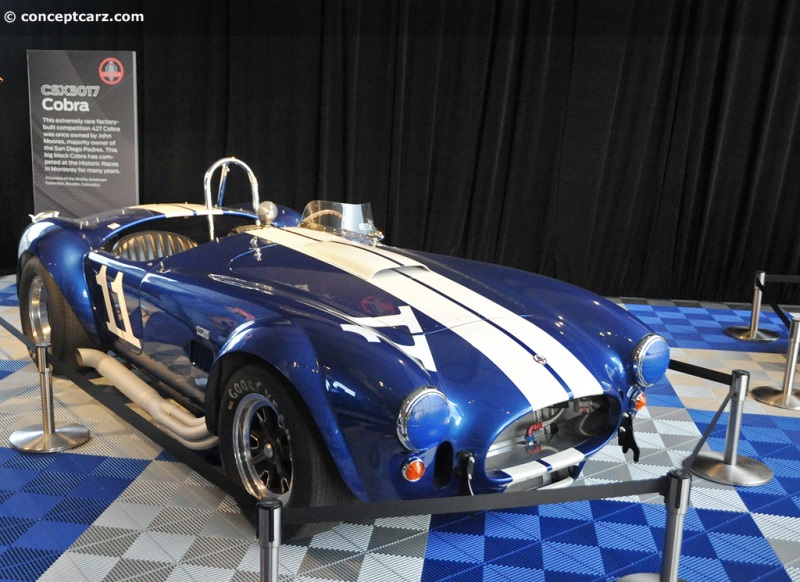
Competition features included a wider body to accommodate wider wheels and tires, an oil cooler, side exhaust, external fuel filler, front jacking points, roll bar and a special 42-gallon fuel tank.
Anticipating FIA approval, Shelby placed an order with AC for 100 of these competition 427 Cobras. Each was finished in primer, with a black interior and air shipped to Shelby's facilities upon completion. Unfortunately, on 29 April, 1965 when the FIA inspectors arrived, they found just 51 cars completed and denied Shelby the homologation he needed. Oddly enough, the same fate befell Enzo Ferrari, and his 250 LM, which was intended to replace the GTO, was also denied approval. As a result, both archrivals were forced to return to last year's cars for the upcoming season.
Once Shelby knew the FIA was not going to allow the new 427 Cobra to compete in the GT class, he cancelled his order for the remaining competition cars, and AC began production of street cars immediately.
Meanwhile, in June of 1965, the FIA decided to juggle its classification system and a new class called 'Competition GT' was created, whereby the production requirement was lowered to 50 cars – coincidentally, one less than the number of 427 competition cars built at the time of the FIA inspection.
The rule change created another problem for Shelby – it put his Cobra in the same class as Ford's GT40. Since Shelby was running the program for Ford, there was a clear conflict of interest. To resolve it, Shelby agreed not to campaign his own car, leaving it in the hands of the privateers.
By this time, 53 competition chassis had been completed by AC (chassis number CSX3001 through CSX3053), and of those, 16 had been sold to private teams. The first two were retained as prototypes, and one chassis (CSX3027) was sent to Ford
Engineering.
The remaining 34 chassis were something of a problem for Shelby. Parked outside Shelby's L.A. warehouse, they were proving difficult to sell. Seeing the cars prompted Shelby's East Coast representative, Charles Beidler, to suggest that they be painted and completed as street cars and marketed as the fastest street car ever built. The idea worked, and the 427 S/C (for semi-competition) was born. While the cars were being converted for street use, three more orders were received for full competition cars, for a total of 19 'production' full competition cars.
CSX 3006
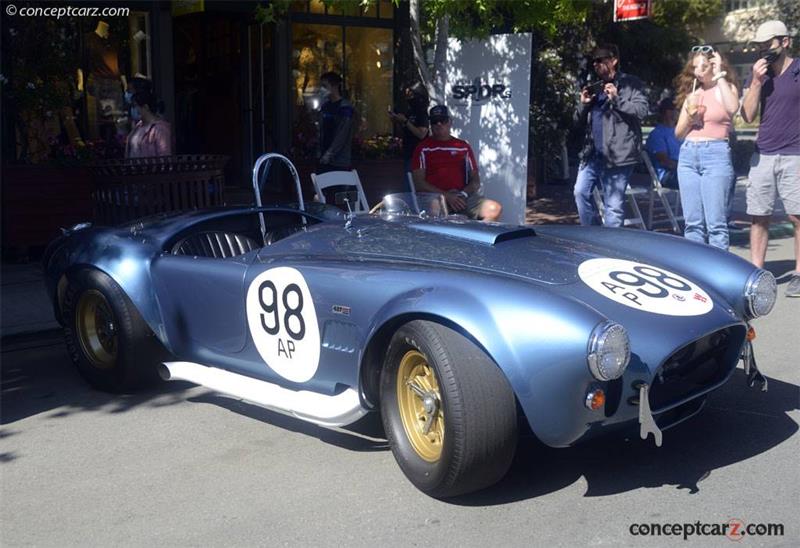
The Shelby Cobra offered, chassis CSX 3006, is one of the aforementioned chassis sold to private teams. According to the Shelby American World Registry, it was billed to Shelby American on 31 December, 1964. The work order was opened on 25th January to build CSX3006 for William G. Freeman of Muncie, Indiana. Upon Freeman's request, the car was finished in metallic blue, slightly lighter than the team cars, and had gold stripes. It was invoiced to Hi-Performance Motors of Los Angeles with a cost of $9,600, plus $24.86 for a shoulder harness.
Freeman picked the car up at the dealership, and, according to period photos, it was devoid of a Cobra emblem on the nose and was fitted with FIA Halibrand wheels – 6.5 inches wide in front and 8.5 inches in back. The car competed in two races before it was offered for sale in May 1965, as Freeman was offered a racing contract in Europe. Freeman did not sell the car, however, and instead took it with him to France, where it remained in storage, as evidenced by another advertisement in the Competition Press later that year.
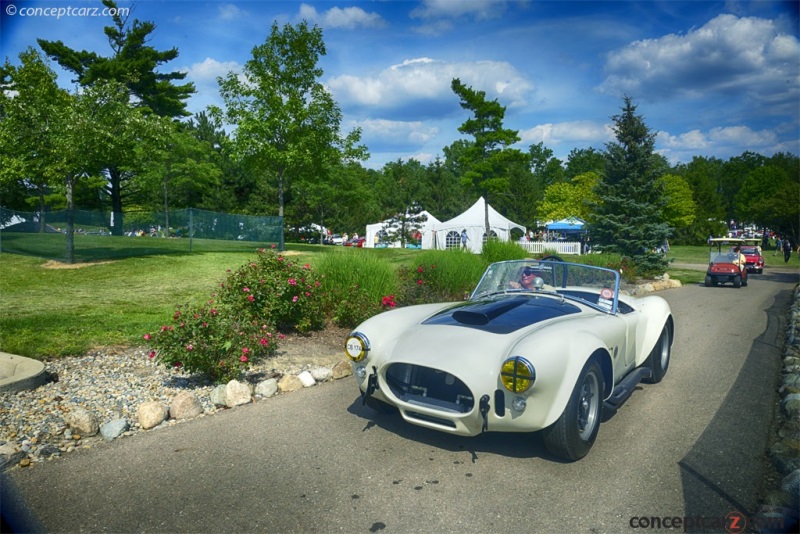
Ultimately, an Air Force Captain from Dayton, Ohio purchased the car from Freeman as he was in France at the time. This Captain in turn sold the car to the Chequered Flag of London, England in the summer of 1966. After arriving in England, the car was converted to right-hand drive and refinished in Wimbledon White with a gloss black hood and cowl, before competing in several races that year, including Goodwood (May 1966) and Zeltweg, Austria (October 1966).
BRANDS HATCH, 1966
Its biggest success, however, was a win at Brands Hatch in the Ilford 500 (May 1966), driven by co-drivers David Piper and Bob Bondurant. Much like the car itself, the Piper-Bondurant racing duo represented the finest racing talent from England and America. David Piper, who was in his mid-thirties at the time, had already competed in Formula 1 for two seasons and was a veteran sports car driver. Bob Bondurant, whose name has since been associated with the eponymous racing school, had started his racing career a decade earlier and in 1963 joined Shelby's Cobra team, securing the GT class win at Le Mans. By 1966, he was an internationally recognised racing driver and had served as technical consultant on the epic famed Formula 1 motion picture Grand Prix, directed by John Frankenheimer and starring James Garner. In 1966, the same year he drove this Cobra at Brands Hatch, he also started numerous Grands Prix and finished fourth at Monaco.
According to the June 1966 issue of Motorsport Magazine, the Ilford 500 started in a 'torrential downpour' at 2:10 p.m. after a supporting 15-lap Formula 3 race, which Piers Courage won in a Lotus-Ford. Given the inclement weather, the sports car race was limited to 500 miles or six hours, whichever was shorter, and the rolling start was changed to the traditional standing start. Entries that day included everything from the big block Cobra to a Ford GT40 and a Jaguar E-Type. Innes Ireland took the lead at the start with his GT40 and held it for twelve laps, before spinning at Stirling's Bend. J. Oliver in his E-Type took the lead and staved off the competition until lap 85, when he was replaced by K. Baker, who spun off as well. CSX 3006 eventually took the lead and held it until the end. As David Piper remarked in a recent interview with RM Auctions, 'CSX 3006 was extremely well prepared for the race by Graham Warner and the team at Chequered Flag…the Cobras were very reliable cars.'
In fact, Chequered Flag had entered another big block Cobra that day, a coupé driven by Chris Irwin and Roy Pike, which retired after engine trouble on lap 95. Although the terrible weather conditions had evened the field somewhat, Bondurant and Piper were able to harness their big block behemoth in the turns, winning outright with Peter Sutcliffe's GT40 in second place.
Reflecting on this race, Piper continued, 'The seven-litre Cobra was prodigiously quick, especially in a straight line and quite a handful on the bends in the wet which this race was. I'm quite sure this was the first time I ever drove a seven-litre Cobra.' The winning team was awarded a lovely silver plate as well as a set of engraved glasses. Mr. Piper had this trophy proudly displayed on the wall in his English house until it was stolen from his home, only to be rediscovered by his wife in an antiques shop. The dealer gave it to her as a gift after hearing of its theft!
SUBSEQUENT HISTORY
The car returned to Brands Hatch in August, driven by Chris Irwin, but by this time it had been sold by Chequered Flag to Edwin Butterworth who, according to the Shelby Registry, stored the car at a friend's house to prevent his parents from discovering it. It is believed the car's number plate at this time was 'NAN 658D' and was later changed to 'LOV 1.' While in Butterworth's ownership, the car was only raced twice before it was acquired in 1973 by garage owner John Carden of England. Carden offered it for sale in 1977, mistakenly identifying it as CSX 3001. Nevertheless, the car was purchased once more by Chequered Flag and sold to Michael Shoen of Phoenix, Arizona. By 1985, the car was offered for sale once more, having been restored by Geoff Howard of Accurate Restorations, who returned the car to left-hand drive configuration.
It changed hands several times in the U.S. thereafter and was acquired by David Livingston of Seattle, Washington in 1990. Livingston had the car race-prepped by marque specialists Dralle Engineering of California and fared well in vintage racing, finishing first overall in class 8 at Palm Springs that year. It was repainted Guardsman Blue a year later, and cooling vents, which were cut into the hood in the sixties, were re-installed. An appearance followed at SAC-17 in 1992. By the late 1990s, the car was being enjoyed as a fair weather driver by an enthusiast based in New Orleans. A mechanical restoration was conducted by Dralle in 2001 and included a balanced and blueprinted engine rebuild, fresh clutch and hydraulics, as well as attention to the transmission, suspension and brakes. A fresh interior was installed in 2002 before the car was sold the following year to its current owner.
Following its acquisition by this enthusiast, it was sent to renowned restoration facility Legendary Motorcar in Canada and rebuilt to its 1966 race specification, as it was when Bob Bondurant and David Piper got behind the wheel and hammered the competition 427 side-oiler around the turns in the wet at Brands Hatch. In fact, the car's restoration was even featured on the television series Dream Car Garage, of which tapes will be sent directly to the new owner by the vendor. It was converted once more to right-hand drive and was painted white with a gloss black hood and black side pipes, roll bar and quick-jacks, precisely the way it appeared in its Chequered Flag days. Driven only about 100 miles since its restoration, the car is in perfect working order and ready for a host of different vintage racing events.
With very low production numbers, authentic competition Cobras seldom change hands. This example, with its race-winning history and provenance that includes such great names as David Piper and Bob Bondurant, is certainly one of the best examples of Carroll Shelby's greatest legacy – the pavement-pounding big block Cobra.
'The seven-litre Cobra was prodigiously quick, especially in a straight line and quite a handful on the bends in the wet which this race was. I'm quite sure this was the first time I ever drove a seven-litre Cobra.'
-David PiperSource - RM Auctions
The formula for the success of the Cobra came through a man named Carroll Shelby adapting a powerful Ford engine into a nimble, British sports car.
A.C. Cars of Thames Ditton in Surrey, England had been producing the Ace since 1954. It was designed by John Tojeiro and featured an independent suspension by transverse leaf springs. The tubular frame body of the vehicle took its styling cues from Ferrari. The original engine used in the Ace was a 1991 cc, over-head-cam engine designed by John Weller, the founder of AC, in the 1920s. In 1956, an optional Bristol engine became available. This was a BMW derived, 1971 cc six-cylinder engine that was capable of producing 125 horsepower. With the Bristol engine, the Ace captured many victories on the race tracks around the world. It even won the SCCA Class E championship three years in a row.
In 1959, Bristol ceased its six-cylinder engine production. When Bristol stopped supplying A.C. with the engine, the production of the Ace ceased. Carroll Shelby quickly negotiated a deal where A.C. would supply him with the chassis. Now all Shelby needed was an appropriate engine. In 1961, Ford introduced the 221 cubic-inch small block engine. This was a new lightweight, thin wall-cast, V8 engine that produced 164 horsepower. Shelby approached Ford about the use of the engine for the 2-seat sports car. Ford agrees.
In February of 1962, a 260 HiPo engine and Borg-Warner four-speed manual gearbox was fitted into the aluminum-bodied Cobras. The AC Shelby Ford Cobra was complete.
In April of 1962, the first Cobra with chassis CSX 2000 was painted yellow and shipped to the New York Auto Show where it appeared on the Ford display. The vehicle was an instant success and attracted much attention. Orders came faster than Shelby could build. The prototype CSX 2000 was continuously being repainted for magazine reviews. The purpose was to create an illusion that more Cobras existed.
In 1963 the engine size increased to 289 cubic-inches. Rack-and-pinion steering was added to the vehicle.
Two Cobras were entered into the grueling 24-Hours of Le Mans endurance race. Carroll Shelby himself drove one of the vehicles. Ford had refused to provide an engine so Shelby, with the help of A.C. cars and Ed Hugus, prepare the cars. One of the Cobras managed to capture a seventh place finish, a major accomplishment.
Dan Gurney became the first American driver to win an FIA race in an American car when he won the Bridgehampton 500KM race in September of 1963 while driving a Cobra.
In 1964, the Cobra returned to LeMans where it finished fourth overall and first in the GT class.
Near the end of 1964, the Cobra 427 was unveiled to the press. If featured a new tubular, aluminum body, coil spring chassis, and a 427 cubic-inch, 425 horsepower engine. The car was able to go from zero to 100 mph and back to zero in less than 14 seconds.
In 1967, the last 427 Cobra was built and in 1968, the last 427 Cobra was sold by Carroll Shelby.
Ford had shifted their resources to the new GT40 and modified Mustang programs. In 1966, three GT-40 Mark II's crossed the finish line at Le Mans capturing first, second, and third.
For more information and related vehicles, click here© 1998-2010. All rights reserved. The material may not be published, broadcast, rewritten, or redistributed.
A.C. Cars of Thames Ditton in Surrey, England had been producing the Ace since 1954. It was designed by John Tojeiro and featured an independent suspension by transverse leaf springs. The tubular frame body of the vehicle took its styling cues from Ferrari. The original engine used in the Ace was a 1991 cc, over-head-cam engine designed by John Weller, the founder of AC, in the 1920s. In 1956, an optional Bristol engine became available. This was a BMW derived, 1971 cc six-cylinder engine that was capable of producing 125 horsepower. With the Bristol engine, the Ace captured many victories on the race tracks around the world. It even won the SCCA Class E championship three years in a row.
In 1959, Bristol ceased its six-cylinder engine production. When Bristol stopped supplying A.C. with the engine, the production of the Ace ceased. Carroll Shelby quickly negotiated a deal where A.C. would supply him with the chassis. Now all Shelby needed was an appropriate engine. In 1961, Ford introduced the 221 cubic-inch small block engine. This was a new lightweight, thin wall-cast, V8 engine that produced 164 horsepower. Shelby approached Ford about the use of the engine for the 2-seat sports car. Ford agrees.
In February of 1962, a 260 HiPo engine and Borg-Warner four-speed manual gearbox was fitted into the aluminum-bodied Cobras. The AC Shelby Ford Cobra was complete.
In April of 1962, the first Cobra with chassis CSX 2000 was painted yellow and shipped to the New York Auto Show where it appeared on the Ford display. The vehicle was an instant success and attracted much attention. Orders came faster than Shelby could build. The prototype CSX 2000 was continuously being repainted for magazine reviews. The purpose was to create an illusion that more Cobras existed.
In 1963 the engine size increased to 289 cubic-inches. Rack-and-pinion steering was added to the vehicle.
Two Cobras were entered into the grueling 24-Hours of Le Mans endurance race. Carroll Shelby himself drove one of the vehicles. Ford had refused to provide an engine so Shelby, with the help of A.C. cars and Ed Hugus, prepare the cars. One of the Cobras managed to capture a seventh place finish, a major accomplishment.
Dan Gurney became the first American driver to win an FIA race in an American car when he won the Bridgehampton 500KM race in September of 1963 while driving a Cobra.
In 1964, the Cobra returned to LeMans where it finished fourth overall and first in the GT class.
Near the end of 1964, the Cobra 427 was unveiled to the press. If featured a new tubular, aluminum body, coil spring chassis, and a 427 cubic-inch, 425 horsepower engine. The car was able to go from zero to 100 mph and back to zero in less than 14 seconds.
In 1967, the last 427 Cobra was built and in 1968, the last 427 Cobra was sold by Carroll Shelby.
Ford had shifted their resources to the new GT40 and modified Mustang programs. In 1966, three GT-40 Mark II's crossed the finish line at Le Mans capturing first, second, and third.
| Vehicle Spotlight |
![]() | ![]() | ![]() | ![]() | ![]() | ![]() |
![]() | ![]() | ![]() | ![]() | ![]() | ![]() |
![]() | ![]() | ![]() | ![]() | ![]() | ![]() |
![]() | ![]() | ![]() |
| 1965 Shelby models |
| Shelby Cobra 289 |
| Shelby Cobra 289 Stage I |
| Shelby Cobra Daytona |
| Shelby Mustang GT 350 R Competition | 1965 Shelby Concepts |
| Shelby Cobra 427 Competition Prototype CSX 3002 |
| Shelby: 1961-1970 |
| Similar Automakers |
| Other models by Shelby |
![]() |