Concept Cars Home
1964 Cobra 289 Image Right1964 Cobra Dragonsnake 289 Image Right
 

1963 Shelby Cobra 289 news, pictures, and information

Roadster
Chassis Num: CSX2129
 
Sold for $2,585,000 at 2011 Gooding & Company.
In 1963, the Shelby Cobra team was threatening Ferrari in international competition and was thoroughly dominating the Corvette just about everywhere else. Shelby wanted to create and build what he called a 'Corvette-Beater'. The AC Cobras would do that, and in the meantime, would send Ferrari scurrying around trying to make sure it could stay ahead.

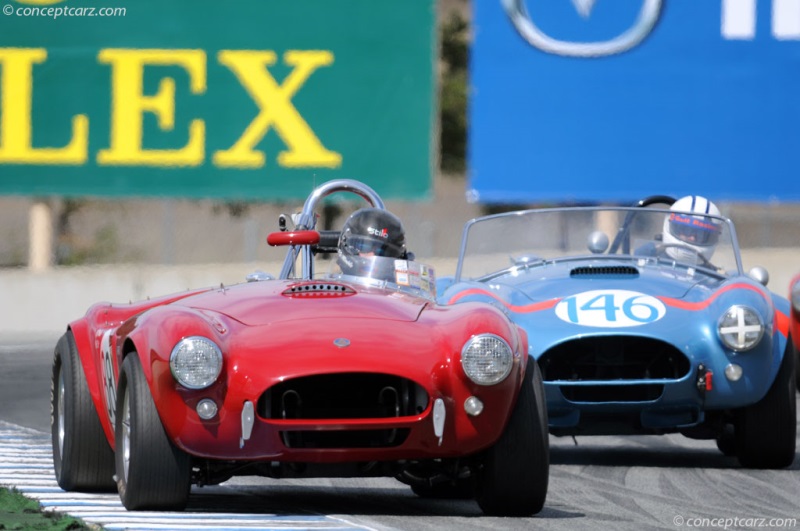
The 1963 season started out perfectly for Shelby as his 289 Cobras would score a 1st and 2nd place result at Riverside. The Shelby team had dominated a field of Corvettes, Jaguars, Porsches and Maseratis to earn the first victory for the Cobra.

The advantage the Cobras enjoyed throughout the year came as a result of the 289 CID Ford V8 engine with four Weber carburetors which helped boost horsepower to approximately 400 bhp. The car's performance would also be helped by a chassis that weighed considerably less than a Corvette and could handle much better due to its lower weight, good center of gravity and the use of new rack-and-pinion steering.

After the early successes of the season the team would prepare six cars for the 12 hour race at Sebring. These cars would have some special modifications including quick-change pins on the front brakes, Halibrand magnesium wheels and, for the first time, rack and pinion steering. A number of other revisions had to do with body-to-chassis fit and other small tweaks that would help the team's performance over 12 hours of racing. Unfortunately, despite all of the modifications and performance tweaks, just one car would end up making it to the finish of the race.

In August of this year Gooding & Company hosted an auction at Pebble Beach. One of the cars offered at the auction would be a 1963 Shelby Cobra 289 factory team car. Chassis number CSX2129 had been completed in March of 1963 and would be shipped to Los Angeles.

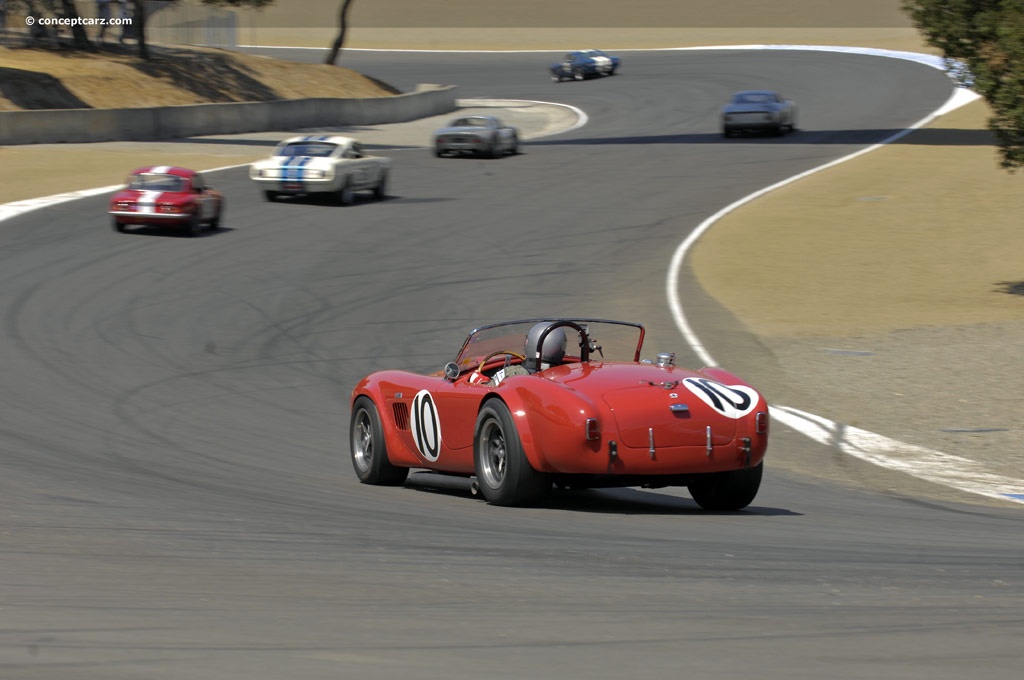
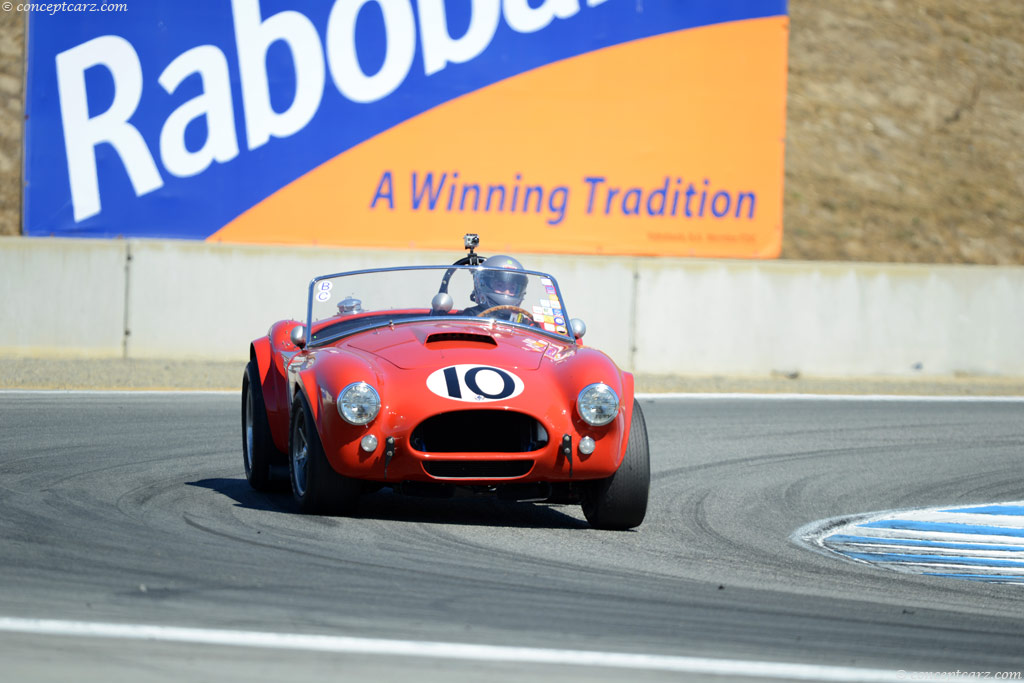
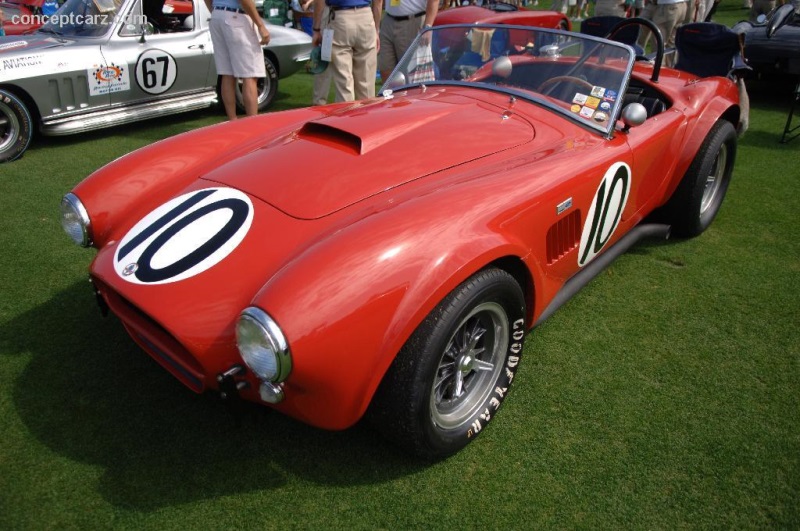
Upon arriving, the car would immediately undergo conversion. The car would be converted to 'Sebring' specifications. The car would receive modifications inside and out of the chassis and would be topped off with a bright red finish. This would end up being the only one of the group that would sport the red finish.

Over the next couple of months of racing the car would continue to improve. At Watkins Glen it would receive its first victory as Ken Miles would take the car to a 3rd place overall finish and a 1st place in the 2.0-liter category.

Throughout the summer months the car continued to earn top five and top three finishes. It would also go on to win more than a couple of races. But perhaps one of the greatest performances put in by the Shelby Factory team and CSX2129 would come at the FIA Double 500 at Bridgehampton. There the team would face a series threat of privateer Ferraris and very good E-Type Jaguars.

The race would be a battle throughout. It would come down to the struggle between the Jaguars and the Cobras. After some heavy fighting and close contact, Dan Gurney would lead home a Shelby Cobra one, two. Ken Miles, piloting CSX2129 would finish in 2nd behind Gurney.

Through Miles' efforts behind the wheel of this Cobra, and the efforts of the other factory Cobras, Shelby American would win the 1963 USRRC Manufacturer's Championship, USRRC Drivers' Championship and would also become the SCCAA-Production Champions.

After its successful season, this particular Cobra would be sold to Graham Shaw of South Carolina. The car would receive a new livery and would begin its new career as part of Graham Shaw Racing in Daytona the next year.

Shelby American would purchase the car back and would prepare it to be featured at Ford Motor Company's 1964 New York World's Fair display. Well over a year later, September of 1965, Shelby would loan the car to Lew Spencer to drive in the SCCA National at Riverside. Proving the car still had some more life in it, Spencer would go on to win A-Production.

Shelby American would again part with the car. It would end up being sold to Mr. Eric Pohl in 1966. From then on, the car would take part in a number of club races. Racing was in its blood, and CSX2129 would continue to race throughout 1966.

In 1967, Bruce Goldsmith would acquire the car. By this time the car was over three years old. While it was still competitive it certainly was on its downward trend. Goldsmiths' ownership would end up seeing the car take on a new role.

For whatever reason, Goldsmith would purchase a new high-performance short block engine from Ford. The engine featured original Shelby components but was installed on a short block. This change would give the car incredible performance.

Goldsmith would make the changes to the car and would put it up for sale. The advertisement would end up catching the eye of Thomas Long of Hemet, California. Long would end up purchasing the car.

In 1984, Long would begin restoring the car. During the process, Long would discover much of the car's original racing history. He would come across the original red finish and the hastily-repaired flared fenders. Long would repair the flares and would finish the car in a dark blue livery.

In time, Long would come to understand and recognized the need to have the car restored to its original factory team livery. The work to restore the car to its appearance as part of the Shelby Factory Team would start in the late 1990s. When the car was finished, it would again be adorned in a bright red finish and would sport the proper black interior.

When it was first adorned in its red finish CSX2129 could be readily seen competing at circuits all over the country. However, since its restoration to its original livery, CSX2129 has rarely been seen except for a few instances where the car has taken part in some tribute events.

Cobras were hard competitors. Just one look and the car's mean, competitive nature become readily apparent. They didn't look the part of a high-strung thoroughbred that needed to be handled carefully. Instead, it was very much a muscle car meant to beat its competition into submission. To do that sometimes required driving the car hard and risk damaging it.

This example offered at auction would be truly a rare example. The racing damage to the car remained relatively light. Combine this with its already impressive history, racing success and relatively low mileage since retiring from racing and it is little wonder why CSX2129 would end up being sold for $2,585,000.

Sources:
'Lot No. 055: 1963 Shelby Cobra 289 Factory Team Car', (http://www.goodingco.com/car/1963-shelby-cobra-factory-team-car). Gooding & Company. http://www.goodingco.com/car/1963-shelby-cobra-factory-team-car. Retrieved 25 August 2011.

Wikipedia contributors, 'AC Cobra', Wikipedia, The Free Encyclopedia, 22 August 2011, 17:49 UTC, http://en.wikipedia.org/w/index.php?title=AC_Cobra&oldid=446184103 accessed 25 August 2011

By Jeremy McMullen
Roadster
 
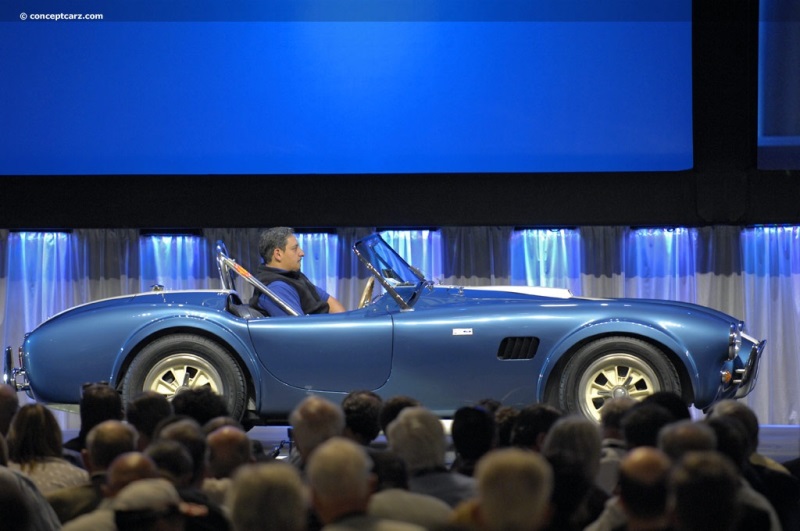
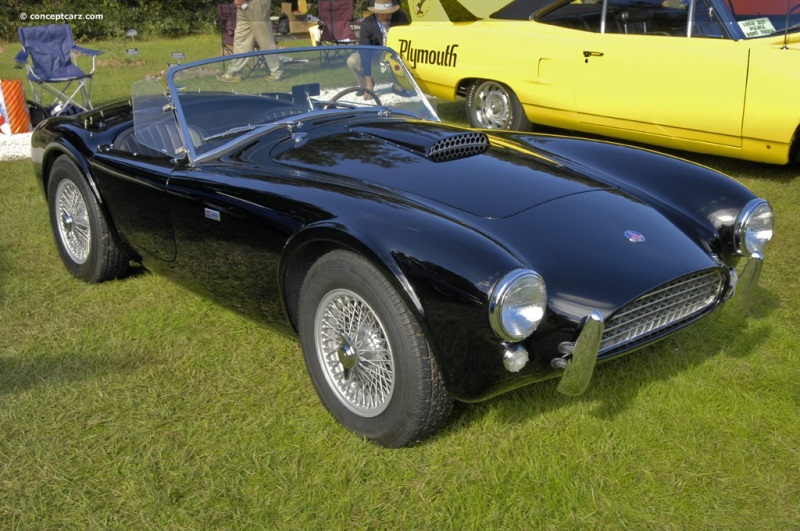
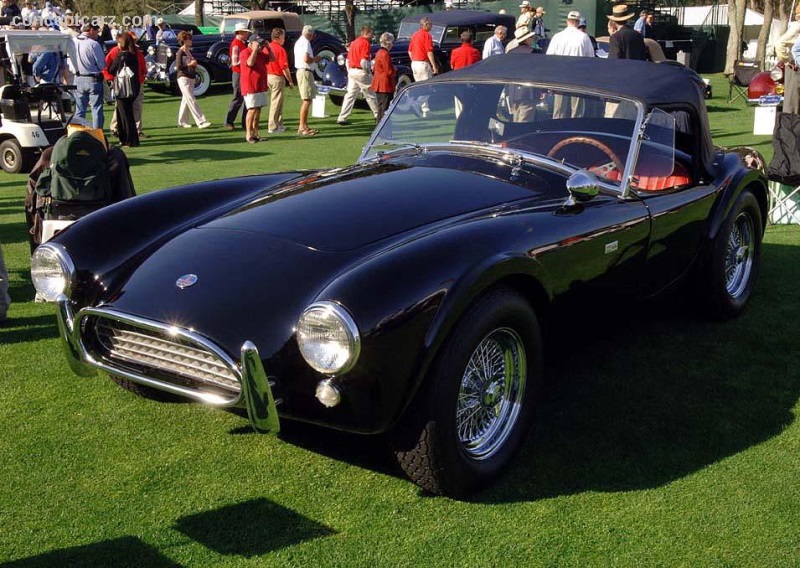
Carroll Shelby helped forge the motor racing link between the United States and Europe. He began as an accomplished racing driver who showed Europeans that Americans were not confined to oval tracks, became a driver for a European Formula One team, and won the 1959 LeMans 24-hour race. Although not an engineer, he 'married' the British AC chassis and a powerful Ford V8 engine to produce the Cobra, one of the most successful of all sports cars ever. The first Cobra was sold in 1962, and 75 more came off the assembly line that year, by which time the car had become homologated and was eligible for competition work. Through the next four years, the Cobra was campaigned successfully on both sides of the Atlantic, and by the time production ended in 1966, a total of 1,140 of these cars had been built. This example was sold new by Coventry Motors of Walnut Creek, CA, and was purchased in 2003 by its current owner from an Oregon Ford dealer who had owned it for 22 years.
Roadster
Chassis Num: CSX 2060
 
The AC Car Company in England began building sports cars in the mid-1950s. In 1962 the AC, Shelby America, and Ford Motor Companies formed a partnership to build sports/race cars for the American market. The AC Company shipped cars without engines and transmissions to Shelby American in California. Ford supplied the engines and Shelby America finished the cars.

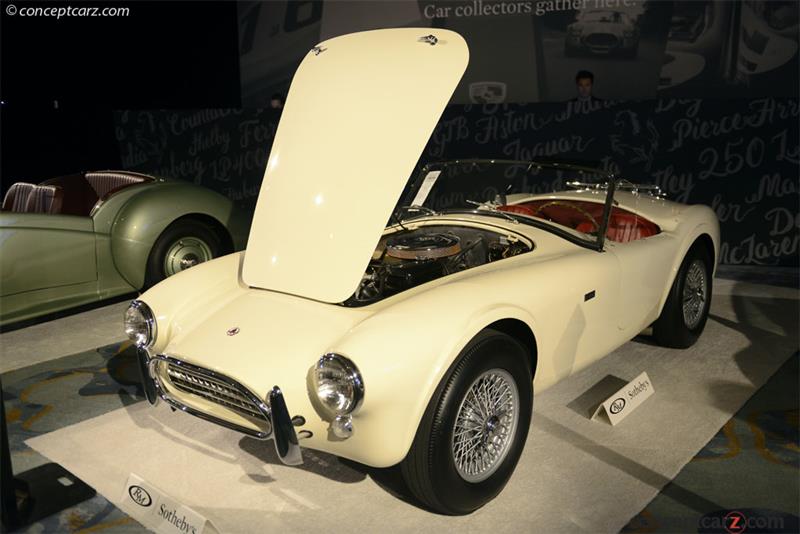
This car, serial number CSX 2060, is an early AC Cobra. Since the production of AC Cobras started with car CSX 2000, this car is the 61st Cobra built.

The early AC Cobras had 260 cubic-inch Ford engines. In 1964, Ford began to supply 289 cubic-inch Hi-Po engines for installation in Cobras. This car returned to the Shelby America Company and received a 289 Hi-Po race configured engine. A total of 603 small block Cobras were built between late 1962 and late 1964.
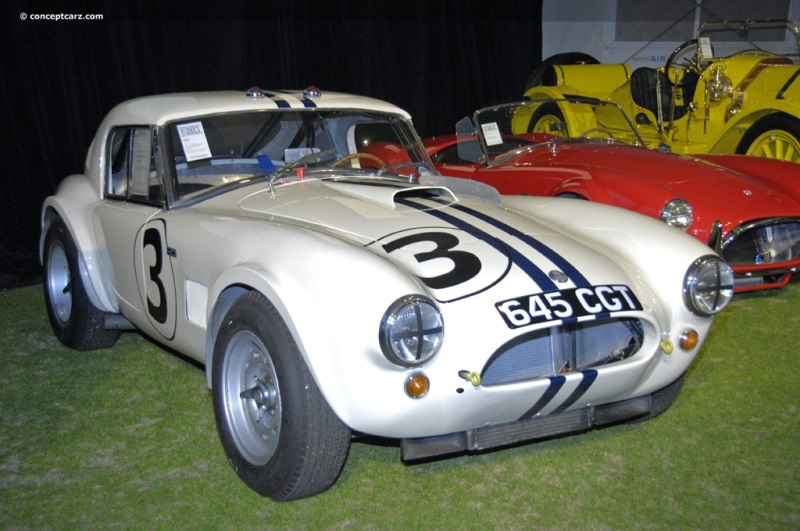
LeMans Coupe
Chassis Num: CSX 2142
 
High bid of $790,000 at 2009 RM Auctions. (did not sell)
This 1963 AC Shelby Cobra 289 with chassis number CSX 2142 is one of two Cobra Roadsters to race by the factory at the 1963 LeMans race. The sister car was a right-hand drive example. Both of the cars had semi-fastback alloy hardtops and this was the first car to be fitted with the hardtop, giving it greater aerodynamics and faster top speeds. This car was driven by Ed Hugus, Shelby's East Coast representative, who was aided by Peter Jopp with the driving duties. Stirling Moss managed the American Ford entry but engine trouble in the tenth hour meant it was forced to retire prematurely.

John Willment, a Ford dealer with a racing shop, acquired this car along with the sister car. Both cars were without engines. Willment fitted the cars with new engines, tested them at Brands Hatch, and entered them in the 1963 RAC Tourist Trophy at Goodwood. Both cars were unable to race due to unacceptable suspension parts and modified wheels. The following month, Bob Olthoff drove CSX 2142 at the Autsport 3 Hours at Snetterton race. It was then shipped to South Africa where it continued its racing career until late 1963.

The car was purchased by Ford of France. French racing driver Jo Schlesser was given driving duties at the Rallye de Picardie in May of 1964, finishing second overall. The car was then entered in the Rallye de La Baule the following month, where it was driven to a third overall. The following week, the car competed in the Mont Ventoux Hill Climb where it finished first in class. In August, the car competed in the Mont Dore Hill Climb where it finished first in the GT class.

The car continued to race in 1965 by Schlesser. In June, the car sustained fire damage during practice. It was then sold to Jean Marie Vincent, still in a damaged state. Vincent used parts from CSX 2142 and 6010 to re-assemble his AC Cobra. The bodywork from 2141 was unable to be saved due to the fire damage.

The car was sold near the close of 1965, or early 1966, to Michel Gaudard. While in Gaudard's possession, the engine was damaged while in route to Paris. It would remain parked in an underground garage in a Parisian suburb for the next three years, before it was sent to a scrap yard in Clamart. From there, it was purchased by Bernard Maitre in 1969 and later sold to Bernard Alter, who delivered it to Bernard Afchain. While in Afchain's care, the car was brought back to its 1963 LeMans specifications. The work was completed in 1983 or 1984. In 1990 it was sold to Bernard Merian, who kept the car for three months before selling it back to Afchain, who kept it until 1997 and selling to Yvan Mahe. In 2003, the car returned to the United Kingdom and treated to a restoration by Simon Hadfield.

In 2008, this Le Mans Cobra was brought to the 'Automobiles of Amelia Island' presented by RM Auctions. The car has an estimated value of $1,000,000 - $1,400,000. At auction, the lot failed to sell after bidding reached $790,000.

By Daniel Vaughan | Mar 2009
Roadster
Chassis Num: CSX2122
 
CSX2122 was among the first 200 Cobras produced at AC Cars, Ltd. under the newly agreed contract with Shelby America. It is painted in Princess Blue metallic paint and was shipped From AC Cars, Ltd. to Shelby's Los Angeles headquarters on May 2nd of 1963. It is powered by a 289 cubic-inch v8 engine and fitted with a 4-barrel carburetor. It has a luggage rack, WSW tires, and a four-speed manual transmission.

The first owner of this car was Jaques Passino who purchased it on September 16, 1963 for $5,182, which included his $300 employee discount. It returned to Shelby American a year later with 4,058 miles on the odometer. There is was given a Rotunda tachometer, Smiths clock, new soft top and tonneau, and a Ford air cleaner.

The next owner was Hi-Performance Motors of Los Angeles purchasing it on August 10th of 1964. It was then sold to Robert Brandes who sold it a year later to Monte Stutes of Conroe, Texas. It remained in his care until September of 1973, when it was again offered for sale. At this point, the advertisement stated it has 26K miles, was painted in metallic grey, and offered for $7,800.

W.H. Griffin of Topeka, Kansa purchased, kept it for about a year, before selling it to John D. Leatherman of PA. A Wisconsin individual named Bill Milburn purchased the car in 1976 and later sold it to Jim Cowles of Green Bay, Wisconsin.

While in Mr. Cowles care, the car was given a restoration. Upon completion, it was featured in the January 1994 issue of Mustangs and Fast Fords. David Furay of Colorado purchased the car in 1996 and sold it on to his brother Dan Furay of Frankfort, Illinois in 2001. The car currently has 39,000 miles and is reported to be in great mechanical and cosmetic condition.

In 2009, it was brought to the Gooding & Company auction held in Scottsdale, Arizona where it was estimated to sell for $525,000 - $600,000. Bidding failed to satisfy the vehicle's reserve and the lot was left unsold.

By Daniel Vaughan | Apr 2009
Roadster
 
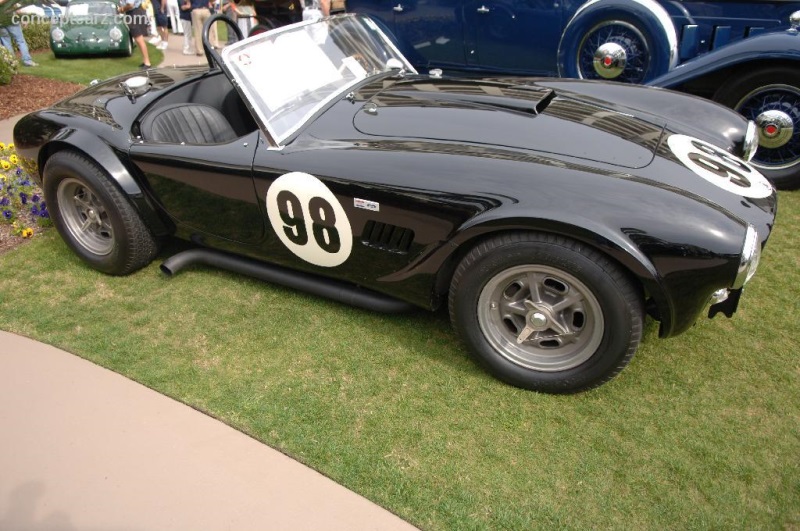
This Cobra is the last of the 'LeMans' series of competition cars. It was built during the fall of 1963, with the first Daytona Coupe. It has been raced every year from 1963 through 2005, except when it was being restored. It has never been driven on the road, but has competed in hundreds of races, including the first Nassau Trophy Race, the Daytona Continentals (where it finished 7th overall), and twice at the SCCA runoffs. THis car holds the lap records at Thompson, CT; Lime Rock, CT; Loudon, NH; and Blackhawk Farms, IL.
Roadster
Chassis Num: CSX 2085
 
It is rare to find a car that has been street-driven and raced in as many forms of competition as this Cobra. CSX 2085 was initially shipped to Ford in Dearborn and originally bought by Jacques Passino for $5,182. The car was shipped off to California the following year. It was then purchased and modified by Bob Gage, a friend of Carroll Shelby and godson of Ken Miles. Miles assisted in the car's competition conversion, which included a fuel cell, roll bar, Weber carburetors, hood scoop, brake ducts and a competition windshield. The car and owner were shipped to England, where they claimed eight victories during the 1965 racing season. After this season, it returned home and was returned to street trim, however its competitive streak still glowed as the car was auto crossed and even drag raced successfully.

Bob Gage sold the car in 1969. It visited Florida and then was tucked away in Canada for a decade. The current owner purchased the car in 1996, upgrading it to current vintage racing specs and returning it to its rightful place, the race track.
Roadster
Chassis Num: CSX2178
 
CSX2178 was factory Vineyard Green with a Beige interior, as it is today, but at one stage in its life both changed. It was originally delivered on the Shelby transporter to the Ford Motor Company in Cleveland, Ohio as a promotional vehicle to be returned to Shelby in the summer of the following year for repairs. It stayed in Los Angeles for years, went to Texas, and was ultimately bought by the current owners in October of 1981. At the Wine Country Classic in 1995, 57,400 miles were recorded. In their ownership, the car has participated in most of the Cobra 1000 tours.
Roadster
Chassis Num: CSX2253
 
CSX2253, a 'leaf-spring' 289 Cobra Roadster, was originally White with Black interior and sold by Theodore Robins Ford of Newport Beach, CA. The first owner was a Los Angeles doctor who soon traded it for a 427. The original 289 motor was somehow seized while in transit from Virginia back to Los Angeles in 1970 and was replaced by a Holman and Moody 302. It then sat in primer for 16 plus and was ultimately acquired by the current owner in 1997. The new owner painted it Guardsman blue with White stripes after mild modification such as fitting of a roll bar, oil cooler scoop and 6 inch painted wire wheels.
Roadster
Chassis Num: CSX2100
 
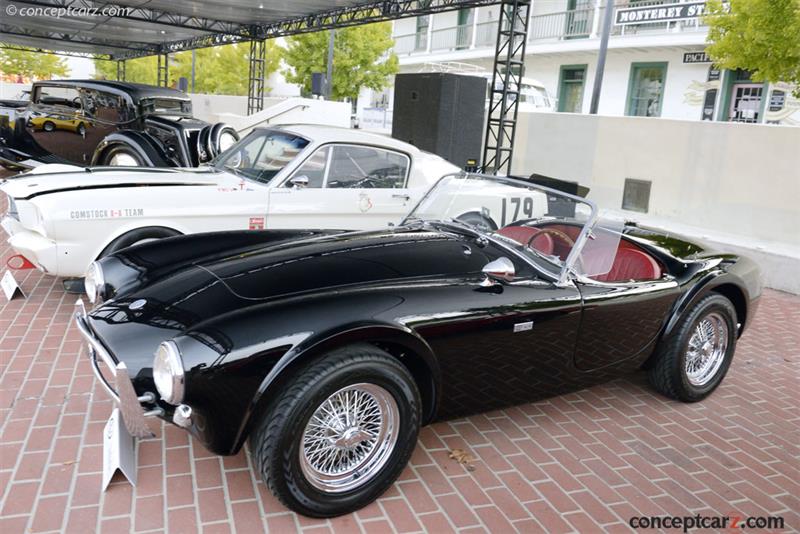
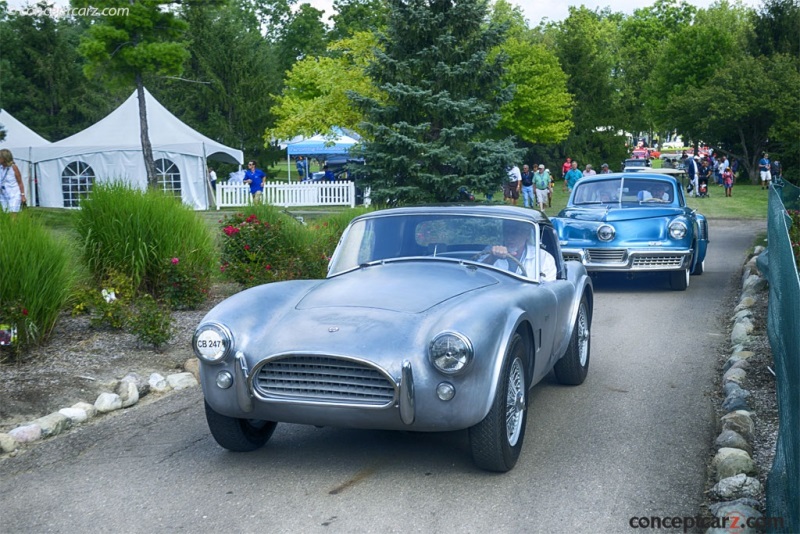
In the United Kingdom, the source of the chassis and body, the car is known as an AC Cobra; in the rest of the world, a Shelby Cobra. AC Cars of Thames Ditton, Surrey built Roadsters from 1961 through 1967 in various versions. This Cobra 289 is a Mark II, chassis number CSX2100. CSX means 'export Cobra' and 2100 makes it the 100th example built. About 528 Mark II Cobras were built in total. The Cobra went through a long development process through 1967 - getting faster, arguably, and complex.
Roadster
Chassis Num: CSX 2167
 
Sold for $627,000 at 2012 RM Auctions.
CSX 2167 is a 1963 289 Cobra Mark II with 30,500 original miles. It was shipped to Shelby American in Los Angeles on August 30th of 1963, aboard the SS Loch Garth. The car left the factory with options that included whitewall tires and a luggage rack for a total of $5,500.50. From there, it was sent by transporter to Gotham Ford in New York City to be used by Ford's District Office as a sales promotion unit.

The car was released from the Gotham dealership with little mileage in mid-1964. Gotham Ford sold it in June of 1964 and was returned for engine warranty work in July, indicating 1,350 miles. At the time, the owner was Mr. Liebowitz, of the Tarrell Building Corp. in Glen Cove, New York. In April of 1969, the car was purchased by Ray Cuomo of Huntingdon, New York. Cuomo had previously raced CSX 2009. At the time, CSX 2167 was fitted with Weber carburetors, chrome wire wheels, and cooling scoops underneath the front valence, which it retains today. In October of 1970, the car was sold to Pat Johnson of Virginia, who retained the car for a decade. Johnson sold it to Edwin Bunn, of Grundy, Virginia in 1980 and had it registered as 65COBRA.

In the mid-1980s, the car was treated to a restoration. The frame was sleeved to strengthen it, the engine brakes and suspension were rebuilt, and it was repainted in Emerald Blue, which was a non-metallic color. Other changes included an alloy fuel tank, a Holley carburetor on a Cobra intake, Dayton wire wheels with Goodyear tires, new exhaust, and new black vinyl interior. The work was completed in December of 1986 and at the time, the mileage totaled 21,132.

In October of 2001, the car was sold to Richard Cohen and Larry Smith, of Florida. A year later, Kay Hafner of Essen, Germany purchased the car. Soon after the purchase, it was sold to successful racing driver Frank Sytner in the UK, who registered it with the period-correct marker plate ANU 950A. It was subsequently offered by Gregor Fisken in the UK, who had it repainted in Guardsman Blue. Jon Savage, of Providence, Rhode Island, bought CSX 2167 in May of 2005 and brought the car back to the U.S. In 2007, it was sold to David Paulson, of Westlake, California.

In 2012, the car was offered for sale at RM Auction's Monterey, CA. sale. The car was estimated to sell for $600,000 - $700,000. As bidding came to a close, the car had been sold for the sum of $627,000, including buyer's premium.

By Daniel Vaughan | Nov 2012
Roadster
Chassis Num: CSX 2048
 
Sold for $522,500 at 2012 RM Auctions.
CSX2048 is an early small-block Cobra. It is factory-finished in red and black, the same colors as today. It was invoiced to Shelby American on November 13th of 1962 and shipped to Los Angeles. Factory documents recorded that it was refinished in a custom pearlescent paint finish and used briefly as a show car, followed by storage at the Shelby American warehouse prior to joining the famous 'Ford Custom Caravan' travelling display.

The next owner was Jacques Passino, the head of Ford Motor Company's racing operation. Invoiced to Passino for $5,889.30, after a $300 Ford Motor Company discount, the Cobra was equipped with the Class 'A' accessory package, the aforementioned pearlescent paint finish, chrome wheels, and Goodyear racing tires. The subsequent history of CSX2048 resumes in late-1970, when it was advertised for sale by a Massachusetts-based dealer.

In May 1971, CSX2048 was purchased by Mark Panageotes, of New Hampshire, who ultimately retained the car until the late-2000s. In 1973, the car was repainted in red. He drove the Cobra frequently and regularly. After moving to Kansas, Mr. Penageotes extensively campaigned the Cobra in Kansas State Sports Car Club autocross events. In total, he and the Cobra visited 21 U.S. states and four Canadian provinces, covering a conservatively-estimated 5,000 miles per year, on average, over the years.

In the late-2000s, the car was treated to a complete restoration. In late-2011, after 40 years of ownership, Mr. Panageotes sold his Cobra to another enthusiast. The 289 cubic-inch Ford overhead valve V-8 engine is fitted with a Holley four-barrel carburetor and offers 271 horsepower. There is a four-speed manual transmission and four-wheel hydraulic disc brakes.

In 2012, this car was offered for sale at RM Auction's Monterey, CA sale. It was estimated to sell for $550,000 - $650,000. As bidding came to a close, the car had been sold for the sum of $522,500, inclusive of buyer's premium.

By Daniel Vaughan | Nov 2012
Roadster
Chassis Num: CSX2128
 
A factory Shelby team car, this roadster was memorialized in the song 'Hey Little Cobra.' The Shelby was driven by Dan Gurney, Ken Miles, Lew Spencer, Allen Grand and others. Most recognized as one of two Cobras built for the 1963 Sebring race, it once wore a livery designed by movie titan George Lucas.
The formula for the success of the Cobra came through a man named Carroll Shelby adapting a powerful Ford engine into a nimble, British sports car.

A.C. Cars of Thames Ditton in Surrey, England had been producing the Ace since 1954. It was designed by John Tojeiro and featured an independent suspension by transverse leaf springs. The tubular frame body of the vehicle took its styling cues from Ferrari. The original engine used in the Ace was a 1991 cc, over-head-cam engine designed by John Weller, the founder of AC, in the 1920s. In 1956, an optional Bristol engine became available. This was a BMW derived, 1971 cc six-cylinder engine that was capable of producing 125 horsepower. With the Bristol engine, the Ace captured many victories on the race tracks around the world. It even won the SCCA Class E championship three years in a row.

In 1959, Bristol ceased its six-cylinder engine production. When Bristol stopped supplying A.C. with the engine, the production of the Ace ceased. Carroll Shelby quickly negotiated a deal where A.C. would supply him with the chassis. Now all Shelby needed was an appropriate engine. In 1961, Ford introduced the 221 cubic-inch small block engine. This was a new lightweight, thin wall-cast, V8 engine that produced 164 horsepower. Shelby approached Ford about the use of the engine for the 2-seat sports car. Ford agrees.

In February of 1962, a 260 HiPo engine and Borg-Warner four-speed manual gearbox was fitted into the aluminum-bodied Cobras. The AC Shelby Ford Cobra was complete.

In April of 1962, the first Cobra with chassis CSX 2000 was painted yellow and shipped to the New York Auto Show where it appeared on the Ford display. The vehicle was an instant success and attracted much attention. Orders came faster than Shelby could build. The prototype CSX 2000 was continuously being repainted for magazine reviews. The purpose was to create an illusion that more Cobras existed.

In 1963 the engine size increased to 289 cubic-inches. Rack-and-pinion steering was added to the vehicle.

Two Cobras were entered into the grueling 24-Hours of Le Mans endurance race. Carroll Shelby himself drove one of the vehicles. Ford had refused to provide an engine so Shelby, with the help of A.C. cars and Ed Hugus, prepare the cars. One of the Cobras managed to capture a seventh place finish, a major accomplishment.

Dan Gurney became the first American driver to win an FIA race in an American car when he won the Bridgehampton 500KM race in September of 1963 while driving a Cobra.

In 1964, the Cobra returned to LeMans where it finished fourth overall and first in the GT class.

Near the end of 1964, the Cobra 427 was unveiled to the press. If featured a new tubular, aluminum body, coil spring chassis, and a 427 cubic-inch, 425 horsepower engine. The car was able to go from zero to 100 mph and back to zero in less than 14 seconds.

In 1967, the last 427 Cobra was built and in 1968, the last 427 Cobra was sold by Carroll Shelby.

Ford had shifted their resources to the new GT40 and modified Mustang programs. In 1966, three GT-40 Mark II's crossed the finish line at Le Mans capturing first, second, and third.

By Daniel Vaughan | Mar 2010
For more information and related vehicles, click here

Sonoma Historic Motorsports Festival Celebrates Corvette'S 60 Years At Sonoma Raceway
• Fast cars, fine food and wine highlight May 18-19 weekend
• Paul Reinhart is honored guest, popular racing seminar scheduled for second year
SONOMA, Calif. (April 27, 2013) - The Sonoma Historic Motorsports Festival returns to Sonoma Raceway on May 18-19 for the fourth straight year under that title. The program for the 27th annual historic-car event organized by General Racing Ltd. in Sonoma will celebrate the 60th Anniversary of the popular Corvette, created by the ...[Read more...]
KARL LUDVIGSEN SPEAKING IN WATKINS GLEN ON APRIL 13
Automobile industry insider and author/historian Karl Ludvigsen will speak about his experiences in the worlds of cars and racing on April 13 at the International Motor Racing Research Center. The free talk, part of the on-going Center Conversations speaker series, will be at 1 p.m. at the Center located at 610 S. Decatur St., Watkins Glen, N.Y. It is open to all. 'A Lifetime on Wheels' will be an illustrated presentation based on Ludvigsen's careers as an executive in the motor industry...[Read more...]
Limited-Edition Ford Racing History Artwork Unveiled at SEMA; Limited-Edition Print Sales to Benefit JDRF
•Special limited-edition Ford Racing history artwork is unveiled at the annual SEMA show as part of the Ford press conference •Famed automotive artist Sam Bass created the artwork at the request of Edsel B. Ford II, with proceeds from sales of limited-edition autographed prints benefiting JDRF •Drivers and Ford race vehicles featured on the special artwork include Henry Ford (Sweepstakes), Trevor Bayne (No. 21 Fusion), Dan Gurney/A.J. Foyt (Ford Mark IV), Bob Glidden (NHRA Thunderbird), Jack...[Read more...]
1962 Monaco Grand Prix: McLaren Carries the Cooper Flag back to the Top
By the beginning of the 1962 Formula One season Jack Brabham had left Cooper to form his own racing team. It seemed the glories days of the double World Championship were well and truly behind them. However, left in Brabham's stead would be a man very akin to the Australian in so many ways. And in Bruce McLaren, Cooper had a driver and competitor more than apt to help carry the team forward into the future. The first race of the 1962 season, the Grand Prix of the Netherlands, certainly didn't...[Read more...]
1959 24 Hours of Le Mans: Confirmation of a Great
When it came to success in motor racing, Salvadori was blessed behind the wheel of a sports car. Throughout the 1950s, there really weren't too many drivers more successful. However, at Le Mans, Salvadori's would be left fighting for a race finish just about as badly as he had been throughout the majority of his Formula One career. But in 1958, things would turn around in the Formula One World Championship. Could the same thing happen for Salvadori at Le Mans a year later? Just 24 hours awaited ...[Read more...]

Arrow Right 1963 Shelby models
Shelby Cobra 289 Le Mans
1963 Shelby Concepts
Shelby Bordinat Cobra Concept
Shelby Cougar II Concept

Similarly Sized Vehicles from 1963
AC Ace
Alfa Romeo 2600
Alfa Romeo Giulia 1600
Alfa Romeo Giulia 1600 Series 105
Alfa Romeo Giulietta
Alfa Romeo Giulietta Sprint Speciale
Amphicar 700
Austin-Healey 3000 MKII BJ7
Daimler SP 250
DeTomaso Vallelunga

 
Shelby: 1961-1970
Similar Automakers
Other models by Shelby

Related Articles and Event Coverage
Rolex Monterey Motorsports Reunion
RM Auctions - Monterey
Carmel By The Sea Concours
Pebble Beach Concours d'Elegance
17th Annual Amelia Island concours d'Elegance
2011 Rolex Monterey Motorsports Reunion
Watkins Glen Vintage Grand Prix
Gooding and Company - Pebble Beach Auctions
RM Auctions at Monterey
Mid-Ohio Vintage Grand Prix
Watkins Glen U.S. Vintage Grand Prix
The Quail, A Motorsports Gathering
Rolex Monterey Motorsports Reunion
Carmel-By-The-Sea Concours on the Avenue
Kohler International Challenge
Rolex Monterey Historic Automobile Races
Mid-Ohio Vintage Grand Prix
Automobiles of Amelia Island
The Scottsdale Auction : Gooding & Company
Hilton Head Island Concours d'Elegance & Motoring Festival
Monterey Historic Automobile Races at Laguna Seca
Amelia Island Concours d'Elegance
Zippo U.S. Vintage Grand Prix at Watkins Glen
2006 Amelia Island Concours d'Elegance


CanAm
Cobra
Mustang
Series 1

1964 Cobra 289 Image Right1964 Cobra Dragonsnake 289 Image Right
© 1998-2012. All rights reserved. The material may not be published, broadcast, rewritten, or redistributed.