History
It was in 1948 when the newly formed Italian automobile company named Ferrari began selling a promising sports car named the 166. The two-seater sports car featured a 12-cylinder engine mounted in the front and supplying over 100 horsepower to the rear wheels. The engine was just under two-liters in size and had a unitary displacement of 166 cc, thus, the evolution of the model name. Production would last until 1953 with only 38 examples being produced. Even though production was low, its accomplishments are large, with wins at LeMans, Mille Miglia, and the Targa Florio.
The 166 was a continuation of the 125, introduced a year earlier. The 125's size of 1497 cc was later enlarged to 1902cc, bringing about the Tipo 159. In 1948, it was enlarged to 1995 cc and became the 166.
Engineer Gioachino Colombo had been tasked with creating the engine to power the first Ferrari automobile. Both Enzo and Colombo had a history with working at Alfa Romeo and were well versed on the rules and regulations of Grand Prix racing. Rules dictated that displacement size was limited to just 1.5-liters in forced induction engines, and 4.5-liters in naturally aspirated units. Colombo opted for the forced induction route, just as he had done while at Alfa Romeo, and designed for Ferrari their first V12 engine, as well as their first chassis. The engine was very different from the units Colombo had created while at Alfa Romeo, though sharing the same displacement size. Before the engine or chassis were ever created, Colombo left. Aurelio Lampredi was brought in to pick-up where Colombo had left off. Lampredi was a former Fiat employee who was a very talented and gifted engineer. He created the Colombo designed supercharged V12 engine, which would quickly grow in size to three liters.
The engine was potent, but still lacking. Lampredi was tasked with creating a new engine, larger in size, and aimed at propelling Ferrari's next generation of Grand Prix racing machines. Lampredi's goal was to create a powerful, yet fuel-efficient engine that could keep with the competition. The Alfa Romeo engines were providing serious competition, and Lampredi questioned if the horsepower output could reach the figures Alfa Romeo was producing. Better fuel-efficiency, along with better tire wear, were two ways Lampredi was hoping to best the Alfa's.
The Lampredi designed 3.3-liter engine was ready by early 1950. Due to its size and configuration, it would eventually become known as the 'long-block' engine. It was constructed from a light-alloy metal, two valves per cylinder, single overhead camshaft, and drew design inspiration from the prior Colombo engine.
Touring was tasked with creating the first two vehicles to house the Lampredi engines. They were entered in the 1950 Mille Miglia and carried the designation, 275 S, keeping with the traditional Ferrari naming scheme based on unitary displacement. The car's debut was less than stellar, as both were forced to retire prematurely due to tire and gearbox issues. As the year progressed, the issues were resolved and development continued on the engine, ultimately reaching 4.5-liters.
Other than being a very successful race car builder that enjoyed profound racing success, he was also a great businessman and able to capitalize on racing success. Many of the road-going cars Ferrari produced were derived from their racing program. Using the Lampredi engine, displacing 4.1 liters and producing 220 horsepower, the engine was mounted in an enlarged version of the 275 S chassis, and the vehicle was named the 340 America. The 340 America's first public debut was at the Paris Auto Show where it was displayed wearing a Touring Barchetta body. a total of 23 examples would eventually be produced, with bodies supplied by Vignale, Touring, and Ghia. As is popular with Ferrari automobiles, many of the 340 America's were used by privateers in racing competition.
Though rule changes at the close of the 1951 season left the Lampredi engine obsolete, development continued. A total of six examples of the Ferrari 342 America were created. These were very exclusive machines catered to Ferrari's wealthiest clients. The 340 Mexico cars were true Ferrari racing bred machines. Four examples were specifically created to compete in the 1952 running of the Carrera Panamericana race. They were powered by a 280 horsepower version of the Lampredi engine and given a longer wheelbase to better traverse the rough and changing terrain.
In 1953, Ferrari introduced the 340 MM, which was a replacement for the 340 America. Under the bonnet was a 300 horsepower Lampredi engine.
By Daniel Vaughan | Oct 2007
The 166 was a continuation of the 125, introduced a year earlier. The 125's size of 1497 cc was later enlarged to 1902cc, bringing about the Tipo 159. In 1948, it was enlarged to 1995 cc and became the 166.
Engineer Gioachino Colombo had been tasked with creating the engine to power the first Ferrari automobile. Both Enzo and Colombo had a history with working at Alfa Romeo and were well versed on the rules and regulations of Grand Prix racing. Rules dictated that displacement size was limited to just 1.5-liters in forced induction engines, and 4.5-liters in naturally aspirated units. Colombo opted for the forced induction route, just as he had done while at Alfa Romeo, and designed for Ferrari their first V12 engine, as well as their first chassis. The engine was very different from the units Colombo had created while at Alfa Romeo, though sharing the same displacement size. Before the engine or chassis were ever created, Colombo left. Aurelio Lampredi was brought in to pick-up where Colombo had left off. Lampredi was a former Fiat employee who was a very talented and gifted engineer. He created the Colombo designed supercharged V12 engine, which would quickly grow in size to three liters.
The engine was potent, but still lacking. Lampredi was tasked with creating a new engine, larger in size, and aimed at propelling Ferrari's next generation of Grand Prix racing machines. Lampredi's goal was to create a powerful, yet fuel-efficient engine that could keep with the competition. The Alfa Romeo engines were providing serious competition, and Lampredi questioned if the horsepower output could reach the figures Alfa Romeo was producing. Better fuel-efficiency, along with better tire wear, were two ways Lampredi was hoping to best the Alfa's.
The Lampredi designed 3.3-liter engine was ready by early 1950. Due to its size and configuration, it would eventually become known as the 'long-block' engine. It was constructed from a light-alloy metal, two valves per cylinder, single overhead camshaft, and drew design inspiration from the prior Colombo engine.
Touring was tasked with creating the first two vehicles to house the Lampredi engines. They were entered in the 1950 Mille Miglia and carried the designation, 275 S, keeping with the traditional Ferrari naming scheme based on unitary displacement. The car's debut was less than stellar, as both were forced to retire prematurely due to tire and gearbox issues. As the year progressed, the issues were resolved and development continued on the engine, ultimately reaching 4.5-liters.
Other than being a very successful race car builder that enjoyed profound racing success, he was also a great businessman and able to capitalize on racing success. Many of the road-going cars Ferrari produced were derived from their racing program. Using the Lampredi engine, displacing 4.1 liters and producing 220 horsepower, the engine was mounted in an enlarged version of the 275 S chassis, and the vehicle was named the 340 America. The 340 America's first public debut was at the Paris Auto Show where it was displayed wearing a Touring Barchetta body. a total of 23 examples would eventually be produced, with bodies supplied by Vignale, Touring, and Ghia. As is popular with Ferrari automobiles, many of the 340 America's were used by privateers in racing competition.
Though rule changes at the close of the 1951 season left the Lampredi engine obsolete, development continued. A total of six examples of the Ferrari 342 America were created. These were very exclusive machines catered to Ferrari's wealthiest clients. The 340 Mexico cars were true Ferrari racing bred machines. Four examples were specifically created to compete in the 1952 running of the Carrera Panamericana race. They were powered by a 280 horsepower version of the Lampredi engine and given a longer wheelbase to better traverse the rough and changing terrain.
In 1953, Ferrari introduced the 340 MM, which was a replacement for the 340 America. Under the bonnet was a 300 horsepower Lampredi engine.
By Daniel Vaughan | Oct 2007
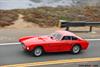


1953 Ferrari 340/375 MM Vehicle Profiles


Recent Vehicle Additions


Related Automotive News

1953 FERRARI 375 MM SPIDER LEADS LATEST HIGHLIGHTS FOR RM'S MULTI-MILLION-DOLLAR MONTEREY SALE
RM Auctions secures a championship-winning 1953 Ferrari 375 MM Spider competition car for its flagship Monterey, California, sale, August 16–17, after single ownership for 45 years
Also announced are a 1939 Mercedes-Benz 540K Special Roadster, a...

Italian Record For A Classic Ferrari
Maranello, 28 May – A classic car gains value over time, even more so if it is a Ferrari. This was confirmed for the umpteenth time at an auction organised by RM at Villa Erba on Lake Como, where a splendid Ferrari 340375 MM Berlinetta Competizione,...
Pedigreed 500 Mondial Series I Spider, ex-Jo Siffert, Unrestored 275 GTB/4, and Dark Green 365 GTB/4 Daytona Spider Lead Ferrari Offerings at the Amelia Island Auction
Star Ferraris at Gooding %26 Companys Amelia Island Auctions include a 1954 Ferrari 500 Mondial Series I Spider, a garage-find 1967 Ferrari 275 GTB4, and a low-mileage 1972 Ferrari 365 GTB4 Daytona Spider
Gooding %26 Company has announced an...

Gooding & Company Releases Entire Catalogue for Upcoming London Sale, Led by a 1953 Ferrari 166 MM/53 Spider Offered from Long-Term Ownership
The London Auction at Hampton Court Palace will present an unrestored Ferrari 166 MM53 Spider and Ferrari 250 Europa, as well as a desirable Fiat 8V Berlinetta and right-hand-drive Aston Martin DB5 Convertible.
Gooding %26 Company, the international...

Ferrari: Under The Skin
15 November 2017 - 15 April 2018
Major exhibition announced by the Design Museum in London to mark the 70th anniversary of Ferrari
£140M worth of Ferraris featured in exhibition displaying cars driven by racing drivers Peter Collins and Stir...
Luigi Musso: Talented, Tempting and Troubled
Following Alberto Ascaris back-to-back titles in 1952 and 1953 there have been no Italian Formula One World Champions. While there has been a great amount of hope throughout the years, Italians have been left without a World Champion. Perhaps, it could...

1954 Carrera Panamericana: Courage to Go On
Suddenly the Ferrari 340 Mexico would break loose on Hill. Careening down over the ledge, the car would be battered and bruised, coming to a rest finally with its occupants none the worse for wear. It would be a scary moment and the mangled bodywork...