Packard introduced their first 12-cylinder model, the Twin Six, in 1916. It had its two-cylinder banks at a 60-degree angle and a displacement of 424.1 cubic inches, offering 88 horsepower, and giving the 6,000-pound vehicle a top speed of 70 mph. The Twin Six remained in production until 1923. Eight-cylinder engines remained favorable until Cadillac introduced new twelve- and sixteen-cylinder models in the early 1930s. Packard responded in 1932 with the introduction of another V12, again called the Twin Six. Although it had the same name, it was an entirely new design with a 67-degree vee angle and a 445.5 cubic-inch displacement offering 160 horsepower. Displacement grew by 24.4 cubic inches and horsepower increased by 82 percent. Packard soon realized that a new name was needed to distinguish it from the past model, changing its name to the Packard Twelve. The Packard Twelve was produced from 1933 to 1939.
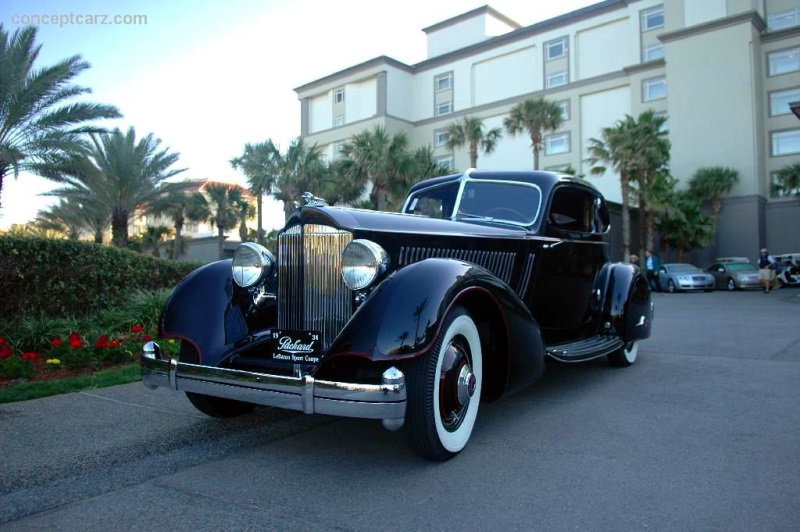
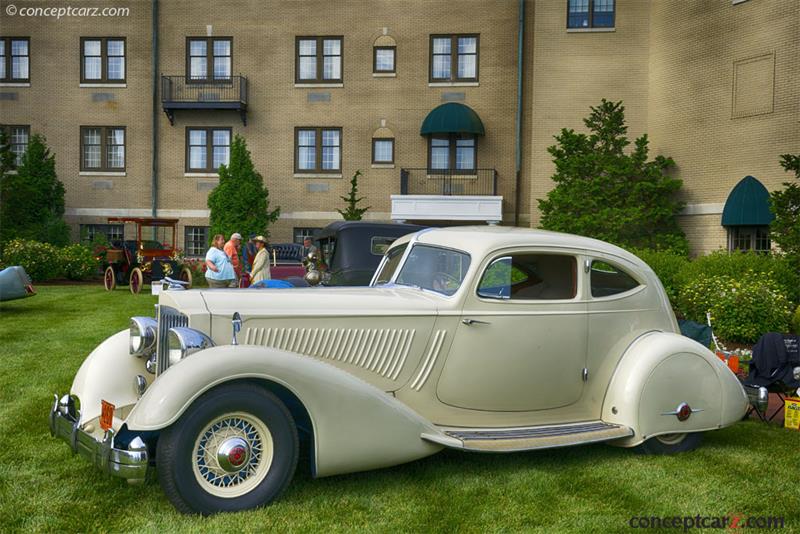
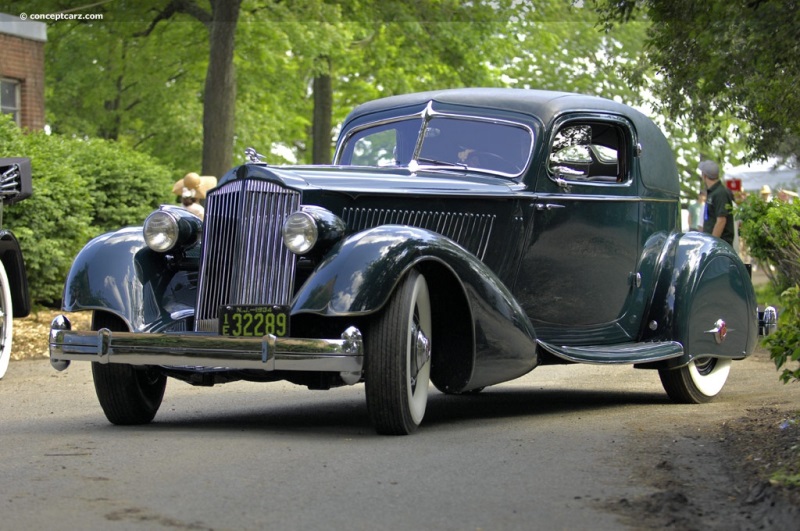
Aero Sport Coupe by LeBaron
Chassis #: 1106-783-15
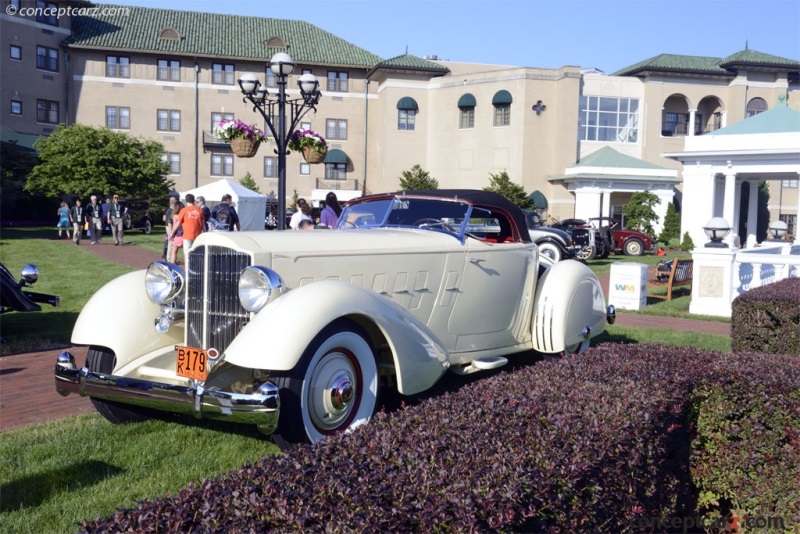
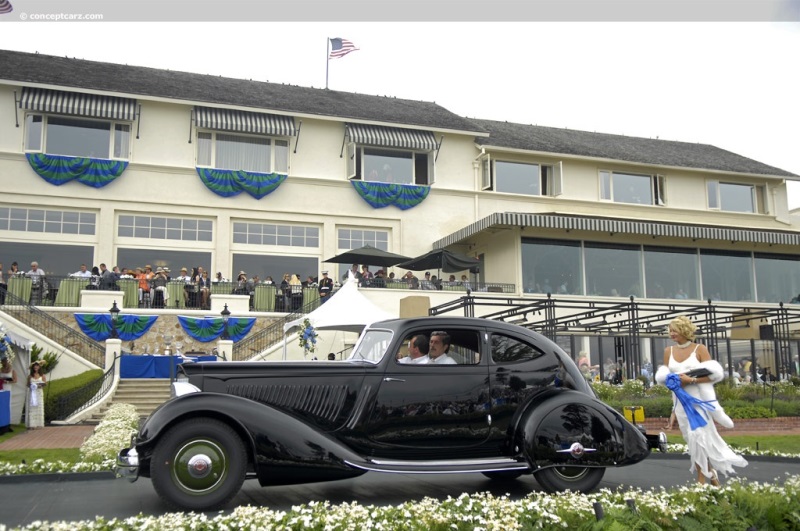
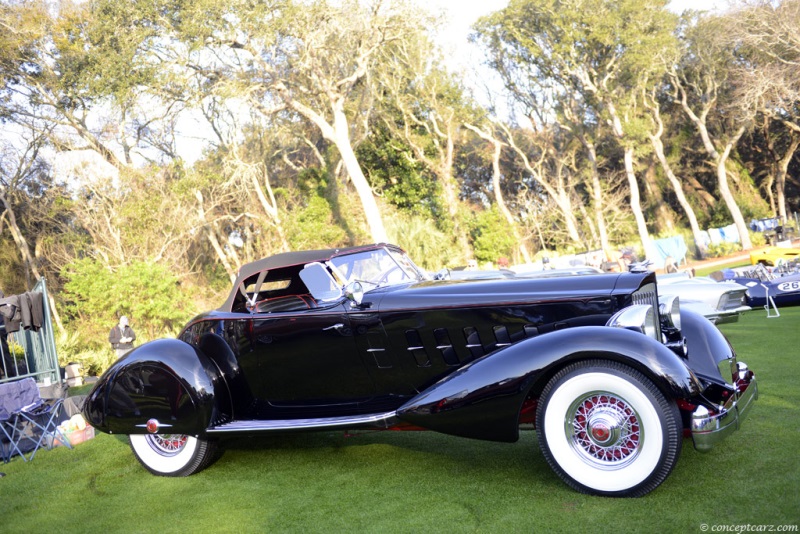
View info and historyThe Packard Twelve was the top-of-the-line offering from one of America's leading manufacturers of fine cars. The Eleventh Series Packard 1106 was powered by a 445 cubic-inch engine with Stromberg downdraft carburetion and delivered 160 horsepower. The engine was mated to a three-speed synchromesh transmission and there were four-wheel adjustable vacuum-assisted brakes and a wheelbase that measured 135 inches. The Packard Twelve line consisted of the 1106, 1107, and 1108. The 1107 had a 142-inch wheelbase and 11 production body styles while the Model 1108 was the long 147-inch wheelbase offered in seven-passenger production bodies. The 1106 body styles included the Sport Coupe and the LeBaron Runabout Speedster. 1934 changes included modifications to the engine and a redesigned interior, with a radio being offered as optional equipment.
by Daniel Vaughan | Jun 2019
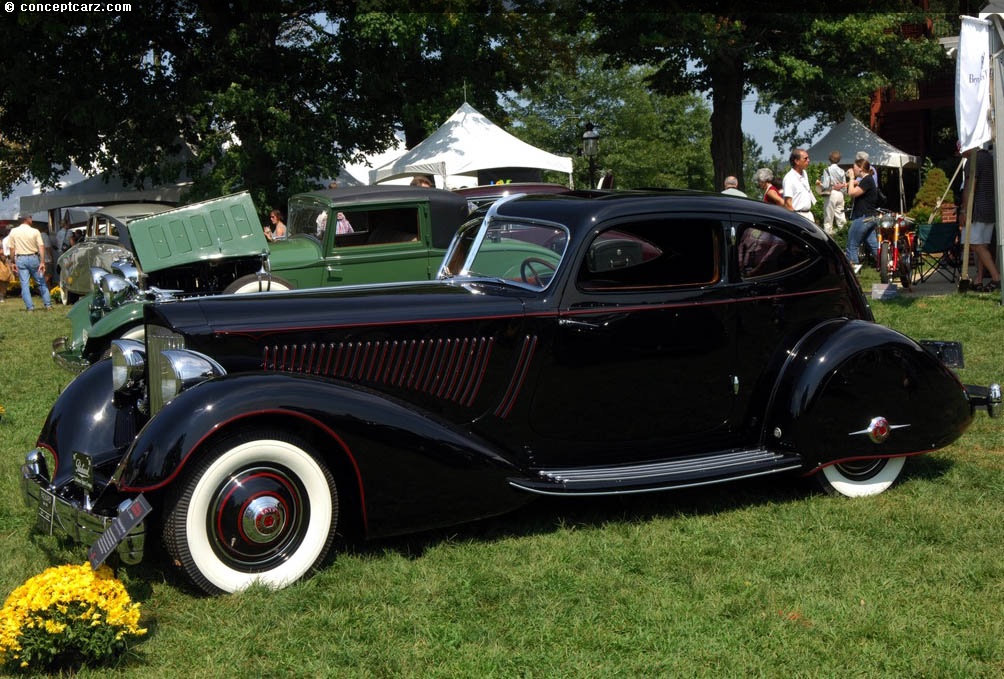
Aero Sport Coupe by LeBaron
Chassis #: 1106-783-15
View info and history
by Daniel Vaughan | Jun 2019
Related Reading : Packard Twelve History
The Packard Twelve was produced from 1933 to 1939 with over 35,000 examples produced. It is considered by many to be one of the finest automobiles produced by Packard and one of the most significant creations of the classic car era. The long and flowing front hood hid a 445 cubic-inch side-valve twelve-cylinder engine that was refined, powerful, smooth, and quiet. The engine was originally destined....
Continue Reading >>
Continue Reading >>


1934 Packard 1106 Twelve Vehicle Profiles





Recent Vehicle Additions


Performance and Specification Comparison
Price Comparison
$2,365
$2,600 - $3,300
$3,000 - $3,825
$3,300 - $7,060
$3,800 - $4,800
$4,200 - $14,000
$4,590 - $6,800
Twelve Eleventh Series Specification Comparison by Year
Year
Production
Wheelbase
Engine
Prices
Related Automotive News

Past Best of Show Winners at The Pebble Beach Concours d'Elegance
overview1
The 70th anniversary of the Pebble Beach Concours dElegance was celebrated with a spectacular display of previous Best of Show winners. Thirty-seven examples graced the showfield and many were still with the same owners who raised the trophy...

Alfa Romeo Named Best of Show at the 68th Pebble Beach Concours d'Elegance
Touring-Bodied Alfa Romeo 8C 2900B Named Best of Show at the 68th Pebble Beach Concours dElegance
PEBBLE BEACH, Calif. (August 26, 2018) — After an intense competition that drew diverse cars from around the globe, the coveted gold Best of Show...

1929 Mercedes-Benz S Barker Tourer Named Best Of Show At The 67Th Pebble Beach Concours d'Elegance
PEBBLE BEACH, Calif. (August 20, 2017) — Just a week ago, Bruce R. McCaws 1929 Mercedes-Benz S Barker Tourer emerged from the restoration shop of Steve Babinsky in Lebanon, New Jersey. Today, having crossed the country, the boattailed beauty captured...

The Elegance at Hershey
Modeled after the finest concours in Europe and America, The Elegance is a genteel garden party featuring the worlds finest collector cars, arrayed around the classically manicured gardens of The Hotel Hershey. Approximately 75 carefully curated...

What Cars Can You Expect to See at The Elegance at Hershey?
HERSHEY, PA (May 2017) - The Elegance at Hershey is a celebration of a bygone era when the automobile stirred our imaginations and quickened our hearts. Today, people both young and old marvel at the extravagances of the automobiles of the past....