Frank Kurtis's infatuation with automobiles began at an early age. His father owned a blacksmith shop located in Pueblo, Colorado, that repaired automobiles and horse-and-buggy. The family later moved to Los Angeles, CA, where Frank got a job working with Don Lee Cadillac after lying about his age. By the 1930s, Frank was designing, building, and repairing racers in his four-car garage located behind his house. 
Roadster
View info and historyIn 1941 he created a car to be entered in the Indianapolis race which was driven by Sam Hanks. Near the mid-1940s, he had created two other racers designed for Indy. The first was for Ross Page and the second was the Novi Special. The Novi V8 Specials were racing cars designed to compete at Indianapolis from 1941 through 1965. These were very fast and powerful machines that had a reputation for their handling, which had claimed the lives of two drivers.During the 1940s, Kurtis fostered a reputation for his midget and Indy racers. In 1946, the Kurtis Miller Ross Page Special was created and was ready to compete in the first Indy 500 after World War II. The rear faring was constructed of Plexiglas and powered by a 183 cubic-inch Offenhauser engine. It competed in the 1946-1948 Indianapolis 500 races.By 1947 he had created the Kurtis-Kraft Special, his personal entrant in the 1948 Indy race. This one-off was built specifically to Frank Kurtis's specifications and desire. During the 1948 season, it carried Frank to a 9th-place finish at Indy and 12th in points. For the 1949 season, under the name of Wynn's Oil Special, it was driven by Johnny Parson and wearing the number 1 on its side, to a first overall finish at Indianapolis. The vehicle was later sold to Jim Robbins who drove it in the 1951 Indianapolis race, where he finished with an impressive 2nd overall.
Roadster
Chassis #: KK500G2-3
Engine #: 89
View info and historyDuring the early 1950s, Kurtis continued to build Indianapolis and midget racers. He even began building sports cars, which later evolved into the Muntz Road Jet. By 1952, the majority of cars entered in the Indianapolis race were designed and built by Kurtis Kraft. In 1952, Herb Porter and Frank Kurtis built the Wolcott Special, also known as the Kurtis 500A. It ran at Indianapolis in 1952, driven by Joie James, where it set records and lap times of 140 mph. The 500 S was constructed in 1953, and it quickly proved its potential at sporting events around the country. The 500 S was quickly followed by the 500 M. There were six 500 X cars produced during the mid-1950s. The cars featured a four-bar torsion suspension, hand-formed aluminum panels, and a 364 cubic-inch Buick nailhead engine with Hilborn fuel injection.
Roadster
Chassis #: KK500G2-3
Engine #: 89
View info and historyIn 1956, Frank left the Kurtis-Kraft Company and his business partners to begin his new company called Frank Kurtis Company. The company continued to build midget roadsters, go-karts, and sports cars. Since then, the company has shifted its focus to designing airplanes. Contracts with Lockheed Corporation lead to the construction of Start Carts for the SR-71 Blackbird. In 1968 Frank retired from the company leaving his son Arlen in charge.During Frank Kurtis's illustrious career, he created vehicles that dominated the midget racing series, racers that filled the grid at Indianapolis, and sports cars that were street-legal Indianapolis racer variants. His custom creations, such as his 1941 Buick, was sensational, which ultimately led to the Muntz Jet automobiles.
by Daniel Vaughan | Aug 2011
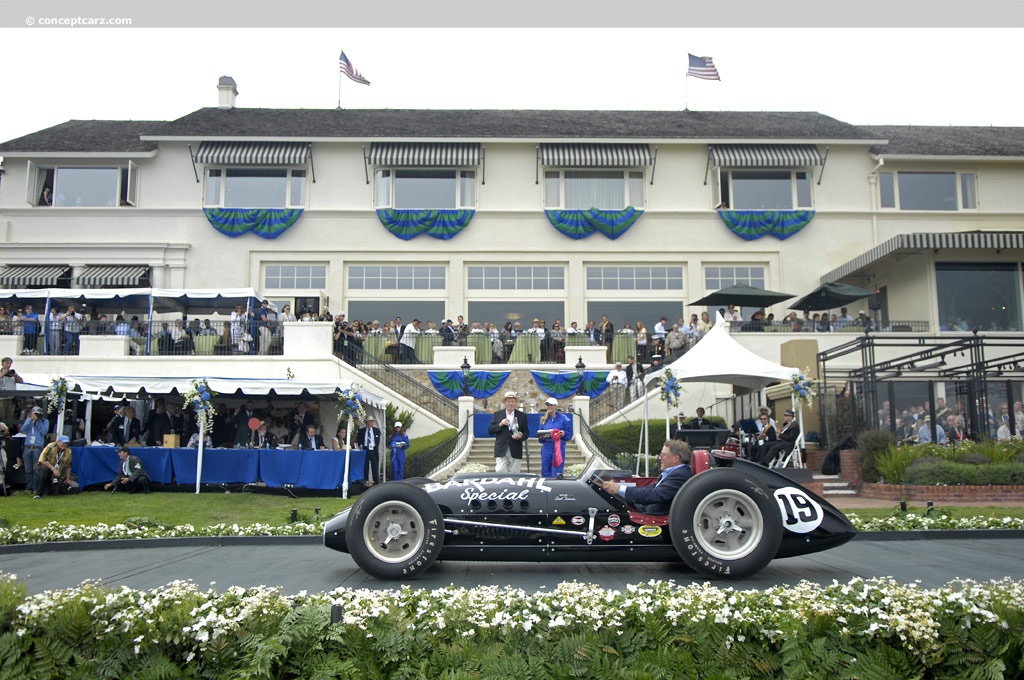
Roadster
View info and history
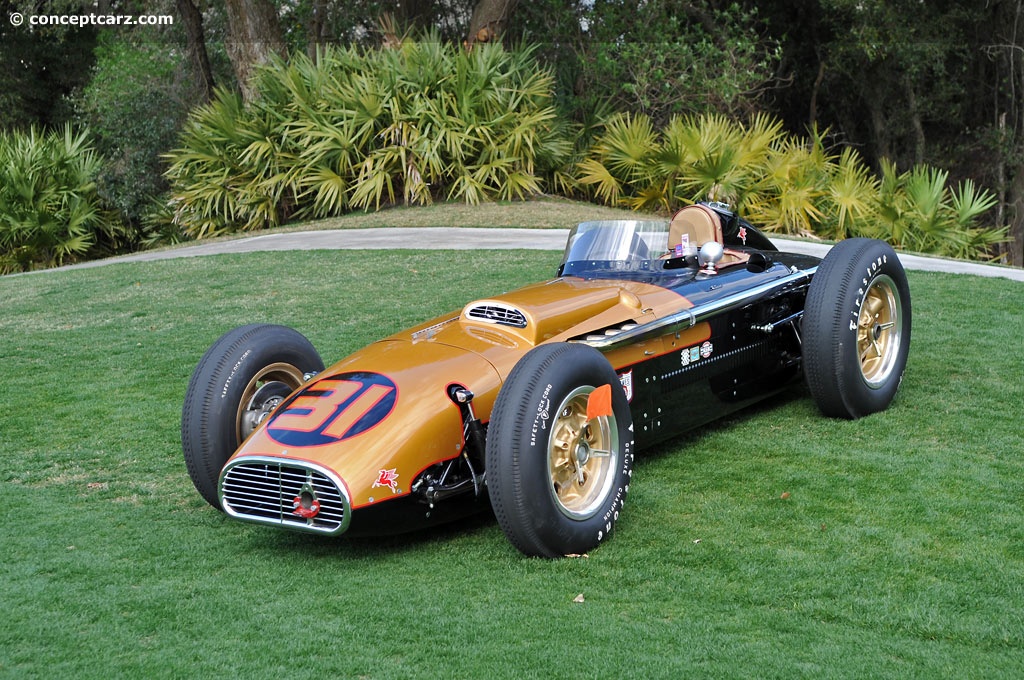
Roadster
Chassis #: KK500G2-3
Engine #: 89
View info and history
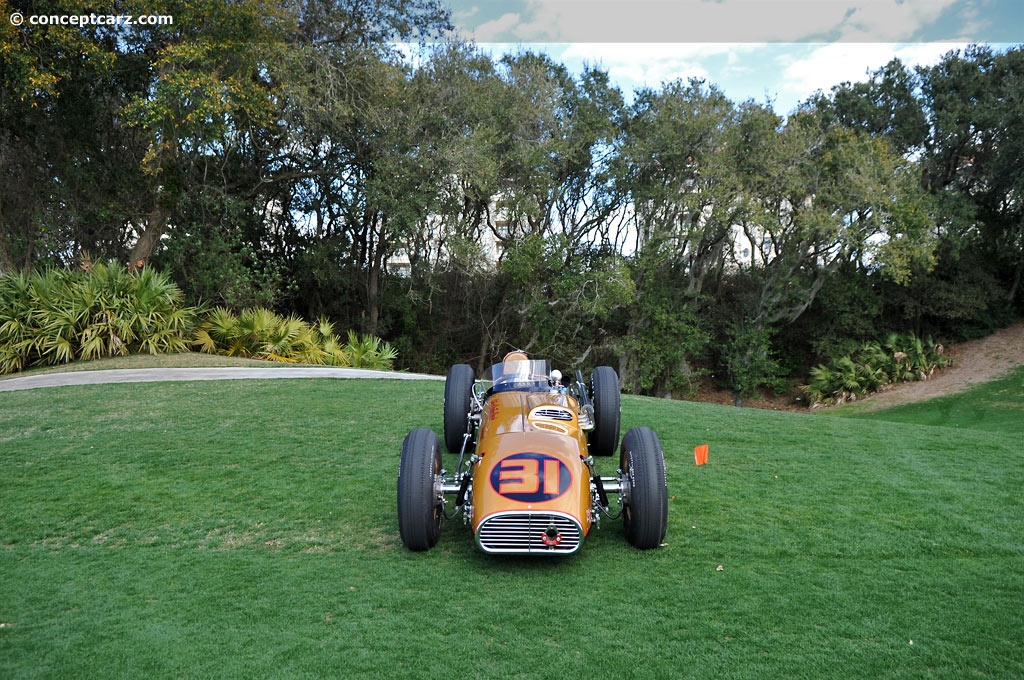
Roadster
Chassis #: KK500G2-3
Engine #: 89
View info and history
by Daniel Vaughan | Aug 2011


1957 Kurtis Kraft 500G Vehicle Profiles


Recent Vehicle Additions


Related Automotive News

Two Significant Private Collections Lead Early Entries For RM Auctions Auburn Spring Sale
THE BILL AKIN COLLECTION FEATURING HISTORIC INDY RACERS AND HOT RODS
31 BUICKS FROM THE ROADMASTER COLLECTION SPANNING NEARLY EIGHT DECADES
ALL OFFERED ENTIRELY WITHOUT RESERVE
RM Auctions announces two important, single-own...

McLaren Racing Inducted Into Canadian Motorsports Hall Of Fame
Two-time Indy 500 winner Johnny Rutherford accepts honour on behalf of the team
TORONTO, Ont. — On February 12, McLaren Racing was inducted into the International Category of the Canadian Motorsport Hall of fame. The honour was accepted...

BOBBY UNSER INSPIRED INFINITI Q60 DEBUTS AT AMELIA ISLAND CONCOURS
The 19th annual Amelia Island Concours announced today that Infiniti will commemorate the events Offenhauser celebration by wrapping a 2014 Infiniti Q60 Convertible in the same color scheme as Bobby Unsers 1968 Indianapolis 500 winning racecar. To...

OFFENHAUSER HEROES AND MERCHANTS OF SPEED SEMINARS OFFER FANS A BACKSTAGE PASS TO AMERICAN MOTORSPORT
A pair ofthe Amelia Island Concours dElegances popular seminars will offer backstage passes to the history and the business of American motorsport.
On Friday March 7, 2014 the celebration of Offenhauser-powered vehicles will begin in the Talbot...

RK MOTORS ADDS 'LEGENDS OF MOTORSPORTS' COLLECTION OF HISTORIC RACING MACHINES TO UPCOMING AUCTION
Charlotte, N.C. – October 14, 2013— Only weeks after revealing plans to auction the 1977 McLaren M26 that James Hunt drove to his final F1 victory, RK Motors Collector Car Auctions (RKMCCA) today announced that four additional iconic racing...