The last year of production for the Packard Twelve was in 1939 before being replaced by the One-Eighty as the company's top-of-the-line automobile. The Model One-Eighty was built to nearly identical specifications as the One-Sixty, with trim and interior appointments distinguishing the two. The Super-8, One-Eighty models had a revised front end, and headlights integrated into the fenders for the first time. The interior had a dash fascia that was modeled almost entirely in plastic.
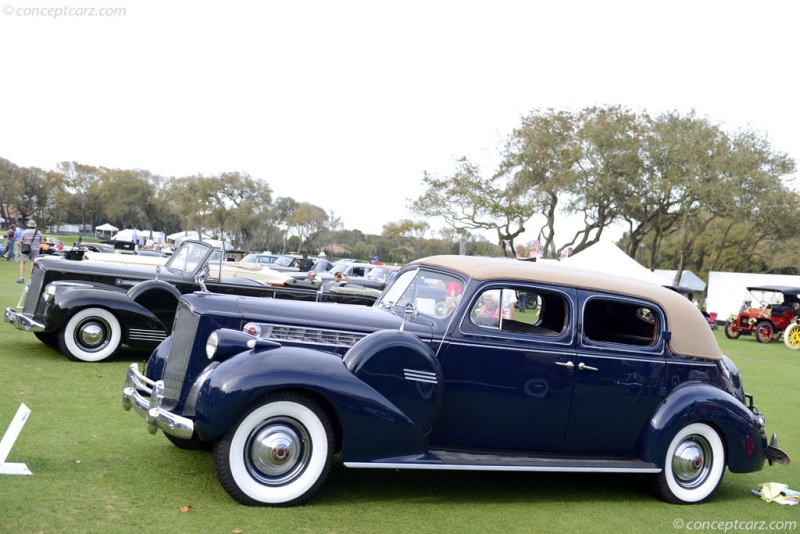
Convertible Limousine by Rollson
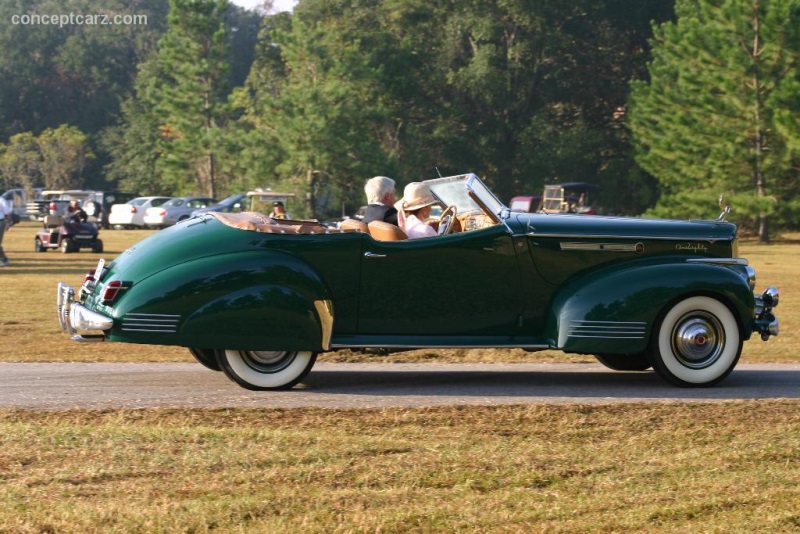
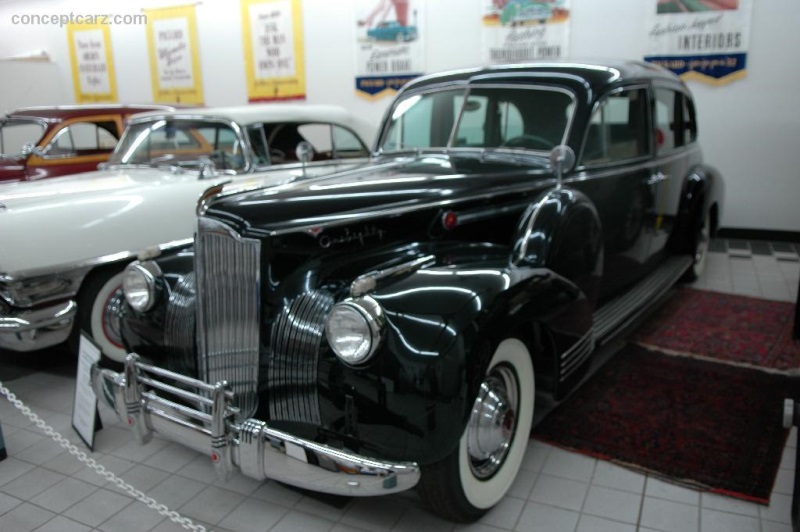
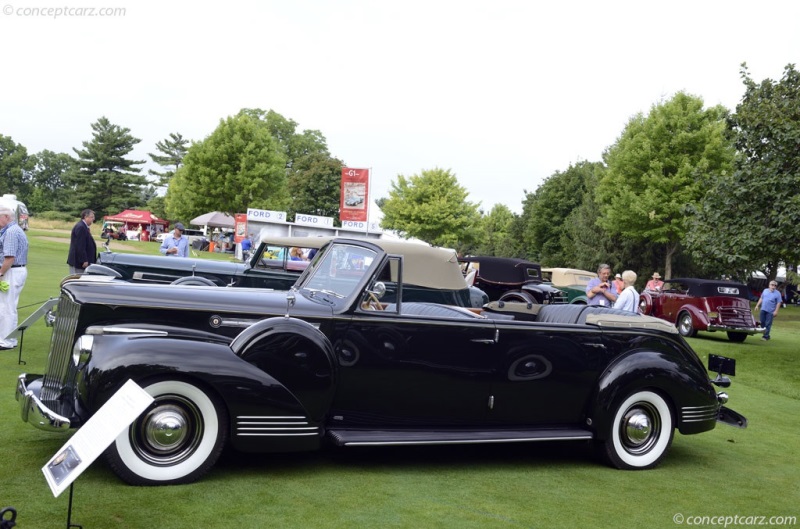
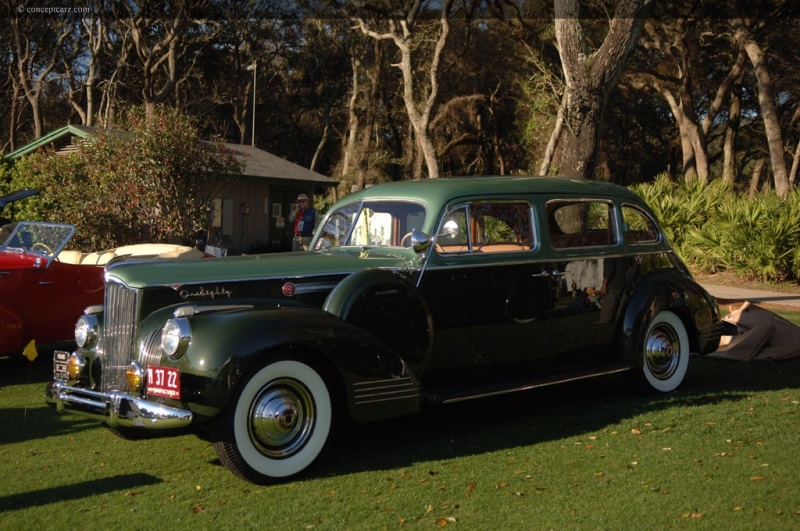
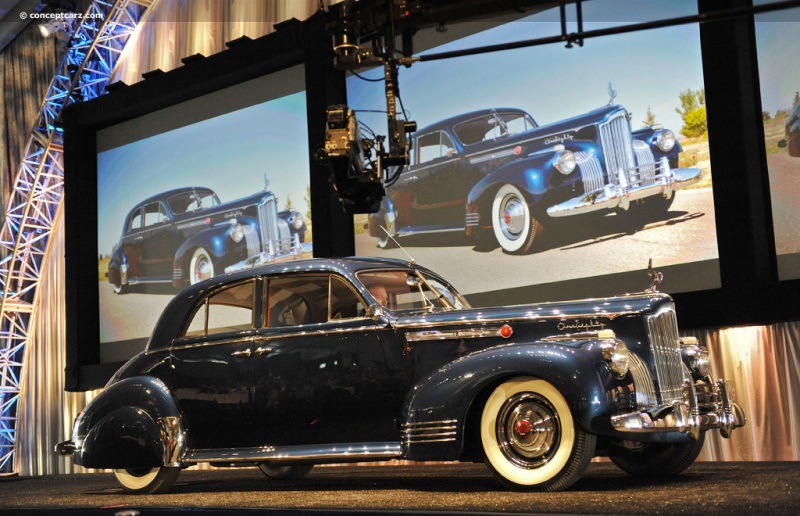
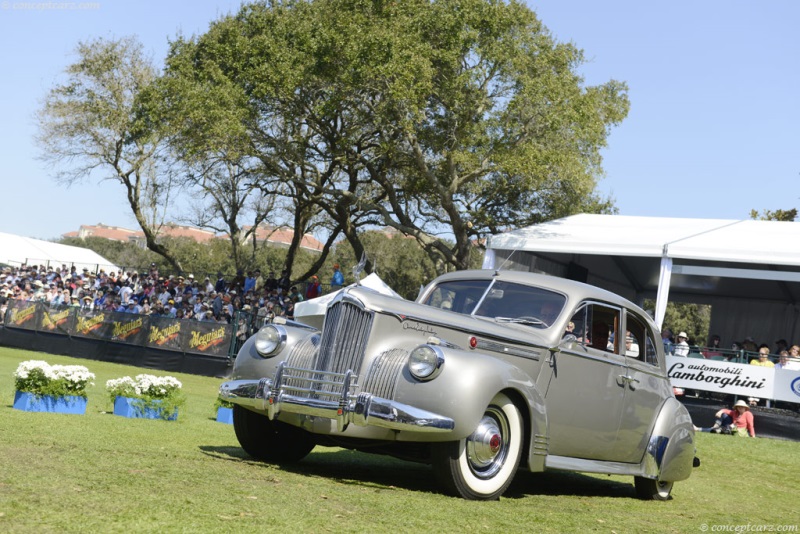
View info and historyThe United States entered the 1940s wary of hostilities occurring throughout many other parts of the world. Packard was occupied with re-tooling their facilities for the new Clipper series while construction had begun on a new high-volume factory to build Rolls-Royce Merlin aircraft engines. A myriad of other preparations was being made for other war production projects, all the while civilian car orders continued streaming in. Remarkably, Packard made substantial styling and catalog changes for the 1941 model year. Among the most prominent new design features were the headlights faired into the front fenders, flanking a dramatic new grille treatment with dummy grilles set below the front fender catwalks. The 15-inch wheels lowered the car's stance and eliminated the need for running boards (albeit, running boards remained part of the options list). Packard advertised the One-Eighty as a custom car built to order. Eleven body styles were offered with six of those being provided by independent coachbuilders. The 180 was comprised of the Series 1906, 1907, and 1908, distinguished by the size of the wheelbase and available in various body styles. The Series 1906 was a convertible victoria with coachwork by Darrin. Five body styles were available on the Series 1907 and five on the Series 1908. The Series 1906 had a 127-inch wheelbase, the Series 1907 rested on a 138-inch platform, and the Series 1908 was the largest at 148 inches. The Darrin-bodied cars had proven popular, and Packard recognized an opportunity to market the cars outside of California. So they acquired the rights to the design and put it into limited production themselves. In the former Auburn-Cord body facilities at Connersville, Indiana, an assembly line was established to hand the production. Production was later transferred to the Sayers & Scovill's facility near Cincinnati, Ohio. In comparison to the construction of the cars by Darrin of Hollywood, the Packard-built cars of Darrin's design were much improved upon. Sold as the Convertible Victoria by Darrin, they were built in small and exclusive numbers through the end of pre-war Packard production in 1942.
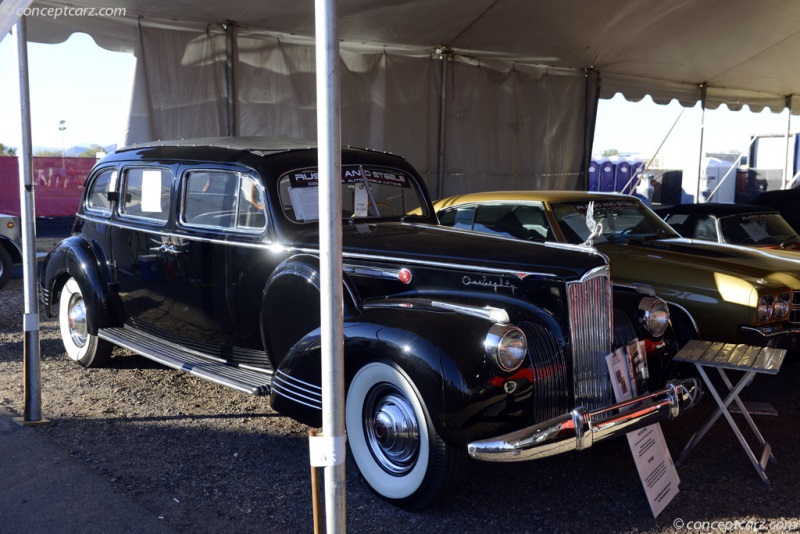
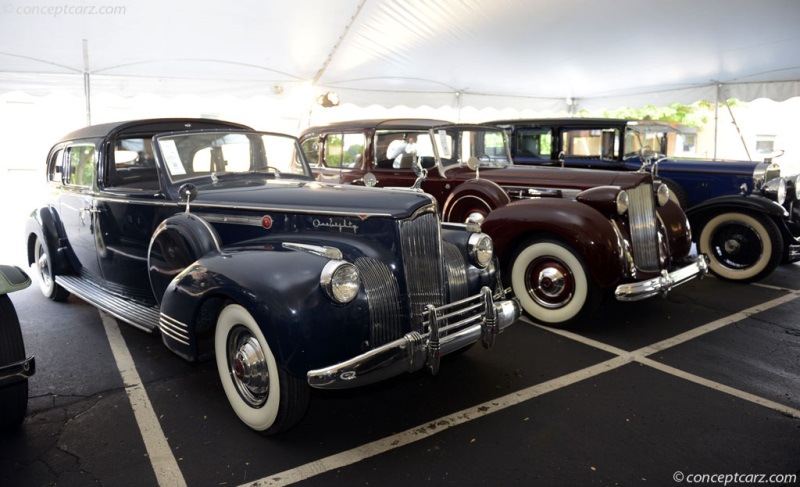
All-Weather Cabriolet by Rollson
View info and historyNew York's Rollston built a small run of 'semi-custom' bodies for Packard and offered two 'catalogue custom' bodies on the Packard Custom Super Eight One Eighty chassis in 1941. Both styles were intended to be driven by a chauffeur and were outfitted with open driver's compartments and padded formal rooflines. The most expensive and deluxe was the All-Weather Town Car, which was based on the 148-inch wheelbase 1908 platform. They were built by extensively modifying a factory touring limousine body and were priced at $4,820 each. Production was limited, with only three of these cars produced in 1941. By 1941, LeBaron had become a division of Briggs, yet still continued the tradition of building largely hand-built bodies in limited numbers. The majority of LeBaron's final Packard offerings were formal limousines, which were intended to be driven by a chauffeur. In 1941, however, an 'owner-driver' version was offered called the Sport Brougham. Resting on the shorter 1907 Series chassis, it had narrow chromed window frames and a 'formal' rear window. In total, 99 examples of the Sport Brougham were built. A total of 930 examples of the Senior Packards were produced in 1941.
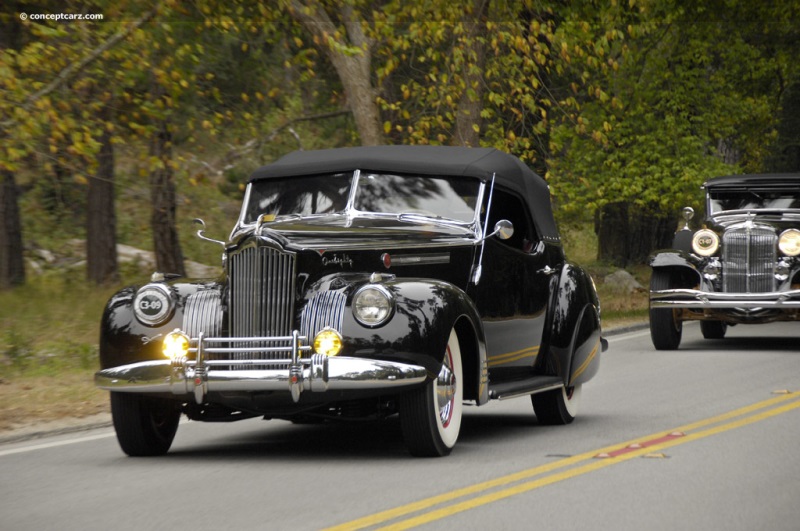
Convertible Victoria by Bohman & Schwartz
View info and historyThe L-head, straight-8 engine displaced 356 cubic inches and used nine main bearings, silent hydraulic valve lifters, a standard 6.85:1 compression ratio, and delivered 160 horsepower at 3,500 RPM. It was backed by a three-speed selective synchromesh transmission with a single plate clutch and column shift controls. Hydraulic brakes on all four wheels provided the stopping power. Disc wheels were standard and dual side mounts, fender skirts, a radio, spotlight, electromagnetic clutch, and AeroDrive were optional.
by Daniel Vaughan | Jan 2020
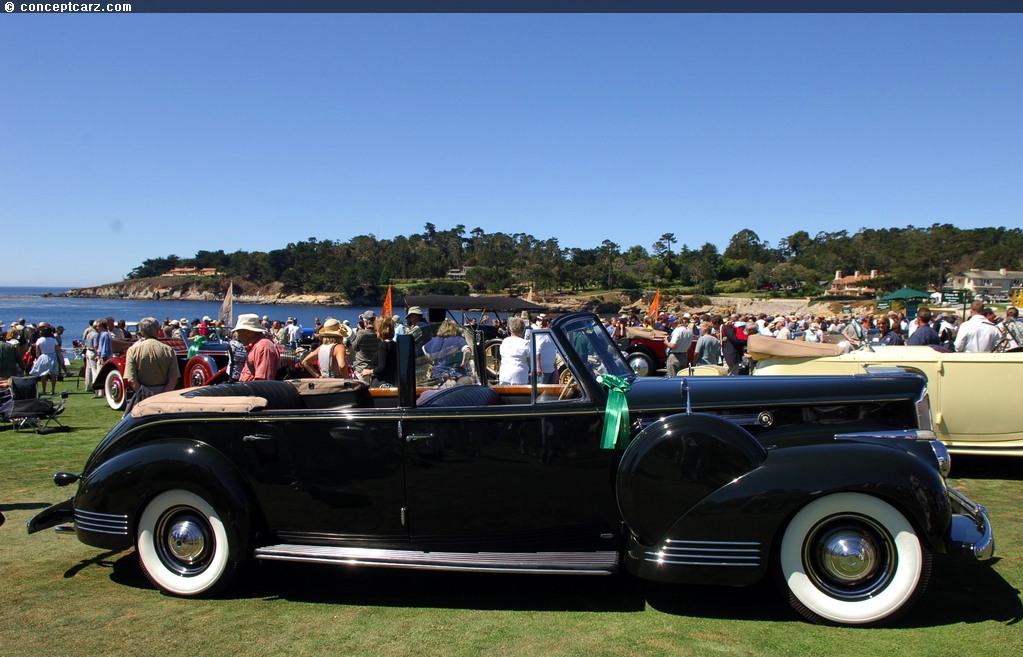
Convertible Limousine by Rollson
View info and history
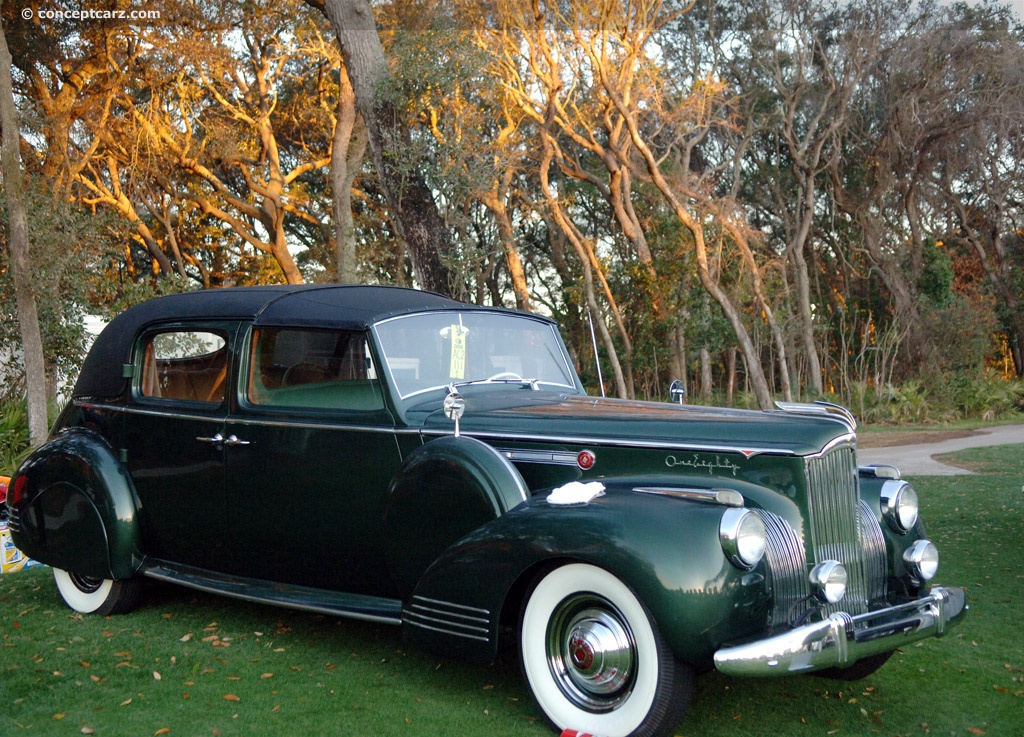
All-Weather Cabriolet by Rollson
View info and history
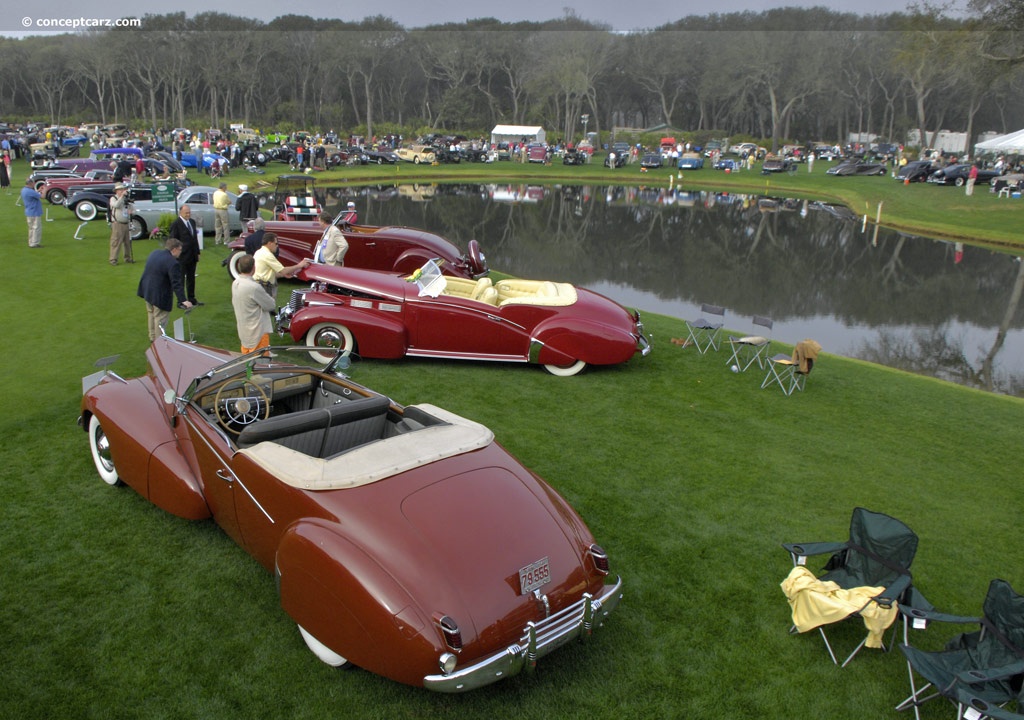
Convertible Victoria by Bohman & Schwartz
View info and history
by Daniel Vaughan | Jan 2020
Related Reading : Packard 180 History
The Packard One Eighty was first introduced in 1940 and was Packards new top-of-the-line vehicle. It served as a replacement for the companys V12 powered vehicle. The Packard 180 was given an eight-cylinder 356 cubic-inch engine that produced an astonishing 160 horsepower. Packard proudly claimed that it was the most powerful eight-cylinder engine on the market. Though most of the other series,....
Continue Reading >>
Continue Reading >>
Similar Automakers
Similarly Sized Vehicles
from 1941
Similarly Priced Vehicles


1941 Packard Super-8 One-Eighty Vehicle Profiles









Recent Vehicle Additions


Performance and Specification Comparison
Price Comparison
$1,000 - $1,325
$1,135 - $1,784
$1,400
$1,622 - $2,400
180 Specification Comparison by Year
Year
Production
Wheelbase
Engine
Prices
1,900
127.00 in., 138.00 in., 148.00 in.
8 cyl., 356.00 CID., 160.00hp
$2,240 - $6,300
930
127.00 in., 138.00 in., 148.00 in.
8 cyl., 356.00 CID., 160.00hp
$2,600 - $5,600
Related Automotive News

Past Best of Show Winners at The Pebble Beach Concours d'Elegance
overview1
The 70th anniversary of the Pebble Beach Concours dElegance was celebrated with a spectacular display of previous Best of Show winners. Thirty-seven examples graced the showfield and many were still with the same owners who raised the trophy...

Alfa Romeo Named Best of Show at the 68th Pebble Beach Concours d'Elegance
Touring-Bodied Alfa Romeo 8C 2900B Named Best of Show at the 68th Pebble Beach Concours dElegance
PEBBLE BEACH, Calif. (August 26, 2018) — After an intense competition that drew diverse cars from around the globe, the coveted gold Best of Show...

1929 Mercedes-Benz S Barker Tourer Named Best Of Show At The 67Th Pebble Beach Concours d'Elegance
PEBBLE BEACH, Calif. (August 20, 2017) — Just a week ago, Bruce R. McCaws 1929 Mercedes-Benz S Barker Tourer emerged from the restoration shop of Steve Babinsky in Lebanon, New Jersey. Today, having crossed the country, the boattailed beauty captured...

Lancia Named 2016 Best of Show
PEBBLE BEACH, Calif. (August 21, 2016) — The 2016 Pebble Beach Concours dElegance concluded with first-time entrant Richard Mattei lifting the top prize high overhead soon after his 1936 Lancia Astura Pinin Farina Cabriolet was named Best of...

63rd Pebble Beach Concours d'Elegance Names 1934 Packard 'Best of Show'
The competition showcased 248 cars, including 48 from abroad
PEBBLE BEACH, Calif. (August 18, 2013) -- A 1934 Packard 1108 Twelve Dietrich Convertible Victoria owned by Joseph and Margie Cassini III of West Orange, New Jersey, was named Best...