1933 Pierce-Arrow Model 836 news, pictures, and information | ||
| Tweet | ||
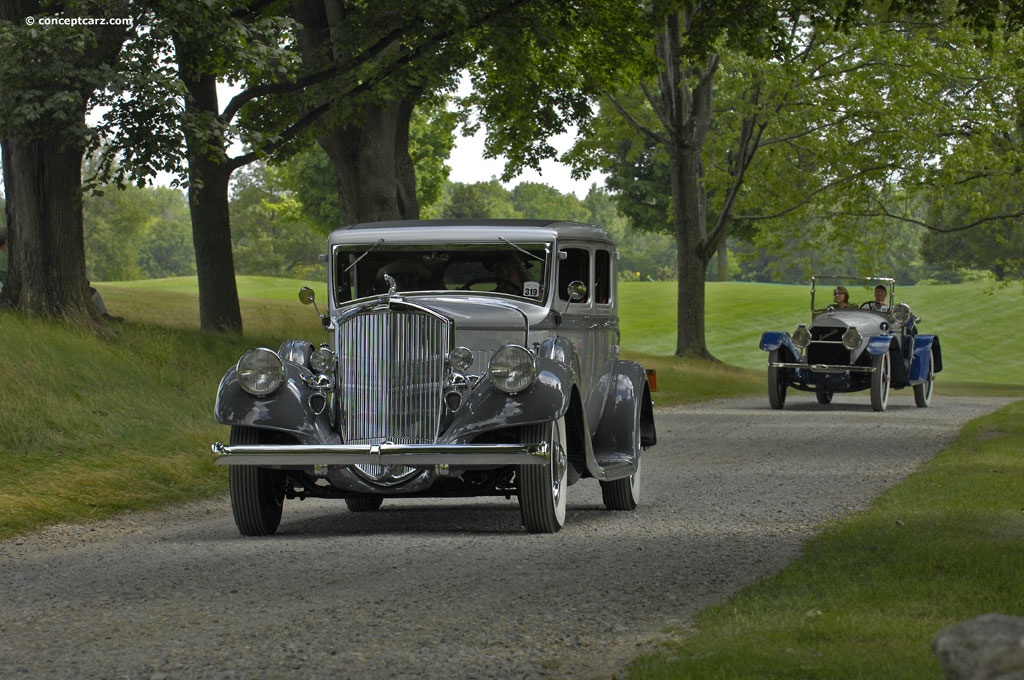
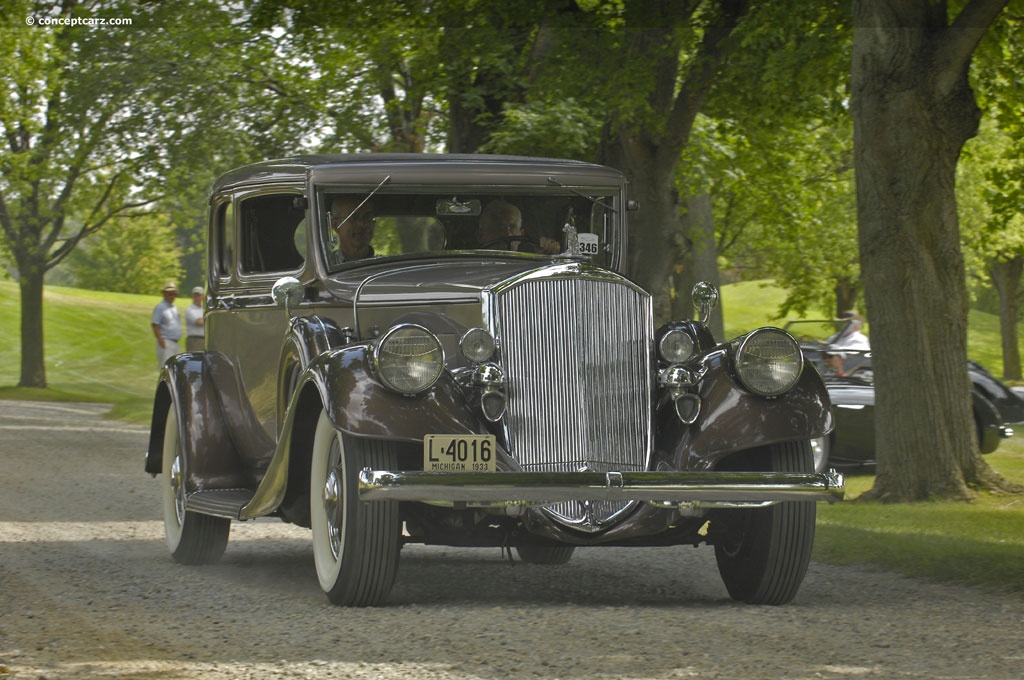
![]() | ![]() | ![]() | Club Sedan Designer: LeBaron |
Like many of his contemporaries in the early years, George N Pierce built bicycles. That was after an earlier stint making wire bird cages. Although the bicycle business was profitable, Pierce recognized that profits would increase directly with the number of wheels employed. Early efforts included six steam vehicles, under license from Overman. The steamers ran poorly and were quickly abandoned. In 1901, Pierce entered the internal combustion business.
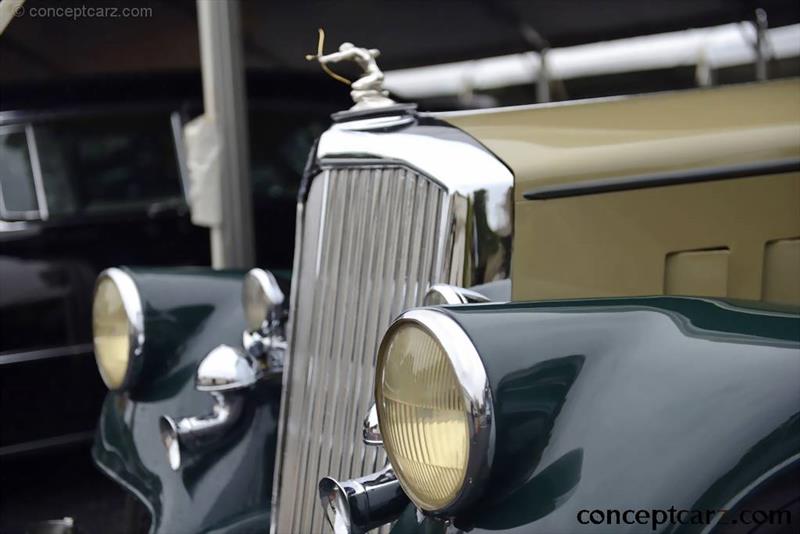
Known for its uncompromising quality, reliability and powerful motors, Pierce was one of America's finest motor cars. Pierce pioneered many innovations, one of which was integrating the headlights into the fenders.
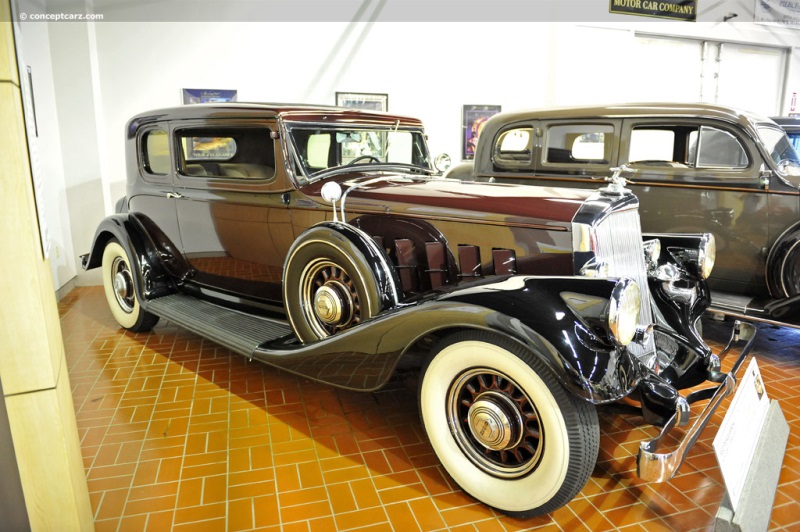
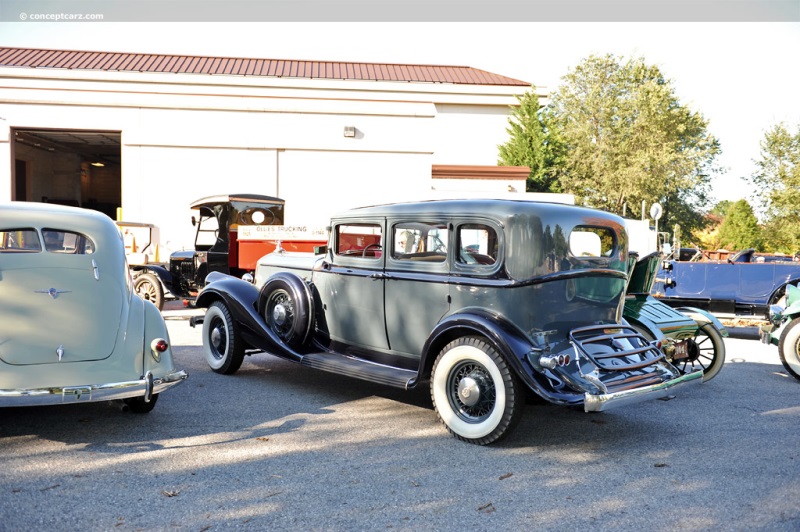
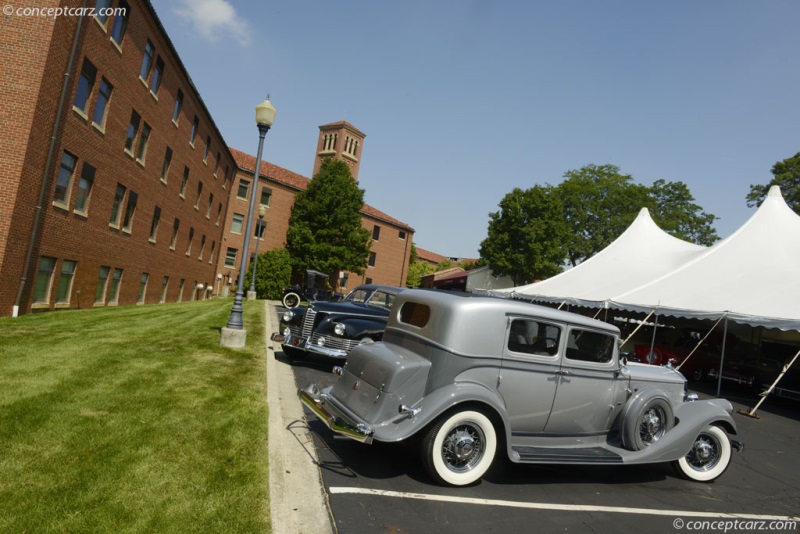
LeBaron worked with Pierce in the design of several different body styles in the early 1930's. The 1933 Club Sedan was a LeBaron body design and was the beginning of the 'sport sedan,' to be owner driven vs. chauffeur driven.
This Model 836 Club Sedan was built for the 1933 Chicago World's Fair. It features a full leather interior, Stewart Warner mechanical power brakes, Startix automatic starting, and an automatic choke. It was restored by its current owner and completed in 2006. Chalk notifications under the body reinforcement plate indicate that the car was produced for a major automobile show, and with no trunk rack.
There was evident the car left the factory with an all-leather interior. Removal of the door plate established the original color to be satin silver. The darker color is Chateau Gray with Eulan Gray striping. This was the first year Pierce used tinted glass.
It is the first car to have hydraulic valve lifters, full flow oil filtration and oil temperature control. It also sports ball bearing spring shackles and a five-foot-long muffler, ensuring near silent operation. The owner restored the car, completing it in January, 2006.
![]() | ![]() | ![]() | Club Brougham |
The Pierce was a status symbol - owned by movie stars and other notable individuals. Their advertisements were notably understated and different. While the company declared insolvency in the late 1930s, it was these early cars as well as the Silver Arrow that put Pierce on a perch equal to and above many of the other manufacturers of the day.
Pierce-Arrow was out of business by May, 1938, but many of the innovations on the Arrow were standard styling features by 1940 on many of its competitors.
![]() | ![]() | ![]() | Enclosed Drive Limousine Chassis Num: 1550247 Engine Num: 239L1 137 |
| Sold for $76,050 at 2008 Bonhams. High bid of $50,000 at 2010 RM Auctions. (did not sell) | |||
In 2008, this elegant Limousine was offered for sale at the 'Quail Lodge, A Sale of Exceptional Motorcars and Automobilia' where it was estimated to sell for $90,000 - $125,000. A buyer willing to satisfy the cars reserve was not found, and the lot was left unsold.
This very late 1933 car, having been produced only 12 units before the end of Pierce-Arrow production for 1933, was delivered new to a Korean Prince during Japanese colonial rule. The car later accompanied him to Japan, where it was reportedly used until 1945 and then hidden away in a garage. This Formal Limousine remained in storage until 1980, when it was discovered and subsequently obtained by one of Japan's most prestigious private automotive museums. Later, the car went to New Zealand, where its paint, chrome and interior were renewed while its mechanics and chassis were overhauled.
After being away for nearly 75 years, the car returned to the United States. Following acquisition by the current owner, the car was thoroughly inspected and the repairs were made where needed. The electrical system was renewed, the various switches repaired or replaced, and a new battery was installed, spark plugs and an ignition cut-off switch were added. Other updates were done as needed.
In 2010, this Model 836 was offered for sale at the Vintage Motor Cars of Meadow Brook event presented by RM Auctions. The car was estimated to sell for $75,000 - $100,000. Bidding reached $50,000 but was not enough to satisfy the car's reserve. It would remain unsold.
By Daniel Vaughan | Aug 2010
The Pierce Company was founded by George n. Pierce. The company began by producing household items such as birdcages and iceboxes, and by the 1870s, had ventured into the world of bicycles. As the 1900s came into sight, Pierce began exploring the possibilities of motor carriages.
The first automobile produced by Pierce was in 1901. It was a 600lb Pierce 'Motorette' that was powered by a single-cylinder engine. In 1907, they were powered by large six-cylinder engines and called the Great Arrow. In 1908, the company was renamed the Pierce-Arrow Motorcar Company.
By the early 1910s, Pierce-Arrow had their Model 66, which was a large and stately vehicle driven by a 824 cubic-inch T-head six-cylinder engine and rode atop a large 147-inch chassis. By 1913, Pierce-Arrow patented fender-mounted headlamps, a design that would become a powerful brand signature for every subsequent Pierce-Arrow model produced during the remainder of the firm's existence.
The 1910s and early 1920s were a prosperous time for the Pierce-Arrow company. As the 1920s continued, the company began loosing its footing as they continued to use their six-cylinder engines. Most of their competitors had moved on, now powering their cars with eight-cylinder engines. Pierce-Arrow was also hesitant to embrace the art deco flamboyance of the time, and their style was quickly becoming outdated.
In 1928, the Pierce-Arrow company was merged with the Studebaker Corporation. This made available an eight-cylinder powerplant. For 1929, Pierce-Arrow was finally able to offer an eight-cylinder model that was stylish and fast. Sales were strong and plans continued for the years to come.
The 1931 Pierce-Arrows were given a longer wheelbase than earlier models. The following year, two new 80-degree V-12 engines were announced. This bold move was to help keep pace with the vicious cylinder wars being fought by their rivals such as Marmon, Cadillac, Packard, and Lincoln.
For 1933, Pierce-Arrow introduced the Silver Arrow prototype car. It was a statement of the direction the Pierce-Arrow intended to take. It was bold and elegant that had poise and power. Meanwhile, the 1933 Pierce-Arrow production cars were given valanced fenders which was the only major visual change distinguishing them from their 1932 counterparts.
The eight-cylinder Pierce-Arrow Series 836 was available in both a regular and extended wheelbase size. There was a wide range of body styles available on the 136-inch platform, while the extended 139-inch wheelbase was reserved for special sedan and limousine styles.
The Studebaker and Pierce-Arrow was a financial nightmare from the start, and by 1933, the Studebaker management ha brought the company to bankruptcy and into receivership. A group of Buffalo businessmen returned ownership of Pierce-Arrow to its hometown, paying $1,000,000 for the privilege.
For the years that followed 1933, the company continued to modify and refine their eight- and twelve-cylinder lines, though their future was coming to an end. For the 1937 model year, only 200 cars were built. 1938 would be the final year and only a few cars were built before the company closed its doors.
By Daniel Vaughan | Dec 2008
The first automobile produced by Pierce was in 1901. It was a 600lb Pierce 'Motorette' that was powered by a single-cylinder engine. In 1907, they were powered by large six-cylinder engines and called the Great Arrow. In 1908, the company was renamed the Pierce-Arrow Motorcar Company.
By the early 1910s, Pierce-Arrow had their Model 66, which was a large and stately vehicle driven by a 824 cubic-inch T-head six-cylinder engine and rode atop a large 147-inch chassis. By 1913, Pierce-Arrow patented fender-mounted headlamps, a design that would become a powerful brand signature for every subsequent Pierce-Arrow model produced during the remainder of the firm's existence.
The 1910s and early 1920s were a prosperous time for the Pierce-Arrow company. As the 1920s continued, the company began loosing its footing as they continued to use their six-cylinder engines. Most of their competitors had moved on, now powering their cars with eight-cylinder engines. Pierce-Arrow was also hesitant to embrace the art deco flamboyance of the time, and their style was quickly becoming outdated.
In 1928, the Pierce-Arrow company was merged with the Studebaker Corporation. This made available an eight-cylinder powerplant. For 1929, Pierce-Arrow was finally able to offer an eight-cylinder model that was stylish and fast. Sales were strong and plans continued for the years to come.
The 1931 Pierce-Arrows were given a longer wheelbase than earlier models. The following year, two new 80-degree V-12 engines were announced. This bold move was to help keep pace with the vicious cylinder wars being fought by their rivals such as Marmon, Cadillac, Packard, and Lincoln.
For 1933, Pierce-Arrow introduced the Silver Arrow prototype car. It was a statement of the direction the Pierce-Arrow intended to take. It was bold and elegant that had poise and power. Meanwhile, the 1933 Pierce-Arrow production cars were given valanced fenders which was the only major visual change distinguishing them from their 1932 counterparts.
The eight-cylinder Pierce-Arrow Series 836 was available in both a regular and extended wheelbase size. There was a wide range of body styles available on the 136-inch platform, while the extended 139-inch wheelbase was reserved for special sedan and limousine styles.
The Studebaker and Pierce-Arrow was a financial nightmare from the start, and by 1933, the Studebaker management ha brought the company to bankruptcy and into receivership. A group of Buffalo businessmen returned ownership of Pierce-Arrow to its hometown, paying $1,000,000 for the privilege.
For the years that followed 1933, the company continued to modify and refine their eight- and twelve-cylinder lines, though their future was coming to an end. For the 1937 model year, only 200 cars were built. 1938 would be the final year and only a few cars were built before the company closed its doors.
By Daniel Vaughan | Dec 2008
![]() | ![]() | ![]() | Enclosed Drive Limousine |
In 1909, the Pierce-Arrow became known as the car of Presidents when William H. Taft became the first president to use an automobile for official occasions. This tradition would continue until 1935.
This 1933 Pierce-Arrow Model 836 Limousine rides on an extended 139-inch wheelbase and was one of the last produced by Pierce in 1933. The car was delivered to a Korean prince who later lived in Japan and was used there until 1945 when it was put into storage. It was put into a private museum in Japan in 1980. The current owner acquired the car after it had been restored in New Zealand.
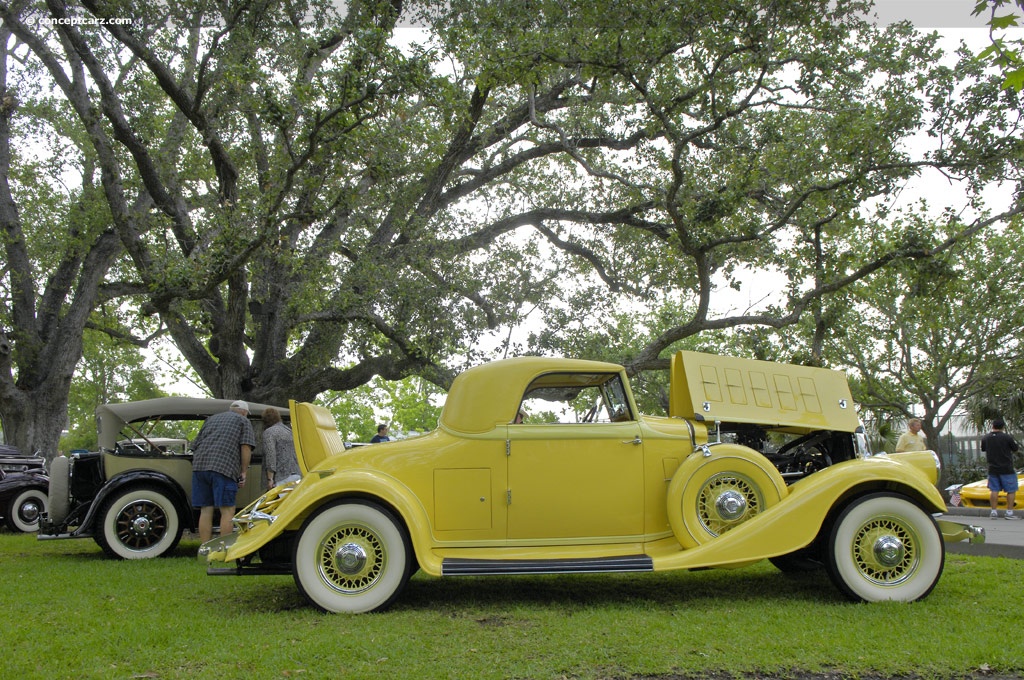
![]() | ![]() | Convertible Roadster |
For 1933, Pierce-Arrow offered eight and twelve-cylinder automobiles. However, sales continued to decline. Only 2,152 cars were sold in 1933. By 1938 the company was gone.
The eight cylinder automobiles were built on a 136-inch wheelbase chassis and were powered by a Pierce-Arrow inline eight that developed 135 horsepower.
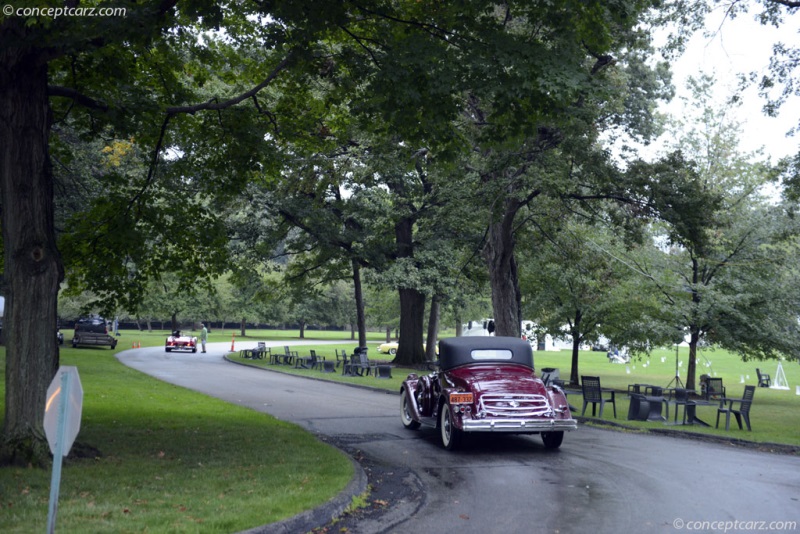
This Pierce-Arrow was purchased new in 1933 by a New York City physician. It was restored from a 'basket case' in 1991.
![]() | ![]() | ![]() | Sedan Chassis Num: 1070470 |
| Sold for $34,100 at 2011 RM Auctions. | |||
During the Great Depression, the company was unwavering in its quest to provide luxury, exclusive automobiles to their discerning clientele.
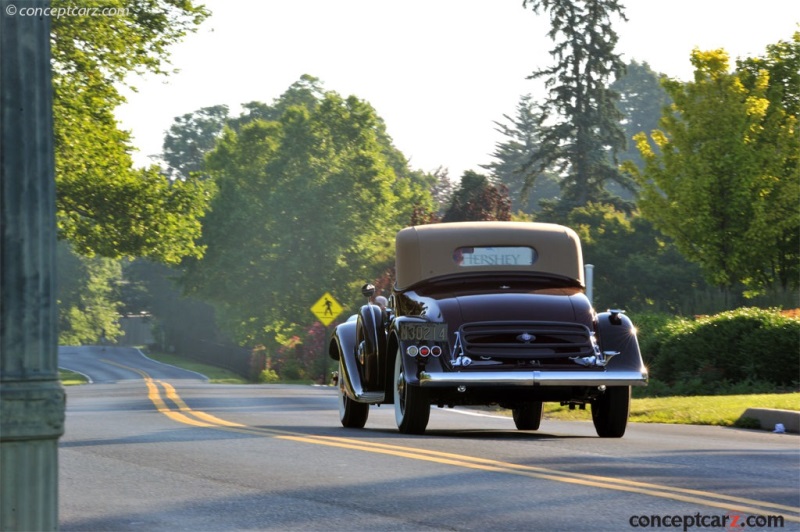
This 1933 Pierce-Arrow Sedan is from the Estate of the late Don Riddle, Jr., who purchased the car in Arizona during 2004. It was restored in the late 1990s, which included a new exterior finish, a new vinyl top, new chrome and a new interior. The engine is an L-head, 366 cubic-inch eight-cylinder powerplant offering 135 horsepower. There is a three-speed manual transmission and four-wheel brakes.
In 2011, this car was offered for sale at the Hershey, PA auction presented by RM Auctions. The car was estimated to sell for $40,000 - $60,000 and offered without reserve. As bidding came to a close, the car had been sold for the sum of $34,100 inclusive of buyer's premium.
By Daniel Vaughan | Dec 2011
![]() | Club Brougham |
New features for the 1933 Pierce-Arrow included a down draft carburetor, power assisted brakes, hydraulic lifters and Startix starting system. Startix was a system that automatically restarted the car if it stalled.
| Mercedes Amg Petronas Links Up With Tata Communications | |
| MERCEDES AMG PETRONAS is pleased to confirm a new partnership with Tata Communications which will see the delivery of world-class trackside connectivity for the team at all Formula One race locations using the Tata Communications global network. With the new partnership, Tata Communications becomes the 'Official Managed Connectivity Supplier' to the team. Tata Communications, a leading global provider of 'a new world of communications', will work closely with MERCEDES AMG PETRONAS to deliver ...[Read more...] | |
| Auctions America Announces Exciting List of Attractions for its Auburn Spring Collector Car Weekend | |
![]() | • Final countdown underway to Auctions America's Auburn Spring collector car weekend, May 9 – 11 at the historic Auburn Auction Park in Auburn, Indiana • Sale lifts the gavel on approximately 500 quality collector cars and features full day of memorabilia • Latest auction highlights include a 1930 Packard Dual Cowl Sport Phaeton, a 1938 Cadillac V-16 Convertible Coupe, and a very rare 1967 Ford Fairlane 500XL R-Code in addition to the previously announced John Soneff estate collection • Week...[Read more...] |
| Mercedes-Benz Classic at the 2012 Grossglockner Grand Prix | |
![]() | • Revival of the mountain race from the 1930s • Mercedes-Benz SSK and W 125 at the start • 92 bends, 14 hairpins, 15 kilometres and a 1300-metre altitude difference The Grossglockner mountain race was one of the most prestigious motor sports events of the 1930s. This year it will be revived with the 2012 Grossglockner Grand Prix to be held from 20 to 22 September 2012 and Mercedes-Benz will be there with some famous cars. In 1938, the brand took part for the first time. As a classic c...[Read more...] |
| Mercedes-Benz at Pebble Beach Automotive Week: An Expression of Fascinating Design and Innovation | |
![]() | •Historical Tribute to SL: W194 Chassis No. 2, 7 and 11 among 300SL vehicles on display •The Concept Style Coupé opens a new chapter and generation of Mercedes-Benz vehicles •AMG 45 year anniversary highlights the pinnacle of performance and style A tribute to Mercedes-Benz SL Roadsters is set for Pebble Beach Automotive Week with three 1952 W194 vehicles among a mix of vintage and new vehicles bearing the three-pointed star that express the marque's breadth and depth of fascinating desi...[Read more...] |
| Mercedes-Benz at Pebble Beach: An Expression of Fascinating Design and Innovation | |
![]() | • Historical Tribute to SL: W194 Chassis No. 2, 7 and 11 among 300SL vehicles on display • The Concept Style Coupé opens a new chapter and generation of Mercedes-Benz vehicles • AMG 45 year anniversary highlights the pinnacle of performance and style A tribute to Mercedes-Benz SL Roadsters is set for Pebble Beach weekend with three 1952 W194 vehicles among a mix of vintage and new vehicles bearing the three-pointed star that express the marque's breadth and depth of fascinating design and ...[Read more...] |
1933
Pierce-Arrow
models |
| Pierce Arrow Model 1236 Twelve |
| Pierce Arrow Model 1242 Twelve |
| Pierce Arrow Model 1247 |
| Pierce Arrow Silver Arrow |
| Similarly Priced Vehicles from 1933 |
| Franklin 16-B Airman Six ($1,936-$25,545) |
| Chrysler CL Custom Imperial ($2,895-$3,395) |
| Packard 1004 Super Eight ($2,800-$3,650) |
Average Auction Sale: $39,600 |
| Pierce-Arrow: 1931-1940 |
| Similar Automakers |
| Pierce-Arrow History |
| Other models by Pierce-Arrow |
| 38 | Model 36 | Model 43 | Model 48 | Model 66 | Model 80/81 | Series 33 | Twelve |
© 1998-2012. All rights reserved. The material may not be published, broadcast, rewritten, or redistributed.


1933